U.S. Federal Courts
Gina Méndez Miró confirmed as first LGBTQ federal judge in Puerto Rico
Senate has approved 100 Biden judicial nominees
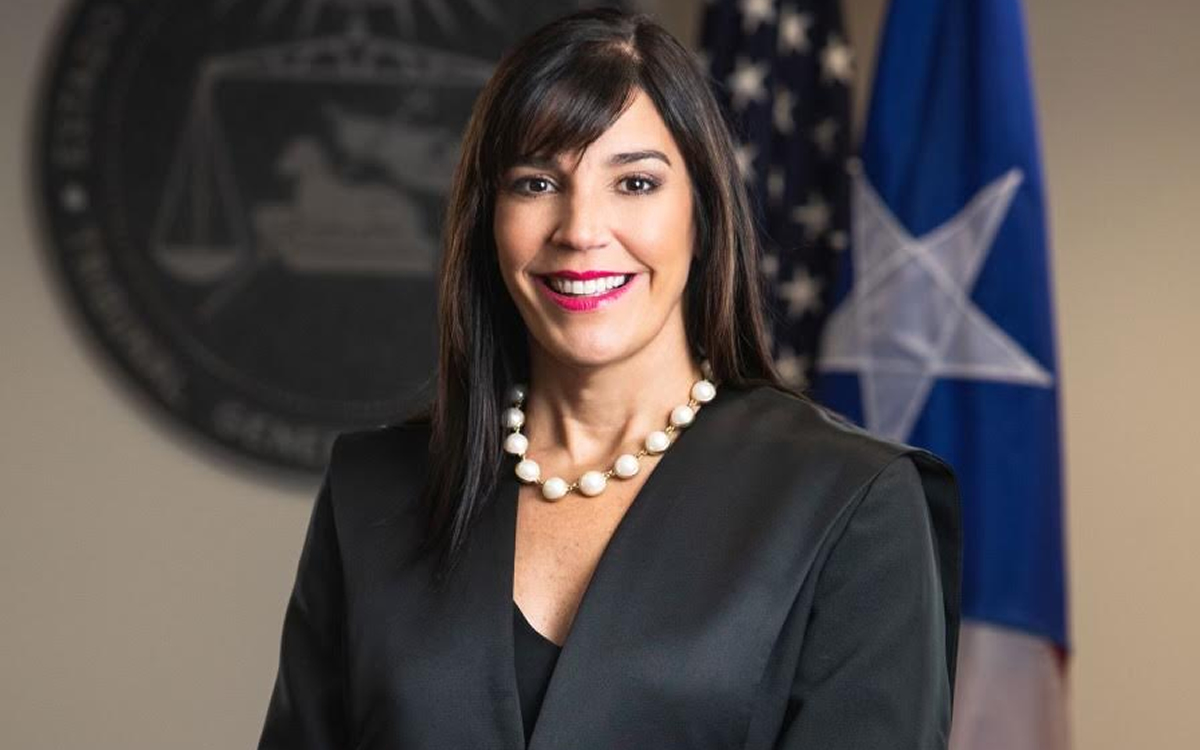
The U.S. Senate confirmed on Tuesday the nomination of Judge Gina Méndez Miró to the federal court of the District of Puerto Rico, making her the first LGBTQ person to serve in the position on the island.
Méndez, who previously served on the Puerto Rico Court of Appeals, was approved by a 54-45 vote margin.
The approval of Méndez into the federal judiciary comes as an attempt from Democratic lawmakers and the Biden administration to reshape the judicial branch to fit the country’s ever-changing demographics. Democratic senators say 65 of President Joe Biden’s judicial nominees have been women and 68 of them have been people of color.
Méndez is the 100th Biden judicial nominee who the Senate has approved.
“As a former chair of the Senate Judiciary Committee, strengthening the federal judiciary with extraordinarily qualified judges who are devoted to our Constitution and the rule of law has been among my proudest work in office,” said Biden in a press release. “I’m especially proud that the nominees I have put forward—and the Senate has confirmed—represent the diversity that is one of our best assets as a nation, and that our shared work has broken so many barriers in just two years.”
Méndez, who is currently married to Puerto Rico Supreme Court Chief Justice Maite Oronoz Rodríguez, garnered support for her confirmation from various human rights groups.
“Judge Méndez Miró is a first-rate jurist, with absolute sensitivity, deep empathy and a great sense of justice,” said Pedro Julio Serrano, founder of Puerto Rico Para Todes, a Puerto Rican LGBTQ rights group. “Puerto Rico must feel very proud of her career and performance, as I know she will continue to do from this new position.”
Waves Ahead, an organization that offers support to LGBTQ Puerto Ricans and other marginalized and vulnerable groups on the island, also commended the Senate for approving Méndez’s nomination.
“The day that celebrates love gives us a historic confirmation,” said the organization on Facebook.





Puerto Rico
The ‘X’ returns to court
1st Circuit hears case over legal recognition of nonbinary Puerto Ricans

Eight months ago, I wrote about this issue at a time when it had not yet reached the judicial level it faces today. Back then, the conversation moved through administrative decisions, public debate, and political resistance. It was unresolved, but it had not yet reached this point.
That has now changed.
Lambda Legal appeared before the 1st U.S. Court of Appeals in Boston, urging the court to uphold a lower court ruling that requires the government of Puerto Rico to issue birth certificates that accurately reflect the identities of nonbinary individuals. The appeal follows a district court decision that found the denial of such recognition to be a violation of the U.S. Constitution.
This marks a turning point. The issue is no longer theoretical. A court has already determined that unequal treatment exists.
The argument presented by the plaintiffs is grounded in Puerto Rico’s own legal framework. Identity birth certificates are not static historical records. They are functional documents used in everyday life. They are required to access employment, education, and essential services. Their purpose is practical, not symbolic.
Within that framework, the exclusion of nonbinary individuals does not stem from a legal limitation. Puerto Rico already allows gender marker corrections on birth certificates for transgender individuals under the precedent established in Arroyo Gonzalez v. Rosselló Nevares. In addition, the current Civil Code recognizes the existence of identity documents that reflect a person’s lived identity beyond the original birth record.
The issue lies in how the law is applied.
Recognition is granted within specific categories, while those who do not identify within that binary structure remain excluded. That exclusion is now at the center of this case.
Lambda Legal’s position is straightforward. Requiring individuals to carry documents that do not reflect who they are forces them into misrepresentation in essential aspects of daily life. This creates practical barriers, exposes them to scrutiny, and places them in a constant state of vulnerability.
The plaintiffs, who were born in Puerto Rico, have made clear that access to accurate identification is not symbolic. It is a basic condition for moving through the world without contradiction imposed by the state.
The fact that this case is now being addressed in the federal court system adds another layer of significance. This is not a pending policy discussion or a legislative proposal. It is a constitutional question. The analysis is not about political preference, but about rights and equal protection under the law.
This case does not exist in isolation.
It unfolds within a broader context in which debates over identity and rights have increasingly been shaped by the growing influence of conservative perspectives in public policy, both in the United States and in Puerto Rico. At the local level, this influence has been reflected in legislative discussions where religious arguments have begun to intersect with decisions that should be grounded in constitutional principles. That intersection creates tension around the separation of church and state and has direct consequences for access to rights.
Recognizing this context is not an attack on faith or religious practice. It is an acknowledgment that when certain perspectives move into the realm of public authority, they can shape outcomes that affect specific communities.
From within Puerto Rico, this is not a distant debate. It is a lived reality. It is present in the difficulty of presenting identification that does not match one’s identity, and in the consequences that follow in workplaces, schools, and government spaces.
The progression of this case introduces the possibility of change within the applicable legal framework. Not because it resolves every tension surrounding the issue, but because it establishes a legal examination of a practice that has long operated under exclusion.
Eight months ago, the conversation centered on ongoing developments. Today, there is already a judicial finding that identifies a violation of rights. What remains is whether that finding will be upheld on appeal.
That process does not guarantee an immediate outcome, but it shifts the ground.
The debate is no longer theoretical.
It is now before the courts.
Maryland
4th Circuit dismisses lawsuit against Montgomery County schools’ pronoun policy
Substitute teacher Kimberly Polk challenged regulation in 2024
A federal appeals court has ruled Montgomery County Public Schools did not violate a substitute teacher’s constitutional rights when it required her to use students’ preferred pronouns in the classroom.
The 4th U.S. Circuit Court of Appeals in a 2-1 decision it released on Jan. 28 ruled against Kimberly Polk.
The policy states that “all students have the right to be referred to by their identified name and/or pronoun.”
“School staff members should address students by the name and pronoun corresponding to the gender identity that is consistently asserted at school,” it reads. “Students are not required to change their permanent student records as described in the next section (e.g., obtain a court-ordered name and/or new birth certificate) as a prerequisite to being addressed by the name and pronoun that corresponds to their identified name. To the extent possible, and consistent with these guidelines, school personnel will make efforts to maintain the confidentiality of the student’s transgender status.”
The Washington Post reported Polk, who became a substitute teacher in Montgomery County in 2021, in November 2022 requested a “religious accommodation, claiming that the policy went against her ‘sincerely held religious beliefs,’ which are ‘based on her understanding of her Christian religion and the Holy Bible.’”
U.S. District Judge Deborah Boardman in January 2025 dismissed Polk’s lawsuit that she filed in federal court in Beltsville. Polk appealed the decision to the 4th Circuit.
U.S. Federal Courts
Federal judge in Md. rules against White House passport policy
Lambda Legal represents transgender, nonbinary people in lawsuit
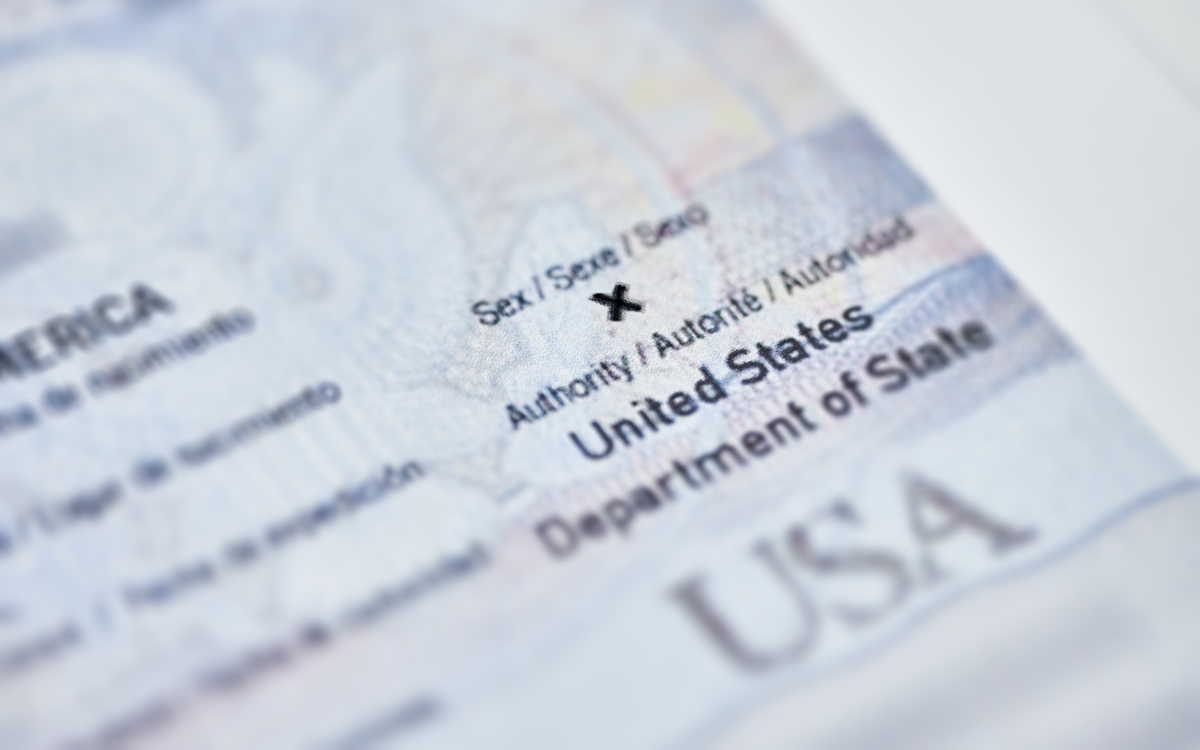
A federal judge in Maryland on Tuesday ruled in favor of six transgender people who are challenging the Trump-Vance administration’s passport policy.
President Donald Trump once he took office signed an executive order that banned the State Department from issuing passports with “X” gender markers. A memo the Washington Blade obtained directed State Department personnel to “suspend any application where the applicant is seeking to change their sex marker from that defined in the executive order
pending further guidance.”
The Trump-Vance administration only recognizes two genders: male and female.
The lawsuit that Lambda Legal filed in U.S. District Court for the District of Maryland in Baltimore in April alleges the policy “has caused and is causing grave and immediate harm to transgender people like plaintiffs, in violation of their constitutional rights to equal protection.”
Seven trans people — Zander Schlacter, Jill Tran, Lia Hepler-Mackey, David Doe, Robert Roe, Peter Poe, and Kris Koe — filed the lawsuit.
Roe is a U.S. Foreign Service Officer who currently lives in Europe. Lambda Legal, who represents him and the six other plaintiffs, notes Chief Judge George L. Russell III dismissed Roe’s case because the State Department has yet to deny him “an accurate passport.”
“Like every other court that has considered this executive order, the court finds its stated purpose does not serve an important governmental interest that is exceedingly persuasive; further, the discriminatory means employed are not substantially related to the achievement of those objectives,” said Russell in his ruling.
Lambda Legal Counsel Carl Charles described Russell’s decision as “a crucial victory for our clients and transgender people nationwide who have been trapped by this administration’s cruel and discriminatory policy.”
“The court recognized that forcing inaccurate identity documents on transgender Americans causes immediate and irreparable harm,” said Charles in a press release. “Our clients can now travel with dignity and safety while we continue fighting to overturn this discriminatory policy entirely.”
The American Civil Liberties Union earlier this year filed a separate lawsuit against the passport directive on behalf of seven trans and nonbinary people.
A federal judge in Boston in April issued a preliminary junction against it. A three-judge panel on the 1st U.S. Circuit Court of Appeals last week ruled against the Trump-Vance administration’s motion to delay the move.

Minimal version of ‘Streetcar Named Desire’ heading to Dupont Underground

Comings & Goings

An effort to increase the number of psychiatrists of color

Calendar: April 10-16

BLUF leather social set for April 10 in Rehoboth
Tenn. lawmakers pass transgender “watch list” bill

Cuba under pressure and without answers

Vance speaks at Orbán rally in Hungary

Amendments to India’s transgender rights law criticized