Maryland
Suspect in 2021 murder of PG County trans woman sentenced to 48 years
District Heights man pleaded guilty to second-degree murder

Prosecutors in Prince George’s County, Md., announced in a virtual press conference on Jan. 24 that the man charged with the July 17, 2021, murder of transgender woman Taya Ashton, 20, who was found shot to death in her Suitland, Md., apartment, was sentenced on Jan. 10 to 48 years in prison.
Assistant PG County State’s Attorney Sherrie Waldrup, the lead prosecutor in the case, said the sentence came after DeAllen Price, 29, pleaded guilty in October to Second-Degree Murder and Use of a Firearm in the Commission of a Crime of Violence. Price has been held since the time of his arrest less than a week after the murder.
Waldrup and PG County State’s Attorney Aisha Braveboy, the county’s lead prosecutor, provided details about the case that had not been publicly disclosed at the time of Price’s arrest two and a half years ago.
“What we know in this case is that the victim in this case and the defendant knew each other,” Braveboy said at the press conference. “They had an intimate relationship with one another. And an argument ensued during one of their meetings in July of 2021,” Braveboy continued. “And from there, unfortunately, their argument led to this tragedy.”
Waldrup called the case highly complicated because up until the time of the sentencing the motive for the murder remained unclear, even though many in the community believed it was based on Taya Ashton’s status as a transgender woman.
“We didn’t have any definitive evidence to show that until sentencing,” Waldrup said, adding that there were no witnesses to the incident and initial evidence was mostly circumstantial. “And when it came time for the sentencing, the defendant did offer that clarity, if you will, as to why this happened,” she told news conference attendees.
“He spoke at sentencing and told the court that he was engaged in an intimate relationship with Taya,” the prosecutor said. “And that evening was when he first learned that Taya was not born a female. And in response to that he reacted and shot her.”
Added Waldrup, “That was just a chilling thing to hear. It’s horrifying, it’s unacceptable. It is certainly not an excuse or justification for what happened to Taya.”
In response to a question from the Washington Blade asking if defendant Price might have been attempting to invoke the so-called trans panic defense, which defense attorneys have used in murder cases where the victims were transgender or gay or lesbian, Waldrup said neither Price nor his attorney used that defense.
She noted that in Maryland, like in many other states and D.C., the “panic” defense is prohibited by law when attempted to be used based on a victim’s gender identity, sexual orientation, race, ethnicity, religion, and other factors.
“Taya was somebody who was loved by her family,” Waldrup said. “She loved her family immensely. Taya was somebody who, although being part of what some may consider a marginalized community, was not marginalized in how she interacted with Prince George’s County,” Waldrup concluded.
“So, today, what we want to send is the message that regardless of how someone wants to live or chooses to live, because this is a free country,” Braveboy told the press conference.
“People can live how they want to live and that does not give an individual the right to commit violence against them or to take their life, period. End of story,” she said. “And when they choose violence, we will hold them accountable. And today, and now, Mr. Price has been held accountable.”
Braveboy said she and her team of prosecutors have and continue to be committed to aggressively prosecuting crimes targeting members of the LGBTQ community. She noted that her office created an LGBTQIA+ Task Force to provide support on matters impacting that community.
Others who spoke at the press conference included PG County Council member Krystal Oriadha, PG County Deputy Police Chief Zachary O’Lare, and Renee Lau, an official with Baltimore Safe Haven, a transgender and LGBTQ services organization



Maryland
Supreme Court ruling against conversion therapy bans could affect Md. law
Then-Gov. Larry Hogan signed statute in 2018
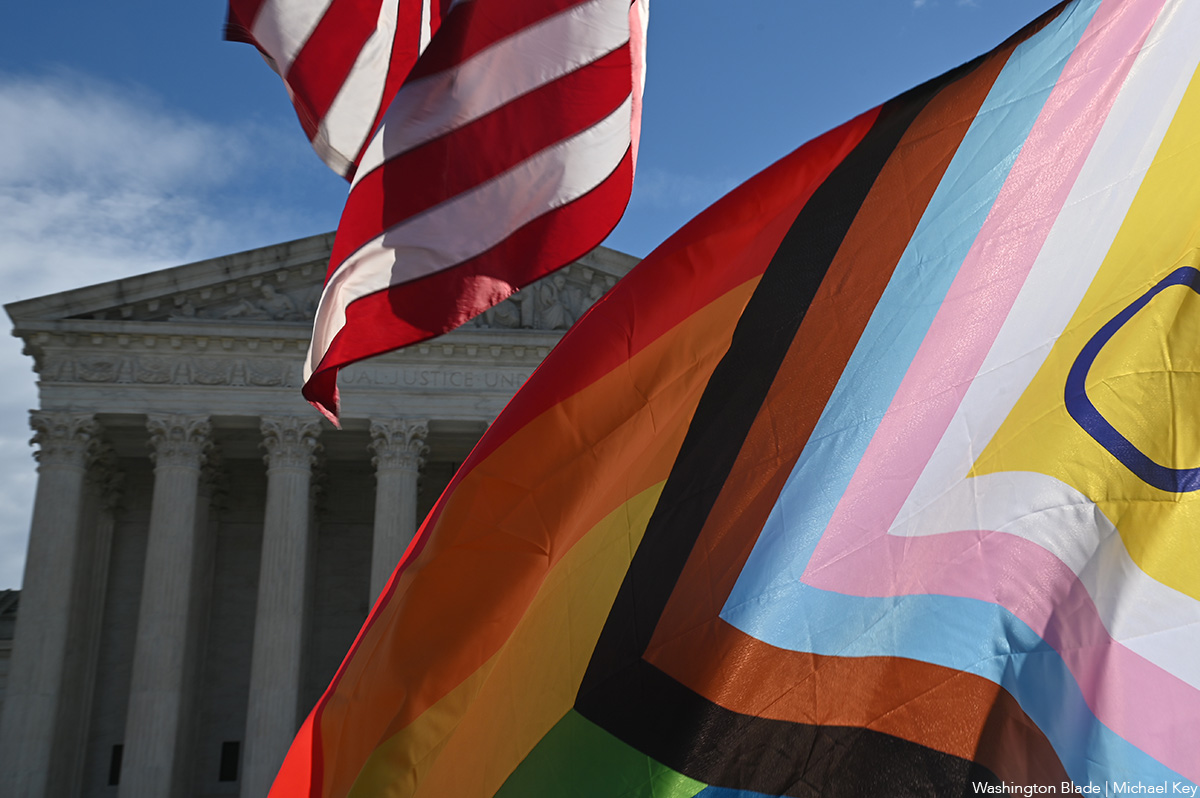
By PAMELA WOOD, JOHN-JOHN WILLIAMS IV, and MADELEINE O’NEILL | The U.S. Supreme Court on Tuesday ruled against a law banning “conversion therapy” for LGBTQ kids in Colorado, a ruling that also could apply to Maryland’s ban on the discredited practice.
An 8-1 high court majority sided with a Christian counselor who argues the law banning talk therapy violates the First Amendment. The justices agreed that the law raises free speech concerns and sent it back to a lower court to decide whether it meets a legal standard that few laws pass.
Justice Neil Gorsuch, writing for the court’s majority, said the law “censors speech based on viewpoint.” The First Amendment, he wrote, “stands as a shield against any effort to enforce orthodoxy in thought or speech in this country.”
The rest of this article can be read on the Baltimore Banner’s website.

Maryland’s legislative caucuses outlined their legislative priorities heading into the final weeks of the 2026 General Assembly during a joint press conference on March 24.
The press conference was titled “We are Maryland,” where a representative for each of the legislative caucuses outlined priorities.
State Del. Kris Fair (D-Frederick County) of the LGBTQ+ Caucus opened the press conference with a statement on the unity of Maryland’s caucus.
“Together we can show our state and our community a different world, one where we mutually support one another and through that support uplift every Marylander,” he said.
In a press conference on March 5, the LGBTQ+ Caucus outlined its top legislative priorities. Fair highlighted two of those bills again during the “We are Maryland” press conference.
The first of the two highlighted pieces of legislation was Senate Bill 626 and House Bill 1589.
The bills would simplify the process of updating an individual’s birth certificate and align the Department of Health and DMV systems to reflect those changes. The bill is being led by state Sen. Clarence Lam (D-Anne Arundel and Howard Counties) and state Del. Ashanti Martinez (D-Prince George’s County).
The second piece of legislation is Senate Bill 950 and House Bill 1209, which would update and modernize laws and regulations around so-called conversion therapy. The bills have failed to pass either chamber thus far. They are being led by state Sen. Cheryl Kagan (D-Montgomery County) and state Del. Bonnie Cullison (D-Montgomery County).
(The U.S. Supreme Court on Tuesday ruled against a Colorado law that bans so-called conversion therapy for minors. Maryland is among the U.S. jurisdictions that prohibit the widely discredited practice for anyone under 18.)
Martinez and Lam have introduced bills in their respective chambers that would expand PrEP access in Maryland. Martinez did not attend the press conference, and Fair did not mention it when he spoke.
State Del. N. Scott Phillips (D-Baltimore County) represented the Black Caucus during the press conference. State Del. Dana Jones (D-Anne Arundel County) spoke on behalf of the Women’s Caucus, State Del. Teresa Woorman (D-Montgomery County) represented the Latino Caucus, and State Del. Lily Qi (D-Montgomery County) represented the Asian-American and Pacific Islander Caucus. State Del. Jared Solomon (D-Montgomery County) represented the Jewish Caucus, and state Del. Sean Stinnett (D-Baltimore County) represented the Muslim Caucus during the press conference.
Solomon ended the press conference by explaining the importance of all the caucuses coming out together.
“We are stronger when we’re together, and many of these issues that we have talked about, again, impact all of us,” said Solomon.
Cameroon
Gay Cameroonian immigrant will be freed from ICE detention — for now
Ludovic Mbock’s homeland criminalizes homosexuality
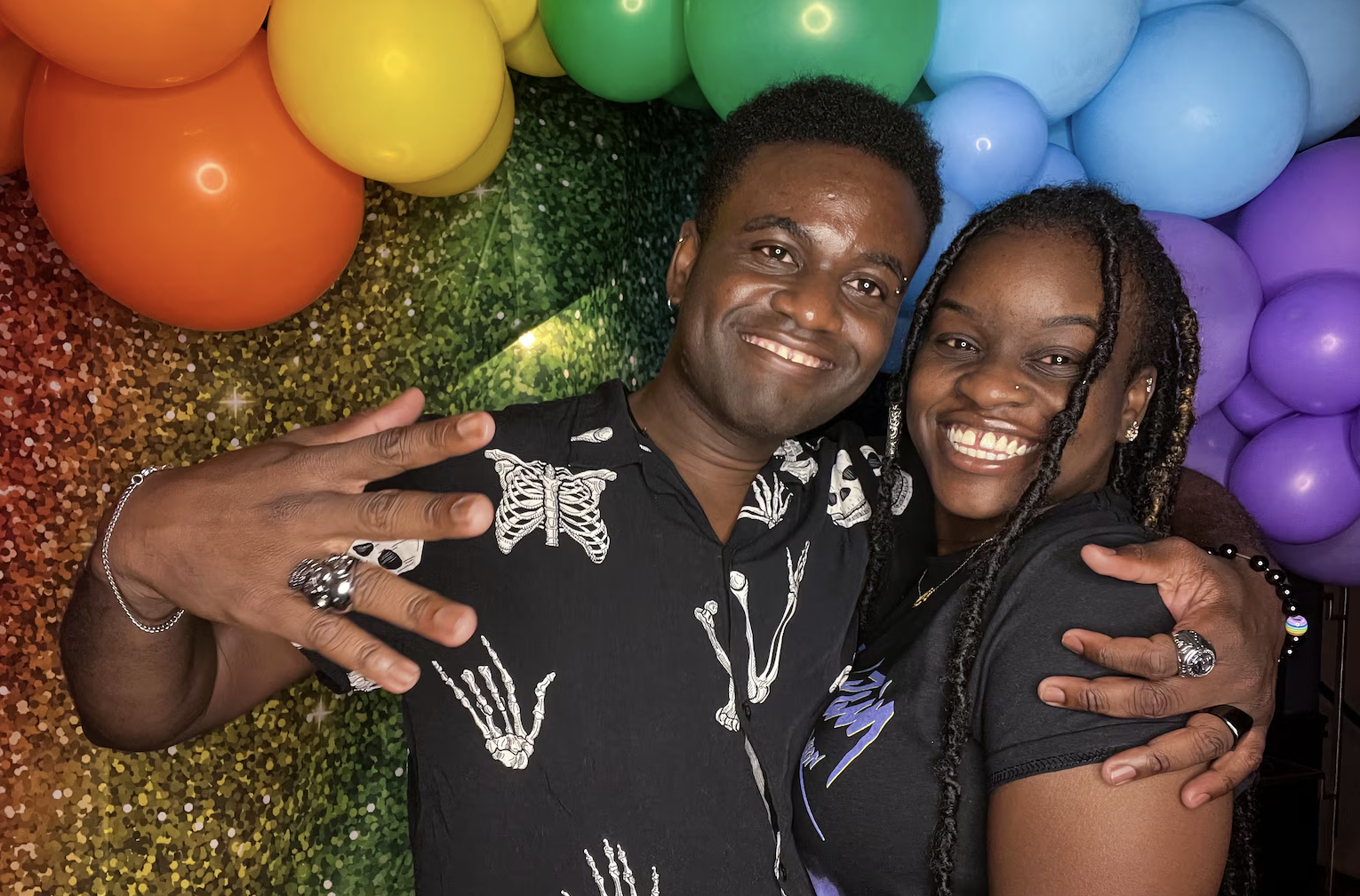
By ANTONIO PLANAS | An immigration judge on Friday issued a $4,000 bond for a Cameroonian immigrant and regional gaming champion held in federal immigration detention for the past three weeks.
The ruling will allow Ludovic Mbock, of Oxon Hill, to return to Maryland from a Georgia facility this weekend, his family and attorney said.
“Realistically, by tomorrow. Hopefully, by today,” said Mbock’s attorney, Edward Neufville. “We are one step closer to getting Ludovic justice.”
The rest of this article can be found on the Baltimore Banner’s website.

Trump’s war threats trigger rare 25th Amendment discussion

A Sondheim masterpiece ‘Merrily’ rolls onto Netflix

ROSENSTEIN: Vote McDuffie for mayor of D.C.

New book celebrates 1970s dance music icons

Report: Grenell wants Russian ambassadorship

Risking it all for love during World War II

PHOTOS: The Bonnet Ball

D.C. is the place for the Democratic Socialists of America

Key lifestyle changes can help patients cope with diabetes