District of Columbia
How will Trump impact D.C.’s plans for World Pride?
Organizers say events moving ahead as planned

Organizers of World Pride 2025, the international LGBTQ celebration scheduled to take place in Washington, D.C. May 17-June 8, 2025, say plans for the many events associated with World Pride are moving ahead without any signs of problems caused by the outcome of the U.S. presidential election.
Although many LGBTQ activists saw President-elect Donald Trump’s positions on LGBTQ rights as far less supportive than losing Democratic presidential candidate Kamala Harris, LGBTQ Republicans point out that Trump did not take steps to oppose Pride events in the nation’s capital during his first term as president. As president-elect, Trump recently nominated Scott Bessent, who’s gay, as Treasury Secretary. If confirmed, Bessent would become the “highest-ranking openly gay U.S. government official in American history,” according to the Equality Forum, since the Treasury Secretary is fifth in the line of presidential succession.
Officials with the Capital Pride Alliance, the group that organizes most of D.C.’s annual Pride events and that is playing a lead role in organizing World Pride 2025, note that World Pride is expected to draw more than two million visitors to D.C. and the events are being embraced by local businesses.
Theresa Belpulsi, senior vice president for Tourism and Visitor Services for Destination D.C., an organization that promotes tourism and business-related events in D.C. and that is working with Capital Pride Alliance to support World Pride, said the outcome of the presidential and congressional elections has so far not had a negative impact on World Pride.
“People are very excited about coming to D.C.,” she told the Washington Blade. “We’re looking at anywhere from two and three million people coming in over World Pride over the course of those three weekends that will be generating over $780 million in economic impact,” she said.
A spokesperson for the Trump presidential transition team couldn’t immediately be reached to determine whether the president-elect has taken a position on World Pride 2025.
Charles Moran, president of the national LGBTQ organization Log Cabin Republicans, said he expects the incoming Trump administration to be supportive of World Pride.
“Donald Trump has consistently reinforced a policy platform bolstered by economic opportunity for people to improve their quality of life, and travel/tourism is one of America’s leading economic generators,” Moran told the Blade in a statement.
“Anyone who adheres to Donald Trump’s America First agenda would clearly welcome people from around the world – and even those who don’t support him – to visit America to celebrate World Pride, bolster our regional economy, and celebrate freedom with us in the most free place in the world to be gay,” Moran said.
Ryan Bos, executive director of Capital Pride Alliance, said the organization fully agrees with reports by local business advocates that World Pride will have a positive economic impact on the D.C. area.
Among other things, Bos said his organization has submitted applications for permits with the U.S. National Park Service for use of the National Mall for World Pride events.
“With the event about six months away, we are fully moving ahead with planning the celebration that is expected to attract 2 million overnight visitors and an estimated $787 million in spending,” he told the Blade. “It is expected to take place on the National Mall but also throughout D.C. and its neighborhoods,” Bos said in referring to World Pride events.
Mike Litterst, a spokesperson for the National Park Service’s National Mall and Memorial Parks division, said the Park Service has received at least one permit application from Capital Pride Alliance for World Pride events.
He said that under longstanding Park Service policy, permits are approved based on the applicant’s ability to ensure “the preservation of park resources and the safety of all participants, park visitors, and community members.” According to Litterst, “It is a deliberate process that does not consider the content of the message presented.”
In the week following the U.S. presidential election, a few people, including some from Europe, posted messages on a World Pride 2025 Facebook page saying they would not come to D.C. for World Pride because of Trump’s election as president. Those messages were no longer on the World Pride Facebook page as of early in the week of Nov. 24.
LGBTQ rights advocates from D.C. are expected to point out that the locally elected D.C. government, including the mayor and City Council, have for many years and continue to be highly supportive of the LGBTQ community and are supportive of World Pride.
A full list of the World Pride 2025 events can be accessed at worldpridedc.org.


District of Columbia
D.C. Pride flag raising ceremony set for June 1
Mayor, council members to participate
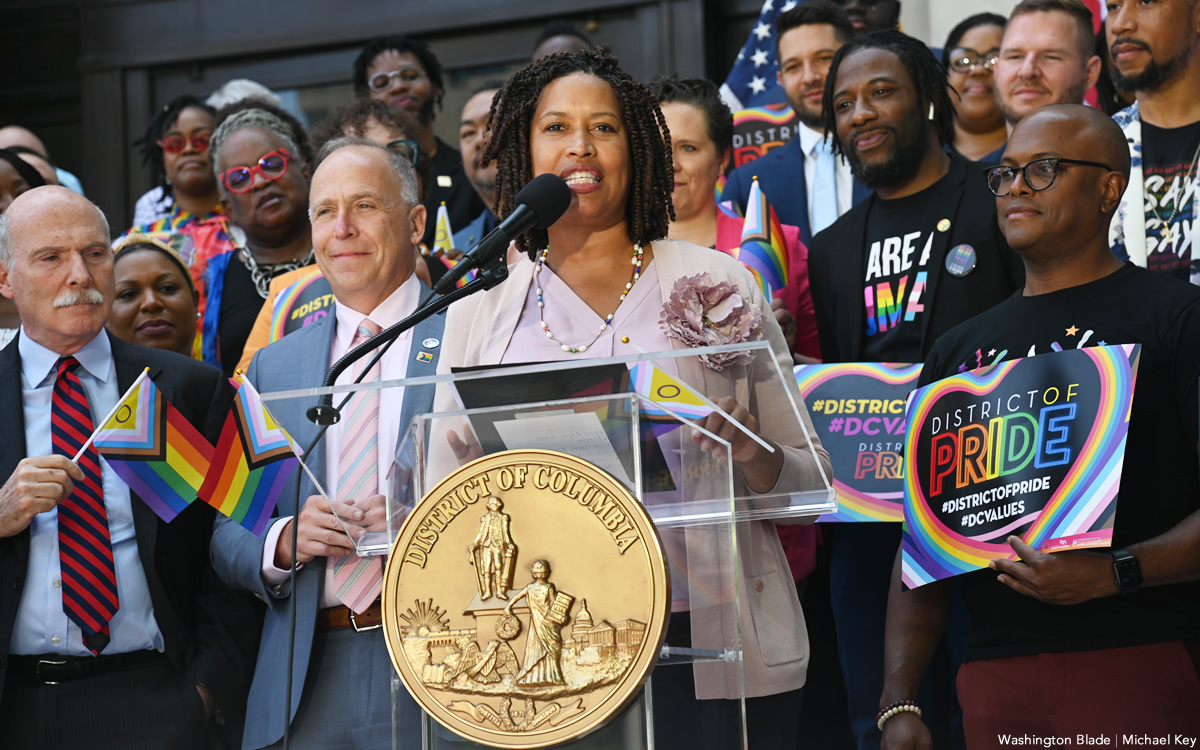
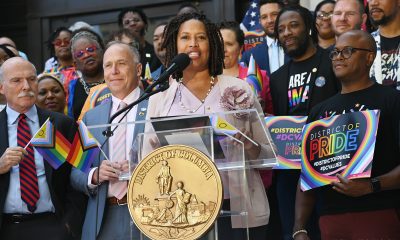
D.C. Mayor Muriel Bowser’s Office of LGBTQ Affairs is inviting the LGBTQ community and friends to attend the city’s annual Pride flag raising ceremony scheduled for 4 p.m. Monday, June 1, outside the John Wilson Building that serves as the D.C. City Hall.
Like in prior years, members of the D.C. Council and officials with the Office of LGBTQ Affairs were expected to join Bowser in delivering remarks on the front entrance steps at the Wilson Building before raising the Pride flag atop one of the tall flagpoles next to the building’s entrance.
Gaby Vincent, a spokesperson for the LGBTQ Affairs Office, said attendees of the flag raising ceremony will be invited to attend a reception immediately following the ceremony in the main lobby of the Wilson Building, which is located on Pennsylvania Avenue at 14th Street, N.W.
She said the reception will feature a DJ, dancing, and refreshments provided by the D.C. LGBTQ bar and café Spark Social House.
Vincent said the flag raising event will also mark the 20th anniversary of the opening of the D.C. Mayor’s Office of LGBTQ Affairs.
In its official announcement of the flag raising event the LGBTQ Affairs Office also announced it is hosting the 7th annual District of Pride Showcase event to be held Friday, June 17, at 7 p.m. at the Lincoln Theater.
The announcement says LGBTQ community members, families, and allies are also invited to walk with Bowser in the Capital Pride Parade scheduled for Saturday, June 20. It says the mayor’s parade contingent will assemble at 2 p.m. at the parade’s starting location at 14th and U Streets, N.W.
“As we also celebrate the 20th anniversary of the Mayor’s Office of LGBTQ Affairs, we invite residents, community members, families and allies to join us throughout June for moments of pride, connection, visibility, and joy,” the announcement says.
District of Columbia
‘Queer Love’ campaign launched to address domestic violence
D.C. event set for LGBTQ+ Domestic Violence Awareness Day on May 28
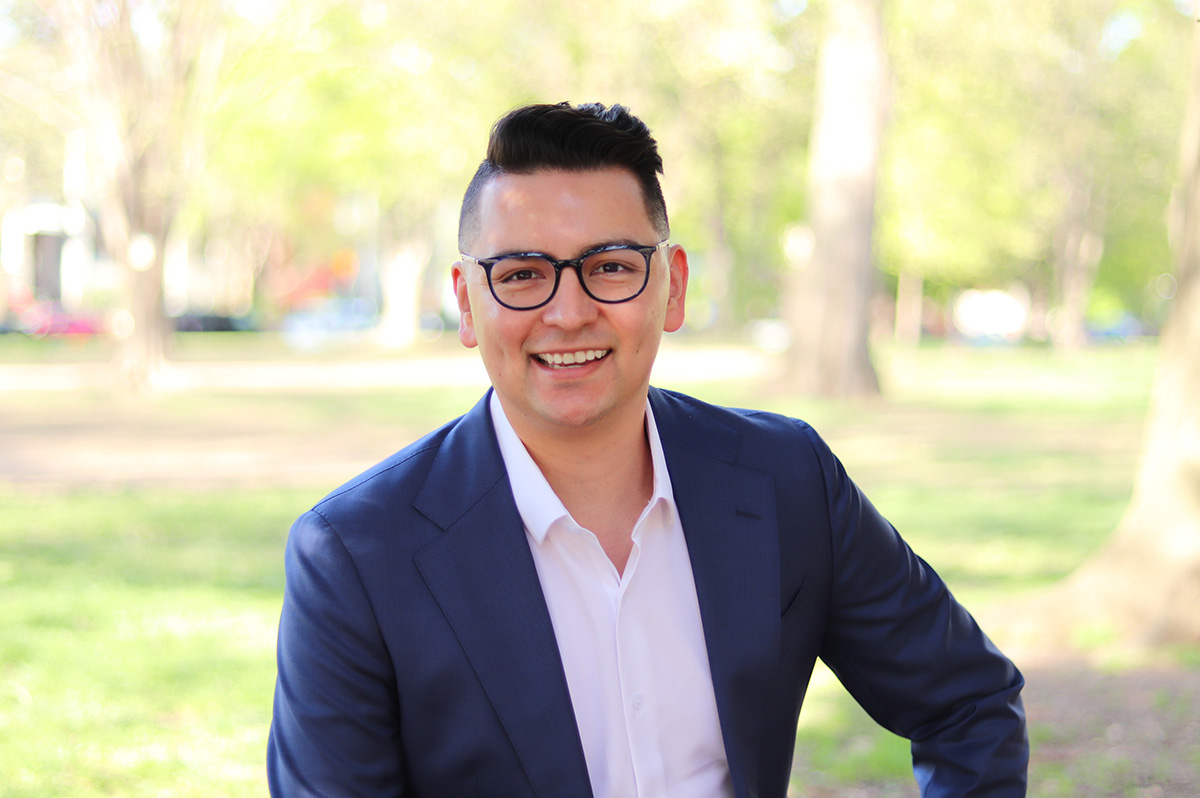
The D.C.-based Wanda Alston Foundation, which provides housing and support services for homeless LGBTQ youth, announced earlier this month that it has joined partner organizations to launch a Queer Love Shouldn’t Hurt campaign aimed at addressing domestic violence within the LGBTQ community.
In a May 18 statement, the Alston Foundation said the campaign involves a public awareness initiative leading up to LGBTQ+ Domestic Violence Awareness Day scheduled for May 28.
“Domestic and family violence in LGBTQ+ communities is real and too often invisible,” Cesar Toledo, the Alston Foundation’s executive director, said in the statement. “As a community, we do not talk about it enough, and that silence can leave survivors feeling isolated and alone,” he said. “We must break that silence.”
He added that culturally competent care for those impacted by domestic violence is available through a newly launched website, queerlove.org, “where people can safely access vital resources, educational toolkits, and support networks they need on their healing journey.”
The website announces one of the project’s first events, a Queer Love Community Social, was scheduled for Thursday, May 28, from 6-8 p.m. at the D.C. LGBTQ+ Community Center at 1827 Wiltberger St., N.W.
“Join us this LGBT+ Domestic Violence Awareness Day for a community social dedicated to visibility and survivor resilience,” the website statement says. “Let’s gather to strengthen our bonds, honor the path to healing, and share free resources,” it says of the May 28 event.
The website also announces a June 1 workshop called Empowering Survivors of LGBTQ+ Intimate Partner Violence, which it says will be presented by Jesse Wedell, an official with the D.C. LGBT+ Counseling Collaborative. The website provides an online form to register for the workshop upon which its location would be disclosed.
It identifies the partner organizations working with the Alston Foundation on the Queer Love Public Awareness Campaign as the LGBT+ Counseling Collaborative, Whitman-Walker Health, the D.C. LGBTQ+ Community Center, and Equality Chamber.
The resources and information provided by the project can be accessed at www.queerlove.org.
District of Columbia
Man accused of threatening to shoot D.C. bar employee after making anti-gay slurs
May 24 incident took place near Black Pride events on U Street

D.C. police on Sunday, May 24, at around 4:20 p.m. arrested a Maryland man for allegedly threatening to shoot an employee while using anti-gay slurs at Ben’s Next Door restaurant and bar at 1211 U St., N.W.
According to a statement released by police and a police incident report, the arrested man, identified as Delonte Fraley, 32, of Accokeek, Md., made the threats after the employee told a bartender not to serve the man alcohol.
“The suspect overheard the employee and threatened to shoot the employee and used homophobic slurs against the employee,” the police statement says. “When the employee left the restaurant for the day, the suspect was standing near the employee’s vehicle,” it says.
“The employee returned to the restaurant and called the police,” the statement continues. “The suspect was apprehended by responding officers,” it says.
The police statement says the arresting officers charged Fraley with Felony Threats (Hate/Bias).
D.C. Superior Court records show prosecutors with the Office of the U.S. Attorney for D.C., which prosecutes D.C. criminal cases, escalated the charge to Threatening to Injure or Kidnap a Person (Bias-Related Hate Crime).
The incident occurred during Memorial Day weekend when thousands of visitors and D.C. area LGBTQ advocates and supporters were attending D.C. Black Pride events held in locations across the city, including Black Pride parties hosted by LGBTQ bars in the U Street entertainment area near Ben’s Next Door.
Among the nearby LGBTQ bars hosting D.C. Black Pride events were Nellie’s Sports Bar and Thurst Lounge. Ben’s Next Door is located next to the popular longtime U Street eatery Ben’s Chili Bowl.
Court records show that Judge Robert R. Rigsby at a May 25 presentment hearing released Fraley on personal recognizance with a stay-away order — the details of which were not publicly disclosed pending a June 4 preliminary hearing.
A more detailed arrest affidavit filed in court by D.C. police says Fraley allegedly confronted the employee at Ben’s Next Door with anti-gay slurs on the day prior to his arrest.
“The complainant told the defendant that because he used homophobic slurs towards himself previously on May 23, 2026, and his hostess, as well as making threats to the complainant and calling him a faggot, he was unable to stay in the establishment,” the affidavit states.
It adds, “The defendant became irate stating, ‘I know where your Tesla is at. See me outside faggot, I will slap your ass’ and ‘I will shoot your ass.’” The affidavit says the complainant confirmed to police the Tesla referred to by Fraley was his vehicle. It says as the victim walked toward his car after getting off work, he saw Fraley standing directly in front of the car.
“The complainant stated he felt unsafe while the defendant was standing in front of his vehicle because he felt the defendant was capable of carrying out those threats,” says the affidavit. It says the victim then decided to return to the restaurant and call police without the defendant having seen him.
“The defendant was placed under arrest for Felony Threats Hate/Bias and was transported to the Third District Station for processing,” the affidavit concludes.
It couldn’t immediately be determined whether the victim identifies as LGBTQ or whether any of the Ben’s Next Door patrons had been involved with D.C. Black Pride.
“Established in 2008, Ben’s Next Door is a family-owned and operated restaurant and bar on U Street, Northwest in Washington, D.C.,” a statement on its website says. “As a Black-owned establishment, it’s our goal to deliver a warm, welcoming, familiar, and communal vibe to all guests,” the statement says.

Ghanaian lawmakers approve anti-LGBTQ bill

‘The Stranger’ queers an existentialist classic

Nine Russian LGBTQ groups deemed ‘extremist’ banned

D.C. Pride flag raising ceremony set for June 1

Still marching: Rev. Troy Perry and the ongoing fight for liberation

Bree Fram’s congressional campaign ends but her fight continues

Peppermint made her mark on ‘Drag Race.’ Now, her advocacy is front and center

From Media Matters to massive queer ragers: the rise of Tara Dikhof

Why this Black Pride, I ranked Janeese Lewis George #1 for D.C. mayor

Kenyan High Court issues landmark transgender rights ruling
-

 2026 Midterm Elections4 days ago
Bree Fram’s congressional campaign ends but her fight continues
-
Celebrity News4 days ago
Peppermint made her mark on ‘Drag Race.’ Now, her advocacy is front and center
-
a&e features4 days ago
From Media Matters to massive queer ragers: the rise of Tara Dikhof
-
Opinions4 days ago
Why this Black Pride, I ranked Janeese Lewis George #1 for D.C. mayor