Arts & Entertainment
Jay-Z says he cried with joy when his mother came out to him
Gloria Carter admitted she was in love while the rapper was working on his album
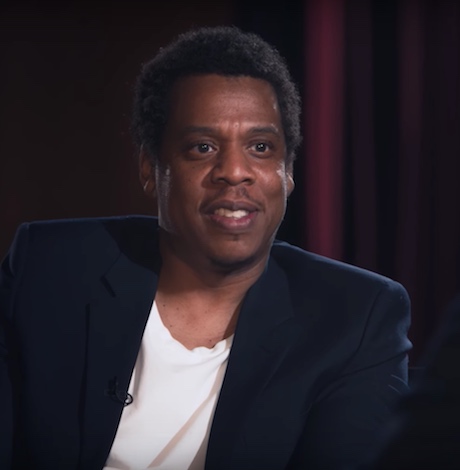
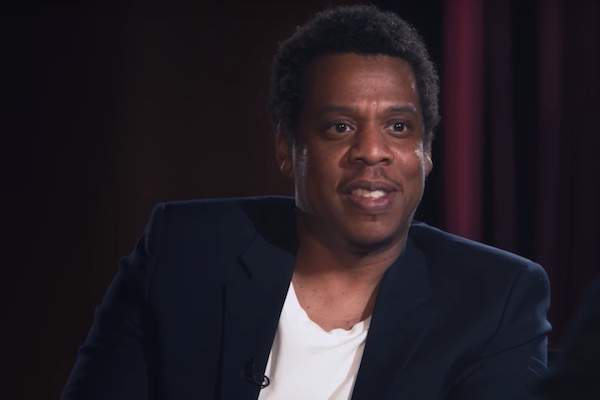
Jay-Z (Screenshot courtesy of YouTube)
Jay-Z got candid about his mother coming out to him during an interview on David Letterman’s Netflix show “My Next Guest Needs No Introduction.”
Gloria Carter came out to the public on Jay-Z’s track “Smile” from his latest album “4:44.”
“Living in the shadow/Can you imagine what kind of life it is to live?” Carter says in a monolugue. “In the shadows people see you as happy and free/Because that’s what you want them to see/Living two lives, happy, but not free.”
Jay-Z also detailed his mother’s trauma from being closeted rapping, “Mama had four kids, but she’s a lesbian/ Had to pretend so long that she’s a thespian/ Had to hide in the closet, so she medicate/ Society shame and the pain was too much to take.”
The rapper also explained to Letterman that when his mother came out to him he cried tears of joy.
“For her to sit in front of me and tell me ‘I think I love someone’ – I mean, I really cried,” Jay-Z says. “That’s a real story. I cried because I was so happy for her that she was free.”
Jay-Z went on that while he knew his mother was gay she had never discussed her sexuality with him.
“This was the first time we had the conversation,” Jay-Z says. “And the first time I heard her say she loved her partner. Like, ‘I feel like I love somebody.’ She said ‘I feel like.’ She held that little bit back, still. She didn’t say ‘I’m in love,’ she said ‘I feel like I love someone.’ And I just, I cried. I don’t even believe in crying because you’re happy. I don’t even know what that is. What is that?”
Jay-Z’s full interview with Letterman premieres on Netflix on April 6.
Watch below.






Photos
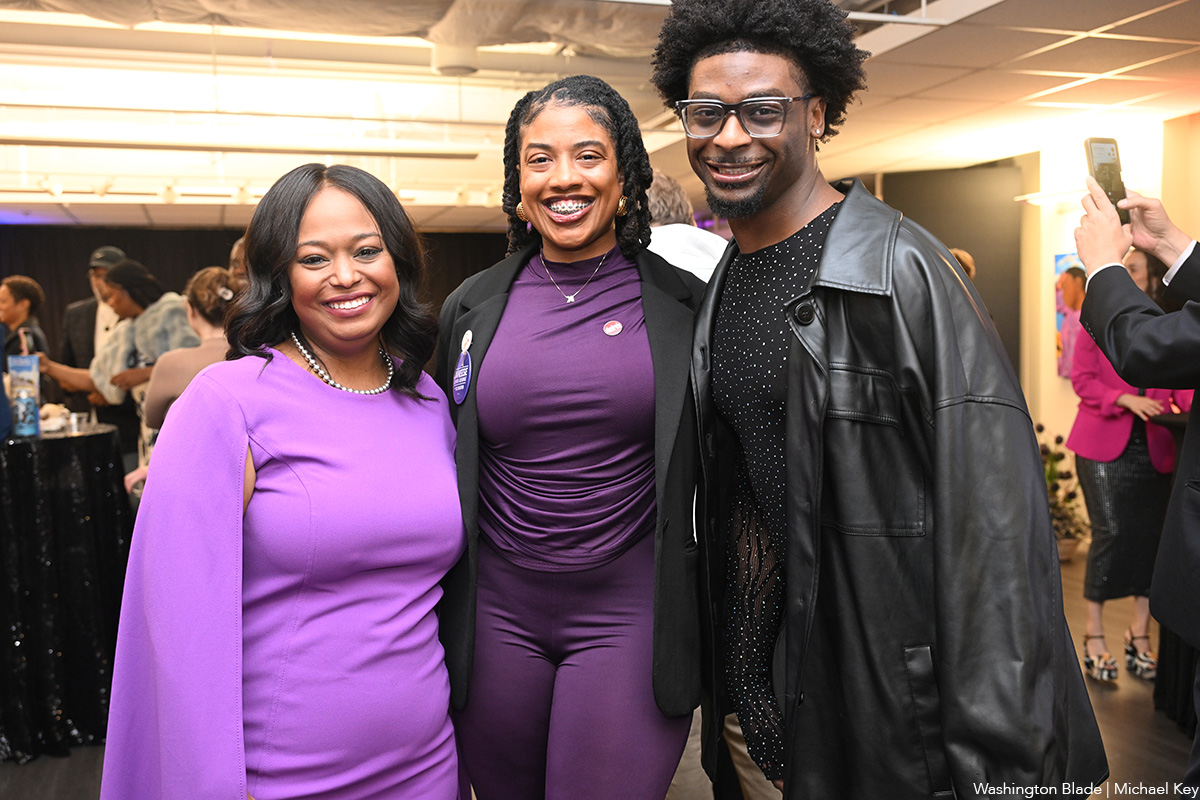
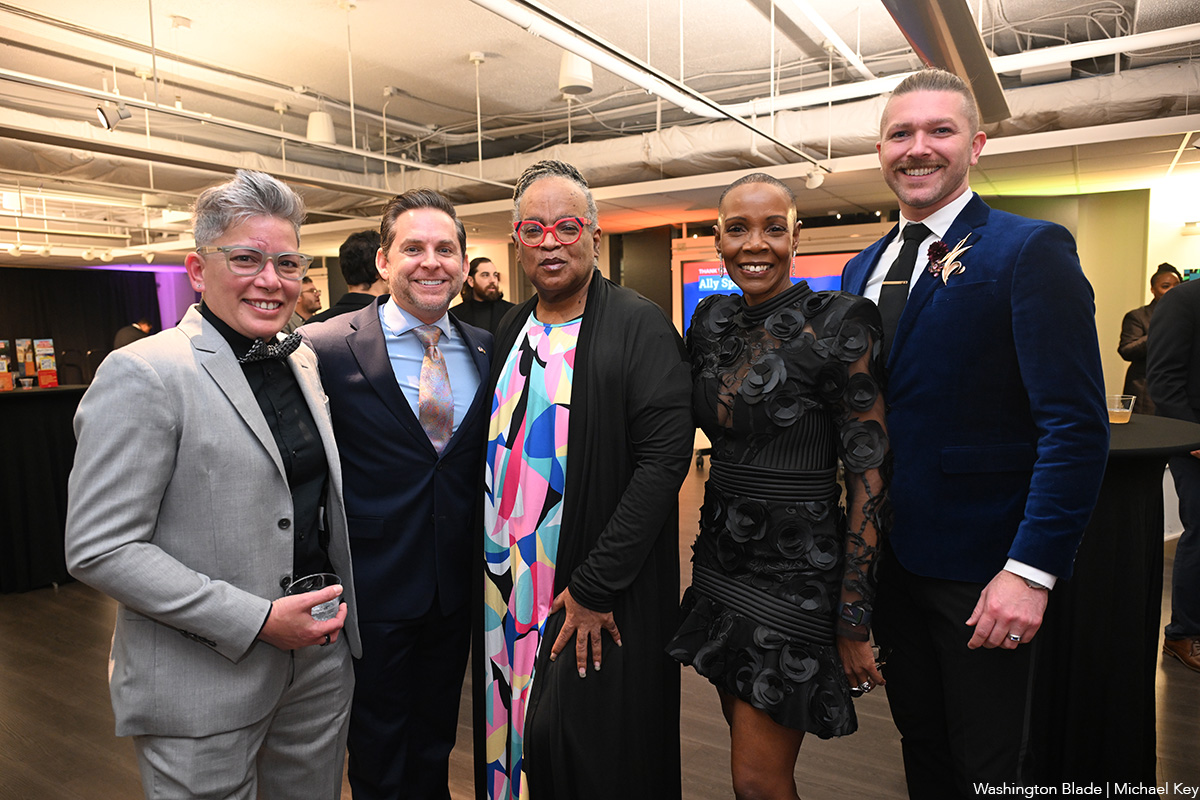
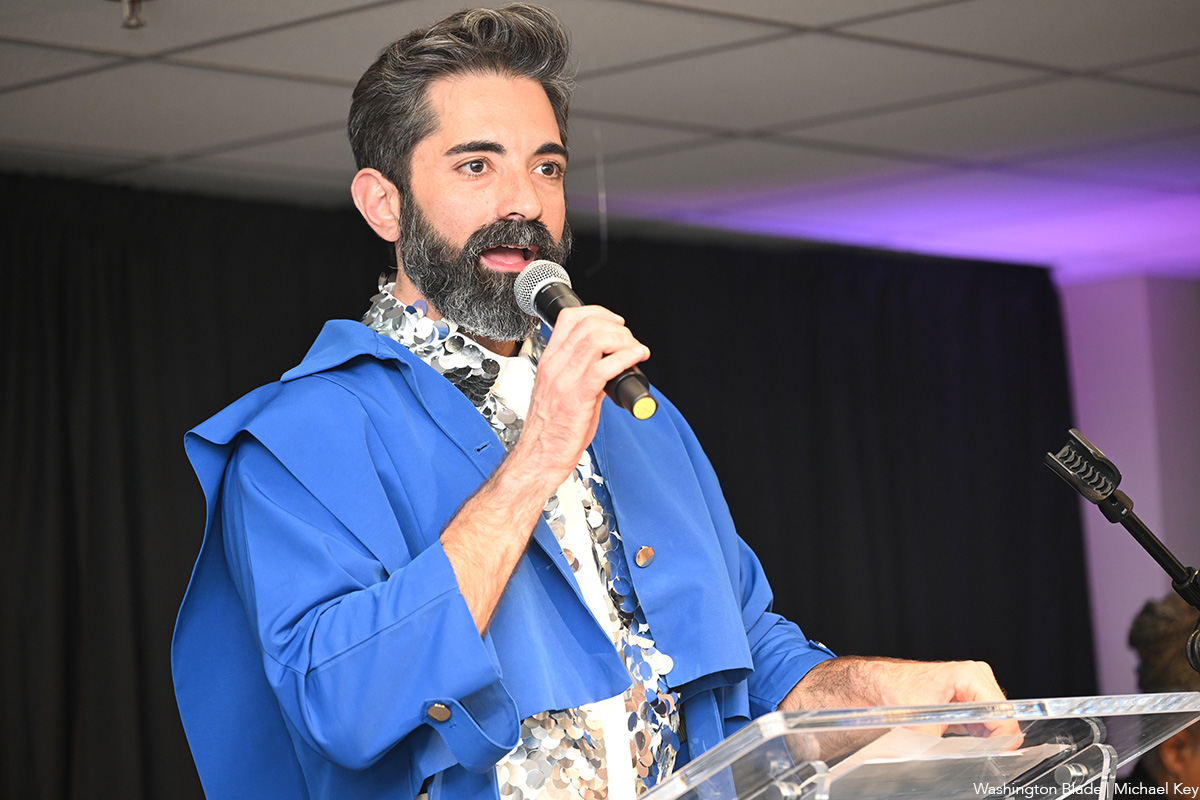
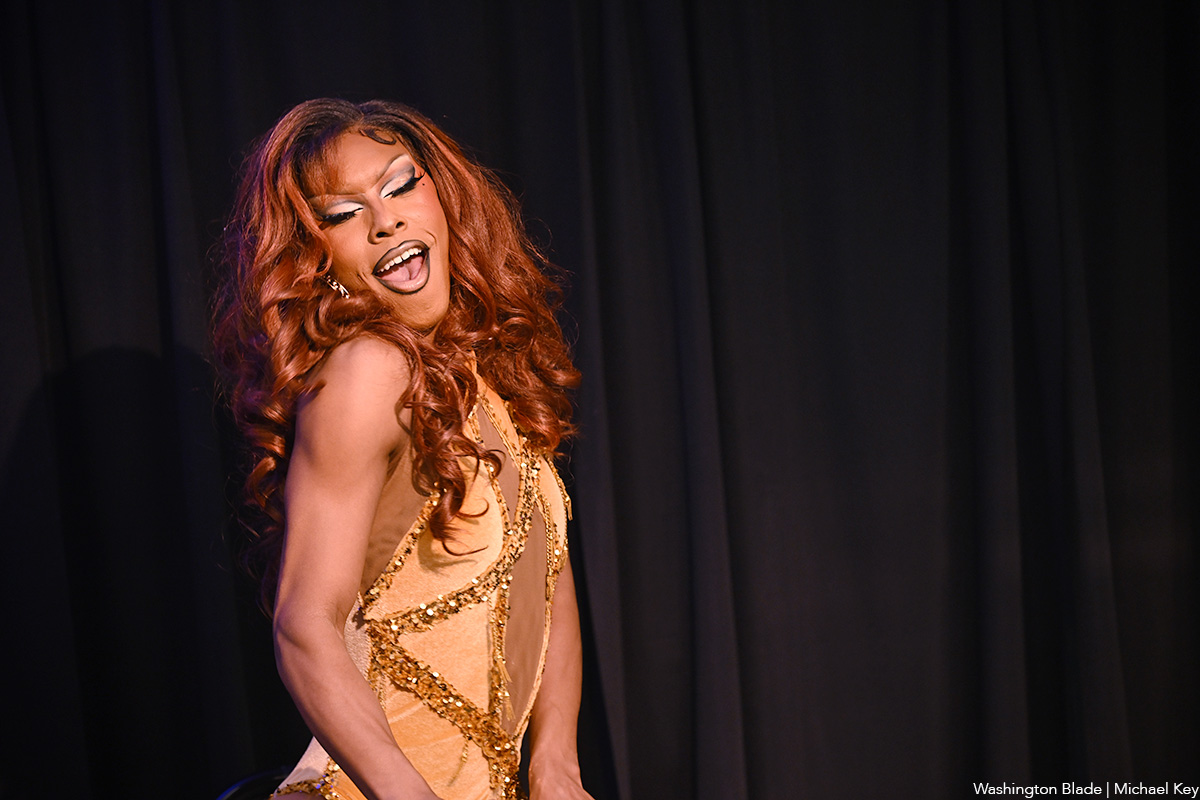
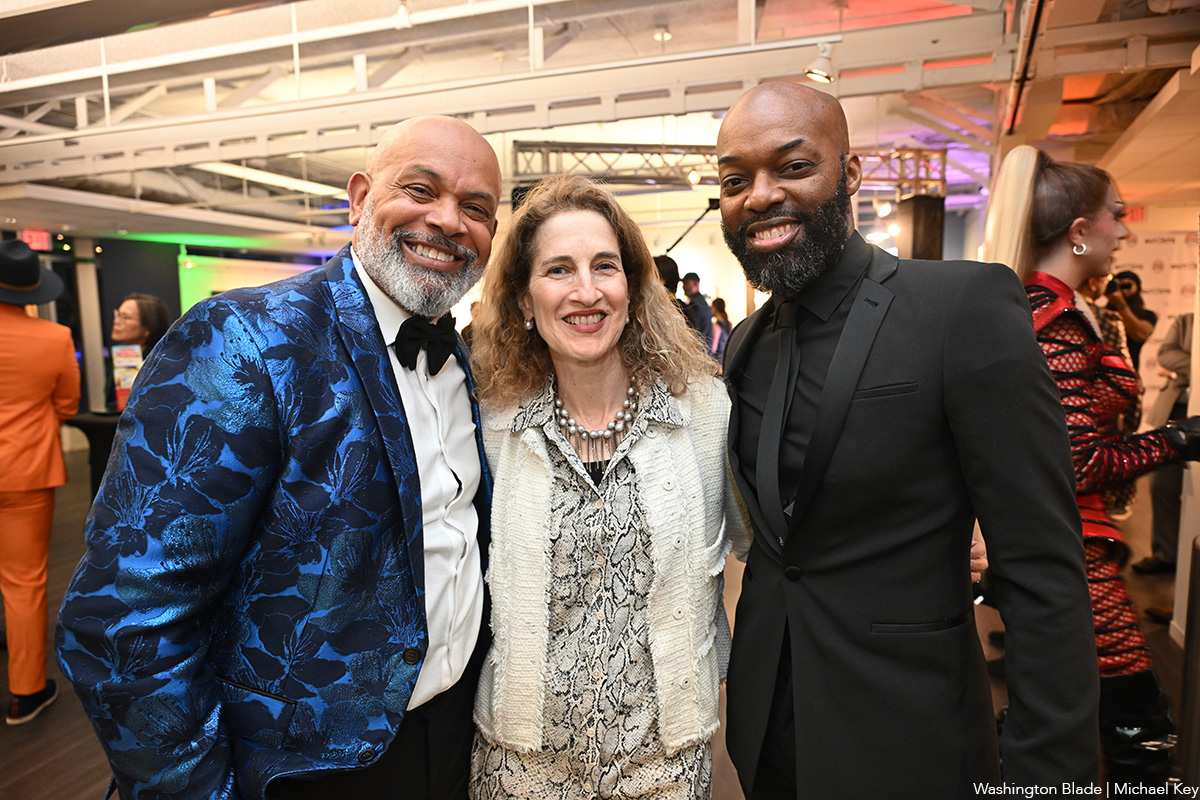
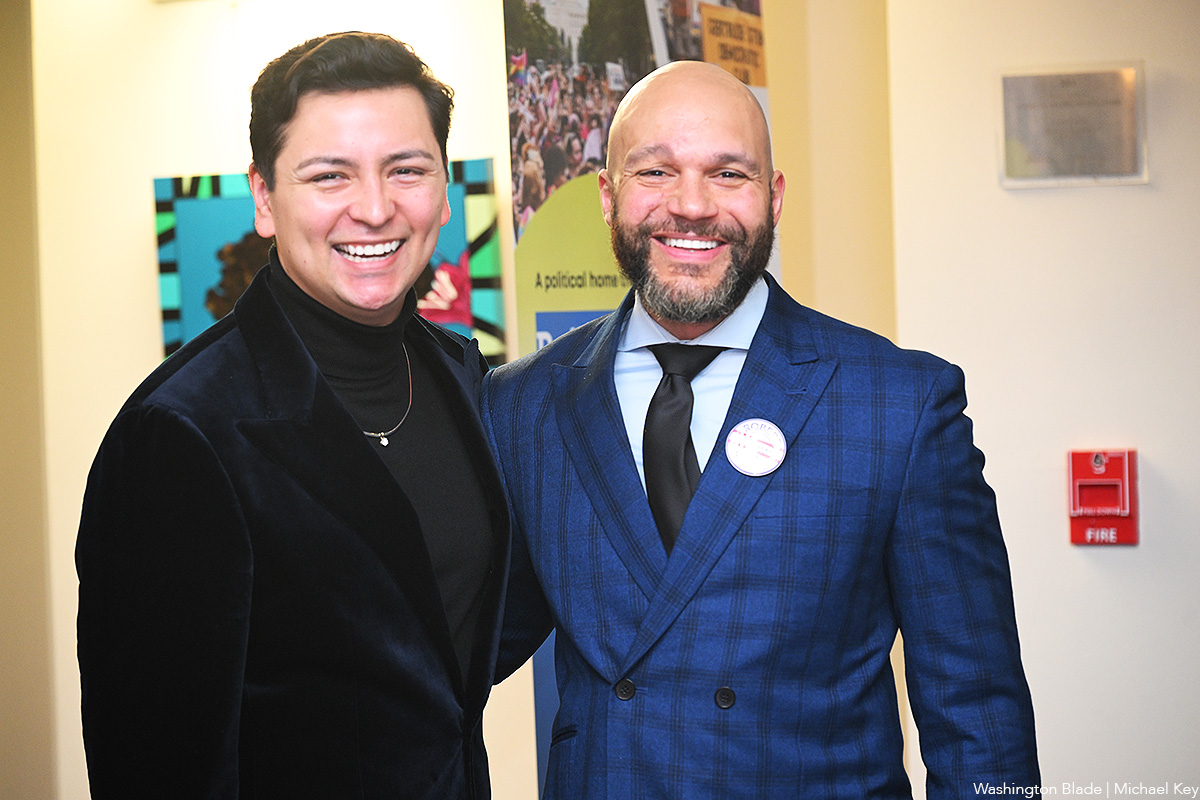
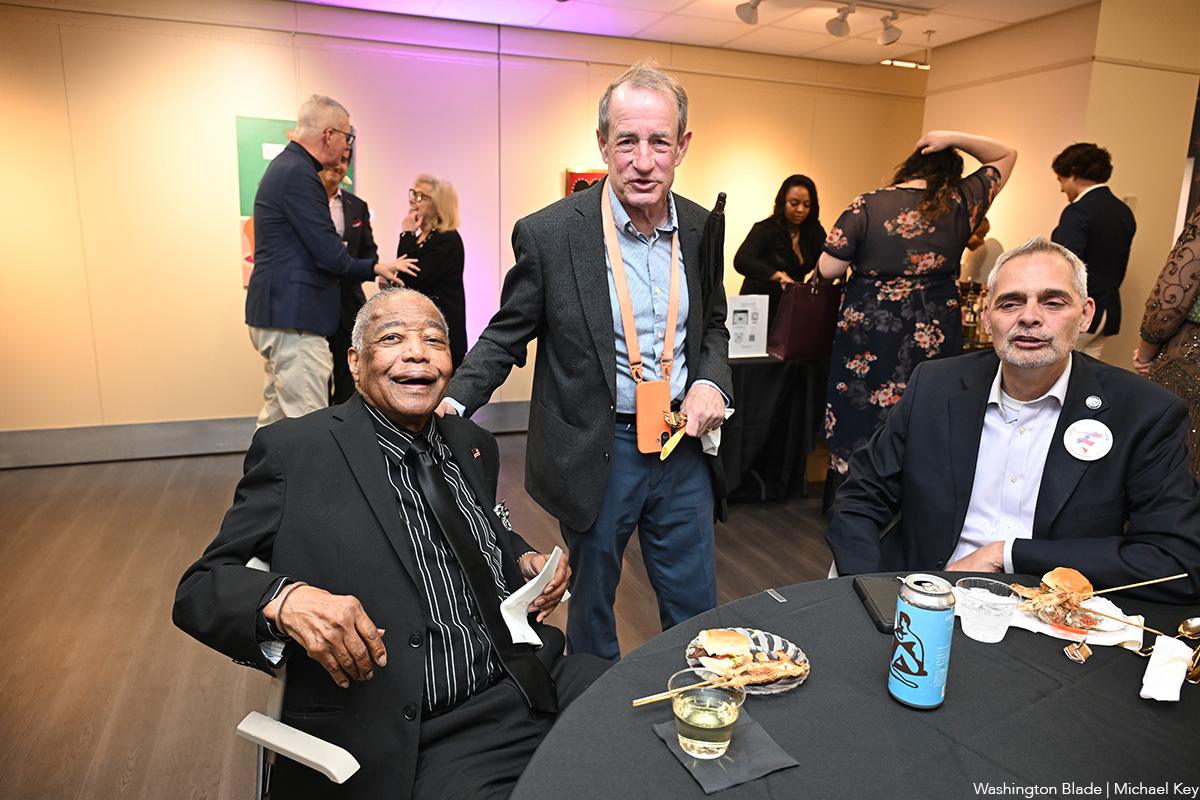
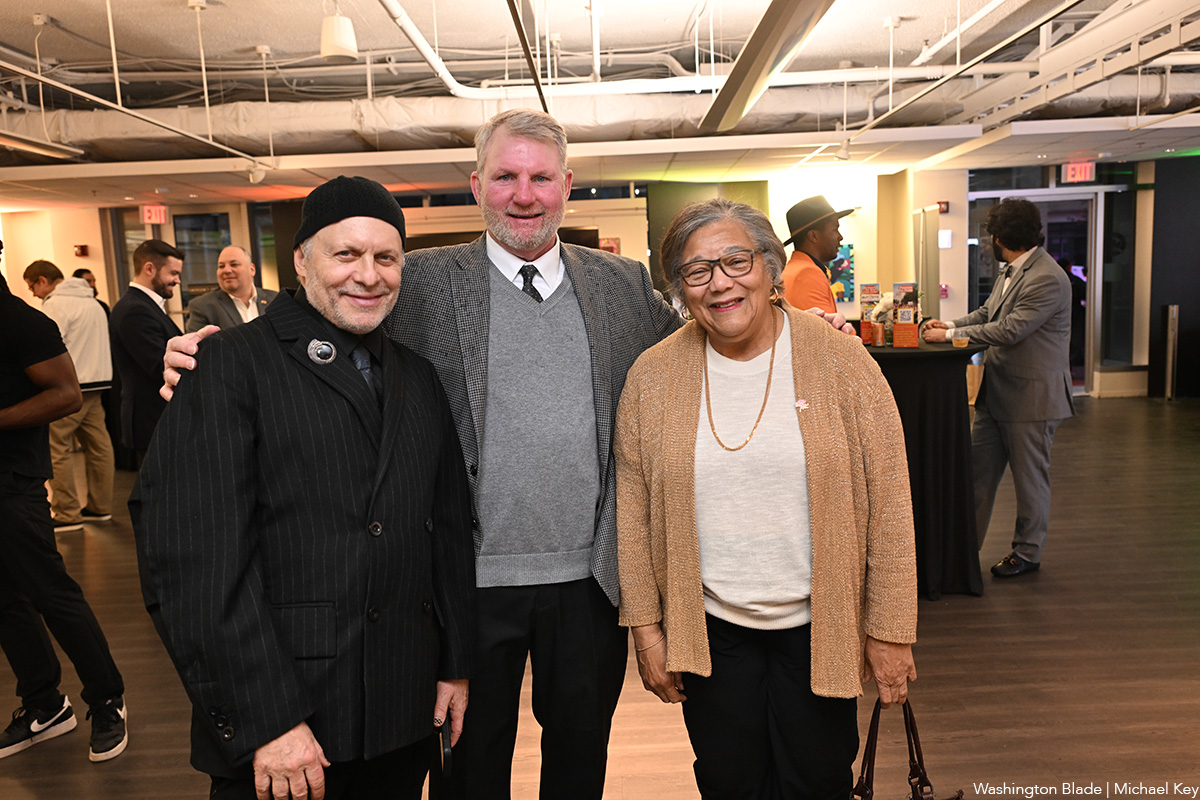
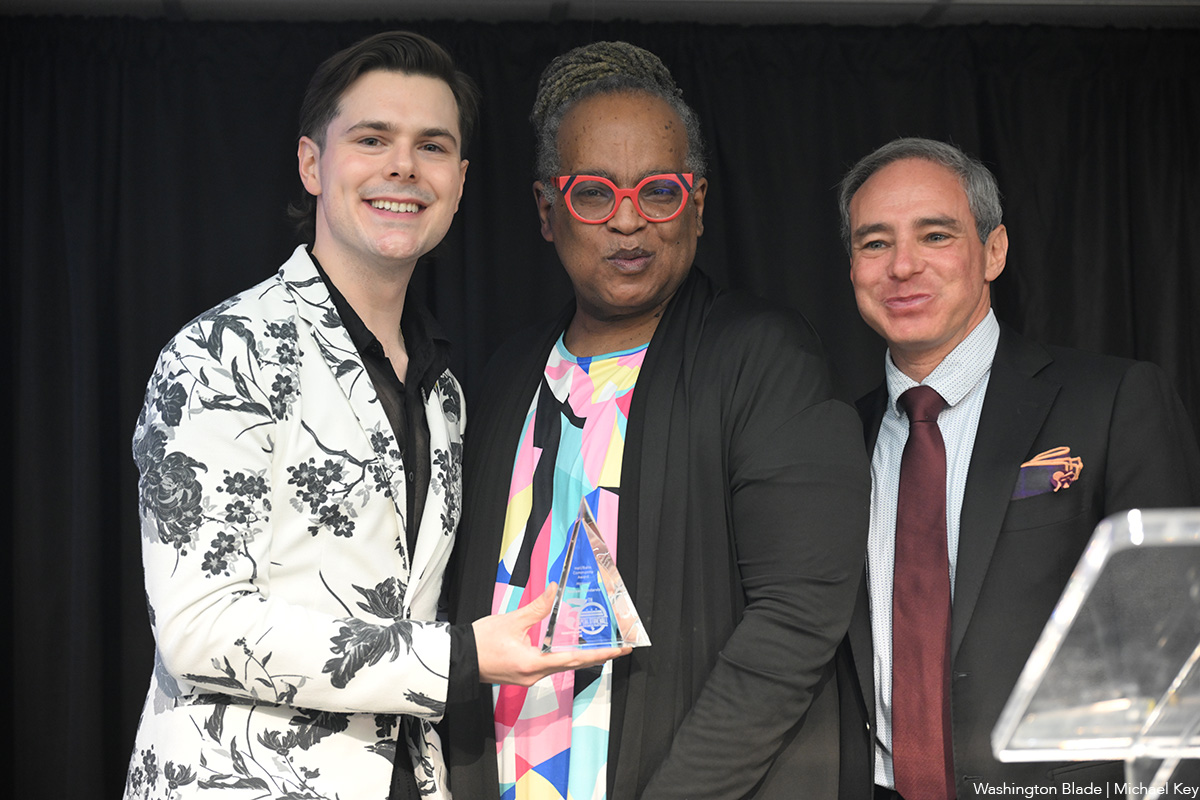
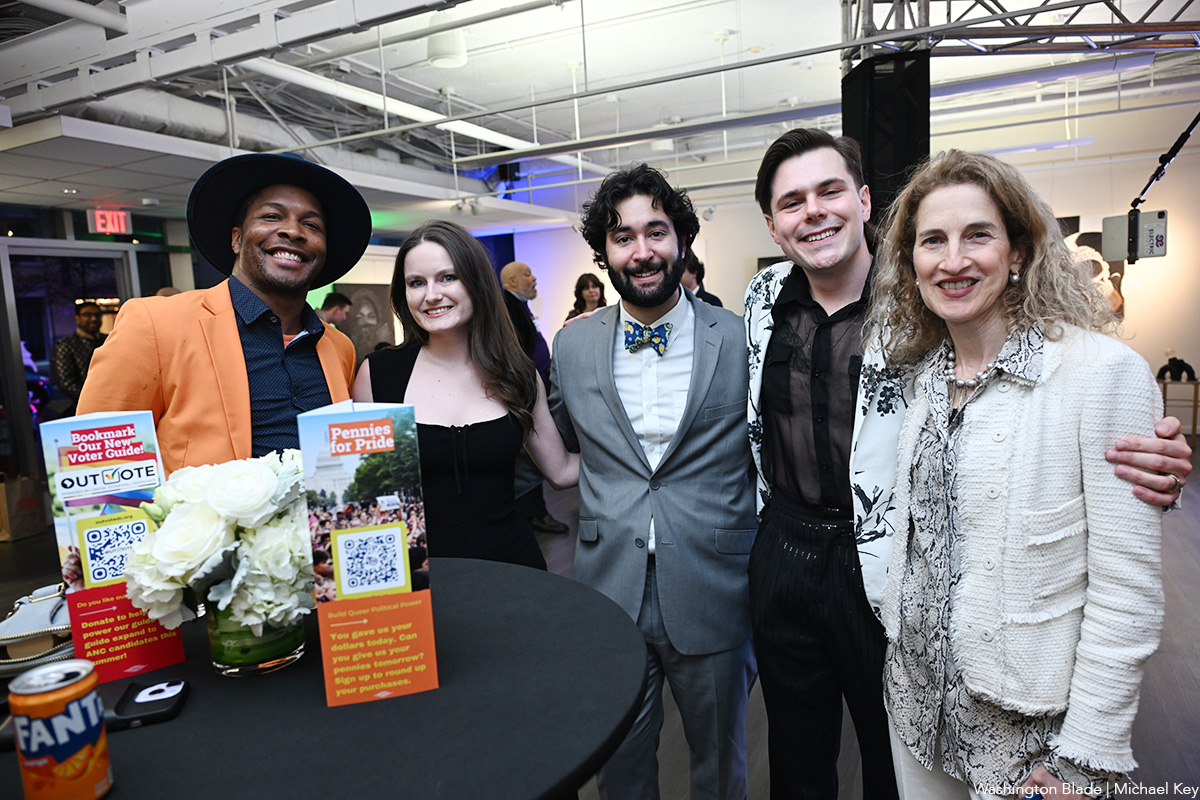
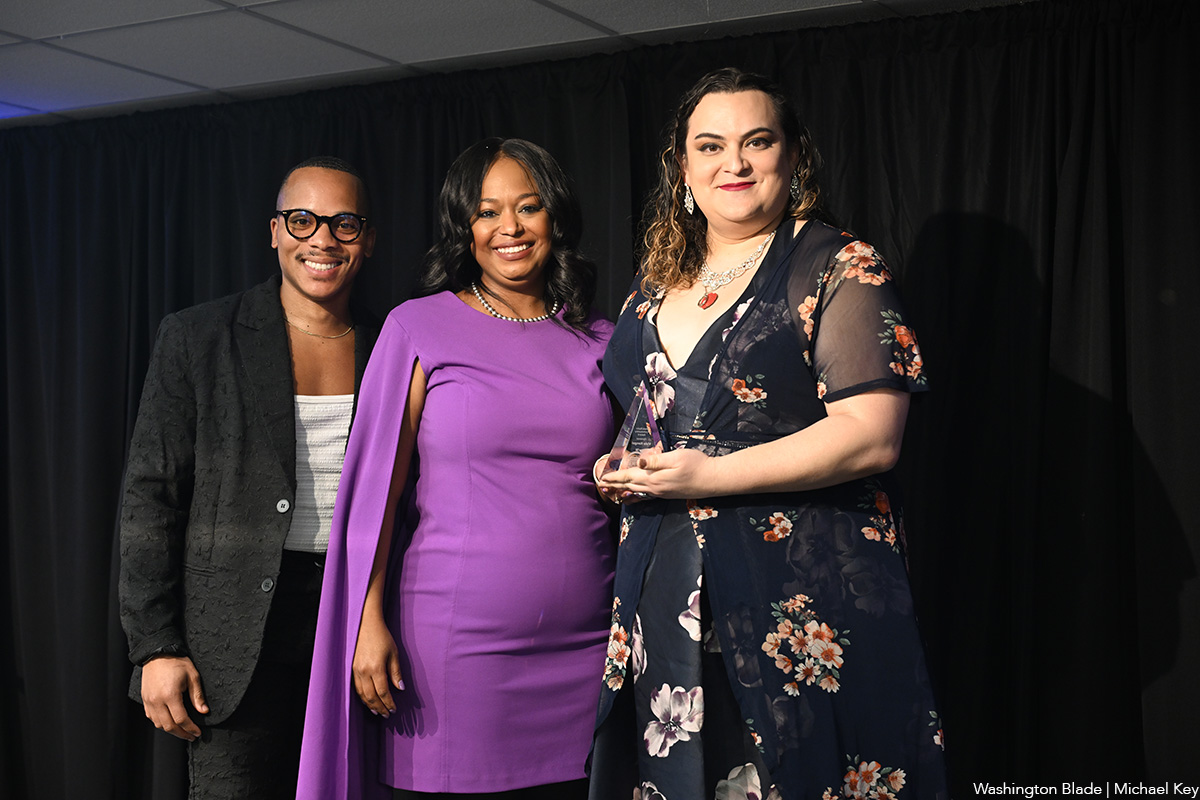
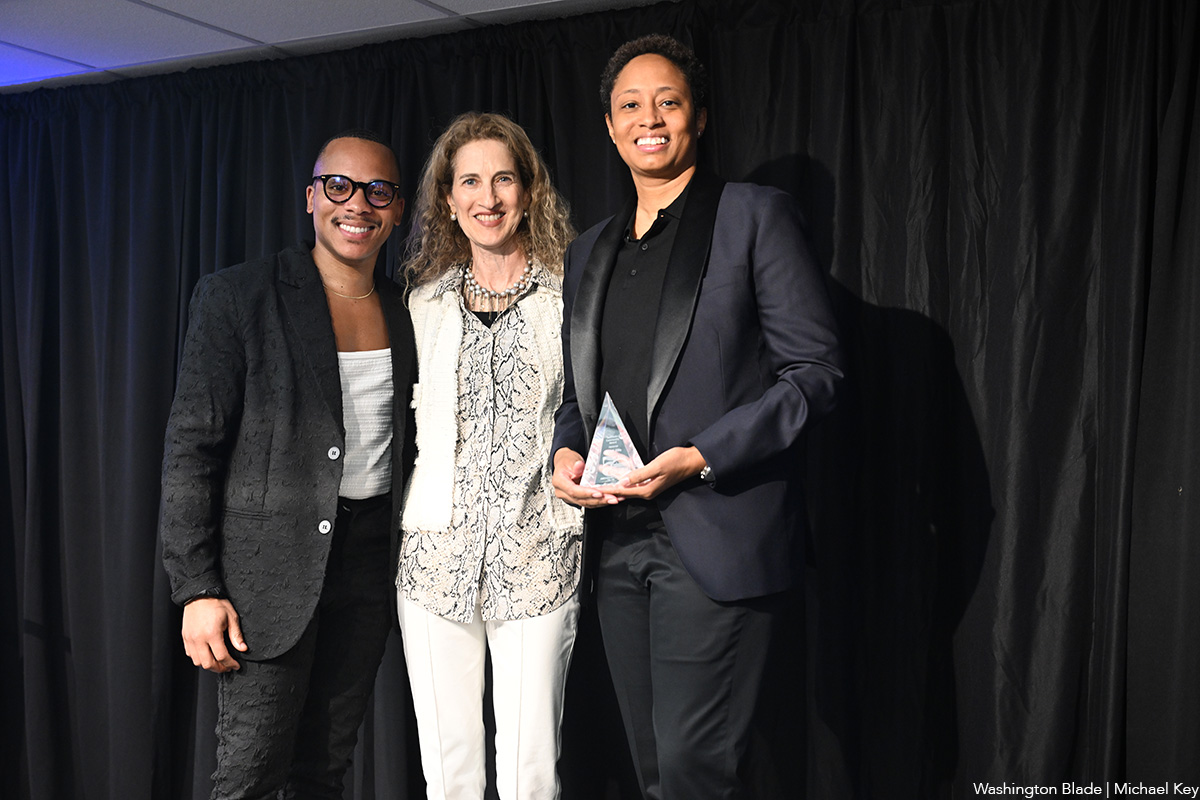
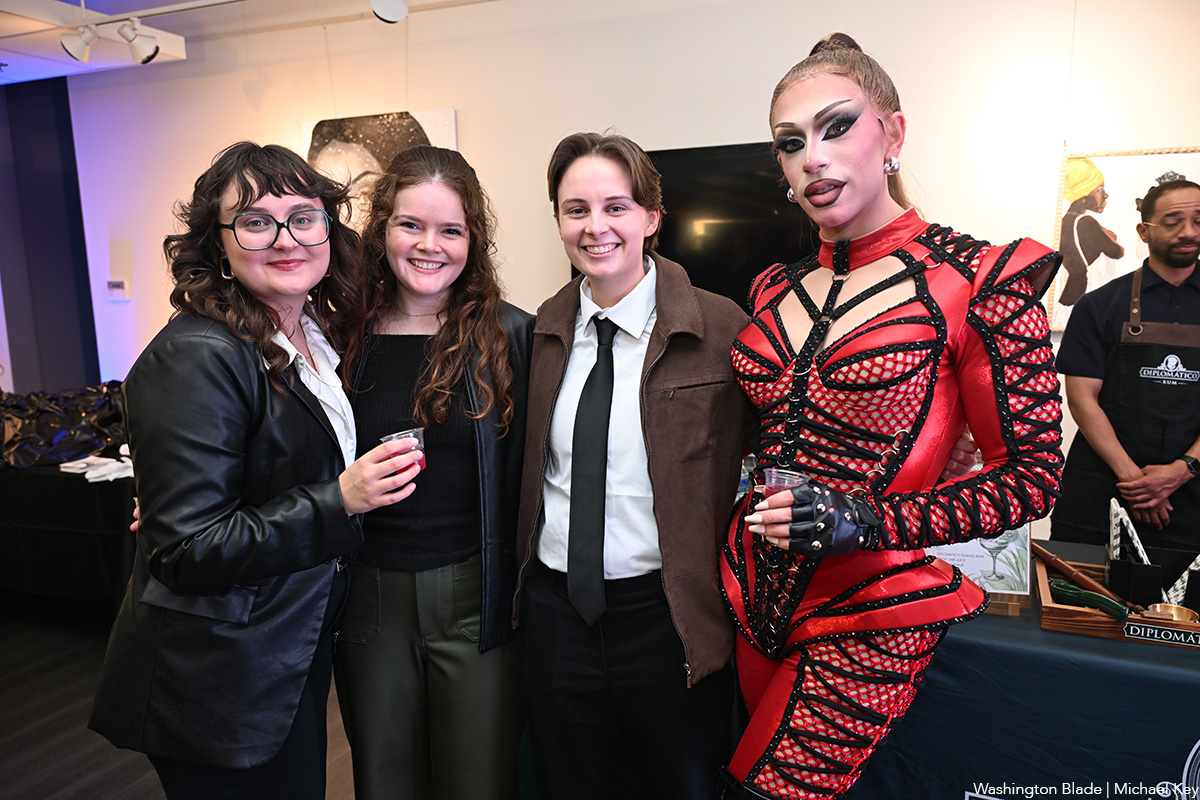
PHOTOS: Capital Stonewall Democrats 50th anniversary
D.C. LGBTQ political group celebrates milestone at Pepco Edison Place Gallery
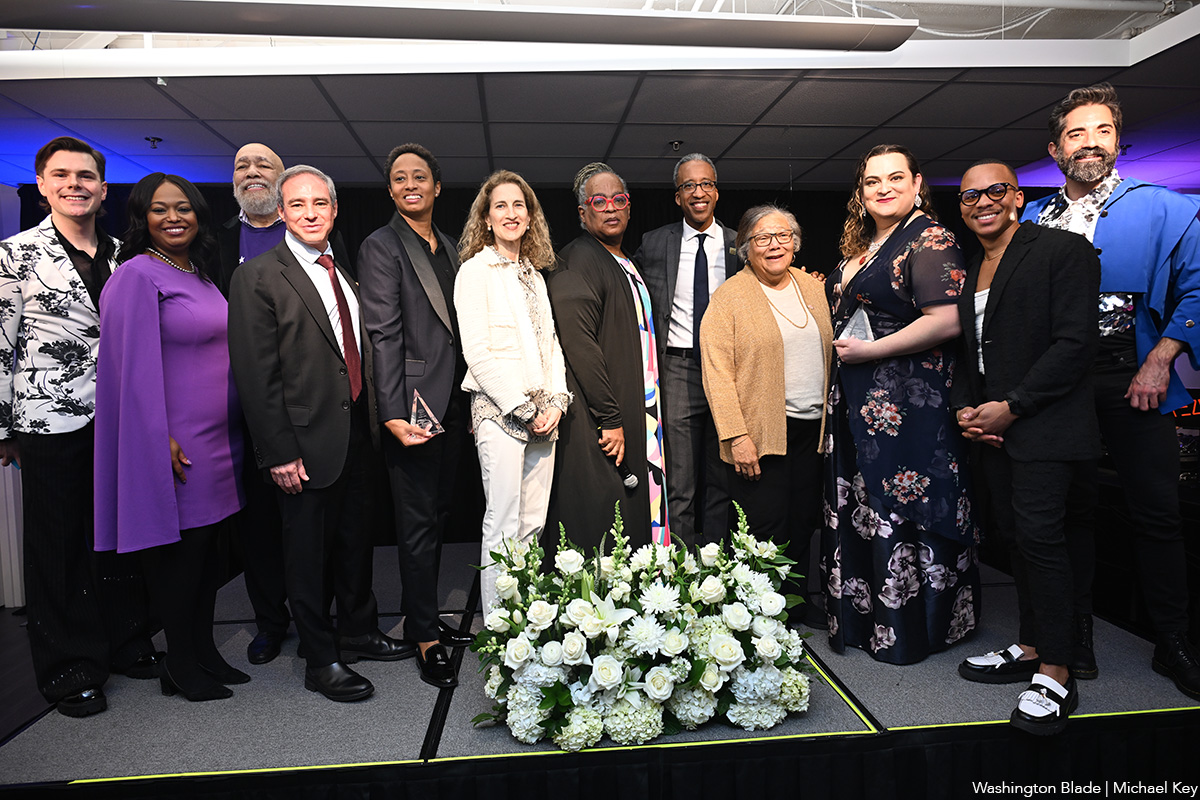
The Capital Stonewall Democrats held a 50th anniversary celebration at Pepco Edison Place Gallery on Friday. Rayceen Pendarvis served as the emcee.
(Washington Blade photos by Michael Key)










Theater
‘Inherit the Wind’ isn’t about science vs. religion, but the right to think
Holly Twyford on new role and importance of listening to different opinions

‘Inherit the Wind’
Through April 5
Arena Stage
1101 Sixth St., S.W.
Tickets start at $73
Arenastage.org
When “Inherit the Wind” premiered on Broadway in 1955 with a cast of 50, its fictional setting of Hillsboro, an obscure country town described as the buckle on the Bible Belt, was filled with townspeople. And now at Arena Stage, director Ryan Guzzo Purcell has somehow crowded Arena’s large Fichandler space with just 10 actors, five principals and a delightful ensemble of five playing multiple roles.
Inspired by the real-life Scopes Monkey Trial of 1925, Jerome Lawrence and Robert E. Lee’s fictionalized work pits intellectual freedom against McCarthyism via the imagined trial of Bertram Cates (Noah Plomgren), a Tennessee educator charged with teaching evolution. Drawn into the fracas are big shot lawyers, defense attorney Henry Drummond (Billy Eugene Jones), and conservative prosecutor, Matthew Harrison Brady (Dakin Matthew). On hand to cover the closely watched story is wisecracking city slicker and Baltimore reporter E.K. Horneck (played by nonbinary actor Alyssa Keegan).
Out actor Holly Twyford, a four-time Helen Hayes Award winner who has appeared in more than 80 Washington area plays, is part of the ensemble. In jeans and boots, she memorably plays Meeker, the bailiff at the Hillsboro courthouse and the jailer responsible for holding Cates in the days leading to his trial.
Twyford also plays Sillers, a slack jawed earnest employee at the local feed store who’s called to serve on the jury. And more importantly she plays Brady’s quietly strong wife Sarah whom he affectionately calls “Mother.”
When Twyford makes her memorable first entrance as Meeker, she’s wiping shaving cream from her face with a hand towel. With shades of Mayberry R.F.D., the jail is run casually. Meeker says Cates isn’t the criminal type, and he’s not.
“There’s a joke among actors,” says Twyford. “When an actor gets his shoes, they know who their character is. And it’s sort of true. When you put on boots, heels, or flip flops, there’s a different feeling, and you walk differently.”
Similarly, shares Twyford, it goes for clothes too: “When Mother slips a pink coat dress over her cowboy boots, dons a little hat and ties her scarf, or Meeker puts on his work shirt, I know where I am. And all of that is thanks to a remarkable wardrobe crew.
“Additionally, some of the ensemble characters are played broadly which is helpful to the actors and super identifying for the audience too.”
During intermission, an audience member loudly described the production as “a proper play” filled with beautifully written passages. And it’s true. Twyford agrees, adding “That’s all true, and it’s also been was fun for us to be a part of the Arena legacy as well. Arena took ‘Inherit the Wind’ to the Soviet Union in the early ‘70s when the respective governments did a cultural exchange. At the time, the iron curtain was very much in place, and they traveled with a play about a man with his own thoughts.”
When the ensemble was cast, actors didn’t know which tracts exactly they were going to play. “What came together was a cast, diverse in different ways. Some directors, including myself when I direct, are interested in assembling a cast that’s a good group. No time for egos. It’s more about who will make the best group to help me tell this story.”
At one point during rehearsal, ensemble members began to help one another with minor onstage costume changes, like jackets and hats: “We just started doing it and Ryan [Guzzo Purcell] picked up on it, saying things really began to come alive when we helped each other, so we went with that.”
“For me, it was reminiscent of ‘The Laramie Project’ [Ford’s Theatre in 2013] when we played five different parts and we’d help each other with a vest or jacket in a similar way. It worked so well then too,” says Twyford.
“Inherit the Wind” isn’t about science versus religion. It’s about the right to think, playwright Jerome Lawrrence has been quoted as saying. And it’s a quote that makes the play that much more relevant today.
Twford remembers a chat in a hair salon: “I was getting my hair cut and the woman next to me shared that she was tired of message plays. Understandably there are theater makers who believe that message plays are the point, while others think it’s all about entertainment. I feel like ‘Inherit the Wind’ sits in a nice place in the middle.”
She adds “the work is a creative way of showing different opinions and that, I think, is what we should be paying attention to right now. Clearly, it’s not right or wrong to express what you think.”
Out & About
‘How We Survived’ panel set for March 25
‘Living History’ discussion to be held at Spark Social
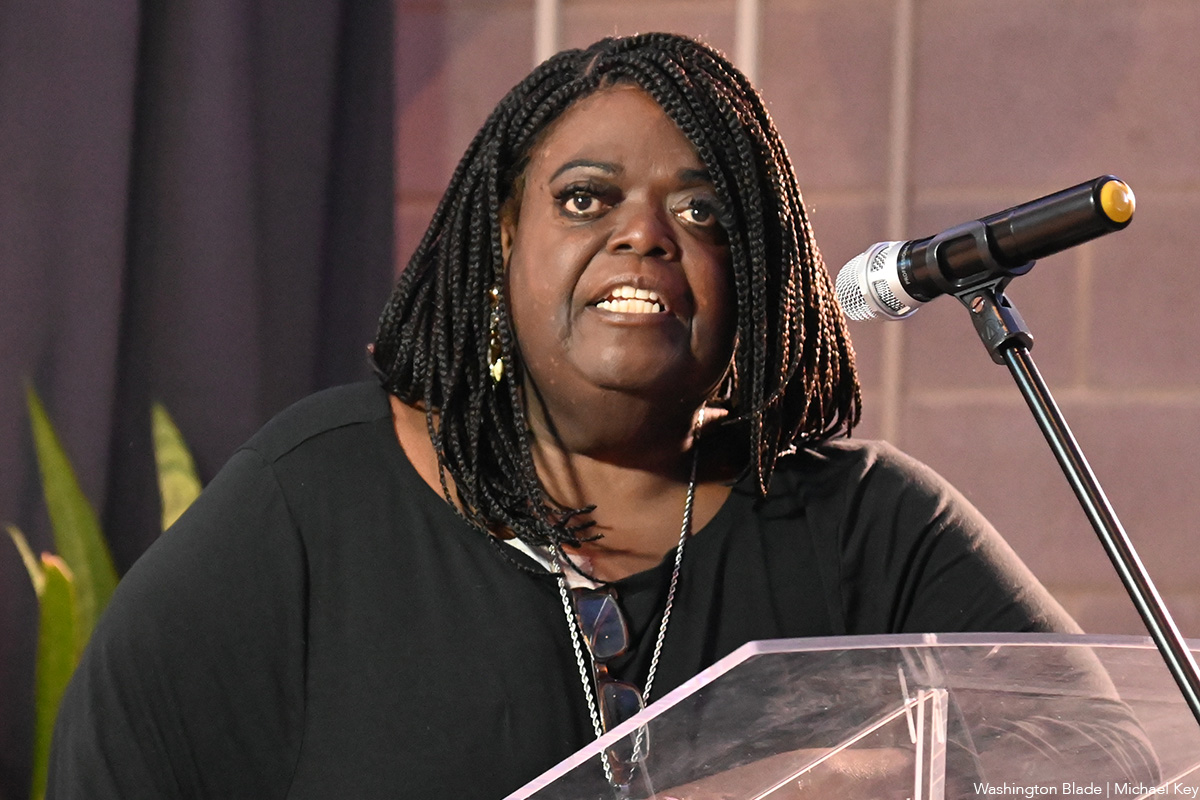
Friends of Dorothy Cafe will host “Part One, Living History: How We Survived,” will take place on Wednesday, March 25 at 7:30 p.m. at Spark Social House.
This event will be moderated by Abby Stuckrath, host of the “Queering the District” podcast. Panelists include: Earline Budd, activist, trans rights advocate; TJ Flavell of Go Gay DC; DC LGBTQ+ Center Board Member David Bissette; and Alexa Rodriguez, founder and executive director, Trans-Latinx DMV.
This event is part of a four-part storytelling series called “Living History,” which centers LGBTQ elders, activists, artists, and icons sharing their lived experiences and reflections with younger generations. The conversations explore themes like resilience, community organizing, chosen family, and the lessons earlier generations hope today’s LGBTQ+ and ally communities will carry forward.

Polish court rules country must recognize same-sex marriages from EU states

Capital Stonewall Democrats 50th anniversary gala draws ‘sold out’ crowd

PHOTOS: Capital Stonewall Democrats 50th anniversary

Small is beautiful: subcompact SUVs

‘Inherit the Wind’ isn’t about science vs. religion, but the right to think

SAVE Act could silence millions of trans voters

The frightening rise of antisemitism, Islamophobia

‘It’s Dorothy’ traces lasting influence of a cultural icon
Protesters say SAVE Act targets voters, transgender youth