Local
O’Malley says marriage bill brings dignity, religious freedom
LGBT advocates, clergy, labor leaders join governor in launching campaign to pass bill
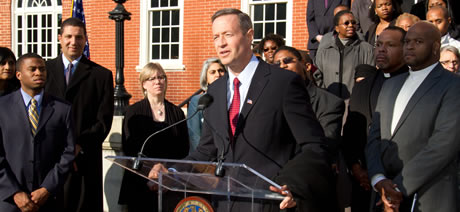
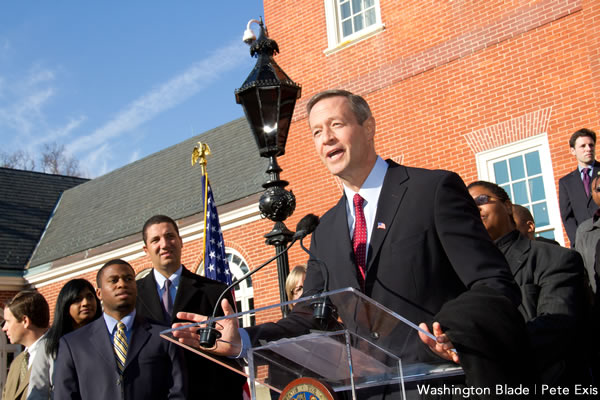
Gov. Martin O’Malley on the steps of the governor’s residence in Annapolis, Maryland (Washington Blade photo by Pete Exis)
At a gathering on the steps of the governor’s residence in Annapolis, Maryland Gov. Martin O’Malley on Tuesday called on the state’s residents and lawmakers to join him in supporting his newly drafted same-sex marriage bill.
With about 50 supporters of the bill standing behind him, including same-sex couples, clergy members, and state labor leaders, O’Malley said the bill provides a proper balance between “equal protection under the law” and “religious freedom.”
His remarks came on the day after he officially introduced the Civil Marriage Protection Act into the Maryland General Assembly and minutes after he hosted a breakfast in the governor’s residence for representatives of the coalition of organizations and clergy backing the bill.
“There is a broad coalition, and many are arrayed on the steps here with me, and they are all supportive of the bill I introduced last night on civil marriage equality in the state of Maryland,” he said.
“All of us want the same thing for our children. Marylanders of different religious beliefs, Marylanders of all walks of life all want the same thing for our children. We want our children to live in loving, stable, committed households that are protected equally under the law,” he said.
Anticipating what political observers in the state capital expect to be an aggressive campaign to oppose the bill by religious groups, including leaders the Catholic Archdiocese of Maryland, O’Malley stressed that his bill provides expanded protections for religious institutions and people of faith.
“We also believe that we can protect religious freedom and rights equally under the law,” he said. “Other states have found a way to do this. We can find a way to do this too. And that common ground that allows us to move forward is dignity — the human dignity of every single person,” he said.
Among those who spoke at the gathering in addition to O’Malley were Rev. Starlene Joyner Burns, founder of a Christian ministry in Bowie, Md.; Ezekiel Jackson, an official with the Service Employees International Union Local 1199 of Maryland; and State Senator Rich Madaleno (D-Montgomery County, one of seven out gay members of the General Assembly.
Also speaking were O’Brian Banner, 28, and Daryl Fields, 27, who identified themselves as a gay couple from New Carrollton, Md., near D.C., who hope to marry in their home state.
“We’ve been together for five years,” Banner said. “We moved here two years ago from North Carolina with the hope of a better opportunity.”
Like most other couples, Banner said, he and his partner would like to realize “the American dream – to get married, adopt children, and own a home.”
Others attending the gathering included out gay House of Delegate members Luke Clippinger (D-Baltimore), Heather Mizeur (D-Montgomery County), Mary Washington (D-Baltimore), and Peter Murphy (D-Charles County).
Mizeur called O’Malley’s strong support for the same-sex marriage bill a “tremendous” development that would greatly increase the bill’s prospects for passing.
Also in attendance was Sister Jeannine Gramick, co-founder of the Mt. Rainier, Md., based New Ways Ministry, an LGBT supportive Catholic organization. Gramick said opposition to the same-sex marriage bill by Catholic Church officials in Maryland would be offset by support for same-sex marriage rights and LGBT equality by a “solid majority” of rank and file Catholics in Maryland.
“The momentum is growing and there’s a lot of hard work to do,” said O’Malley, in assessing the bill’s chances of passage in the legislature’s 90-day legislative session. “But we are going to be successful in this legislative session.”
Sultan Shakir, campaign manager for Marylanders for Marriage Equality, the coalition of LGBT, civil rights, labor, and religious groups leading the effort to pass the bill, said he expects both the State Senate and House of Delegates to vote on the bill before the end of February.
He noted the Senate Judicial Proceedings Committee is scheduled to hold a public hearing on the bill on Jan. 31. Shakir and Madaleno said the committee is expected to vote to send the bill to the full Senate shortly after the hearing and a Senate vote could take place within a week or two.
“We have the votes to pass it in the Senate,” said Madaleno.
Once cleared by the full Senate, which approved the bill last year, Shakir said it will go to the House of Delegates, which he expects to vote on the measure sometime before the end of February.
“All of us are engaging in on-the-ground efforts to move hearts on this issue and to generate votes when we get to the House of Delegates,” said Mizeur, one of the lead sponsors of the bill in the House.
“And we know it’s going to be a challenge again,” she said. “No one is taking this for granted. It’s not a done deal. But we definitely feel like it’s Maryland’s moment and we’re going to make this happen.”
The bill died in the House of Delegates last year when supporters determined they didn’t have the votes to pass it and voted to send it back to committee.
With O’Malley’s changes this year that he says have strengthened the bill’s “religious liberties” provisions, supporters say they are hopeful several House members who declined to support the measure last year will help to pass it this year.
When asked at the news conference what he sees as the main difference between last year’s bill and this year’s measure, O’Malley said, “The protections of religious liberty are more explicit in this bill.”
He added, “In fact, they may be more explicit in the bill than they had been in any other bills around the country. I know that our legislative team was drawing upon the experience in other states that have passed this measure and they found a way to protect rights equally while also protecting religious liberties.”
Sen. Jamie Raskin (D-Montgomery County), one of the lead sponsors of the bill, said he was studying the bill’s new wording when contacted by the Blade Tuesday afternoon.
Raskin, an American University law professor, said O’Malley’s version of the bill appears to have added to a provision he and members of the Senate Judicial Proceedings committee put in the bill last year in an effort to accommodate religious organizations and churches.
The provision allows organizations like the Catholic group Knights of Columbus to decline to provide public accommodations such as rental of a hall for a gay wedding, Raskin said.
“Arguably under current law the Knights of Columbus hall has to be open to everyone if it is a place of public accommodation,” he said. “So there was a small sacrifice in public accommodations law to bend over backwards to accommodate religiously oriented institutions. It has not gone much further than that.”
Raskin added, “We haven’t entered into an examination yet into what the governor’s bill means. But I don’t think it goes much further than that. And I think the marriage equality side can swallow our misgivings on that because we’re trading it for a long overdue vindication of everybody’s right to participate in institutional marriage.”
The anti-gay National Organization for Marriage, which lobbies against same-sex marriage laws throughout the country, has rejected the type of compromise language described by Raskin, saying same-sex marriage laws are unacceptable regardless of whether they include religious exemption provisions.
NOM President Brian Brown has said his organization works to defeat any lawmakers that vote for same-sex marriage because marriage must be “preserved” as a union only between a man and a woman.

Rehoboth Beach
SUNFESTIVAL takes center stage as Rehoboth Beach closes out summer
Labor Day Weekend bustling with events, including David Archuleta performance

Labor Day Weekend marks the unofficial end of summer in Rehoboth Beach, but there will be no shortage of LGBTQ events, with CAMP Rehoboth’s annual SUNFESTIVAL taking over town this weekend.
Thursday (9/3)
Get your Labor Day Weekend started early Thursday night with happy hour from 5-7 p.m. at Diego’s Bar & Nightclub, followed by Naughtee Bingo hosted by Magnolia Applebottom at 8:30 p.m.
After bingo, the party continues with Dancing at Diego’s from 9 p.m. to 1:30 a.m.
Aqua Bar & Grill will also kick off its Labor Day Weekend festivities Thursday with a DJ spinning from 9 p.m.-1 a.m.
Friday (9/4)
The weekend ramps up Friday night at Aqua, where DJ Matt Bailer will keep the dance floor moving from 9 p.m.-1 a.m.
Over at Diego’s, DJ Steve Sidewalk will then take over Diego’s for Freedom Friday from 9 p.m.-1:30 a.m.
Saturday (9/5)
The main event of the weekend arrives Saturday with the opening night of CAMP Rehoboth’s SUNFESTIVAL.
Billed as the ultimate party to close out the summer, SUNFESTIVAL has become one of Rehoboth’s signature Labor Day Weekend events. The annual celebration sells out each year, with proceeds benefiting CAMP Rehoboth.
Doors open at 6:30 p.m. with refreshments available at the cash bar while attendees are invited to socialize and find their seats.
Saturday night will feature local singer Ashley Williams as the opening performer, followed by headliner David Archuleta. The event will also feature a live auction.
Back across town Saturday, Aqua will continue its Labor Day Weekend DJ lineup from 9 p.m. to 1 a.m.
Diego’s will also have plenty happening, with ‘Splash Party’ hosted by Magnolia Applebottom at 5 p.m., followed by a Saturday Dance Party with Brett Oosterhaus from 9 p.m.- 1:30 a.m.
The Blue Moon hosts its popular Legends Show at 9 p.m. It’s an all-live singing show by the Blue Moon cast of celebrity impersonators.
Etienne Pilon has taken Rehoboth by storm this summer. Check out the talented singer/pianist at The Pines from 7-10 p.m.
Sunday (9/6)
Sunday’s SUNFESTIVAL event will shift the focus to the dance floor, with globally renowned DJs Robbie Leslie and James Anthony scheduled to perform. Doors open at 7 p.m., with dancing continuing until 1 a.m.
On Sunday, Aqua will throw its annual White Party, with DJs spinning from 9 p.m.-1 a.m. Guests are encouraged to dress in white for the holiday weekend celebration.
Diego’s will host its Sunday High T-Dance with Pamala Stanley at 5 p.m. Later that evening, DJ Tannr will be spinning at 9 p.m.
John Flynn is on the piano from 6-8 p.m. at the Blue Moon.
Monday (9/7)
The final day of Labor Day Weekend brings one last chance to hit the dance floor before summer officially winds down.
Aqua will close out its five-day Labor Day Weekend celebration with DJ Biff from 3-7 p.m.
Maryland
Anne Arundel schools now need parent permission to call trans students by preferred names
Conservative groups challenged system’s policy
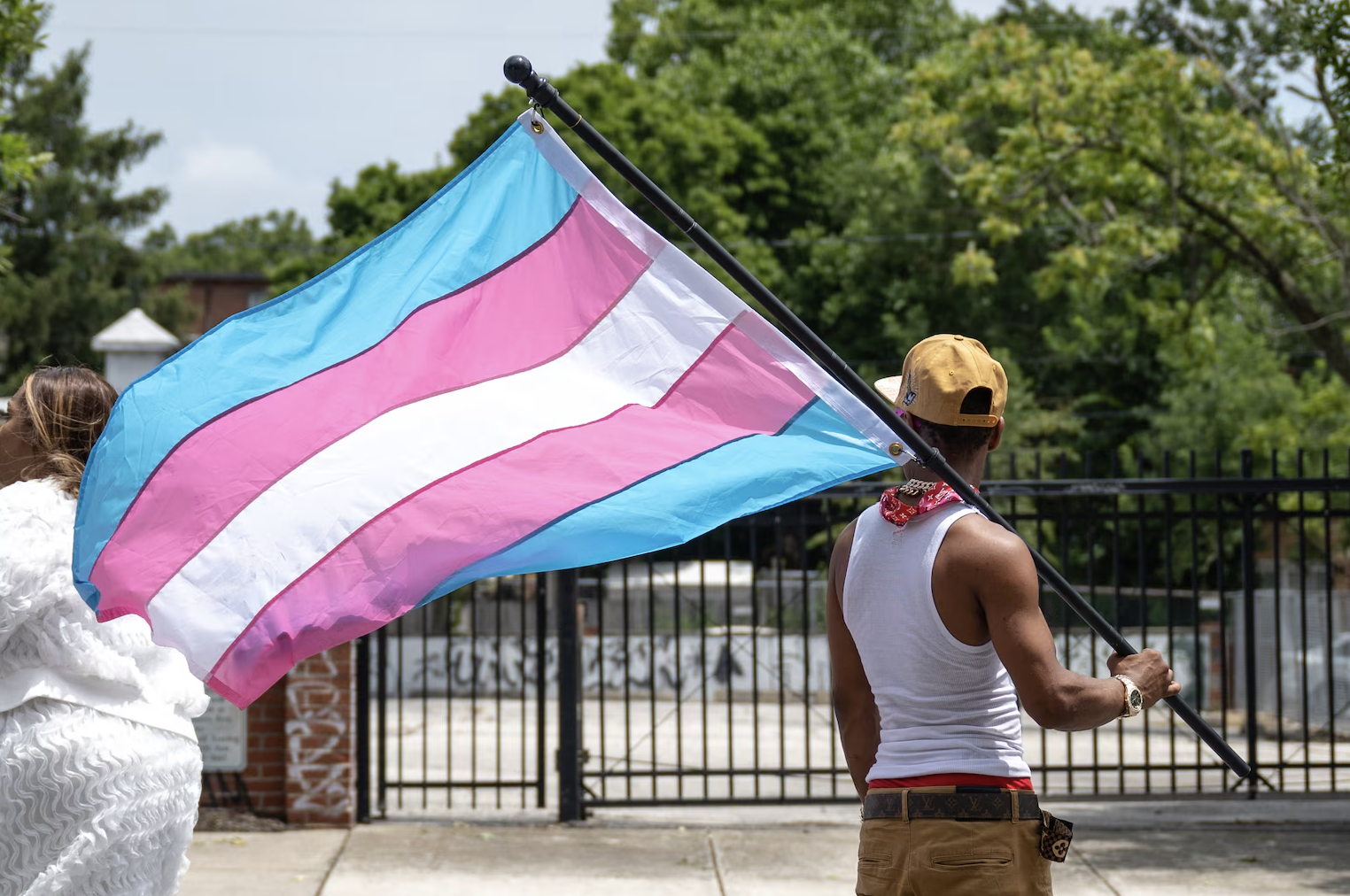
By JESSICA CALEFATI | Anne Arundel County Public Schools staff cannot use transgender students’ preferred names if their parents oppose it, according to an internal document reviewed by the Banner, a change that comes after conservative groups challenged the school system’s approach to gender identity.
Teachers union president Kristina Korona told members in an Aug. 20 email that the new guidance undermines district policy on acceptance and inclusivity and “will begin harming affected students immediately.”
Previously, the district didn’t require parental permission to use a high school student’s chosen name and pronouns corresponding to their gender identity, the internal document says. Now it does. The change comes as parents challenge the suburban school system’s gender identity policy and regulation in court and the Trump-Vance administration threatens the district’s funding.
The rest of this article can be found on the Baltimore Banner’s website.
District of Columbia
‘People don’t see me. They see a trend’
New popularity of all things Asian warps view of multiple cultures
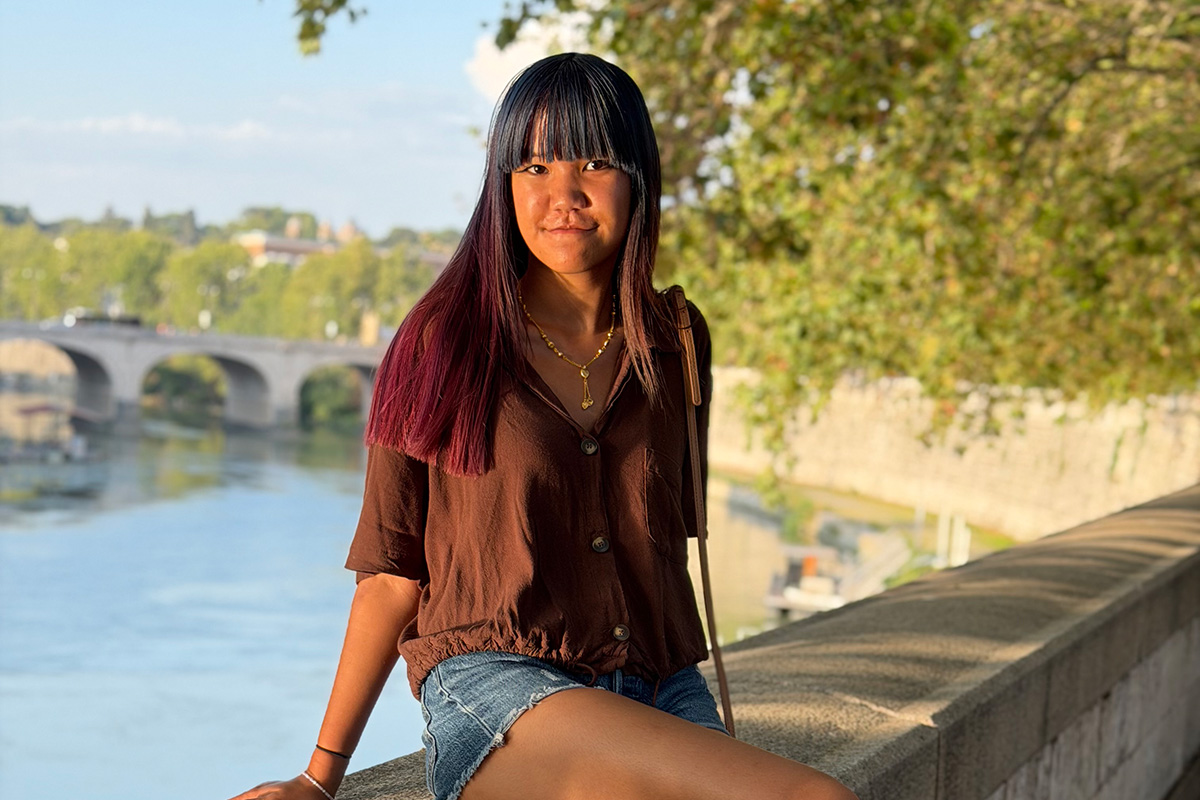
As I was growing up, my parents often shared stories about how they were bullied when they were my age, just for being Asian. My mom is Cambodian and my dad is “Wasian,” Chinese and white. Students teased them for their looks, their homemade lunches, and treated their traditional holidays as jokes.
I once asked my mom when I was little if she could pack me dumpling leftovers for lunch. “Yes,” she said with a surprised look, adding, “I would have never wanted to bring dumplings to school when I was your age because I would always get bullied for them. I’m glad times have changed.”
At the time, I was confused. Whenever I brought a homemade Asian dish to school for lunch, I was happy to hear intriguing and curious questions from the other kids. It felt good to have my meal be popular and different from the Lunchables everyone else had.
Though times have changed, racism still continues. It just has a new face. Today, social media pretends to flatter our cultures in an insincere way trying to gain popularity just for clicks. Think anything from K-pop to Japan’s surge in international tourism. Even Starbucks has added drinks with the flavor of ube yam, native to the Philippines, onto its menu.
I feel that now when people see me, they don’t see me, they see a trend.
For years, Asian people have been portrayed as foreign or exotic. The new embrace of foods and fashion at first felt good. Asians have never been represented as much as they’ve deserved.
But this new popularity warps what non-Asians see. Instead of the blunt and direct racism my parents faced, everything now is a gray area, more discreetly hidden behind some TikTok video. It actually normalizes racism and stereotypes.
Whitewashing my culture
As a 15-year-old Asian American who lives in D.C., I’ve always been one of the few Asian kids in school; my high school today counts less than 2 percent of students as being of Asian descent. I remember always being called “that one Asian girl” or some slur a kid learned from their parents. Every time I search for something related to Asian culture, such as a recipe or maybe a holiday, it’s always the same thing: some white person whitewashing my culture.
Social media is the main culprit, of course. I realized this when I entered high school and got a phone and was introduced to the internet. That is when I realized how messed up the new stereotypes around Asians are.
One pattern I started to notice was people wanting to be Asian just because it was popular. It was hurtful, patronizing, and annoying. They made assumptions about our race and then only found us “cool” because we were trending. How can people go from hating us or finding us weird, to then only liking us because we’re popular?
There was a trend going around on TikTok called “race change to another” or RCTA. It is this trend of people manifesting certain physical traits to change their appearance in order to change races. According to journalist Emi Tran, writing then as an intern for NBC Digital, the trend started when a white woman wanted to be Japanese. The woman began posting TikTok videos of herself wishing for different features such as monolids. Tran wrote in that 2023 article that “the overwhelming majority of the RCTA community wants to be East Asian.”
People also look up to K-pop culture, idolizing the pop groups pulled together by big entertainment companies. Most people expect all Koreans to be K-pop fans. Korean friends are asked about K-pop all the time even though they are not into the South Korean music genre.
Although I am not South Korean — I am half Cambodian and Chinese — I still get asked, almost like I’m expected, “You’re really into this group, right?” or “Can you tell me how to pronounce this member’s name?”
I was asked even worse questions during COVID-19. Suddenly, discrimination and violence were increasing specifically toward Asians everywhere. Suddenly, almost everyone was blaming Chinese people for spreading and causing COVID-19.
I remember going to school for one of the last times before quarantine had started and hearing kids whisper, “Oh, she’s going to give us the Coronavirus.” President Donald Trump had publicly posted his opinions about the situation on social media, blaming China for the pandemic, even calling it the “Chinese Virus” or the “Wuhan Virus.” According to NPR, anti-Asian hate crimes in U.S. cities surged 149 percent that year.
The topic of Asians in the media has always been complicated. One moment people can hate us for being weird and different and the next we’re suddenly popular and cool for the same reasons.
I feel conflicted on whether I should feel happy that we’re being represented or angry that it’s all for the wrong reason and has the wrong effects.
Lily Brugman is a sophomore at Benjamin Banneker Academic High School, one of Youthcast Media Group’s journalism class partners. She worked with YMG volunteer and Professor Emerita in journalism at American University Amy Eisman on this piece.

PHOTOS: Miss Gay Old Bay

SUNFESTIVAL takes center stage as Rehoboth Beach closes out summer

Anne Arundel schools now need parent permission to call trans students by preferred names
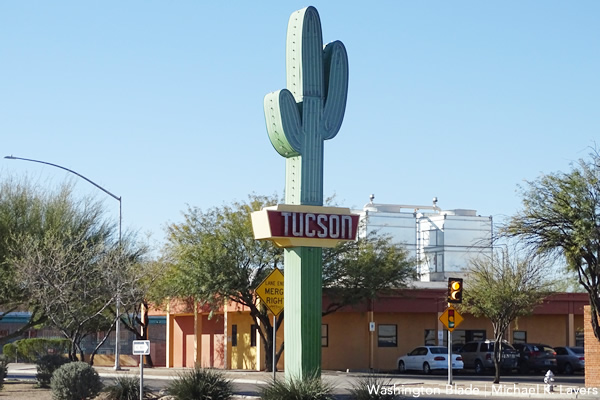
Shooting outside gay bar in Ariz. leaves three dead

‘People don’t see me. They see a trend’

San Francisco, long a queer safe haven, remains competitive for homebuyers

Trans, nonbinary Americans find refuge in the Netherlands

Calendar: August 28-September 3

‘Teenage Sex and Death’ has never been more entertaining

Actor Tim Curry dies at 80
-

 California4 days ago
San Francisco, long a queer safe haven, remains competitive for homebuyers
-
Netherlands5 days ago
Trans, nonbinary Americans find refuge in the Netherlands
-
Calendar5 days ago
Calendar: August 28-September 3
-
Movies5 days ago
‘Teenage Sex and Death’ has never been more entertaining