National
70 groups call on Obama to endorse anti-bullying legislation
SNDA may see vote this year on Senate floor

A group of 70 organizations is asking President Obama to build on his work against bullying in schools by endorsing legislation pending in Congress that would prohibit harassment of LGBT students.
In a letter dated March 7, the groups ask Obama to endorse the Student Non-Discrimination Act, or SNDA, which would prohibit and harassment in public elementary and secondary schools based on a student’s actual or perceived LGBT status. No federal law explicitly prohibits harassment against LGBT students in school.
“SNDA would provide lesbian, gay, bisexual and transgender (“LGBT”) students with long overdue and much needed explicit federal protections against discrimination and harassment,” the letter states. “The legislation also protects students who associate with LGBT people, including students with LGBT parents and friends.”
The organizations — led by the American Civil Liberties Union — include LGBT groups such as the Human Rights Campaign, Lambda Legal and the Gay, Lesbian & Straight Education Network, or GLSEN, as well as other groups, such as the American Psychological Association, the Feminist Majority and the Southern Poverty Law Center. Religious groups, such as the Episcopal Church, the Methodist Church and the United Church of Christ also signed the letter.
Obama has said he’s committed to combatting bullying and harassment in schools, but has yet to endorse legislation that would explicitly prohibit the bullying of LGBT students.
The letter asks Obama to endorse SNDA so that it has the same level of support from the White House as other pro-LGBT bills, such as the Respect for Marriage Act, which Obama endorsed in June, or the Employment Non-Discrimination Act.
“An endorsement of the Student Non-Discrimination Act would likewise be a clarion call for equality in our schools and better protections for vulnerable children,” the letter states. “And more importantly, it would make clear to all Members of Congress what the administration views as a necessary federal legislative solution to the serious problem of anti-LGBT discrimination and harassment in our nation’s public schools.”
Groups send the letter to Obama ahead of March 10, which will mark the anniversary of the anti-bullying summit held at the White House in 2011. The event was seen as the hallmark effort of Obama’s commitment to combat bullying in schools.
Ian Thompson, the ACLU’s legislative representative, said an announcement in support of SNDA on the anniversary of the anti-bullying summit would have significant impact.
“An endorsement by the administration on the anniversary of the White House Conference on Bullying Prevention would be a powerful statement from the administration that all students are entitled to an education unhindered by discrimination and harassment,” Thompson said.
Other anti-bullying efforts the administration has undertaken include holding the first-ever federal LGBT youth summit in June and issuing guidance informing schools they may be violation of federal laws protecting students from harassment on the basis of gender by allowing anti-gay bullying. Obama, Vice President Joe Biden and other administration officials have also appeared in “It Gets Better” videos.
Just this week, the Departments of Justice and Education, together with six private plaintiffs and the Anoka-Hennepin School District in Minnesota, came to an agreement on a consent decree to resolve alleged bullying and harassment of students who weren’t conforming to gender stereotypes.
Shin Inouye, a White House spokesperson, said Obama supports the goals of the SNDA, didn’t offer full-throated support of the bill.
“Without speaking to the specifics of this letter, I would note that the President supports the goals of the Student Non-Discrimination Act,” Inouye said. “As the Elementary and Secondary Education Act is being considered by Congress, we look forward to working with lawmakers to ensure that all students are safe and healthy and can learn in environments free from discrimination, bullying and harassment.”
SNDA is sponsored by gay Rep. Jared Polis (D-Colo.) in the House and Sen. Al Franken in the Senate. The bill has 156 co-sponsors in the House and 37 co-sponsors in the Senate.
The legislation may see action on the Senate floor this year. Franken, who offered then withdrew the bill as an amendment to education reform legislation before the Senate Health, Education, Labor & Pensions Committee, said he’d offer SNDA as an amendment when the Education & Secondary Education Act reauthorization bill comes to the Senate floor. The bill is unlikely to come up as a standalone bill in the Republican-controlled House.
Obama administration officials have been repeatedly asked about whether the administration is ready to support SNDA. During a conference call with reporters Tuesday, Thomas Perez, assistant attorney general for the Justice Department’s Civil Rights Division, said in a response to a question from the Washington Blade that having law on the books like the Student Non-Discrimination Act would “certainly be helpful,” but stopped short of endorsing the bill.
“We have had conversations with various stakeholders on the Hill and spoken about that, and are carefully reviewing that particular proposal,” Perez said.
Another piece of legislation pending before Congress, the Safe Schools Improvement Act, or SSIA, also aims to protect LGBT students from bullying. The bill, sponsored by Rep. Linda Sanchez (D-Calif.) in the House and Sen Bob Casey (D-Pa.) in the Senate, would require schools to adopt anti-bullying codes of conduct and submit to states data to the Department of Education on bullying.
ACLU’s Thompson said SSIA isn’t mentioned in the letter for the sake of having a more clearly stated request to Obama.
“While SSIA and SNDA have complementary goals, the bills do different things,” Thompson said. “Many of the organizations on this letter also support SSIA, but in order to have as clear of an ‘ask’ as possible to the administration, we decided to focus this particular letter on SNDA.”



Federal Government
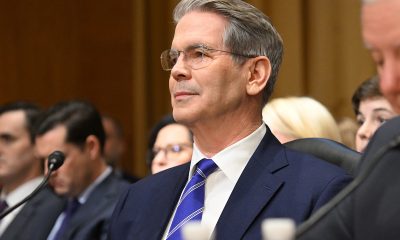
Bessent says Trump chose him for his qualifications, not his sexuality
Treasury Secretary Scott Bessent talked with Axios about his sexuality — and how it played no role in his nomination for the position.
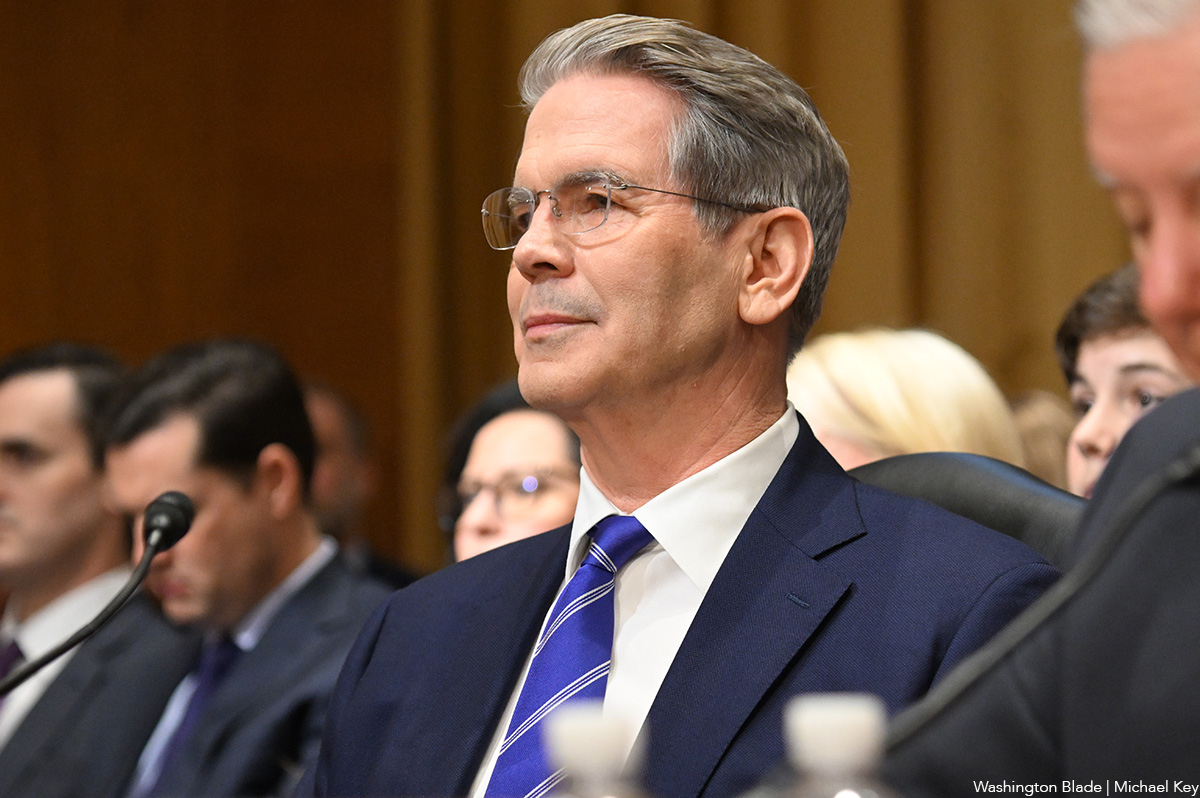
Treasury Secretary Scott Bessent participated in an interview in which he said his sexuality had no impact on the president’s selection of him.
On Sunday, Axios co-founder Mike Allen interviewed Secretary Bessent, the 79th person to lead the Treasury Department, in the “Cash Room” in the Treasury building. The two talked for more than 40 minutes about issues related to the current administration’s efforts for Axios’s YouTube channel.
Bessent has been something of an anomaly during this administration, breaking what many consider the “gay glass ceiling.” He is the first openly gay person to lead the U.S. Treasury Department, the first openly gay Senate-confirmed Cabinet member in a Republican administration, and the highest-ranking LGBTQ government official in U.S. history.
The two covered various ground — about the state of the U.S. economy, the various AI approaches by the Trump administration, and the war in Iran. All things that have made President Trump’s constant appraisal of the U.S. economy difficult to sell to the American people as the affordability crisis has worsened.
Toward the end of the interview, Allen asked Bessent about deciding not to attend the U.S. Naval Academy, knowing his sexuality would be a hindrance, and instead attending Yale University. Allen asked if his choice to attend the Ivy League school held him back in life.
“I don’t think it did at all, and it’s very difficult to talk about the counterfactual… but I don’t think going to Yale held me back,” Bessent said. “Maybe some people at other schools would think it might. But I think it makes you aware, and I’ve openly spoken about it before, too. I think maybe some of my career choices were influenced by it.”
The U.S. Naval Academy only began allowing openly LGBTQ students to apply — and be open about their sexuality — following the 2011 repeal of “Don’t Ask, Don’t Tell.” Prior to the policy’s removal, students could be removed from the school for violating the rules, including rules related to their sexuality.
“You said President Trump chose me because he believes I’m the best candidate, not because of my sexual preference or your green eyes…,” Allen said.
“Exactly,” Bessent replied. “And I think that’s one of the reasons we have such a great team. The president makes his decisions all the time. You know, he’ll occasionally tell me, ‘You’re breaking my friends’ hearts.’ They see you on TV and they want an intro, and we have to break the news to them.”
Bessent has been married to former New York prosecutor John Freeman since 2011, and they have lived together in South Carolina. There, they had two children through surrogacy.
Despite being a member of the LGBTQ community, Bessent has publicly supported Trump’s policies, including some that have drawn criticism from LGBTQ advocates and organizations. These include reductions to PEPFAR funding, policies removing transgender service members from the military, recognizing only two sexes, removing LGBTQ protections from Title IX, and other policies that LGBTQ advocates argue come at the cost of LGBTQ safety and protections.
The Washington Blade has reached out to the Treasury Department and Secretary Bessent’s team for comment and responses to these questions, including questions about how he views his identity and sexuality in relation to — and potentially at odds with — the policies and mission of the current administration. The Blade did not receive a response by publication time.
Georgia
In Ga., 2 trans candidates believe voters are ready for them
Bentley Hudgins, Bella Bautista running for state House of Representatives
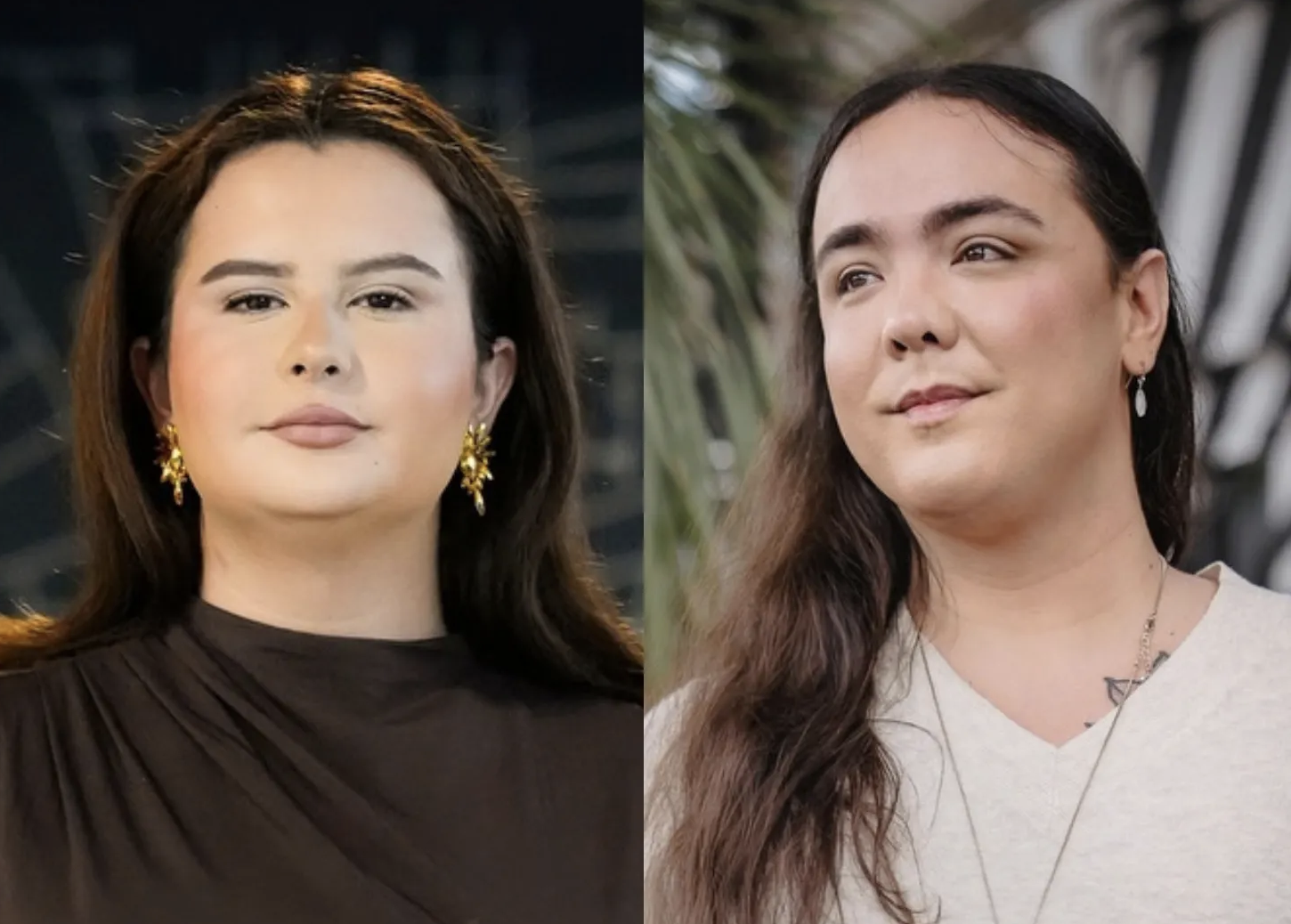
Uncloseted Media published this story on Oct. 6.
This story was reported in partnership with The 19th, a nonprofit newsroom reporting on gender, politics and policy.
By ORION RUMMLER | Bentley Hudgins is a 33-year-old democratic socialist who spent the past three years advocating for LGBTQ rights in the Georgia statehouse.
Bella Bautista is 10 years younger, the first transgender woman to win a legislative primary in Georgia and head of a nonprofit distributing supplies to at-risk young adults.
Both are running for a spot in the Georgia House of Representatives, part of a cohort of Democrats who hope to shrink or end Republicans’ hold on the chamber. Both would make history as the first trans members of the body. Neither wants to discuss identity politics or pronouns — they want to talk about data centers, the price of groceries and healthcare.
But their districts are very different: Hudgins is running in a liberal stronghold in Atlanta with no serious Republican opposition and is all but certain to win in November. Bautista’s district is rural and deeply conservative; it hasn’t elected a Democratic state representative since 1996, and she’s the first to run for this seat since 2010. But Hudgins’s and Bautista’s bets are the same: Voters are looking for someone to fight for them. In Hudgins and Bautista’s view, something in the country is broken and no one else will fix it. So they stepped up.
“People around here just hate the government, and that’s why I’m running,” Bautista told Uncloseted Media and The 19th. “People have lost faith in the system as a whole.”
Hudgins’ mind is on the big picture: getting as many Democrats, especially progressives, in the statehouse as possible. Without that, they believe the future — especially for LGBTQ people and immigrants — isn’t certain.
“At the end of the day, we have to have the numbers,” Hudgins told Uncloseted Media and The 19th.
A deep red district in rural Ga.
In the hourlong drive from Atlanta to Cartersville, where Bautista grew up, suburbs fade away and the land expands into RV lots, farms, and houses on the edge of the woods. Bautista launched her campaign in this small town, at Noble & Main Coffee Co., across the street from a butcher shop that offers deer processing.
“It’s one of those hidden gems,” she says. “They’re friendly toward Democrats.”
It’s also not in the statehouse district she wants to represent. She’s running for office in the more rural side of the county, an area that’s about 80 percent white, mostly older and mostly conservative. And it’s been a challenge. Most people here vote Republican. Her opponent, the GOP incumbent Mitchell Scoggins, has not run against anyone since he first won a special election in 2018.
Lack of change is what spurred Bautista to run. And it’s not just Scoggins sailing unopposed to reelection every two years. Bartow County is one of a small handful of counties in Georgia with only one commissioner, who single-handedly decides the fate of everything from data center construction to new roads. The current commissioner has held the position for 14 years.
The issues facing her hometown can’t be left to one man, Bautista says. She wants to pass legislation for locals to vote on a board of commissioners, regulate Flock cameras, shield locals from data center pollution, conserve farmland and expand rural mental healthcare. She thinks these stances will appeal to voters who may otherwise vote Republican. But it’s still an uphill battle — and a lonely one.
“This is not a story about pride. It’s not a story about visibility,” she says. “It’s a story about challenges, difficulty. I don’t want to be the fucking first to do it, but I have no choice but to be the first.”
But Bautista says she’s struggling. This campaign has cost her privacy and peace, which doesn’t impact just her: She lives in her family home as the primary caretaker for her mom.
In May, during the primaries, someone came to her house twice, she says: once to put up a sign supporting President Donald Trump next to her own campaign sign in the front yard, and later to take down her sign.
“I literally live in the middle of nowhere,” she says. “That sent chills down my back, because I’m like, OK, that means someone physically went to my home, got out of their car, went up the hill, put up a Trump sign.”
Her neighbors, who she’s known her whole life and are Trump voters, assured her that they weren’t involved. But that fear hasn’t left her. Since then, more signs have gone missing: A few weeks after we met, hundreds of her campaign signs were taken down across the district. Those cost money to replace — money the campaign doesn’t have.
As a trans Latina, she belongs in Bartow County just as much as anyone else, she says. This is the only home she’s known. But campaigning in this district feels like being thrown into the ocean, she says. Online, people mock her and misgender her. It hurts. Often, they’re the same people she’s fighting for.
At one point during an interview at Noble & Main Coffee Co., Bautista started crying. Keeping her head above water means she doesn’t often take time to think about why she’s doing this.
“You’re just having to swim, swim, swim, swim and you never get any chance to look back and think, oh my gosh, why am I doing this, what does this mean to other people?”
Dramatically different districts
Hudgins launched their campaign at Joe’s Coffeehouse in East Atlanta Village, roughly 50 miles from Bautista’s district. This place, a local indie fixture, holds personal history for them: When they became homeless in 2017, it became a refuge as they couchsurfed and lived in their car. It took a year to find stable housing.
This neighborhood is where they got back on their feet after being kicked out of their apartment, something they know is common for queer people in the U.S., as well as in their own circles.
“Most of the queer electeds that I’m really close with are people who have experienced homelessness,” they say. “It just goes to show how prevalent this is for queer Southerners.”
And, years later, this same neighborhood is where they fell back in love with politics.
Being here makes Hudgins think about how the city is changing as people get priced out. Gay bars are closing and, as a former drag performer, they know of only three places still putting on shows. It’s all getting too expensive. Midtown isn’t the bustling queer neighborhood it used to be, they say, but the queers are still here: They’re just moving further into DeKalb County, East Point and southeast Atlanta, all in search of affordability.
That’s part of the problem. Hudgins sees solutions, though: raising the state minimum wage to $20 an hour or creating a state earned income tax credit to give money to lower-income families. Previous Democrat-sponsored bills to enact those policies have been blocked in the statehouse, and it’s those stalemates that are driving voters to push for something different, Hudgins says. Decades of Republican control have left people disillusioned.
“People’s political will and spirit has kind of been chipped away at,” they say. “Life can be better.”
The first time Hudgins ran for this seat in 2022, they were 28 and single, and the pandemic was still fresh. The previous year, Atlanta spa shootings targeting Asian women had taken place, and “Cop City,” the massive training ground for local police in DeKalb County, was formally proposed amid national protests against police brutality. Joe Biden was president, and from where Hudgins sat, the Democratic establishment was clamping down on progressive dissent.
They were angry — but that anger didn’t resonate with voters, they say.
“It was such a more agitated time in a lot of different ways, and this strong leftist point of view wasn’t as appreciated,” they say. “At that time, I was also angry. I was mad. And I think it came through.”
Their opener in their 2022 race was, “To be frank, I’m tired of my friends dying,” they say. They had lost friends to police violence, addiction, hunger and mental illness. One of their friends was left permanently disabled from a hate crime, they say. Hudgins had begun to get severe cluster headaches and was managing that while running their first campaign.
After losing that race, they reassessed if they wanted to do politics at all. They were broken-hearted, they say. A friend helped them get a job at a Laotian pop-up restaurant in East Atlanta Village, only a short walk from Joe’s Coffeehouse. But what they thought would be an escape from politics became a reeducation in why it mattered, they say. Surrounded by other Asian Americans, they learned about U.S. bombing campaigns in Laos and connected with their new friends’ working-class struggles.
“I really got to understand more about how my Southeast Asian neighbors and friends have experienced American identity,” they say.
If elected, Hudgins would be Georgia’s first Japanese American lawmaker. To them, it feels like that usually gets left out of their story as people instead focus on their gender identity.
They weren’t planning on running for office this year. Their wedding is in November. Until recently, they were lobbying against anti-LGBTQ bills as Georgia state director for Human Rights Campaign, a major LGBTQ advocacy group. But Saira Draper, who beat Hudgins in 2022 to represent House District 90, is running for the state Senate. That left the House seat open. And it left the door open for Hudgins to run again.
When three other Democrat contenders dropped out in the primary, Hudgins became the front-runner. Their opponent, Samantha Boston, received only about 500 votes in the Republican primary. Hudgins got over 7,000 in the Democratic contest.
Fearless advocates
On a muggy September night, Hudgins and Bautista were in full glam at the College Park Woman’s Club in Atlanta, gathered alongside activists, volunteers and political candidates at a fundraising gala for LGBTQ youth.
At her table, Bautista prepared to present a “fearless youth advocate” award to state Rep. Akbar Ali, sworn in last year at 21 as the youngest lawmaker in Georgia. Bautista won this same award last year for the work she does at her nonprofit, which primarily supports transgender and immigrant young adults. Seated with Ali and friends running for office in Bartow County, she read over her notes.
Democrats in the room buzzed with the possibility of reshaping the statehouse, and with nerves that Republicans’ now abandoned redistricting effort will resurface.
On stage, Bautista looked to a different future — one where trans visibility in politics is not a rarity in Georgia.
“To all my transsexual girls in the building, just know that I’m fighting for you, and that in two years it’s going to be one of y’all,” she said. “It’s going to be one of y’all running for governor. It’s going to be one of y’all running for state senator. It’s going to be one of y’all running for commissioner.”
But she knows that history recognizes the victors, people who make it past the finish line, regardless of how much work they put into the race.
“I stand before you in the middle of history, not on the other side of it,” she said on stage. “I keep going not because the water is calm, but because someone on the other side is waiting for proof that a person like them survived it.”
Hudgins watched from the front of the room. They sat next to Sam Park, the Georgia House minority whip, a longtime mentor.
“I’m incredibly proud of Bella’s leadership and her courage for stepping up,” Park told Uncloseted Media and The 19th in an interview a few days later. “Bella is giving her voters, her fellow neighbors, an option, a real choice to say enough is enough.”
Rural Democrats are craving someone willing to fight for them, says Courtney Bruder, chair of the Democratic committee of Cherokee County, where Bautista’s district also touches. But complacency has gotten in the way, she says.
“It’s been difficult to try to get someone to be willing to fight for a seat that’s going to be hard,” she told Uncloseted Media and The 19th. “It’s been a slow change to get Democrats in this area to run.”
Bautista hasn’t felt supported by the Georgia Democrats, she says. She has allies in the statehouse and in others running for office, but she still feels like the subliminal message from the party is that she just isn’t electable. She feels like she isn’t taken seriously because she’s not white, doesn’t have wealthy donors and isn’t running in a safe district for Democrats.
Democrats in leadership say she’s changed the game, though, and see her candidacy as a sign of a changing tide in Georgia.
A blue wave may be brewing in the Peach State. Georgia saw record-breaking engagement in the primaries, and an NBC analysis found that Democrats turned out in unusually high numbers across the state. But in Bartow County, where Bautista lives, Democrats make up just one-third of the vote in the gubernatorial primary, according to data from the Georgia Secretary of State’s elections office.
Bautista is positioning herself as an anti-establishment candidate first, and a Democrat second, to appeal to people who aren’t engaged in politics, she says.
It may not be enough to win. But for the past 16 years in this district, no one was willing to step into the ring at all. She still sees victory in that, and in the ways her campaign has gotten neighbors to care about what’s happening in their backyard.
‘I’m going to be who I am’
If elected, Hudgins would become the state’s first nonbinary lawmaker. But they don’t care if voters understand their gender or use the correct pronouns; they just want voters to understand the issues.
“I realized if I led with my identity, it would distract people from understanding what I had to say,” Hudgins says.
One moment in particular on the campaign trail, at Israel Missionary Baptist Church in April, changed their perspective on this.
“The deacon lays his hands on me. He’s like, ‘God, help her, help this person, help him, just help them be victorious.’ I wanted to laugh, but then I was really touched. This guy I’ve never met before … was just trying to be respectful,” they say.
If they win, a whole new set of challenges awaits them at the Georgia statehouse. The dress code is gendered; men must wear a coat and tie, while women are allowed a more nebulous “dignified dress.” But it’s not just the clothes; they would be joining an institution built around a gender binary they don’t adhere to.
Lawmakers are used to referring to each other as “Mr.,” “Mrs.” or “Miss,” per the rules. Although there are more formal options that could allow for a loophole, those are gendered too — members may identify each other by the district “he or she” represents or by the city of “his or her” residence. The bathroom is its own ordeal: if there is a gender-neutral bathroom, Hudgins has yet to find it. As a gender nonconforming person, if Hudgins takes office, they would be walking into a system designed to exclude them. And there are fines associated with breaking these rules.
They are still weighing how to respond to it. They want to be taken seriously as a legislator and build relationships that move bills, but if they don’t stand up for themselves, it sends a poor message, they say.
“I have a pesky knack for maintaining who I am regardless of what the rules say,” they say with a laugh. “If we have a Democratic majority, we can change the rules. If there is a Republican majority, I’m going to be who I am and I’m going to dress how I think is appropriate. And their problems, we’ll address them as well.”
U.S. Federal Courts
Renee Good’s family files two federal lawsuits
ICE officer killed lesbian mother of three in Minneapolis in January

The family of a lesbian who a U.S. Immigration and Customs Enforcement officer killed in Minneapolis in January has filed two federal lawsuits.
The Associated Press notes Renee Good’s partner, Becca Good, and her brother, Brent Ganger, in the lawsuits accuse the Trump-Vance administration and ICE officer Jonathan Ross of “unjustified and excessive use of force.”
Renee Good was a 37-year-old mother of three.
Ross on Jan. 7 shot and killed her in Minneapolis.
The shooting took place during the Trump-Vance administration’s so-called Operation Metro Surge that targeted Somalis and other immigrant groups in Minneapolis. U.S. Customs and Border Protection agents on Jan. 24 shot and killed Alex Pretti, a 37-year-old nurse who worked for the U.S. Department of Veterans Affairs, in Minneapolis.
Both shooting sparked outrage across the U.S. and around the world.
“Every morning, she is my first thought. I think about how the kids are growing up without their mama, and how I will grow old without the love of my life. I think about how we should have had 40 more years together. But I also think about what she would have wanted after all of this,” said Becca Good in a statement the Human Rights Campaign released after she and her partner’s family announced the lawsuits.
“As we have tried to navigate our own massive loss, I am also devastated by how many other lives have been destroyed in this darkest of times. So many other families are dealing with the loss of their loved ones; to everyone who has had to witness it — the pain of this moment extends far beyond our family,” added Becca Good. “What happened to us should never happen to any family. No child should grow up without a parent because of it. No one should lose their sister or their daughter. No one should have to live without their soulmate. Accountability — real accountability — is the only way to make sure that no other family has to go through what we have.”
HRC President Kelley Robinson in her own statement said the Good family “is one of our own — and today, the Human Rights Campaign joins them in demanding justice.”
“It has been eight months and 24 days since Renee was shot and killed by an ICE agent, and the United States government has failed to take responsibility for its actions,” said Robinson. “Her partner, Becca, and brother Brent, have made the brave and bold decision to hold the government accountable, and we stand with them. Like every person murdered by ICE, Renee should be alive today. The Goods were robbed of what every American family deserves: to be together.”

D.C.’s LGBTQ homeless facilities face possible hit from Trump funding cuts

10 years later, we still can’t shake Barry Jenkins’s ‘Moonlight’

‘Some Like It Hot’ a wild ride at renovated Bernard Family Theatre

Bessent says Trump chose him for his qualifications, not his sexuality

Alianza para la Inclusión fortalece la defensa de derechos LGBTQ en Centroamérica

Eliot Glazer’s new book an engaging collection of essays

Equality Chamber hosts Pride in Business Expo and Profits & Pours

Learn more about Virginia’s queer history

Lula, Flávio Bolsonaro to face off in second round of Brazilian presidential election

Engrossing ‘Tip Toe’ delivers tension and an ominous warning
-

 Books3 days ago
Eliot Glazer’s new book an engaging collection of essays
-
Out & About3 days ago
Equality Chamber hosts Pride in Business Expo and Profits & Pours
-
Out & About3 days ago
Learn more about Virginia’s queer history
-
Brazil3 days ago
Lula, Flávio Bolsonaro to face off in second round of Brazilian presidential election