Local
Estate to create Kameny Foundation
Will promote LGBT rights causes, provide scholarships to LGBT youth and establish guidelines for using “Gay is Good” slogan

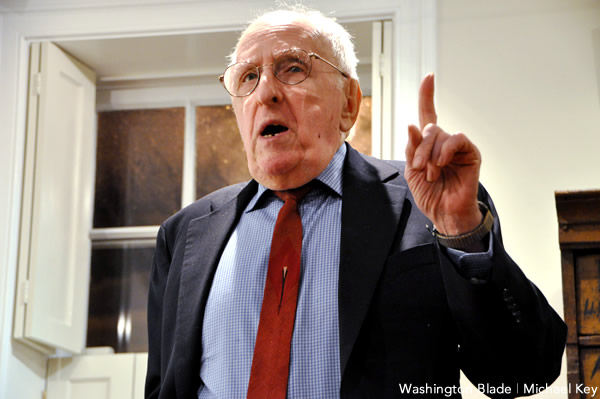
Frank Kameny died last year. (Washington Blade photo by Michael Key)
The estate of the late gay rights leader Frank Kameny is taking steps to create a non-profit foundation to promote LGBT rights causes, provide scholarships to LGBT young people and establish guidelines for using Kameny’s “Gay is Good” slogan, according to an attorney representing the estate.
“The estate is in the process of organizing the Franklin E. Kameny Foundation for the purpose of preserving Dr. Kameny’s legacy and promoting public awareness of the need for lesbian, gay, bisexual, and transgender equal rights,” said attorney Glen Ackerman.
The announcement of the creation of the Kameny Foundation came less than a week after the U.S. Patent and Trademark Office issued a preliminary denial of an application by the Kameny estate for a trademark to restrict the use of the “Gay is Good” slogan, which Kameny coined in 1968 to promote gay rights causes.
Several gay activists have raised objections to the idea of placing a trademark on the well-known slogan, saying Kameny intended the slogan to be used by the LGBT community without restrictions.
In a written notice, which is part of the public record, a USPTO official said the trademark application failed to properly demonstrate how the phrase would be used in interstate commerce, as required under the U.S. trademark law.
A USPTO spokesperson told the Blade the trademark law has been interpreted broadly to allow non-profit organizations to obtain trademarks for non-commercial use as long as such organizations engage in activities or provide services that cross state lines and fall under the definition of “commerce.”
The estate has six months to revise and resubmit its application under USPTO rules.
Ackerman said the Kameny estate is “committed to working with” the USPTO to obtain a trademark for the Gay is Good slogan.
According to Ackerman, the estate will or has invited at least six prominent gay rights leaders or academic experts to serve on the Kameny Foundation’s board of directors. Among them, he said, are Christopher Dyer, former director of the city’s Office of GLBT Affairs; Charles Francis, founder of the Kameny Papers Project, which facilitated the sale and transfer of most of Kameny’s historic papers and other items to the Library of Congress and the Smithsonian Institution’s American History Museum; Timothy Patrick McCarty, lecturer and director of the Human Rights and Social Movement Program at Harvard University’s Kennedy School of Government; Richard Rosendall, longtime D.C. gay rights advocate and an official with the Kameny Papers Project; and Joe Solmonese, former executive director of the Human Rights Campaign.
He said Timothy Lamont Clark, whom Kameny named in his will as his heir and the executor of his estate, will also serve on the foundation board along with Ackerman’s law firm partner, J. Max Barger, the estate’s legal representative.
Ackerman said the foundation would be charged with establishing guidelines for use of the Gay is Good slogan by organizations and individuals working to advance LGBT equality.
Dyer, who called the creation of the Kameny Foundation a “great idea,” said he was uncertain whether other work-related commitments would allow him time to serve on the foundation’s board. He said he was troubled over a dispute between the estate and the local group Helping Our Brothers and Sisters, which has resulted in a delay in the burial of Kameny’s ashes, and isn’t inclined to join the board until the dispute is resolved.
Rosendall said he has declined the estate’s invitation to join the foundation board. The others named as possible board members couldn’t immediately be reached.




District of Columbia
Blade welcomes fall intern
Alexis McLean is student at University of North Florida
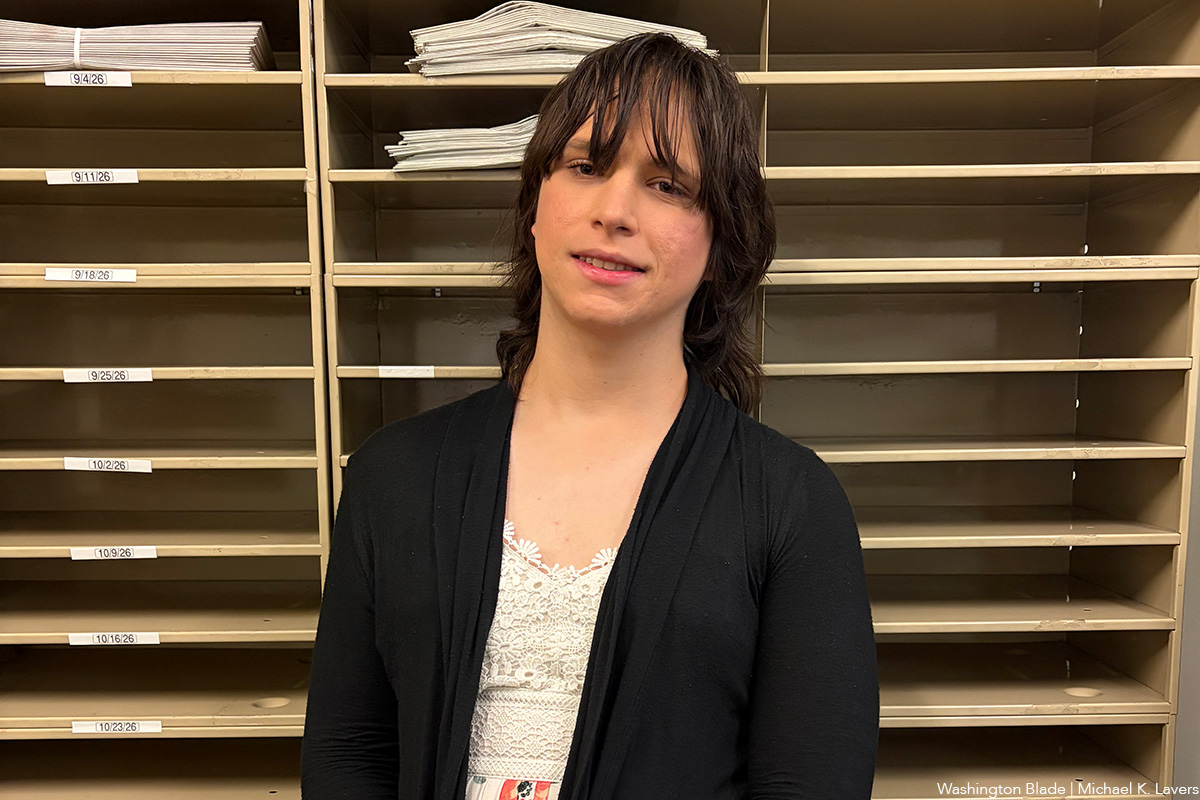
The Washington Blade this week welcomed Alexis McLean as its fall intern.
Alexis is studying political science at the University of North Florida in Jacksonville, Fla. She is interning with the Blade as part of a continued partnership with the Washington Center.
“I am looking forward to spending my time in the fall with the Washington Blade, as this is a new experience for me,” said Alexis. “I have not experienced any journalist jobs in the past so this would be my first time, and I am excited to better my writing and communications skills with this internship.”
Alexis’s internship with the Blade ends in early December.
Rehoboth Beach
SUNFESTIVAL takes center stage as Rehoboth Beach closes out summer
Labor Day Weekend bustling with events, including David Archuleta performance

Labor Day Weekend marks the unofficial end of summer in Rehoboth Beach, but there will be no shortage of LGBTQ events, with CAMP Rehoboth’s annual SUNFESTIVAL taking over town this weekend.
Thursday (9/3)
Get your Labor Day Weekend started early Thursday night with happy hour from 5-7 p.m. at Diego’s Bar & Nightclub, followed by Naughtee Bingo hosted by Magnolia Applebottom at 8:30 p.m.
After bingo, the party continues with Dancing at Diego’s from 9 p.m. to 1:30 a.m.
Aqua Bar & Grill will also kick off its Labor Day Weekend festivities Thursday with a DJ spinning from 9 p.m.-1 a.m.
Friday (9/4)
The weekend ramps up Friday night at Aqua, where DJ Matt Bailer will keep the dance floor moving from 9 p.m.-1 a.m.
Over at Diego’s, DJ Steve Sidewalk will then take over Diego’s for Freedom Friday from 9 p.m.-1:30 a.m.
Saturday (9/5)
The main event of the weekend arrives Saturday with the opening night of CAMP Rehoboth’s SUNFESTIVAL.
Billed as the ultimate party to close out the summer, SUNFESTIVAL has become one of Rehoboth’s signature Labor Day Weekend events. The annual celebration sells out each year, with proceeds benefiting CAMP Rehoboth.
Doors open at 6:30 p.m. with refreshments available at the cash bar while attendees are invited to socialize and find their seats.
Saturday night will feature local singer Ashley Williams as the opening performer, followed by headliner David Archuleta. The event will also feature a live auction.
Back across town Saturday, Aqua will continue its Labor Day Weekend DJ lineup from 9 p.m. to 1 a.m.
Diego’s will also have plenty happening, with ‘Splash Party’ hosted by Magnolia Applebottom at 5 p.m., followed by a Saturday Dance Party with Brett Oosterhaus from 9 p.m.- 1:30 a.m.
The Blue Moon hosts its popular Legends Show at 9 p.m. It’s an all-live singing show by the Blue Moon cast of celebrity impersonators.
Etienne Pilon has taken Rehoboth by storm this summer. Check out the talented singer/pianist at The Pines from 7-10 p.m.
Sunday (9/6)
Sunday’s SUNFESTIVAL event will shift the focus to the dance floor, with globally renowned DJs Robbie Leslie and James Anthony scheduled to perform. Doors open at 7 p.m., with dancing continuing until 1 a.m.
On Sunday, Aqua will throw its annual White Party, with DJs spinning from 9 p.m.-1 a.m. Guests are encouraged to dress in white for the holiday weekend celebration.
Diego’s will host its Sunday High T-Dance with Pamala Stanley at 5 p.m. Later that evening, DJ Tannr will be spinning at 9 p.m.
John Flynn is on the piano from 6-8 p.m. at the Blue Moon.
Monday (9/7)
The final day of Labor Day Weekend brings one last chance to hit the dance floor before summer officially winds down.
Aqua will close out its five-day Labor Day Weekend celebration with DJ Biff from 3-7 p.m.
Maryland
Anne Arundel schools now need parent permission to call trans students by preferred names
Conservative groups challenged system’s policy
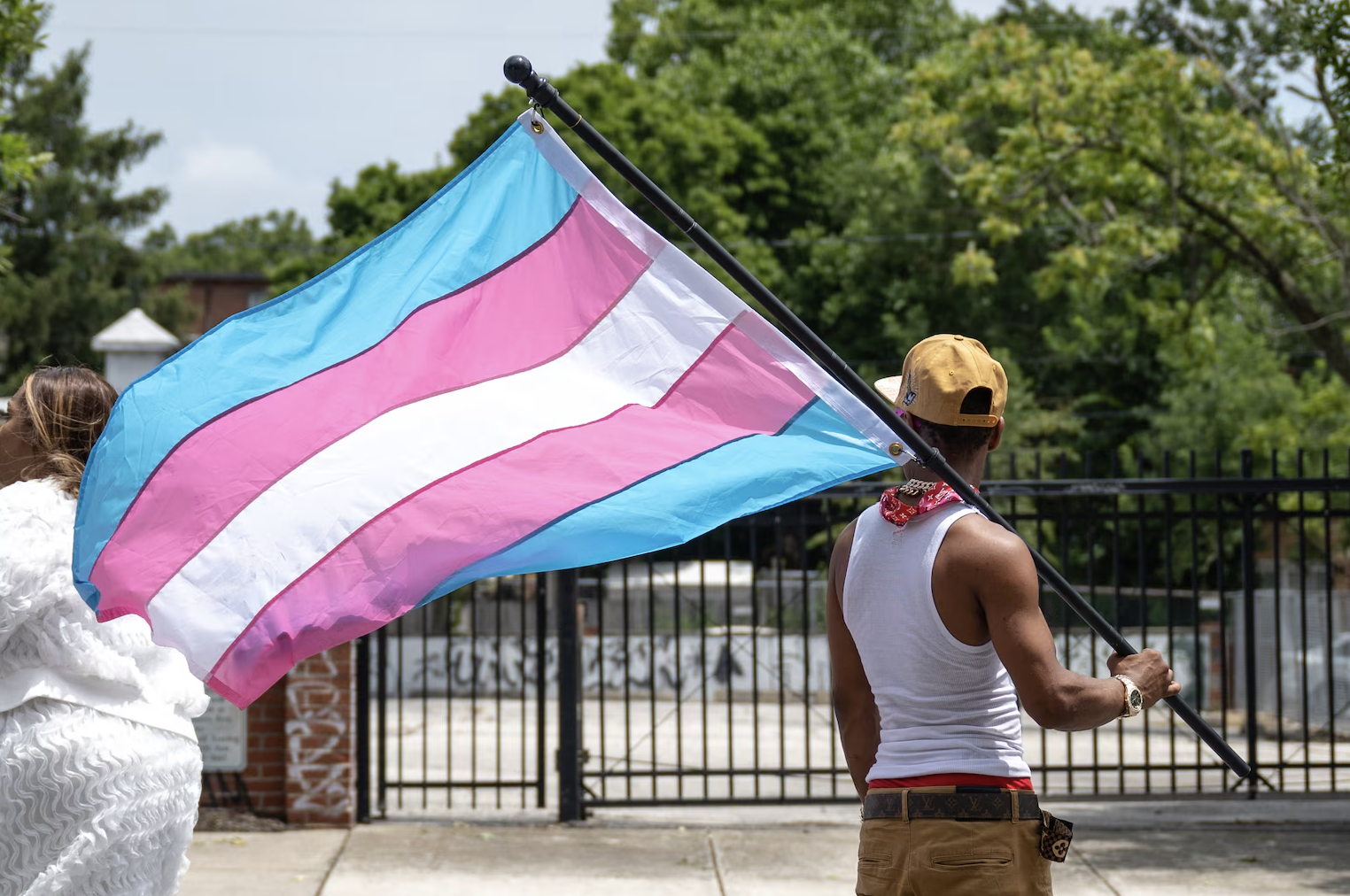
By JESSICA CALEFATI | Anne Arundel County Public Schools staff cannot use transgender students’ preferred names if their parents oppose it, according to an internal document reviewed by the Banner, a change that comes after conservative groups challenged the school system’s approach to gender identity.
Teachers union president Kristina Korona told members in an Aug. 20 email that the new guidance undermines district policy on acceptance and inclusivity and “will begin harming affected students immediately.”
Previously, the district didn’t require parental permission to use a high school student’s chosen name and pronouns corresponding to their gender identity, the internal document says. Now it does. The change comes as parents challenge the suburban school system’s gender identity policy and regulation in court and the Trump-Vance administration threatens the district’s funding.
The rest of this article can be found on the Baltimore Banner’s website.

Pentagon expands testosterone screening as trans troops face hormone therapy restrictions

Calendar: September 4-10

Swiss government backs nationwide conversion therapy ban

Gloria Steinem dies at 92

The mastery of love
Shooting outside gay bar in Ariz. leaves three dead

PHOTOS: Miss Gay Old Bay

Gay men linked to 2006 Wone murder failing to make lawsuit settlement payment

‘People don’t see me. They see a trend’