Arts & Entertainment
UNESCO censors nude statues
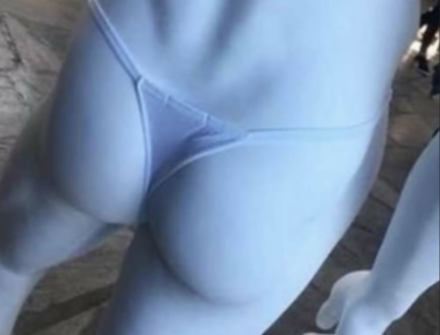
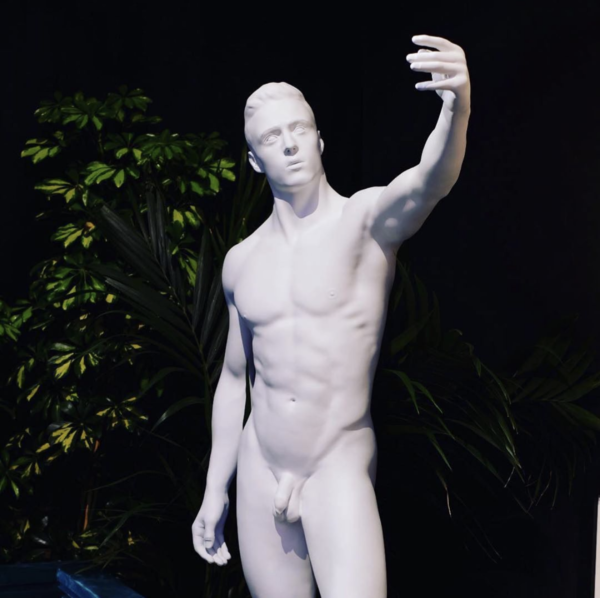
The United Nations’ cultural agency is under fire for covering the genitalia on a series of nude sculptures with underwear, according to CNN.
The work of French sculptor Stéphane Simon, 45, the sculptures were on display at the European Heritage Days event held in in Paris by the United Nations Educational, Scientific and Cultural Organization (UNESCO) in September.
CNN reports that the classical-style figures were part of a series called “In Memory of Me,” in which they were depicted in poses meant as a commentary on the now-worldwide social phenomenon of taking selfies.
UNESCO officials made the decision to cover the genitalia with the addition of underwear during the event.
The two statues in question were covered with a thong and a baby’s diaper.
Simon told CNN the decison “humiliated him” and was “disgusting.”
“I felt ashamed,” said Simon, 45, “so deeply sad to see all these years of work and research broken.”
“For two days visitors came to meet, to ask me: ‘But why did you do that?’ But it was not my choice,” the artist added, saying that he should instead have spent those two days “explaining the fascinating link” between the practice of selfie-taking and Ancient Greek history.
To make matters worse, Simon says he had raised the issue of nudity with UNESCO during meetings to plan for the event, but that they had not asked him to cover up the works until a few days before it took place on September 21 and 22.
In an interview with the French news site CheckNews, he said, “The question of the nudity of the statues was raised… I understand that can be disturbing. So, I proposed to stay, during Heritage Days, nearby with a cloth and, if necessary, depending on the visitors, to hide the sex of the statues.”
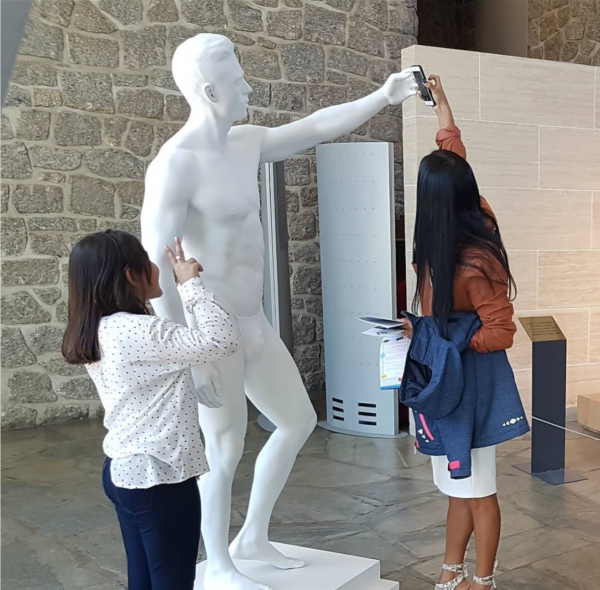
In a report by UK’s Daily Mail, law professor Jacques Bouineau compared the situation to the case of Daniele da Volterra, an Italian painter who tried to cover the exposed backsides in Michelangelo’s Last Judgment in the Sistine Chapel.
“And it’s in Paris, the capital of a secular state, in 2019, that a similar censorship is imposed upon an artist,” Bouineau added. “Are we going to have to cover up Michelangelo’s David… or the nude women of Rubens and Ingres?’
For their part, UNESCO initially said the sculptor agreed to cover up the genitalia – which Simon denies – before the arrival of Muslim delegations, citing a confused chain of emails with agency staff over the placement of the underwear, which they said was proposed by the artist himself.
Nevertheless, the agency has apologized, blaming the incident on a “misunderstanding” and a mistake made by a “stressed” employee, and saying that they would have allowed the statues to be exhibited uncovered if they had fully understood the situation.
In a statement, UNESCO said, “We didn’t want to censor the artist, and understand that he felt hurt.”
Photos of the underwear-clad statues drew ridicule from online commentators, with some commenting that the coverage made the statues look like an underwear ad, and others wondering how the skimpy garments could even have been slipped over the base.
The predominant reaction, however, has been to level criticism at UNESCO for a decision many call “puritanical.”
In the words of one Twitter user, “That’s how the fall of the Roman Empire began.”



Out & About
A roundup of fall events not to be missed
Laverne Cox, Oktoberfest, arts celebrations, and more
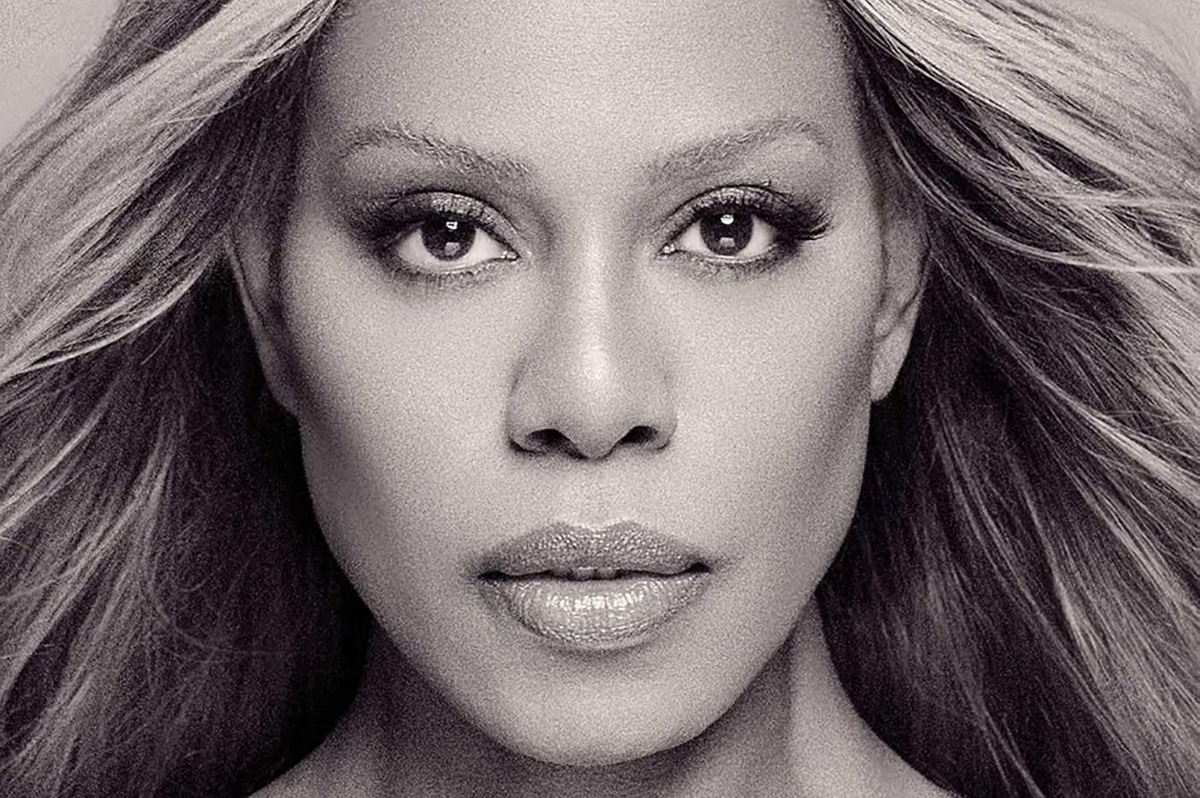
Colder temperatures don’t mean you have to stay indoors — here’s a roundup of what to do this fall.
Laverne Cox will discuss her memoir, “Transcendent,” with Dr. Melanie Bryant on Saturday, Sept. 19 at 7 p.m. at Baltimore Book Fest. Cox will share her journey as a transgender woman in Hollywood, confronting childhood trauma, shame, gender identity, her transition, body image issues, her search for romantic love, deep-seated feelings of unworthiness, and ultimately, healing.
Dacha Beer Garden will launch its longest and loudest Oktoberfest yet on Friday, Sept. 18. This will be 17 consecutive days of Bavarian festivities across both locations — the original Shaw beer garden and the 800-person Navy Yard garden — running through Sunday, Oct. 4. On opening night, DC Brau will tap the ceremonial first keg and then Manuela Horn, the six-foot-two Austrian yodel queen, will trade sets with Johnny Koenig and his four-piece band in a live back-and-forth of yodeling, polka, and crowd games that can only be described as Oktoberfest ping pong.
Fay Jacobs will host “Aging Gracefully: 2nd Annual Farewell Tour” on Friday, Oct. 9 and Saturday, Oct. 10 at CAMP Rehoboth Community Center. This show will feature a new script with lots of new stories, and only a couple of “signature” tales.
Capital One Center will host its “Celebration of the Arts” starting on Saturday, Sept. 19 at its location in Tysons, Va. There will be art, music, food trucks, local vendors, and family-friendly outdoor entertainment. This curated experience invites you to engage with hands-on workshops, immersive art activations, and live performances. More details are available on Eventbrite.
Spark Social will host “open Mic Night” on Thursday, Oct. 8 at 8 p.m. Get ready to share your talent or just kick back and enjoy some great performances at Spark Social. Sign Ups are first-come-first-serve,, but you can also message the venue on Instagram to reserve a performance spot. Whether you’re a singer, poet, or comedian, this is your chance to get on stage and share your art. Tickets are $13.26 and are available on Eventbrite.
Howard University’s School of Social Work will host “Intergenerational Trauma in the BIPOC Community and the Use of Art” on Thursday, Sept. 17 at 3 p.m. This in-person, interactive workshop explores the role of art as a creative and supportive tool for understanding and addressing intergenerational trauma. Participants will examine the meaning and impact of intergenerational trauma, with particular attention to its historical roots and ongoing effects within Black and other BIPOC communities. More details are available on Eventbrite.
9:30 Club will host “BERTHA: Grateful Drag” on Thursday, Oct. 8 at 7 p.m. The group has partnered with PLUS1 so that $1 from every ticket sold goes to SMYAL and their work supporting and empowering LGBTQ+ youth. Tickets are available on 9:30 Club’s website.
Steve Lacy’s “Oh Yeah?” tour is coming to The Anthem on Sunday, Oct. 18 at 6 p.m. Tickets are available on The Anthem’s website.
Rapper Cupcakke will perform at Howard Theatre on Sunday, Oct. 25 at 7 p.m. More details are available on the theater’s website.
Team DC will host “Open Play: A Celebration of LGBTQ+ Athletes and Sports Fans” on Saturday, Oct. 10 at 6 p.m. at Trade. Join Athlete Ally, Team DC and District Wrestling for a casual, in-person mixer as they celebrate LGBTQ+ sports fans and athletes at all levels of the game. Whether you’re part of an LGBTQ+ recreational league or just love watching sports, this is the place to connect, celebrate, and share the love of the game with other queer athletes, fans, business leaders, policymakers and more. Reserve a spot on Eventbrite.
The DC LGBTQ+ Community Center will host “2026 LGBT Intergenerational Extravaganza” on Sunday, Sept. 20 at 12 p.m.This is an event to connect, build relationships, and have fun with LGBTQ folks from other generations, and it will include lunch, an intergenerational dialogue and breakout sessions. More details are available on Eventbrite.
Music & Concerts
Queer mega stars coming to D.C. this fall
Indigo Girls, Charli XCX, Doja Cat headed our way
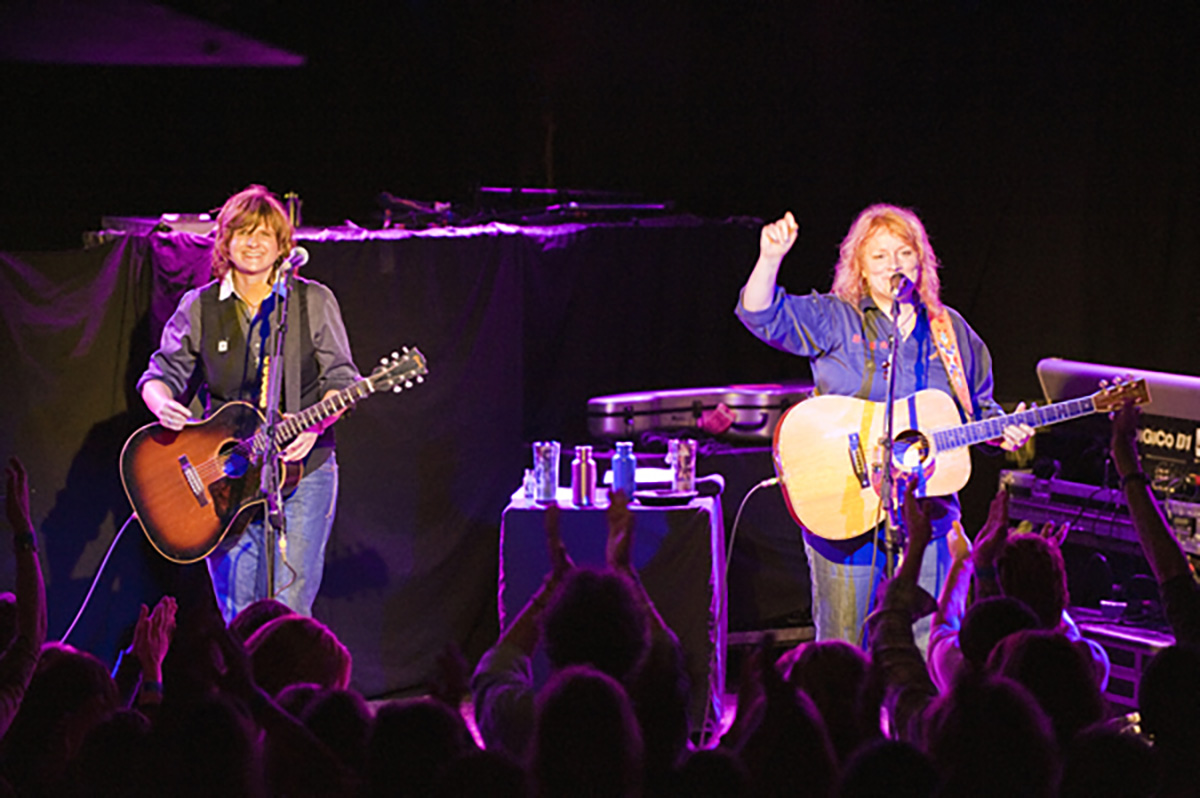
As D.C. enters the fall season, LGBTQ performers and allies will take the stage. This fall’s lineup is massive and diverse, from rock to electronic dance music.
Ryan Beatty, a gay musical artist, will bring his show, “Arms Over Armor North American Tour ’26” to the Lincoln Theater (1215 U St. N.W.) in D.C. on Sep. 26, at 6:30 p.m. Tickets go for $43.15 per attendee. Visit https://www.thelincolndc.com/#block-3 for more information.
All Things Go Music Festival: A major lineup of allies, including Mitski, Ethal Cain, Rebecca Black, Underscores, and many more. The festival, known for being LGBTQ-friendly, will take place at Merriweather Post Pavilion (10475 Little Patuxent Pkwy., Columbia, Md.) from Sept. 26-28. Visit allthingsgofestival.com for tickets and details.
Bisexual singer Charli XCX will bring her “Music, Fashion, Film Tour” to Capital One Area (601 F St, N.W.) in D.C. on Sep. 28 at 7:30 p.m. Tickets go from $102 – $500. capitalonearena.com for more info.
Bisexual artist Phoebe Bridgers will bring her “The Lost Tour 2026” to Capital One Arena on Sep. 29 at 7:30 p.m. Tickets go from $157-$500.
Power To the People Festival, another fantastic festival will take place at Merriweather Post Pavilion (10475 Little Patuxent Pkwy., Columbia, Md.). It will feature LGBTQ artists and allies, such as Bruce Springsteen and Brittney Howard. The festival is on Oct. 3 and doors open at 12 p.m.
Anabel Englund, calls herself a “heterosexual ally” on Instagram. She will perform at the Diplo’s Glow Block Party at Echo Stage (2135 Queens Chapel Road, N.E.) in D.C., Oct. 3. Doors Open at 3 p.m. Tickets range from $106-$154.
Amy Ray and Emily Saliers are the two lesbian singers who make up the Indigo Girls, one of the most recognizable folk duos who have sold more than 2 million albums with two singles: “Closer to Fine” and “Kid Fears” alone. Both will be performing at the Anthem (901 Wharf St., S.W.) in D.C. on Oct. 4. Doors open at 5 p.m. and the show starts at 7:30 p.m.
Grateful Drag, featuring PLUS 1, will take place at the 9:30 Club (815 V St., N.W.) in D.C. on Oct. 8 at 7 p.m.
Lauren Sanderson is a lesbian and queer performer with viral tracks that include “GAY 4 ME” (with G Flip). She will bring her “COME SAY SUM TOUR” to the Alantis (2047 9th St., N.W.) in D.C. on Oct. 15.
Steve Lacy, a bisexual artist, will bring his “Oh yeah?” tour to the Anthem on Oct. 18. Doors open at 6 p.m. and show starts at 7 p.m.
Washington Concert Opera‘s ARMIDA, staring Daniel Laucerica, Andrew Wilkowske, and Jonathan Pierce Rhodes, will take place at the Lisner Auditorium (730 21st St., N.W.) in D.C. on Oct. 24 at 6 p.m.
Yebba, a bisexual and queer artist, is a singer and songwriter within the genre of contemporary music who has performed alongside Ed Sheeran, Drake, and A$AP Rocky. Yebba will perform on Oct. 31 at the Anthem. Doors open at 6:30 p.m. and the show starts at 8:30 p.m.
Brutalismus 3000 is a longtime LGBTQ ally. They will bring their “Harmony US Tour 2026” show to Echo Stage on Nov. 13 at 10 p.m. Tickets range from $48-$66.
The Washington National Opera Orchestra will feature Andrea Gibson, a queer, nonbinary, and genderqueer poet/spoken-word artist, who will perform “Andrea Gibson’s Love Letter from the Afterlife” on Nov. 17 at the Anthem. Doors open at 6:30 p.m. and the show starts at 7:30 p.m.
Doja Cat, a bisexual artist who previously worked with Laurel Charleston, a trans women makeup artist, will bring her “Ma Vie World Tour” to Capital One Arena on Nov. 21. The show is at 7:30 p.m. and tickets range from $69-$316.
Victoria Monét: A bisexual R&B singer and a three-time Grammy winner, will bring her Frequency of Love Tour to the Anthem on Nov. 27 at 8 p.m.
Nightlife
Parties, dinners, concerts and more on tap for fall nightlife
Blade’s 25th Best Of party among highlights
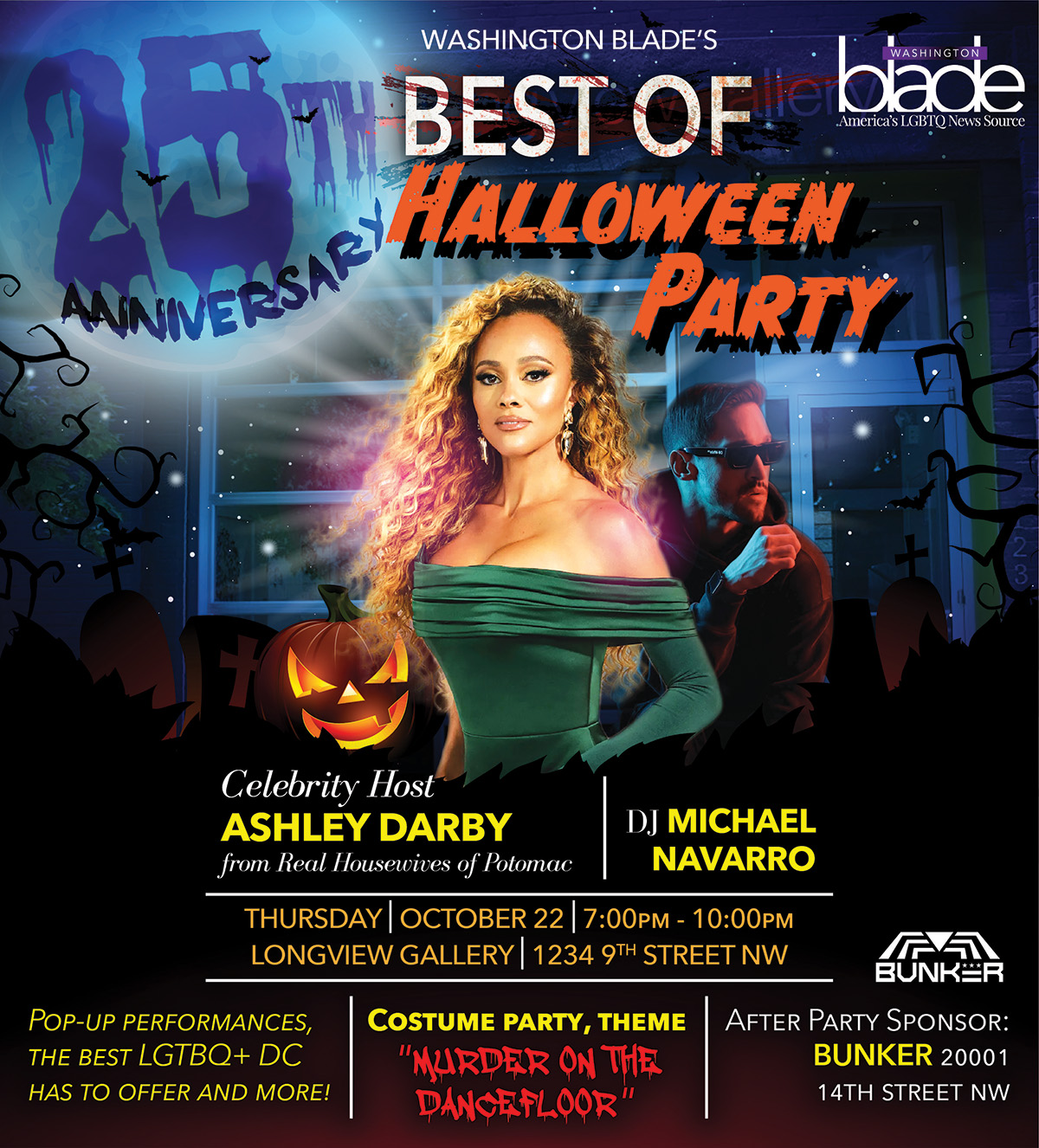
The heat is on in the city this fall for gala season, culture, and nightlife, including many LGBTQ and ally artists. Select shows, parties, and events for the season are below.
September
9/18-20: Fuchsia Fest – The inaugural Fuchsia Fest is a new multi-day celebration created to highlight LGBTQ community and expression, bringing together a mix of community gatherings, entertainment, and nightlife. Hosted by Capital Pride, Fuchsia Fests’s various events take place across the city throughout the weekend.
9/24: Katie Pruitt – The Americana/indie-fold singer-songwriter is known for her soaring vocals and deeply personal storytelling. She is on tour for her latest album, released Sept. 18, “Fools for the Fleeting.” She is part of the LGBTQ community.
9/25-27: All Things Go. This annual music festival at Merriweather Post Pavilion includes performers like Mitski, Hayley Williams, Brandi Carlile, MUNA, Zara Larsson, Ethel Cain, and many more beloved artists. Featuring and highlighting female artists, the festival has turned into a must-see for many LGBTQ audience members. There are single-day and three-day tickets.
9/26: Human Rights Campaign National Dinner – This annual big-ticket fundraiser for HRC (black tie, of course) celebrates achievements and recognizes the road ahead for LGBTQ+ equality. Taking place at the Mayflower, look out for D.C. stars, like members of Congress, former first ladies, and Broadway actors.
9/26 Gorillaz – Two decades strong, this artistic group unites visuals, storytelling, and music across diverse genres, from rock to reggae to electronic, for a show at Capital One Arena.
9/29 Charli XCX – British singer-songwriter and pop diva known for her bold expression, mixes electronic, pop, and dance, will bring thrilled audiences to her show at Capital One Arena as part of her Music, Fashion, Film Tour.
Multiple dates: Smithsonian Festival – This fall, the Smithsonian Institutions is debuting a festival called Rhythms, Roots, Recipes: Community Stories of Food and Music. Across this five-part series, each session features cooking demos, discussions, and live music. All programs are free and open to the public, and take place in the demo kitchen at the National Museum of American History.
October
10/3: GLOW BLock Party – GLOW is back! After throwing a giant party this spring with 10,000-plus dancing fans dancing against the Capitol dome at sunset, GLOW returns with an even more epic lineup: legendary Grammy-winning DJ and producer Diplo leading a seven-hour party with vendors, activations, and a number of other huge acts like Westend, Anabel Englund, Monty Kiddo, and D.C.’s own Ratalina.
10/3: Home Rule Music Festival – Now in its fifth year, this is a free, all-day community-driven event of local music, food trucks, and vendors at the Parks at Walter Reed. The D.C.-focused event features bands playing go-go, soul, hip-hop, jazz, and more, plus a record fair and live art.
10/3: PRIDEtoberfest – Gay-owned Wunder Garten presents PRIDEtoberfest, marrying the festive spirit of Oktoberfest and the joy of the LGBTQIA+ community for an all-day celebration of Pride, community, live music, DJs, overflowing steins of beer, and entertainment. Food will be available from Little Miner Taco and CaliBurger, plus plenty of friendly men in lederhosen.
10/3: Power to the People Festival – The inaugural Power to the People Festival will take place at Merriweather Post Pavilion in Columbia, Md. The festival, curated by Rock & Roll Hall of Fame guitarist and acclaimed activist Tom Morello, is a celebration of peace, justice, solidarity, music, and community action.
10/10: Jessie Ware – British singer and songwriter fully embraced by the LGBTQ community brings her impassioned mix of pop, disco, and electronic genres to Capital One Arena supporting her latest album Superbloom,
10/19: Chefs for Equality – This annual dinner fundraiser for HRC remains in its remixed, diffused form this year. Under the theme of United Plates of America, there will be six different activations: four multi-course collab dinners (at CUT by Wolfgang Puck, Marcus DC, Moon Rabbit, and Centrolina); Drag Brunch for Dinner at Perry’s; and a lavish cocktail party at cocktail lounge Silver Lyan. In any form, Chefs for Equality is a signature benefit toward the fight for full LGBTQ+ equality.
10/20 Rodrigo y Gabriela – Grammy-winning Mexican acoustic guitar duo that blends flamenco, rock, and heavy metal is coming to The Anthem. They have been playing at 9:30 Club and sister venues since 2007.
10/22: Washington Blade Best of Party – Celebrate the best of LGBTQ DC at the Blade’s epic Halloween party: Murder on the Dance Floor. Winners of the Blade’s annual Best of DC will be announced at this party at Longview Gallery. This marks the 25th anniversary of the Blade’s Best Of competition. “Real Housewives” star Ashley Darby hosts.
10/31: Into the Shadows – An immersive, indoor/outdoor Halloween party actually on the spooky day itself at Berhta. With multiple stages across multiple rooms, there are various DJs and activations.
November
11/11: Whitman-Walker Gala – This annual fundraiser at the Ritz-Carlton is themed “A Celebration of Impact & Innovation.” It aims to showcase the impact of Whitman-Walker’s healthcare, research, and policy programs, and will include presentation of the Groundbreaker Award for Community Philanthropy.
11/20: Ilana Glazer – Comedian, actor, advocate, and creator best known for co-creating and co-starring in the acclaimed series Broad City brings her act to Lincoln Theater. Her first show is already sold out, but a second show has been added.

Over 2,000 turn out for Hands Around the Kennedy Center protest

Furries take over the Metro

A roundup of fall events not to be missed

Activists protest outside Turkish Embassy in D.C.

Republican challenger misgenders McBride during forum, forced to leave

Acclaimed Chef Patrick O’Connell’s memoir reveals the arc of a life well lived

Hands Off the Arts to form ‘human chain’ around Kennedy Center

LGBTQ issues, attacks on Democrats dominate unusual RNC midterm convention

78th annual Emmy Awards recapped

Advocate, Out parent company adds Trump supporter to board, prompting outrage
-

 a&e features4 days ago
Acclaimed Chef Patrick O’Connell’s memoir reveals the arc of a life well lived
-
District of Columbia4 days ago
Hands Off the Arts to form ‘human chain’ around Kennedy Center
-
2026 Midterm Elections4 days ago
LGBTQ issues, attacks on Democrats dominate unusual RNC midterm convention
-
Arts & Entertainment4 days ago
78th annual Emmy Awards recapped