News
Utah places ‘on hold’ recognition of same-sex marriages
Letter to staff comes after Supreme Court issued a stay on gay nuptials
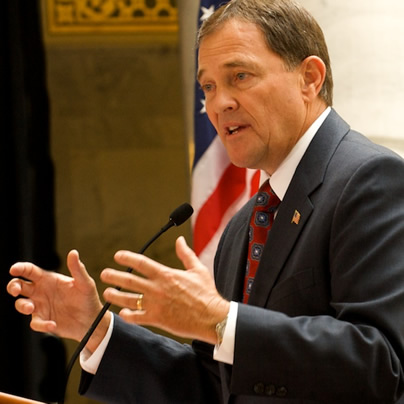
Utah Gov. Gary Herbert has placed on hold recognition of same-sex marriages in Utah. (Photo public domain)
Utah Gov. Gary Herbert has placed on hold recognition of same-sex marriages in the state following a stay on gay nuptials put in place this week by the Supreme Court.
The governor’s chief of staff Derek Miller indicated recognition of same-sex marriages would be placed on hold in an email Tuesday to Cabinet members on Herbert’s staff.
“Based on counsel from the Attorney General’s Office regarding the Supreme Court decision, state recognition of same-sex marital status is ON HOLD until further notice,” Miller writes.
On Monday, the Supreme Court placed a stay on marriage equality in Utah, which started occurring in the state on Dec. 20 after U.S. District Judge Robert Shelby ruled against Amendment 3, the state law prohibiting same-sex marriage. Utah state officials — Herbert and Attorney General Sean Reyes— requested the stay on gay nuptials pending the results of the litigation, which is currently before the U.S. Tenth Circuit Court of Appeals.
Although the letter doesn’t explicitly say for how long the hold recognition on same-sex marriages will last, the suggestion is that the state won’t recognize the marriages until the courts say otherwise. Nate McDonald, a Herbert spokesperson, said the hold on recognition of same-sex marriages will continue “until it goes through the legal process.”
Chad Griffin, president of the Human Rights Campaign, criticized Herbert for the decision, saying it “harms hundreds of Utah families” seeking legal protections.
“Governor Herbert has once again planted himself firmly on the side of discrimination by preserving the second-class status he believes gay and lesbian Utahans merit,” Griffin said. “These families deserve better and I have no doubt the courts will soon grant them the justice and equality that our Constitution demands.”
Elizabeth Cooper, a law professor at Fordham Law School, said Utah has taken a highly unusual step by not recognizing the same-sex marriages because a stay should only freeze more from occurring and not be retroactive.
“Although the state may believe it is stabilizing the situation, it, in fact, is adding more uncertainty to the situation,” Cooper said. “The issue of whether same-sex couples may marry in Utah ultimately will be answered by the courts, not by the state’s unilateral action. Had it wanted to legitimately roll back the clock, the state should have petitioned the courts with its request.”
One question that remains is whether the federal government will recognize the same-sex marriages if Utah won’t recognize them. On Wednesday, Dena Iverson, a Justice Department spokesperson, said, “The department is reviewing the governor’s decision.”
Adam Umhoefer, executive director of the American Foundation for Equal Rights, joined other LGBT advocates in calling for federal government to recognize the marriages.
“These families should not be stuck in legal limbo while the State’s appeal plays out,” Umhoefer said. “We call on the federal government to give them some measure of human dignity to which they are constitutionally entitled by recognizing their marriages under federal law.”
The complete email follows:
Dear Cabinet,
I’m sure you are all aware of the issuance of the stay regarding same-sex marriage in Utah from the United States Supreme Court yesterday. This stay effectively puts a hold on the decision of the district court, which found state laws prohibiting same-sex marriage in Utah to be unconstitutional.
After the district court decision was issued on Friday, December 20th, some same-sex couples availed themselves of the opportunity to marry and to the status granted by the state to married persons. This office sent an email to each of you soon after the district court decision, directing compliance.
With the district court injunction now stayed, the original laws governing marriage in Utah return to effect pending final resolution by the courts. It is important to understand that those laws include not only a prohibition of performing same-sex marriages but also recognizing same-sex marriages.
Based on counsel from the Attorney General’s Office regarding the Supreme Court decision, state recognition of same-sex marital status is ON HOLD until further notice. Please understand this position is not intended to comment on the legal status of those same-sex marriages – that is for the courts to decide. The intent of this communication is to direct state agency compliance with current laws that prohibit the state from recognizing same-sex marriages.
Wherever individuals are in the process of availing themselves of state services related to same-sex marital status, that process is on hold and will stay exactly in that position until a final court decision is issued. For example, if a same-sex married couple previously changed their names on new drivers licenses, those licenses should not be revoked. If a same-sex couple seeks to change their names on drivers licenses now, the law does not allow the state agency to recognize the marriage therefore the new drivers licenses cannot be issued.
We appreciate your patience and diligence in this matter. We recognize that different state agencies have specific questions and circumstances that will need to be worked through. Please do so with the Assistant Attorney General assigned to your respective agency in coordination with the Governor’s General Counsel. We also recognize that these changes affect real people’s lives. Let us carefully and considerately ensure that we, and our employees throughout the state, continue to treat all people with respect and understanding as we assist them.
Regards,
Derek B. Miller
Chief of Staff
Governor’s Office
State of Utah





Brazil
Transgender woman elected to Brazilian Chamber of Deputies
Thabatta Pimenta is first trans person from northeast Brazil elected to Congress

SÃO PAULO — Voters in Brazil’s Rio Grande do Norte state on Sunday elected a transgender woman to the country’s Chamber of Deputies.
Natal Municipal Councilwoman Thabatta Pimenta, who is a member of the Green Party, won with 92,743 votes. She is the first trans woman from northeast Brazil elected to the country’s Congress.
Pimenta became emotional when she was speaking to her supporters after she won. Her brother Ryan, who has cerebral palsy, was by her side.
“This victory belongs to the people of Rio Grande do Norte,” she said. “It is a victory built from the ground up … the people themselves rose up, and you saw the result: today they elected the first female travesti federal deputy from northeast Brazil.”
Pimenta will join Erika Hilton, a travesti member of the leftist Socialism and Liberty (PSOL) party who was a sex worker before her election to the São Paulo Municipal Council, and Duda Salabert, a trans woman and fellow PSOL member from Minas Gerais state, in the Chamber of Deputies.
Hilton on Sunday won re-election with 1,596,472 votes, the most any female member of Congress has received in Brazilian history. Dudabert also won re-election with 215,192 votes.
“Thank you Minas Gerais,” said Dudabert on social media after she won re-election.
❤️ REELEITA!!! Obrigada Minas Gerais! Com muito trabalho, aumentamos nossa votação! Muito orgulho em ser, pela segunda eleição consecutiva, a terceira candidatura mais votada de Minas Gerais para o cargo de deputada federal. E mostramos novamente que é possível fazer uma campanha “lixo zero”- sem imprimir santinhos, bandeiras ou adesivos. Muito feliz! Obrigada Minas ! Obrigada Brasil
— Duda Salabert 5️⃣0️⃣5️⃣0️⃣ (@DudaSalabert) October 5, 2026
Three openly bisexual Chamber of Deputies candidates also won their races on Sunday.
• Guilherme Cortez, a PSOL member in São Paulo state
• Dandara Tonatzin, a member of President Luiz Inácio Lula da Silva’s Workers’ Party in Minas Gerais state
• Anielle Franco, a Workers’ Party member in Rio de Janeiro state.
Fabio Félix, a gay PSOL member of the Chamber of Deputies who represents the Federal District in which Brasília, the country’s capital, is located won re-election with 224,224 votes. Rick Azevedo, a gay PSOL member from Rio de Janeiro state, won his campaign.
Daiana Santos, a lesbian Brazilian Communist Party member who represents Rio Grande do Sul state in the Chamber of Deputies, won re-election with 114,315 votes.
Two lesbian women won their Chamber of Deputies campaigns.
• Rosa Amorin, a Workers’ Party member from Pernambuco state.
• Bella Gonçalves, a Workers’ Party member from Minas Gerais who is a member of the Belo Horizonte Municipal Council.
Rio de Janeiro Municipal Councilwoman Mônica Benício, who is a PSOL member, came up short in her bid for the Brazilian Senate. Her then-partner, Rio de Janeiro Municipal Councilwoman Marielle Franco, and her driver, Anderson Gomes, were assassinated on March 14, 2018.
Fabiano Contarato, a gay senator from Espíritu Santo state who is a member of the Workers’ Party, also lost his re-election bid.
“I receive the election results with respect and serenity,” he said on social media. “The popular will is sovereign, and democracy must always be respected.”
Jean Wyllys is a gay former member of the Chamber of Deputies who previously represented Rio de Janeiro state. He resigned in 2019 and fled Brazil after he received death threats. Wyllys this year ran to represent São Paulo state in the Chamber of Deputies, but he did not win his race.
VoteLGBT, an organization that seeks to increase LGBTQ representation in Brazilian politics, noted 529 openly LGBTQ candidates ran in the election. The group on Sunday said 35 of them won their races across the country.
Lula and Sen. Flávio Bolsonaro, whose father is former President Jair Bolsonaro, will face off in the presidential election’s second round on Oct. 25.
The Washington Blade will update this article.
Brazil
Lula, Flávio Bolsonaro to face off in second round of Brazilian presidential election
Neither man received at least 50 percent of the vote on Sunday
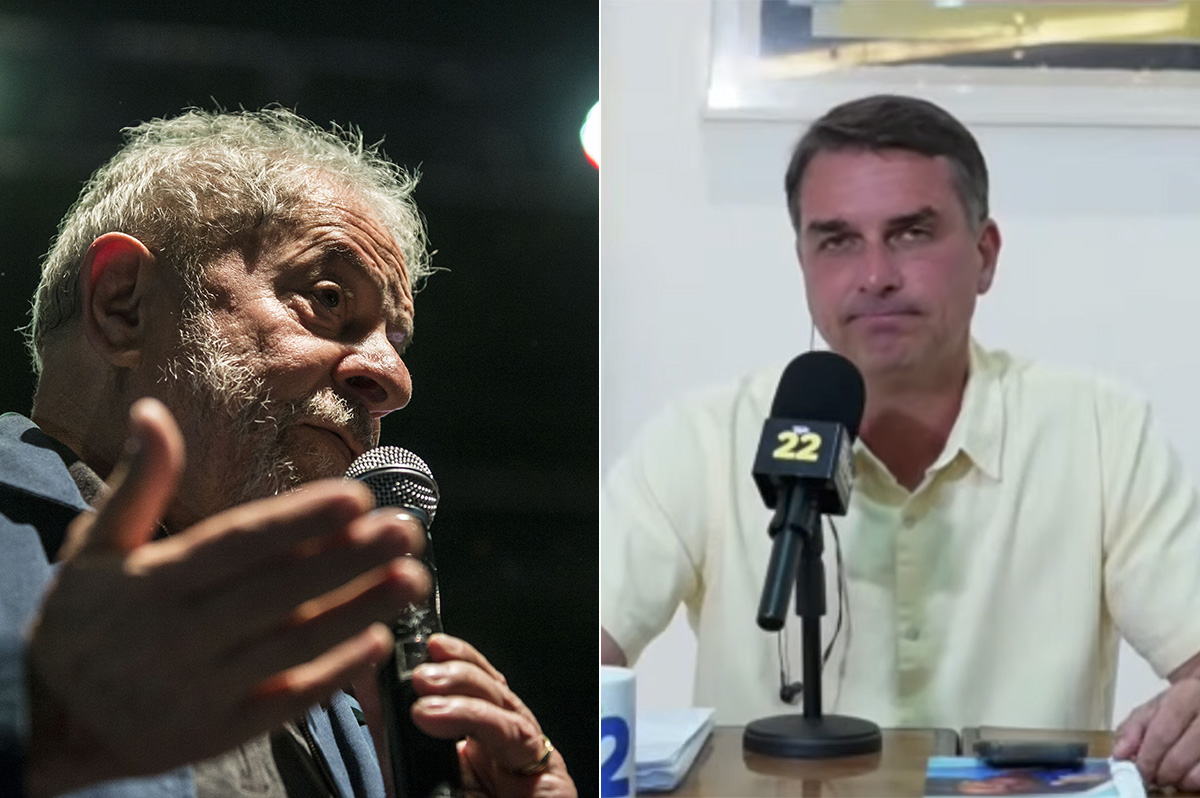
SÃO PAULO — President Luiz Inácio Lula da Silva will face off against Sen. Flávio Bolsonaro in the second round of Brazil’s presidential election on Oct. 25 after neither man received more than 50 percent of the vote in the first round that took place on Sunday.
Bolsonaro was ahead of Lula by a 47.03-45.16 percent margin with 100 percent of the vote counted.
Lula in 2022 defeated Bolsonaro’s father, then-President Jair Bolsonaro, in that year’s presidential election.
The Brazilian Supreme Court last year sentenced Bolsonaro — who repeatedly targeted LGBTQ Brazilians and other groups while in office — to more than 27 years in prison for his role in an attempted coup that saw thousands of his supporters storm the Congress, presidential palace, and the Supreme Court itself on Jan. 8, 2023. Bolsonaro is currently serving his sentence at his home in Brasília, the country’s capital, because of his poor health. His son has pledged to pardon him if he becomes the country’s next president.
Lula, who leads Brazil’s leftist Workers’ Party, was Brazil’s president from 2003-2010.
Sergio Moro, a judge who Jair Bolsonaro later tapped as his government’s Justice and Public Security Minister, in 2017 sentenced Lula to 9 1/2 years in prison after his conviction on money laundering and corruption charges that stemmed from Operation Car Wash.
The Supreme Court in November 2019 ordered Lula’s release.

VoteLGBT, an organization that seeks to increase LGBTQ representation in Brazilian politics, noted 529 openly LGBTQ candidates ran in this year’s election. More than 100 of them are either transgender or travesti.
The Washington Blade will cover the results of these races when they become available.
U.S. Federal Courts
Renee Good’s family files two federal lawsuits
ICE officer killed lesbian mother of three in Minneapolis in January

The family of lesbian woman who a U.S. Immigration and Customs Enforcement killed in Minneapolis in January have filed two federal lawsuits.
The Associated Press notes Renee Good’s partner, Becca Good, and her brother, Brent Ganger, in the lawsuits accuse the Trump-Vance administration and ICE officer Jonathan Ross of “unjustified and excessive use of force.”
Renee Good was a 37-year-old mother of three.
Ross on Jan. 7 shot and killed her in Minneapolis.
The shooting took place during the Trump-Vance administration’s so-called Operation Metro Surge that targeted Somalis and other immigrant groups in Minneapolis. U.S. Customs and Border Protection agents on Jan. 24 shot and killed Alex Pretti, a 37-year-old nurse who worked for the U.S. Department of Veterans Affairs, in Minneapolis.
Both shooting sparked outrage across the U.S. and around the world.
“Every morning, she is my first thought. I think about how the kids are growing up without their mama, and how I will grow old without the love of my life. I think about how we should have had 40 more years together. But I also think about what she would have wanted after all of this,” said Becca Good in a statement the Human Rights Campaign released after she and her partner’s family announced the lawsuits.
“As we have tried to navigate our own massive loss, I am also devastated by how many other lives have been destroyed in this darkest of times. So many other families are dealing with the loss of their loved ones; to everyone who has had to witness it — the pain of this moment extends far beyond our family,” added Becca Good. “What happened to us should never happen to any family. No child should grow up without a parent because of it. No one should lose their sister or their daughter. No one should have to live without their soulmate. Accountability — real accountability — is the only way to make sure that no other family has to go through what we have.”
HRC President Kelley Robinson in her own statement said the Good family “is one of our own — and today, the Human Rights Campaign joins them in demanding justice.”
“It has been eight months and 24 days since Renee was shot and killed by an ICE agent, and the United States government has failed to take responsibility for its actions,” said Robinson. “Her partner, Becca, and brother Brent, have made the brave and bold decision to hold the government accountable, and we stand with them. Like every person murdered by ICE, Renee should be alive today. The Goods were robbed of what every American family deserves: to be together.”

Transgender woman elected to Brazilian Chamber of Deputies

Lula, Flávio Bolsonaro to face off in second round of Brazilian presidential election

The financial realities facing LGBTQ+ first-time buyers

‘Merrily’ is for Sondheim super fans, the uninitiated, and anyone in between

Engrossing ‘Tip Toe’ delivers tension and an ominous warning

Meet the LGBTQ candidates running for U.S. House, Senate

Ana Brnabić becomes world’s first openly lesbian head of state

Vote now! Best Of LGBTQ DC readers’ choice awards

Gay Va. couple hopeful voters will enshrine marriage equality in state constitution

Victory Fund board investigates former staffers’ allegations against CEO Evan Low
-

 2026 Midterm Elections5 days ago
Meet the LGBTQ candidates running for U.S. House, Senate
-
Serbia5 days ago
Ana Brnabić becomes world’s first openly lesbian head of state
-
Arts & Entertainment5 days ago
Vote now! Best Of LGBTQ DC readers’ choice awards
-
Virginia4 days ago
Gay Va. couple hopeful voters will enshrine marriage equality in state constitution