Local
Md. trans activist, businesswoman Sharon Brackett dies at 59
Co-founded Gender Rights Maryland
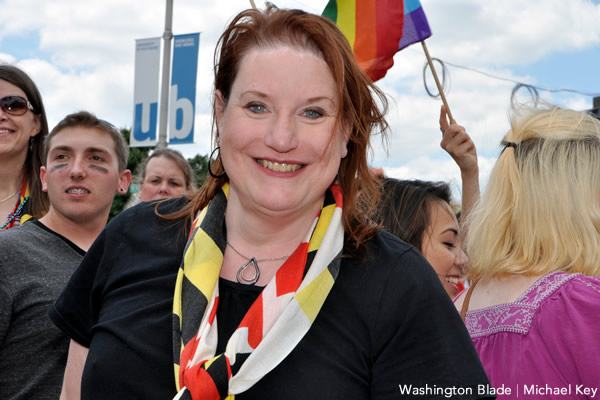
Sharon Brackett, a Maryland businesswoman and transgender rights advocate who played a lead role in the successful effort to persuade the Maryland Legislature to pass transgender rights legislation in 2014, died on May 24 at her Baltimore home. She was 59.
Her son, Steven Brackett, told the Baltimore Sun she had “chronic illnesses that manifested themselves in cardiac arrest.”
Brackett’s LinkedIn page says she helped to start five companies over the past 20 years and was named by the Maryland Department of Commerce in 2016 as one of Maryland’s Top Women in Tech.
With a degree in computer engineering from Syracuse University in New York, Brackett served as president and CEO for the Laurel, Md., based tech company Tiresias Technologies, Inc. from 2011 to 2019. She served from 2019 to 2021 as founder of Baltimore Design Works, Inc., an engineering and design company, according to her LinkedIn page.
In a YouTube interview in March of this year conducted by a student intern, Brackett said that after encountering what she considered discrimination in the business world as a transgender woman she joined other trans activists in 2011 as co-founder of Gender Rights Maryland, a statewide group that advocates for transgender rights. Bracket served as chair of the group’s board from 2011 to the time of her passing this week.
LGBTQ activists in Maryland have said Brackett also became involved in the broader LGBTQ rights movement. She served as co-chair for the National LGBTQ Task Force’s Creating Change conference in Baltimore in 2012. She also served on the boards of the Point Foundation, a national LGBTQ scholarship organization; and OutServe-SLDN, an advocacy group for LGBTQ people in the military.
As if that were not enough, Brackett co-founded Trans Parent Day and served as a volunteer co-moderator for a gender identity support group of the Gay and Lesbian Community Center of Baltimore. In prior years, she served as a mentor for high school students interested in tech-related projects and was a scout master in the Boy Scouts of America.
In 2018, Brackett won election to the Baltimore City Democratic State Central Committee, becoming the first transgender person to be elected to any political office in Maryland. She was later named as chair of the LGBTQ+ Diversity Leadership Council of the Maryland Democratic Party.
Brackett appeared to sum up her career as a businesswoman and her role as an activist in a campaign website post when she ran as a candidate for the Democratic committee position.
“Yes, I am an Engineer, Entrepreneur, Corporate Executive, Roboticist, Rocketeer, Maker, and sometimes Activist,” her campaign write-up says. “I also just happen to be trans. If that’s a showstopper for you then I’m probably not your candidate,” she stated.
“But if you consider my challenges and experience. My support of diversity and inclusion. My on the ground experience in Annapolis. I think you will find I’ve honed all the tools for this job and then some,” she stated.
“Sharon was a dedicated champion of equality for all and gave much of her time, heart and soul to the fight for equality for all Marylanders,” said College Park Mayor Patrick Wojahn, who’s gay. “Her passing is a true loss for the whole LGBTQ+ community,” Wojahn said.
Sara Law, Brackett’s partner for the past seven years, was the first to announce Brackett had passed away in a Facebook posting.
“She left this world so much better than she found it,” Law wrote. “That was one of her goals, and she met it many times over – be it Boy Scouts, or gender rights, or robotics, or local politics.”
The Baltimore Sun reported Brackett was born in Batavia, N.Y., and lived in Laurel, Md., before settling in Baltimore.
Survivors include her partner, Sara Law; her son, Steven Brackett; and daughter, Jess Brackett. No immediate plans were announced for funeral or memorial services.




Delaware
Gay man sues Delaware AG for not prosecuting partner in domestic violence case
Also accuses Univ. of Delaware of failing to discipline Ph.D. student named as attacker
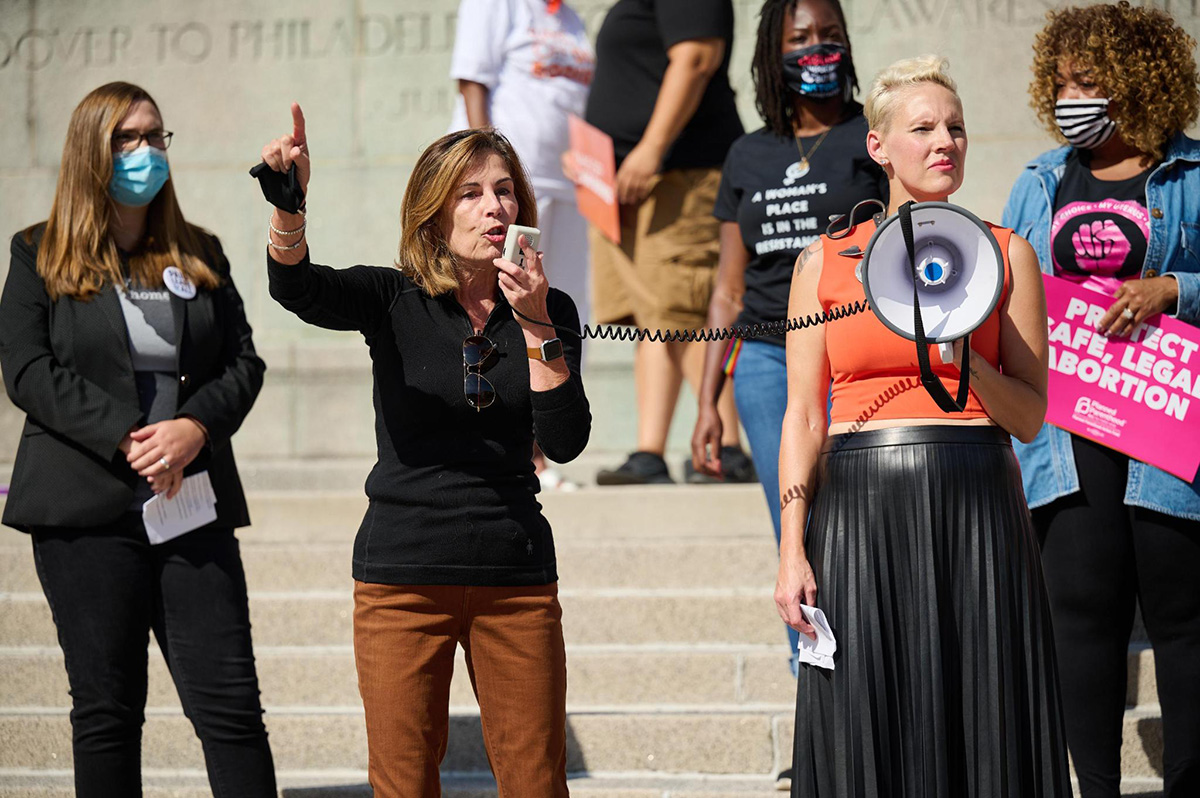
Tymothy ‘Ty’ Moyer, a gay former resident of Wilmington, Del., earlier this year filed a lawsuit in federal court charging Delaware Attorney General Kathleen ‘Kathy’ Jennings, one of her deputies, and a state-employed victims advocate with conspiring to deny him “equal protection” under the law because he is African American by declining to prosecute his then domestic partner after the partner’s arrest on Feb. 3, 2024, for assaulting and seriously injuring him, causing a “permanent traumatic brain injury.”
The lawsuit also names as defendants the University of Delaware and one of its officials for allegedly failing to sufficiently discipline Michael Uzu, Moyer’s former partner and alleged attacker, who at the time was a graduate student seeking a Ph.D. in chemistry.
According to the lawsuit, following his arrest on an assault charge, the university conducted an investigation of Uzu and found he violated the university’s policy of student conduct by engaging in domestic violence, but issued a deferred suspension until December 2025, allowing him to continue his studies. Moyer has said the university acted improperly by not expelling Uzu from its Ph.D. program because of the seriousness of the assault.
The lawsuit identifies Uzu, 33, as a citizen of Nigeria with a U.S. student visa. Uzu identifies himself on his LinkedIn page as a chemist who was conducting research for the Delaware-based chemical company Chemours while studying advanced chemistry at the University of Delaware. His LinkedIn page says he received his Ph.D. in 2026.
Moyer, 30, who identifies himself in his lawsuit as African American and a lifelong U.S. citizen, provided the Washington Blade with a statement describing the details of his allegations against Uzu.
“On the late evening of February 2 through the morning of the 3rd, in 2024, I ended the relationship and asked Michel ‘Mike’ Uzu to leave my apartment in Wilmington, Delaware,” his statement says. “I was ending the relationship after months of escalating mistreatment,” the statement says, adding that Uzu refused to leave his apartment and started a confrontation.
“Uzu attacked me,” the statement continues. “He struck me repeatedly with his fists, with my own cell phone, and with a titanium lacrosse stick that he picked up from inside the apartment and used to strike me on the head. I suffered severe facial trauma, swelling, bodily bruising, and required surgical staples to close the lacerations on the top of my skull.”
The statement adds, “During the assault, Uzu told me he would kill me if I told anyone. Outside the apartment building, Uzu picked up a large rock and positioned himself to strike me with it before a bystander intervened.” It says Moyer was then transported to the emergency room of a nearby hospital.
Moyer’s lawsuit says Uzu was arrested by Wilmington police, indicted by a grand jury, and arraigned on felony and misdemeanor assault charges.
In response to an email request from the Blade for comment, Uzu emailed a statement on Sept. 15 denying all of Moyer’s allegations, saying it was he who told Moyer he wanted to end their relationship and it was Moyer who assaulted him.
“He would get drunk and use drugs and pick up fights with me and apologize when he became normal,” Uzu says in his statement. “So, I packed up my things and decided to depart from him,” he said, adding, “The night preceding the day I was moving out he attacked me while I was sleeping, kicked me in the stomach and injured me in my arms, jaw and neck while I was sleeping, that turned into a fight as I was defending myself.”
He said he called the police and before the police arrived Moyer “self-inflicted injury on himself and framed it on me.”
Moyer couldn’t immediately be reached for a response to Uzu’s allegations. But his friend, journalist Scott Davis, who has followed the case and examined the police report and court documents, said none of Uzu’s allegations could be confirmed by police, who arrived on the scene and prepared a report. Among other things, Davis said the investigation conducted by the University of Delaware found Uzu never provided any documentation that he was injured.
Davis said Moyer, who is about 5 feet 7 inches tall and weighs about 160 pounds compared to Uzu, who is over six feet tall and weighed over 200 pounds, was the one found to be suffering serious injuries, with no injuries reported for Uzu.
Moyer’s earlier statement to the Blade says that In September 2024, on the day of his birthday, the lead prosecutor in the case, Deputy Attorney General Claudia Debonte, called him to inform him she was dropping the case. The lawsuit states that the reason given for dropping the case was insufficient evidence based on Uzu’s claim that he acted in self-defense.
“The University’s hearing officer explicitly rejected Uzu’s self-defense claims as ‘inconsistent and unreliable’ and found that Uzu’s account contained ‘multiple irreconcilable inconsistencies’ and ‘material omissions,’” Moyer’s lawsuit states.
Moyer’s lawsuit says the university’s investigative findings and the police report at the time Uzu was arrested, along with a partial video Moyer took with his phone showing Uzu attacking him with the lacrosse stick, clearly provide sufficient evidence for a full prosecution.
Moyer has said the assault left him with permanent brain damage that impaired his vision, forcing him to resign from his career as a financial compliance associate with the BlackRock asset management company.
In response to a request by the Blade for comment on why the Delaware Attorney General’s office, with the approval of Attorney General Jennings, declined to prosecute Uzu for assault, Matt Marshall, a spokesperson for Jennings, sent the Blade a statement.
“While I can’t characterize specific evidence or statements made to police, the State’s analysis included, but was not limited to, the investigation’s finding that the Defendant had a credible claim of self-defense,” according to Marshall’s statement.
“This kind of dynamic is fairly common in domestic violence cases, no less so in same-sex cases,” he said. “A case being unviable at trial does not mean a victim has not been harmed, that we don’t believe them, or even necessarily that a Defendant is innocent,” Marshall’s statement says. “It only means that criminal guilt could not be proven at trial.”
Among other things, he noted that prosecutors must be able to convince a jury that a defendant is guilty beyond a reasonable doubt. In this case, he said, his office did not believe they could overcome “every reasonable doubt, which would include a Defendant’s argument that they acted in self-defense.”
Jennings, a Democrat, who easily won her primary race for re-election to a third four-year term on Tuesday, has a longstanding record of support on LGBTQ rights and progressive causes. She was challenged by two opponents in the Sept. 15, 2026, Delaware Democratic primary. One of the opponents, civil rights attorney Dwayne Bensing, is gay and would have become the nation’s first openly gay state attorney general had he prevailed in the race.
In response to a request from the Blade for comment on Moyer’s lawsuit allegations, Bensing said in a statement that when the Attorney General’s office declines to prosecute a case where an arrest was made it should maintain the public trust by being “transparent” about its decision-making process.
“As Attorney General, I will commit to reviewing how domestic partner violence cases are handled across the state to ensure that prosecutorial decisions are made consistently, transparently, and free from administrative oversight failures,” he said.
Moyer’s lawsuit, which was filed in the U.S. District Court for the District of Delaware on April 16, 2026, calls for a jury trial and requests that the court issue a judgment against each of the defendants, “jointly and severally” finding that they “conspired to deprive Plaintiff of the equal protection of the laws in violation of 42 U.S. Code 1985 (3).”
It calls for compensatory damages and punitive damages against each defendant “in an amount to be determined at trial, including damages for lost wages, medical expenses, legal fees, emotional distress, and pain and suffering.”
Moyer said he is currently representing himself without an attorney.
In an Aug. 28, 2026, “Report and Recommendation,” Magistrate Judge Laura D. Hatcher, who was presiding over the lawsuit case, issued a recommendation that the case be dismissed without prejudice on grounds that Moyer’s complaint “fails to state a claim upon which relief can be granted” based on existing federal law.
Hatcher also recommended that Moyer be “granted leave to amend his complaint within thirty (30) days of the District Court’s adoption of this Report and Recommendation.”
Moyer told the Blade District Judge Gregory B. Williams accepted the recommendation and granted him permission to amend and revise his complaint.
“An amended complaint addressing the Court’s guidance will be filed within the timeframe the Court has provided,” Moyer said. “The Court identified areas where the complaint needed further development, and that development is underway,” he said.
Moyer’s friend, journalist and commentator Davis, said he has conducted research into domestic violence cases in Delaware and reported in articles and commentaries that Delaware is one of the states with the highest rates of domestic violence cases that are not prosecuted.
“In fiscal year 2024, Delaware law enforcement made 5,064 domestic violence arrests,” Davis wrote in a November 2025 commentary entitled, “Was Ty Moyer Too Black and Gay for Delaware AG Kathy Jennings to Prosecute His Attacker?” He added, “Yet Jennings’ office prosecuted only 1,184 cases – a mere 23 percent,” Davis wrote, adding that, “More than three-quarters of domestic violence perpetrators faced no prosecution despite being arrested.”
Davis told the Blade that Jennings’s decision not to prosecute Uzu has raised concerns that she based that decision on political bias. He points out that Jennings has publicly aligned herself with national immigration advocacy efforts, including joining lawsuits against the Trump administration’s immigration policies and its funding freezes against universities, including the University of Delaware.
Davis said Uzu’s academic ties to the University of Delaware and the chemical company Chemours, which Davis says is “politically influential” with its headquarters in Wilmington, has led some to believe that Jennings’s refusal to prosecute Uzu was politically motivated, aimed at preserving her image as a defender of immigrants rather than pursuing justice for a domestic violence victim.
Jennings’s supporters dispute those claims, saying she bases her decisions on whom to prosecute on the available evidence.
As if all that were not enough, Davis said he contacted the U.S. Department of Homeland Security in September 2025 to find out if their strict policy of investigating and deporting immigrants found to have violated U.S. laws, including engaging in violent behavior, might apply to Michael Uzu, who was charged with assault and is in the U.S. on a visa status. Davis said the DHS did not respond to his inquiry.
Virginia
Virginia Anti-Violence Project struggles to fill federal funding gaps
Group has lost 54 percent of funding since 2020
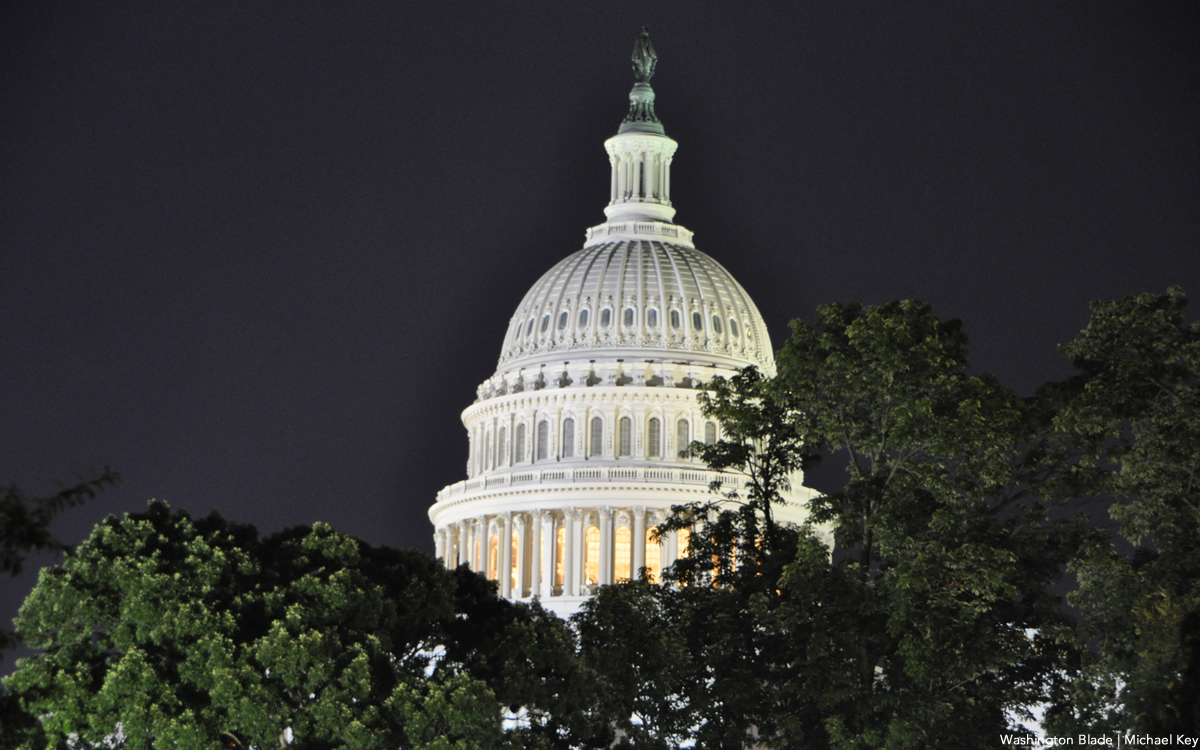
A loss of federal funding has threatened to adversely impact the Virginia Anti-Violence Project’s work in the state.
The group’s mission is to assist LGBTQ and BIPOC (Black, Indigenous and people of color) victims of domestic, sexual, interpersonal, and state violence with direct support, education, and advocacy. The VAVP seeks to build a future where LGBTQ and BIPOC individuals can live freely without a sense for worry about violence.
“Virginia Anti-Violence Project helps to close the distance between services existing and LGBTQIA+ survivors actually being able to reach safety, stable housing, and support that they can trust,” VAVP Executive Director Ebony Clark told the Washington Blade on Tuesday. “Our mission is to provide direct services and advocacy to LGBTQ+ survivors across Virginia.”
Clark said obtaining state and federal funds has become increasingly difficult.
“One of the reasons that we can talk about is politics and how you know queer diverse, queer communities are targets when it comes to politics, and so that may be a reason why the funding is decreasing in in very niche areas, but overall, state funding, federal funding has been lost or significantly reduced when it comes to culturally specific marginalized populations,” Clark said. “The bigger picture is that funding that was purposed for diversity, equity, inclusion, marginalized populations, or you know culturally competent programming, those funds have been strategically reduced or eliminated on state and federal levels overall.”
Even more so with the current Trump-Vance administration.
VAVP’s federal funding has dropped 54 percent over the last six years: from $25.1 million in fiscal year 2020 to $11.6 million in fiscal year 2026.
Clark noted some federal funding has been denied due to VAVP’s DEI policies — it has had to “water down” their language. These cuts have forced VAVP to limit housing and economic support, which has resulted in fewer resources for its clients.
The organization has set up a goal for receiving between $250,000-$300,000 a year that would allow it to operate — and focus on client housing.
“Housing is fundamental to safety,” Clark told the Blade. “If you know leaving violence puts someone on the street or forces them back to the person harming them, that means the crisis isn’t over. So there needs to be other prevention strategies and reactive strategies in place to be able to prevent further violence from folks.”
VAVP has set up a link for anyone who is interested in making a donation. It is here.
The VAVP website is also accepting donations.
District of Columbia
Hands Off the Arts to form ‘human chain’ around Kennedy Center
Drag performer Tara Hoot among event organizers
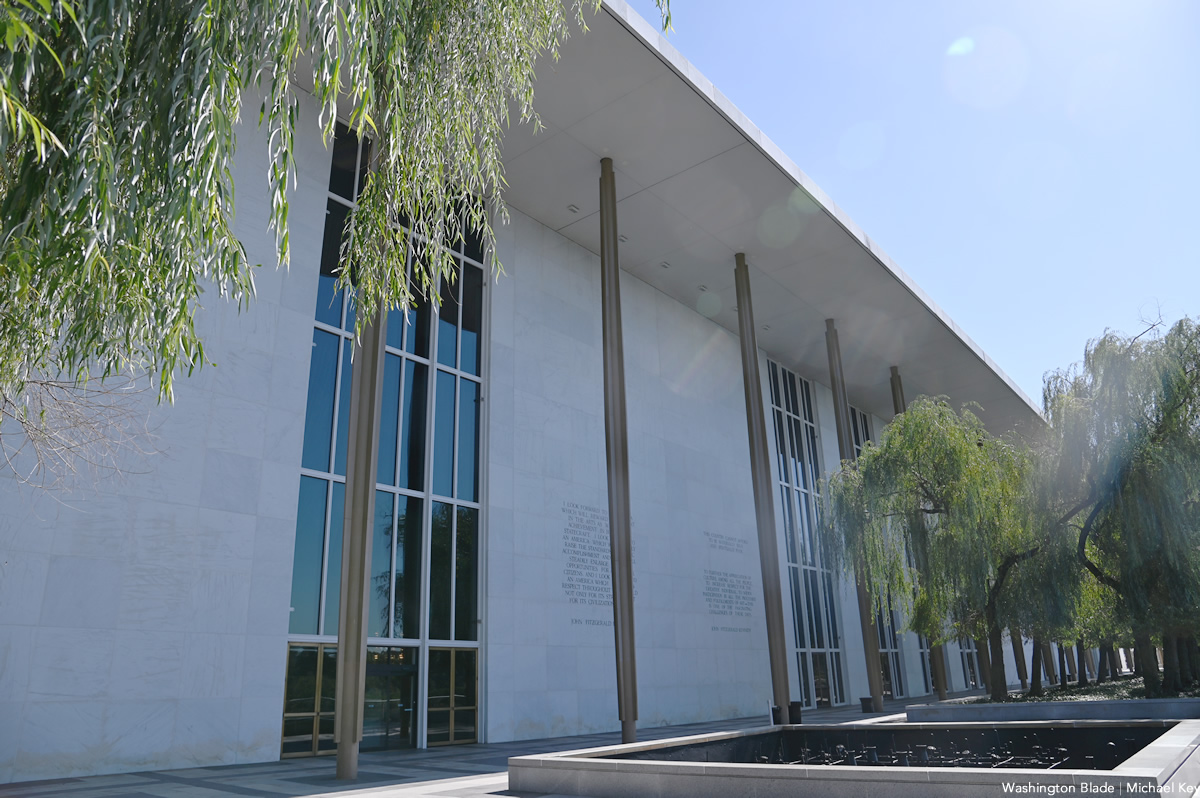
An organization called Hands Off the Arts has announced it is holding a protest on Friday, Sept. 18, in which between 400 and 800 participants are expected to create a “human chain” around the Kennedy Center to voice their strong objection to President Donald Trump’s call for possibly demolishing the Kennedy Center.
“Hands Off the Arts is organizing a rally Sept. 18 against the president’s defacing of JFK’s memorial, his removal and censorship of art, and the threat to demolish the center if he can’t remake the site in his image,” a statement released by the group says.
The statement says the event will start with a rally at 6:30 p.m. on the Kennedy Center steps and culminate with a “human chain” around the building. “There will be musical performances, testimonials from current and former employees, along with other special guest speakers,” it says
A separate announcement by the group says longtime D.C. drag performer Tara Hoot, who has performed at the Kennedy Center in past years, was among the organizers of the Sept. 18 protest.
The planned protest follows Trump’s decision last year to use his authority to replace the existing members of the Kennedy Center’s board of directors with new members loyal to him. Over the objection of longtime Kennedy Center supporters, the Trump-appointed board changed the name of the center, at Trump’s request, from the John F. Kennedy Memorial Center for the Performing Arts to the Donald J. Trump and the John F. Kennedy Center for the Performing Arts.
But following the threat of legal action by opponents who pointed out that the name change could not be legally made unless approved by Congress, the name change was cancelled, with Trump saying he would take steps to restore it later.
The Washington Post, meanwhile, reports in a Sept. 13 news story that because of negative publicity related to Trump’s actions, the Kennedy Center was facing “fiscal collapse” and possible bankruptcy and could be forced to shut down as early as this week.
According to the Post report, a 57-page document presented to the Kennedy Center’s board of trustees says the center was facing a financial and structural building crisis, with the recent collapse of part of the building’s inside ceiling, indicating the building was unsafe for employees and the public. Among other things, the document says the Kennedy Center may not be able to make payroll or pay for routine maintenance “within a matter of weeks,” the Post reports.
Some LGBTQ advocates were among those who joined others in boycotting the Kennedy Center to express their objections to Trump’s actions, including a statement by Trump that he objected to the Kennedy Center’s practice of hosting drag performances.
The Gay Men’s Chorus of Washington has been among the LGBTQ performing arts groups and artists that have performed at the Kennedy Center.
“With the future still very much uncertain, now more than ever, the Center needs you to stand up for freedom of expression and against authoritarian overreach into arts and culture institutions,” the Hands Off the Arts group says in its announcement of the Hands Around the Kennedy Center protest.
“You have the opportunity to make a difference — show up with Hands Off the Arts and show your power as part of Hands Around the Kennedy Center,” it says.
A spokesperson for the Kennedy Center couldn’t immediately be reached for comment.

Trump’s Cabinet: Dumb, dumber, dumbest, and evil

D.C.’s fall theater season is already well underway

More than 150 people detained outside Istanbul courthouse

Gay man sues Delaware AG for not prosecuting partner in domestic violence case

Virginia Anti-Violence Project struggles to fill federal funding gaps

‘Thelma and Louise’ remains landmark of unspoken queer rebellion

Dolly Parton biography puts her hardships into context

PHOTOS: SMYAL Fall Brunch

Fashion icon Bob Mackie dead at 87