Asia
U.S. continues to push for Asian Development Bank LGBTQ, intersex safeguard
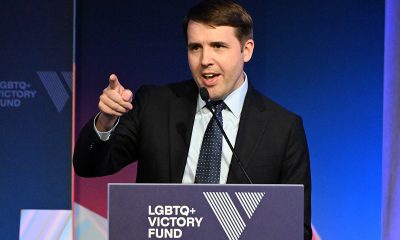
Chantale Wong says Biden administration continues ‘to press our position’
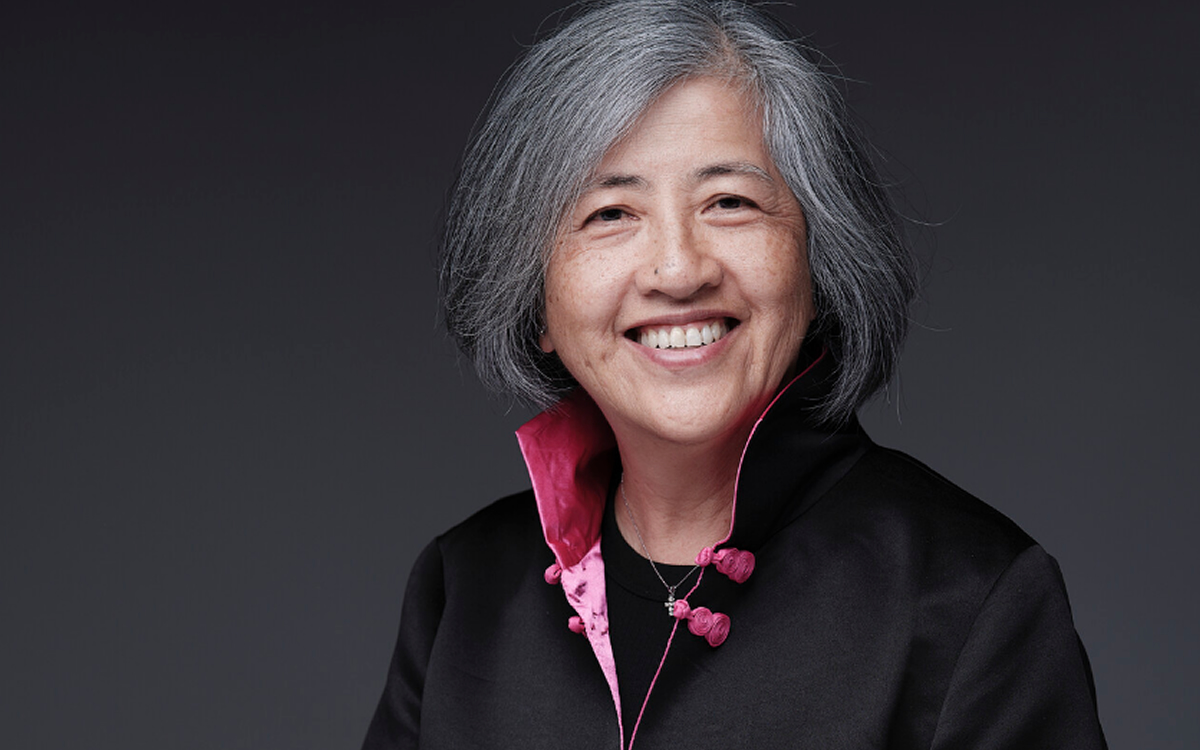
The U.S. director of the Asian Development Bank last month said the Biden administration continues to push for the inclusion of sexual orientation and gender identity to the institution’s safeguards.
“We continue to press our position, the U.S. government position,” Amb. Chantale Wong told the Washington Blade on Oct. 15 during a telephone interview.
The ADB, which is based in the Philippines, seeks to promote economic and social development through the Asia-Pacific Region. Wong, who is the first openly lesbian U.S. ambassador, spoke with the Blade while she was in D.C. to attend the annual World Bank Fall Meetings.
The Treasury Department has endorsed the safeguard. Wong said Assistant Secretary for International Trade and Development Alexia Latortue, who headed the U.S. delegation to the ADB’s annual meeting that took place at its Manila headquarters in late September, raised the safeguard throughout the gathering.
“Alexia would bring up the safeguards and what the U.S. government’s proposal is and we were urging them to adopt that,” said Wong. “That was very powerful.”
The ADB board is expected to vote on the proposed safeguard in late 2023.
Wong recently met with activists in Bhutan, Palau
President Joe Biden in 2021 issued a memo that committed the U.S. to promoting LGBTQ and intersex rights abroad as part of his administration’s overall foreign policy. Wong is one of seven American ambassadors who are openly gay or lesbian.
U.S. House Speaker Nancy Pelosi (D-Calif.) during an Aug. 1 speech to the American Chamber of Commerce in Singapore spoke in support of LGBTQ and intersex rights.
Wong was among those who attended the speech, which coincided with a Congressional delegation to Singapore, Malaysia, Taiwan, South Korea and Japan that Pelosi led. Singapore Prime Minister Lee Hsien Loong on Aug. 21 announced his country will decriminalize consensual same-sex sexual relations.
“I was really pleased to see and hear the speaker bring up LGBTQ issues and how they’re (LGBTQ and intersex people) productive members of society and that criminal laws have no place in modern society to hamper a whole group of people of who they love, who they are,” said Wong. “It was incredible for me to be witness to the speaker’s message there.”
Wong early last month traveled to Bhutan to attend the Subregional Conference on ADB Gender Equality and Social Inclusion Framework in South Asia.
Lawmakers in the small kingdom in the Himalayas that borders India and China in 2020 voted to amend portions of the country’s Penal Code that had been used to criminalize consensual same-sex sexual relations.
Wong said she met with government officials, LGBTQ and intersex activists and representatives of other civil society organizations from Bhutan and five other countries — India, Nepal, Sri Lanka, Bangladesh and Maldives — while at the conference. Wong noted Bhutanese King Jigme Khesar Namgyel Wangchuck told her that his wife, Queen Jetsun Pema, publicly supported the decriminalization of homosexuality in the country.
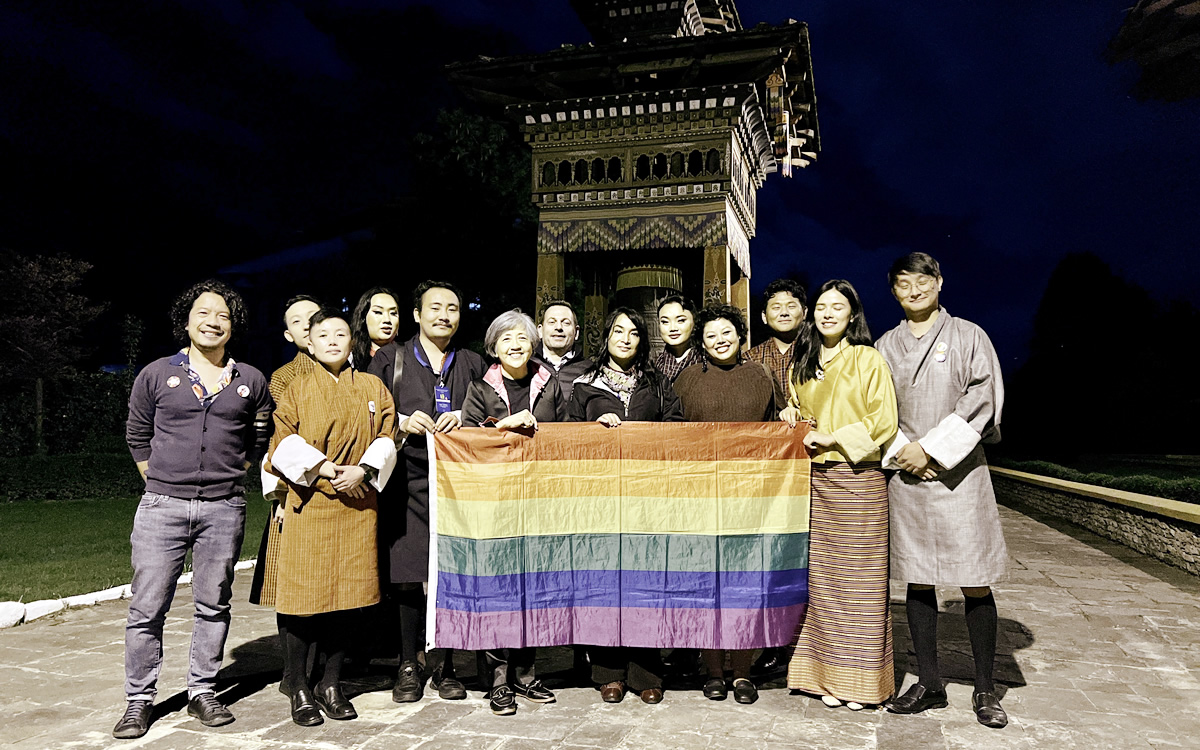
Wong in September met with members of Living All Inclusive in Belau, an LGBTQ and intersex rights group in Palau, an island country in the Western Pacific.
She told the Blade that Palauan Finance Minister Kaleb Udui during their meeting initially said there is no discrimination based on sexual orientation and gender identity in his country because there are no discriminatory laws in place.
“When I spoke with the LGBTQ activists in Palau, they said yes, there is prejudice going on and it has an impact on their ability to get services and there’s consequences from those prejudice areas,” said Wong. “I was able to take their feedback and actually give it back to the minister. He was like, ‘oh, I didn’t know that and that’s good to know.”
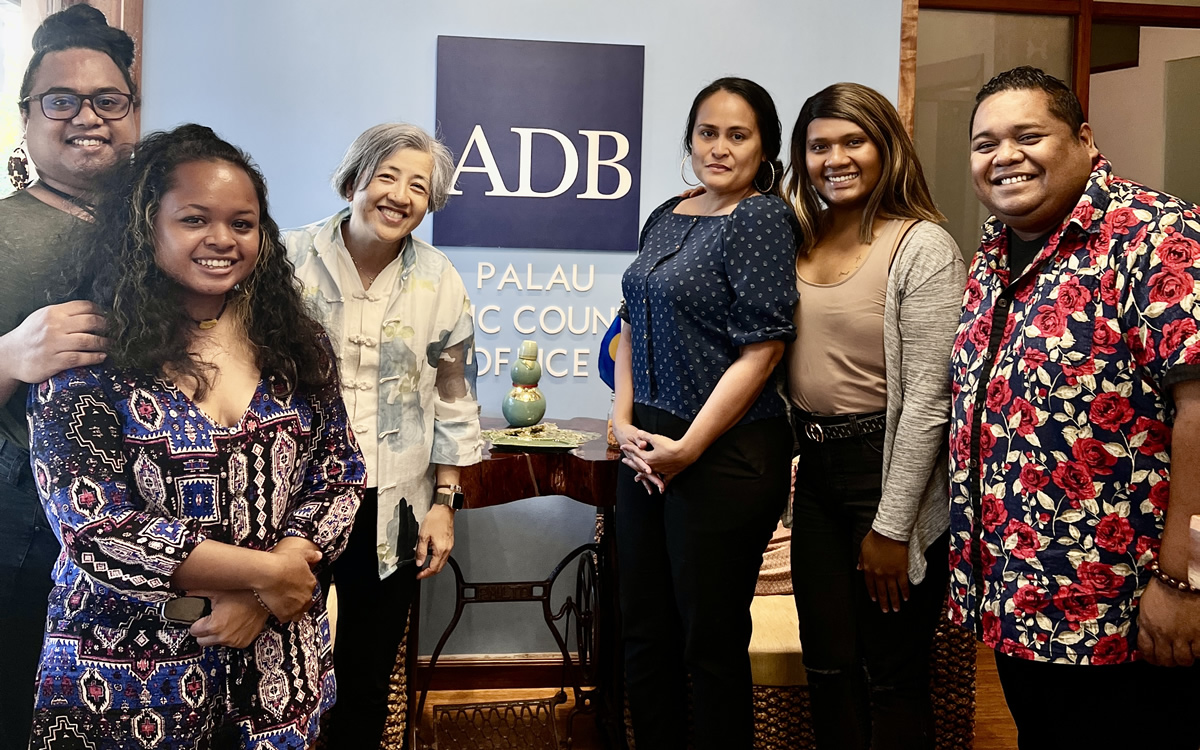
Wong said she tries to meet with LGBTQ and intersex activists in the countries she visits and raises their concerns with government officials.
“I try to meet with the local LGBTQ activists in various places just to understand what their particular situation is and their plight and what their particular challenges are,” said Wong. “I try not to promise what ADB can do or not do, but certainly if there is anything that ADB is doing that’s harmful, I want to know that.”
Wong acknowledged anti-LGBTQ and anti-intersex laws remain on the books in many countries in the Asia-Pacific Region. Wong also said it will be a “huge challenge in implementing” the ADB safeguards.
“We fully recognize that,” she said. “But because of criminal laws, members of the community are very much the most vulnerable of the vulnerable … an institution like ADB needs to step up to provide and protect those that are most vulnerable.”



Japan
Report: LGBTQ exclusion costs Japanese economy billions a year
Open for Business findings coincide with marriage equality fight
LGBTQ exclusion may be costing Japan as much as ¥16.42 trillion ($10.35 billion) annually, according to a new report by Open for Business, which argues that greater inclusion could help address the economic pressures facing a country with a shrinking population and workforce.
Japan’s population is projected to decline from 126.15 million in 2020 to about 87 million by 2070, according to the National Institute of Population and Social Security Research. As the country confronts a shrinking workforce; the economic stakes of retaining talent, improving productivity, and ensuring that LGBTQ people can participate fully in the economy are becoming increasingly significant.
Open for Business estimates that the costs extend beyond lost earnings.
The organization attributes between $25.1 billion to $75.1 billion annually to the excess economic burden associated with depression, suicide and self-harm, cardiovascular disease and HIV/AIDS, and another $12.2 billion to $26.2 billion to lost earnings linked to the LGBTQ wage gap.
A 2026 survey by Dentsu Japan, the Japanese arm of global advertising and public relations company Dentsu Group, found that 10.6 percent of respondents aged 20-59 identified as LGBTQ, up from 9.7 percent in 2023. The survey polled 46,658 people living in Japan.
The report argues that Japan already has the foundations for greater LGBTQ inclusion; pointing to public support, corporate leadership, and growing legal momentum. Progress on these fronts, it says, could reduce the economic costs of exclusion, strengthen workforce participation and help Japan remain competitive.
“For Japan, LGBTQ inclusion is not simply a question of fairness. It is part of the country’s economic resilience,” the report states.
Japan does not legally recognize same-sex marriages at the national level, but partnership systems have spread across local governments. As of 2024, municipalities operating such systems covered nearly 93 percent of Japan’s population. The certificates can help couples access certain services, but they do not carry the same legal status as marriage, including in areas such as inheritance and medical decision-making.
The absence of marriage recognition can leave same-sex couples facing uncertainty over hospital access, medical decisions, and survivor benefits. It can also complicate employers’ decisions about spousal health coverage, relocation assistance and family leave, particularly when policies depend on a marriage recognized under Japanese law.
Japan’s PRIDE Index, administered by the nonprofit Work with Pride since 2016, evaluates corporate initiatives related to LGBTQ employees across five categories, awarding Bronze, Silver or Gold ratings. In 2025, 931 companies headquartered in Japan were assessed, with 80 percent receiving the highest, Gold rating.
Despite progress in corporate inclusion, workplace practices remain uneven.
A 2026 workplace white paper by Nijiiro Diversity found that 55 percent of surveyed employees reported no concrete LGBTQ measures at their workplaces. A separate 2025 survey found that 30 percent of professionals had experienced workplace discrimination or bias based on sexual orientation, while 27 percent reported bias based on gender identity. Only about one-third said they felt comfortable disclosing their sexual orientation or gender identity at work.
The report also points to disparities in HIV and STI outcomes.
Men who have sex with men accounted for an estimated 82 percent of newly diagnosed HIV cases in Japan, according to the report. In a separate study at a Japanese gender-affirming clinic, researchers screened 275 transgender and gender-diverse patients and found that 6.2 percent tested positive for HIV or another sexually transmitted infection. All were asymptomatic when tested.
The report also estimates substantial losses from the LGBTQ wage gap.
It puts Japan’s total earned income at about $1.81 trillion, of which LGBTQ workers account for an estimated $175 billion, or 9.7 percent. Applying a wage gap of 7 to 15 percent, a range the report says is supported by OECD analysis, yields an estimated $12.3 billion to $26.3 billion in lost wages annually. Japanese research cited in the report also points to economic disparities among transgender workers, who are disproportionately represented in non-regular employment and lower-income groups.
“Public attitudes and many leading companies have moved considerably, but national frameworks and everyday workplace experience have not yet caught up. That creates both a challenge and an opportunity,” said Open for Business CEO Ken Janssens. “Japan’s population is projected to fall from roughly 125 million in 2020 to fewer than 87 million by 2070, while its working-age population is already contracting. The country ranks 14th globally for talent appeal but 55th for talent readiness, according to the report. In that context, Japan simply does not have talent to waste. Every worker who is less healthy, less productive, pushed into lower-paid work or unable to participate fully because of discrimination represents a cost that becomes harder to absorb as the labour force shrinks.”
Janssens further told the Washington Blade that the report’s ultimate message is that LGBTQ inclusion is a question of fairness, but in Japan, it is increasingly a question of economic resilience as well. The foundations for further progress are already there. The challenge now is to convert visible corporate leadership and social momentum into consistent practice and clearer protections.
Akira Nishiyama, a spokesperson for the Japan Alliance for LGBT Legislation, told the Blade that Japan’s business sector has pushed for stronger legal protections for sexual and gender minorities.
In 2017, the Japan Business Federation, known as Keidanren, announced a policy calling for nondiscrimination based on sexual orientation and gender identity. Its chairperson also stressed the importance of legislation explicitly prohibiting such discrimination in 2023.
Nishiyama added Japan’s laws addressing workplace power harassment cover harassment based on sexual orientation and gender identity, outing someone without their consent, and forcing or pressuring someone to disclose or conceal their identity. Employers and local governments are required to take measures to prevent such harassment.
“While such legal frameworks and social momentum continue to advance, a law prohibiting discrimination based on SOGI has still not been enacted,” said Nishiyama. “In other words, legal measures to address discriminatory treatment, such as discriminatory hiring refusals, unreasonable transfers, and coerced resignations, are still insufficient. When legislations are needed to bridge this gap, I believe that initiatives promoted by the business sectors as well as the issuance of clear policies aimed at prohibiting discrimination, will serve as one of the major driving forces in this effort.”
Makiko Terahara, co-representative and leader of the business collaboration team at Marriage for All Japan, told the Blade that the figures are estimates and that the report does not claim legal reform alone would eliminate the economic losses.
“But the connection is real. Without marriage, same-sex couples have no spousal status for inheritance, tax, social security or medical decision-making. Without anti-discrimination legislation, employees have no clear legal remedy. This insecurity drives the concealment, stress and wage gaps that the report quantifies. So yes, I believe stronger legal protections would have a measurable impact on health, retention and Japan’s ability to attract talent,” she said.
Terahara also noted to the Blade the report cites a study finding that living in a municipality with a partnership system was not associated with better mental health. She said symbolic recognition without legal rights is not enough.
“The report confirms that Japanese society and business are already ahead of national law,” said Terahara. “Public opinion and leading companies have moved, and the remaining gap is in legislation. The report shows that marriage equality is not only a human rights issue but also an economic one, and that the cost of inaction is being paid now.”
The Open for Business report can be read here.
Afghanistan
ICC unseals arrest warrants for Taliban officials accused of persecuting LGBTQ people, women
‘For LGBTIQ+ people, this matters enormously’
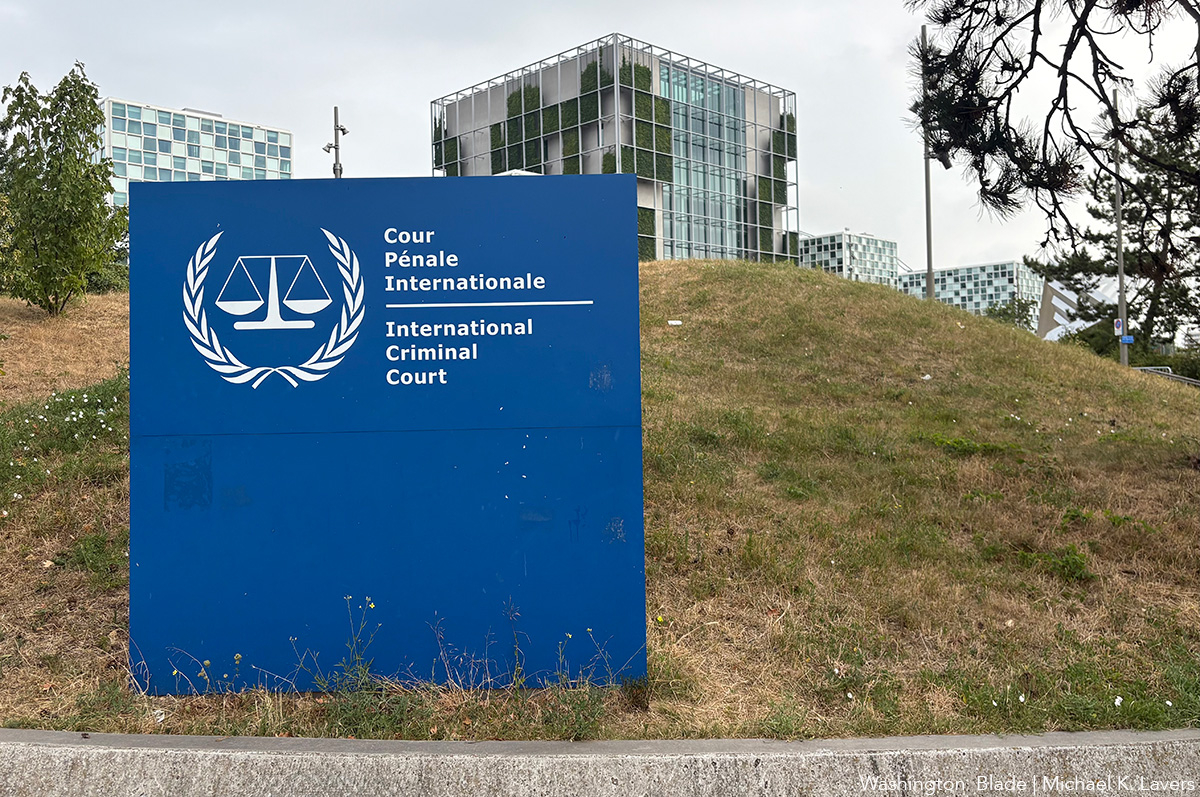
The International Criminal Court this week unsealed arrest warrants for four Taliban officials in Afghanistan accused of targeting LGBTQ people, women, and others who defy the group’s strict gender norms.
The warrants the ICC unsealed on Oct. 5 are for Hibatullah Akhundzada, the Taliban’s supreme leader, and Chief Justice Abdul Hakim Haqqani. The ICC also unsealed warrants for Education Minister Habibullah Agda and Higher Education Minister Neda Mohammad Nadim.
The ICC last year announced warrants for Akhundzada and Haqqani, as the Washington Blade previously reported.
“In the warrants of arrest, the (Pre-Trial) Chamber (II), in line with current developments in international law, found that the definition of ‘gender’ in the Rome Statute necessitates an interpretation that goes beyond a purely biological conception of sex,” reads the ICC’s Oct. 5 announcement. “It considered that it requires acknowledging the socially constructed roles, behaviors, expectations, and hierarchies traditionally associated with individuals on the basis of their sex. The Chamber considered that these societal constructs, commonly referred to as ‘gender norms,’ form part of the contextual lens through which acts amounting to gender-based persecution under article 7(1)(h) must be assessed.”
“It found that there are reasonable grounds to believe that the four suspects are criminally responsible for having ordered, induced or solicited the crime against humanity of persecution, under article 7(1)(h) of the Rome Statute, on gender grounds against girls, women, and other persons non-conforming with the Taliban’s policy on gender, gender identity or expression; and on political grounds against persons perceived as ‘allies of girls and women,’” it adds. “These crimes are believed to have been committed on the territory of Afghanistan since the Taliban seized power on Aug. 15, 2021, and have continued until at least Jan. 20, 2025.”
The Rome Statute established the ICC, which is in the Dutch city of The Hague, in 2002 after 60 countries ratified it.
The U.S. is among the countries that do not recognize the ICC. Secretary of State Marco Rubio on Friday announced U.S. sanctions against the ICC, which he described as a “rogue court.”
Then-ICC Chief Prosecutor Karim Khan in January 2025 announced a request for warrants against Taliban officials over their treatment of women and other groups since they regained control of Afghanistan in 2021. It marked the first time the ICC specifically named LGBTQ people as victims in a gender persecution case before it.
A report that Outright International released in 2023 notes Taliban officials have systematically targeted LGBTQ people — especially gay men and transgender women.
Taliban officials have subjected them to physical and sexual assault as well as arbitrary detention. The Outright International report also notes Taliban authorities have carried out public floggings for alleged same-sex sexual relations, and have collected intelligence on LGBTQ activists and community members.
Artemis Akbary, executive director of the Afghanistan LGBTIQ Organization, on Oct. 5 described the additional arrest warrants as “huge.”
“For LGBTIQ+ people, this matters enormously,” he said. “It strengthens the understanding that gender persecution can also capture persecution based on non-conformity with imposed gender roles, identities, and expressions.”
“This is an important development for accountability in Afghanistan, and potentially far beyond it,” added Akbary.
Indonesia
Indonesia’s top Muslim clerical body proposes criminalizing LGBTQ people, advocacy
Proposal underscores increased pressure against community
Indonesia’s top Muslim clerical body has proposed replacing the term “LGBT” with “LGSP,” grouping lesbian and gay people with sodomy and sexual abuse, as it prepares a proposed law that would criminalize conduct and advocacy it consideres prohibited.
Asrorun Niam Sholeh, head of the Indonesian Ulema Council’s Fatwa Commission, announced the proposal in Jakarta in late July, saying the council was preparing an academic paper and draft bill to submit to the government and MPs
The council in August also warned men against wearing women’s clothing during Independence Day festivities, despite a long-standing tradition in some Indonesian communities of men dressing in dresses and hijabs to play football as part of the annual celebrations. In a statement issued Aug. 7, the Fatwa Commission said such cross-dressing was “haram,” or forbidden under Islamic law, and linked the practice to what it described as a covert campaign by the “Lesbian, Gay, Sodomy and Obscenity (or LGSP) movement.
Indonesia on Aug. 17 marks its 1945 declaration of independence from the Netherlands with flag ceremonies, neighborhood gatherings, and a lively tradition of community competitions known as “lomba tujuhbelasan.” Children and adults take part in games ranging from sack races and cracker-eating contests to tug-of-war and “panjat pinang” — teams climb a greased pole to reach prizes at the top. Some communities also hold football matches in sarongs or “daster,” a loose-fitting house dress traditionally associated with women, turning the celebrations into an occasion for communal play and laughter.
The pressure extends beyond religious authorities.
In a report published in July, Human Rights Watch said attacks against LGBTQ university students had escalated during June’s Pride Month, while at least 10 public universities had recently adopted discriminatory regulations and curbed student media coverage and social media discussions about gender and sexual diversity. The rights group said the measures undermine freedom of expression and academic freedom.
Reacting to Pride Month celebrations, the Ulema Council called for “sexual deviation” to carry criminal penalties heavier than those for adultery and said it was preparing a draft law to criminalize LGBTQ conduct and campaigning.
President Prabowo Subianto in October 2025 signed Presidential Regulation No. 111 of 2025, which sets Indonesia’s General National Defense Policy for 2025–2029 and classifies the spread of LGBTQ culture as a non-military threat to the state. The provision places it among other perceived threats that include terrorism, radicalism, separatism, and the spread of prohibited ideologies.
The regulation drew public attention in July after Indonesian media reported on the provision, prompting Amnesty International Indonesia Executive Director Usman Hamid to warn that it could institutionalize discrimination against LGBTQ people.
“Amnesty International Indonesia unequivocally condemns these attacks and intimidation by both state and non-state actors based on perceived sexual orientation or gender identity,” said Amnesty International Indonesia. “We urgently call upon the Indonesian government to repeal this regulation and uphold its constitutional mandates and the international human rights treaties it has ratified.”
Indonesia on Jan. 2 began enforcing a new national criminal code, replacing the Dutch-era penal code that had governed the country for more than eight decades.
MPs had approved the 345-page code in December 2022 after years of debate and public protests over provisions concerning morality, religion, and individual rights. Among its new provisions is Article 411, which makes sexual intercourse outside marriage a criminal offense punishable by up to one year in prison.
Article 412 makes living together as husband and wife outside a legally recognized marriage punishable by up to six months in prison. The offenses can be prosecuted only after a complaint by a spouse, parent or child, but rights groups have warned that the provisions can disproportionately affect same-sex couples, whose relationships are not legally recognized in Indonesia.
Purba Widnyana, chairman of GAYa Nusantara, an Indonesian LGBTQ rights organization, told the Washington Blade that the situation for LGBTQ people in Indonesia has become increasingly worrying.
Widnyana told the Blade that the concern extends beyond increasing violence, pointing to stronger anti-LGBTQ sentiment in public spaces, on social media and within educational institutions, as well as in politics, including Presidential Regulation No. 111 of 2025.
“The impact is not always in the form of physical violence. Many LGBT+ people, especially trans women, that mostly work in entertainment or other informal jobs, beginning to lose job opportunities because they are considered to pose a ‘risk’ to the event organizers,” Widnyana said. “There are also concerns that the rising stigma and fear could deter people from accessing health services, including HIV test and STI, due to the fear that their identity or sexual orientation might be revealed.”
Widnyana said the changing environment has placed an additional burden on LGBTQ organizations; making spaces for gatherings, educational activities, and public information campaigns increasingly sensitive.
“We are constantly in alert mode,” he said, adding that since the previous wave of anti-LGBTQ sentiment in 2016, organizations have developed security and risk-mitigation plans before holding events. Previously, he said, the primary concerns were physical attacks, raids and threats that could force venues to cancel events. Now, organizations also have to account for online attacks, including WhatsApp hijacking and social media account hacking, as well as the possibility of an event or organization being targeted after going viral.
“It’s been limiting our movements,” he said.
Asked about the proposed LGSP framework and its decision to replace the term LGBTQ with a classification combining sexual orientation with sexual conduct, Widnyana said the council was conflating fundamentally different concepts.
“I really don’t know where to begin. They are definitely confused by mixing identities, in this case sexual orientation, with sexual behavior and actions that are understood as violations or offenses, that are sodomy and sexual indecencies,” he said.
Widnyana said the change should not be viewed as merely a change in terminology.
“The change shifts how Indonesians understand or perceive LGBT+ issues, moving from identities, rights and existence to behavior, morality, and criminality,” he told the Blade. “We also see it in the context of narrative that has been for so long evolving that frames LGBT+ as the ‘product of the West’ or ‘Western propaganda’,” he said. “In this framework, LGSP can be interpreted as their effort in rejecting how LGBT+ people define themselves and changing it with a category that is defined by those who oppose the existence of LGBT+ people.”
Widnyana also pointed to Indonesia’s long history of diverse gender identities and expressions, citing traditions such as the “bissu,” “calalai,” “calabai,” and “waria,” as well as artistic traditions in which men perform female characters. He cautioned against imposing modern LGBTQ categories on those traditions, but said gender and sexual diversity are not foreign to Indonesian history.
Widnyana said his main concern was the lack of clarity around terms such as “campaigning,” “promoting,” and “spreading LGBT+ culture,” which he said could be interpreted broadly enough to affect legitimate work in education, health care, human rights, and community services. He cited HIV and sexual health information, legal assistance for victims of violence, discrimination research, training on sexual orientation, gender identity and expression, and sex characteristics, and academic discussion as examples. Widnyana also questioned whether a gay man publicly saying he is gay and demanding to live safely, or a transgender woman speaking about discrimination she has experienced, could be deemed “campaigning” or “spreading LGBT+ culture.” Such legislation, he warned, could turn existing social stigma into a tool for systematically limiting the lives, expression, services and LGBTQ organizations.
“For me, the situation is becoming more difficult. And I think we need to look beyond just what the law says. Because sometimes, when we talk about Indonesia, people say, ‘Well, being LGBTQ+ is not generally criminalized under the national criminal law,’” said Arisdo, outreach representative of Pelangi Nusantara, an LGBTQ community group in Indonesia advocating for love, equality, and the right to live with dignity. “technically, that’s an important distinction. But that’s not really what people on the ground are experiencing. What we’re seeing is more pressure. More harassment. More public shaming. More people being targeted simply because they are perceived to be LGBTQ+.”
Arisdo told the Blade that transgender women are facing escalating violence, citing Pelangi Nusantara’s documentation of 10 attacks in Bogor between March and July 2026 involving 45 victim-survivors. He said the emergence of “Boti Hunter” groups was particularly alarming, reflecting a shift from anti-LGBTQ rhetoric toward actively targeting people. He added that fear of being outed or attacked prevents many victims from reporting violence, while doxxing and online harassment are increasingly forcing LGBTQ organizations to limit their visibility.

Annie Andrews denounces trans athletes after Trump targets her

On Republican Long Island, gay Democrat Chris Gallant bets on public service over politics

Report: LGBTQ exclusion costs Japanese economy billions a year

Center for Black Equity honors leaders, activists at BE. Gala

In ‘The Lost Brontë,’ a complicated lie can lead to danger

Trump uses anti-trans slur against Democratic Senate candidate

U.S. int’l trade negotiator, consultant James Bedore dies at 82

Campaign urges Virginia High School League to reverse stance on trans athletes

Calif. GOP gubernatorial candidate ad ‘disgusting attempt to exploit lesbian intimacy’

Center Arts Gallery celebrates 10 years with reception, auction
-

 2026 Midterm Elections5 days ago
Trump uses anti-trans slur against Democratic Senate candidate
-
Obituary4 days ago
U.S. int’l trade negotiator, consultant James Bedore dies at 82
-
Virginia4 days ago
Campaign urges Virginia High School League to reverse stance on trans athletes
-
California4 days ago
Calif. GOP gubernatorial candidate ad ‘disgusting attempt to exploit lesbian intimacy’