Obituary
Norm Kent, co-founder of South Florida Gay News, dies at 73
Marijuana and LGBTQ rights champion, baseball fanatic, radio talk host passed away at home
By Steve Rothaus for South Florida Gay News
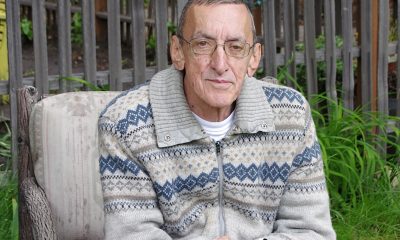
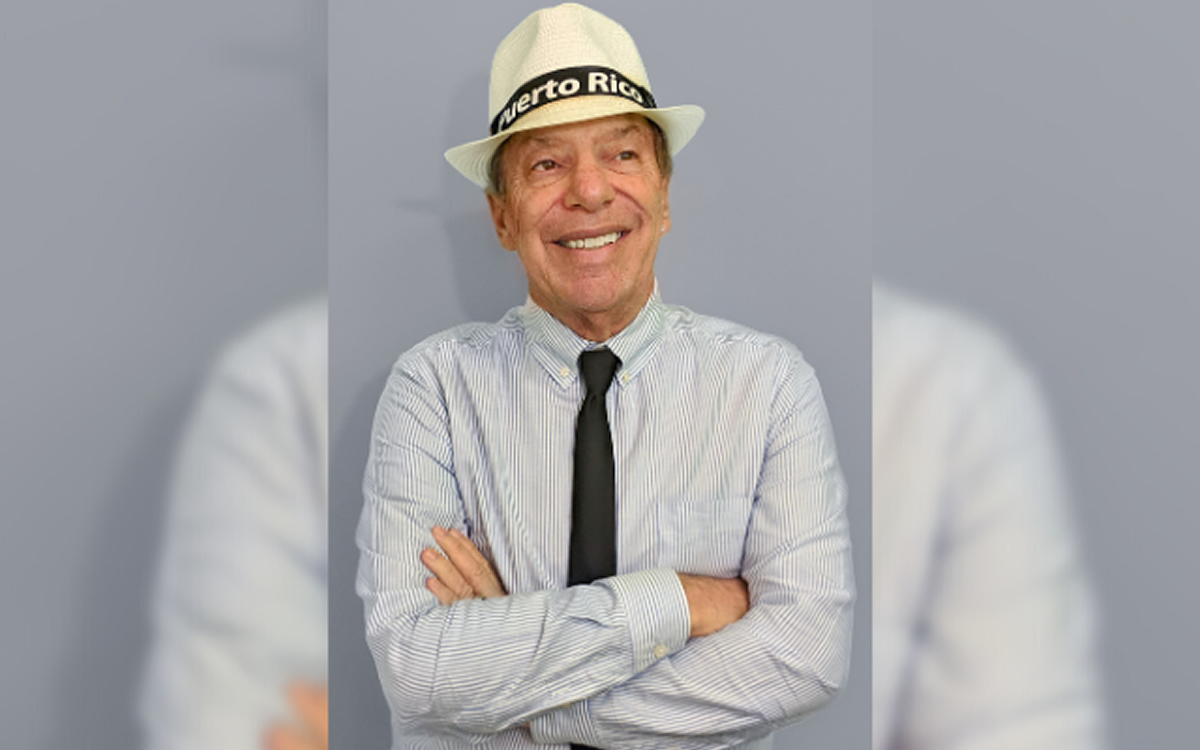
Attorney Norm Kent — relentless fighter for marijuana and LGBT rights, baseball fanatic, popular radio talk host and co-founder of South Florida Gay News — died at 73 on April 13, 18 months after learning he had pancreatic cancer.
In his final interview on March 28, Kent told SFGN he was diagnosed in October 2021. “That day, I said, ‘Let’s fly to Atlanta and go to a Dodgers game. If they’re telling me I have cancer, we’re going to a baseball game.’”
“You definitely can’t accuse him of not being interesting,” said Fort Lauderdale attorney Russell Cormican, Kent’s law partner for nearly 25 years.
“The most important thing looking at Norm’s legacy is that he reminds us how important it is to stand up for what you believe in, no matter how unpopular it might be or what types of repercussions or blowback you might get from people, if you know what you’re doing is the right thing,” said Cormican, 51. “When he sees an injustice, he’s not afraid to lead the call against it. That’s the common thread that’s gone through his life.”
Born Norman Elliott Kent in Brooklyn, N.Y., on Oct. 18, 1949, his family soon moved to North Woodmere in Nassau County on Long Island.
“Ever since I was a little kid growing up in North Woodmere and taking Bus 53 to junior varsity games, I was a good, competitive baseball player. The doctor once said I had steel springs in my legs,” Kent said. “I just loved the game. I love it now because you don’t know what’s going to happen on the next pitch. It’s not scripted like a movie. Like comedians, you never know what the next joke is going to be.”
To never miss a game, Kent equipped his longtime small, two-bedroom Victoria Park home with 16 televisions.
“It looks like mission control,” Cormican said. “Heaven forbid there are four baseball games on. He has to see each one.”
Thirty years ago, he even owned a baseball card shop at the Gateway Shopping Center in Fort Lauderdale, Norm Kent’s Baseball Heaven.
Kent, who is survived by older brother Richard and younger brother Alan, once flirted with becoming a professional ballplayer but their dad Jesse told him, “You’re going to be the lawyer in the family.”
After graduating in 1971 from Hofstra University on Long Island with a bachelor’s degree in social sciences and sociology, Kent made his father happy and received a Hofstra law degree in 1975.
During college, Kent began establishing a national reputation as a leading proponent of legalizing marijuana use.
Kent joined NORML, the National Organization for the Reform of Marijuana Laws in 1971. He served 1992-94 on NORML’s national board, rejoined the governing body in 1998 and from 2013-14 served as national board chairman.
In 1988, Kent made headlines representing singer Elvy Musikka, a Hollywood woman nearly blinded by cataracts who was busted for growing pot in her own backyard.
“After 23 different operations for cataracts,” Kent recalled March 28, “she found the only thing that let her see was by taking marijuana. It had a certain THC in it which let her see.”
He continued: “Who was her government, or the president, to stop her from seeing? And when the police came to her house in Hollywood and said we’re going to have to arrest you for smoking pot, she said, ‘I dare you to. I don’t care. It’s my life. It’s my right to see.’
“She went to a lawyer. She went to me. And I said let’s go to court. We argued a case in [Broward Circuit Court] before Judge Mark E. Polen and we won. He said your right to smoke marijuana is a lot more important than the right of the government to tell you what to do with what you can smoke. That case became the seminal case for hundreds of others.”
While dying of cancer, Kent himself couldn’t find pain relief smoking marijuana: “No,” he said, “I had a respiratory condition in 2018 when I got a defibrillator and pacemaker.”
Shortly after college, Kent worked briefly as an urban affairs analyst for the New York Legislature, and in 1978 relocated to South Florida where his parents had moved.
Kent never officially told them he was gay.
“My parents always suspected he was gay from the time he moved to Fort Lauderdale,” said his brother Alan, a retired psychologist. “They would always ask me, ‘Do you think Norman is gay?’”
Alan Kent, who also is gay, came out to their parents in 1982. Five years later, after their father died, Norm called Alan from Provincetown, Mass., with some news: I’m gay.
“I said really? Tell me something I don’t know,” Alan Kent recalled.
Before he died, Norm Kent said that for him “there was no such thing as being in [the closet].”
“There was always this fear that as a gay lawyer it might cost me economically,” Kent said. “But there I was, a gay lawyer who was representing gay bars and gay friends and gay owners.”
Kent said that decades ago he never cared if people knew his sexual orientation. Once, a South Florida Sun Sentinel reporter interviewed Kent for a story and asked about rumors that he was gay — and then never published that he was.
“It’s not my job to do their thinking for them. It’s my job to be who I am. And I’m proud of every minute and moment of who I am and what I was,” Kent said. “And if that meant I was a faggot who could throw a baseball, that’s their problem.”
After he moved to South Florida, Norm Kent briefly wrote a column for Playbill magazine and taught sociology at Florida Atlantic University. Soon he became known locally as an advocate for runaway gay youths who hung out at Fort Lauderdale Beach.
On the strip, Kent interviewed 30 boys ages 12 to 20 working as prostitutes. By 1984, Kent had spoken with about 150 boys on the strip — a third of them said they had sold their bodies to survive.
For years, Fort Lauderdale police and politicians worked to downplay the local homeless problem, according to a 1989 Miami Herald profile of Kent headlined “Upholder of the Unpopular.”
“It was like the mayor in Amity denying that there was a shark out there,” Kent told the Herald, referring to the blockbuster 1975 film of the era, “Jaws.”
Kent spent the rest of his life advocating for homeless gay youth. In 2000 — after having just survived treatment for lymphoma — Kent met John Fugate, then 18 and disowned since middle school by his Lakeland family. Kent, who at the time published the Express Gay News in Fort Lauderdale, offered Fugate a job delivering newspapers.
“I was living under the bridge on Federal Highway just south of 26th Street,” Fugate said March 28, weeping, a few feet from Kent’s hospice bedside. “And Norman found out that I was sleeping on the street and he invites me to the Floridian Restaurant for dinner.”
That night, Kent told him: “I just want you to know if you ever need a place to stay, you can always stay at my house. Here are the keys.”
At first, Fugate said he was “too proud and scared” to come to Kent’s home. But a few weeks later, about 3 a.m. on a cold, rainy morning, Fugate showed up. Eventually, he moved in.
Despite their age difference, Kent, 53, and Fugate, 21, became partners. Seven years later, they ended their romantic relationship. But they remained close friends and continued to work together on and off. After Kent’s health began to decline in 2018, Fugate and his new husband Brian Swinford stepped in as Kent’s caregivers.
Fugate said Thursday that Kent died of a recently diagnosed lung cancer.
On April 10, Fugate posted on Facebook: “Sometimes you start to doubt your beliefs and wonder why it’s happening to good people and telling yourself why can’t the good people live in why does it have to be this way? I’m so lucky to have had Norm Kent in my life forever changed me to make me a better person, there’s no way on earth I could ever repay him or show him the love that I have for him other than being here for him now.”
Mark Possíen, Kent’s close friend since 1977, described his Victoria Park home as “a refuge for so many people.”
“If you were down and out, he would invite you to come and stay with him. He’d get you a job. If you were on drugs, he tried to get you off drugs,” Possíen said. “He was selfless. He did everything with no expectation of any kind or return or reward from the person.”
About 1991, Possíen moved into a spare room in the Victoria Park house where Kent helped him launch Catalog X, one of the first gay-owned mail-order adult toy businesses.
“I was Dildo Central!” Kent wrote in his final SFGN column published March 30.
By 1998, Possíen had opened two Catalog X retail stores, one in Fort Lauderdale, the other in South Beach. “It was a gay department store. We had everything we thought gay people would be interested in.”
Possíen, who closed Catalog X in 2003, now lives in Lake Worth. In late March, Kent told him that his “biggest disappointment” about having terminal cancer was not having enough time “to sue Ron DeSantis for the drag queen stuff.”
“He said, ‘I’ve taken on all these cases all my life, I didn’t make money on them and sometimes they cost me money,’” Possíen said. “When he saw something that was wrong or unjust, he wanted to fix it.”
During college on Long Island, Kent dabbled as a reporter writing for the local Jewish Journal and Nassau Herald.
Later in South Florida, Kent himself became a media celebrity.
“He’s lived his life in the public eye,” Kent’s brother Alan said. “Norman has done a lot of good stuff and he’s had a lot of recognition for what he accomplished.”
Norm Kent’s name frequently appeared in both the Sun Sentinel and the Miami Herald. Among his high-profile legal cases:
- Helping adult video store owners charged with obscenity in the 1980s.
- Representing the owners of nude dance clubs in the 1990s, when South Florida municipalities tried to shut them down.
- Defending countless men charged with public sex in restrooms, in parks and on beaches throughout South Florida well into the 2000s.
A 1992 case that got particular attention: When gay radio superstar Neil Rogers, Kent’s close friend, was charged with indecent exposure at an adult movie theater in South Beach.
“Millions” of other men were arrested under the same circumstances, Kent recalled March 28.
“Only straight men would go free. … And people like Neil would get into trouble. I said ‘What the hell is going on here? This isn’t right. This isn’t fair to gay people.’ Over the years, so many would be wrongfully and unjustly arrested and prosecuted.”
From 1989 to 1992, Kent had his own daily talk show on WFTL AM. Later, he hosted various radio programs including one broadcast live during the breakfast rush at the Floridian on Las Olas Boulevard.
He also represented Rogers in the radio business. “I wound up making him, as his agent, $1.5 million a year,” Kent said.
Kent said that for years, Rogers made fun of him on the radio and elsewhere, sometimes referring to him as “Norma.”
“Do you know that they gave me an award for donating money to the Broward General Cancer Society in 2000,” Kent recalled. “And they put my name up on a plaque. And one of the ladies who made the plaque, she really thought my name was Norma. She didn’t put ‘Norman Kent’ on the plaque. She put ‘Norma.’ I said, ‘Neil, you did that.’ We thought that was hilarious.”
In 1999, Kent took on a new title: Newspaper publisher. He launched the Express Gay News, which covered all aspects of queer life in South Florida.
Kent sold the paper four years later to Window Media, a national LGBT media group that renamed it the South Florida Blade. Window Media went bankrupt in November 2009 and quickly shut down the Blade. Most of the staff of the Blade reorganized and launched the Florida Agenda, which shut down in 2016.
In January of 2010 Kent launched a new newspaper and website called South Florida Gay News, along with a new business partner Piero Guidugli, who stayed with the company until 2020.
Celebrating 400 issues of SFGN in 2018, Kent and Guidugli highlighted a few of their most compelling stories, including:
- A five-year long program of entrapment by two West Palm Beach policemen who had entrapped more than 300 men.
- Hollywood police fired officer Mikey Verdugo in 2010 after the department learned he had appeared in a 15-minute gay porn scene 14 years earlier. (Verdugo now owns Bodytek Fitness in Davie and Wilton Manors.)
- The 2010 firing of licensed practical nurse Ray Fetcho AKA drag queen Tiny Tina, when it came out that 35 years earlier Fetcho had been charged with a lewd act for hosting a wet jockey shorts contest at the old Copa nightclub in Fort Lauderdale. (Fetcho died at 68 of cancer and diabetes in 2015.)
In 2016, Kent wrote in a publisher’s column about the last of the big gay bar raids in Broward County, when in 1991 then-Sheriff Nick Navarro created a media spectacle arresting men at the Copa and at Club 21 in Hallandale Beach.
“Sheriff Navarro orchestrated the raid as if he were hosting a Hollywood opening,” Kent wrote. “As the news report by Steve Rothaus indicates, the sheriff turned the raid into a media event, placing the entire LGBT community in a false light. Navarro arrived on the scene, believe it or not, in a helicopter, accompanied by his wife, dressed in an evening gown. Reporters were shocked by the crass celebration, amazingly accompanied by foreign Russian dignitaries to show off for.”
Kent said he never regretted publishing a story, even if it got him into hot water with local power figures, including activists and elected officials.
“It’s the newspaper. It’s what editorial cartoons are all about,” he said. “It’s not for the politician to be thin skinned. It’s for the politician to go naked before the canon and accept the fact that he, too, can be criticized no matter how good they think they are.”
The past five years, Kent suffered several life-threatening health setbacks. He had two brain surgeries to remove tumors, COVID in 2021 and then the pancreatic cancer diagnosis.
Last September, he stepped down as publisher and handed the running of SFGN to Associate Publisher Jason Parsley.
“Jason has established himself as a very powerful voice, not afraid to stand up to anybody,” Kent said March 28.
Parsley, 45, a one-time hair stylist who in 2007 got a journalism degree from Florida Atlantic University, has worked at SFGN since 2011.
These days, a local LGBT newspaper and website are more important than ever, Parsley said.
“Our stories, need to be told, must be told,” he said. “Unlike big corporate media, an LGBT paper is invested in the community.”
“You have a hostile legislature that wants to silence and erase our voices and stories. And because this isn’t taught in school, places like the gay media are where you are going to be informed and educated and learn about the queer community.”
Parsley said Kent “had a passion for journalism and being a storyteller.”
“He leaves a long legacy of journalism and a dogged pursuit of the truth,” Parsley said. “He wasn’t just a news reporter. He also wrote scathing and biting — truthful — editorials that would sometimes call out members of our own community and push the ball forward.”
Journalist Steve Rothaus covered LGBTQ issues for 22 years at the Miami Herald. @SteveRothaus on Twitter.
Norm Kent’s eloquence and outlook on life expressed in final column
Thirteen days before his passing, on March 30, South Florida Gay News published an opinion column written by Norm Kent entitled, “What is Hospice and What it Means to Me,” in which he movingly and eloquently described his outlook on life and his passion for journalism as noted by those who knew him.
“Last week, the doctors told me about a new and invasive cancer and tumor that would require even more sudden and maybe midnight trips to the ER and hospitals, ending the day with newer needles in my arms and weakening veins,” Kent wrote.
“Nope, no more,” he continued. “I think I have done my share for here and now. An activist for gay rights and your rights; for NORML and human rights. Your body. Your life. Your call. I hope I have made you proud.”
He reminisced about his life experiences and those dear to him along with loved ones who have been at his side during his illness before stating, “So folks, that all brings me to home health care hospice, like President Jimmy Carter has just done. It’s not to say goodbye, but to thank you for the many hellos. From the many memories; from your local hospitality establishments and homes and businesses.”
And in keeping with his philosophy on life, Kent concluded by saying, “Keep on doing what is right, remembering what is right is not always popular, and what is popular is not always right. You will always find a path belonging to you. Like Yogi Berra, New York Yankees Hall of Famer once said, ‘When you come to a fork in the road, take it.’ It’s your own. Forever.”
— Lou Chibbaro Jr.


Obituary
U.S. int’l trade negotiator, consultant James Bedore dies at 82
Longtime D.C. resident was prominent supporter of Dignity Washington
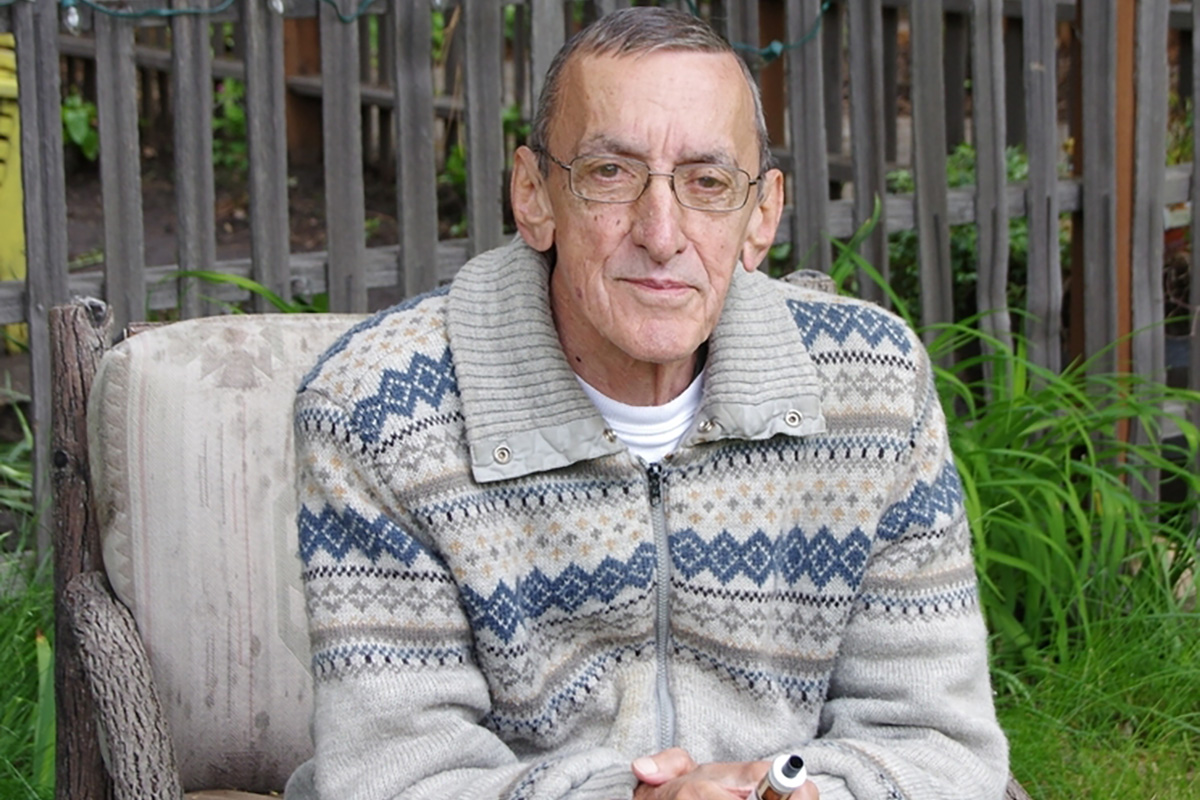
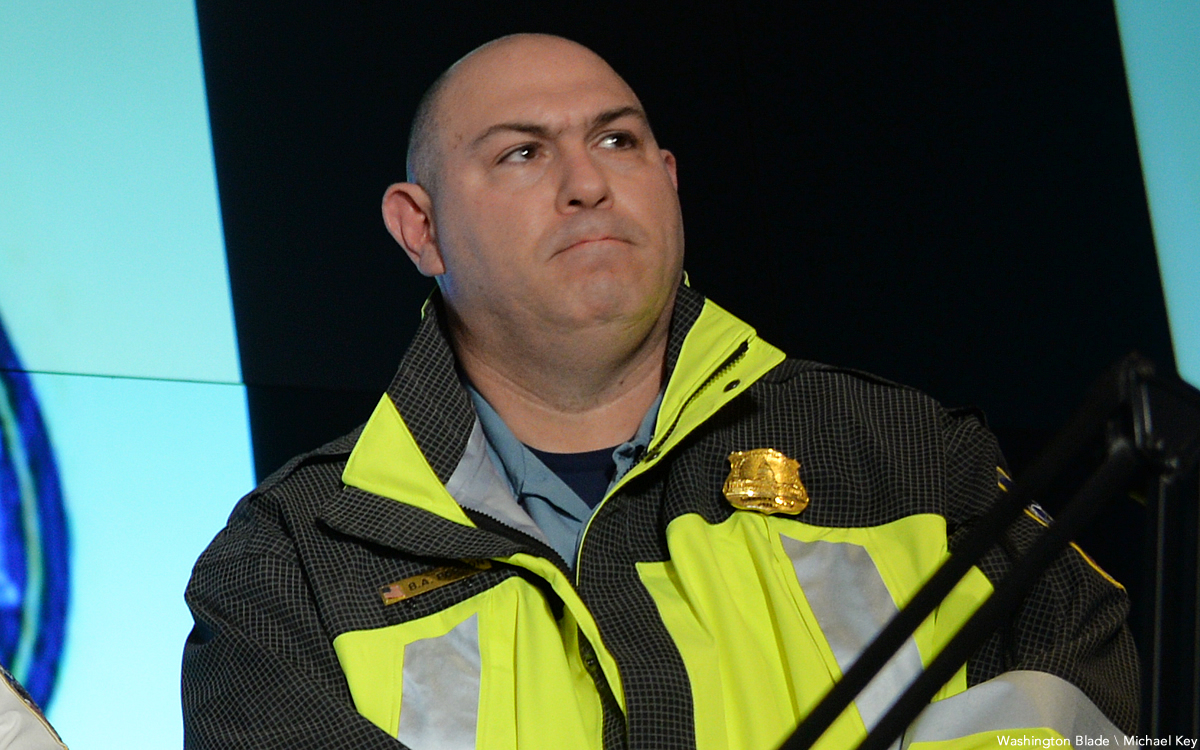
James “Jim” Bedore, an international affairs specialist whose career included work for the U.S. Department of State and as a private sector consultant in Europe with a focus on Middle Eastern and African development before his retirement in 2000, died on Sept. 2 at his home in D.C. He was 82.
His sister, Carol Bedore, said the cause of death was lung cancer.
Dignity Washington, the D.C.-based LGBTQ Catholic organization, released a detailed statement on Bedore’s life and career that, among other things, says Dignity Washington “became a huge part of Jim’s social life after his retirement in 2000.”
Carol Bedore said her brother was born and raised in Unionville, Mich., as the sixth of eight kids and the oldest boy in their family. She said he graduated from high school there before going on to “amazing” things in a distinguished career.
The Dignity Washington statement says upon the completion of his “B.A. in History and Economics,” Bedore served in the U.S. Peace Corps in West Africa in the mid-1960s. The statement says after completing his Peace Corps service Bedore taught briefly at Voorhees College, a historically Black college in South Carolina. He next earned a master’s degree from the East-West Center in Honolulu before undertaking advanced graduate work at the London School of Economics, according to the statement.
“During the Vietnam War, he served a two-year assignment in the Mekong Delta with the U.S. Department of State,” the statement continues. “He later worked in the private sector in Hong Kong, Saudi Arabia, and London, residing in London for fifteen years,” it says, adding, “He served as a Research Fellow at Chatham House (the Royal Institute of International Affairs in London) and co-authored a volume on Middle East Industrialization, (Macmillan in 1979).”
The statement says other articles and commentaries that Bedore wrote appeared in several prominent publications, including the journals Foreign Affairs, International Affairs, the Financial Times of London, and the International Herald Tribune. It says he remained active in international affairs after his retirement in 2000, including involvements with ‘think tank” organizations in D.C.
The Dignity Washington statement says Bedore, who lived for many years until the time of his passing in a condominium in D.C.’s Dupont Circle neighborhood, was a dedicated volunteer and organizer of Dignity related events.
“He did what he could to organize practical and social events, including some 14 years cooking and feeding approximately 100 homeless individuals monthly at Christ House,” the statement says, referring to the D.C. Adams Morgan neighborhood organization that provides medical care and other services for homeless people.
“Additionally, he initiated the ‘Moon Over Washington’ pot-luck event on the incredible roof on his condominium building,” it says. “The event continues to be one of Dignity Washington’s signature events to this day.” Among other things, it says Bedore was part of Dignity Washington’s annual LGBTQ Pride parade contingent, and he helped to sew 60 AIDS Memorial Quilts.
The statement says Bedore also “built a good relationship with St. Matthews’s Cathedral and created a gay chapter there, where he collaborated with parents with gay children.”
Dignity Washington President Peter Edwards called Bedore a beloved, dedicated Dignity Washington member. Edwards said the group recently issued its Willick Award to Bedore, which he said, “is a special award that we give to people who have done wonderful things for our community.”
“We will remember Jim for his sharp mind, his humor, his generosity, and his unwavering belief in the power of human connection,” the statement adds. “He lived a life shaped by service, curiosity, and love – and he leaves behind a community forever enriched by his presence,” it concludes.
Edwards said Dignity Washington will hold a Catholic Mass in Bedore’s honor in the coming weeks.
The statement says Bedore was pre-deceased by two life partners, Geoffrey Lawrence of 19 years, and Al Lunde, who the statement says passed away in 1999.
Bedore’s sister, Carol, said Bedore was cremated and his ashes have been returned to the family’s hometown in Michigan where an interment is being planned at the family’s cemetery plot.
Obituary
Beloved D.C. ‘Old Catholic’ Bishop Charles Braun dies at 86
Gay church leader offered spiritual support to LGBTQ community
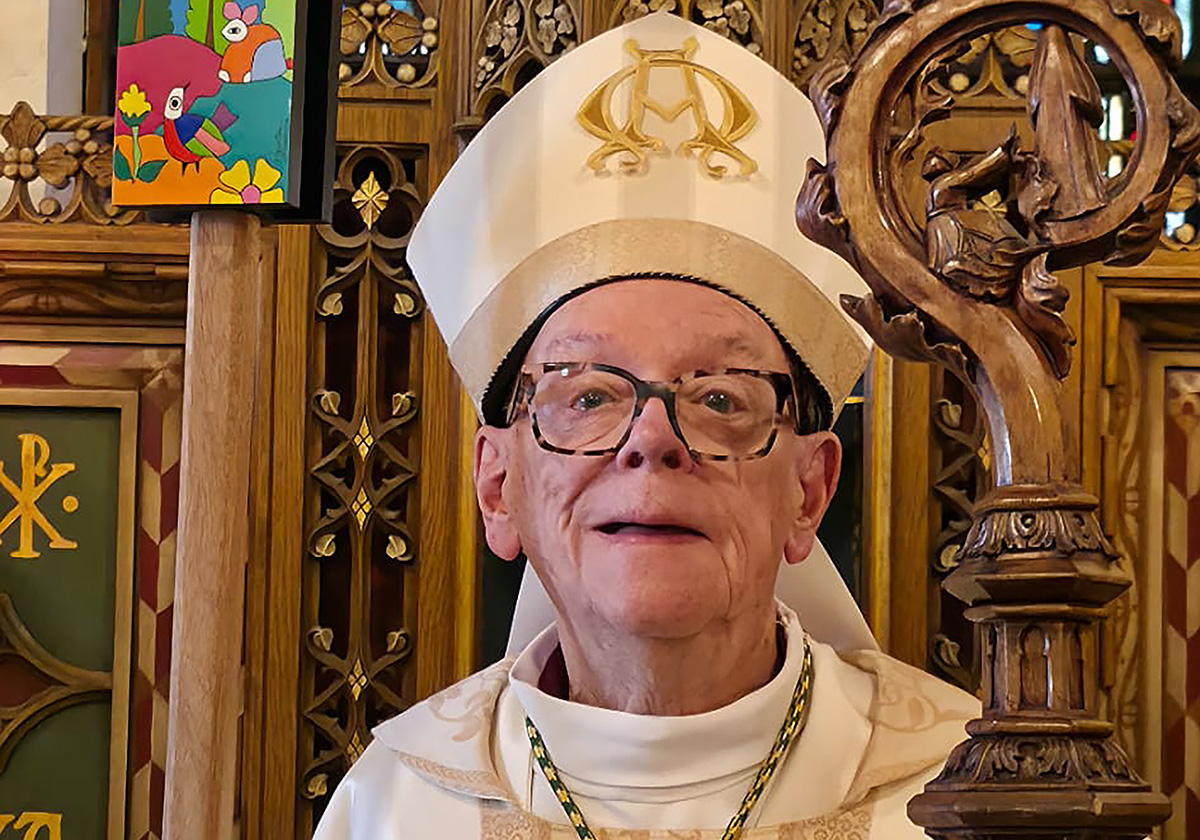
The Rt. Rev. Charles “Charlie” Braun, who served since 2001 as Bishop of the D.C.-based Inclusive Catholic Diocese of the Chesapeake Bay and as founding minister at the affiliated LGBTQ supportive St. John’s Inclusive Catholic Community of D.C., passed away Aug. 3 at the age of 86.
Write-ups about Braun’s life and legacy as a progressive religious leader report that the Inclusive Catholic Diocese of the Chesapeake Bay and St. John’s Inclusive Catholic Community are part of the “Old Catholic” movement, which is a partial break-away church from the Roman Catholic Church.
“St. John’s parish was founded with and continues with the special calling to reach those who had been hurt by other church denominations,” a statement on the St. John’s website says.
“St. John’s welcomes all without exception, with particular care for members of the LGBTQIA+ community who have suffered abuse and rejection elsewhere, offering them contemporary scriptural and theological guidance grounded in an ancient faith tradition made to work in the 21st century,” the website statement says.
It notes that until the time of his passing, Braun, among other things, performed the St. John’s Inclusive Catholic Community’s weekly Sunday mass at its headquarters location at 3417 14th St., N.W. in the city’s Columbia Heights neighborhood. The location is in a converted townhouse owned and operated by the LGBTQ supportive Dandelion Collective, which provides support for the local LGBTQ community.
Rev. Stephen F. Scott, the current pastor at the D.C. St. John’s Catholic Community, said Braun is a native of Bucks County, Pa., and studied to become a priest at D.C.’s Catholic University’s Marist House seminary, where he was ordained as a Roman Catholic priest in the 1960s.
Scott told the Washington Blade that Braun was then assigned as a parish priest at St. Michael’s Catholic Church in Wheeling, W.Va. The St. John’s Catholic Community website write-up says Braun directed that church’s choir “and formed friendships that lasted lifetimes.”
The website write-up continues, “Bishop Charlie left the Roman Catholic priesthood but never left ministry. He found a new spiritual home in the Old Catholic movement, where he was consecrated a bishop and became a beloved unapologetic voice for its theology and tradition.”
It says he began his service as Bishop of the D.C.-based Inclusive Catholic Diocese of the Chesapeake Bay in October 2001 and later founded the St. John’s Inclusive Catholic Community, both of which he led until the time of his passing.
“In Washington, D.C. Bishop Charlie became especially well known and cherished within the LGBTQ+ community, offering compassionate pastoral presence, ordaining and mentoring candidates for ministry, and reminding all who knew him that ministry does not end when circumstances change – it simply takes new forms,” the website statement says.
Rev. Scott confirmed reports by people in the LGBTQ community who knew Braun and who told the Blade the man they knew as Bishop Charlie visited LGBTQ supportive bars and restaurants in D.C., including the Dupont Circle area, to perform religious services and offer spiritual support for LGBTQ people.
“Charlie spoke so much about the importance of loving and welcoming, especially gays, lesbians, transgender Catholics and Christians and meeting them where they were,” Scott said. “So not expecting people to come to a full-on church building, he would go in his evenings and enjoy a drink or have a meal, whether it was Dupont Italian Kitchen, Floriana, or any of the neighborhood gathering places in the queer community,” Scott told the Blade.
“If there was a couple that would come to talk to him and wanted to get married, he would arrange with the couple to have the ceremony at their venue of choice,” according to Scott. “He would have weddings, confirmations, baptisms at those locations because that’s where the community felt comfortable.”
A Mass of Christian Burial was held for Bishop Charles ‘Charlie’ Braun on Saturday, Aug. 22, at the LGBTQ supportive Lutheran Church of the Reformation located in the Capitol Hill neighborhood. Scott said the church was selected because it offered a larger space for the service than the St. John’s Inclusive Catholic Community location in Columbia Heights.
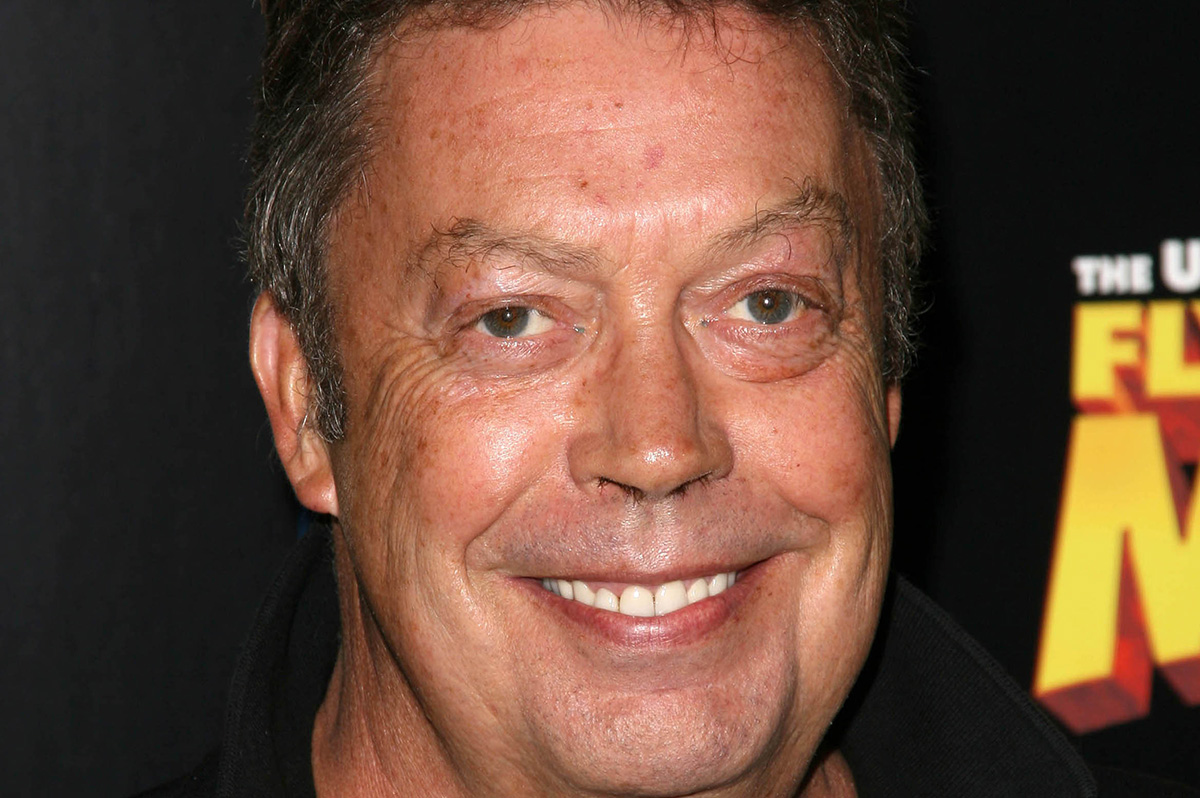
Actor Tim Curry died at his home in Los Angeles on Tuesday.
Curry has a career spanning decades that included roles on the stage and screen. With an unmistakable voice, he also leaves behind a large body of voice work in animated features and video games. Curry is perhaps best remembered by LGBTQ fans for his performances in camp classics, “The Rocky Horror Picture Show” and “Clue.”
“Rocky Horror” (1975) became an underground cultural phenomenon of gender-bending joy.
To this day, fans meet at late night movie theaters dressed in costumes of their favorite characters, including as Curry’s Dr. Frank-N-Furter. Such gatherings gave permission for fans to play with gender expression, which could be particularly important for LGBTQ fans in more repressive times and places.
“… It became a gathering point for LGBTQ+ people. For punks, for goths, for anyone who felt marginalized or othered by society,” screenwriter, producer, and filmmaker Michael Varrati told the Washington Blade in September 2025 interview on “Rocky Horror”‘s lasting legacy. “When you walked through those theater doors, you belonged, and everybody accepted you, and the thing that made you feel like a freak was celebrated.”
Curry was also known for roles under heavy prosthetics, such as Pennywise the murderous clown in Stephen King’s “It,” or as the demon-horned Darkness in “Legend.” Always shining through any mask was Curry’s signature mischievous voice.
With the passing of Dolly Parton, a fellow LGBTQ icon, one can expect many tributes to Curry and Parton at drag shows and music events at LGBTQ venues in the coming nights.
Pitchers DC (2317 18th St., N.W.) will have a “Dolly + Tim Tribute” with show tunes on Sunday from 2-8 p.m. JR.’s Bar (1519 17th St., N.W.) has announced it will have a show tunes night “honoring Dolly & Tim” on Monday starting at 9 p.m.

Annie Andrews denounces trans athletes after Trump targets her

On Republican Long Island, gay Democrat Chris Gallant bets on public service over politics

Report: LGBTQ exclusion costs Japanese economy billions a year

Center for Black Equity honors leaders, activists at BE. Gala

In ‘The Lost Brontë,’ a complicated lie can lead to danger

Trump uses anti-trans slur against Democratic Senate candidate

U.S. int’l trade negotiator, consultant James Bedore dies at 82

Campaign urges Virginia High School League to reverse stance on trans athletes

Calif. GOP gubernatorial candidate ad ‘disgusting attempt to exploit lesbian intimacy’

Center Arts Gallery celebrates 10 years with reception, auction
-

 2026 Midterm Elections5 days ago
Trump uses anti-trans slur against Democratic Senate candidate
-
Obituary4 days ago
U.S. int’l trade negotiator, consultant James Bedore dies at 82
-
Virginia4 days ago
Campaign urges Virginia High School League to reverse stance on trans athletes
-
California4 days ago
Calif. GOP gubernatorial candidate ad ‘disgusting attempt to exploit lesbian intimacy’