Israel
Queer American in Israel discusses Iran war’s impact
Max Polonsky lives in Jaffa
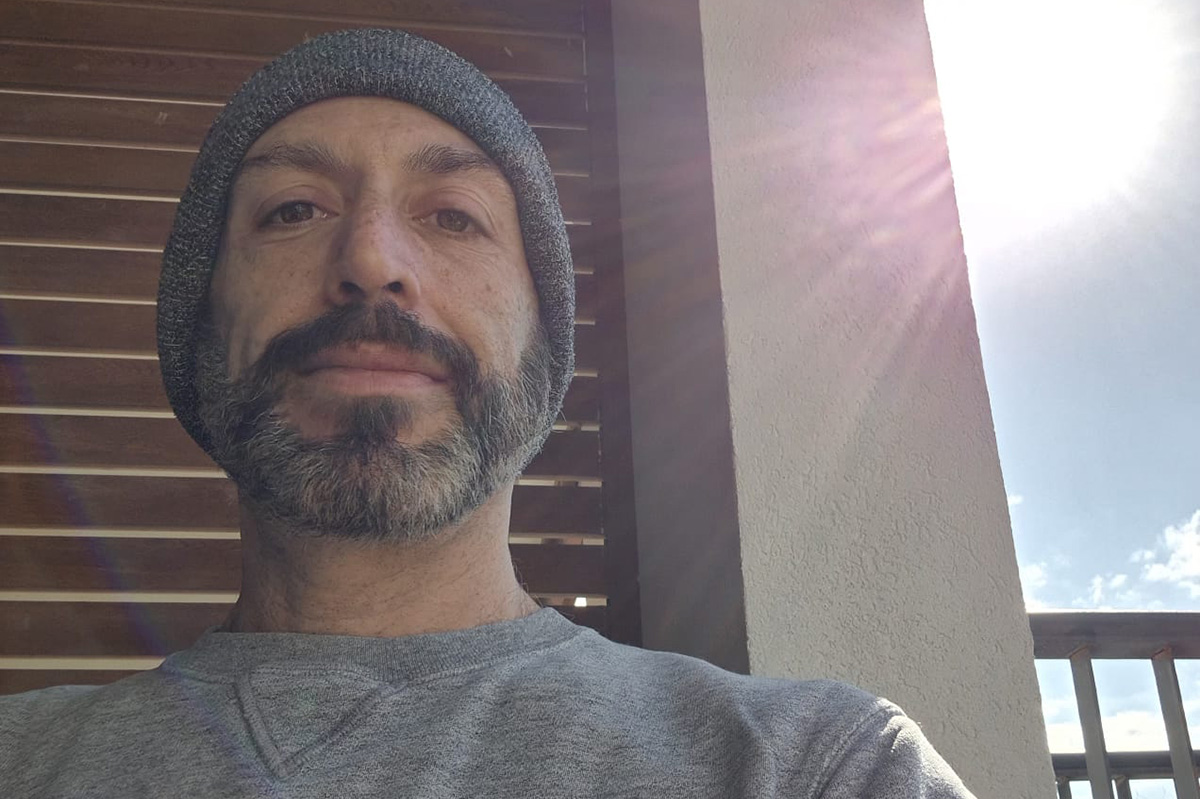
The Washington Blade on Wednesday spoke with Max Polonsky, a queer American who lives in Israel, about the Iran war and its impact on the country.
“It’s been tiring,” Polonsky told the Blade during a telephone interview from his home in Jaffa, an ancient port city with a large Arab population that is now part of Tel Aviv.
Polonsky grew up in Cherry Hill, N.J. He lived in D.C. for eight years before he moved to Israel in March 2022.
Israel and the U.S. on Feb. 28 launched airstrikes against Iran.
One of them killed Supreme Leader Ayatollah Ali Khamenei. Iran in response launched missiles and drones against Israel and other countries that include Kuwait, Bahrain, Qatar, the United Arab Emirates, Jordan, Saudi Arabia, Azerbaijan, and Cyprus.
An Iranian missile on March 1 killed nine people and injured 27 others in Beit Shemesh, an Israeli town that is roughly 20 miles west of Jerusalem. Shrapnel from an Iranian missile that struck a hair salon in Beit Awa, a Palestinian town in the West Bank, on Wednesday killed four women and injured more than a dozen others.
An Iranian drone that hit a command center in Kuwait on March 1 killed six U.S. soldiers: Sgt. Declan Coady, Sgt. 1st Class Nicole Amor, Capt. Cody Khork, Sgt. 1st Class Noah Tietjens, Chief Warrant Officer 3 Robert Marzan, and Maj. Jeffrey O’Brien. Another American servicemember, Sgt. Benjamin Pennington, died on March 8, a week after Iranian drones and missiles targeted the Prince Sultan Air Base in Saudi Arabia.
Iranian drones and missiles have damaged hotels, airports, oil refineries, and other civilian and energy infrastructure in the United Arab Emirates, Kuwait, Qatar, and elsewhere. Israel on Wednesday attacked Iran’s South Pars natural gas field in the Persian Gulf.
The Associated Press notes roughly 20 percent of the world’s crude oil passes through the Strait of Hormuz that connects the Persian Gulf and the Gulf of Oman. Gas prices in the U.S. and around the world continue to increase because the war has essentially closed the strategic waterway to ship traffic.
The war also left hundreds of thousands of people who were traveling in the Middle East stranded.
The Blade on March 6 spoke with Mario, who had stopped in his native Lebanon while traveling from the U.S. to India for work.
Mario was about to board a flight at Rafic Hariri International Airport in Beirut, the Lebanese capital, on Feb. 28 when the war began and authorities closed the country’s airspace. Mario is now back in the U.S.
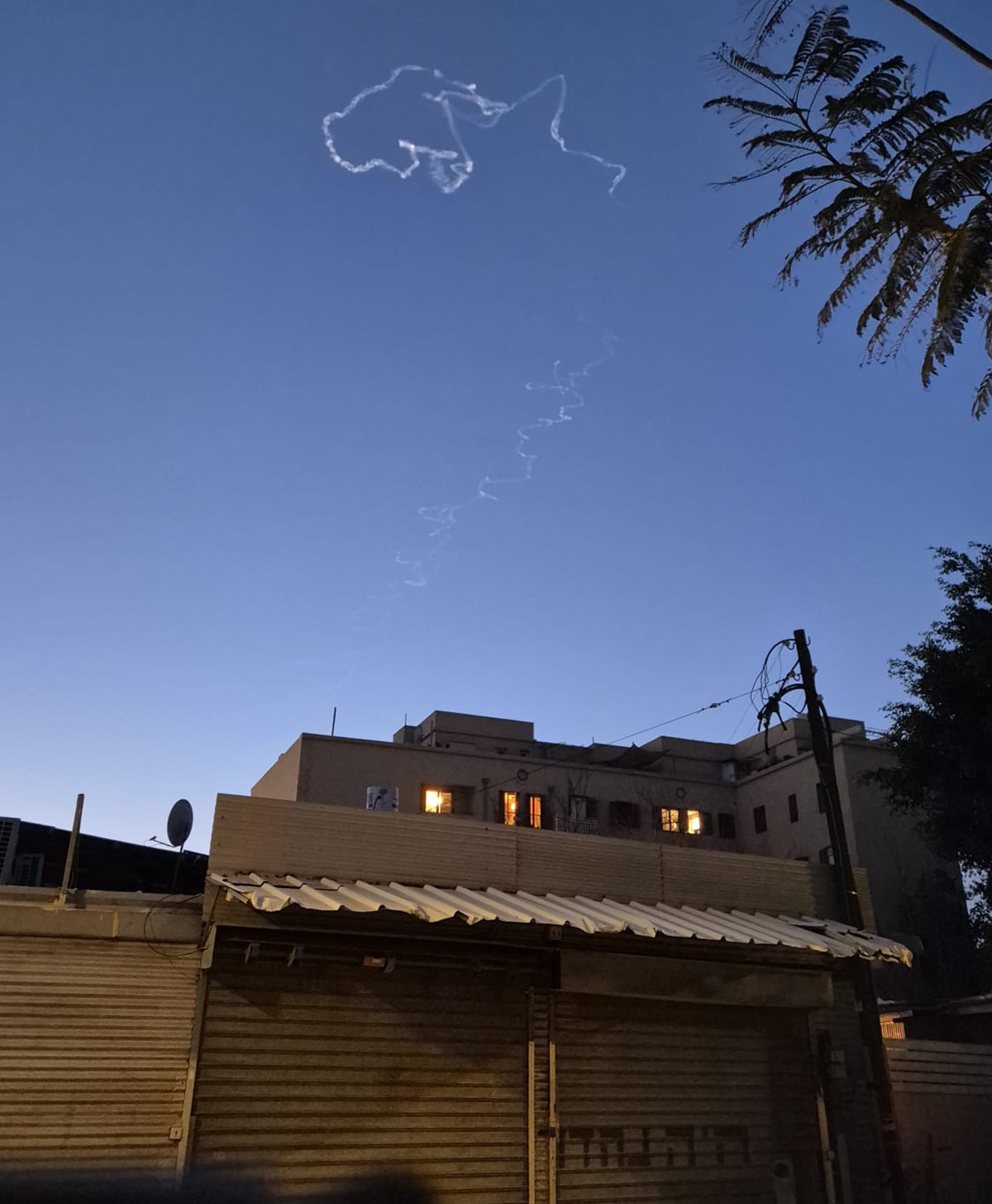
Polonsky told the Blade there were “alarms all day … sometimes multiple alarms an hour, sometimes every hour, every two hours” on Feb. 28.
Israel’s Home Front Command typically issues warnings about 10 minutes ahead of an anticipated Iranian missile attack. Sirens then sound 90 seconds before an expected strike.
People in Tel Aviv, Jerusalem, and in other cities in central Israel have 90 seconds to seek shelter if a rocket or missile is fired from Lebanon or the Gaza Strip. (Hezbollah, an Iran-backed Shia militant group in Lebanon that Israel and the U.S. have designated a terrorist organization, launched rockets at the Jewish State after Khamenei’s death. Israel, in turn, continues to carry out airstrikes against Hezbollah targets in Lebanon. Hamas militants on Oct. 7, 2023, killed upwards of 1,200 people when they launched a surprise attack against Israel from the Gaza Strip.) People who live close to Lebanon and Gaza have 15 seconds to seek shelter.
Polonsky has a safe room — known as a “mamad” — in his apartment. Polonsky also uses it as his home office and a second bedroom.
He told the Blade the alerts in recent days have become less frequent.
“We’ll get maybe a handful of alarms during the day, maybe some at night,” said Polonsky.
Israel on June 12, 2025, launched airstrikes against Iran that targeted the country’s nuclear and military facilities. The subsequent war, which lasted 12 days, prompted the cancellation of Tel Aviv’s annual Pride parade. An Iranian missile destroyed Mash Central, the city’s last gay bar.
Iran on Oct. 1, 2024, launched upwards of 200 ballistic missiles at Israel. This reporter arrived in Israel three days later to cover the first anniversary of Oct. 7 and the impact the subsequent war in the Gaza Strip had on LGBTQ Israelis and Palestinians.
‘Iranian regime was bad’
Polonsky admitted he doesn’t “know what to think” about the latest war against Iran.
“I don’t know what I think about the war,” he said. “Ultimately what happens is just not in my personal control: whatever Donald Trump, [Israeli Prime Minister Benjamin] Netanyahu, the ayatollah, whoever is running Iran are going to organize and launch attacks and reach any deals is not anything I personally have any control over, so I try to just kind of let that aspect of it go as I’m living my life.”
Polonsky told the Blade he understands “there are very serious questions about how” the war started, and Congress’s role in it.
“Those are serious and valid, important questions,” he said. “And at the same time, the Iranian regime was bad.”
Polonsky noted Iran has supported and funded Hezbollah, Hamas, Houthi rebels in Yemen, and other groups “who were attacking Israel.” Polonsky added the Iranian government has “terribly oppressed their people.”
Iran is among the handful of countries in which consensual same-sex sexual relations remain punishable by death.
Reports indicate Iranian authorities killed upwards of 30,000 people during anti-government protests that began late last year. Sources with whom the Blade spoke said LGBTQ Iranians are among those who participated in the demonstrations.
“I’m not sad to see them pressured,” said Polonsky, referring to the Iranian regime.
He also described Khamenei as “a bad guy.”
“Him not being there is better,” said Polonsky.





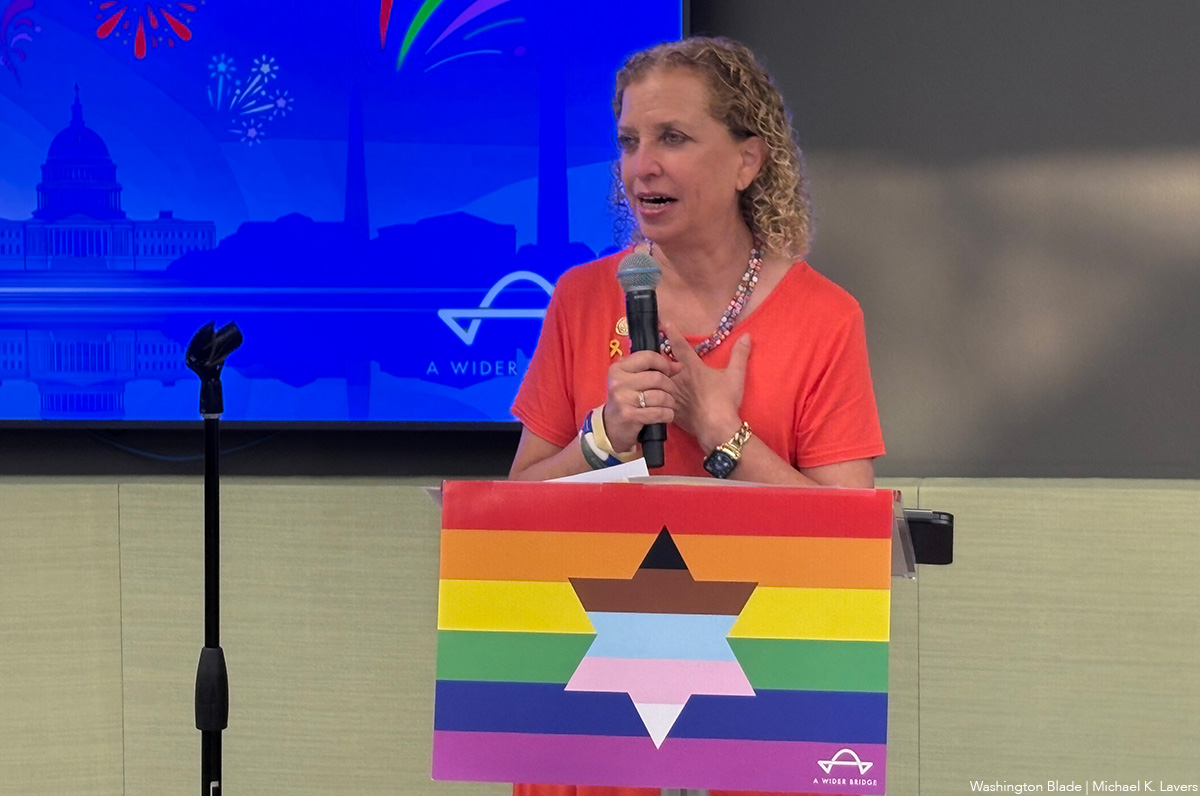
A Wider Bridge on Friday announced it will shut down at the end of the month.
The group that “mobilizes the LGBTQ community to fight antisemitism and support Israel and its LGBTQ community” in a letter to supporters said financial challenges prompted the decision.
“After 15 years of building bridges between LGBTQ communities in North America and Israel, A Wider Bridge has made the difficult decision to wind down operations as of Dec. 31, 2025,” it reads.
“This decision comes after challenging financial realities despite our best efforts to secure sustainable funding. We deeply appreciate our supporters and partners who made this work possible.”
Arthur Slepian founded A Wider Bridge in 2010.
The organization in 2016 organized a reception at the National LGBTQ Task Force’s Creating Change Conference in Chicago that was to have featured to Israeli activists. More than 200 people who protested against A Wider Bridge forced the event’s cancellation.
A Wider Bridge in 2024 urged the Capital Pride Alliance and other Pride organizers to ensure Jewish people can safely participate in their events in response to an increase in antisemitic attacks after Hamas militants attacked Israel on Oct. 7, 2023.
The Jewish Telegraphic Agency reported authorities in Vermont late last year charged Ethan Felson, who was A Wider Bridge’s then-executive director, with lewd and lascivious conduct after alleged sexual misconduct against a museum employee. Rabbi Denise Eger succeeded Felson as A Wider Bridge’s interim executive director.
A Wider Bridge in June honored U.S. Rep. Debbie Wasserman Schultz (D-Fla.) at its Pride event that took place at the Capital Jewish Museum in D.C. The event took place 15 days after a gunman killed two Israeli Embassy employees — Yaron Lischinsky and Sarah Milgrim — as they were leaving an event at the museum.
“Though we are winding down, this is not a time to back down. We recognize the deep importance of our mission and work amid attacks on Jewish people and LGBTQ people – and LGBTQ Jews at the intersection,” said A Wider Bridge in its letter. “Our board members remain committed to showing up in their individual capacities to represent queer Jews across diverse spaces — and we know our partners and supporters will continue to do the same.”
Editor’s note: Washington Blade International News Editor Michael K. Lavers traveled to Israel and Palestine with A Wider Bridge in 2016.
District of Columbia
Bet Mishpachah welcomes release of last hostages from Gaza
President Donald Trump helped broker ceasefire between Israel, Hamas

Bet Mishpachah on Monday welcomed the release of the remaining hostages in the Gaza Strip as part of a ceasefire agreement that President Donald Trump helped broker.
“As we enter into the holy days of Shmini Atzeret and Simhat Torah, we are flooded with a mix of emotions,” said Jake Singer-Beilin, the Washington LGBTQ Jewish congregation’s chief rabbi, in a message to members. “The great joy of these holy days was smashed two years ago on Oct. 7, 2023. Hundreds were murdered on that day, and many — alive and dead — were taken hostage.”
“Today, as the last living hostages return back to Israel, we find great relief as well as pain for what has happened to them up to this point,” he added. “This year, we will celebrate with exuberance knowing that a ceasefire is holding, and that the captives have been redeemed. We will also hold within us the grief that we feel for Israelis and Palestinians who died on that day and since. With these swirling emotions, we offer thanks to the peacemakers and to the One who makes peace on high. We pray that peace will reign in the region, and that those who have endured so much will find healing and hope.”
The Israeli government says Hamas militants killed roughly 1,200 people on Oct. 7, including upwards of 360 partygoers at the Nova Music Festival near Re’im, a kibbutz that is a couple miles from the Gaza Strip, when it launched its surprise attack on the country. The militants also kidnapped more than 200 people.
(Washington Blade video by Michael K. Lavers)
The Hamas-controlled Gaza Health Ministry says Israeli forces have killed more than 67,000 people in the enclave since Oct. 7. Karim Khan, the International Criminal Court’s chief prosecutor, has said Israeli Prime Minister Benjamin Netanyahu and former Hamas leader Yahya Sinwar, who the Israel Defense Forces killed last October, are among those who have committed war crimes and crimes against humanity in Gaza and Israel.
The Israeli government has strongly denied it has committed genocide in Gaza.
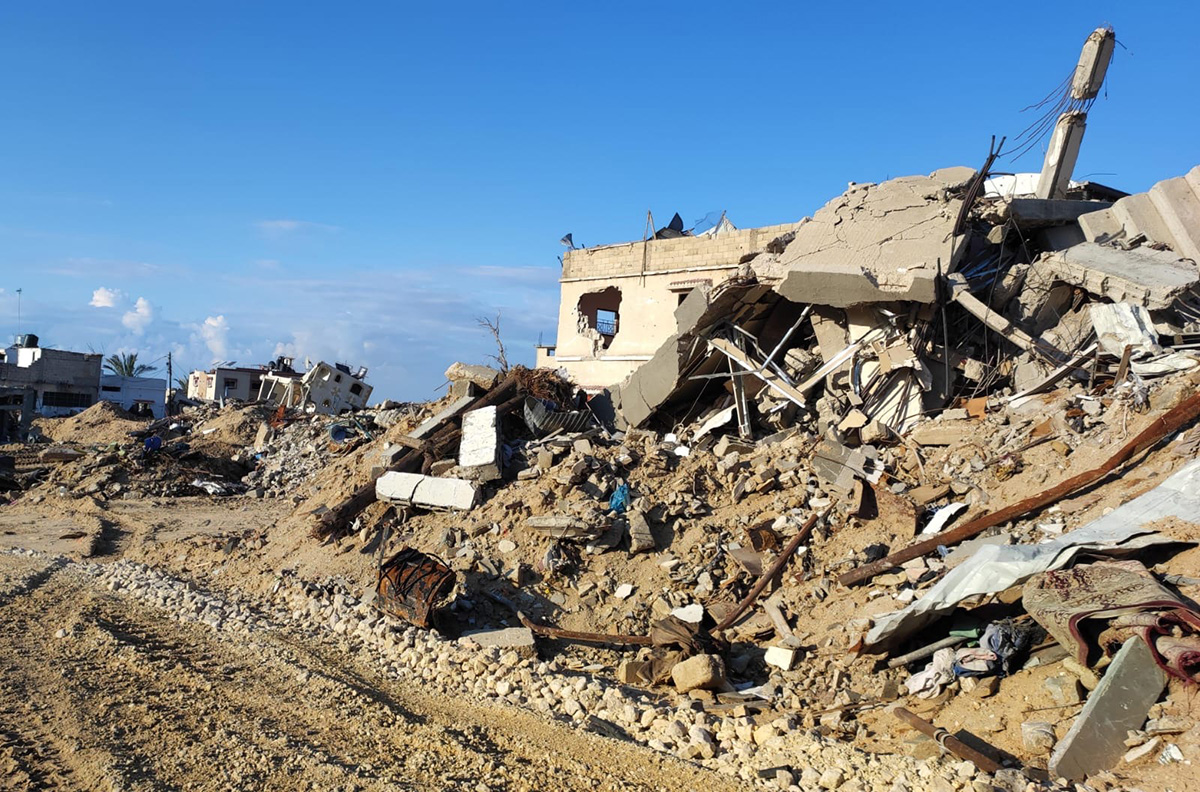
The ceasefire between Israel and Hamas took effect on Oct. 10.
The last 20 living hostages returned to Israel on Monday, while the Jewish State released 1,968 Palestinians who had been in Israeli prisons. Hamas on Monday released the bodies of four hostages who died while in captivity.
Trump, Egyptian President Abdel Fattah el-Sisi, Turkish President Recep Tayyip Erdogan, and Qatari Emir Tamim bin Hamad Al Thani on Monday signed the ceasefire agreement in Sharm el-Sheikh, Egypt. Trump earlier in the day spoke at the Israeli Knesset in Jerusalem.
“This is the historic dawn of a new Middle East,” said Trump in his Knesset speech.
The ceasefire and its implementation remains tenuous, but one Israeli LGBTQ activist with whom the Washington Blade spoke on Monday celebrated the hostages’ return.
“Emotions are high and everyone is with their loved ones or celebrating in the streets,” they said. “It’s definitely a historic and joyful day for the Israeli people.”
Ga’ava, an LGBTQ group that is affiliated with the Toronto-based Center for Israel and Jewish Affairs, on its Instagram page proclaimed the “hostages are free, war is over.” A Wider Bridge — a group that “advocates for justice, counters LGBTQphobia, and fights antisemitism and other forms of hatred” — described Monday as “a joyful day.”
Israel
Activist recalls experience in Tel Aviv after Israel-Iran war began
Marty Rouse was part of Jewish Federations of North America Pride mission
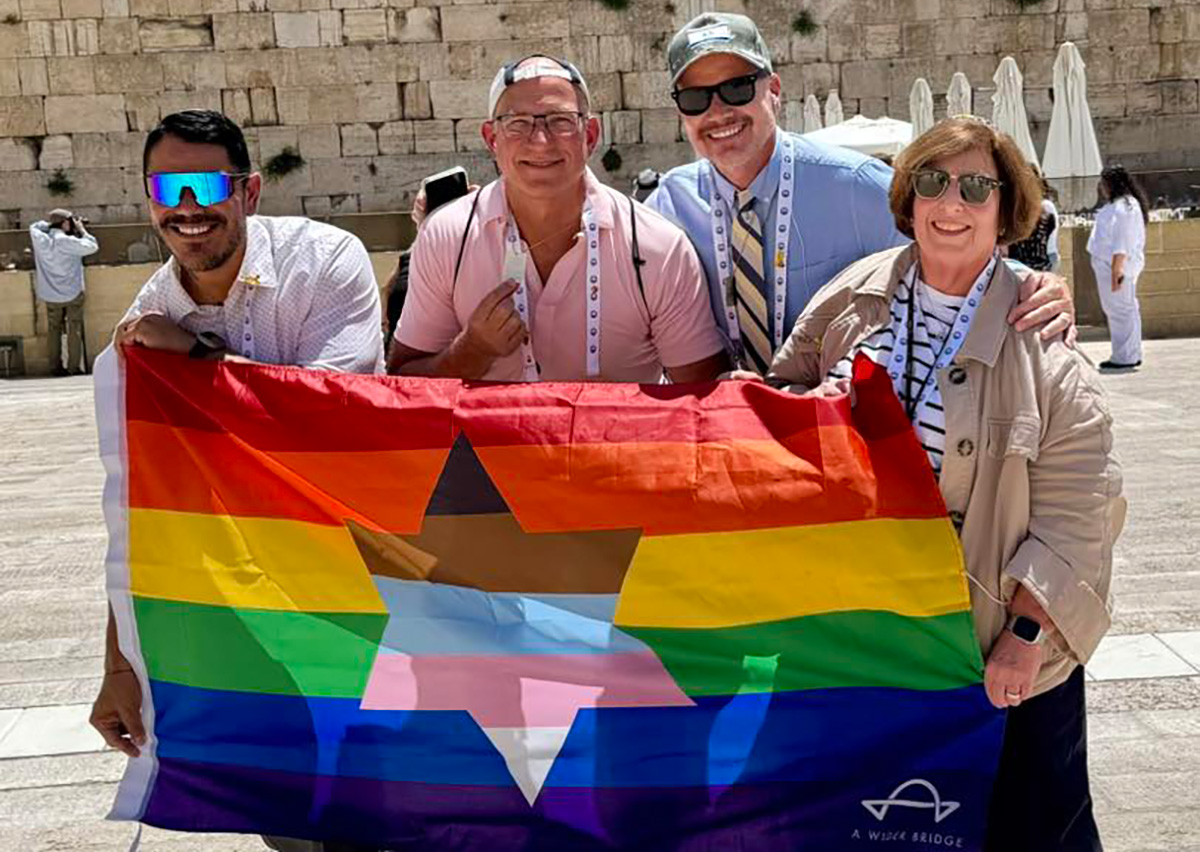
A long-time activist who was in Israel last month when its war with Iran began has returned to D.C.
Marty Rouse traveled to Israel on June 6 with the Jewish Federations of North America. The 5-day mission ended the night before the annual Tel Aviv Pride parade was scheduled to take place.
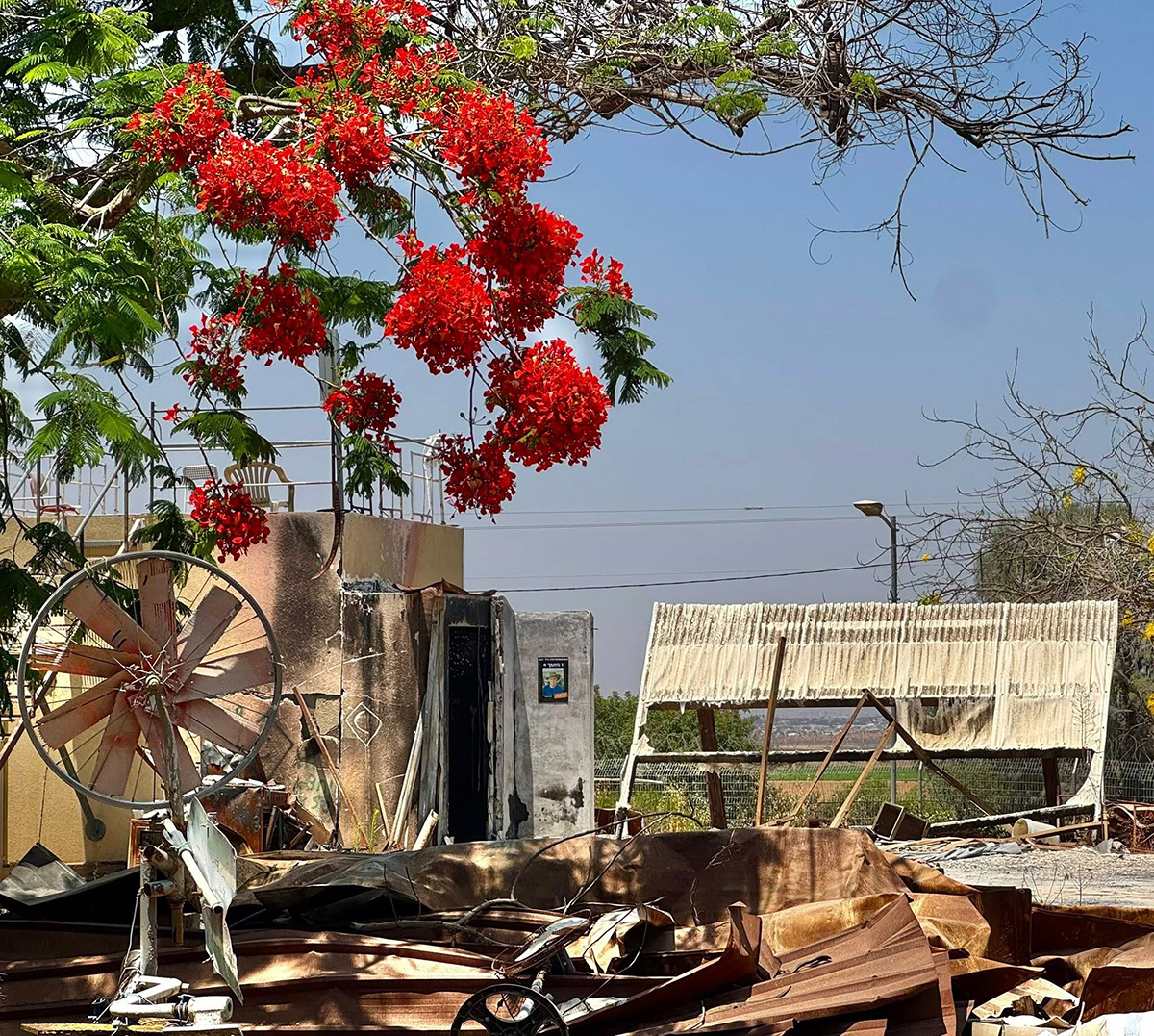
Mission participants met with Israeli President Isaac Herzog and several LGBTQ activists in Tel Aviv and Jerusalem. They visited the Western Wall, the Nova Music Festival site, and Nir Oz, a kibbutz in southern Israel that is less than a mile from the country’s border with the Gaza Strip. Mission participants also visited Sderot, a city that is roughly a mile from the Hamas-controlled enclave, a veterans rehabilitation facility, a new LGBTQ health center and the Aguda: The Association for LGBTQ Equality in Israel in Tel Aviv.
Hamas militants on Oct. 7, 2023, killed upwards of 360 partygoers and kidnapped dozens more at the music festival that was taking place at a campground near Re’im, a kibbutz that is roughly 10 miles southwest of Nir Oz. The militants killed or took hostage nearly a quarter of Nir Oz’s residents. They also took control of Sderot’s police station.
Tel Aviv Deputy Mayor Chen Arieli spoke at the mission’s closing party that took place at the Sheraton Grand, a hotel that overlooks Tel Aviv’s beachfront, on June 12.
Rouse and other mission participants planned to stay in Tel Aviv for the Pride parade, which was scheduled to take place the following day. He and Gordie Nathan, another mission participant who lives in Palm Springs, Calif., had checked into a nearby hotel that was less expensive.
“We said our farewells,” recalled Rouse when he spoke with the Washington Blade in D.C. on June 24. “We went to our hotels, and we get the warning, and then all hell broke loose.”
Israel early on June 13 launched airstrikes against Iran that targeted the country’s nuclear and military facilities.
Rouse said mission organizers told him and other participants who remained in Tel Aviv to meet at the Sheraton Grand for breakfast and dinner — Israel’s airspace was closed in anticipation of an Iranian counterattack, and authorities cancelled the Pride parade.
He said he went to bomb shelters at least twice a night for three nights.
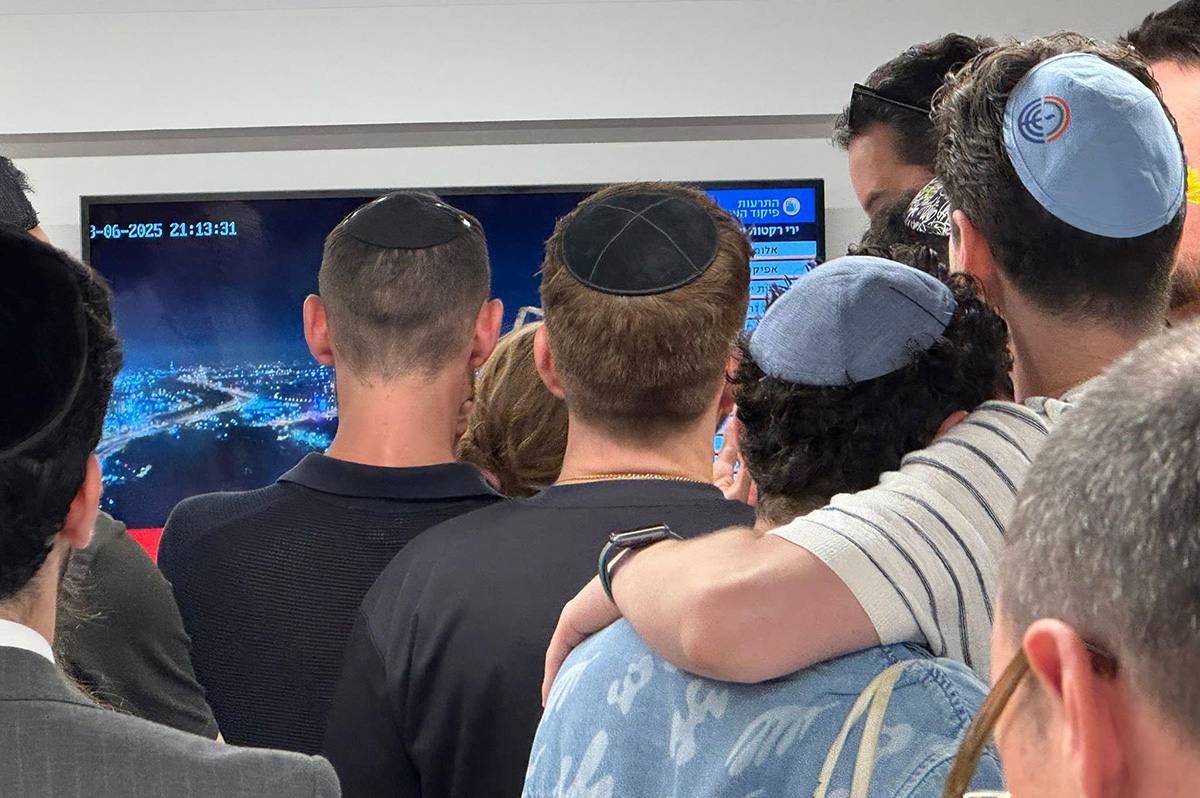
Israel’s Home Front Command during the war typically issued warnings about 10 minutes ahead of an anticipated Iranian missile attack. Sirens then sounded 90 seconds before an expected strike.
Rouse and Nathan walked to the Sheraton Grand on June 13 when the Home Front Command issued a 10-minute warning. They reached the hotel in a couple of minutes, and staff directed them to the bomb shelter.
“You know to walk slowly, everything’s fine,” recalled Rouse. “You get 10 minutes, so everything was fine when the alarm goes off.”
Rouse described the Sheraton Grand shelter as “well lit” with WiFi, a television, and air conditioning. He was watching an Israeli television station’s live coverage of the Iranian missile attack when he saw one hit an apartment building in the Tel Aviv suburb of Ramat Gan.
A 74-year-old woman died and her boyfriend was seriously injured.
“I go over to look at the TV, just to watch,” recalled Rouse. “All of a sudden, you watch, and you see one bomb go and land and explode in Tel Aviv on TV. It landed and blew up.”
“I was like, okay, this is real, and so that was scary,” he added.
Rouse said the bomb shelter in the hotel where he and Nathan were staying after the mission ended was far less comfortable.
“It was dark. It was humid. It was hot. It was very uncomfortable,” said Rouse. “You really felt alone.”
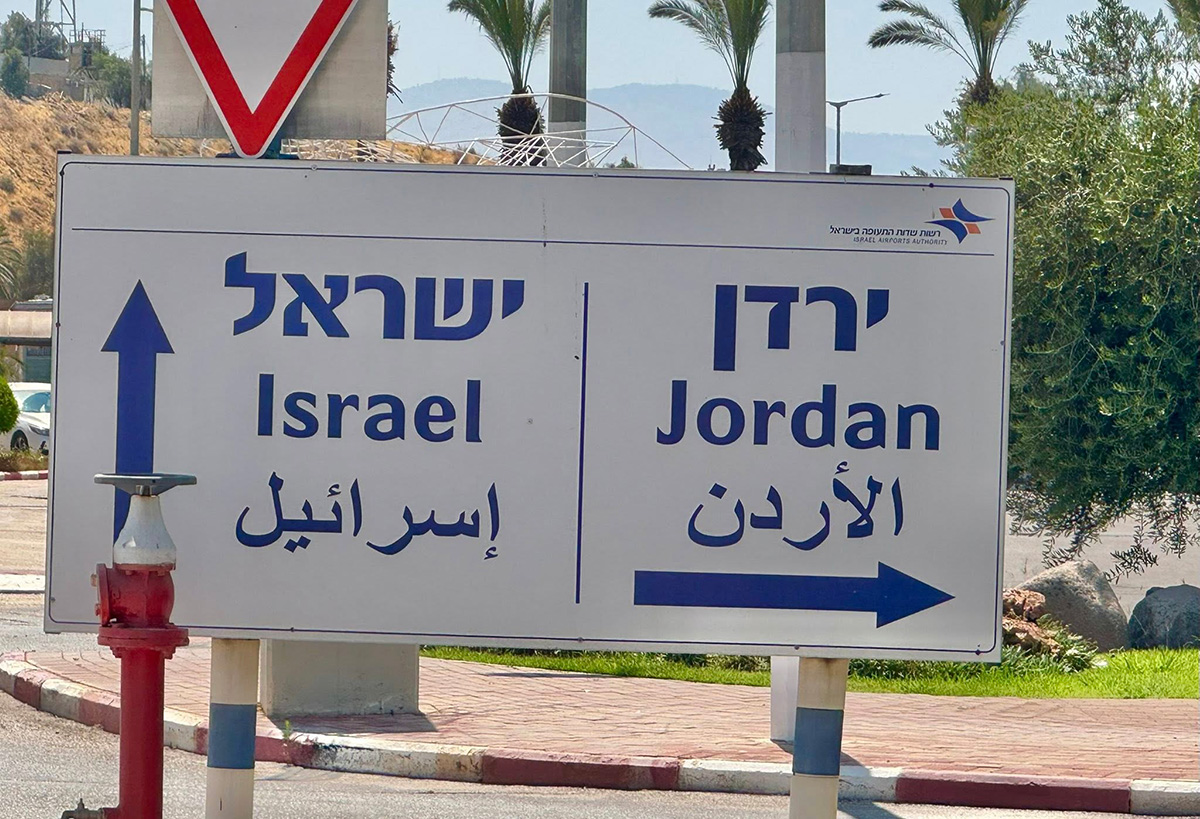
Rouse and nearly everyone else on the mission who were in Tel Aviv when the war began left Israel on June 15. They boarded buses that took them to the Jordanian capital of Amman, which is a roughly 2 1/2-hour drive from Tel Aviv through the West Bank.
Rouse described the trip as “like a field trip” until they drove across the Jordan River and arrived at the Jordanian border crossing.
“You walk into this room, and instead of being in a well air-conditioned airport, you’re in this hot, humid, small place in the middle of the desert, packed with people, and those big, large, loud fans and pictures of military people on the walls,” he said. “It was almost like a Casablanca kind of feeling.”
Rouse said Jordanian authorities brought mission participants through customs in groups of 10. A Jewish Federations of North America liaison from Amman who previously worked as a tour guide for A Wider Bridge — a group that “advocates for justice, counters LGBTQphobia, and fights antisemitism and other forms of hatred” — went “behind closed doors” to ensure everyone was able to enter the country.
“It took a really long time,” Rouse told the Blade.
Mission participants arrived in Amman a short time later. They checked into their hotel and then had dinner at a restaurant.
“Now we feel like we’re safe and we’re in Amman,” recalled Rouse. “We’re sitting outside having a beautiful dinner.”
Iranian missiles passed over Amman shortly after Rouse and the other mission participants had begun to eat their dessert. They went inside the restaurant, and waited a few minutes before they boarded busses that brought them back to their hotel.
“No one was openly freaking out, which I was surprised by,” said Rouse.
The group was scheduled to fly from Amman to Cairo at 11 p.m. local time (4 p.m. ET) on June 16. They visited Jerash, an ancient city north of Amman, before their flight left Jordan.
“[The Jerash trip] actually took our minds off of everything,” said Rouse.
A Jewish Federations of North America contact met Rouse and the other mission participants at Cairo’s airport once their flight landed. Rouse arrived at JFK Airport in New York on June 17.
Trump-announced ceasefire ended 12-day war
President Donald Trump on June 23 announced a ceasefire that ended the 12-day war.
The U.S. three days earlier launched airstrikes that struck three Iranian nuclear sites. The ceasefire took effect hours after Iran launched missiles at a U.S. military base in Qatar.
Iran said the war killed more than 900 people in the country.
The Associated Press notes Iranian missiles killed 28 people in Israel. One of them destroyed Tel Aviv’s last gay bar on June 16.
The war took place less than two years after Oct. 7.
The Israeli government says Hamas militants on Oct. 7, 2023, killed roughly 1,200 people on that day when it launched its surprise attack on the country. The militants also kidnapped more than 200 people.
The Hamas-controlled Gaza Health Ministry says Israeli forces have killed nearly 55,000 people in the enclave since Oct. 7. Karim Khan, the International Criminal Court’s chief prosecutor, has said Israeli Prime Minister Benjamin Netanyahu and former Hamas leader Yahya Sinwar, who the IDF killed last October, are among those who have committed war crimes and crimes against humanity in Gaza and Israel.
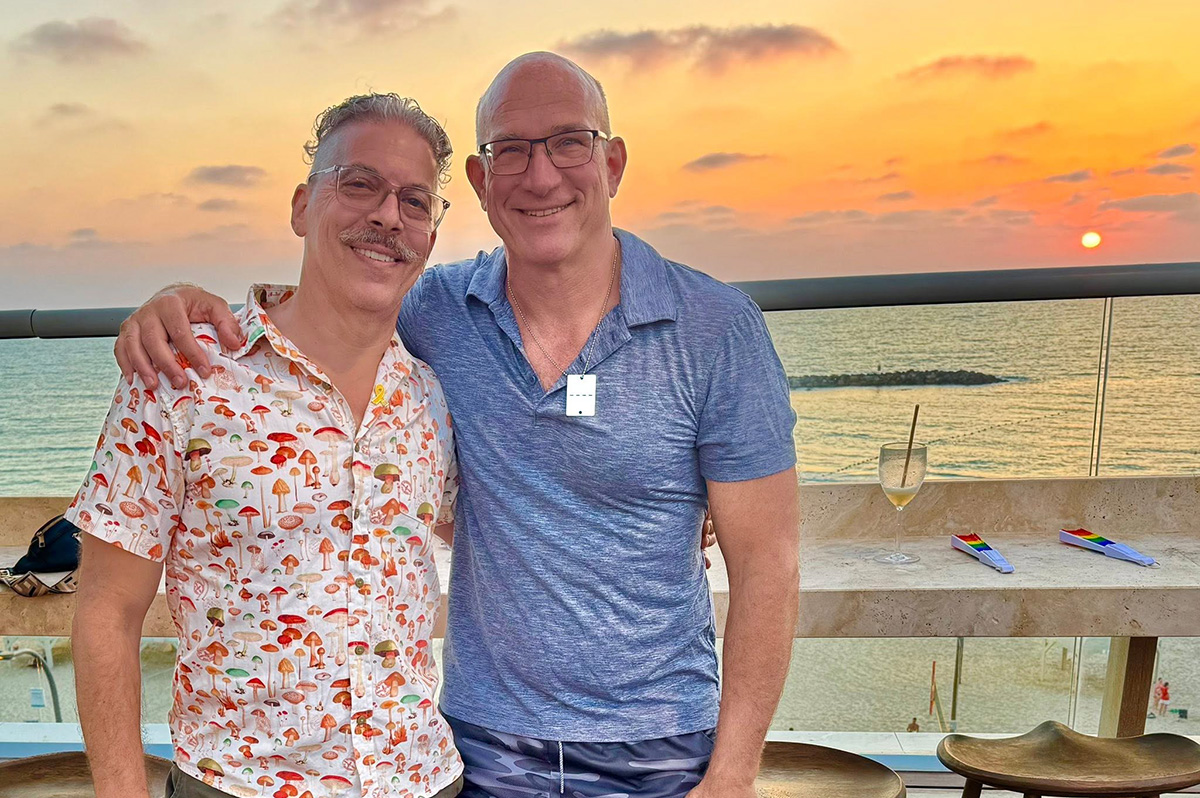
Rouse upon his return to the U.S. said he “was never as aware of the comfort of another human being than I was during that time.” Rouse affectionately called Nathan his “bomb shelter boyfriend” and even questioned the way he reacted to the missile alerts.
“He’s sitting on the edge of the bed and he goes, okay, I’m going to put on my socks and my shoes, and I say, really? You’re going to put on your socks,” Rouse told the Blade. “The fact that I was nervous, that putting on socks might have changed the direction of our lives, to me was like I can’t believe I said that to him.”
Rouse quickly added Nathan helped him remain calm.
“If I was by myself, those nights would have been long enough,” said Rouse. “It’s a totally different feeling to be with another human that you know than to be by yourself.”
Rouse also praised the Jewish Federations of North America.
“JFNA really sprung into action and started to figure out all options to get us all safely home,” said Rouse. “It was all about logistics. Staff worked around the clock identifying and then mobilizing to get us back to the states. It was a great team effort and I know I speak for everyone in expressing our deep appreciation for their dedication to getting us safely home.”

Annapolis Pride arrives this weekend

Calendar: October 2-8

Renee Good’s family files two federal lawsuits

House Democrats urge White House to confront Turkish government over anti-LGBTQ crackdown

988 restores crisis services for LGBTQ youth

HRC National Dinner 2026: A night of music, activism, LGBTQ history

Trump asks Supreme Court to allow restrictions on gender-affirming care in prisons

Lesbian Bar Project co-founder: purity politics could destroy our remaining spaces

529 openly LGBTQ candidates running in Brazilian election

HRC report: LGBTQ students face ‘far greater challenges’ in non-supportive states
-

 LGBTQ Non-Profit Organizations4 days ago
HRC National Dinner 2026: A night of music, activism, LGBTQ history
-
U.S. Supreme Court5 days ago
Trump asks Supreme Court to allow restrictions on gender-affirming care in prisons
-
Bars & Parties4 days ago
Lesbian Bar Project co-founder: purity politics could destroy our remaining spaces
-
Brazil4 days ago
529 openly LGBTQ candidates running in Brazilian election