KASPER’S LIVERY SERVICE

Since 1987. Gay & Veteran Owner/Operator.
Your Personal Limo/Uber Service
WHERE DO YOU WANT TO GO? LET ME TAKE YOU THERE!
Proper DC License & Livery Insured.
http://www.KasperLivery.com.
202-554-2471

India
Iran war causes condom shortage in India
Trade disruptions have strained petrochemicals, lubricant supplies

About 80 days into the U.S.-Iran war, while much of the world struggles with oil supplies, India is confronting a different crisis: a widening condom shortage. Health activists warn the supply disruption could worsen HIV/AIDS risks in the world’s most populous country.
Disruptions in maritime trade through the Strait of Hormuz have strained supplies of petrochemicals and industrial lubricants used in condom manufacturing. The crisis has increased production costs across the sector and pushed retail prices sharply higher.
India’s condom manufacturing industry is valued at nearly $1 billion.
Production depends heavily on silicone oil and ammonia. Silicone oil, a key lubricant used in manufacturing, is in short supply. Ammonia, which stabilizes raw latex, is expected to see price increases of 40-50 percent. Rising packaging costs have added further pressure. Some manufacturers and retailers have reported condom prices increasing by as much as 50 percent.
India is home to an estimated 2.5 million people living with HIV, the world’s second-largest population of HIV-positive people, according to a 2024 report. The Health Ministry’s India HIV Estimation 2025 technical report said 5.4 percent of HIV cases in 2024-2025 were linked to transmission between men who have sex with men.
In 2024, India recorded an estimated 64,470 new HIV infections and 32,160 AIDS-related deaths nationwide. The figures marked declines of 48.69 percent and 81.42 percent, respectively, compared with 2010.
Ankit Bhuptani, an LGBTQ activist in India, told the Washington Blade that the country has made significant progress in reducing HIV infections over the past two decades. But, he said, that progress depended heavily on affordable condoms, targeted outreach programs and on-the-ground work by NGOs serving MSM and transgender people.
“Pull one thread and the whole thing loosens. What worries me about this particular shortage is that it arrives at exactly the moment when India’s LGBTQ community was beginning to access healthcare more openly after the Section 377 reading down,” said Bhuptani. “Young queer Indians in tier-two cities were just starting to trust government health systems enough to engage with them. A price spike that prices them out, or a shortage that sends them to substandard alternatives, could set that trust back by years.”
The Indian Supreme Court in 2018 struck down Section 377, a colonial-era law that criminalized consensual same-sex sexual relations.
In March, the Commerce and Industry Ministry acknowledged the difficulties faced by Indian exporters due to disruptions caused by the war in West Asia and launched a roughly $51.5 million Resilience and Logistics Intervention for Export Facilitation, or RELIEF, program. It provides credit insurance support for exporters whose shipments have been stranded because of the conflict.
“Price elasticity in sexual health products is brutal. When a condom pack goes from 20 rupees to 40, usage drops. It’s that simple,” said Bhuptani. “And when usage drops in populations with higher baseline HIV exposure, you don’t see the consequences for two or three years. Then the numbers arrive and everyone acts surprised.”
The situation has been further aggravated by the structure of India’s condom market, which operates on a high-volume, low-margin model designed to keep products affordable for a population of more than 1.4 billion people. Industry analysts say that model is now under growing pressure from rising raw material and shipping costs.
Reports in Indian media said supply constraints and price volatility involving PVC foil, aluminium foil, and packaging materials have disrupted production and complicated order fulfilment across parts of the condom manufacturing sector.
“Supply chain vulnerability assessments almost never include sexual health commodities. They should. India imports roughly 86 percent of its anhydrous ammonia from West Asian countries including Saudi Arabia, Qatar, and Oman, with that ammonia being essential for stabilizing the natural rubber latex used in domestic condom production,” said Bhuptani. “That is a documented strategic dependency that was never flagged as a risk. The Iran war converted it from a latent vulnerability into an active supply shock in a matter of weeks.”
The National AIDS Control Organization, or NACO, which oversees India’s HIV/AIDS programs, during the 2026-2027 fiscal year received an allocation of about $249 million, up from roughly $238 million the previous year. By comparison, the U.S. approved a $6 billion funding package in 2026 for global HIV/AIDS programs, according to the United Nations.
“The gay and trans community in India report high perceived HIV risk and adopted PrEP through non-profit and private channels, with cost and access remaining consistent concerns,” said Bhuptani. “The community organizations managing that risk perception are now operating in a tighter supply environment while simultaneously absorbing the downstream effects of USAID funding cuts. Health workers seeing increased anxiety among community members are observing the predictable consequence of removing redundancy from a system that had very little to begin with.”
The Washington Blade reached out to Indian condom manufacturer Manforce several times, but the company declined to comment.
Harish Iyer, an LGBTQ and equal rights activist in India, told the Blade that this is the time when the government needs to step in. Condoms, Iyer said, are not about pleasure, but about life.
“Not just in terms of HIV, it is also a source of contraception in a nation which is heavily populated. So, if there is a crisis in the condom industry, it has an adverse effect on the LGBTQ community,” said Iyer. “And eventually it has a compounding effect on the economy as well. Because if the cases of HIV wrecks to rise, if the population was to explode, it is going to have a straining effect on the economy as well. So, I think it is time that the government steps in, and condoms should be recorded as a necessity commodity rather than making it feel like any kind of commodity that some (privileged people) can afford.”
Iyer told the Blade that the government should provide condoms free of cost.
He pointed to the Nirodh Scheme, India’s long-running family planning and safe sex program launched by the government in 1968. Condoms, Iyer said, are a necessity, not a luxury product. He urged the government to classify them as essential items and either remove the Goods and Services Tax or reduce it to a minimum.
The Nirodh Scheme was launched by the Health and Family Welfare Ministry to promote contraception and prevent the spread of sexually transmitted infections, including HIV, through the nationwide distribution of subsidized and free condoms.
Wyoming
U.S. attorney nominee confirmed despite anti-LGBTQ history, no trial experience
Nine felony grand jury indictments tied to Darin Smith dismissed last week
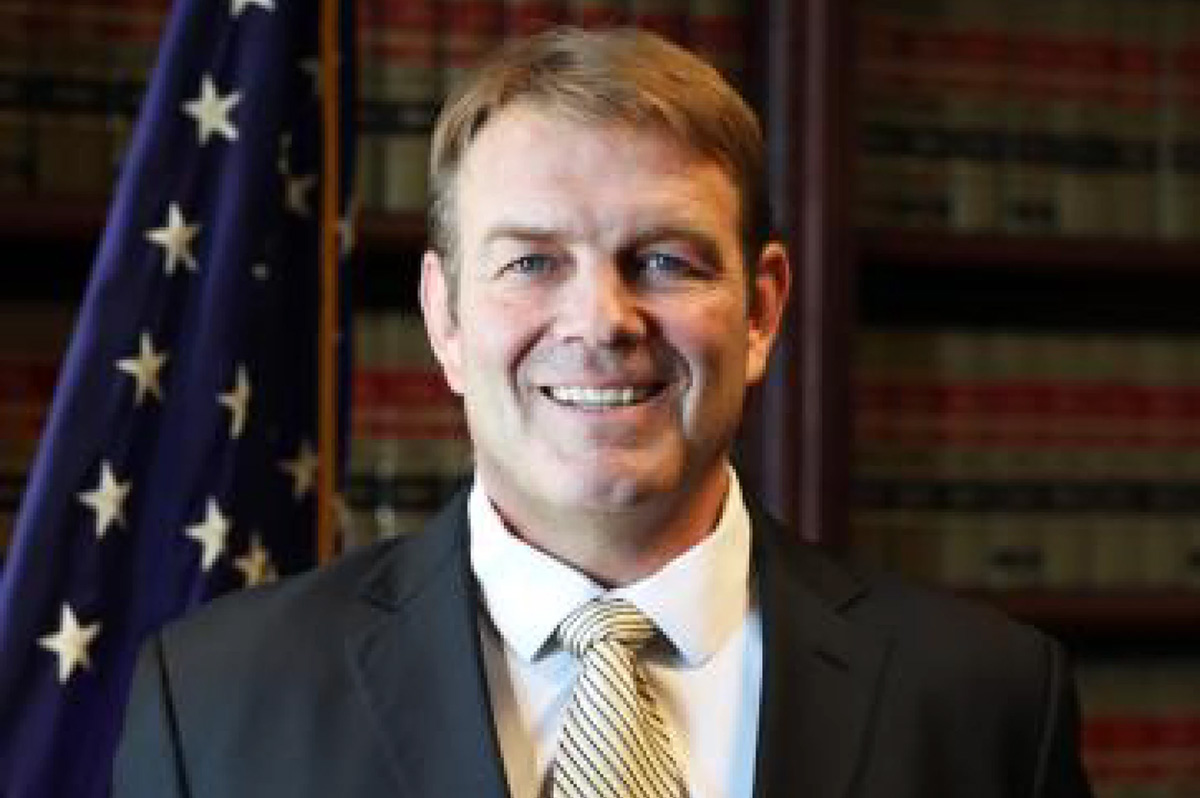
Republicans confirmed Darin Smith as U.S. Attorney for the District of Wyoming on Monday, regardless of his history as interim U.S. Attorney for Wyoming and a state senator.
While serving as interim U.S. Attorney for Wyoming — after being appointed by President Donald Trump last July despite never trying a case outside of his time as a law student intern — former state Sen. Darin Smith likely prejudiced jurors during grand jury proceedings.
Nine felony grand jury indictments tied to Smith’s tenure were dismissed last week.
Judges dismissed felony indictments against Cheyenne Swett, Richard Allen, Michael Scott Hopper, Brian Joseph Johnson, Dennison Jay Antelope, Matthew Christopher Jacoby, Matthew Miller Jr., Wolf Elkins Duran, and Jose Benito Ocon. The now-dismissed charges included felony firearm possession, drug distribution, and possession of child pornography, among other allegations.
Smith allegedly told the grand jury that the defendants were “bad guys,” described them as “murderers,” and said deliberations “won’t take long.”
Even the U.S. Attorney’s Office for the District of Wyoming acknowledged that Smith’s comments were “ill-advised.”
Smith has a history of aligning with Trump over the Constitution and supporting anti-LGBTQ legislation.
In 2025, Smith co-sponsored House Bill 0194, titled “Obscenity amendments,” which, among other provisions, would have criminalized drag shows. The bill also would have repealed exemptions for public and school librarians from the crime of “promoting obscenity” to minors. The wording of the bill was so vague that Republican state Rep. Lee Filer said, “We will end up having to arrest somebody for allowing a child to read the Holy Bible.”
Smith also co-sponsored SF0062, a bill requiring public school students to use restrooms, sex-designated changing facilities, and sleeping quarters that align with their sex assigned at birth. In March 2025, the Wyoming governor signed the bill into law, along with its House companion.
He also attended the Jan. 6 Capitol riot alongside thousands of other Trump supporters.
“Smith was on the Capitol grounds on Jan. 6 … and made the reprehensible claim … that the hundreds of Capitol Police officers who risked their lives that day were guilty of ‘massive incompetence.’ Smith blames the police for what happened on Jan. 6. Without evidence, he claimed that rioters who breached the Capitol were victims of entrapment,” U.S. Sen. Dick Durbin (D-Ill.) said. “Moreover, Smith is not remotely qualified to be a U.S. Attorney. He’s going to be in the package — take it or leave it. Prior to becoming the interim U.S. Attorney, he had no courtroom or litigation experience whatsoever. None. And Smith’s lack of experience has had real-world consequences.”
Prior to his work in the Wyoming state legislature, Smith worked as Director of Planned Giving for the Family Research Council, an organization that describes homosexuality as “harmful” to society with “negative physical and psychological health effects.”
The organization also believes that sexual orientation “should [not] be included as a protected category in nondiscrimination laws or policies, as it is not comparable to inborn, immutable characteristics such as race or sex.”
During questioning before the U.S. Senate, he denied that his work with the organization shows he has loss of impartiality when it comes to matters of LGBTQ rights.
Also questioning, Smith was asked about a now-deleted Facebook post in which he appeared to express support for Kim Davis, the Kentucky county clerk who was found to be unconstitutional in her refusal to issue same-sex marriage licenses, despite Obergefell v. Hodges.
“Perhaps Hillary and Obama can share the cell with Kim Davis for refusing to uphold the Defense of Marriage Act,” the post said.
When asked why he posted it, Smith told Durbin: “I do not recall.”
Josh Sorbe, spokesperson for the Senate Judiciary Committee Democrats and Durbin, said:
“Anti-LGBTQ+ extremist Darin Smith has no business serving as a top law enforcement officer in any state — let alone a state with as much history of queer importance as Wyoming. He’s an unqualified insurrectionist with no experience litigating criminal or federal matters, and his bigotry puts into serious question his commitment to upholding the law for all Americans.”
Human Rights Campaign Vice President of Government Affairs David Stacy also condemned Smith’s confirmation to the U.S. Attorney’s office.
“The justice system in America is supposed to be about ensuring the law is applied fairly and equally. But Darin Smith has spent his career obsessed with making life worse for LGBTQ+ people, opposing marriage equality, cosponsoring state legislation targeting transgender youth, and smearing LGBTQ+ people in public statements,” Stacy said. “Just over two decades after Matthew Shepard was brutally murdered in that same state, Wyoming deserves better than tired anti-LGBTQ+ hate at the helm of federal law enforcement. The Senate should reject Darin Smith and demand a nominee who will put the people — and justice — first.”
Vermont
Vt. lawmaker equates transgender identity with bestiality
Vermont Democrats condemned comments, demanded apology
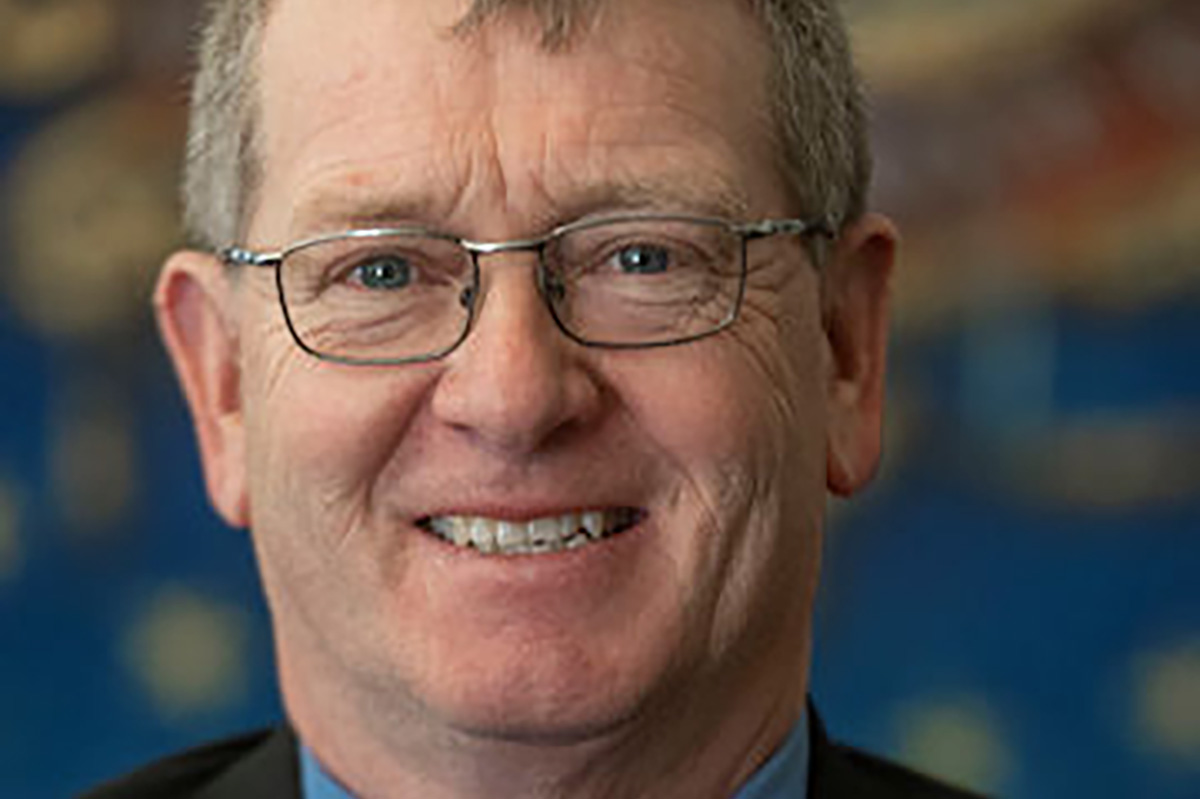
State Sen. Steven Heffernan (R-Addison) equated transgender people to bestiality on the Vermont Senate floor on May 15 while debating an animal cruelty bill.
Heffernan, who was elected in 2024 to the state Senate, constructed a scenario in which a trans person is indistinguishable from someone committing bestiality.
“In these crazy times, what happens if the individual identifies as an animal having intercourse with an animal? How is the courts going to handle that?” the former member of the Vermont Air National Guard said while debating House Bill 578. “Being that we voted through Prop Four, and if it does make it through this state, and I have a gender identity that I identify as a dog and had sex with my dog, is this law going to affect me?”
State Sen. Tanya Vyhovsky (D-Chittenden Central), who presented H. 578 responded professionally.
“The bill that we are putting forward in the current law is quite clear that any act between a person and an animal that involves contact with the mouth, sex organ, or anus of the person, and the mouth, sex organ, or anus of the animal, without a bona fide veterinary purpose, will be a crime.”
In the video, Heffernan continued to ask inappropriate questions — questions that Vyhovsky answered.
“If I identify as that animal, will this be able to … It says a person. I’m not a person. I’m identifying as this animal I’m having intercourse with,” he said. “We are identifying genders, of whatever gender we decide we want to be, and I think I like this bill. I’m going to vote for this bill, but I want to make this chamber aware of what’s coming.”
Vyhovsky made a statement saying this was a planned move in an attempt to “other” trans Vermonters instead of protecting them.
“Senator Heffernan knew exactly what he was doing,” said Vyhovsky. “Sen. Heffernan is using the same dehumanizing playbook that has been used against LGBTQ+ people for generations — the false, ugly suggestion that queer and trans identity is synonymous with deviance and harm. It was wrong then and it is wrong now.”
This derogatory action at the expense of trans people appears to be part of a pattern of behavior from Heffernan in his official capacity.
In March, Heffernan left the floor right before lawmakers voted on Proposal 4, conveniently missing the bill vote. PR 4, if passed by the state’s voters in the fall, would amend the state constitution to enshrine protections against unjust treatment, including discrimination based on a “person’s race, ethnicity, sex, religion, disability, sexual orientation, gender identity, gender expression, or national origin.”
Heffernan told VTDigger at the time that he left because his stomach was feeling “agitated” and he needed to use the restroom. He said he had not made up his mind on how to vote on the amendment, largely because he’d heard from constituents urging him both to vote for and against it.
“My pizza hit at the right time, I guess,” he said, calling the timing “convenient.”
Despite his leaving — and being the only lawmaker to do so — the state Senate voted to pass it 29-0, with Heffernan marked “absent.” This came after the state House of Representatives voted to pass it 128-14 last week.
Vermont Senate Democrats condemned the statement and used the opportunity to emphasize the need for the state to pass PR 4 on Nov. 4.
“In the wake of Sen. Heffernan’s comments, the stakes of this election couldn’t be more clear,” the statement provided to the Washington Blade read. “Transgender and nonbinary Vermonters are our neighbors, our friends, and our family members. On Friday, Sen. Heffernan used his platform as an elected official representing the people of Vermont to dehumanize them. Senate Democrats will never stop fighting for dignity for all Vermonters. We demand Senator Heffernan apologize to those he has harmed with his words and actions.”
State Sen. Kesha Ram Hinsdale (D-Chittenden Southeast), speaking in her capacity as chair of the Senate Ethics Panel, responded to similar transphobic comments made by President Donald Trump in a White House counterterrorism strategy document last week, in which he said those with “extreme transgender ideologies” should know “we will find you and we will kill you,” stating:
“A lot of people are living in fear in this country because of what somebody with the power of the pen and the power of the military is saying every day,” Hinsdale said. “Just because [speech] is protected does not mean it is worthy of this institution, and does not mean it is worthy of the office we hold and the power that we wield in the lives of Vermonters.”
The Blade reached out to Heffernan for comment but has not heard back.

Iran war causes condom shortage in India

U.S. attorney nominee confirmed despite anti-LGBTQ history, no trial experience

Vt. lawmaker equates transgender identity with bestiality

Gay Men’s Chorus celebrates 45 years at annual gala

BREAKING NEWS: Barney Frank dies at 86

Disillusioned about democracy? Think of it as a community garden

Honey, have we been priced out of gay paradise?

IDAHOBiT a reminder we all must stand up against transphobia

PHOTOS: Blade Summer Kickoff Party