National
U.S. lawmakers spurn Ugandan LGBT activists
Inhofe-led delegation to reportedly meet with East African country’s president

A congressional delegation is scheduled to meet with Ugandan President Yoweri Museveni in his country’s capital on Jan. 23. (Photo by the U.K. Department for International Development; courtesy Wikimedia Commons)
The Washington Blade has learned a congressional delegation is expected to meet with Ugandan President Yoweri Museveni next week amid outrage over the passage of a bill that would impose a life sentence upon anyone found guilty of repeated same-sex sexual acts.
U.S. Sen. Jim Inhofe (R-Okla.) will lead the delegation that includes U.S. Reps. Vern Buchanan (R-Fla.), Ander Crenshaw (R-Fla.), Ann Kirkpatrick (D-Ariz.) and Erik Paulsen who are scheduled to travel to Uganda on Jan. 23. A source familiar with the trip told the Blade the lawmakers are scheduled to meet with Museveni while they are in the East African country.
A copy of an itinerary the source forwarded to the Blade indicates the lawmakers will also travel to Germany, Turkey, Jordan, the United Arab Emirates, Rwanda and Niger before returning to the U.S. on Jan. 26.
“The purpose of the CODEL’s (congressional delegation’s) engagements in Africa is to better understand how to address the ‘Arc of Instability’ through the center of Africa so the SASC (Senate Armed Services Committee) can support USG (U.S. government) efforts to address the underlying causes of our problems on the continent rather than just reacting to the symptoms,” it reads.
The source familiar with the trip told the Blade the delegation will focus on efforts to combat the Lord’s Resistance Army that led a bloody insurgency against the Ugandan government from 1986-2006. Inhofe and other U.S. lawmakers are also expected to discuss counter-terrorism efforts against the Somali Islamist militant group al-Shabab, the escalating conflict in South Sudan and “other U.S. interests.”
The source told the Blade the lawmakers have rejected Ugandan LGBT rights advocates’ requests to meet with them while in the East African country.
“We understand that Sen. Inhofe will be meeting with President Museveni and we believe other officials in Uganda on Jan. 23,” Maria Burnett of Human Rights Watch told the Blade on Friday. “We understand that they have been close for many, many years and maintain a great deal of dialogue on a range of issues. And given the recent events on the Anti-Homosexuality Bill, it seems like a crucial time for Sen. Inhofe to restate his lack of support of the bill quite clearly.”
Ugandan lawmakers on Dec. 20 approved the Anti-Homosexuality Bill that originally contained a provision that would have imposed the death penalty on anyone found guilty of repeated same-sex sexual acts. The measure would also criminalize the promotion of homosexuality.
The White House, Florida Congresswoman Ileana Ros-Lehtinen and U.N. High Commissioner for Human Rights Navi Pillay are among those who criticized the measure’s passage. Richard Branson, founder of the Virgin Group, announced after Ugandan lawmakers approved the Anti-Homosexuality Bill that his company would not do business in the country.
Museveni’s spokesperson told Agence France-Presse on Jan. 2 the Ugandan president “won’t rush” to sign the measure into law. A Ugandan newspaper on Friday reported Museveni has blocked the bill because Parliament Speaker Rebecca Kadaga allowed a vote on the measure without the required number of lawmakers needed for quorum.
Uganda is among the more than 70 countries in which homosexuality remains criminalized.
The Center for Constitutional Rights in March 2012 filed a federal lawsuit against Scott Lively in Massachusetts on behalf of Sexual Minorities Uganda, a Ugandan LGBT advocacy group, that accuses the evangelical Christian of exploiting homophobic attitudes in the East African country and encouraging lawmakers to approve the Anti-Homosexuality Bill. U.S. District Judge Michael A. Posner of the U.S. District Court for the District of Massachusetts last August ruled the group’s lawsuit can move forward.
Ugandan Parliamentarian David Bahati, who introduced the Anti-Homosexuality Bill in 2009, has ties to the Fellowship Foundation, a Christian evangelical group that hosts the annual National Prayer Breakfast in D.C. Inhofe is also closely aligned with the secretive organization also known as “The Family.”
The Oklahoma Republican told MSNBC host Rachel Maddow during a 2012 interview he had “never heard” of Bahati when she asked him about the parliamentarians’ claims the idea for the Anti-Homosexuality Bill came from a conversation he had with members of the Fellowship.
“I do not, nor have I ever, supported or condoned this legislation,” said Inhofe in an Oct. 2011 statement to the website Red Dirt Report. “It is my hope that Uganda will abandon this unjust and extraordinarily harsh legislation.”
The Oklahoma Republican has not publicly spoken about the measure since Ugandan lawmakers approved it.
“Frankly this is not the only human rights issue that we think would be important for a high-level American delegation to raise with President Museveni,” Burnett told the Blade. “We have a lot of other concerns, such as obstacles to Ugandans rights to expression and assembly, but Senator Inhofe happens to be going at a particularly significant moment in the course of this bill.”
Inhofe’s spokesperson, Donelle Harder, denied reports the delegation will meet with the Ugandan president while in his country.
“It appears someone gave you a bad itinerary as the members are not meeting with Museveni,” she told the Blade. “Sen. Inhofe will be in Uganda briefly to meet with local officials regarding the [Lord’s Resistance Army.]”
A U.S. State Department spokesperson deferred to the staffers of the delegation members.

National
Victory Institute to honor Biden at D.C. conference
Former president to receive award on Friday

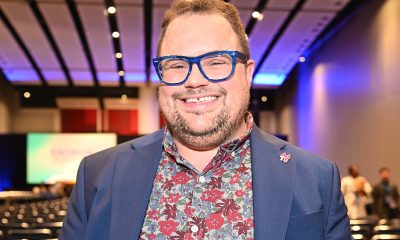
The LGBTQ+ Victory Institute on Friday will honor former President Joe Biden at its annual International LGBTQ+ Leaders Conference in D.C.
Biden will receive the Chris Abele Impact Award in honor of what the Victory Institute described as “his historic role in championing LGBTQ+ rights and for his leadership in achieving the most LGBTQ+ inclusive administration in U.S. history.”
“President Biden has shown unwavering commitment to ensuring LGBTQ+ people can participate fully and openly in our democracy,” said Victory Institute President Evan Low in a press release. “From appointing a record number of LGBTQ+ leaders to reversing harmful policies and expanding civil rights protections, his administration set a new and necessary standard for what inclusive governance looks like.”
The conference will take place at the JW Marriott Hotel in Downtown Washington from Dec. 4-6.
National
Faith leaders denounce anti-transgender attacks
‘You are holy. You are sacred. We love you.’
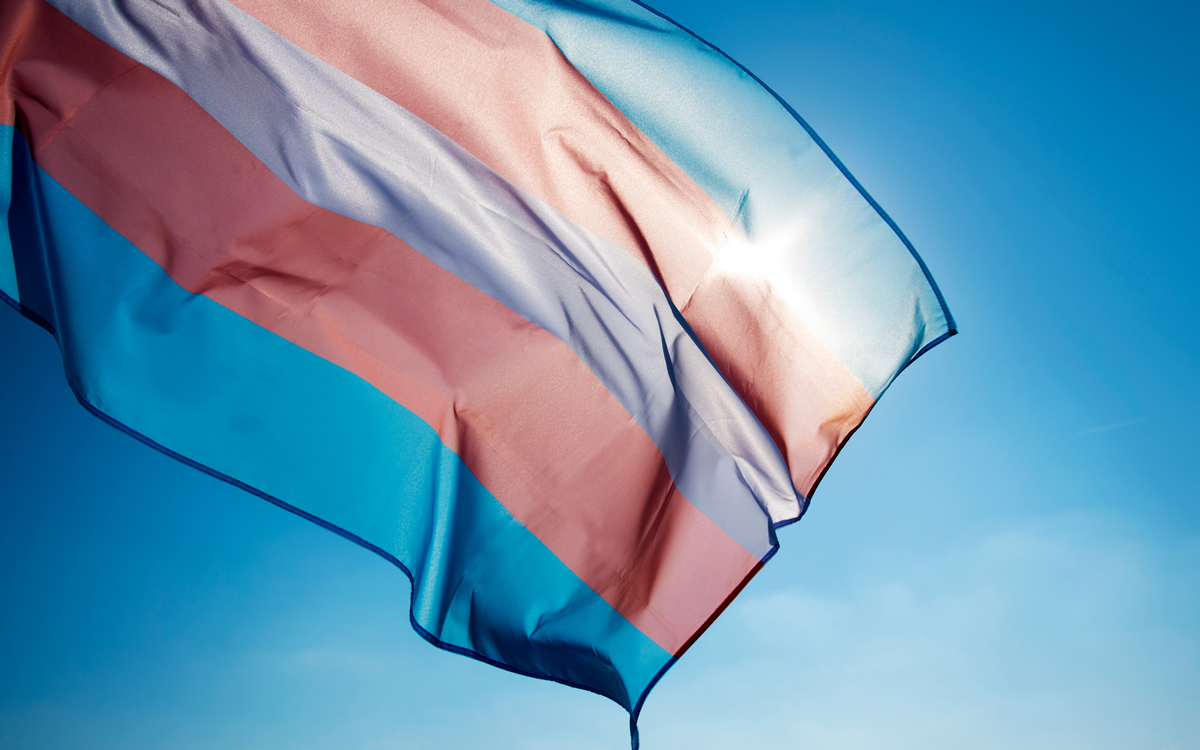
This past Trans Awareness Week, 10 heads of diverse religious traditions issued a statement proclaiming that transgender, intersex, and nonbinary people are worthy of love, support, and protection. Led by Rev. Dr. Sofía Betancourt, president of the Unitarian Universalist Association, representatives from the Universal Fellowship of Metropolitan Community Churches, The Fellowship of Affirming Ministries, the Union for Reform Judaism, the Presbyterian Church, the Christian Church (Disciples of Christ), The Episcopal Church, the United Church of Christ, and Reconstructing Judaism called out the violent and systemic persecution of trans, nonbinary, intersex, and queer people–proclaiming that their faith and their humanity urged them to affirm that trans, intersex, and quere people are “sacred” and “holy.”
Their statement comes at a critical time. Over the past three months, Trump and his Cabinet’s anti-trans rhetoric has only intensified, with a report released late September by journalist Ken Klippenstein in which national security officers leaked that the FBI is planning to classify trans people as “extremists.” By classifying trans people as “Nihilistic Violent Extremists,” far-right groups would have more “political (and media) cover,” as Abby Monteil reports for them, for anti-trans violence and legislation.
While the news is terrifying, it’s not unprecedented – the fight against trans rights and classification of trans people as violent extremists was included in Project 2025, and in the past several weeks, far-right leaders’ transphobic campaign has expanded: boycotting Netflix to pressure the platform to remove trans characters, leveraging anti-trans attack ads in the Virginia governor’s race and banning professors from acknowledging that trans people exist. In fact last month, two Republican members of Congress called for the institutionalization of trans people.
It seems that the government shutdown was predicated, at least partially, on Trump’s own anti-trans policies that were attached as riders in the appropriations bill.
It’s a dangerous escalation of transphobic violence that the Human Rights Campaign has classified as an epidemic. According to an Everytown for Gun Safety report published in 2020, the number of trans people murdered in the U.S. almost doubled between 2017 and 2021. According to data released by the Gun Safety report from February 2024, 34 percent of gun homicides of trans, nonbinary, and gender expansive people remain unsolved.
As Tori Cooper, Director of Community Engagement for the Transgender Justice Initiative for the Human Rights Campaign Foundation, this violence serves a purpose. “The hate towards transgender and gender expansive community members is fueled by disinformation, rhetoric and ideology that treats our community as political pawns ignoring the fact that we reserve the opportunity to live our lives full without fear of harm or death,” Cooper said.
The faith leaders came out in this statement to affirm that it is their spiritual and human imperative to call out this escalating violence and protect trans, nonbinary, intersex, and queer people. The leaders acknowledge that historically and today, religion is used as a weapon of hate to degrade and deny the human dignity of LGBTQ+ peoples. The Supreme Court is hearing Chiles v. Salazar, a case about the constitutionality of a Colorado ban of conversion therapy for minors, with the majority of conversion therapy practices being faith based. And despite the Supreme Court declining to hear a case challenging the constitutionality of same-sex marriage conferred in Obergefell v. Hodges, efforts to end marriage equality remain ongoing with Katy Faust’s End Obergefell movement.
“During a time when our country is placing their lives under increasingly serious threat,” the statement reads, “there is a disgraceful misconception that all people of faith do not affirm the full spectrum of gender – a great many of us do. Let it be known instead that our beloveds are created in the image of God – Holy and whole.”
The faith leaders argue that commendation of LGBTQ peoples and religiously motivated efforts to deny their dignity and rights is not the belief of all faith communities, and far-right Christian nationalist communities and others who uphold homophobia and seek to exact it writ large in the United States do not speak for all faith leaders.
This is a critical piece of the statement and builds on historical precedence. During the 1980s AIDS crisis, when far-right Christian leaders like Jerry Falwell, one of the founders of the Moral Majority, stated that HIV was “God’s punishment” for LGBTQ+ people and indicative of a broader moral decline in America, affirming faith communities came out to affirm the dignity and divinity of queer people. As funeral homes and churches refused to prepare the dead and bury them, some faith communities stepped up to say that these homophobic leaders do not speak on behalf of all people of faith.
In 1985, the United Church of Christ General Synod urged its member congregations to claim and declare themselves “Open and Affirming,” in order to express their welcome and support for LGBTQ+ people, and two years later, the Church of the Brethren issued a statement titled “A Call to Compassion” where conference members urged member congregations to speak out boldly against discrimination, provide direct care to people with HIV/AIDS, and actively educate themselves and others to stop the spread of fear and prejudice surrounding the disease.
Just one year later, the Evangelical Lutheran Church in America Church Council issued a statement, “AIDS and Church’s Ministry of Caring,” which outlined the ways in which welcoming, ministering to and advocating on behalf of people with HIV/AIDS is critical to their mission. Even the US Conference of Catholic Bishops, which earlier this month banned gender-affirming care at Catholic hospitals, issued a statement in 1987 calling discrimination against people with HIV/AIDS “unjust and immoral,” and denouncing the label of “innocent” or “guilty” patients.
Thus, the faith leaders’ statement this past week builds on a rich history of faith communities fighting the stigma that far-right faith groups perpetuate about LGBTQ+ people and committing to action. What sets this latest statement apart is its decidedly interfaith heart, which speaks to the history of the Pride Interfaith Service in Washington, DC that was first started by a group of faith leaders and lay people who gathered at the AIDS Memorial quilt.
As the statement reads, “Our scriptures vary, but they share a common conviction. As we make justice our aim we must give voice to those who are silenced. Our shared values, held across many faiths, teach us that we are all children of God and that we must cultivate a discipline of hope, especially in difficult times. As such, we raise our voices in solidarity to unequivocally proclaim the holiness of transgener, nonbinary, and intersex people, as well as the recognition of the entire spectrum of gender identity and expression.”
The statement ended by arguing that they need to call out the violence they are witnessing. Their silence, they argue, would be in compliance and reinforce the idea that homophobic religious leaders and lay people speak on behalf of all people of faith. Their statement is not only words, however, it is a written promise affirming the dignity and holiness of queer people but also to protect them in the face of increasing violence and persecution.
“When people of faith and conscience stay silent in the face of oppression, we are all made less whole. When people of faith and conscience speak out against that which violates the sacred in its own name, we have the power to stay the hand of sin. Transgender, nonbinary, and intersex people are vulnerable today,” the statement concluded.
“Our faiths, our theologies, and our practices of prophetic witness call on us to say with one voice to transgender people among us: ‘You are holy. You are sacred. We love you. We support you, and we will protect you.’”
The White House
White House halts World AIDS Day recognition amid HIV funding cuts
Trump-Vance administration under increased criticism over policies
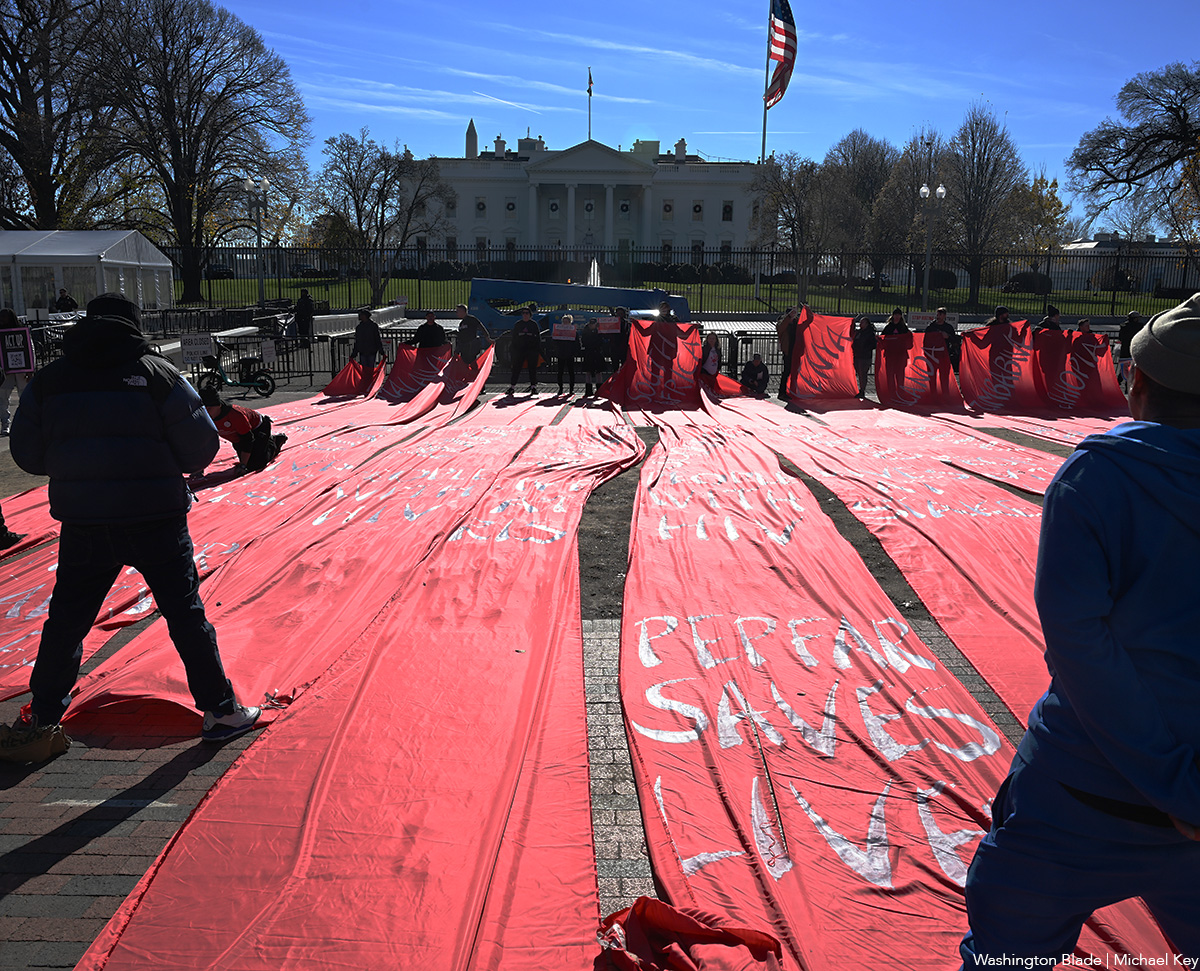
For the first time since the global observance began, the U.S. government did not commemorate World AIDS Day on Monday.
World AIDS Day, first marked in 1988, has long served as an annual reminder of the ongoing effort to end an epidemic that has killed more than 44.1 million people worldwide and continues to disproportionately impact LGBTQ people, communities of color, and those in the American South. Yet the Trump-Vance administration declined to acknowledge the day this year, severing a symbolic but consistent tradition upheld by every president since Ronald Reagan.
The move comes despite the scale of the epidemic today. Approximately 1.2 million people in the U.S. are living with HIV, according to federal estimates, and about 13 percent — 158,249 people — do not know their status. Globally, the World Health Organization reports 40.8 million people were living with HIV at the end of 2024.
Presidents of both parties have historically used World AIDS Day to highlight progress, remember lives lost, and recommit to reducing disparities in prevention and treatment. Past administrations have also commemorated the day through displays of the AIDS Memorial Quilt — first created in 1987 and later spread across the National Mall and White House lawn. Today, the quilt includes the names of more than 94,000 people lost to AIDS on more than 47,000 panels.

This year’s silence from the White House follows several sweeping foreign aid rollbacks instituted by President Donald Trump after his 2024 inauguration. According to an October report by KFF, the administration enacted a “90-day review of foreign aid; a subsequent ‘stop-work order’ that froze all payments and services for work already underway; the dissolution of USAID, including the reduction of most staff and contractors; and the cancellation of most foreign assistance awards.”
These cuts have created significant funding gaps for nongovernmental organizations around the world — many of which work directly to prevent HIV transmission and expand access to lifesaving treatment.
The State Department dismissed criticism of the administration’s decision not to acknowledge World AIDS Day.
“An awareness day is not a strategy. Under the leadership of President Trump, the State Department is working directly with foreign governments to save lives and increase their responsibility and burden sharing,” deputy spokesperson Tommy Pigott said in a statement CNN first reported. “Earlier this year, we released a global health strategy aimed at streamlining America’s foreign assistance and modernizing our approach to countering infectious diseases.”
The U.S. historically played a central role in the global HIV response. Since 2003, the United States has been the largest financial supporter of HIV/AIDS programs — primarily through President George W. Bush’s PEPFAR initiative, which has invested more than $110 billion into the fight to end the epidemic.
Despite overall declines in transmission, HIV continues to disproportionately affect racial and ethnic minorities, LGBTQ people, and men who have sex with men. More than half of new HIV diagnoses occur in the South.
The Centers for Disease Control and Prevention’s Ending the HIV Epidemic in the U.S. initiative focuses on the 48 counties, D.C., San Juan, Puerto Rico, and seven rural states that accounted for more than half of all new diagnoses in 2016 and 2017.
Advocates say the administration’s withdrawal from World AIDS Day — combined with its cuts to foreign and domestic health programs — risks reversing hard-won gains.
“Though new HIV infections declined 12 percent from 2018 to 2022, progress is uneven with Black people accounting for 38 percent of new diagnoses, Latino people accounting for 32 percent of new diagnoses and more than half (52 percent) of new HIV diagnoses were among people living in the South,” Jarred Keller, senior press secretary at the Human Rights Campaign, told the Washington Blade via email. “Cuts to CDC funding have driven HIV prevention resources to historic lows, stripping support from HIV-focused programs.”
Legal and public health experts echoed that concern, saying that there is a possibility to stop HIV/AIDS, but only if efforts are taken gradually over time.
“HIV is a preventable and treatable condition, but only if the research, organization, and effort continue to be a priority to those looking out for the health of Americans and people worldwide,” said Lambda Legal HIV Project Director Jose Abrigo.

Victory Institute to honor Biden at D.C. conference

Colombia anunció la inclusión de las categorías ‘trans’ y ‘no binario’ en los documentos de identidad

Faith leaders denounce anti-transgender attacks

Tokyo court upholds Japan’s same-sex marriage ban

White House halts World AIDS Day recognition amid HIV funding cuts

Comings & Goings

Impulse Group DC to host fundraiser

Calendar: November 28-December 4

India’s Jharkhand state works to improve trans people’s access to health care