Books
SPRING ARTS 2018 BOOKS: Fact, fiction and beyond
Queer themes — especially trans memoirs — abound in spring book crop
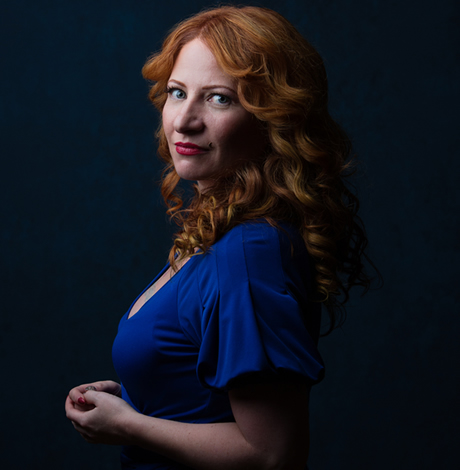
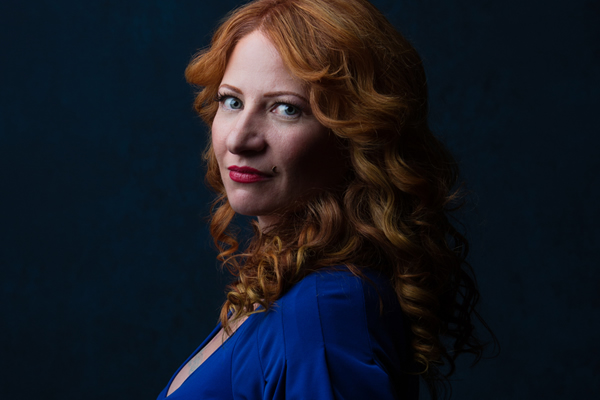
Out author Amber Dawn returns with her second novel ‘Sodom Road Exit’ on April. 3. (Photo courtesy Dawn)
In her much-anticipated memoir, “Tomorrow Will Be Different: Love, Loss and the Fight for Trans Equality” (Crown Archetype, March 6), Sarah McBride tells the story of how she went from closeted student body president at American University to the first transgender person to speak at a national political convention at the age of 26. One of the most prominent transgender activists of her time, McBride interweaves thoughtful analysis of contemporary political issues, such as bathroom access and trans health care, into her own triumphant journey. The book begins with a foreword by Joe Biden.
“Speak No Evil: A Novel” by Uzodinma Iweala (Harper, March 6) just might be the coming-out story of the year, and a Washingtonian one at that. Iweala’s heart-wrenching sophomore novel follows Niru, a seemingly charmed track star at an elite D.C. private school bound for Harvard. Only his best friend Meredith knows he is gay until his sexuality is discovered by his conservative Nigerian father. The repercussions are swift and violent, catastrophic for his relationship with his family and taxing in his friendship with Meredith. The novel is a visceral but compassionate portrait of what it means to be different within a family, let alone society at large.
In “The Affliction” (Four Way Books, March 6), award-winning poet C. Dale Young makes his fiction debut with a novel told in fantastical short stories, spanning the United States and Caribbean. Among the novel’s many memorable characters are a man who can disappear, a woman who can see the future and a man raised in a cult who believes he is doomed to die. Young is openly gay and of Latino and Asian descent. He is also very much left- and right-brained in that he is a full-time physician when not writing and teaching creative writing at Warren Wilson College.
“The Sparsholt Affair” by Alan Hollinghurst (Knopf, March 13) begins with a covert gay relationship at Oxford University in 1940 and spans three generations, masterfully unfolding the social and sexual revolutions that have taken place through present day. Instantly a bestseller in the U.K., the novel is anchored by David Sparsholt and Evert Dax, whose evening trysts at Oxford feel especially under the radar with the world at war. Hollinghurst, who won the Man Booker Prize in 2004, is an openly gay English author.
“Berlin 1936: Sixteen Days in August” by Oliver Hilmes (Brodley Head, March 27) is a fascinating historical account of the 1936 Olympic Games in Berlin. Hilmes, a gay German historian, paints an intoxicating picture of the city of Liza Minelli’s “Cabaret” — where queer life flourished under the Weimar Republic — contrasted with the terrifying rise of Adolf Hitler. In addition to analyzing the events of the Olympic Games, namely Jesse Owens’ triumph, Hilmes also introduces us to the lives of ordinary (some queer) Berliners. The book is ultimately an ode to the city, which has since reestablished itself as one of the most dynamic creative queer capitals in the world.
Chelsey Johnson’s debut novel, “Stray City” (Custom House, March 20) is the queer anti-“Gilmore Girls” you didn’t know you needed. This warm, hysterical story follows 23-year-old Andrea Morales, who escaped her Midwestern Catholic childhood to create a life for herself in Portland’s vibrant lesbian community. One especially debauched evening, Andrea hooks up with a man and later finds herself pregnant. The novel jumps to a decade later, as Andrea’s precocious daughter Lucia starts asking questions about the father she’s never met.
“Written on the Body,” edited by Lexie Bean (Jessica Kingsley Publishers, March 21), is a collection of essays written by and for trans and non-binary survivors of sexual assault and domestic violence. With contributions from Dean Spade, Nyala Moon, Alex Valdes, Sawyer DeVuyst and Ieshai Bailey, this book offers support, guidance and affirmation for trans survivors, whose stories are too often met with incredulousness and skepticism.
Amber Dawn, a Lambda Literary Award winner, returns with her second novel, “Sodom Road Exit” (Arsenal Pulp Press, April 3). This spellbinding paranormal thriller takes place in the summer of 1990 in Crystal Beach. Queer picaresque heroine, Starla Mia Martin, drops out of college and returns to find her lakeside village a ghost town after its beloved amusement park shuts down. Starla soon discovers an unnerving energy in the air — strange sounds, phantasmagoric sightings — and instead of hopping off the rollercoaster, she confronts every twist and turn head-on.
If you’re a poetry fan, “Nepantla: An Anthology Dedicated to Queer Poets of Color” (Nightboat Books, May 1), edited by Christopher Soto, is a stunning celebration of the diversity of the queer poetry community, as varied in style and form as it is in the experiences held by each contributor. Soto launched Nepantla with the Lambda Literary Foundation as an online journal to share the work of queer and trans poets of color. This is its first time in print, featuring canonical pieces by legends like Audre Lorde and James Baldwin alongside their contemporaries, such as Natalie Diaz, Tommy Pico and Chen Chen.
Celebrated novelist Alexander Chee makes his nonfiction debut with “How to Write an Autobiographical Novel” (Mariner Books, April 17). This revealing collection of essays is Chee’s manifesto on what it means to be a contemporary writer and gay man, Korean American, artist, activist, lover and friend. While tracing the most decisive moments of his own life, Chee also examines some of the nation’s biggest historical turning points, from the AIDS crisis to the election of Donald Trump.
“Little Fish” (Arsenal Pulp Press, May 1) is the debut novel from Lambda Literary Award-winning short story writer Casey Plett. The protagonist, Wendy Reimer, is a 30-year-old trans woman who discovers that her late grandfather, a pious Mennonite farmer, was likely transgender as well. In distracting herself from the problems in her own life and those of her friends — from alcoholism, to sex work to suicide — Wendy finds herself fully consumed by this familial mystery and the need to uncover the truth.
“SELF-ish: a Transgender Awakening” (Red Hen Press, May 4), a memoir by Chloe Schwenke, tells of her life and adventures living in five countries and working on projects in more than 40, mostly in Africa and the Middle East. This former Obama Administration appointee, has committed her life to assisting marginalized groups in some of the world’s most challenging countries.
If you haven’t gotten a chance to see it live, snag the paperback of legendary playwright Tony Kushner’s “The Intelligent Homosexual’s Guide to Capitalism and Socialism with a Key to the Scriptures” (Theatre Communications Group, May 8). The play opens with Gus Marcantonio, a retired longshoreman, who has gathered his family together to discuss his decision to commit suicide. Kushner, who wrote “Angels in America” and has won a Pulitzer and two Tony Awards, uses his signature wit in telling a story of revolution, family and challenging the systemic constructs we consider inherent to our society. It will be interesting to see how it translates to the page; Theater J’s D.C. production a few years ago felt like three hours of overlapping screaming.
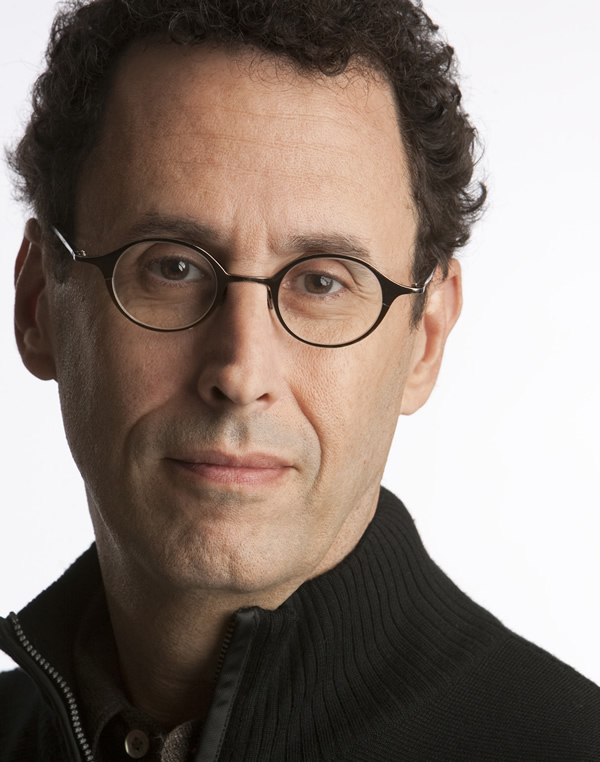
Out playwright Tony Kushner has adapted his play ’The Intelligent Homosexual’s Guide …’ to the written page. (Photo courtesy Berkeley Rep)
Other releases of note include:
• “The Routledge History of Queer America” (Routledge Histories), edited by Don Romesburg, offers one of the most comprehensive overviews of LGBT U.S. history, featuring nearly 30 chapters spanning the colonial era to present day. The book is $210 and releases March 14.
• “Post-Borderlandia: Chicana Literature and Gender Variant Critique”(Rutgers University Press) by Jackie T. Cuevas synthesizes Chicana/o studies with queer theory and transgender studies, exploring gender identity and expression using the Chicana feminist canon and contemporary thinkers and artists. The book is $26.96 and releases March 28.
• “Transforming: the Bible & the Lives of Transgender Christians” (Westminster John Knox Press) by Austen Hartke challenges the way readers conceptualize faith and the transgender experience, analyzing Biblical figures and providing representation to modern-day trans Christians. The book is $16 and out April 7.
• “Picture Us in the Light” by Kelly Loy Gilbert (Disney-Hyperion) is a poignant gay YA novel about Danny Cheng, a young artist bound for college who finds himself inexplicably panicked that he’ll be moving far from his best friend, Harry Wong. He’s also shaken by a disturbing discovery in his father’s closet. The book is $17.99 and releases April 10.
• “Not Here” (Coffee House Press) is the latest from critically acclaimed queer Vietnamese-American poet Hieu Minh Nguyen. Nguyen uses a wide variety of styles to provocatively confront whiteness, evoke both pleasure and pain, and find a sense of home in deep loneliness. The book is $16.95 and out April 10.
• “The Bride Was a Boy” by Chii (Seven Seas, May 1) is a delightful autobiographical manga novel about a transgender love story, drawn in the style of diary comics. Chii, who was assigned male at birth, begins with her childhood and continues through her latest adventure: marrying the man of her dreams. The book is $12.59 and available May 1.
• “Now the Night Begins” (Semiotext(e)/Native Agents) is gay French filmmaker Alain Guiraudie’s first foray into literature, translated by Jeffrey Zuckerman. Adopting his signature film themes, the novel is driven by disconcerting, overpowering sexual desire, centered on 40-year old protagonist Gilles Heurtebise’s all-encompassing obsession with a 90-year old man in his neighborhood. It costs $24.95 and is out May 11.
• “50 Queer Music Icons Who Changed the World” (Hardie Grant, May 15), written by Will Larnach-Jones and illustrated by Michele Rosenthal, is a beautiful tribute to the LGBT musicians who have been pushing boundaries since the 1920s, featuring everyone from Little Richard to Frank Ocean. It’s $14.99 and available May 15.






Books
New book reveals what we can learn from animal sex
‘Poking the Squid’ on homosexuality, gender swapping, and more
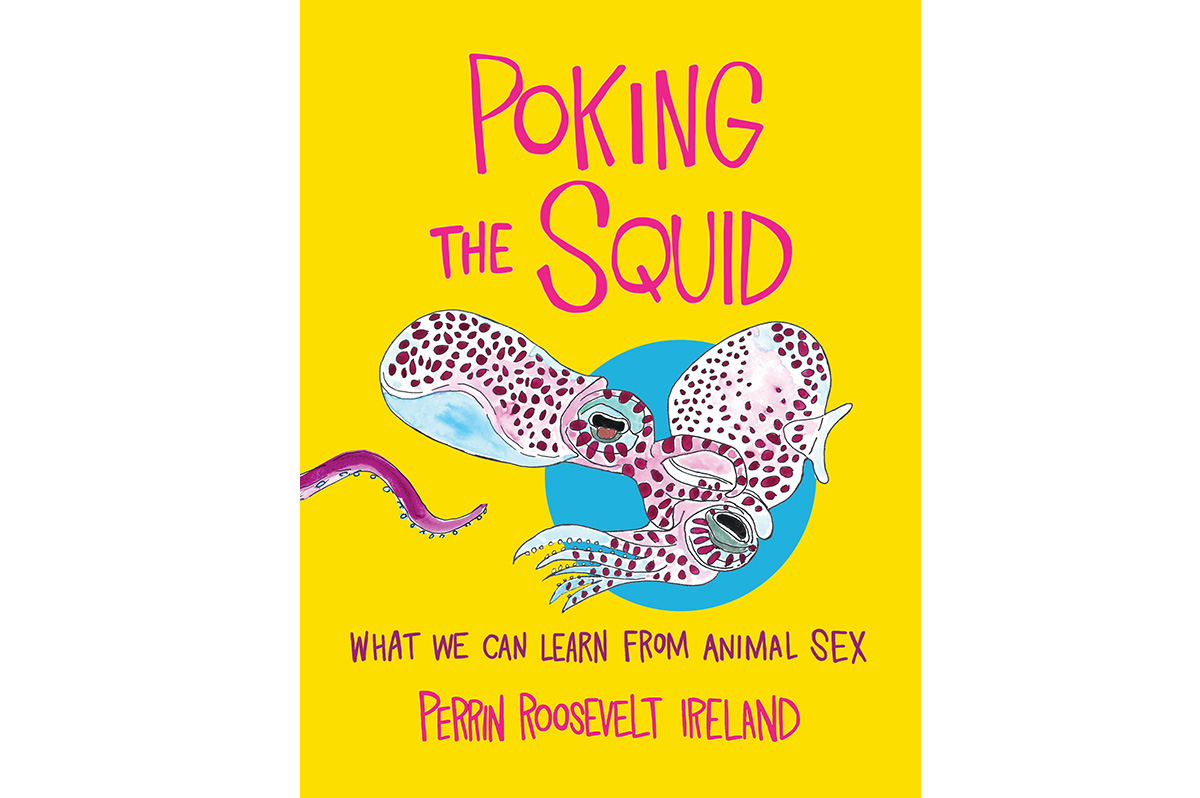
‘Poking the Squid: What We Can Learn from Animal Sex’
By Perrin Roosevelt Ireland
c.2026, W.W. Norton
$29.99 241 pages
Birds do it.
According to Cole Porter, bees do, too, but it’s not exactly what he imagined. Wild and tame, avians, insects, and mammals all have sex – although not always as you’ve been told or for reasons you might think. Even educated fleas do it and, as in the new book, “Poking the Squid” by Perrin Roosevelt Ireland, humans can learn from them all.

If you read through scientific papers on animal reproduction, you might notice something unusual: for scientists, the word “sex” means a lot of different things.
Says Ireland, “It’s used to describe behaviors, biology, life histories, and more.”
That might be because animals are not simply binary.
Take, for instance, hyenas. It’s easy for the casual observer to mistake a male hyena for a female and vice versa because of stereotypes of anatomy. Mating, for hyenas, requires subordination for the male and a nifty trick on the part of the female’s body to get things done.
Our feathered friends are no birdbrains, either: black-browed albatrosses were once thought to be monogamous but global warming seems to have changed their nesting habits sometimes. Male flamingos have sex with one another, as a territorial thing; other birds and animals form same-sex pairs for other reasons.
The Chinese mantis eats her mate after fertilization. Female snakes, alpacas, guinea pigs, and monkeys are anatomically able to enjoy sex. Genitalia between species varies quite a bit; in fact, the vaginas of ducks “are highly complex.” Lionesses will mate up to 100 times when in heat. Female damselflies will change into a “third sex” to avoid overly aggressive mating males. Bearded dragons can change their sex, if needed, as can yellow clown goby fish. And seahorse pregnancy and birth sparked a book banning in Tennessee.
So, asks Ireland, if animals, including us, vary so much in biology and life, “… why are we using the word sex like it means something, anything, consistent?!”
Pick up “Poking the Squid,” page through it a few seconds, and you’ll see that the information here is largely told through cartoon-like drawings mixed with captions. It seems to be something on the lighter side, but don’t let that artwork fool you.
Author Perrin Roosevelt Ireland offers readers solid information that cozies up to the scholarly, with hard science, philosophy, feminism, and quotations from researchers to support it, thus furthering the narrative and hitting the points squarely. If you see the art and expect something lighthearted, comic, and small-talk-worthy, you could be disappointed.
On the other hand, if you want solid, wryly serious facts, you’re in for a treat.
There’s lots of learning to be gleaned here, and some slight nudge-wink whimsy to emphasize the absurdity of wrong-headed thinking. This can make readers feel like they’re in-the-know on the jokes, and the playfulness balances the seriousness of the information well.
So, serious, scholarly, or slightly silly, none of these are negative but you’re going to know what you want from a book like this. For the right reader, someone in the mood, “Poking the Squid” is wild.
The Blade may receive commissions from qualifying purchases made via this post.
Books
‘Transcendent’ a tough but important read
Laverne Cox’s memoir recounts horrific abuse as a child
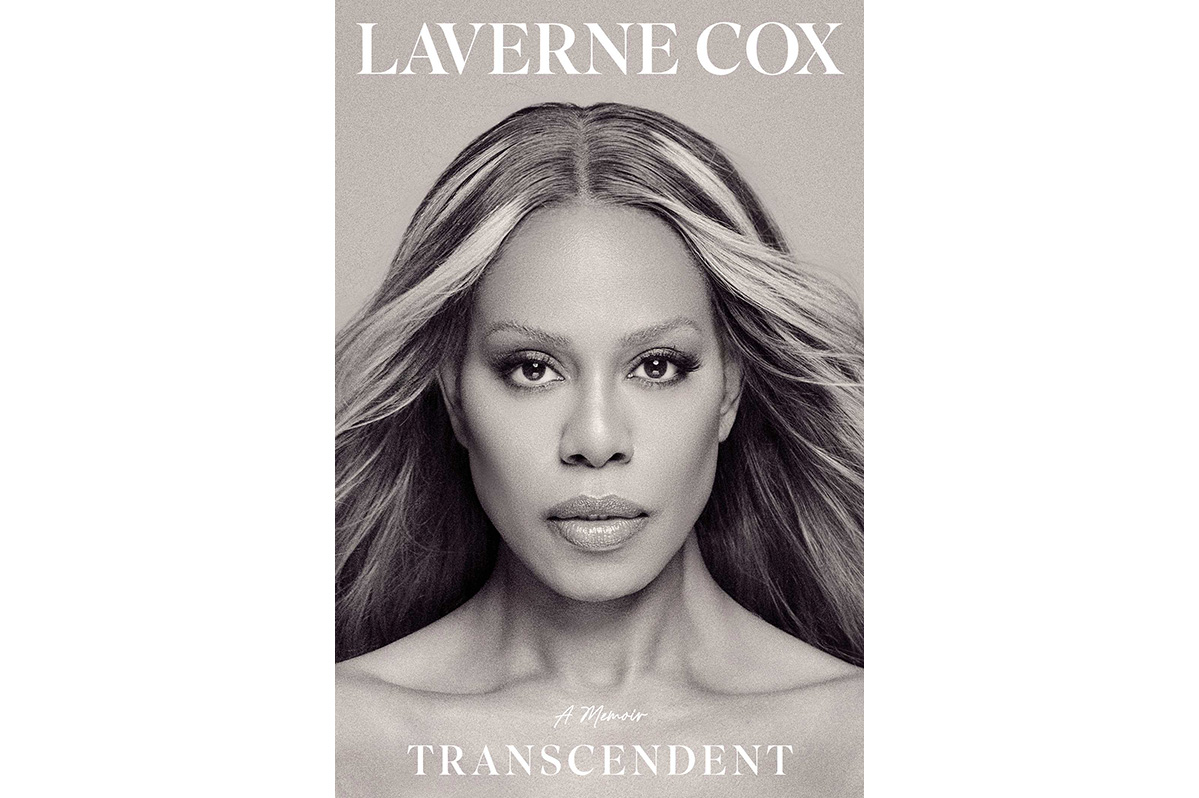
‘Transcendent: A Memoir’
By Laverne Cox
c.2026, Gallery Books
$30/238 pages
OK, let’s just say it: You’re tired of lies.
They come from above, behind, from either shoulder. They’re repeated, laid out in a line, told as if they’re true but they’re not. You wish people would stop lying to you. As in the new memoir “Transcendent” by Laverne Cox, you wish you could tell the truth about yourself.
Sissy.
If the bullies in the neighborhood weren’t constantly calling Laverne Cox that name, then Cox’s mother was. “Sissy,” was just one word, though; the others were worse. The boys would say those things while they beat Cox, when they could catch her. Her mother screamed at her gentle child who didn’t like “boy” activities.
Even at eight years old, says Cox, “I was a prim and proper lady.”
Despite the verbal abuse about her perceived feminine behavior and a furtive, failed attempt at conversion therapy, Cox’s mother sent her and her brother to the Alabama School of Fine Arts, where Cox learned to dance. It was a lifeline for her, and the talent gained there helped Cox get into college in Indiana.
From there, Cox expected to find fame and fortune in New York City.
And yet, the abuse she suffered as a child held Cox back, and the words “There is something wrong with me” became a daily mantra.
“I didn’t know how to say it.” Cox says. “I’m a girl.”
There were therapy sessions to get to that point, as Cox learned the language and skills needed to speak the truth. Landing a sense of style helped, as did her brother’s support, a handful of friends, and happy, scent-infused memories of her mother’s make-up table.
At each step, Cox says, “I was expressing myself, I was also allowing myself to edge closer to my girlhood.”
Let’s start here: “Transcendent” is a difficult read – not for style, but for substance.
From her earliest memory of being sexually abused as a toddler; to verbal and physical abuse from many sources; to what, judging by photo captions, seems perhaps like forgiveness, author Laverne Cox glosses over nothing. Be ready, in other words, for pages and pages of memories that, like a roller-coaster, will make you cringe and want to hide your eyes, although doing so would be a mistake.
As this book progresses, Cox’s story does, too. We see a child who knows a truth but has no words for it. The child becomes a teen with a bursting sense of self, then a young adult who craves love as she’s stretching her wings. By the time Cox advances to writing about her career and the abuse is (mostly) over, readers will breathe a well-deserved sigh of relief. Whew, you’ve winced through a harrowing tale to reach a satisfying but not complete update.
Fans of Cox’s work will want “Transcendent,” as will anyone who’s transitioned, is thinking about it, or loves someone who has. It’s a rough read, but a necessary one, then, and that’s no lie.
The Blade may receive commissions from qualifying purchases made via this post.
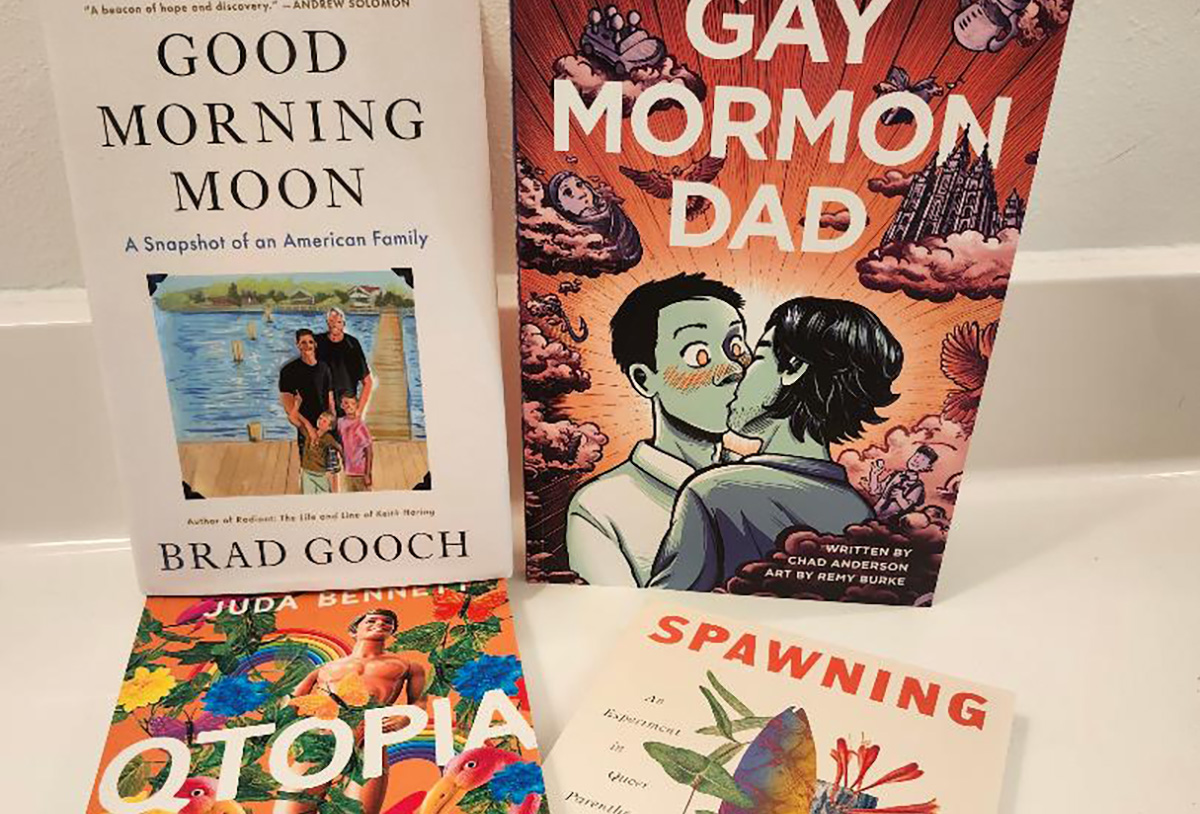
Books for Pride by various authors
c.2026, various publishers
$18.95 – $29.00
How many times have you marched so far this month? Seems like there’s always a reason to gather and walk during Pride, but save some time for yourself, too. You’ll want to reflect, rest, and read these great books about living your best Pride month.
No doubt, you’ve thought once or twice about stepping away from society as it is, and moving somewhere more accepting. So read “Qtopia: A Memoir of Love, Land, and Liberation” by Juda Bennett (University of Wisconsin Press, $18.95), the story of doing exactly that, and how it turned out.
Back in the ‘70s, Bennett fled the suburbs and all it represented, and went “back to the land,” to a commune named Lavender Hill. Some of the places he’d lived before then had promised way more than they delivered, but Lavender Hill was different – more rural, more open, more queer, much better. But you know all good things must end, and that includes “queer utopia.” The only thing left was to re-enter the mainstream, a journey unto itself, and one worth reading.
Speaking of memoirs, in “Gay Mormon Dad” by Chad Anderson, art by Remy Burke (Graphic Mundi, $21.99), you’ll read about Anderson’s life as a husband (to a woman), a father, and a man who seemingly had it all but it wasn’t right, and he wasn’t happy. He was gay, but acknowledging it, telling his family and his church family, could mean the loss of everything he loved. It’s a story that may be familiar to you, in some way, and it’s a quick read.
For most of his life, Joseph Osmundson dreamed about getting pregnant and having a family. The former didn’t happen and, as for the latter, as he writes in his memoir, “Spawning Season: An Experiment in Queer Parenthood” (Bloomsbury, $27.99) the journey for a gay man to become a father can have plenty of roadblocks.
When two women approach Osmundson to be a sperm donor, it appears that his ultimate dreams are about to come true. Things go swimmingly – until race enters the conversation. Are the words “donor” and “dad” the same? Read this powerful book, and think about it.
And finally, if parenthood as a gay person is something that’s a case of maybe-later, then “Good Morning Moon: A Snapshot of an American Family” by Brad Gooch (Harper, $29) is a book to find. It’s the story of late-life love, surrogacy, and identity as Gooch learns about himself as he learns to be a good Dad. This is a great book for older fathers, and anyone who’s on the parental fence, later in life.
If these great books aren’t enough for you, or if you’re looking for something different for Pride, then head to your favorite bookstore or library and ask the staff there to help you find your next best read. They’ve got a lot of books to put in your hands, a lot of sunny afternoons full of relaxing and promise, so march on out, get a new book, and happy Pride!

Authorities investigate officer-involved shooting outside Asheville gay bar

Popular Mount Vernon gay bar Leon’s to temporarily close after owner’s death

30 years on, ‘The Birdcage’ remains a landmark

Comings & Goings

Whitman-Walker to host legal services workshop

Democrats are trying to disqualify trans candidates. Here’s how

Political drama in Angie Craig’s Minn. Senate race heats up

Mexico’s first openly gay mayor killed

Expected India Supreme Court ruling could shape future LGBTQ rights cases

Celebrate Pride in Rehoboth Beach this weekend
-

 National5 days ago
Democrats are trying to disqualify trans candidates. Here’s how
-
Congress5 days ago
Political drama in Angie Craig’s Minn. Senate race heats up
-
Mexico5 days ago
Mexico’s first openly gay mayor killed
-
India4 days ago
Expected India Supreme Court ruling could shape future LGBTQ rights cases