World
Gay U.S. foreign service officer speaks at Chilean LGBT rights march
An estimated 80,000 people took part in LGBT rights march in Chilean capital on Saturday
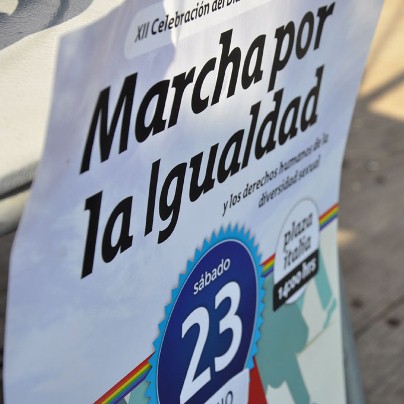
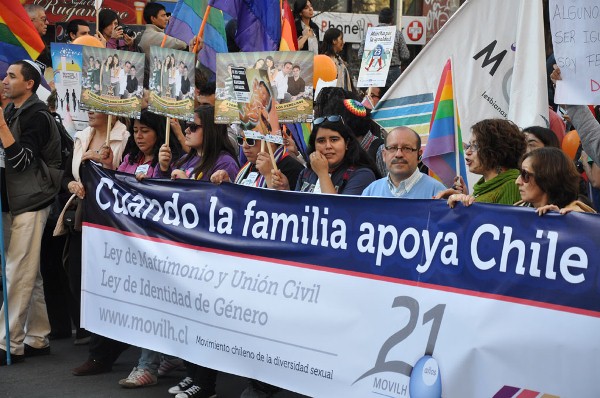
An estimated 80,000 people took part in an LGBT rights march in the Chilean capital on Saturday (Photo courtesy of the Gay Liberation and Integration Movement)
A gay foreign service officer was among the estimated 80,000 people who took part in an LGBT rights march in the Chilean capital on Saturday.
Jason Jeffreys of the U.S. embassy in Santiago spoke at the Gay Liberation and Integration Movement’s annual Equality and Human Rights for Sexual Diversity March. Jacqueline Vera, whose son Daniel Zamudio was brutally beaten to death in a downtown Santiago park in March, Education Minister Harold Beyer, a number of presidential candidates and lawmakers and Jon Benjamin, the United Kingdom’s ambassador to Chile, were among those who also participated.
“As the Human Rights Officer at the U.S. Embassy in Santiago, one of a number of policy objectives that Secretary [of State Hillary] Clinton has determined is the concept of equal protections for all, including the international LGBT community,” Jeffreys told the Blade. “I wanted to participate because I wanted to share with Chile the fact that the [U.S. government] stands with them in this regard.”
Jeffreys, whose boyfriend is Chilean, added that Zamudio’s death affected him personally. He attended candle light vigils and marches and spoke with Chilean politicians about what he described as the importance of anti-discrimination laws. Jeffreys also delivered a letter on behalf of the U.S. ambassador to Chile, Alejandro Wolff, to Zamudio’s family at his funeral.
“I jumped at the chance to be able to speak at this event to continue with this support,” he noted.
Chilean lawmakers in April passed an LGBT-inclusive hate crimes and anti-discrimination bill that had languished for seven years. President Sebastián Piñera and other leading politicians backed the measure in the wake of Zamudio’s death.
The Inter-American Court of Human Rights in March ruled in favor of lesbian Judge Karen Atala who lost custody of her three daughters because of her sexual orientation. Piñera last August introduced a bill that would have allowed same-sex couples to enter into civil unions, but lawmakers rejected it.
President Obama last December issued a memorandum calling upon all government agencies involved with American foreign aid to promote LGBT rights. The White House released the directive on the same day that Clinton delivered her landmark speech on gay rights in Geneva.
Jeffreys said the embassy continues to support Movilh and other Chilean LGBT advocacy organizations. He further stressed that he feels progress on LGBT rights remains possible in the traditionally conservative South American country.
“I want to see Chile in a different place when it comes to the social acceptance of gays, lesbians and transgendered people,” said Jeffreys. “I am tired of hearing Chilean friends say that they will never be like ‘Argentina’ or ‘Brazil’ when it comes to the gay community, and, therefore, they don’t want to even try. This is not acceptable to me, and therefore, I am willing to speak and attend Pride events if for nothing more than to encourage Chile and to demonstrate that this is not an impossible, unobtainable goal.”


Japan
Report: LGBTQ exclusion costs Japanese economy billions a year
Open for Business findings coincide with marriage equality fight
LGBTQ exclusion may be costing Japan as much as ¥16.42 trillion ($10.35 billion) annually, according to a new report by Open for Business, which argues that greater inclusion could help address the economic pressures facing a country with a shrinking population and workforce.
Japan’s population is projected to decline from 126.15 million in 2020 to about 87 million by 2070, according to the National Institute of Population and Social Security Research. As the country confronts a shrinking workforce; the economic stakes of retaining talent, improving productivity, and ensuring that LGBTQ people can participate fully in the economy are becoming increasingly significant.
Open for Business estimates that the costs extend beyond lost earnings.
The organization attributes between $25.1 billion to $75.1 billion annually to the excess economic burden associated with depression, suicide and self-harm, cardiovascular disease and HIV/AIDS, and another $12.2 billion to $26.2 billion to lost earnings linked to the LGBTQ wage gap.
A 2026 survey by Dentsu Japan, the Japanese arm of global advertising and public relations company Dentsu Group, found that 10.6 percent of respondents aged 20-59 identified as LGBTQ, up from 9.7 percent in 2023. The survey polled 46,658 people living in Japan.
The report argues that Japan already has the foundations for greater LGBTQ inclusion; pointing to public support, corporate leadership, and growing legal momentum. Progress on these fronts, it says, could reduce the economic costs of exclusion, strengthen workforce participation and help Japan remain competitive.
“For Japan, LGBTQ inclusion is not simply a question of fairness. It is part of the country’s economic resilience,” the report states.
Japan does not legally recognize same-sex marriages at the national level, but partnership systems have spread across local governments. As of 2024, municipalities operating such systems covered nearly 93 percent of Japan’s population. The certificates can help couples access certain services, but they do not carry the same legal status as marriage, including in areas such as inheritance and medical decision-making.
The absence of marriage recognition can leave same-sex couples facing uncertainty over hospital access, medical decisions, and survivor benefits. It can also complicate employers’ decisions about spousal health coverage, relocation assistance and family leave, particularly when policies depend on a marriage recognized under Japanese law.
Japan’s PRIDE Index, administered by the nonprofit Work with Pride since 2016, evaluates corporate initiatives related to LGBTQ employees across five categories, awarding Bronze, Silver or Gold ratings. In 2025, 931 companies headquartered in Japan were assessed, with 80 percent receiving the highest, Gold rating.
Despite progress in corporate inclusion, workplace practices remain uneven.
A 2026 workplace white paper by Nijiiro Diversity found that 55 percent of surveyed employees reported no concrete LGBTQ measures at their workplaces. A separate 2025 survey found that 30 percent of professionals had experienced workplace discrimination or bias based on sexual orientation, while 27 percent reported bias based on gender identity. Only about one-third said they felt comfortable disclosing their sexual orientation or gender identity at work.
The report also points to disparities in HIV and STI outcomes.
Men who have sex with men accounted for an estimated 82 percent of newly diagnosed HIV cases in Japan, according to the report. In a separate study at a Japanese gender-affirming clinic, researchers screened 275 transgender and gender-diverse patients and found that 6.2 percent tested positive for HIV or another sexually transmitted infection. All were asymptomatic when tested.
The report also estimates substantial losses from the LGBTQ wage gap.
It puts Japan’s total earned income at about $1.81 trillion, of which LGBTQ workers account for an estimated $175 billion, or 9.7 percent. Applying a wage gap of 7 to 15 percent, a range the report says is supported by OECD analysis, yields an estimated $12.3 billion to $26.3 billion in lost wages annually. Japanese research cited in the report also points to economic disparities among transgender workers, who are disproportionately represented in non-regular employment and lower-income groups.
“Public attitudes and many leading companies have moved considerably, but national frameworks and everyday workplace experience have not yet caught up. That creates both a challenge and an opportunity,” said Open for Business CEO Ken Janssens. “Japan’s population is projected to fall from roughly 125 million in 2020 to fewer than 87 million by 2070, while its working-age population is already contracting. The country ranks 14th globally for talent appeal but 55th for talent readiness, according to the report. In that context, Japan simply does not have talent to waste. Every worker who is less healthy, less productive, pushed into lower-paid work or unable to participate fully because of discrimination represents a cost that becomes harder to absorb as the labour force shrinks.”
Janssens further told the Washington Blade that the report’s ultimate message is that LGBTQ inclusion is a question of fairness, but in Japan, it is increasingly a question of economic resilience as well. The foundations for further progress are already there. The challenge now is to convert visible corporate leadership and social momentum into consistent practice and clearer protections.
Akira Nishiyama, a spokesperson for the Japan Alliance for LGBT Legislation, told the Blade that Japan’s business sector has pushed for stronger legal protections for sexual and gender minorities.
In 2017, the Japan Business Federation, known as Keidanren, announced a policy calling for nondiscrimination based on sexual orientation and gender identity. Its chairperson also stressed the importance of legislation explicitly prohibiting such discrimination in 2023.
Nishiyama added Japan’s laws addressing workplace power harassment cover harassment based on sexual orientation and gender identity, outing someone without their consent, and forcing or pressuring someone to disclose or conceal their identity. Employers and local governments are required to take measures to prevent such harassment.
“While such legal frameworks and social momentum continue to advance, a law prohibiting discrimination based on SOGI has still not been enacted,” said Nishiyama. “In other words, legal measures to address discriminatory treatment, such as discriminatory hiring refusals, unreasonable transfers, and coerced resignations, are still insufficient. When legislations are needed to bridge this gap, I believe that initiatives promoted by the business sectors as well as the issuance of clear policies aimed at prohibiting discrimination, will serve as one of the major driving forces in this effort.”
Makiko Terahara, co-representative and leader of the business collaboration team at Marriage for All Japan, told the Blade that the figures are estimates and that the report does not claim legal reform alone would eliminate the economic losses.
“But the connection is real. Without marriage, same-sex couples have no spousal status for inheritance, tax, social security or medical decision-making. Without anti-discrimination legislation, employees have no clear legal remedy. This insecurity drives the concealment, stress and wage gaps that the report quantifies. So yes, I believe stronger legal protections would have a measurable impact on health, retention and Japan’s ability to attract talent,” she said.
Terahara also noted to the Blade the report cites a study finding that living in a municipality with a partnership system was not associated with better mental health. She said symbolic recognition without legal rights is not enough.
“The report confirms that Japanese society and business are already ahead of national law,” said Terahara. “Public opinion and leading companies have moved, and the remaining gap is in legislation. The report shows that marriage equality is not only a human rights issue but also an economic one, and that the cost of inaction is being paid now.”
The Open for Business report can be read here.
Afghanistan
ICC unseals arrest warrants for Taliban officials accused of persecuting LGBTQ people, women
‘For LGBTIQ+ people, this matters enormously’
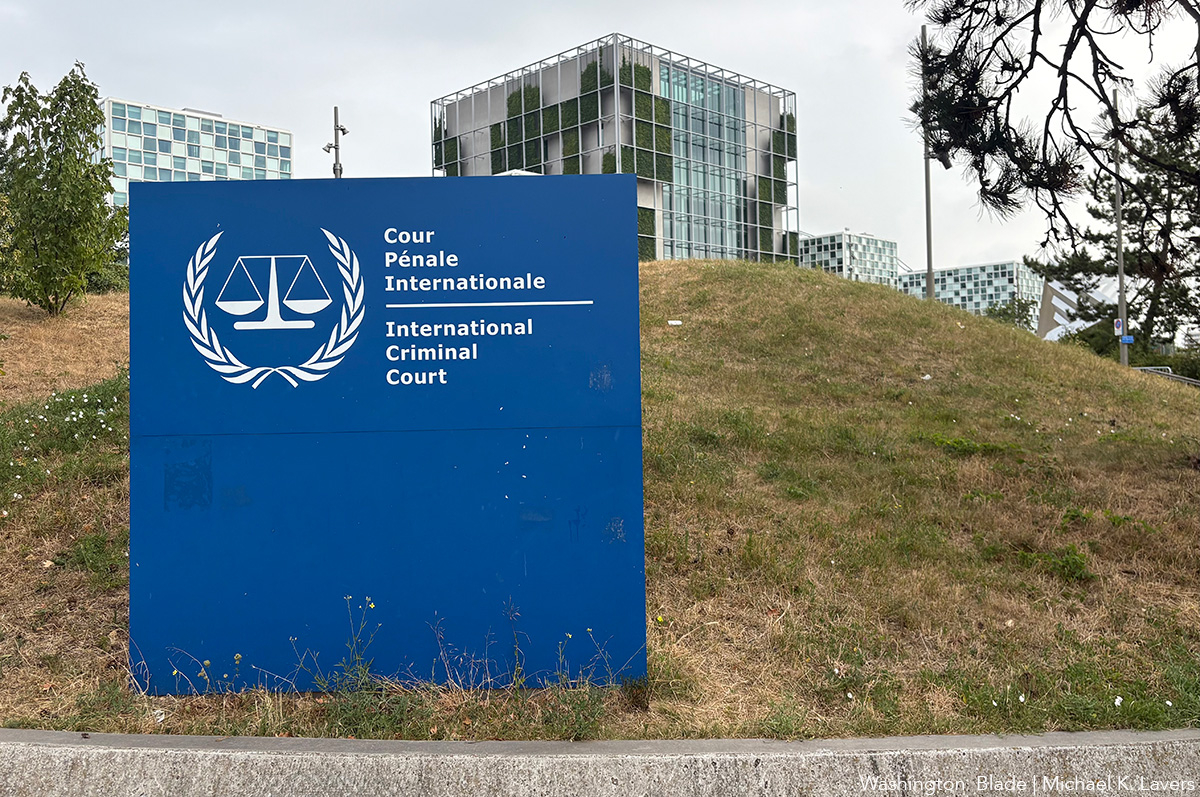
The International Criminal Court this week unsealed arrest warrants for four Taliban officials in Afghanistan accused of targeting LGBTQ people, women, and others who defy the group’s strict gender norms.
The warrants the ICC unsealed on Oct. 5 are for Hibatullah Akhundzada, the Taliban’s supreme leader, and Chief Justice Abdul Hakim Haqqani. The ICC also unsealed warrants for Education Minister Habibullah Agda and Higher Education Minister Neda Mohammad Nadim.
The ICC last year announced warrants for Akhundzada and Haqqani, as the Washington Blade previously reported.
“In the warrants of arrest, the (Pre-Trial) Chamber (II), in line with current developments in international law, found that the definition of ‘gender’ in the Rome Statute necessitates an interpretation that goes beyond a purely biological conception of sex,” reads the ICC’s Oct. 5 announcement. “It considered that it requires acknowledging the socially constructed roles, behaviors, expectations, and hierarchies traditionally associated with individuals on the basis of their sex. The Chamber considered that these societal constructs, commonly referred to as ‘gender norms,’ form part of the contextual lens through which acts amounting to gender-based persecution under article 7(1)(h) must be assessed.”
“It found that there are reasonable grounds to believe that the four suspects are criminally responsible for having ordered, induced or solicited the crime against humanity of persecution, under article 7(1)(h) of the Rome Statute, on gender grounds against girls, women, and other persons non-conforming with the Taliban’s policy on gender, gender identity or expression; and on political grounds against persons perceived as ‘allies of girls and women,’” it adds. “These crimes are believed to have been committed on the territory of Afghanistan since the Taliban seized power on Aug. 15, 2021, and have continued until at least Jan. 20, 2025.”
The Rome Statute established the ICC, which is in the Dutch city of The Hague, in 2002 after 60 countries ratified it.
The U.S. is among the countries that do not recognize the ICC. Secretary of State Marco Rubio on Friday announced U.S. sanctions against the ICC, which he described as a “rogue court.”
Then-ICC Chief Prosecutor Karim Khan in January 2025 announced a request for warrants against Taliban officials over their treatment of women and other groups since they regained control of Afghanistan in 2021. It marked the first time the ICC specifically named LGBTQ people as victims in a gender persecution case before it.
A report that Outright International released in 2023 notes Taliban officials have systematically targeted LGBTQ people — especially gay men and transgender women.
Taliban officials have subjected them to physical and sexual assault as well as arbitrary detention. The Outright International report also notes Taliban authorities have carried out public floggings for alleged same-sex sexual relations, and have collected intelligence on LGBTQ activists and community members.
Artemis Akbary, executive director of the Afghanistan LGBTIQ Organization, on Oct. 5 described the additional arrest warrants as “huge.”
“For LGBTIQ+ people, this matters enormously,” he said. “It strengthens the understanding that gender persecution can also capture persecution based on non-conformity with imposed gender roles, identities, and expressions.”
“This is an important development for accountability in Afghanistan, and potentially far beyond it,” added Akbary.
Central America
Alianza para la Inclusión fortalece la defensa de derechos LGBTQ en Centroamérica
Se implementa el proyecto en Guatemala, El Salvador y Honduras
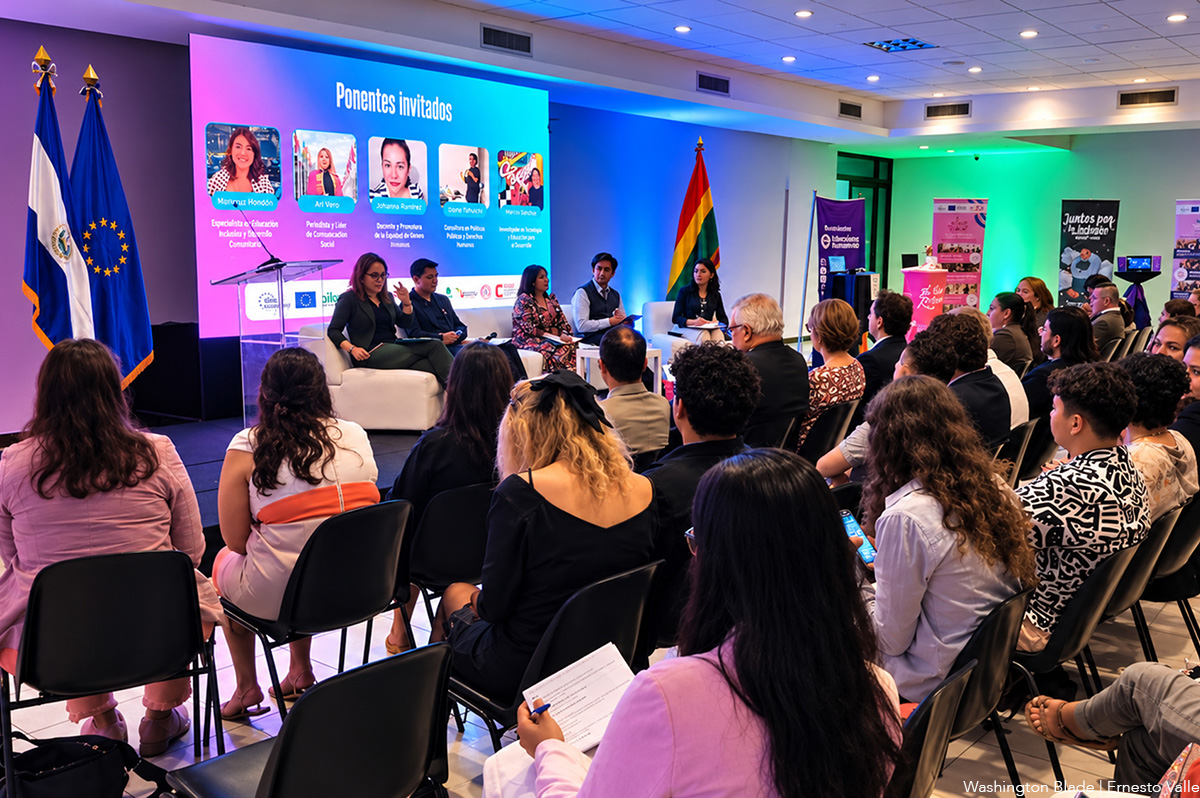
Promover, proteger y defender los derechos humanos de las personas LGBTQ en Centroamérica es el propósito del proyecto “Alianza para la Inclusión: hacia la promoción de derechos LGBTIQ+ en Centroamérica”, una iniciativa subvencionada por la Unión Europea, Global Gateway, Oikos Cooperação e Desenvolvimento y Camões — Instituto da Cooperação e da Língua, que articula esfuerzos en Guatemala, El Salvador y Honduras.
El proyecto, cuya implementación se desarrolla entre 2025 y 2028, busca fortalecer a organizaciones, liderazgos comunitarios y redes regionales frente a contextos marcados por la discriminación, la violencia y la reducción del espacio cívico.
A través de procesos de formación, atención integral, protección, fortalecimiento organizativo, incidencia y articulación regional, la iniciativa procura generar condiciones más seguras y dignas para que las personas LGBTQ puedan ejercer plenamente sus derechos.
Formación y fortalecimiento de liderazgos
Durante los primeros 18 meses de ejecución, el proyecto ha desarrollado acciones de formación y acompañamiento, otorgado subvenciones a colectivos comunitarios, impulsado estrategias de seguridad integral y respaldado procesos regionales de articulación e incidencia.
Uno de los resultados reportados es la participación de 489 personas LGBTQ de Guatemala, El Salvador y Honduras en procesos formativos relacionados con la desnaturalización de la violencia, organización e incidencia. Asimismo, 41 personas líderes LGBTQ de El Salvador y Guatemala fortalecieron sus capacidades para la formulación de proyectos.
Para Pedro Campos, coordinador de Oikos — Cooperação e Desenvolvimento en El Salvador, estos procesos tienen una dimensión que trasciende lo técnico.
“Desde hoy estamos cada día más convencidas y convencidos de que la gestión de proyectos más que técnica o administrativa es esencialmente humana. Nunca debemos olvidar que la persona en toda su diversidad es el centro de nuestro quehacer. Y si un día la empatía y el amor nos abandonan, habremos perdido la esencia de nuestro trabajo”.
La formación también ha significado una oportunidad para fortalecer liderazgos comunitarios. Josh Hernández, persona no binaria y codirectore de Espacios Seguros El Salvador, destaca el impacto que tuvo su participación.
“Esta experiencia me ha fortalecido como activista y como parte de una organización comunitaria, y me ha permitido ampliar mi visión y soñar con nuevas actividades que contribuyan a construir una cultura de paz en nuestra sociedad salvadoreña”, comenta Hernández.
Atención integral para personas LGBTQ en situación de vulnerabilidad
En El Salvador, uno de los componentes del proyecto se ha enfocado en brindar atención integral a personas que enfrentan situaciones de violencia, discriminación o vulnerabilidad.
A través de COMCAVIS TRANS, el proyecto permitió atender a 128 personas, mediante servicios psicosociales, legales y de resguardo temporal en su albergue.
La atención incluyó orientación para activar mecanismos de denuncia y medidas de protección, además de contención emocional, manejo de crisis y acompañamiento para la estabilización de condiciones básicas.
La experiencia también se ha extendido a Honduras. Loren López, directora ejecutiva de la Asociación de Mujeres Lesbianas y Bisexuales LITOS, resaltó el valor de generar espacios seguros para mujeres lesbianas, bisexuales y personas LTBQ (lesbianas, trans, bisexuales y queer).
“Me quedo con la satisfacción de haber contribuido a crear espacios donde una mujer LTBQ+ pueda sentirse segura, escuchada y reconocida, sin tener que esconder quién es. Esta experiencia fortaleció a LITOS y nos dejó nuevas herramientas y posibilidades para seguir trabajando por los derechos y la eliminación de la discriminación”, agrega López.
La seguridad integral como herramienta de protección
En contextos donde quienes defienden derechos pueden enfrentar diferentes tipos de riesgos, el proyecto ha incorporado la seguridad integral como un componente fundamental.
Durante 2026, 140 personas LGBTQ pertenecientes a seis organizaciones participaron en procesos de formación sobre seguridad integral, abordando dimensiones físicas, digitales y emocionales.
Como resultado, seis organizaciones elaboraron y consolidaron sus propios planes de seguridad integral, incorporando medidas de prevención y respuesta ante riesgos físicos y digitales, con especial énfasis en la protección de información sensible, el uso seguro de plataformas digitales y la gestión de incidentes en entornos virtuales.
Incidencia para transformar políticas y garantizar derechos
La iniciativa también ha acompañado procesos de incidencia y litigio estratégico en Guatemala.
La Asociación LAMBDA, junto con la Comisión Presidencial por la Paz y los Derechos Humanos (COPADEH), acompañó una consulta nacional con personas LGBTQ para contribuir a la elaboración de una Estrategia Nacional para las personas LGBTQ, cuyo proceso se encontraba en elaboración y cuya aprobación se esperaba para finales de 2026.
Asimismo, en julio de 2026 fue presentada ante la Corte Constitucional de Guatemala una acción de inconstitucionalidad como parte de una estrategia nacional de litigio estratégico orientada a la aprobación del matrimonio igualitario. Al cierre de la actualización de resultados de este año, el proceso permanecía pendiente de resolución.
El acompañamiento jurídico también ha permitido apoyar procesos individuales relacionados con el reconocimiento de la identidad.
Uno de estos casos es el de Paula Escobar, mujer trans guatemalteca acompañada por LAMBDA en el proceso de cambio de nombre en sus documentos de identidad.
“Ha sido el paso más grande de mi vida, pues me libró de momentos incómodos y de dar explicaciones para ser reconocida como la mujer que soy”.
De acuerdo con el testimonio, la organización se encargó de la gestión legal y aproximadamente seis meses después obtuvo una respuesta favorable.
Redes regionales para ampliar el alcance de la defensa de derechos
La articulación regional constituye otro de los componentes del proyecto. La iniciativa ha apoyado a redes latinoamericanas que buscan fortalecer y posicionar el trabajo de organizaciones LGBTQ.
Entre ellas se encuentra la Alianza Centroamericana y del Caribe de Hombres Trans, que articula organizaciones y personas transmasculinas de Guatemala, El Salvador, Honduras, Costa Rica y Panamá.
Durante su primer año, ALICAHT desarrolló su Plan Estratégico y Reglamento Interno 2025-2030, además de su identidad gráfica y sitio web.
Otro proceso regional respaldado fue el III Congreso Regional de CORPORA en Libertad, realizado en Guatemala en diciembre de 2025. El encuentro reunió esfuerzos orientados a fortalecer la defensa, promoción y garantía de los derechos humanos de las personas LGBTQ privadas y exprivadas de libertad en América Latina y el Caribe.
El espacio permitió fortalecer la articulación regional y compartir experiencias y estrategias frente a los desafíos que enfrentan las personas LGBTQ dentro y fuera de los sistemas penitenciarios.
Ari Vera, fundadora de CORPORA, ha destacado la importancia del trabajo en red como una herramienta para generar transformaciones y fortalecer las capacidades colectivas.
Inclusión más allá de las palabras
Durante el Foro “El Impacto de Incluir”, uno de los planteamientos centrales fue que la inclusión requiere transformaciones concretas y no únicamente el uso de conceptos o siglas.
Jason García, técnico PMA de Monitoreo, Evaluación y Aprendizaje para Oikos El Salvador, señaló una de las barreras que persisten en los proyectos. “Una de las barreras en los proyectos es que son binarios y no se reconocen las otras identidades”.
Desde esta perspectiva, un proyecto inclusivo no se limita a utilizar la palabra inclusión o incorporar las siglas LGBTQ, sino que requiere revisar prácticas, metodologías, mecanismos de participación y formas de reconocer la diversidad.
Como parte de este proceso también se preparó una guía práctica que sistematiza instrumentos y mecanismos del Sistema Internacional de Derechos Humanos, destacando su importancia histórica en la ampliación y protección de derechos.
La compilación fue presentada en la X Conferencia de la Red ILGA LAC y en el 18º Encuentro de la Red Centroamericana de Intercambio Académico en Derechos Internacionales, realizado en la Universidad de El Salvador.
Cooperación centrada en las personas
Los resultados alcanzados durante los primeros 18 meses reflejan una estrategia que combina formación, atención directa, protección, fortalecimiento institucional, incidencia y construcción de redes.
Para la Unión Europea, colocar a las personas en el centro constituye un elemento fundamental de la cooperación. Duccio Bandini, embajador de la Unión Europea en El Salvador, expresó “Desde la Unión Europea seguiremos apostando para una cooperación que pone en el centro a las personas. Porque el verdadero impacto de influir se mide en vidas transformadas, en derechos conquistados y en sociedades que celebran con orgullo su diversidad”.
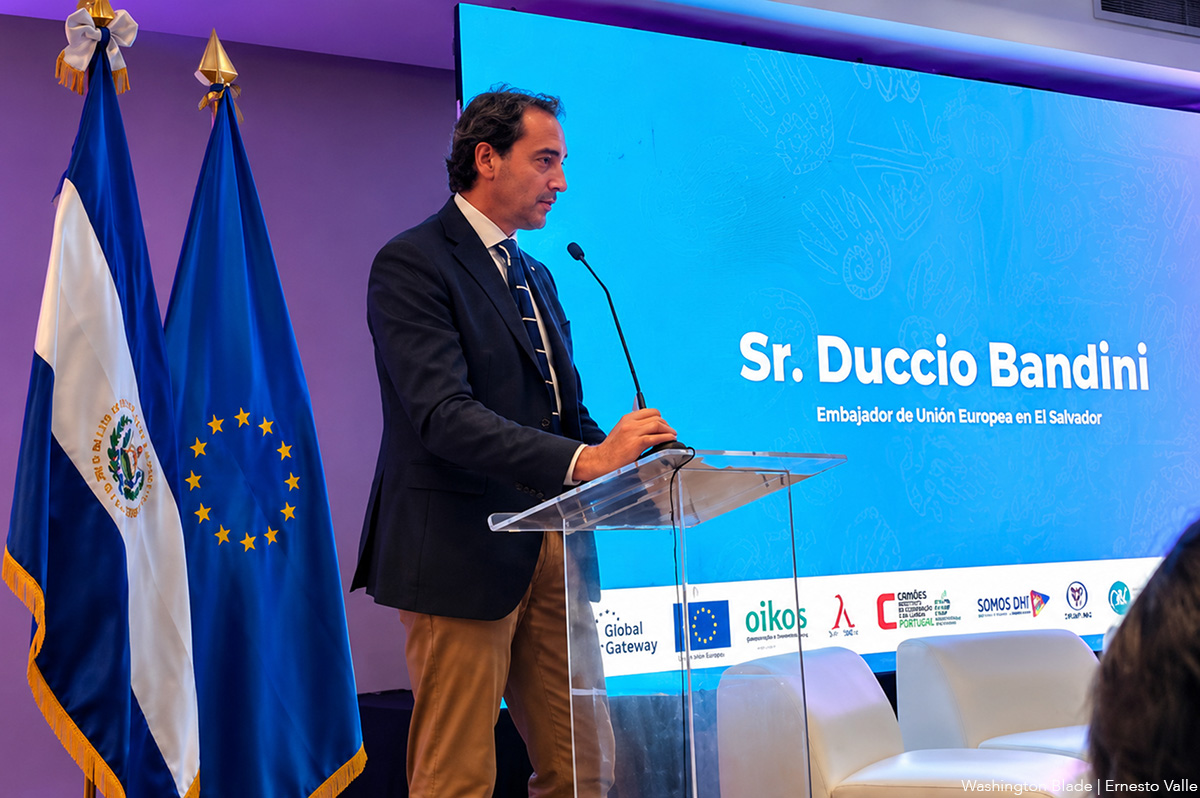
Con una implementación prevista hasta 2028, la Alianza para la Inclusión continúa articulando organizaciones nacionales y redes latinoamericanas para fortalecer capacidades y generar herramientas que permitan a las personas y organizaciones LGBTQ enfrentar los desafíos de sus contextos y avanzar en la promoción, protección y defensa de los derechos humanos.
Más allá de las cifras y los productos alcanzados, el proyecto coloca en el centro una premisa: la inclusión se construye cuando las personas pueden participar, organizarse, defender sus derechos y vivir su identidad con dignidad y seguridad.

Annie Andrews denounces trans athletes after Trump targets her

On Republican Long Island, gay Democrat Chris Gallant bets on public service over politics

Report: LGBTQ exclusion costs Japanese economy billions a year

Center for Black Equity honors leaders, activists at BE. Gala

In ‘The Lost Brontë,’ a complicated lie can lead to danger

U.S. int’l trade negotiator, consultant James Bedore dies at 82

Campaign urges Virginia High School League to reverse stance on trans athletes

Calif. GOP gubernatorial candidate ad ‘disgusting attempt to exploit lesbian intimacy’

Center Arts Gallery celebrates 10 years with reception, auction

Trump, Netanyahu, and Putin are all war criminals
-

 Obituary5 days ago
U.S. int’l trade negotiator, consultant James Bedore dies at 82
-
Virginia5 days ago
Campaign urges Virginia High School League to reverse stance on trans athletes
-
California5 days ago
Calif. GOP gubernatorial candidate ad ‘disgusting attempt to exploit lesbian intimacy’
-
Commentary5 days ago
Center Arts Gallery celebrates 10 years with reception, auction