News
Gay man elected governor of Sicily
Former mayor well known as anti-Mafia crusader

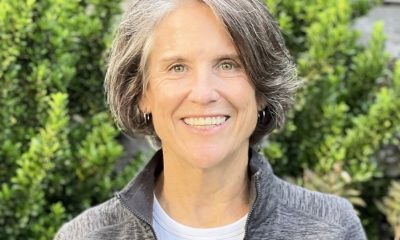
Rosario Crocetta, former mayor of Gela who became known as an outspoken crusader against the Sicilian Mafia, came in first place in a ten candidate race. (Photo by DEEEP Project via Wikimedia)
In a development considered unthinkable just a few years ago, an openly gay man won election as governor of Sicily in an Italian regional election on Sunday.
Rosario Crocetta, 61, a former mayor of the Sicilian city of Gela who became known as an outspoken crusader against the Sicilian Mafia, came in first place with 30.4 percent of the vote in a ten candidate race.
The Italian news service ANSA reports that although Crocetta’s vote total isn’t large enough for a governing majority for the center-left Democratic Party, under whose banner he ran, he is expected to form a coalition government in the Sicilian Parliament with one or more of the other parties.
“Today is more than an election result, it is a date with history,” the AFP news service quoted Crocetta as telling journalists.
“It’s the first time that a candidate for the left is elected as regional governor, it’s the first time that an anti-Mafia candidate wins,” AFP quoted him as saying in referring to Sicily.
Political commentators in Italy and Europe viewed Crocetta’s election as significant because he beat the center-right candidate aligned with former Italian Premier Silvio Berlusconi, Nello Musumeci, who received 25.7 percent of the vote.
Berlusconi’s center-right People of Freedom Party and other right-leaning parties have won nearly all elections in Sicily since the end of World War II.
While campaigning in August, Crocetta startled some political observers when he said in a press interview that he would abstain from sex if elected governor, or president, as the head of the Sicilian government is sometimes called.
“If I were to become Sicily’s president, I would say farewell to sex,” he told the Klaus Condicio news website. “I will consider myself married to my region and its inhabitants.”
Crocetta won election as mayor of Gela, located on Sicily’s southern coast, in 2003 as a member of the Italian Communist Party, becoming Sicily’s and Italy’s first openly gay mayor. He joined the Democratic Party in 2008, one year before he left office as mayor.
His long record as a champion of government reform and his role as a leader of Sicily’s anti-Mafia movement attracted strong support among voters in Gela who, according to some observers, took the extraordinary step of supporting a gay candidate in a conservative leaning region.
His anti-Mafia work also resulted in numerous death threats requiring that he receive 24-hour police protection during his years as mayor.
He is fluent in Arabic, French, and English and served as Sicily’s cultural liaison to Middle Eastern countries, including Tunisia, Yemen, and Lebanon before becoming mayor. After completing two terms as mayor he served as one of Italy’s representatives in the European Parliament.





World
Report: 90 percent of LGBTQ groups around the world have lost funding since 2025
Trump-Vance administration cut US support after it took office

A new report that Outright International released on Thursday notes 90 percent of LGBTQ and intersex rights groups around the world have lost funding since January 2025.
The New York-based global advocacy group surveyed 229 LGBTQ and intersex rights groups in 94 countries.
Forty-nine percent of the organizations that responded said they have lost more than half of their total budget since January 2025 — 75 percent of the groups said they lost more than a quarter of their total funding.
“For nearly half of the respondents, the cuts removed most of the resources that sustained the organization,” reads the report.
When asked which funders “had reduced, suspended, or withdrawn support,” more than half of the responding groups “pointed to a source tied to the United States government, including USAID (U.S. Agency for International Development), the President’s Emergency Plan for AIDS Relief (PEPFAR), and the Department of State.”
“No other funder came close,” notes the report.
‘What was initially framed as a temporary freeze has become a structural disruption’
The Trump-Vance administration froze nearly all U.S. foreign aid shortly after it took office on Jan. 20, 2025.
Secretary of State Marco Rubio in March 2025 announced 83 percent of USAID contacts had been cancelled, and the State Department would administer the remaining programs. USAID officially shut down on July 1, 2025.
Rubio issued a waiver that allowed PEPFAR and other “life-saving humanitarian assistance” programs to continue to operate during the funding freeze. The Washington Blade has previously reported PEPFAR-funded programs in Kenya and other African countries have been forced to suspend services and even shut down because of gaps in U.S. funding.
(Washington Blade video by Michael K. Lavers)
The Outright International report notes the State Department under the Trump-Vance administration “terminated the programs of the Global Equality Fund, the public-private partnership it launched in 2011 with allied governments, companies, and foundations, which distributed more than $100 million in its first decade to LGBTIQ organizations and human rights defenders in over 100 countries.” The Trump-Vance administration, among other things, has withdrawn the U.S. from the U.N. LGBTI Core Group, a group of U.N. member states that have pledged to support LGBTQ and intersex rights.
Outright International Executive Director Maria Sjödin in an op-ed the Blade published on Jan. 28, 2026, wrote the global LGBTQ and intersex rights movement since January 2025 lost more than $125 million — or 30 percent of its total annual funding.
“What was initially framed as a temporary freeze has become a structural disruption,” notes the Outright International report. “The effects have cascaded far beyond U.S. government funding: corporate, institutional, and philanthropic donors have also shifted, stalled, or quietly withdrawn, often without public scrutiny.”
“The broader environment in which LGBTIQ movements operate has continued to deteriorate — with democratic backsliding, anti-NGO legislation, rising violence, coordinated legislative attacks on trans and intersex people’s rights, and emboldened anti-rights actors filling the space left by the retreat of U.S. global leadership.”
The report contains specific examples that include:
• Iraqi lawmakers in 2024 passed a law that criminalized consensual same-sex sexual relations and transgender people. Funding cuts forced IraQueer, an Iraqi advocacy group, to stop offering safety and security trainings and workshops to activists and LGBTQ rights organizations in the country.
• An intersex-led organization in West Africa can no longer maintain office space or pay its staff.
• An Ecuadorian group that operated a community center for a decade was “forced to close” it on Feb. 1, 2026. “It has been a true loss for the LGBTIQ+ communities in our city and the country as a whole, as we were a model of self-management and resistance in one of Ecuador’s most conservative cities,” said the group in the report.
• An “LGBTIQ-led refugee organization” in Uganda “has lost the emergency relocation support that once moved people facing immediate violence to safer locations.”
• An advocacy group in Ukraine that lost funding said it was “forced to stop paying some of our specialists and reduce our hours for handling inquiries … We used to be able to respond promptly to requests and support people throughout the entire process of resolving their issues, whereas now we are forced to limit ourselves to one-time consultations or refuse assistance altogether due to a lack of resources.”
• The Tonga Leitis Association in the report said a lack of funding has forced it to reduce “the number of activities the organization can run and erodes the prevention infrastructure behind” the country’s low HIV rate.
The Outright International report notes “global LGBTIQ funding had begun to fall even before the current U.S. administration took office.”
It further cites statistics from the Human Rights Funders Network that project “rights-focused development assistance will fall by between” $1.4-$1.9 billion a year by 2026, “with movements for LGBTIQ people’s rights and gender equality among the hardest it.”
“At the same time, LGBTIQ organizations have not stood still,” reads the Outright International report. “They have continued to resist, adapt, and serve their communities under extraordinary pressure, often absorbing the costs of these funding shocks in ways that remain largely invisible.”
“This report is an effort to make those costs — and that resilience — visible,” it adds.
United Kingdom
Grindr settles UK lawsuit over claims it shared users’ personal information
Plaintiffs allege gay hookup company disclosed HIV status to third parties
Grindr has agreed to pay £26 million ($35.24 million) to settle a lawsuit in the UK over allegations it shared users’ HIV status and other personal information with third parties.
The BBC on Monday reported a lawsuit was filed in the High Court of England and Wales in 2024. A class action lawsuit with more than 11,000 plaintiffs was later filed in the U.S.
Grindr in a U.S. Security and Exchange Commission filing notes the California-headquartered company as part of the settlement it reached on Sept. 2 will pay £13.0 million ($17.62 million) “to the counterparties” by Dec. 31, 2026, and another £13.0 million ($17.62 million) by March 31, 2027.
“As previously disclosed, in April 2025, Grindr Inc. and Grindr LLC, its indirect and wholly-owned operating subsidiary (collectively, ‘Grindr’), were served with proceedings in the High Court of England and Wales, which proceedings were originally issued in April 2024, brought on behalf of UK Grindr users from a period up to early 2020 alleging violations of UK privacy laws,” reads the U.S. Security and Exchange Commission filing.
“On Sept. 2, 2026, Grindr resolved the above-described UK group action related to historical data practices before 2020, when Grindr was owned and controlled by the Chinese conglomerate Kunlun,” it continues. “The settlement includes no findings or admission of liability. While Grindr disputes the allegations, it recognizes and acknowledges the distress and loss of trust expressed by some of its UK users regarding that pre-2020 period.”
The filing further notes Grindr in 2020 “was sold to new owners and appointed new management” and in 2022 became a publicly listed company on the New York Stock Exchange.
“Since 2020 Grindr has overhauled its privacy program with a keen focus on the unique needs of its community,” reads the filing. “Grindr is and remains a safe space for users, committed to transparency, user control, and responsible data practices.”
A Grindr spokesperson in the UK on Tuesday referred the Washington Blade to the filing for comment on the settlement.
Maryland
Md. groups receive state grants to fight hate crimes
Pride Center of Maryland among recipients
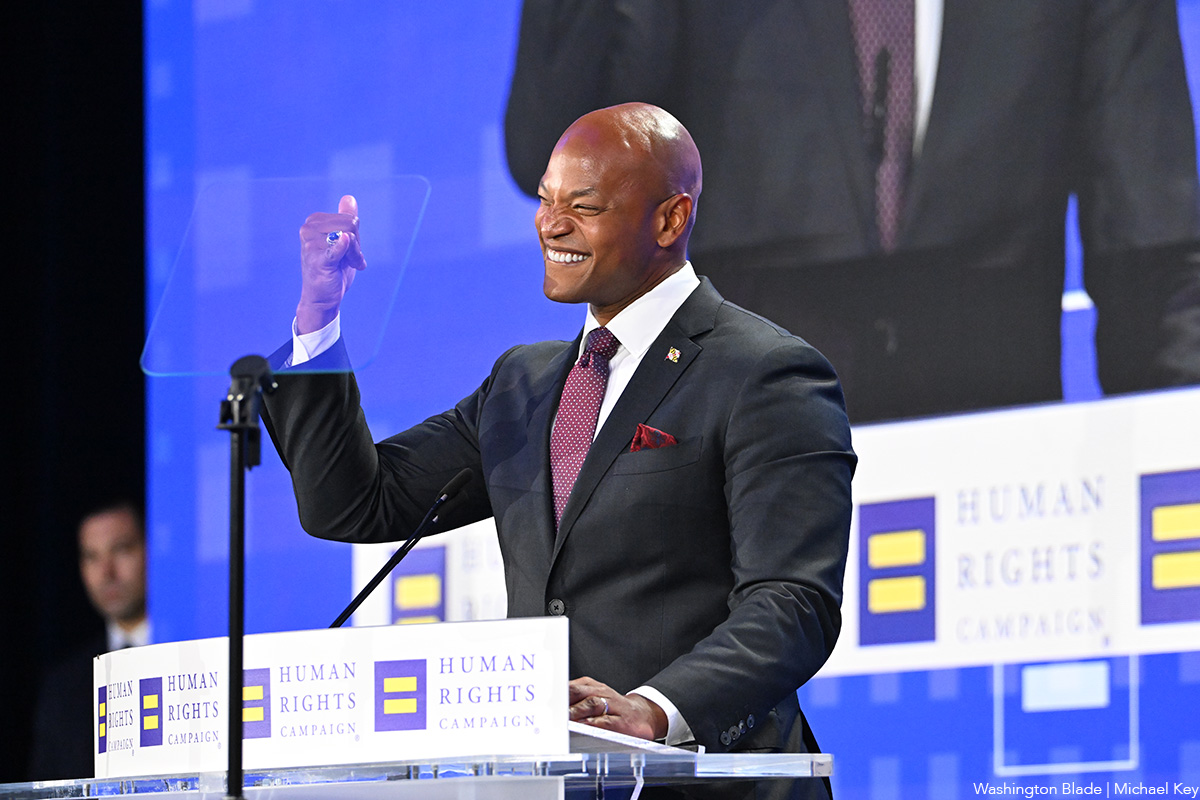
Maryland Gov. Wes Moore and the Governor’s Office of Crime Prevention and Policy are awarding a total of $10 million in grants in the 2027 fiscal year to nonprofit organizations that work to prevent hate crimes in the state.
The funds will be used to support those who feel targeted or discriminated against because of their race, religion, sexual orientation, gender identity, or disability status.
The Pride Center of Maryland is among the recipients. Churches, synagogues, mosques, and LGBTQ organizations are all eligible to receive grants
“The safety and security of all Marylanders is my top priority, so we are drawing a hard line because we have no tolerance for hate,” said Moore, according to media reports. “We are committed to protecting and ensuring safe and sacred spaces stay that way by investing in non-profit organizations, houses of worship, and community centers to protect and honor every community that makes our state so diverse and special.”
“Protection Against Hate Crime funding has strengthened the Pride Center of Maryland’s ability to protect, educate, and support the communities we serve … at a time of heightened concern associated with the Trump administration’s anti-LGBTQ/SGL (same-gender-loving) policies and pressures,” Pride Center of Maryland CEO Cleo Manago said. “PAHC funding helps us do more than improve physical security — it strengthens our community’s knowledge, preparedness, connection to resources, and ability to respond to hate with greater awareness and support.”
Maryland’s hate crimes law includes both sexual orientation and gender identity. The state’s nondiscrimination statute is also LGBTQ-inclusive.

Report: 90 percent of LGBTQ groups around the world have lost funding since 2025

PHOTOS: SUNFESTIVAL

Gloria Steinem’s life of substance and consequence

Nominate your favorites for the Blade’s 25th annual Best Of LGBTQ DC Awards

Grindr settles UK lawsuit over claims it shared users’ personal information

‘Here the Whole Time’ delivers queer coming-of-age comedy

Blade Foundation to host fundraiser in Rehoboth on Sept. 12

Actress takes on bisexual ‘Ma’ Rainey in new Round House production

New book examines fashionista Audrey Smaltz’s fabulous life

Iceland implements gender-neutral blood donor rules
-

 Movies4 days ago
‘Here the Whole Time’ delivers queer coming-of-age comedy
-
Out & About3 days ago
Blade Foundation to host fundraiser in Rehoboth on Sept. 12
-
Theater3 days ago
Actress takes on bisexual ‘Ma’ Rainey in new Round House production
-
Books3 days ago
New book examines fashionista Audrey Smaltz’s fabulous life