National
Labor Sec’y calls for reflection on anti-trans violence
Solis issues statement on Transgender Day of Remembrance
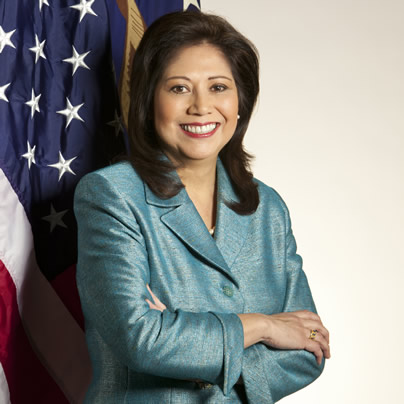
Labor Secretary Hilda Solis issued a statement on Tuesday calling the Transgender Day of Remembrance an occasion for Americans to bear in mind transgender people who’ve lost their lives as the result of violence.
The complete statement follows:
“The Transgender Day of Remembrance will be commemorated in cities and countries around the world today, reflecting on those who have died as a result of fear, hate and transphobia.
“I stand proudly today — and every day — as an ally to the transgender community and to every person and family impacted by anti-transgender bullying and violence. Transgender people are part of the diversity that America celebrates today and they, like every American, deserve to live without fear of prejudice or violence.
“What Gwendolyn Ann Smith began as an online project in 1998 to memorialize Rita Hester’s murder has today evolved to include hundreds of vigils and events in workplaces, churches and community centers around the world. I hope that this year’s commemoration will serve as an opportunity to shine a brighter light on both progress made and the challenges ahead.”
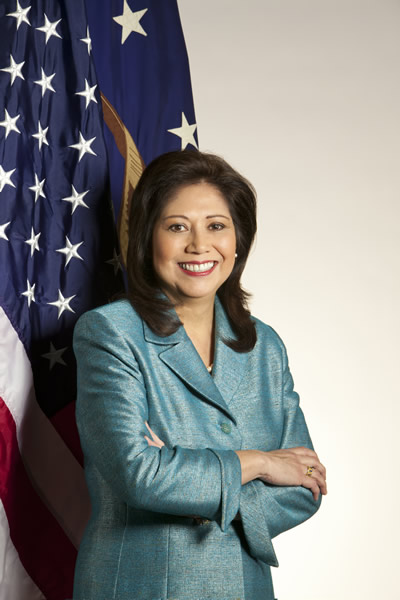
Labor Secretary Hilda Solis (Department of Labor photo public domain)
The Transgender Day of Remembrance, which occurs annually on Nov. 20, was founded in 1998 by transgender activist Gwendolyn Ann Smith to memorialize the murder of Rita Hester in Allston, Mass. At the time of Hester’s murder, a candlelight vigil was held in which about 250 people participated.
Solis issues the statement at a time when many LGBT advocates say her department could do more on transgender workplace protections. Organizations such Freedom to Work are calling on her to issue guidance saying an existing executive order barring federal contractors from discriminating on the basis of gender also protects transgender workers.
Such guidance would bring the Labor Department into alignment with an April ruling from the U.S. Equal Employment Opportunity Commission that said existing federal law protecting workers from gender discrimination — Title VII of the Civil Rights Act — also protects transgender workers.
The Obama administration also observed the Transgender Day of Remembrance by hosting a meeting at the White House with transgender community advocates. Among those in attendance were John Berry, who’s gay and director of the Office of Personnel Management; Mara Keisling, executive director of the National Center for Transgender Equality; and Alison Gill, government affairs director for the Trevor Project.
White House LGBT liaison Gautam Raghavan, who was also in attendance, wrote a blog posting on the meeting that can be read here.
“Far too often, we hear shocking and tragic stories about transgender people who have been assaulted and even killed because of their gender identity or expression,” Raghavan writes. “The Obama Administration is committed to preventing violence against all people, including all members of the LGBT community, and this meeting was an important opportunity to explore ways to make our communities and neighborhoods safer.”



National
Queen Jean is Tony’s first transgender winner
Designer/activist wins for work on ‘Cats: The Jellicle Ball’
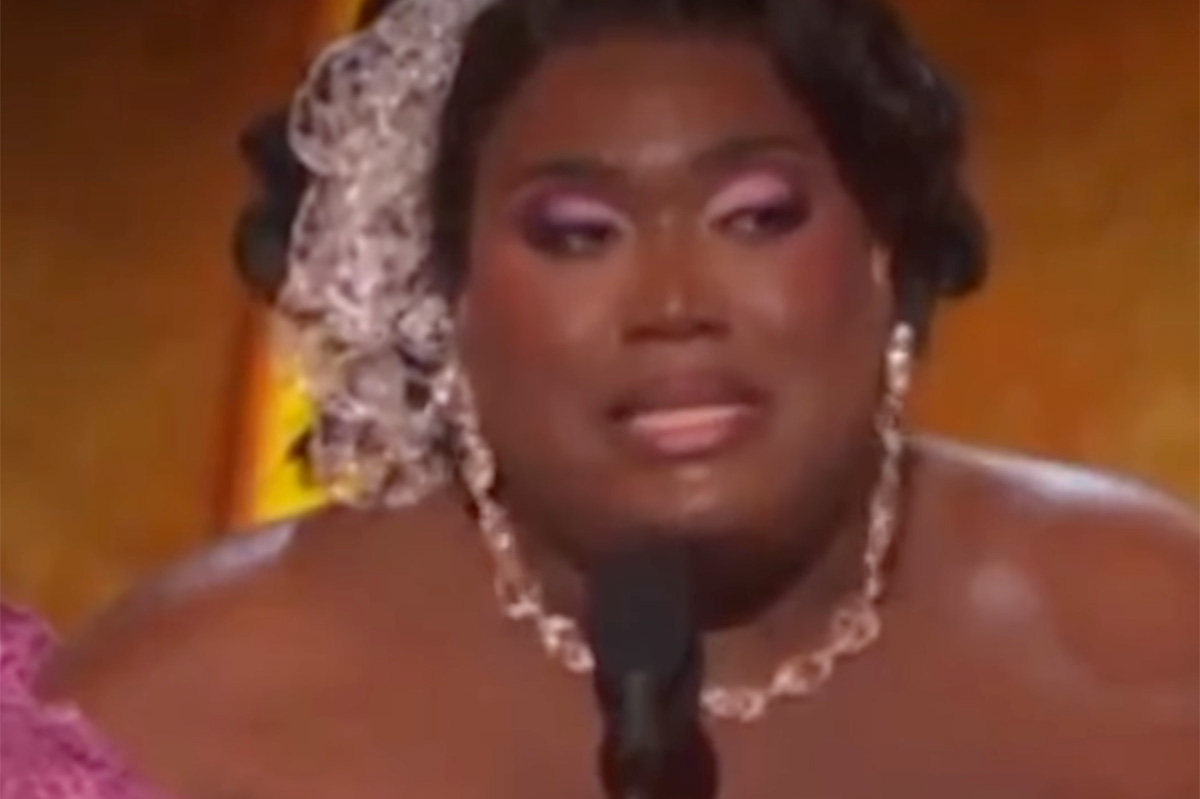
It was a historic night at the 79th annual Tony Awards on Sunday as Queen Jean won the award for Best Costume Design of a Musical, making her the first out transgender person to win a Tony.
“This experience has been monumental. We are here for the legacy of queer people, trans people,” she said. “We are taking up space in ways we have to take up space. We have to shift the paradigm. So I just want to say, thank you all so much for this incredible honor. The world right now is deeply, deeply combating so many ailments, and we know as a society that when we come together, we can make real, permanent change.”
She won the award for her work on “Cats: The Jellicle Ball” and was also nominated for best costume design of a play for “Liberation.”
In addition to her stage work, Queen Jean is the founder of Black Trans Liberation, an organization that supports trans and gender-nonconforming people in New York City.
National
Madonna turns Times Square into massive dance floor
Pop icon celebrates Pride month with surprise performance
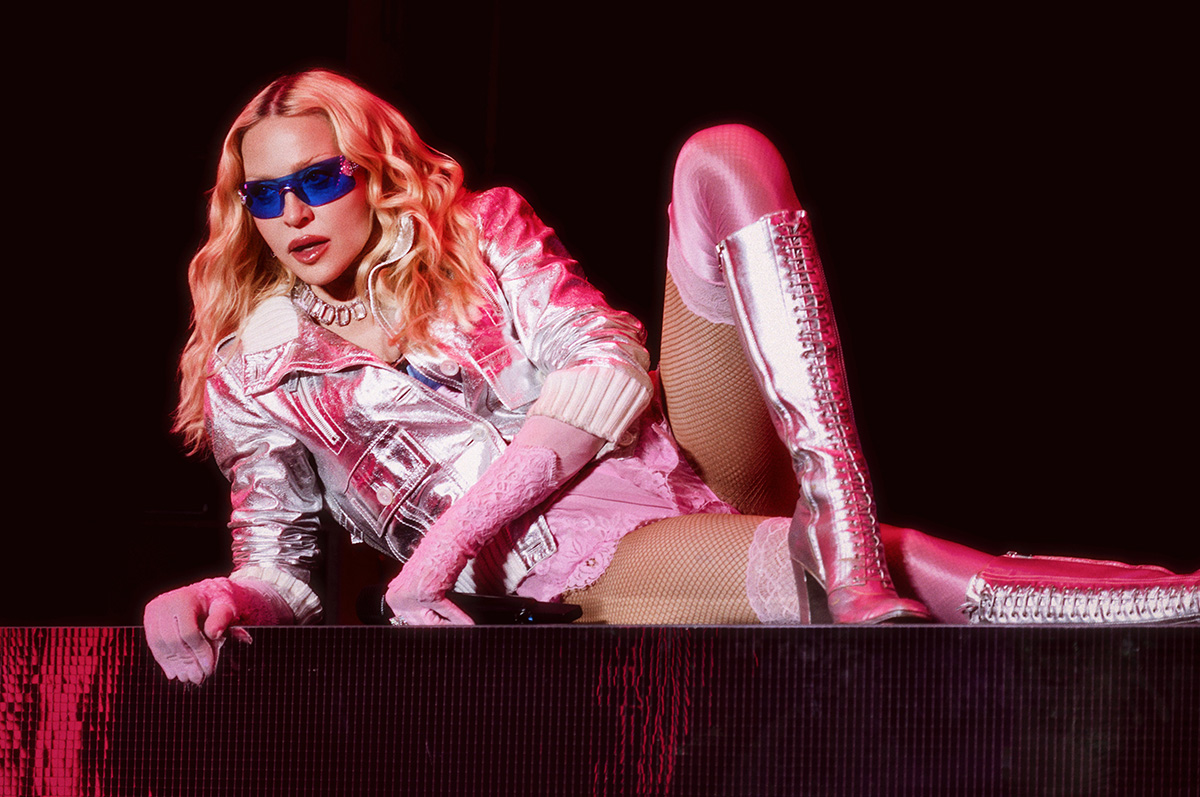
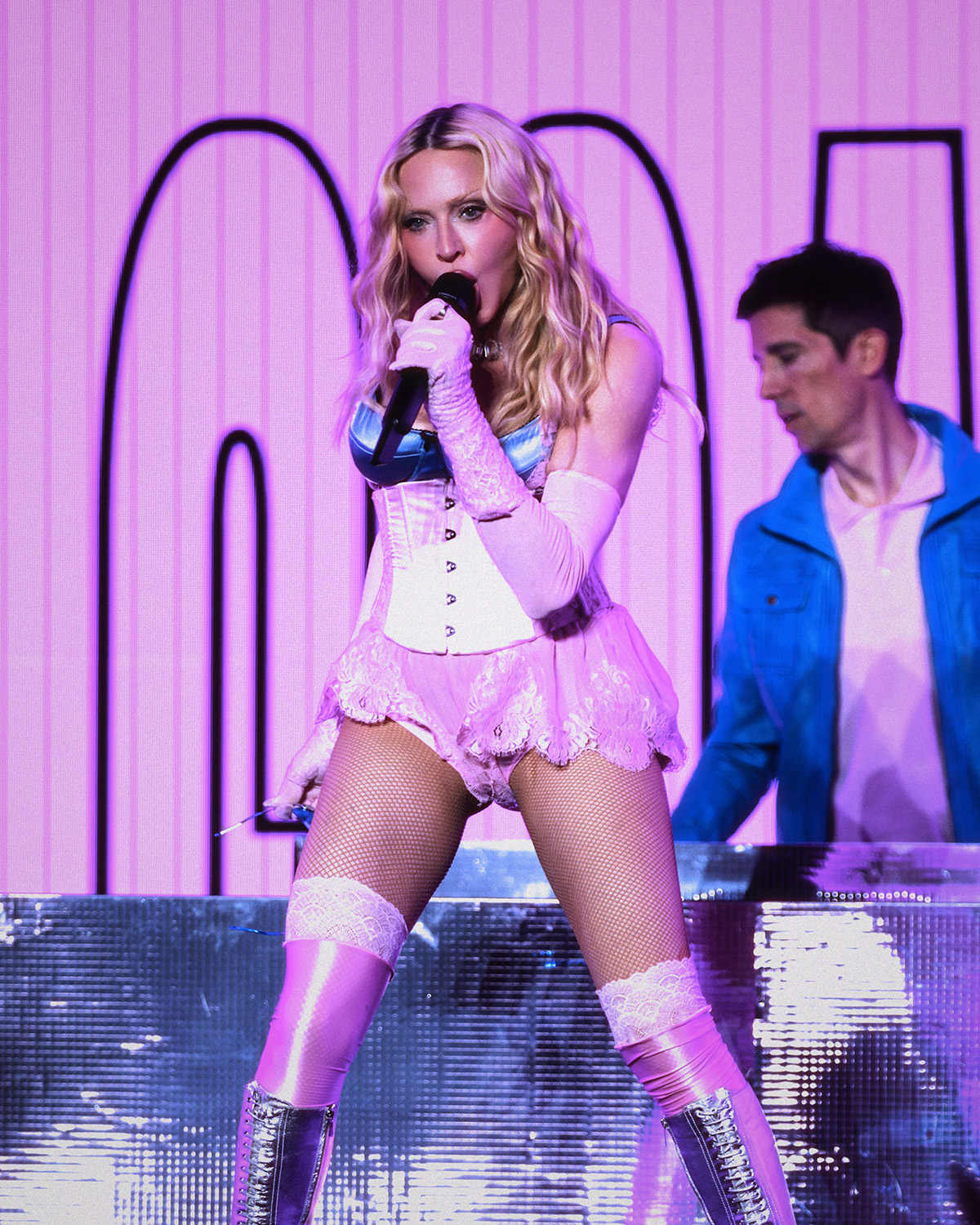
Pop icon Madonna celebrated Pride month with a pop-up performance in New York City’s Times Square on Thursday to the delight of 50,000 fans.
She performed for about 15 minutes high above street level, including several songs from her new album “Confessions II” due on July 3, along with a trio of songs from the first “Confessions on a Dance Floor.”
In addition to the brand new “Love Sensation,” she performed “I Feel So Free” and “Bring Your Love,” plus “Hung Up,” “Get Together” and “I Love New York.” She wished the crowd a happy Pride season; the event was shared with audiences through Grindr’s first-ever livestream.

National
Gallup finds LGBTQ support among Americans is dropping
Marriage equality support lowest since 2016
Gallup, one of the leading organizations in public opinion polling, has found that LGBTQ support among Americans is dropping.
The poll, whose data was collected using Gallup’s annual Values and Beliefs survey, was conducted in May and was published on Wednesday. The data was collected through telephone interviews from a sample of more than 1,000 adults living in all 50 states and D.C. using random digit dialing.
It highlights declining attitudes surrounding LGBTQ issues in multiple areas — from support for same-sex marriage to views on gender identity and the morality of one’s sexuality.
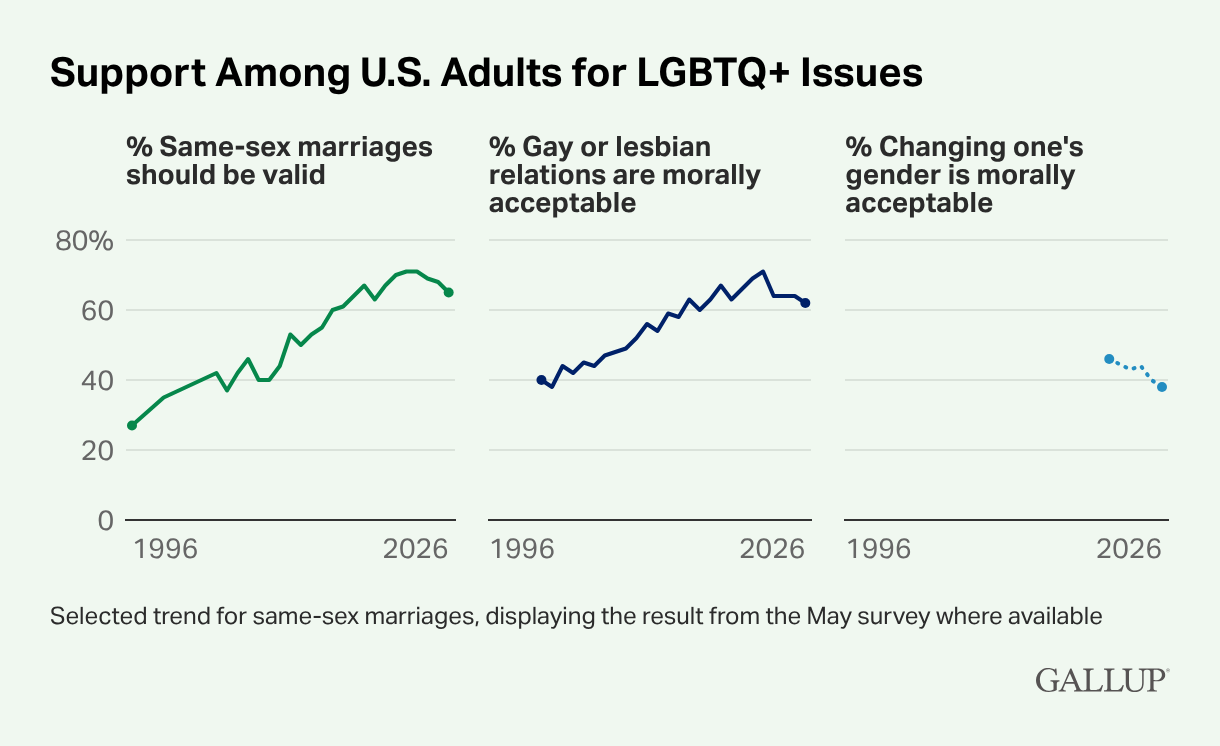
One of the most striking findings was that support for marriage equality fell six points from its 2022-2023 high.
The survey also found that 62 percent of Americans view gay and lesbian relations as morally acceptable, the lowest level since 2016 just after same-sex marriage was legalized nationwide by the U.S. Supreme Court.
One newer question on the poll found that the perceived morality of changing one’s gender has dropped eight points since 2021, indicating the American public is less supportive of transgender people.
The data attributes much of the decline to shifting Republican views alongside the party itself. Conservative leaders have pushed back against diversity, equity, and inclusion programs that were intended to foster greater acceptance of LGBTQ people and other historically disadvantaged groups.
President Donald Trump has been a guiding force behind waves of anti-LGBTQ sentiment, particularly when it comes to trans rights. The president has enacted multiple executive orders, including Executive Order 14168, “Defending Women from Gender Ideology Extremism and Restoring Biological Truth to the Federal Government,” which mandates that gender be defined by one’s sex assigned at birth. He also signed Executive Order 14183, “Prioritizing Military Excellence and Readiness,” which barred qualified trans applicants from joining the military and led to the removal of trans service members already serving in the armed forces.
Additionally, he signed Executive Order 14201, “Keeping Men Out of Women’s Sports,” which prohibits trans female athletes from participating on women’s and girls’ sports teams.
In February, Gallup found that an estimated 9 percent of Americans identified as part of the LGBTQ community in some form.
The organization also found that 23 percent of adults under age 30 identify as LGBTQ, compared with 10 percent of those ages 30 to 49 and 3 percent or less among those ages 50 and older.

Blade editor inducted into D.C. Society of Professional Journalists Hall of Fame

Pride in a new world order

McDuffie on LGBTQ support and standing up to Trump

PHOTOS: Fairfax City Pride