Living
Queery: Clarence Fluker
The GLAA honoree answers 20 gay questions

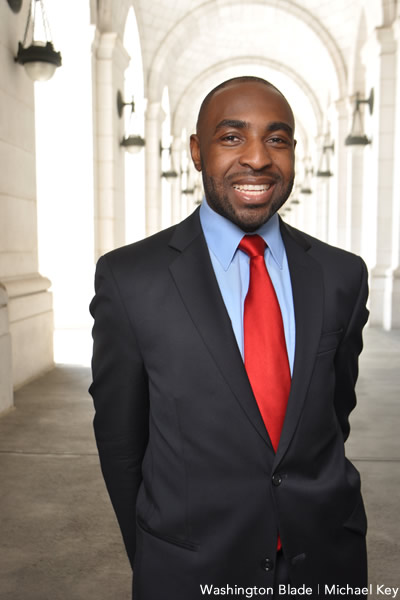
Clarence Fluker (Washington Blade photo by Michael Key)
Clarence Fluker came to Washington in summer 2001 to start a master’s program at American University and never left.
The Cleveland native started college in Cincinnati but after two years transferred to finish his undergraduate degree in Baltimore. He’s been active in LGBT activism work nearly his entire time in Washington. It includes everything from volunteering on the Mayor’s Office of GLBT Affairs in the Williams administration, being a former Black Pride president and board member, to eventually taking full-time work in the Fenty administration and now in Mayor Vincent Gray’s administration where he’s communications and special initiatives director at Serve D.C. — the Mayor’s Office on Volunteerism.
For his years of work, he’s being honored by the Gay and Lesbian Activists Alliance at its 42nd annual anniversary reception slated for Thursday night at 6:30 p.m. at Washington Plaza Hotel (10 Thomas Circle, N.W.) (get tickets online at glaa.org/anniversary).
“I felt humbled, surprised and excited, all those things at once when I heard,” Fluker says. “It’s humbling because I know many people who have received it in the past and I’ve always admired them. It’s very humbling to know that my name would be on that list of names, especially because of the work GLAA does. They’re really about the business of promoting equality in the District in a serious and meaningful way. … They’re one of the groups I most respect because of the way they push forward. They really get into the nitty gritty.”
Fluker considers himself fortunate to have worked in various mayoral offices. He says it’s not terribly unusual but neither is it common.
“I don’t think of it as transferring allegiances because I know former Mayor Fenty and Mayor Gray both had one thing on their mind when they got up each morning and that was to push the city forward in the best way possible,” he says.
Fluker lives in D.C.’s Eckington neighborhood in Ward 5 (where he’s lived his entire time in Washington) and is single. He enjoys theater, museums, reading biographies, keeping up with politics and pop culture, volunteering, NFL and NBA sports, working out and spending time with friends in his free time.
How long have you been out and who was the hardest person to tell?
I started the coming out process when I was 17. The hardest person to tell turned out to be the person who has been my strongest advocate and one of my best friends, my mother.
Who’s your LGBT hero?
I admire Bayard Rustin, James Baldwin and RuPaul so much it is hard to only pick one. I am inspired by each of them in different ways.
What’s Washington’s best nightspot, past or present?
Yesterday, today or tomorrow, the best place to have a good time is anywhere your friends are.
Describe your dream wedding.
My dream wedding is a quiet intimate ceremony with family and close friends who have come together to see me marry a man that is both my lover and best friend. In contrast, the evening reception will be loud and lively, with love, jazz and glamour woven into every detail. Dreams do come true!
What non-LGBT issue are you most passionate about?
I believe that all social justice issues are LGBT issues because LGBT people and our families, friends and communities we live in are diverse. With that said, I am particularly passionate about access to quality education and support for boys and young men of color.
What historical outcome would you change?
In recent history, Al Gore would have been sworn in as president of the United States.
What’s been the most memorable pop culture moment of your lifetime?
The most memorable pop culture moment of my lifetime to date has been the death of Michael Jackson. He was a legend and his legacy and influence will be felt for generations in art, music and culture.
On what do you insist?
I insist on kindness. To give and be open to receiving kindness is a way of life.
What was your last Facebook post or Tweet?
It’s not what you look at that matters, it’s what you see. (Henry David Thoreau)
If your life were a book, what would the title be?
I am currently working on a memoir that explores my relationships with African-American men, straight and gay, and the roles they played in shaping my identity. The manuscript title is “Walking Like A Man.”
If science discovered a way to change sexual orientation, what would you do?
Nothing
What do you believe in beyond the physical world?
I know there is a God. I believe that we are all God’s children and in us, we house beautiful spirits. It is our responsibility to let that spirit shine for others to see.
What’s your advice for LGBT movement leaders?
Spend some time with Dr. King’s “Letter from a Birmingham Jail,” the whole thing not just the one quote everyone cites in speeches and uses on plaques.
What would you walk across hot coals for?
Student loan forgiveness.
What LGBT stereotype annoys you most?
That the LGBT community isn’t diverse.
What’s your favorite LGBT movie?
My favorite LGBT movie is “Punks” written and directed by Patrick Ian Polk. It was the first film I ever saw that showed a romantic relationship between two young black gay men. I fell deeper in love with love after seeing it.
What’s the most overrated social custom?
I champion more social customs and traditional etiquette than less.
What trophy or prize do you most covet?
To be old and gray and proud of the life I lived.
What do you wish you’d known at 18?
I wish I had been more aware then of just how much strength I had inside myself.
Why Washington?
We seem to have a fondness for each other.







At my stage of life — “somewhere between 40 and death,” as the iconic line goes in the musical “Mame” — I want some pampering. A lot of pampering.
Luckily, for anyone who constantly craves a soothing spa, steam room or sauna, there’s the completely updated Mercedes S-Class. This flagship sedan is now so full of glitz, glamour, and gee-whiz gadgetry, it gives new meaning to the term “auto erotica.”
Does this make the S-Class a “gay” ride? For me, any vehicle that pushes my buttons like this one is a Kinsey 6.
MERCEDES S-CLASS
$122,000 (est.)
MPG: 21 city/31 highway
0 to 60 mph: 4.3 seconds
Trunk space: 19 cu. ft.
PROS: Exceptional comfort. Ultra-quiet cabin. Cutting-edge safety.
CONS: Price climbs fast. Tech learning curve. Sportier competitors.
The S-Class continues to define what luxury really means, with a bolder silhouette, larger grille, and striking, next-gen LED headlights. There’s also an optional illuminated Mercedes star on the hood. Overall, nearly 2,700 parts are new or improved, so more than 50 percent of this vehicle has been updated. An extreme makeover, to be sure.
At the same time, this latest S-Class leans harder into intelligence and electrification than ever before. Under the hood, a range of turbocharged inline-six and V8 engines — paired with mild-hybrid systems — deliver power in a way that seems almost edited for smoothness. Braking is solid and strong, too, but never abrupt. All the engineering is fine-tuned and intentional.
Yes, the top-of-the line S580 version is more expensive, almost $140,000. But it’s also blisteringly fast, zipping from 0 to 60 mph in just 3.9 seconds. That’s as lickety-split swift as a Lamborghini Revuelto supercar, which has a starting MSRP of $610,000 and can easily exceed — yowza! — $800,000.
Colors? There are 150 to choose from for the exterior and 400 for the interior. You can even customize the illuminated door sills, interior stitching and wheel accents.
And the ride quality? Sublime. Adaptive air suspension reads the road constantly, leveling out imperfections before they even register. Rear-axle steering enhances maneuverability, making this full-sized sedan feel surprisingly nimble in tight spaces. On the highway, the S-Class simply glides like a private yacht on the calmest of seas — extremely quiet, composed and completely unbothered.
Whenever you slide inside, the cabin immediately sets the tone. A massive OLED digital display — the same high-def technology used for cinematic viewing and gaming monitors — anchors the dashboard, running the latest MBUX infotainment interface. Highly customizable, this software allows for advanced voice commands that feel natural, not forced. And an augmented-reality navigation system takes your route and overlays it onto live camera feeds. It’s intuitive — mostly, as there is a learning curve for all this cutting-edge gear. Overall, though, such amenities make older setups feel like dial-up internet.
A Burmester surround-sound stereo is available in 3D or 4D, with up to 31 speakers, 1,690 watts and tactile transducers in the seats that vibrate and pulse with the music. Those seats are, of course, extremely comfortable. And the seatbelts? These are now heated.
Let’s not forget the latest cabin air-filtration system, which can remove ultra-fine particles to deliver air quality that rivals medical environments. Clean air, yes, but even this seems like a special treat. It’s like being swaddled in couture, not ready-to-wear.
And lastly, there’s the rear-seat area, which — to be honest — is where the S-Class really shines. Executive packages offer multi-contour reclining seats with rapid heating and ventilating, heated armrests and massage functions. You can opt for a footrest, which ups the glam factor to give you a calf massage. Dual 13.1-inch display screens come with their own remote controls. There’s also a video-conferencing feature, to help transform the rear cabin into a fully connected mobile office. For me, it feels less “back seat” and more “private lounge.”
Even in fiction, high-tech luxury carries weight. Tony Stark helped cement the idea that state-of-the art vehicles can be aspirational, not just practical. The magical S-Class fits right into that narrative — minus the flying suit (for now).

Advice
I’m a 64-year-old single gay man and I hate my life
How can I turn things around before it’s too late?

Dear Michael,
I’m a 64-year-old single gay man and I hate my life.
I’ve never had a relationship that lasted more than a few months. I can’t say why. I don’t think I’m defective. I wasn’t unattractive when I was younger (still not bad looking), I think I’m an interesting person to spend time with, but everything always seemed to fizzle out.
Thankfully, I missed AIDS because I came out after people knew what to do. Sometimes I wonder if fear of contracting the virus metastasized into a fear of getting close. I don’t know. I don’t think I’ve consciously kept people away. Consciously I have wanted someone to share my life with, very much.
With my 65th birthday and official senior citizen status approaching, I’ve been taking stock of my life and am coming to the hard realization that I’m never going to find that elusive partner.
I don’t go out anymore because people look right through me, except the ones who have a fetish for older guys. No one’s actually interested in me as me, a unique person rather than what they see on the surface.
I’m tired of my coupled friends. They’re always talking about “we.” Yes, I have become resentful that they have what I want and will never get. I know that’s not admirable but it’s how I feel, secretly, and I am sick of feeling like this when I am around them. So why be around them?
And I’m tired of my friends who are focused on sex all the time. It just all feels like a waste of time. I don’t get anything from a hookup anymore, they’ve been feeling increasingly meaningless. I feel like I’m someone’s momentary opportunity to get off, rather than any kind of real connection.
I’m just sick of the whole chase I’ve been doing for the last 40+ years.
I’m realizing that the whole thing has been pointless, a quest for a partner who is never going to materialize and a lot of diversions along the way that have added up to a despairing feeling that I’ve wasted my life trying to get something that will never happen.
Gay life hasn’t been so gay for me. And I’m officially old, maybe even nearing the finish line. Yes, if you haven’t noticed, I’m getting bitter.
What do I do with this dead end?
Michael replies:
How about looking for a different road to go down?
I’m not going to challenge your belief that you aren’t going to find a partner. I think it’s possible that you could, because there are other guys out there, in your age range, who are looking. But you have no guarantee, especially if you have decided to take it off the table.
So what else can you do with your life? How can you make your remaining time on this earth well-lived?
From your letter, it’s clear what you don’t want to do: Look for a boyfriend, hook up, or spend time with your current friends. Surely there must be more possibilities for your life than those options.
So my advice is to figure out some things you care about and start doing them. Travel? Volunteering? Getting a companion animal? Taking classes? Finding a new career? Those are just a few of the ideas I can come up with, but I don’t know you. What ideas can you generate, that you suspect you’d like to pursue?
In other words, start putting one foot in front of the other and go in some new directions that intrigue you enough to explore.
Sitting around feeling miserable does not help you to get anywhere. It keeps you feeling miserable. Sitting around waiting to feel better does not lead you to feel better. What would help you get to a better place would be to start taking action on your own behalf. Always keep in mind that while you are alive, with your faculties intact, you do have the choice to take this step, over and over and over again.
If you give yourself something (or some things) worthwhile to put your focus on, and do your best to shift your focus there whenever you notice that you are lamenting, I’m hopeful you will create a more fulfilling and meaningful life.
I’m also hopeful that if you are spending time doing things that you actually enjoy and that enrich your life, you may find more satisfying companionship than you are experiencing with your current friend group. (And yes, this could include a romantic relationship if you decide to be open to this possibility.)
A brief reply in an advice column can point you in the right direction, but it is likely not enough to sustain and motivate you through a major life overhaul.
Therefore, I suggest that you find a therapist to help you figure out how to move forward and what to move toward; and also to grieve, and put to rest as best you can, the loss of the life you hoped you would have.
I know that transcending the loss of a huge lifelong dream may seem impossible. But working toward this, as best you are able, would help you.
Relatedly, one more thing that I hope you can address with a therapist is your bitterness. I do understand why you feel so bitter, and I also think that it is torquing your life in a downhill direction.
Michael Radkowsky, Psy.D. is a licensed psychologist who works with couples and individuals in D.C., Maryland, Virginia, and New York. He can be found online at michaelradkowsky.com. All identifying information has been changed for reasons of confidentiality. Have a question? Send it to [email protected].
Real Estate
Honey, have we been priced out of gay paradise?
Rehoboth remains more accessible than many queer beach destinations
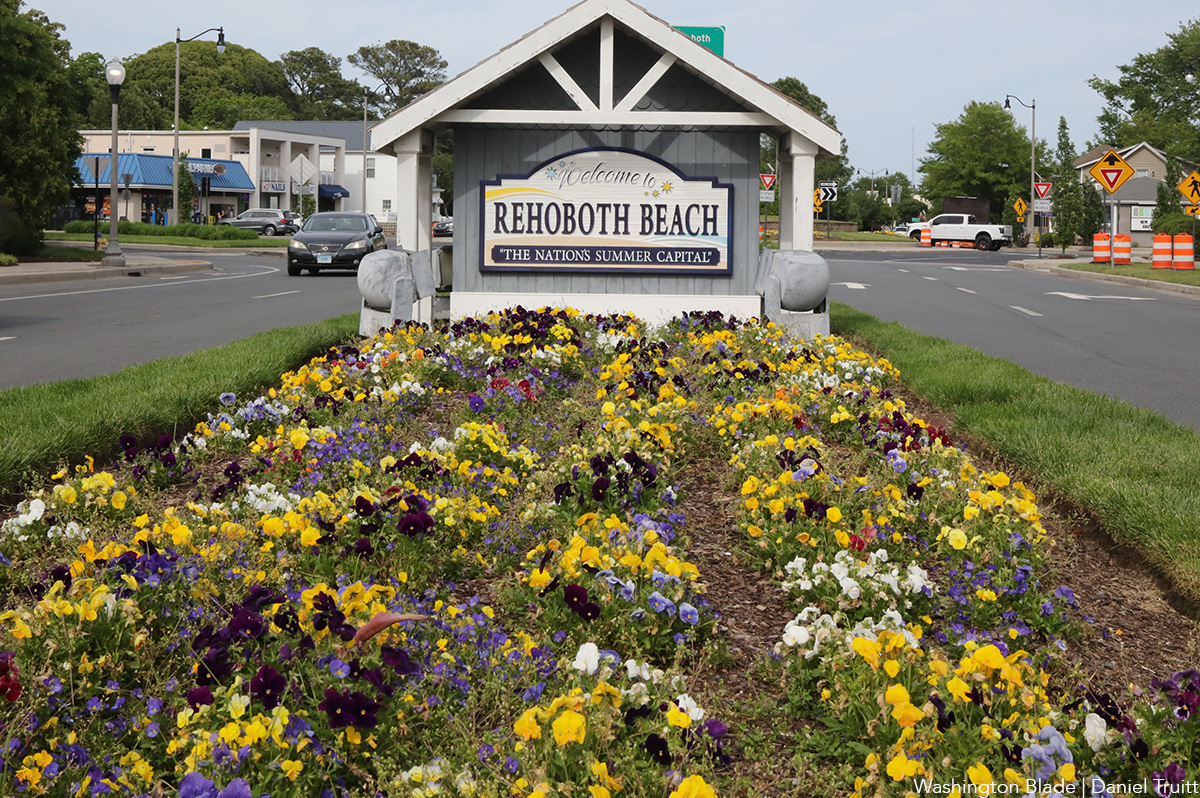
Let’s set the scene, darlings. It’s a scorching July Saturday. You’ve got a trunk full of rosé, a playlist that slaps harder than a “RuPaul’s Drag Race” elimination, and a group chat blowing up with your people en route to Rehoboth Beach — the Delaware beach town that has been the LGBTQ community’s summer headquarters for decades. Sun, sand, Poodle Beach, drag shows, and the kind of easy, breezy freedom that only comes from being surrounded by your tribe.
Now imagine pulling up to a “FOR SALE” sign on that charming two-bedroom cottage two blocks from the boardwalk — the one you’ve been eyeing for years — and seeing the price tag: $1.97 million. Honey, put the rosé down. We need to talk.
Nation’s Summer Capital Has a Spending Problem
Rehoboth Beach has long worn the nickname “The Nation’s Summer Capital” like a crown, owing to the annual migration of Washingtonians — and increasingly, Philadelphians and New Yorkers — who descend on its 27 miles of Atlantic coastline every summer. For the LGBTQ community in particular, Rehoboth has never been just a beach town. It has been a sanctuary, a second home, a place where you can hold your partner’s hand on the boardwalk without a second thought. But the real estate market? She is not reading the room.
According to Redfin data, the median sale price of a home in Rehoboth Beach recently hit $1.96 million — a jaw-dropping 106% increase year over year, and a figure that sits 127% above the national median. The price per square foot has climbed to $1,160, up nearly 27% in the same period. Gag.
So Who IS Buying Right Now?
Let’s not be dramatic — people are still buying in Rehoboth. They’re just a specific kind of people. According to neighborhood data, the per capita income in Rehoboth Beach runs around $118,239, equating to a household income of nearly $473,000 for a family of four. About a third of the workforce telecommutes, many in high-earning, white-collar professions. And more than 68% of residents hold a college degree, compared to a national average of under 22%.
If you want to buy a median-priced home in Rehoboth today with a standard 25% down payment, you’d need to bring nearly half a million dollars to closing — and then cover about $4,000 a month in ongoing expenses.
Still, the market isn’t quite the frenzy it was at peak pandemic frenzy. Homes are sitting on the market for an average of 88 days as of early 2026 — up significantly from the frantic bidding wars of a few years ago, when a listing might vanish before you could refresh Zillow a second time. Sellers are (slowly) getting the memo that buyers have limits.
Have Your Beach House (and Airbnb It, Too)
Many LGBTQ buyers have discovered a savvy workaround to Rehoboth’s sticker shock: buy a property, rent it during peak season, and let your summer visitors essentially pay your mortgage.
The numbers surprisingly support this strategy. The Rehoboth Beach short-term rental market currently has around 928 active listings, with hosts averaging $400 per night and annual revenues of approximately $39,689. The busiest month, predictably, is July — when guests book an average of 96 days in advance (so yes, those summer reservations your friends keep missing out on are being snapped up in April).
The key is making your property stand out in a crowded market. Properties accommodating eight or more guests dominate the Rehoboth STR market (nearly half of all listings), so that five-bedroom house with a game room suddenly starts to look like a business plan. At the same time – keep in mind that location, location, location honey – that is also so valuable. Even a two-bedroom condo close to the beach will also rent favorably well and get those numbers needed to make the most sense to your pockets.
This method allows you to have a second home, enjoy it, have friends enjoy it, and also helps recoup some of the overhead so the overhead and increase in overall purchase price is a bit more manageable.
What It All Means for Our Community
Rehoboth has always been more than real estate. It is one of the few places on the East Coast where LGBTQ people have, for decades, built an actual physical community — businesses, organizations, gathering spaces, neighborhoods — not just a social scene. CAMP Rehoboth, Poodle Beach, the Blue Moon (which, after some drama, was recently sold to new owners who pledged to keep it a queer-affirming space — phew), and countless gay-owned restaurants and shops form an ecosystem that attracts our community every summer precisely because the roots run deep.
But ecosystems require people — year-round residents, small business owners, artists, service workers — not just wealthy second-home owners. When prices rise to the degree they have in Rehoboth, the people who sustain that community can no longer afford to stay. It’s a pattern playing out in LGBTQ neighborhoods from San Francisco’s Castro to New York’s Chelsea, and it’s worth watching closely here.
The good news? Rehoboth remains more accessible than many comparable queer beach destinations. Provincetown, Mass. — the other iconic LGBTQ beach town on the Eastern seaboard — regularly sees median home prices north of $1.5 million with far less inventory and a significantly smaller footprint.
And Delaware’s tax structure does the community a quiet but important favor: no state sales tax, among the lowest property tax rates in the country, and relatively favorable income tax treatment for retirees. These aren’t glamorous talking points, but they matter when you’re running the numbers on whether your beach house dream can actually pencil out.
The Bottom Line, Babe
Can our community still afford Rehoboth? The honest answer is: it depends on what you mean by Rehoboth.
If you mean a single-family home within walking distance of Poodle Beach with an ocean view and a wraparound porch — prepare to spend north of $1.5 million, need a household income pushing six figures annually, and move fast when something comes to market.
If you mean a condo or townhome in the greater Rehoboth area – or a property you plan to rent out in peak season to offset costs — there are still real pathways in.
And if you mean belonging to a community, showing up every summer, taking up space on that beach, supporting LGBTQ-owned businesses, and making sure Rehoboth’s queer identity doesn’t get washed away by the luxury market tide — well, that part doesn’t have a price tag.
It just requires showing up. So pack the car. Bring the rosé. The beach is still ours.
Have a real estate question or Rehoboth market tip? Reach out to [email protected] for LGBTQ-friendly real estate resources in the Rehoboth area.

Man accused of threatening to shoot D.C. bar employee after making anti-gay slurs

Bree Fram’s congressional campaign ends but her fight continues

Rev. Peter Leland DeGroote dies at 86

Kenyan High Court issues landmark transgender rights ruling

Peppermint made her mark on ‘Drag Race.’ Now, her advocacy is front and center

Eight Democrats break with party as House advances ‘Don’t Say Trans’ bill

ROSENSTEIN: Marylanders should again reject Trone

Quest for fame becomes an obsession in entertaining ‘Lurker’

Here’s how to celebrate Black queer joy

When impunity meets history
-

 Congress5 days ago
Eight Democrats break with party as House advances ‘Don’t Say Trans’ bill
-
Opinions5 days ago
ROSENSTEIN: Marylanders should again reject Trone
-
Movies5 days ago
Quest for fame becomes an obsession in entertaining ‘Lurker’
-
Out & About5 days ago
Here’s how to celebrate Black queer joy