Opinions
After 30 years, still summering in Rehoboth
Resort town teeming with gay-friendly businesses
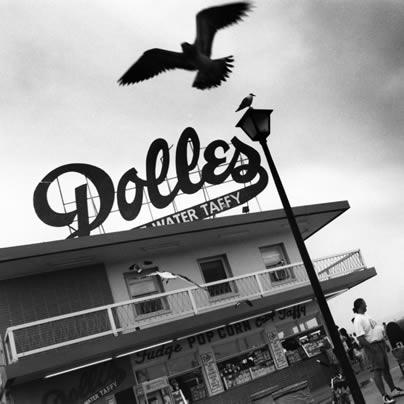
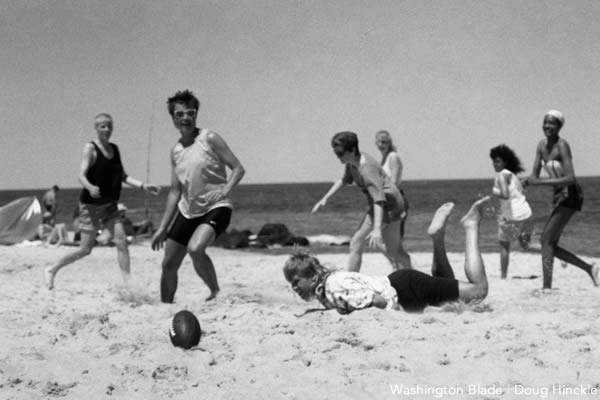
A group of women playing football on Rehoboth Beach in 1989 (Washington Blade archive photo by Doug Hinckle)
Memorial Day is the official start of summer and that means crowds in Rehoboth Beach, Del. This will be one of the busiest years ever at the Delaware beaches because of the havoc created by Hurricane Sandy on the Jersey and New York shoreline. All of us want those communities to rebuild but in the meantime Rehoboth can expect a new crowd of summer tourists.
CHECK OUT THE BLADE’S REHOBOTH SUMMER PREVIEW!
For more than 30 years, Rehoboth has been my choice for summer vacation and for the last 15, I’ve owned a small home there. The town has grown up in that time and is now a year-round place to live. But summer is still the time when business owners have to make their year. This will be a good year for them.
Like many, I spend a great deal of my time in Rehoboth on Baltimore Avenue, the gayest block in town. You can eat breakfast, lunch and dinner; do your shopping; and go to happy hour and late night dancing all on the same block.
As always there are new places opening and one of note this year is Frank and Louie’s Italian Specialties at 58 Baltimore Ave. Frank and Louie are known to many as the nice guys from Touch of Italy but they are now on their own. Their shop is welcoming and their secret weapon is ‘mom’ who is a fantastic chef and baker. I recently tasted her lasagna at a small dinner party and it was delicious. I recommend you stop in and try their full range of Italian specialty items including great sandwiches, cheeses and baked goods and then call them to cater your parties.
The Blue Moon (35 Baltimore Ave.) is all spruced up for its fourth decade. They have a new bar and newly tiled floors and a sound system in the bar and chef extraordinaire Lion Gardner is still at the helm in the dining room. The bartending staff includes Chandler and Matt, who always remember what you’re drinking. Pamala Stanley will again be ensconced there Sundays through Thursdays. There is the always fun Aqua Grille (57 Baltimore Ave.) and everyone always waits for the unveiling of their new bar staff. Bill Shields never disappoints with his hires. There is nothing as nice as happy hour on the Aqua deck on a mild Rehoboth evening and after a few drinks being lazy and staying for a casual, good and very reasonably priced dinner. This year you should also try the newly expanded and upgraded Maggio and Shields Café on the mezzanine (70 Rehoboth Ave.). They have great new comfortable seating and the chef and some staff from the now closed Cloud 9.
Lori’s is still in the CAMP courtyard and good as always. Stop in for a quick and easy breakfast bagel or good hearty sandwiches for lunch. While in the courtyard peek into the Ward Ellinger Gallery and browse his incredible artwork. Then move on to some of the other shops on the block. Elegant Slumming with its fine jewelry and beautiful items for the home and the Philip Morton Gallery now owned by Eric Davison where you can see some very special art work. Eric also owns Gallery Fifty on Wilmington Avenue.
One of the fun places to shop on Baltimore Avenue is Universal Gear, owned by David Franco. The Universal Gear stores just celebrated their 20th anniversary. Part of the fun of shopping at Universal Gear is chatting with manager Denis Dmitriev. Denis spent the winter working at VIDA in D.C. building both his body and modeling portfolio.
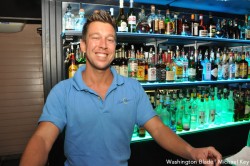
Bartender at the Blue Moon (Washington Blade photo by Michael Key)
Other places not to miss are on Rehoboth Avenue. The Purple Parrot for a good meal and happy hour, the back beach bar and karaoke make it fun any time day or evening. Look into Gidget’s Gadgets for fun retro toys and games and stop at the Coffee Mill for a good cup of coffee or a pound of your favorite beans.
If you have been to Rehoboth Beach you know how great it is and if you haven’t make sure that the summer of 2013 will be your first trip there. You will return time and time again.





Opinions
What I learned from Barney Frank and a bit of queer history
Gay former Mass. congressman died May 19
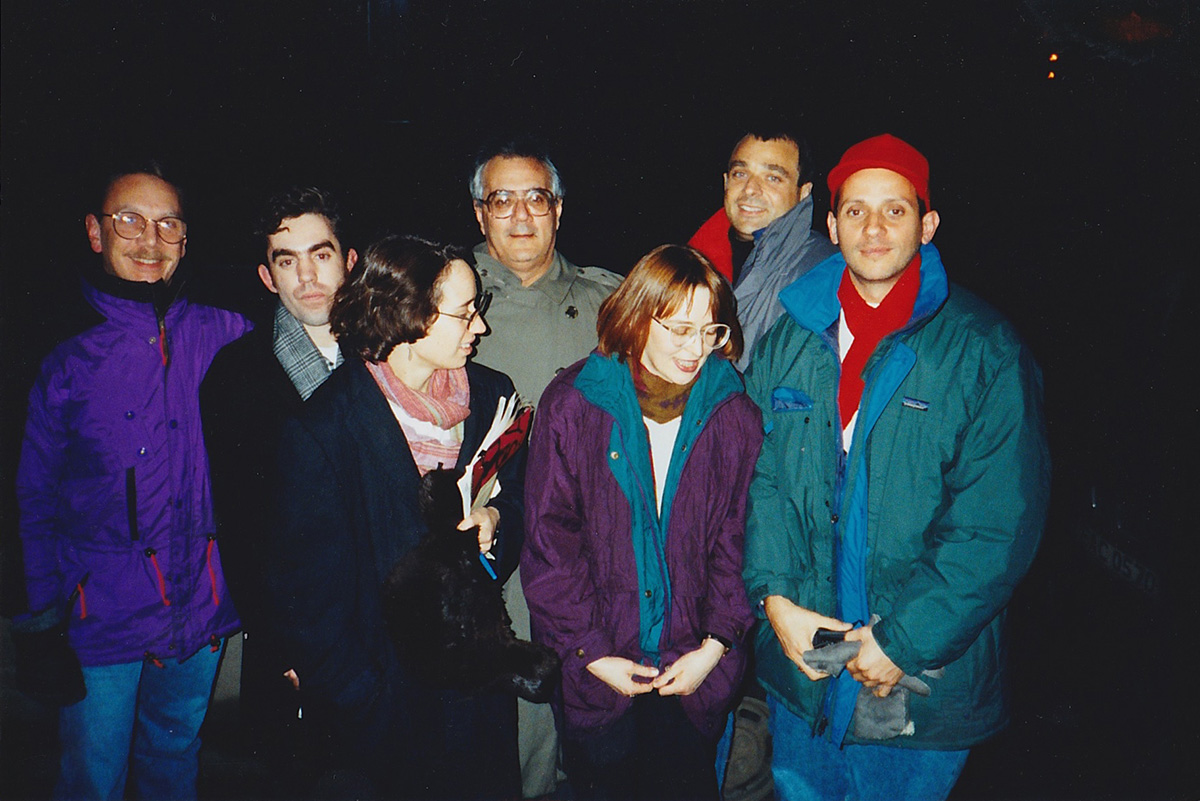
Since I started my activist career at the early age of 25, I feel incredibly blessed to have learned so much from many of the legends of our movement, including from Congressman Barney Frank. When I was just beginning OutRight International (then the International Gay and Lesbian Human Rights Commission), Herb Moses, Barney Frank’s long-term partner prior to his husband Jim Ready, was on our initial board of directors in the early 1990s. Through Herb, I became friends with Barney, and would regularly stay in their guest bedroom on Corcoran Street when I came to Washington for work. We would go out to dinner at their favorite chinese restaurants and Barney would give me advocacy advice, in his tough-love style, which as a similarly argumentative Jew, signified love and respect to me.
Together, we organized a trip to Russia in 1992 for a group of individual donors that included Fred Hochberg (years prior to becoming our nation’s president of the Export-Import Bank), Andy Tobias (before his DNC Treasurer years), Terry Watanabe (one of few major donors to the queer movement at the time), and Vic Basile (who then ran the Victory Fund). Barney was able to get high level meetings with Russian officials that we could never have gotten without him, including conversations with their Ministry of Justice about the infamous Article 121 of their penal code at the time, which actively penalized private gay sex acts. A year later, that law was removed, and consequently most of the copy-cat versions in the other former Soviet countries were written out as well. While Barney organized a reception for our group at the U.S. ambassador’s residence in Moscow, I organized visits to the local prisons to meet with gay prisoners. It was a crazy time and made for some incredible stories, as well as some important lessons from Barney Frank.
Lesson #1: be precise and have proof
Barney was always following up with hard questions of the activists I would bring into his office, exacting concrete proof of the claims of persecution we were trying to expose. His precision sometimes felt like a challenge to the truth of the matter, but it made me a much better human rights activist in those early days. He pushed me to work with more rigor, that helped me to articulate better why the experiences of LGBTQ people around the world are important to share with policy makers and with our own community.
Lesson #2: read more
On the plane to Russia, Barney showed up with a duffle bag full of newspapers and periodicals that he hadn’t finished reading. He hated small talk, and spent the entire flight catching up on his reading. Even though we now have internet access on planes, my take-away was to always stay current and read!
Barney cared a lot about U.S. immigration issues, and together, we opened up the U.S. asylum system to LGBTQ individuals who have a credible fear of persecution on the basis of their “membership in the particular social group” (although at the time, we only called it sexual orientation). This category is one of five legal reasons the United States is obligated to provide asylum. We focused on then-Attorney General Janet Reno and asked her to elevate the case of Marcelo Tenorio from Brazil, who was persecuted for being gay, and whose case IGLHRC had helped to document and win a year earlier, as part of an asylum project that supported immigration attorneys with documentation from around the world (remember, pre-internet!). In June of 1994, Attorney General Reno issued a binding memo elevating that case to a precedent-setting one, and from that moment on “membership in a particular social group” for asylum seekers included queer people in the United States. That milestone paved the way for tens of thousands of LGBTQ asylum seekers to flee persecution and begin safer lives in the U.S. A legal milestone that is now under attack.
Lesson #3: thank your champions
A week after Reno issued her official Attorney General Order, I was on the phone with Barney and he asked me if I had sent my thank you letter to her yet. I had to admit that I hadn’t. An unforgettable cringe moment for me. I was quick to write my protest letters out in those pre-internet days. But didn’t yet understand the importance of writing thank-you notes to our political targets (or allies), when they actually do the things we ask them to do!
Barney served on our International Advisory Board, together with over 30 other amazing leaders from around the world, including Harry Hay, the founder of the Radical Faeries. They couldn’t have been two more different types of gay men. But I took them both to Russia and earned their respect. In a complicated moment in our movement’s history, I was a spokesperson for the International Lesbian and Gay Association (ILGA), an international membership group for queer organizations around the world, and the only other major organization at the time that was working around the world. ILGA had submitted a controversial application to become an official observer to the UN as a non-governmental organization. The truth was, that ILGA — as a broad membership organization had actual pedophile organizations in the membership at the time. Since OutRight (then IGLHRC) was the “action secretariat” for ILGA, I spearheaded the campaign to create membership criteria that would eliminate NAMBLA and the other two similar Dutch groups that refused to distinguish between a two-year old and a 16-year old. Together with our then board members Judith Butler and Alex Chasin, we carefully crafted a nuanced position for OutRight that affirmed the rights of children to explore their sexuality, while opposing abuse of power and sexual exploitation by adults. We lost both Barney and Harry over that statement, and I had to take those difficult calls.
Lesson #4: don’t get defeated by rejection
While Barney explained to me that he could not be associated with any position or organization that was in any way connected to the issue of pedophelia, he didn’t reject me personally or the work of the organization. He just needed to have his name removed from our advisory board. I was still crushed, but didn’t let it stop me from pursuing a more nuanced distinction between consensual sex and exploitation (such as elevating the Dutch model of allowing for consent within two years of each partner within those complicated years around emancipation, rather than an unfair system that can charge rape to an 18-year-old who is in a sexual relationship with a 17-year-old, for example.
Lesson #5: pragmatism with principle
I started OutRight at the age of 25. I remember Barney saying to me over dinner one night in 1992 that I could do well in DC if I wanted to come and work on the Hill. He was complementing my willingness to find concrete, incremental steps towards equality, while understanding my deep passion for justice and full equality. I, on the other hand, was passionate about building the organization and making LGBTQ and HIV issues part of the larger human rights movement. But I held onto that complement for a long time, and it guided my work for many years.
As much as I appreciated his compliment at the time, and have had an amazing career making incremental change, today, I fear that the age of “incrementalism” is over in the United States. Despite Barney’s last book and his final effort to hold onto a liberal institutionalist hope for our democracy, this moment calls on progressives to radically remake this unfair system. It’s not our time to retreat or rally behind Democrats who will not stand for much, much better. It’s our time to boldly envision, name, and work for the better country and world we so urgently need. We can argue over whether or not Barney was politically pragmatic or sold out the trans community back in 2007, when he removed gender identity in the draft legislation in order to get it passed the House. It caused a major split in the community’s support for the bill and he put it back in the legislation two years later, when it didn’t pass. Congress to this very day has never passed basic non-discrimination protections based on sexual orientation or gender identity. As Congressman Frank departs this world, I believe it is time for Urvashi Vaid’s vision of the world, another monumental advocate who we lost last year. Her vision was one of a more interconnected emancipation of all of our country’s citizens, not one identity group at a time. As we regress this quickly into authoritarianism, what do we have to lose by demanding the whole vision of liberation?
The last time I saw Barney, it was a few years back and he was signing books at a local LGBT event in San Francisco. He seemed so genuinely happy to see me and greeted me with a big hug. As we reflect and pay tribute upon his passing, I feel so grateful to have had my early leadership years mentored by the incomparable Congressman Barney Frank.
Julie Dorf is the co-chair of the Council for Global Equality.
Opinions
Why this Black Pride, I ranked Janeese Lewis George #1 for D.C. mayor
Compliance is not a strategy for defending D.C.

Washington, D.C. is at a crossroads. In uncertain moments, voters are encouraged to lower expectations, choose familiarity over vision, and look for leaders who seem most willing to accommodate hostile federal power. That approach misunderstands this moment and what leadership requires.
I ranked Janeese Lewis George #1 for mayor.
As a Black gay man whose career has moved through law, policy, media, and movement work and has called D.C. home for 15 years, I have seen the difference between performative allyship and meaningful action. Too often, politicians treat LGBTQ communities as symbolic talking points. They show up for Pride, issue polished statements, and expect support without taking risks that improve our lives. Our vote should be earned through policy, consistency, relationships, and accountability.
That is one of the many reasons I trust Janeese.
A recent Blade column tried to define Janeese through guilt-by-association politics, treating a passing association with someone else’s comments as proof of her values. I wholly reject that framing.
Coalition-building in a city as politically diverse and socially complex as D.C. will never be perfect. Anyone who has organized, legislated, or advocated understands that progress requires engaging people whose views or approaches may not align at every moment. The fair standard is a candidate’s values, priorities, judgment, and record.
Janeese’s record clears that standard. GLAA gave her a 10 out of 10, its highest possible rating. Capital Stonewall Democrats, the largest LGBTQ political organization in D.C., endorsed her by an overwhelming margin. Her platform shows a candidate who understands that LGBTQ safety depends on the ability to stay housed, access healthcare, protect bodily autonomy, and defend D.C.’s power to govern itself.
For a Black trans woman fighting eviction, safety starts with a lease she can keep. For a family with two dads choosing between medicine and a utility bill, freedom starts with a city willing to lower costs and stand up to greedy utility companies like Pepco and Washington Gas. For residents bounced between agencies, dignity starts with a government that can get help to people before crisis deepens.
Janeese’s campaign speaks to those conditions. She is running on tenant protections, affordable homes, lower utility costs, and a public safety plan that recognizes a problem residents already understand: D.C. has resources, yet too many people still get passed from agency to agency while their situation gets worse. She has also committed to rescinding the MPD order allowing local police to work with ICE.
The above-mentioned Blade column spends little time on those stakes. Its energy goes toward attacking Janeese’s endorsers and casting suspicion on her people-first politics. The writer has previously said he becomes wary when the Working Families Party endorses a candidate because he sees the party as anti-business. That critique reveals anxiety about a candidate challenging the corporation-friendly consensus that has made D.C. harder for working people to survive in. Yet it doesn’t speak to the many workers of those businesses who support a mayoral candidate like Janeese.
This election is also about how D.C. responds to Trump and federal overreach. Trump is not our mayor. The people of Washington, D.C. are. The argument that D.C. needs someone who can comfortably work with Trump sounds like preemptive surrender. There is little evidence that electing a more cautious Democrat would produce a respectful relationship with a president who has repeatedly treated D.C. residents as politically expendable.
D.C. needs a mayor willing to advocate for residents, defend the city’s interests, and resist attempts to bully or diminish the people who live here. Effective leadership requires negotiation. Negotiation from fear gives away power before the fight begins. Compliance is not a strategy for defending D.C.
Further, an ethics complaint against Janeese came with its own political baggage. City Paper reported that the nonprofit behind the complaint and investigation has a board member connected to a research firm her opponent’s campaign paid $20,000. Voters should weigh that connection against Janeese’s record and the LGBTQ organizations that have already vetted her.
This election will decide which communities are prioritized in D.C.’s future: working-class residents trying to stay in the city, or out-of-state elites treating D.C. like an investment portfolio. Black LGBTQ leadership carries responsibility here. Our communities know what it means to be praised in public and abandoned in budgets. We know the difference between symbolic allyship and policy that changes conditions.
I am ranking Janeese Lewis George #1 because, in this critical moment where inspiration is needed, Janeese is offering the kind of mayoral leadership D.C. needs. Black LGBTQ Washingtonians deserve a city we can afford, a government that works for people’s best interests, and leaders who will defend us.
Preston D. Mitchum is a D.C.-based policy consultant, attorney-activist, and television personality whose work focuses on the intersections of racial justice, democracy reform, health and gender equity, and LGBTQ+ rights.
Cuba
When impunity meets history
Raúl Castro indicted for alleged role in shooting down Brothers to the Rescue aircraft
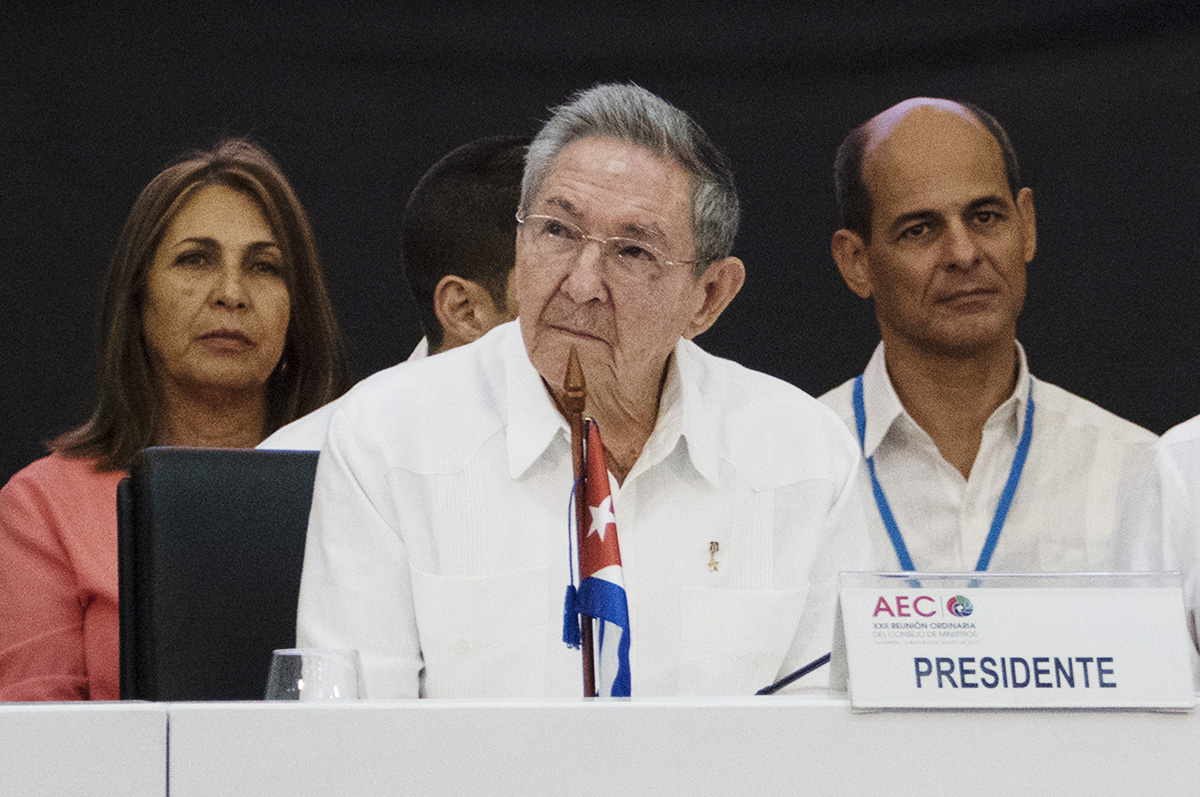
The scene would have seemed impossible only a few years ago.
The name of Raúl Castro Ruz appearing formally inside a United States federal criminal indictment. Cuba’s former general of the Army, for decades one of the most powerful figures inside the Havana regime, accused in connection with the shootdown of the Brothers to the Rescue aircraft and the deaths of American citizens in 1996. And all of it unfolding in Miami, inside the Freedom Tower, on May 20.
That detail matters.
Because this indictment arrives at one of the most fragile and politically tense moments in recent relations between Washington and Havana. It comes as Cuba faces deep economic collapse, growing political exhaustion, mass migration, blackouts, and increasing public frustration both inside and outside the island. It also arrives on a date carrying enormous symbolic weight for Cuban exiles — the anniversary of the founding of the Cuban Republic in 1902.
But the true significance of this moment goes far beyond symbolism.
What happened in Miami represents something much larger: the collapse of the idea that certain men would never face accountability.
For decades, Raúl Castro embodied the permanence of revolutionary power in Cuba. Defense minister. Military strategist. The man who oversaw the armed forces for generations. One of the central architects of the Cuban political and security apparatus built alongside Fidel Castro. A figure many believed would leave this world untouched by any court, shielded forever by power, time, and history itself.
Today the image is very different.
Today his name appears inside the language of American criminal prosecution.
And that changes the historical dimension of this case completely.
Because this is no longer simply a political accusation voiced by the Cuban exile community. It is now a formal federal criminal indictment publicly announced by the United States government against one of the highest-ranking figures in the history of the Cuban regime.
The setting itself carried enormous meaning.
The Freedom Tower is not just another building in Miami. For generations of Cuban exiles it represents memory, displacement, survival, and the beginning of a new life after fleeing Cuba. Thousands of Cubans passed through those doors after escaping the revolution. Families arrived carrying fear, uncertainty, grief, and hope all at once. Announcing these charges from that location transformed the moment into something far deeper than a legal proceeding.
And the people witnessing it were not only members of the exile community.
Among those present were relatives of the young men killed nearly 30 years ago. Families who spent decades waiting to hear words they feared might never come. Families who carried the weight of loss while believing the men responsible would never be formally accused by any court.
That emotional weight still surrounds this case.
On Feb. 24, 1996, two civilian aircraft operated by Brothers to the Rescue were shot down over the Florida Straits by Cuban military jets. Armando Alejandre Jr., Carlos Costa, Mario de la Peña, and Pablo Morales were killed. The flights were connected to humanitarian rescue efforts searching for Cubans attempting to flee the island during the migration crisis of the 1990s.
Those aircraft were not military bombers.
They were not attacking Cuba.
They were civilian planes associated with rescue operations involving Cubans risking their lives at sea.
That reality has always shaped how this tragedy lives inside the memory of the Cuban exile community.
For many, this was never viewed simply as a geopolitical conflict between hostile governments. It was seen as the use of military force against civilians connected to humanitarian missions during one of the darkest chapters in modern Cuban migration history.
But for many Cubans, the indictment reaches far beyond the Brothers to the Rescue case itself.
It touches decades of unresolved pain tied to one of the central figures behind Cuba’s military and political system.
It reaches mothers who buried sons lost in compulsory military service or in distant wars they never chose to fight. Families who spent years believing promises that were never fulfilled. Political prisoners who disappeared into silence. Relatives who watched loved ones die trying to flee the island.
And for many LGBTQ Cubans, the moment carries another layer of historical weight.
Long before official campaigns promoting tolerance and inclusion emerged from within the Cuban government, there were years of persecution, fear, forced silence, and humiliation carried out under the revolutionary system itself.
The UMAP labor camps remain one of the deepest scars in modern Cuban history. Gay men, pastors, religious believers, artists, and others considered incompatible with the revolutionary ideal were sent away under the language of “re-education” and forced labor.
In recent decades, public gestures toward LGBTQ inclusion promoted by figures close to the Cuban leadership attempted to project an image of progress and openness to the international community. But for many survivors, and for many Cuban LGBTQ people, those gestures never erased the trauma or the historical responsibility tied to the same structures of power that once persecuted them.
For many, acknowledgment without accountability still feels painfully incomplete.
That is why this indictment resonates so deeply today.
Because it arrives while Cuba once again faces profound national crisis. The island is losing entire generations through migration. Public frustration continues to grow. Economic collapse shapes daily life. And the revolutionary narrative that once projected permanence and control appears increasingly eroded by reality itself.
Against that backdrop, the image emerging from Miami becomes even more striking.
A man once viewed as untouchable by history now formally accused by the United States government and legally transformed into a fugitive wanted by American justice.
History moves slowly until suddenly it does not.
And for many Cubans, both on the island and throughout the diaspora, what happened today inside the Freedom Tower felt like witnessing something they once believed they would never live long enough to see.
As a Cuban, as an immigrant, and as someone who has lived close to that pain, one thought keeps returning tonight:
Justice takes time.
But when it finally arrives, it arrives with history behind it.

What I learned from Barney Frank and a bit of queer history

‘How to Survive a Plague’ screens June 5

‘Queer Love’ campaign launched to address domestic violence

Ken Paxton wins Texas Republican primary runoff