Arts & Entertainment
Calendar: events through Nov. 28
Parties, concerts, exhibits and more for the week ahead


‘Drag Race’ vet Alaska Thunderfuck will be at Town this weekend. (Photo courtesy Town Danceboutique)
Friday, Nov. 22
Temple Emanuel (10101 Connecticut Ave., Kensington, Md.) hosts its “African Dinner Fundraiser” tonight at 7:30 p.m. Enjoy a Kenyan buffet dinner to help finance mico-financing projects in Kenya. Tickets are $20 per person, $10 per child (under 12) with a maximum of $50 per family. For details call 301-942-2000 or email [email protected].
Burgundy Crescent, a gay volunteer organization, volunteers for the National Gay and Lesbian Chamber of Commerce for its 11th annual National Dinner Gala at the NGLCC office (729 15th St., N.W) and the National Building Museum (401 F St., N.W.) today at various times. Volunteers will assist with facilitating the dinner in registration, greeting guests, crowd management and more. There is a possibility volunteers can enjoy the dinner. To volunteer, email [email protected]. For more details on exact volunteer times and locations, visit burgundycrescent.org.
Town (2009 8th St., N.W.) hosts Bear Happy Hour tonight from 6-11 p.m. There is no cover charge and admission is limited to guests 21 and over. For more information, visit towndc.com.
Saturday, Nov. 23
Burgundy Crescent, a gay volunteer organization, volunteers for Food and Friends (219 Riggs Rd., N.E.) today from 8-10 a.m. Volunteers will chop vegetables and pack groceries. To volunteer, email [email protected]. For more details, visit burgundycrescent.org.
SMYAL (410 7th St., S.E.) provides free and confidential HIV testing drop-in hours today from 1-3 p.m. For more information, visit smyal.org.
The Whornets present “Celebrity Rehab: The Betty Whore’d Clinic” at 1256 New Jersey Ave., N.W. tonight from 8 p.m.- 3 a.m. Dress as your favorite celebrity in rehab or come as a visitor. Visitor tickets are $10 for entry and $2 per drink. Committed celebrities pay $20 for entry and get free drinks. All proceeds go to the D.C. Center.
Bearracuda, the largest bear dance party in the U.S., comes to Cobalt (1639 R St., N.W.) tonight from 9 p.m.-3 a.m. Tickets are $7 before 10 p.m. and $10 after. Doors open at 9 p.m. For more information, visit cobaltdc.com.
Alaska Thunderfuck, “RuPaul’s Drag Race” fifth season contestant, performs her cabaret show “RED for FILTH” at Town (2009 8th St., N.W.) tonight at 7:30 p.m. Tickets for general admission seating are $15 but do not guarantee a seat. Meet and greet tickets include guaranteed seating and are $25. Doors open at 6:30 p.m. Admission is limited to guests 21 and over. For more information, visit towndc.com.
http://www.youtube.com/watch?v=iygtzrVVfLE
Sunday, Nov. 24
Church of the Holy City (1611 16th St., N.W.) hosts “Music with the Angels” concert series today at 3:30 p.m. Zulfugar Baghirov on saxophone, Chris Galvan on guitar and Leland Nakamura on drums perform experimental jazz techniques, free improvisation and avant-garde styles. A reception follows. Admission is free. For details, visit churchoftheholycitydc.org.
Perry’s (1811 Columbia Rd., N.W.) hosts its weekly “Sunday Drag Brunch” today from 10 a.m.-3 p.m. The cost is $24.95 for an all-you-can-eat buffet. For more details, visit perrysadamsmorgan.com.
Monday, Nov. 25
The D.C. Center (2000 14th St., N.W..) hosts coffee drop-in hours this morning from 10 a.m.-noon for the senior LGBT community. Older LGBT adults can come and enjoy complimentary coffee and conversation with other community members. For more information, visit thedccenter.org.
Us Helping Us (3636 Georgia Ave., N.W.) holds a support group for gay black men to discuss topics that affect them today, share perspectives and have meaningful conversations. For details, visit uhupil.org.
Sage Metro D.C. presents Dr. Laurie Young in a lecture about grief, loss and the holidays at The Residence at Thomas Circle (1350 Massachusetts Ave., N.W.) today at 6:30 p.m. Comfort food will be provided. The event is free but email [email protected] to reserve your space.
Nellie’s Sports Bar (900 U St., N.W.) hosts poker night tonight at 8 p.m. Win prizes. Free to play. For more information, visit nelliessportsbar.com.
Tuesday, Nov. 26
Temple Emanuel (10101 Connecticut Ave., Kensington, Md.) hosts an “Interfaith Thanksgiving Service” tonight at 7:30 p.m. The service honors two clergy, Rabbi Warren Stone and Reverend William Hague, for 50 years of combined service to their congregation and community. The event is free. For details, visit templeemanuelmd.org.
Genderqueer D.C. holds a discussion group at The D.C. Center (2000 14th St., N.W.) from 7:30-8:30 p.m. tonight. The group is for anyone who identifies outside of the gender binary as bigender, agender, genderfluid or any label outside of cisgender. For more information, visit thedccenter.org.
SMYAL (410 7th St., S.E.) provides free and confidential HIV testing drop-in hours today from 3-5 p.m. For more information, visit smyal.org.
Bachelor’s Mill (1104 8th St., S.E.) offers all drinks half price tonight until 2 a.m. Enjoy pool, video games and cards. Admission is free. Must be 21 and over. For more details, visit bachelorsmill.com.
Wednesday, Nov. 27
The Lambda Bridge Club meets tonight at 7:30 p.m. at the Dignity Center (721 8th St., S.E.) for duplicate bridge. No reservations required and new comers welcome. If you need a partner, call 703-407-6540.
SMYAL (410 7th St., S.E.) provides free and confidential HIV testing drop-in hours today from 3-5 p.m. For more information, visit smyal.org.
Town (2009 8th St., N.W.) hosts ”WTFsgiving: Let’s Get Totally Basted” tonight. Doors open at 10 p.m. Admission is free from 10-11 p.m. and $5 after 11 p.m. Admission is limited to guests 21 and over. For more information, visit towndc.com.
Thursday, Nov. 28
Burgundy Crescent, a gay volunteer organization, volunteers for Food and Friends (219 Riggs Rd., N.E.) early this morning from 4:45-6:45 a.m. Volunteers will prepare Thanksgiving meals that will be delivered to clients that day. [email protected]. For more details, visit burgundycrescent.org.
Gays and Lesbians Opposing Violence (GLOV) hold a meeting at The D.C. Center (2000 14th St., N.W.) tonight from 7-8:30 p.m. GLOV works to reduce violence against LGBT individuals through community outreach, education and assisting members of anti-LGBT violence. For more details, visit thedccenter.org.
Rude Boi Entertainment hosts “Tempted 2 Touch,” a ladies dance party, at the Fab Lounge (2022 Florida Ave., N.W.) Doors open at 10 p.m. Drink specials $5 and vodka shots $3 all night. No cover charge. Admission limited to guests 21 and over. For more details, visit rudeboientertainment.wordpress.com.


a&e features
Kramers celebrates 50 years as a cultural hub of D.C.
Milestone anniversary event planned for Oct. 22
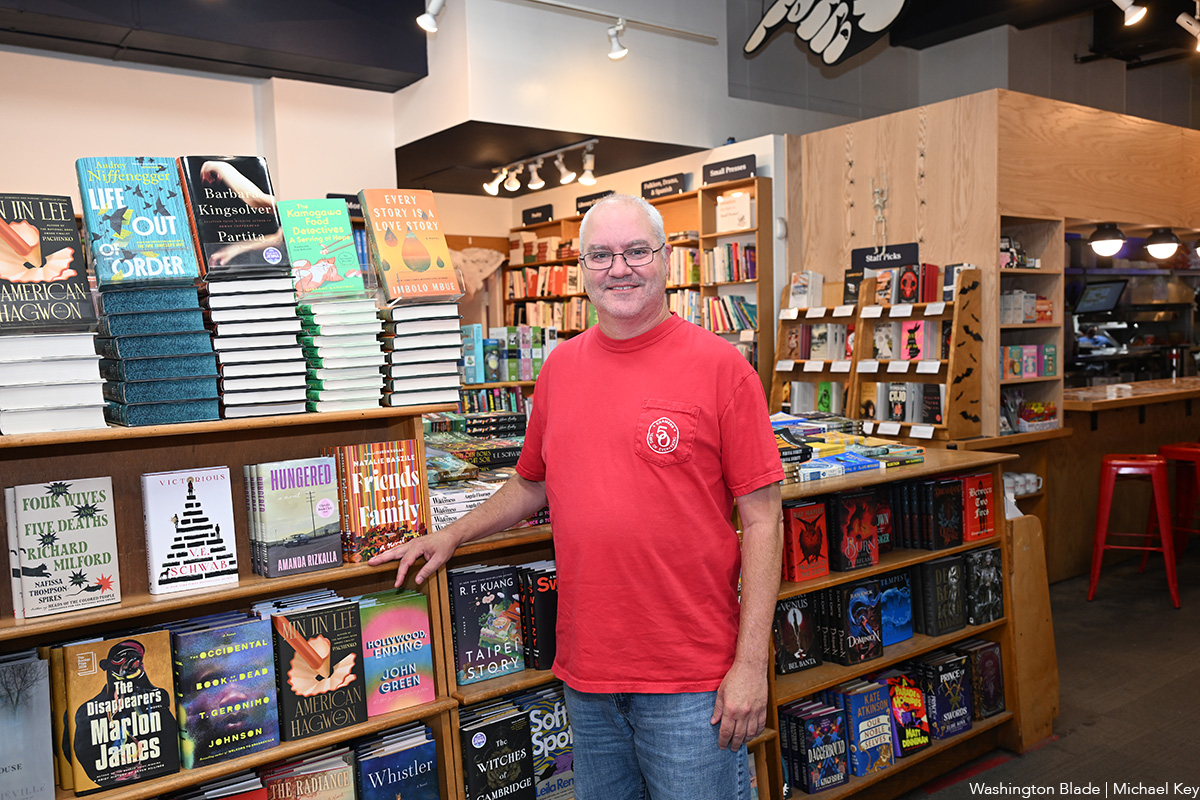
In a world of rapidly diminishing third-place spaces, Kramers – also known as Kramerbooks – is celebrating its 50th anniversary as a beloved cultural Washington, D.C. institution.
Founded in 1976 in the heart of Dupont Circle at the nation’s bicentennial, Kramers is a bookstore, café, restaurant, bar, corner store, gathering place, and multi-generational site for locals, visitors, readers, sippers, and noshers.
Originally owned by Bill Kramer, Henry Posner, and David Tenney, Kramers began first as a bookstore called Kramerbooks, and soon added its coffeeshop and rebranded as Kramerbooks & Afterwords Café. In 2016, the trio sold Kramers to Steve Salis, who expanded the bookstore and rebranded the eatery portion as All Day Café.
As Kramers turns 50, the beloved bookstore and café will honor its rich legacy this month with a milestone anniversary celebration, merchandise, and a look ahead to its next chapter as one of D.C.’s defining cultural gathering places.
The big community day is Oct. 24, bursting with community programs:
· Relume, a local woman-owned home goods and accessories brand, will offer custom book stamping for attendees;
· Aslin Beer Company will offer guests of age a curated on-site beer tasting;
· DuPont Little Flea Market will activate a small pop-up vintage market on site, offering a variety of vintage goods from various vendors;
· The store will partner with Everybody Wins DC, a nonprofit dedicated to advancing child literacy through volunteer-led reading and mentoring programs, donating 20% of all bookstore sales that day. Visit kramers.com to RSVP.
Finally, the shop is throwing a 50th anniversary celebration on Oct. 22, bringing together community leaders and longtime patrons for an event honoring the bookstore’s rich legacy and continued impact on the city.
The 50th anniversary excitement eclipses prior celebrations: for the store’s 20th anniversary, for example, the store gave away one free slice of “three truffle” chocolate cake to customers.
“Kramers has been part of the cultural heartbeat of Washington for 50 years, and that kind of legacy is incredibly rare,” said Salis, who is CEO of Catalogue hospitality, which also runs D.C. favorites like Ted’s Bulletin, Federalist Pig, Honeymoon Chicken, and Sidekick Bakery. “What makes it special is that it has never been just a bookstore — it’s a place where people gather, discover ideas, share meals, and feel connected to the city around them.”
Dupont Circle has always been a center of D.C.’s cultural legacy. The neighborhood continues to evolve, even today, as the Connecticut Avenue deckover project progresses, just outside the doors of Kramers. Just as the neighborhood has changed, Kramers has grown and evolved as well. But its identity as a center of curiosity and connection has remained the same.
Kramers was one of the first bookstores in D.C. – and the nation – to introduce a café on premises. For several years, Kramers would transport bagels from New York daily, unable to source bagels of quality locally. While today Kramers operates regular hours, generally 8 a.m.-10 p.m., for many years it was open 24 hours (literally an All Day Café) on the weekends, not closing its doors once to neighbors and friends. Kramers also branched out across the river, opening two short-lived spots in Arlington. Both are now closed.
Being located in D.C., Kramers has played host to plenty of celebrities: Barack Obama stopped by during his time in office; and Monica Lewinsky shopped there as well. Other celebs who have dropped by include Maya Angelous, Andy Warhol, and Toni Morrison.
In 2020, Salis – after suggesting that he might relocate Kramers from Dupont Circle – refreshed the restaurant, bringing in a new chef and a vibrant new menu with French influences and natural wine pours, plus menu favorites like Crab Deviled Eggs, Chicken & Waffles, and Goober Pie.
Salis recognized the challenges of operating a bookstore and café against the multitude of buffeting headwinds.
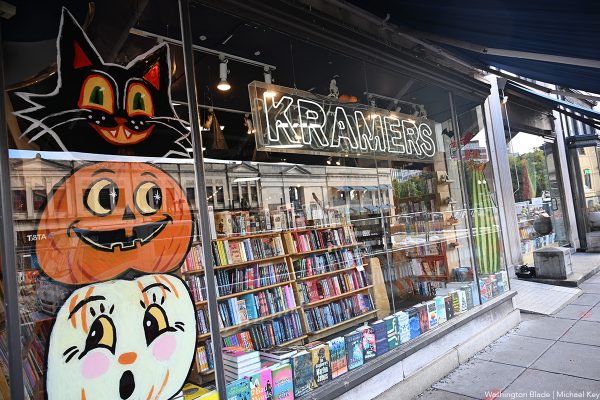
“The biggest challenge has been finding ways to evolve while protecting what makes Kramers unique. The bookstore landscape has changed dramatically, and the restaurant business has become increasingly competitive, with rising costs across the board,” he says. Kramers remains relevant by meeting customers where they are: selling a selection of “banned books,” hosting weekly book clubs and trivia nights, alongside poetry readings, writing workshops, and author talks. It even stays open late for special midnight-release parties, and now offers bookstore memberships for especially eager readers.
Kramers has endured because it’s more than the sum of its parts. Reflecting the diversity of the neighborhood, the curated books selection, and the creation of safe spaces for all kinds of readers, Kramers looks forward, Salis says, “to remain a cultural hub for D.C. for the next 50 years and beyond. We’re excited about continuing to grow and evolve while preserving the spirit that has made Kramers special for generations.”
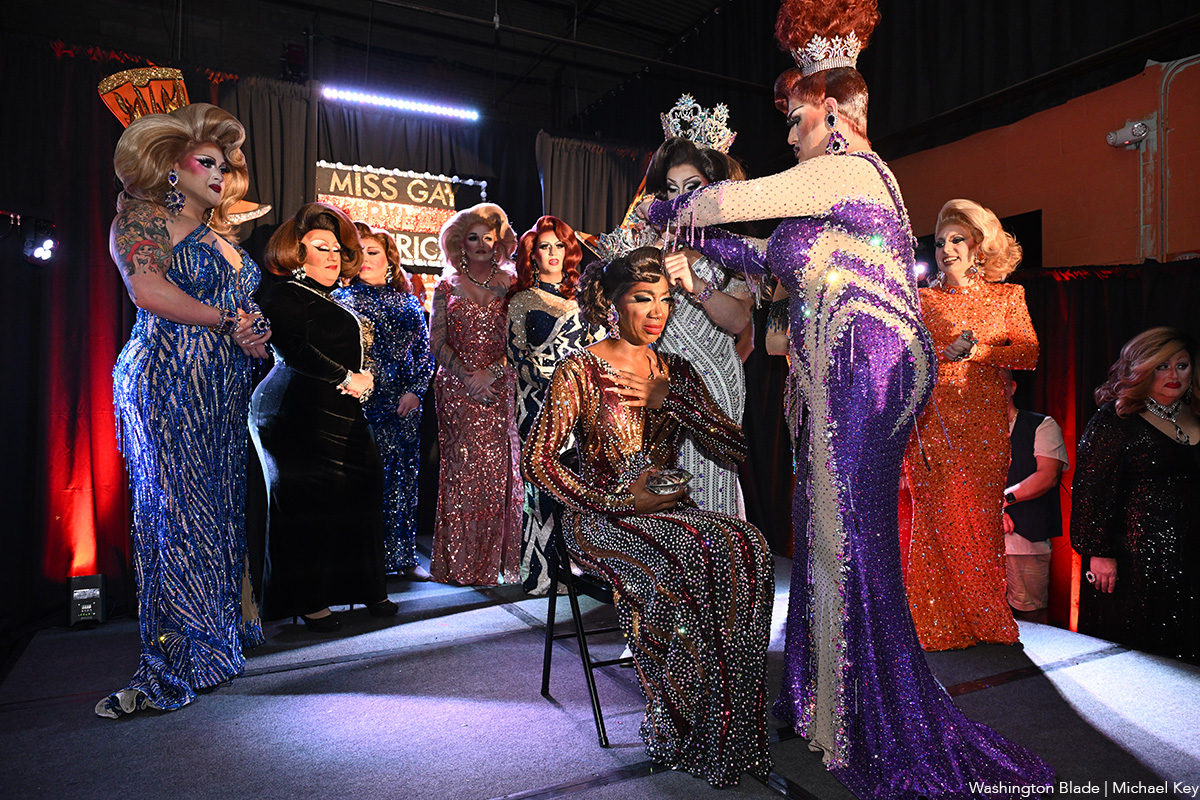
The 2026 Miss Gay Maryland America pageant was held at Hub City Brewery in Hagerstown, Md. on Saturday, Oct. 10. Jalah Nicole was crowned the winner, and Maria Posa was named first alternate. Both competitors qualify for the Miss Gay America pageant in Atlanta in January.
(Washington Blade photos by Michael Key)


Arts & Entertainment
Horror genre has evolved into space to explore queer identity
Forbidden love among topics explored

Spooky season is here, making it a fantastic time to talk about queerness and horror. More precisely, it’s a chance to explore how the horror genre emerged and transformed our perspective on queer identity.
Horror is far more political than most people realize.
Personally, if sci-fi was the genre that helped me understand what it feels like to be different, it was horror that truly allowed me to explore queer relationships and queer rage.
Let’s dive into how horror as a book genre has evolved — moving from portraying queer and transgender identities as monstrous threats to becoming a space where queer people can process our own fears, rage, sexuality, and trauma: from the deeply queer undercurrents of vampire fiction to the liberating “monstrosity” of trans rage.
The ‘monstrosity’ of transness
It’s 2026, so let’s begin with the elephant in the room — or rather, the biggest conservative scapegoat in our community (thanks for actual political monsters). But trigger warning: trauma crawls to the surface like a monster breaking through.
Imagine two scenes:
Fifteen-year-old me, a trans teenager who didn’t yet know they were trans, was reading Thomas Harris’s “The Silence of the Lambs” (1988) for the first time (yes, for me it was first the book, then the movie.) I “encountered” Buffalo Bill, a serial killer who used human skin to make a female costume because he wanted to be a woman. How did I feel? Cringed out, humiliated, and even more determined to hide. And I wasn’t yet permitted myself to think that I’m trans, but I felt terrible without knowing why. It was one more message from mass culture: if you think you belong to a gender different from the one assigned to you at birth, you are a “psycho.” The intersection of ableism and transphobia is striking in stories like this. People with mental illnesses, who in real life are much more often victims than aggressors, are portrayed as dangerous to society, while transness is presented as a mental illness.
Now imagine an adult me, a couple of years after coming out as trans, reading Andrew Joseph White’s young adult horror novel “Hell Follows with Us” (2022). It portrayed actual monsters and a trans boy, Benji, turned into a monster by his cultist family. I felt joy and sympathy for Benji, who stood up against the apocalyptic cult that destroyed humanity, despite his parents raising him to destroy what was left of the human race. His trans rage and rebellion felt justified, and the main character never felt like a pathetic freak.
This is the main difference between classical portrayals of trans people in horror and the changes made by trans authors and creators reclaiming the genre.
When Harris wrote “The Silence of the Lambs” and Jonathan Demme directed the movie (1991), the story made it clear that Buffalo Bill was not a “real” trans person and that real trans people were harmless. But this raises an important question: how can we decide who is a “real” trans person and who isn’t if someone’s gender identity differs from the one assigned to them at birth? The trope of an aggressive, perverse person who “wants to be a woman” has existed throughout modern fiction, with the “Psycho” (1960) movie being another famous example, that stigmatizes cross-dressing and gender non-conformity and, by association, trans women.
Aggressive trans characters and trans characters in serial-killer fiction have every right to exist. White’s young adult horror novel “You’re No Better” (2026), which is coming out this October, features a trans autistic boy trying to prove that he is nothing like his famous serial-killer father. There is also the transgender novel “Manhunt” (2022), featuring two trans women, Beth and Fran, who survive by hunting men transformed into monsters.
Honestly, I’m currently querying a vampire novel with a trans teenager who runs from his transphobic MAGA family and has literally become a monster, so it would be hypocritical of me to object to controversial or monstrous trans characters. They can be violent — but not because they are trans. They can be driven to become monsters by society, but not because of their supposed “perversion.”
Trans horror written by trans and trans-friendly authors can help process rage and alienation. Many trans horror authors reclaim the label of “monstrosity” without turning their characters into caricatures, perverted villains, or pathetic creatures, as often happened in more classical, cis-hetero normative horror.
Queer romance and forbidden love
For me, “The Vampire Chronicles” by Anne Rice was my first introduction to non-judgmental, queer-centered fiction as a teenager. As Rice famously observed, all her vampires are bisexual, and it was remarkably brave to publish books in the 1970s and 1980s where queer families, desire, and drama were simply part of the plot without any silly sensationalism. The 1994 film adaptation of “Interview with the Vampire” was the movie through which many people I knew who weren’t into queer stories first saw these dynamics onscreen. And the new AMC’s “Interview with the Vampire” (2022-current) TV series is, in my opinion, one of the best representations of messy queer relationships between traumatized people, addressing family trauma and the intersection of race and queerness. I recommend it even more than “reality-based” shows such as “Heated Rivalry” or “Queer as Folk.”
Gothic literature has always had a queer undercurrent. From Lord Byron’s homoerotic image of the undead to the lesbian desire of “Carmilla” and the obsessive relationships surrounding “Dracula” (book published in 1897), vampires have long been associated with forbidden desire, sexuality, and relationships outside social norms. “Carmilla,” published in 1872 by Joseph Sheridan Le Fanu, still resonates with the lesbian community today. “Carmilla” is unapologetically queer, declaring romantic passion for the human woman Laura without hiding her desires. Of course, “Carmilla” is literally a monster — but how else could an author write a forbidden queer love story in 1872?
New retellings of “Dracula” and “Carmilla” have become even more increasingly queer. Kat Dunn’s “The Hungerstone” (2025) is a sapphic story about feminine agency and the relationship between Carmilla and Lenore, a bisexual British woman in Industrial-era Sheffield, framed around sapphic emancipation and forbidden love. “Dracula” has also inspired plenty of retellings, most notably S. T. Gibson’s “A Dowry of Blood” (2021) — an explicitly polyamorous, bisexual retelling told from the perspective of one of his brides. It explores abuse and the importance of breaking codependency in queer relationships — a topic underrepresented in more “serious” fiction.
Vampires have also become a cross-cultural way to speak about queerness. For example, Dawn Chen’s “A Vampire in Beijing” that will be published in 2027, offers a sapphic story about the modern Chinese queer community and its unique struggles.
Together against the monsters
Another major trope in queer horror is queer people, especially queer youth, fighting monsters together. Those monsters may be supernatural, as in “The Dark We Know” (2024) by Wen-Yi Lee or “This Raging Sea” (2025) by De Elizabeth, where groups of bisexual, queer kids fight side-by-side with an old evil. Ultimately, these external threats represent a conservative society, oppressive stereotypes, and real-world mental health struggles.
Although horror historically mostly exploited queerness for sensationalism — harming real-world queer people in the process — today it has transformed into one of the most effective spaces to explore queer identity and trauma in our own language.

Kramers celebrates 50 years as a cultural hub of D.C.

The UMD student reporter who dared to record Andy Harris — and kept recording

Pride In Dallas was a weekend of unabashed joy for Texas’s queer community

Forget RFK Jr. — it’s time to get vaccinated

The next chapter of Black and queer leadership

Essential queer horror classics for Halloween

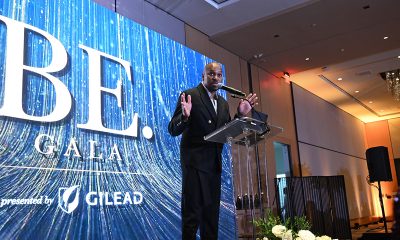
Center for Black Equity honors leaders, activists at BE. Gala

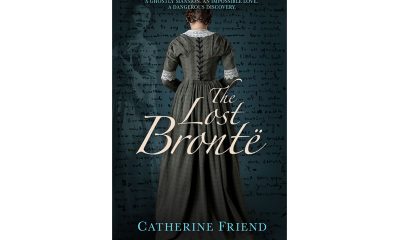
In ‘The Lost Brontë,’ a complicated lie can lead to danger

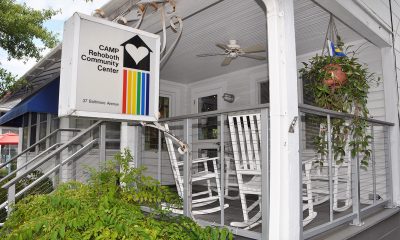
CAMP Rehoboth Block Party returns Oct. 18