Local
Blue Moon owners to wed
Rehoboth’s Tim Ragan and Randy Haney met in 1979
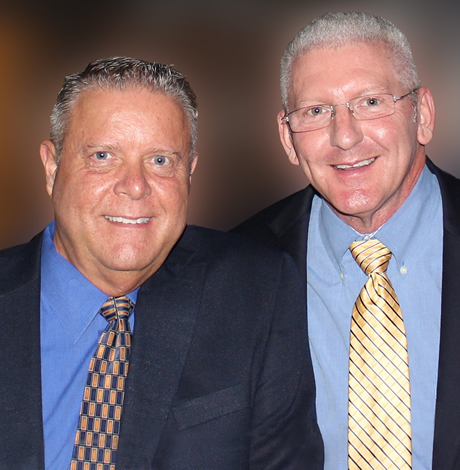
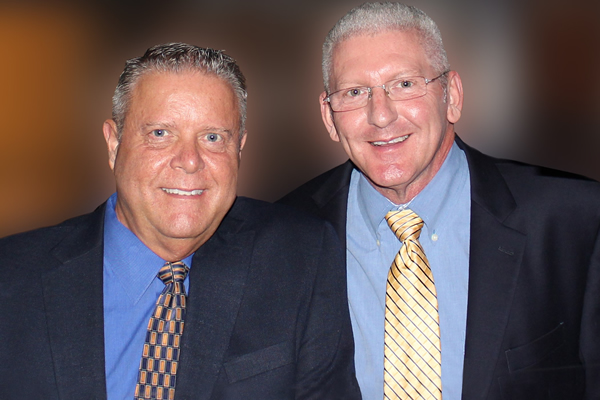
Tim Ragan and Randy Haney, co-owners of the Blue Moon in Rehoboth Beach, will wed on Saturday. (Photo courtesy of the couple)
Tim Ragan and Randy Haney, co-owners of the popular Blue Moon restaurant and bar in Rehoboth Beach, Del., are to be married on Saturday, May 9, at the Nassau Valley Vineyards in nearby Lewes.
Bishop V. Gene Robinson, the first openly gay bishop in the Episcopal Church, is to officiate. About 275 guests, including family members and friends, are expected to attend the ceremony and a reception in a banquet hall on the grounds of the vineyard.
Ragan, 59, and Haney, 57, met in 1979 when Ragan worked as an administrator and Haney was a student at Salisbury University in Salisbury, Md., where the two lived.
“We’ve been together ever since,” Ragan said. “So it’s as much a celebration of the past as it is of the future.”
Haney, who received a degree in business administration with a concentration in accounting, began his career in finance for car dealerships in the Salisbury area. Ragan left his job at the college to start a printing business in the same area, and Haney soon became co-owner of that business.
The two began their association with the Blue Moon in the 1980s when Joyce Felton, one of its first owners, retained Ragan and Haney’s printing company to do various projects for the restaurant, including the printing of menus and display advertising.
According to Ragan, he and Haney later joined the staff of the Blue Moon, where they met chef Lion Gardner and his wife Meghan Gardner, who also worked there. Ragan said it was at a time when he and Haney – who had vacationed in the Rehoboth-Lewes area for years – decided they wanted to move to that area and enter into semi-retirement.
But instead of retiring, the two became full-time employees of the Blue Moon, Ragan said.
Around 2008, after he and Haney had become good friends with Lion and Meghan Gardner, the two couples decided to take steps to open their own restaurant.
“We enjoyed working together so much that we were going to open our own business,” Ragan said. “And then Joyce decided she didn’t want to do it anymore and offered to sell it to us.”
As part of their business partnership, Haney serves in the role of comptroller handling the finances and number crunching, a write-up on the Blue Moon’s website says. Ragan, among other things, oversees promotion as well as the booking of the popular entertainers that the Blue Moon has become known for hosting.
Lion Gardner serves as executive chef, with wife Meghan operating the Blue Moon’s bustling catering business, which includes catering for weddings.
Ragan said he and Haney currently live in Lewes in a home they recently had built next to a pond.
“We have four dogs and plenty of room for them to play,” said Ragan, in reflecting on their many years as life partners and business partners. “So for almost our entire time together we have not only worked together but lived together – and stayed together.”
The couple has asked that guests make a contribution to one or each of three charities in lieu of a wedding gift — CAMP Rehoboth, Jusst Soup Ministries, and Delaware Humane Association — through this site: http://www.idofoundation.org/TimAndRandy.




District of Columbia
‘Queer Love’ campaign launched to address domestic violence
D.C. event set for LGBTQ+ Domestic Violence Awareness Day on May 28
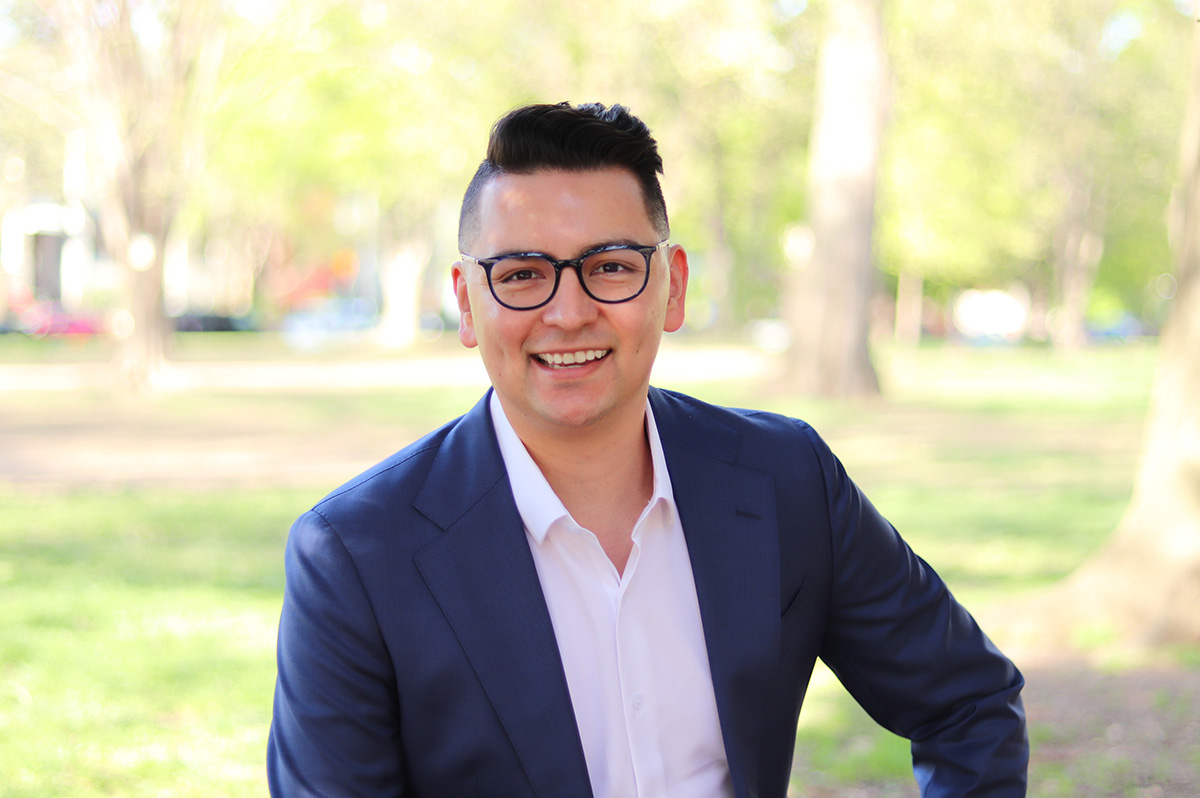
The D.C.-based Wanda Alston Foundation, which provides housing and support services for homeless LGBTQ youth, announced earlier this month that it has joined partner organizations to launch a Queer Love Shouldn’t Hurt campaign aimed at addressing domestic violence within the LGBTQ community.
In a May 18 statement, the Alston Foundation said the campaign involves a public awareness initiative leading up to LGBTQ+ Domestic Violence Awareness Day scheduled for May 28.
“Domestic and family violence in LGBTQ+ communities is real and too often invisible,” Cesar Toledo, the Alston Foundation’s executive director, said in the statement. “As a community, we do not talk about it enough, and that silence can leave survivors feeling isolated and alone,” he said. “We must break that silence.”
He added that culturally competent care for those impacted by domestic violence is available through a newly launched website, queerlove.org, “where people can safely access vital resources, educational toolkits, and support networks they need on their healing journey.”
The website announces one of the project’s first events, a Queer Love Community Social, was scheduled for Thursday, May 28, from 6-8 p.m. at the D.C. LGBTQ+ Community Center at 1827 Wiltberger St., N.W.
“Join us this LGBT+ Domestic Violence Awareness Day for a community social dedicated to visibility and survivor resilience,” the website statement says. “Let’s gather to strengthen our bonds, honor the path to healing, and share free resources,” it says of the May 28 event.
The website also announces a June 1 workshop called Empowering Survivors of LGBTQ+ Intimate Partner Violence, which it says will be presented by Jesse Wedell, an official with the D.C. LGBT+ Counseling Collaborative. The website provides an online form to register for the workshop upon which its location would be disclosed.
It identifies the partner organizations working with the Alston Foundation on the Queer Love Public Awareness Campaign as the LGBT+ Counseling Collaborative, Whitman-Walker Health, the D.C. LGBTQ+ Community Center, and Equality Chamber.
The resources and information provided by the project can be accessed at www.queerlove.org.
District of Columbia
Man accused of threatening to shoot D.C. bar employee after making anti-gay slurs
May 24 incident took place near Black Pride events on U Street

D.C. police on Sunday, May 24, at around 4:20 p.m. arrested a Maryland man for allegedly threatening to shoot an employee while using anti-gay slurs at Ben’s Next Door restaurant and bar at 1211 U St., N.W.
According to a statement released by police and a police incident report, the arrested man, identified as Delonte Fraley, 32, of Accokeek, Md., made the threats after the employee told a bartender not to serve the man alcohol.
“The suspect overheard the employee and threatened to shoot the employee and used homophobic slurs against the employee,” the police statement says. “When the employee left the restaurant for the day, the suspect was standing near the employee’s vehicle,” it says.
“The employee returned to the restaurant and called the police,” the statement continues. “The suspect was apprehended by responding officers,” it says.
The police statement says the arresting officers charged Fraley with Felony Threats (Hate/Bias).
D.C. Superior Court records show prosecutors with the Office of the U.S. Attorney for D.C., which prosecutes D.C. criminal cases, escalated the charge to Threatening to Injure or Kidnap a Person (Bias-Related Hate Crime).
The incident occurred during Memorial Day weekend when thousands of visitors and D.C. area LGBTQ advocates and supporters were attending D.C. Black Pride events held in locations across the city, including Black Pride parties hosted by LGBTQ bars in the U Street entertainment area near Ben’s Next Door.
Among the nearby LGBTQ bars hosting D.C. Black Pride events were Nellie’s Sports Bar and Thurst Lounge. Ben’s Next Door is located next to the popular longtime U Street eatery Ben’s Chili Bowl.
Court records show that Judge Robert R. Rigsby at a May 25 presentment hearing released Fraley on personal recognizance with a stay-away order — the details of which were not publicly disclosed pending a June 4 preliminary hearing.
A more detailed arrest affidavit filed in court by D.C. police says Fraley allegedly confronted the employee at Ben’s Next Door with anti-gay slurs on the day prior to his arrest.
“The complainant told the defendant that because he used homophobic slurs towards himself previously on May 23, 2026, and his hostess, as well as making threats to the complainant and calling him a faggot, he was unable to stay in the establishment,” the affidavit states.
It adds, “The defendant became irate stating, ‘I know where your Tesla is at. See me outside faggot, I will slap your ass’ and ‘I will shoot your ass.’” The affidavit says the complainant confirmed to police the Tesla referred to by Fraley was his vehicle. It says as the victim walked toward his car after getting off work, he saw Fraley standing directly in front of the car.
“The complainant stated he felt unsafe while the defendant was standing in front of his vehicle because he felt the defendant was capable of carrying out those threats,” says the affidavit. It says the victim then decided to return to the restaurant and call police without the defendant having seen him.
“The defendant was placed under arrest for Felony Threats Hate/Bias and was transported to the Third District Station for processing,” the affidavit concludes.
It couldn’t immediately be determined whether the victim identifies as LGBTQ or whether any of the Ben’s Next Door patrons had been involved with D.C. Black Pride.
“Established in 2008, Ben’s Next Door is a family-owned and operated restaurant and bar on U Street, Northwest in Washington, D.C.,” a statement on its website says. “As a Black-owned establishment, it’s our goal to deliver a warm, welcoming, familiar, and communal vibe to all guests,” the statement says.
The Comings & Goings column is about sharing the professional successes of our community. We want to recognize those landing new jobs, new clients for their business, joining boards of organizations and other achievements. Please share your successes with us at [email protected].
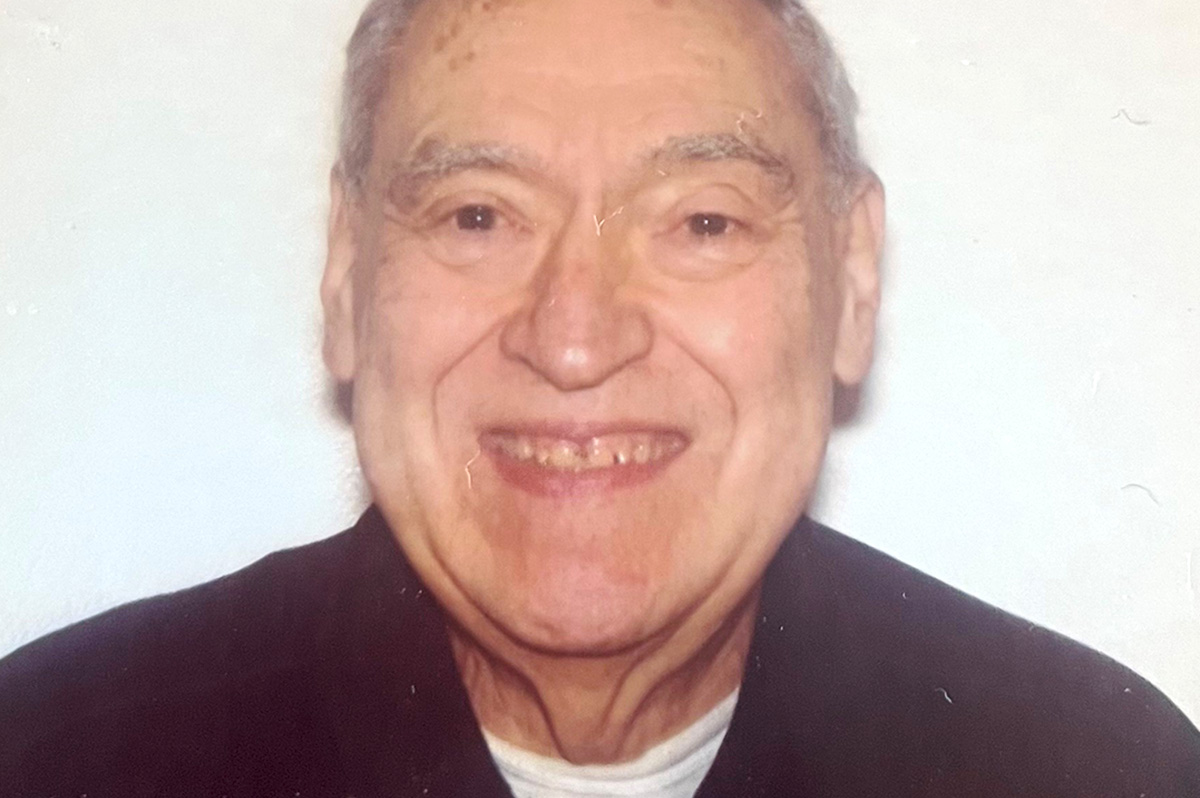
Congratulations to Peter Schott on being honored by Delaware Gov. Matt Meyer on National Honor our LGBTQ Elders Day.
Schott is a prominent LGBTQ advocate and seasoned political strategist who has spent decades advancing civil rights at the national and state levels. Following a distinguished 25-year career as a staff assistant in the U.S. House of Representatives, Schott leveraged his extensive legislative expertise to help organize the National Stonewall Democrats, serving as an influential member of its national board.
After moving to Delaware in 2002, he became a foundational figure in the state’s LGBTQ political landscape, co-founding the Delaware Stonewall PAC, (now Stonewall Delaware) to champion the election of pro-equality candidates. His strategic lobbying and community organizing were instrumental in the successful passage of Delaware’s landmark non-discrimination, civil union, and marriage equality laws. A former member of the State Human Relations Commission, he remains a vital voice for the LGBTQ community in the Mid-Atlantic, continuing to document and drive social progress through his activism and writing. Schott currently serves as vice chair of the Delaware Democratic Pride Caucus, and a board member of Speak Out Against Hate (SOAH). He was a delegate to two Democratic National Conventions.
He earned a bachelor’s degree in Political Science, New York University; and a master’s of Public Administration degree from American University.

‘How to Survive a Plague’ screens June 5

‘Queer Love’ campaign launched to address domestic violence

Ken Paxton wins Texas Republican primary runoff

China’s top court acknowledges anti-LGBTQ discrimination