Local
D.C. Council backs DP ‘termination’ bill
Correcting a legal quirk

A second and final vote on the Domestic Partnership Termination Recognition Amendment Act has been scheduled for the Council’s next legislative session on Dec. 1. (Photo by Andrew Wiseman; courtesy Wikimedia Commons)
The D.C. Council on Tuesday voted unanimously to give preliminary approval to a bill that would allow couples that had domestic partnerships legally registered in another jurisdiction to terminate those partnerships by judicial decree in the District.
The bill, the Domestic Partnership Termination Recognition Amendment Act of 2015, would amend the city’s existing domestic partnership law to correct a “legal quirk” that prevents couples who moved to D.C. from another jurisdiction from terminating their partnerships unless they reestablish residency in the state in which the partnership was originally registered.
According to a legislative report prepared by the Council’s Judiciary Committee, under the existing law couples may only terminate their partnerships using an administrative process at the D.C. Department of Health. The DOH has been in charge of registering and terminating domestic partnerships since the Council first passed the D.C. domestic partnership law in 1992.
Although the DOH has granted terminations of domestic partnerships to couples whose partnerships were registered in other jurisdictions, some of those jurisdictions do not recognize the terminations through an administrative process, saying such a process doesn’t carry the same weight as a judicial decree issued by a judge in a court of law.
The Council report says that since 2002, the DOH has registered 2,592 domestic partnerships and terminated 220.
“Registrations are almost evenly split between opposite-gender and same-gender partnerships,” the report says. “Of late, however, male/female-identified registrations comprise nearly 75 percent of all registrations,” it says, adding that so far in 2015 no partnerships were terminated and only two terminations were recorded in 2014.
LGBT activists have said that domestic partnerships became less popular among same-sex couples in D.C. since the city began legally recognizing same-sex marriage in 2010.
A second and final vote on the Domestic Partnership Termination Recognition Amendment Act has been scheduled for the Council’s next legislative session on Dec. 1.





Maryland
Union leader files assault complaint against gay Md. delegate after fight at early-voting site
Del. Gabriel Acevero, Gino Renne accuse each other of starting confrontation
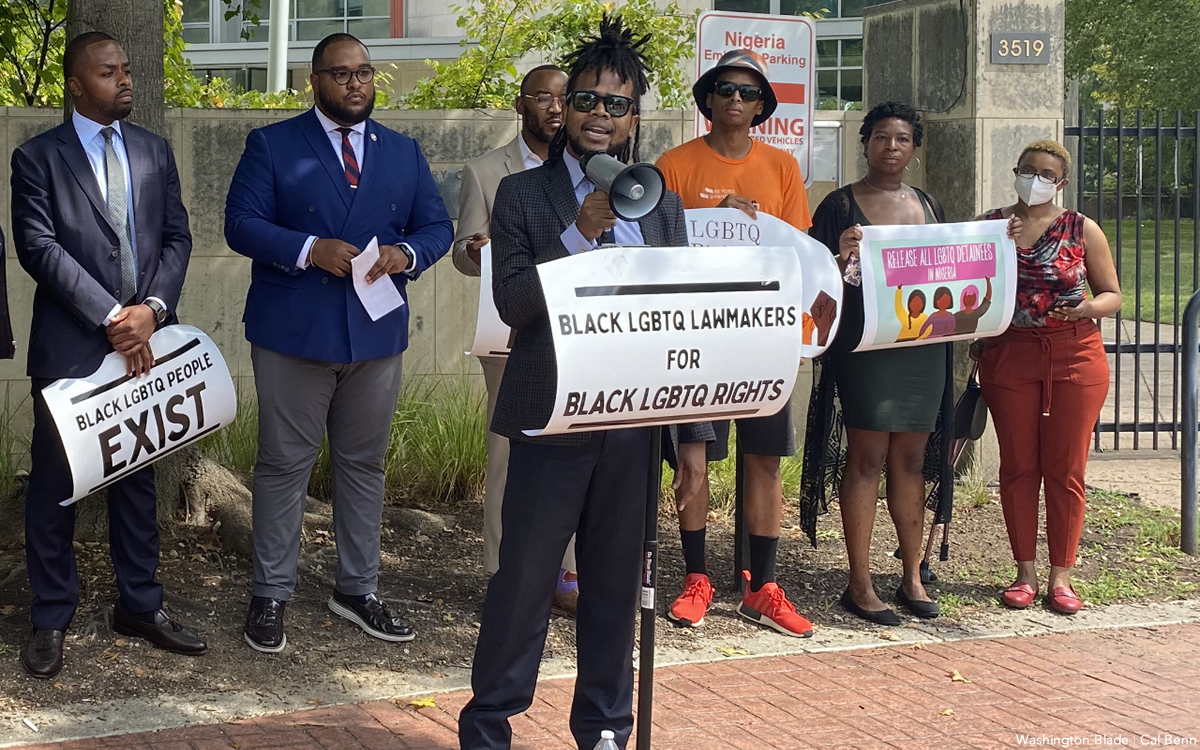
By ANTONIO PLANAS | After a physical confrontation outside an early-voting site Thursday, local union leader Gino Renne filed an assault complaint against Del. Gabriel Acevero, who said he plans to do the same.
Each accuses the other of starting the fight and throwing punches in an incident Thursday at about 6 p.m. at the Bohrer Park Activity Center in Gaithersburg, police said. The park, an early-voting site that day, attracted many candidates and their supporters.
Acevero, 35, is defending his seat representing District 39, which includes Montgomery Village and surrounding areas. The primary is on Tuesday.
The rest of this article can be read on the Baltimore Banner’s website.
Delaware
Delaware guv signs bill to protect children born using assisted reproduction
‘Modernizing laws to better reflect and protect today’s families’

Delaware Gov. Matt Meyer on June 9 signed SB 250, a bill that helps fill the gaps in the state’s parentage law.
SB 250 amends the 2017 Uniform Parentage Act to broaden the state’s legal framework for surrogacy. Prior to SB 250, some children, particularly those born through assisted reproduction or surrogacy, did not have a clear path to a legally recognized relationship with their parents. This created issues around parental decision-making and children’s access to health insurance.
According to the bill’s prime sponsor, Sen. Marie Pinkney, SB 250 ensures that every child in the state has a secure legal relationship with their parents. She said the bill modernizes outdated statutes and strengthens protections for children born through assisted reproduction or surrogacy.
These issues are more likely to affect queer families that rely on assisted reproduction methods to have children. Parentage laws are critical to the well-being of children and the ability of parents to care for them without unnecessary legal barriers.
“Today, we celebrate a victory for all children and families in Delaware. By modernizing its laws to better reflect and protect today’s families, Delaware has set an example for states across the country,” said Jordan Wilson, executive director of COLAGE.
COLAGE is a nonprofit organization dedicated to supporting and empowering youth in LGBTQ+ families through activism and community.
“We are grateful to the many families and advocates who worked tirelessly to advance this legislation, from the bill’s drafters to the COLAGErs who shared their lived experiences directly with lawmakers,” said Wilson.
“Delaware is strongest when the law respects and protects all families,” said Mark Purpura, board member of Equality Delaware, a statewide organization focused on promoting and ensuring dignity, safety, and equality for all LGBTQ+ Delawareans.
The bill’s sponsors and co-sponsors include Sen. Pinkney, Rep. Krista Griffith, Sens. Russ Huxtable, Raymond Seigfried, and David Sokola; and Reps. Alonna Berry, Mara Gorman, Kerri Harris, Eric Morrison, DeShanna Neal, Sophie Phillips, and Cyndie Romer.
Rehoboth Beach
Rehoboth’s ‘Poodle Beach’ to be honored with historical marker
Delaware Public Archives to hold ceremony June 27
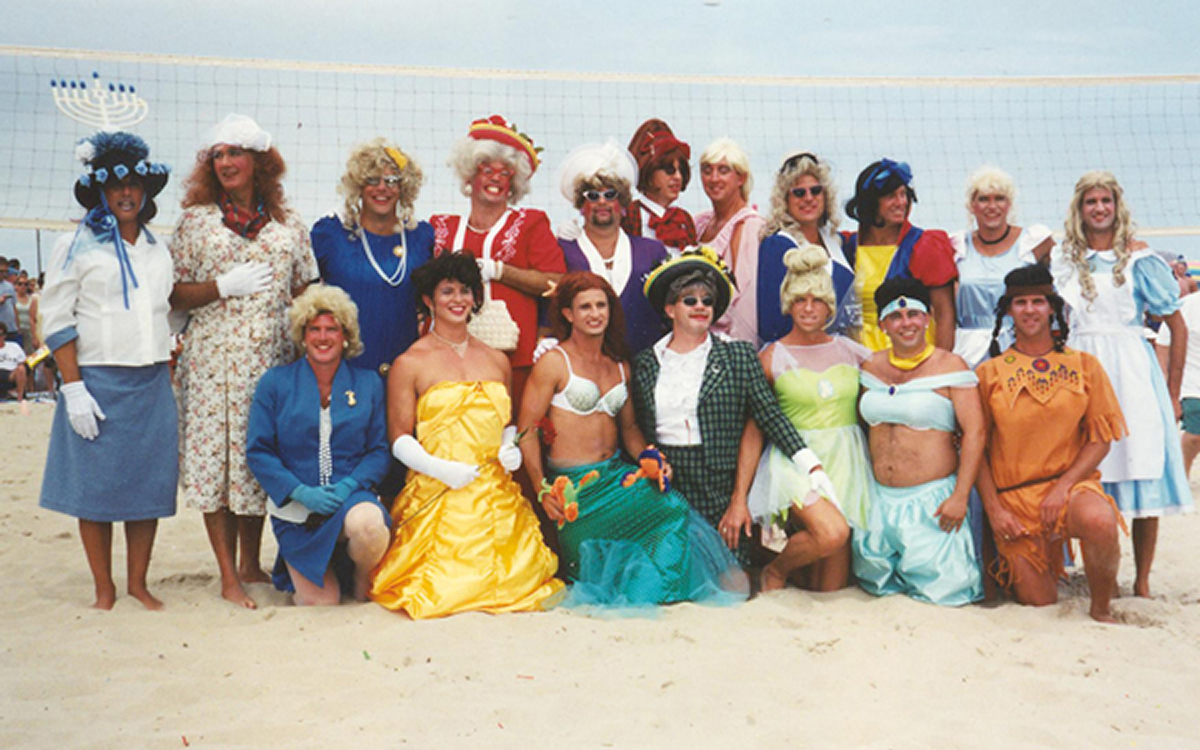
The Delaware Public Archives is set to unveil a new State of Delaware Historical Marker recognizing Rehoboth’s Poodle Beach Saturday, June 27, at 9 a.m. The unveiling will take place at the corner of Prospect Street and the South Boardwalk in Rehoboth Beach, Del.
The unveiling ceremony is free and open to the public and will include remarks from members of the community, government officials, and representatives from the Delaware Public Archives.
Located at the southern end of the boardwalk near Queen Street, Poodle Beach is one of the most famous sections of Rehoboth Beach, having served as a gathering place for the LGBTQ community for decades.
The Delaware Public Archives said that, “The marker recognizes the site’s longstanding role in the social and cultural history of both Rehoboth Beach and the State of Delaware.”
The petition to have Poodle Beach recognized with a historical marker was started by a group of Rehoboth Beach residents in June 2020 and was officially approved in December 2020.
Although the origins of where Poodle Beach got its name are unknown, its history can be traced back to du Pont heiress and well-known lesbian Louisa Carpenter. Carpenter and her LGBTQ group of friends would travel to ‘Carpenter Beach’ toward Dewey Beach in the19 30s and ‘40s.
Over time, the beach grew in popularity and began to be used predominantly by gay men in the following decades. It wasn’t until the ‘80s when the beach spread back toward the boardwalk as people stopped making the journey to Carpenter beach.
Poodle Beach was initially called “Lazy Gay Beach” because gay men got tired of walking so far from the boardwalk to get to Carpenter Beach.
There are multiple theories that explain how the name ‘Poodle Beach’ came to be. One of the most popular is the ‘Two cousin theory’ where it is rumored that a pair of cousins would drive up from Maryland and bring their poodle dogs onto the beach.
Poodle was also the site of the popular Labor Day weekend drag volleyball games that were started in 1988 and ended with COVID in 2020.

US no longer refuge for LGBTQ refugees

Cool convertibles

PHOTOS: 2026 Capital Pride Parade

Union leader files assault complaint against gay Md. delegate after fight at early-voting site

‘Feeling Afraid’ explores life of a neurotic stand-up comic

War, geopolitical tensions with U.S. overshadow Pride month events

Lewis George holds strong lead over McDuffie in D.C. mayor’s race

Netherlands to ban conversion therapy

40 defining moments in LGBTQ pop culture history

Queer candidates, allies on the ballot in Md. primary
-

 World4 days ago
War, geopolitical tensions with U.S. overshadow Pride month events
-
District of Columbia4 days ago
Lewis George holds strong lead over McDuffie in D.C. mayor’s race
-
Netherlands4 days ago
Netherlands to ban conversion therapy
-
America 2503 days ago
40 defining moments in LGBTQ pop culture history