News
White House: Court remand of Gavin Grimm case a ‘routine practice’
Justices sent trans student case to Fourth Circuit


(Washington Blade photo by Michael Key)
A White House spokesperson Monday called the U.S. Supreme Court’s decision to scrap consideration of a case that would have nationwide implications for transgender rights a “routine practice.”
Kelly Love, a White House spokesperson, made the remarks in an email response to a Washington Blade inquiry on whether President Trump supports the Supreme Court’s decision to nix consideration of the case filed by Gavin Grimm, a transgender student seeking to use the boys’ restroom consistent with his gender identity, and remand it to the U.S. Fourth Circuit Court of Appeals.
“The Supreme Court’s remand today is a routine practice in dealing with cases in which circumstances have changed while a case is pending,” Love said.
Love referred to the remand as a “routine practice” after the Blade expressed dissatisfaction with an earlier response in which she stated the facts of the Supreme Court’s action without characterizing the administration’s view.
“The Supreme Court was due to hear a case this month in which a school district was sued by a transgender student for access to bathrooms and locker rooms corresponding to the student’s gender identity,” Love said. “Now that the Departments of Justice and Education have withdrawn their guidance on that issue, the Supreme Court has sent the case back to the lower court to interpret the law without the overlay of the guidance.”
The Supreme Court initially agreed to hear the case last year, but reversed course Monday and remanded the case as a result of the Trump administration revoking Obama administration guidance assuring transgender students access to the restroom consistent with their gender identity.
That guidance formed the basis of the Fourth Circuit decision in favor of Grimm and one of two questions the Supreme Court agreed to consider after his high school in Gloucester County, Va., petitioned justices to review the ruling.
Joshua Block, who represents Grimm as a senior attorney with the American Civil Liberties Union, said in a conference call earlier in the day even though the administration has withdrawn the guidance, the prohibition on sex discrimination in Title IX of the Education Amendments of 1972 still protects transgender students regardless of what the White House says.
“Trump can’t roll back what the statutes say; he can roll back whether or not he’s actually going to be enforcing the way he should be,” Block said, “I think that the previous administration was making sure through guidance and regulations to be enforcing those statutes consistently with how lower courts interpreted them to provide equal education to everyone regardless of sex, including trans students. I think that unfortunately, in this administration, it looks like we’re on our own and we’ll have to be protecting ourselves in court.”




Florida
Gay Fla. Democrat Elijah Manley sees opportunity in Trump’s second term
State’s 20th Congressional District’s includes Broward, Palm Beach Counties
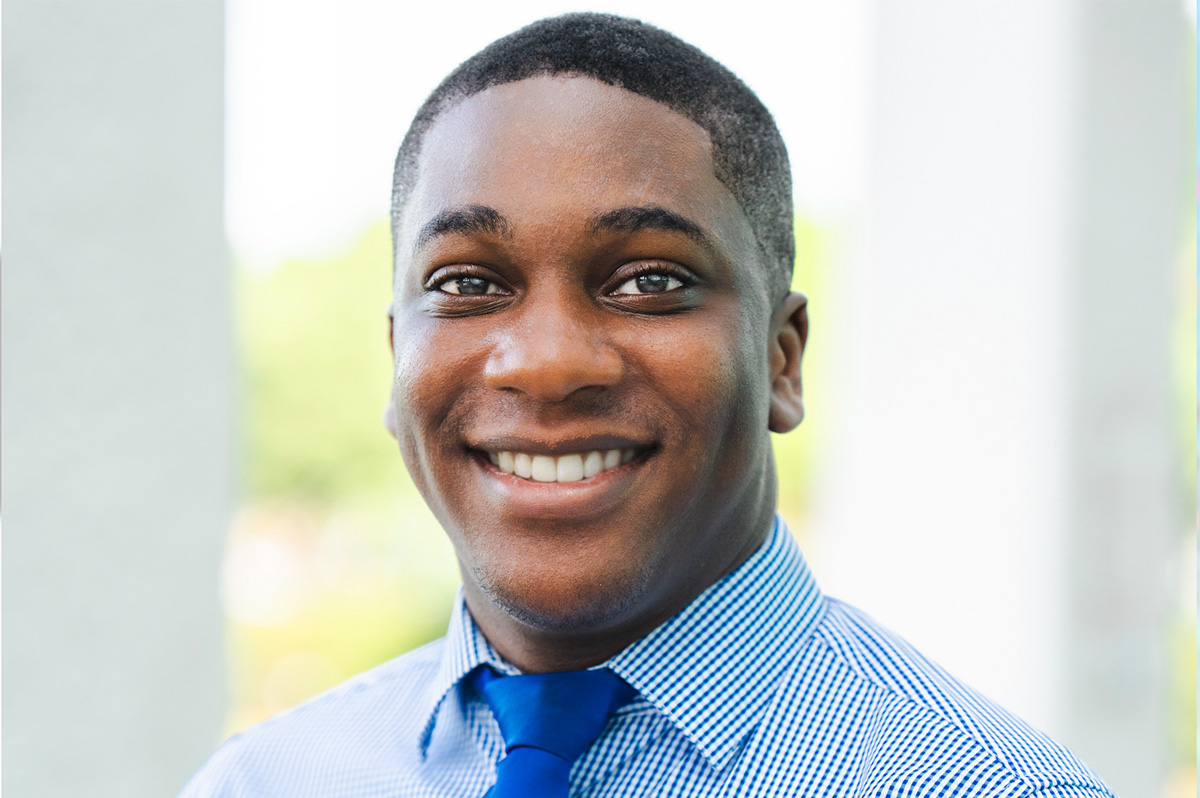
Just over two and a half miles from President Donald Trump’s primary residence lies one of Florida’s most reliably Democratic congressional districts. There, a 27-year-old progressive is mounting a campaign centered on resisting what he calls the Trump-Vance administration’s attacks on civil rights, immigrants, and LGBTQ Americans.
Elijah Manley, an openly gay Democrat, sat down with the Washington Blade to discuss why he is running for Florida’s 20th Congressional District, why he believes this moment calls for a new generation of leadership, and what he hopes to accomplish if elected to Congress.
Born and raised in Fort Lauderdale’s historic Sistrunk neighborhood — the city’s oldest African American community — Manley was raised by a single mother who struggled to make ends meet. His family experienced housing insecurity and, at one point, homelessness, experiences he says continue to shape both his politics and his policy priorities.
For Manley, those experiences are precisely what he believes Congress is missing.
“I think now the country is in need of somebody like me, with my story, my lived experience, the struggles I’ve been through in my life. We’re going through a really dark time in the country with the Trump administration coming for our civil rights and an economy that is not working for everybody. In a time where we have MAGA fascism, we need progressive leadership, and we need people who are really going to do the work of fighting back and resisting and obstructing Donald Trump and MAGA Republicans’ agenda in Congress.”
Manley said his campaign is also about ensuring people from marginalized communities — those without wealth, political connections, or institutional backing — have a voice in Congress.
“I think my story sets me aside from everyone else. I’m the only one in this race who has a story to tell voters that lines up with their lived experiences and their struggles. Growing up in poverty and experiencing homelessness was instrumental in developing my worldview and how I fight for people, and I think that’s something that’s absent on Capitol Hill.”
He argues that lived experience offers a perspective often missing on Capitol Hill.
“There are too many lawyers and people coming from professional and political backgrounds. Then you have somebody like me who is rooted in the story of this district. That’s what sets me apart from everyone else in this race.”
According to his campaign website, Manley’s interest in public service dates back to childhood. He cites the election of President Barack Obama as a defining moment that inspired him to pursue politics.
“He was inspired by Barack Obama’s historic election, igniting his passion for public service. He began writing to elected officials, speaking at school board and city council meetings, and advocating for issues affecting his community,” the website states. It goes on to describe his involvement in criminal justice and law magnet programs, Navy JROTC, and hundreds of hours of volunteer service while in high school.
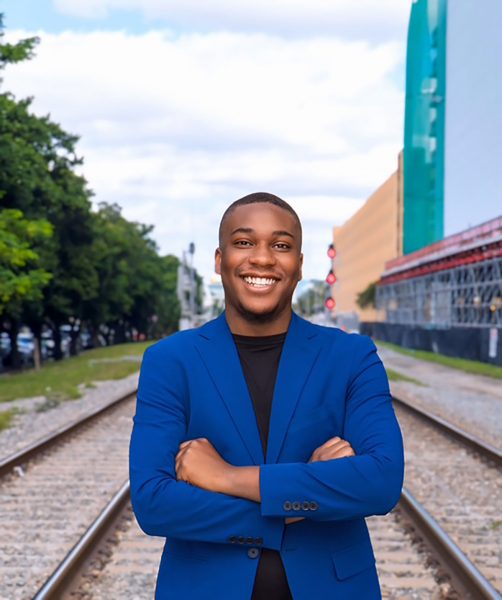
As an openly gay candidate running during Trump’s second administration, Manley said Congress must take a far more aggressive approach to protecting LGBTQ Americans, particularly as Republican-led states continue passing restrictions targeting transgender people.
“I think we need to bring the hammer down on some of these states. I’m not one of these states’ rights people — Congress has the power to preempt laws that states pass through the Supremacy Clause. There’s never been a more important time in our history when we’re seeing fascism, we’re seeing an administration out of control, and we need Congress to act.”
His campaign has also drawn criticism from both Republicans and establishment Democrats for his positions on Gaza, immigration, and his call to abolish U.S. Immigration and Customs Enforcement.
Manley said abolishing ICE does not mean eliminating immigration enforcement altogether.
“I’m not saying there should be no immigration laws. We want laws around immigration, but we want dignity. We don’t need a hypermilitarized, paramilitary group chasing people through the streets, terrorizing communities, churches, schools, and families.”
His personal experiences also inform his healthcare agenda.
“When we talk about healthcare, my experience growing up on Medicaid is seeing the failure of the government to expand Medicaid here in Florida, and now we’re seeing cuts from the Trump administration. I’m not just looking at statistics or numbers on paper — this is based on lived experience. I know how the people in this district are going to be hurt by these policies because I’ve lived it.”
California Democratic Congressman Ro Khanna, who has generated early buzz as a potential 2028 presidential contender for his “progressive capitalist” approach to governing, has endorsed Manley’s campaign, giving the first-time congressional candidate one of his highest-profile endorsements.
Manley faces six other Democrats in the primary, including U.S. Rep. Debbie Wasserman Schultz and former U.S. Rep. Sheila Cherfilus-McCormick, along with four Republican candidates in the general election field. Cherfilus-McCormick resigned from Congress ahead of a potential expulsion and is running again while facing federal criminal charges.
Despite running as the youngest candidate in the field, Manley said he hopes voters leave the race remembering one thing above all else.
“I want people to remember bold and authentic leadership. I want them to know I’m running because I’ve been through what people are going through right now — and it’s not that I’ve been through it, I’m actually still going through it. We need bold people who are going to fight for everybody and stand up for what’s right, and that’s what I hope voters see when they go to the polls.”
Baltimore
Ron Singer, owner of popular Mount Vernon gay bar Leon’s, dies
66-year-old’s funeral to take place Friday
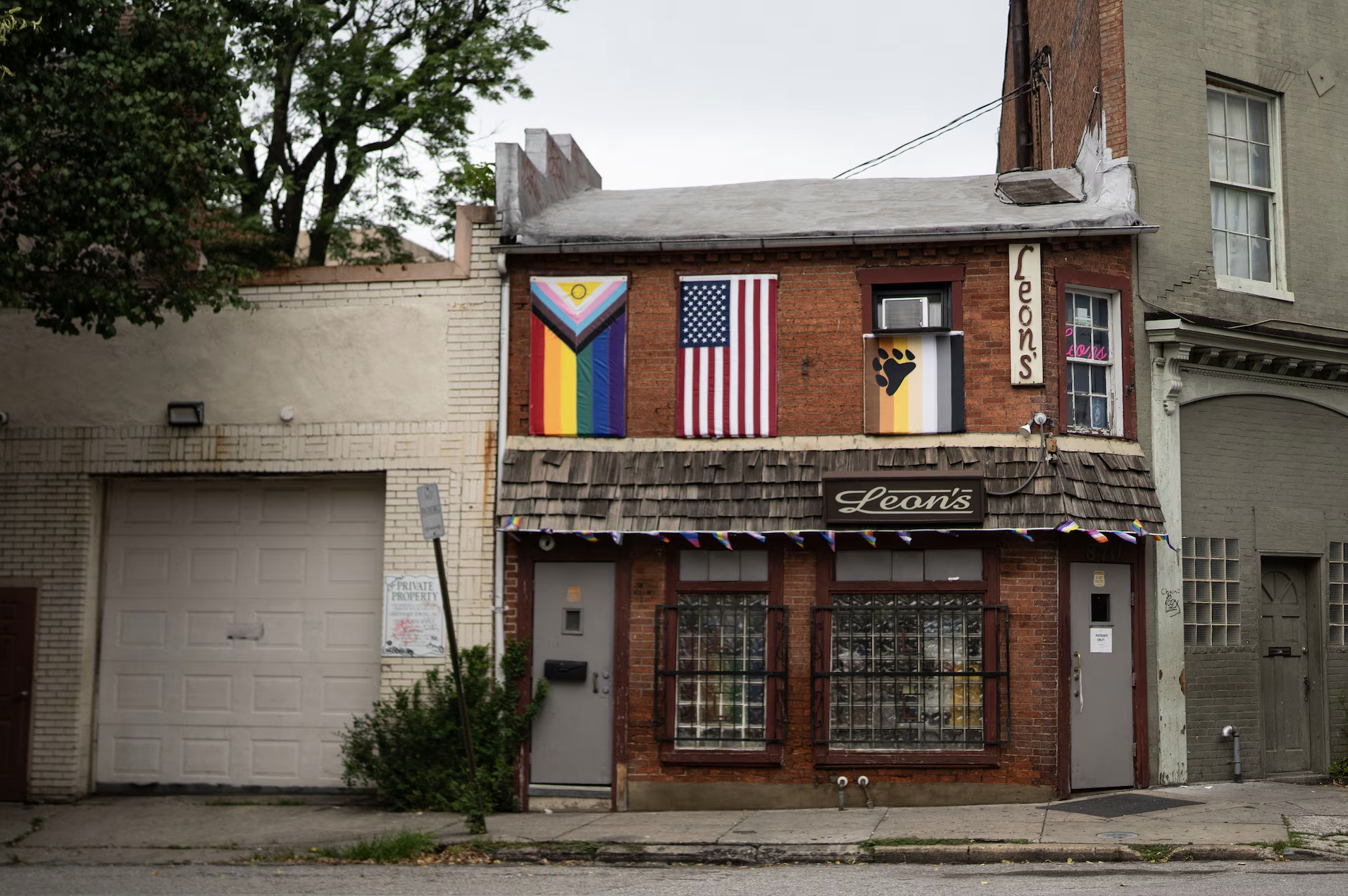
By CAYLA HARRIS | Ron Singer, the owner of Baltimore’s popular gay bar Leon’s Backroom, died Tuesday, the venue announced in a social media post. He was 66.
“For more than 20 years, Ron made Leon’s a place so many people were proud to call home,” the post reads. “He will be deeply missed.”
The Mount Vernon bar, typically open from 4 p.m. to 2 a.m. daily, is still open Thursday, but doors will close at midnight so staff can attend his funeral Friday morning. Services are scheduled to begin at 9:30 a.m. at Sol Levinson’s Chapel.
The rest of this article can be read on the Baltimore Banner’s website.
Egypt
Egyptian authorities refuse to allow gay cruise to dock in country
Scarlet Lady earlier this week blocked from visiting Turkey
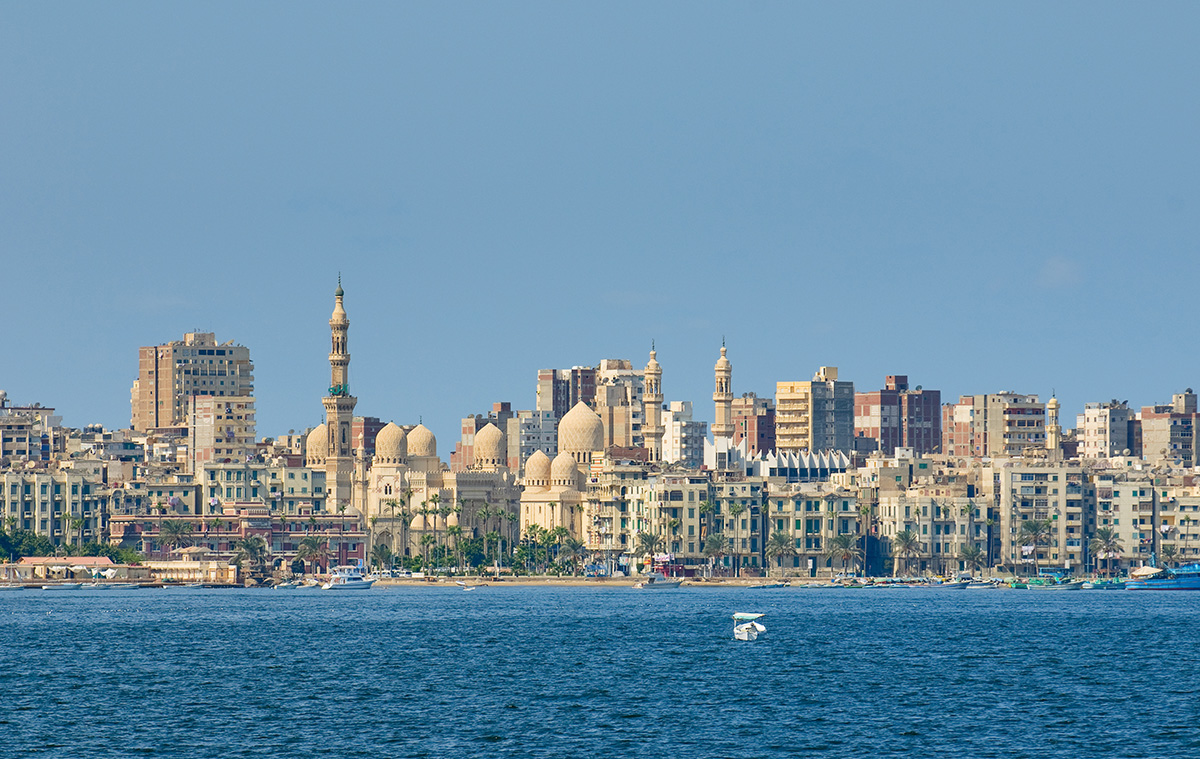
Egyptian authorities have refused to allow a gay cruise to dock in the country.
The Scarlet Lady, a Virgin Voyages ship that Atlantis Events chartered, was to have docked in Alexandria, a port city on the Mediterranean Sea. The Washington Blade obtained a letter that Atlantis Events President Rich Campbell sent to passengers on Thursday, hours before the cruise was to have arrived.
“Early this morning, we were informed that Scarlet Lady has been denied entry into Egyptian waters and, as a result, will no longer be able to call in Alexandria today,” he wrote.
“I know how much this visit meant to so many of you,” added Campbell. “We successfully sailed a similar itinerary last year, so we were surprised by this unfortunate decision.”
Campbell noted “both the Atlantis and Virgin Voyages teams worked tirelessly to make this call in Alexandria a possibility.”
“This news came as a surprise to all of us, and we’re just as disappointed as you are,” he said.
The 10-day cruise left Athens on July 5. It is scheduled to end in Trieste, Italy, on July 15.
The ship had been scheduled to dock in Kusadasi, a Turkish resort town on the Aegean Sea, and Istanbul earlier this week. Turkish authorities refused to allow it in the country.
Former Tempe, Ariz., Mayor Neil Giuliano, who is an LGBTQ+ Victory Institute board member, is among those on the cruise.
“Just a few hours before arriving in Alexandria, Egypt — a city founded by and named for one of the ancient world’s best-known homosexuals — government authorities rescinded permission for our ship of 2,000 gay men to enter Egypt,” wrote Steve May, who is also on the ship, on Thursday in a Facebook post.
Alexander the Great founded Alexandria in 331 B.C.
“As with Turkey, we have been sent away not because of what we did, but because of who we said we are,” said May. “‘I am what I am’ is too much liberty for some to bear. So it was in the United States as well not long ago, where even I ended up as a convicted homosexual after a military trial in 2001 for saying ‘I am gay.’ This is just a reminder that for all the progress we have made, our freedom is never secure — for any of us, regardless of who or how we love. Back to Europe!”
Discrimination and persecution based on sexual orientation and gender identity is commonplace in Egypt. The Egyptian Football Association, along with the Football Federation Islamic Republic of Iran, objected to playing in the World Cup’s “Pride Match” that took place in Seattle on June 26.

Gay librarian to discuss new novel at Green Lantern

Calendar: July 10-16

Gay Fla. Democrat Elijah Manley sees opportunity in Trump’s second term

Ron Singer, owner of popular Mount Vernon gay bar Leon’s, dies

Egyptian authorities refuse to allow gay cruise to dock in country

‘My Favorite Sociopath’ debuts at Shepherdstown’s CATF

Under-the-radar Delaware beach towns smart buyers are targeting

In Trump’s divided America, Michael Weinstein’s AHF responds

Turkish authorities refuse to allow gay cruise to dock in country

When a church fears the rainbow
-

 Theater5 days ago
‘My Favorite Sociopath’ debuts at Shepherdstown’s CATF
-
Real Estate5 days ago
Under-the-radar Delaware beach towns smart buyers are targeting
-
Politics4 days ago
In Trump’s divided America, Michael Weinstein’s AHF responds
-
Turkey4 days ago
Turkish authorities refuse to allow gay cruise to dock in country