Arts & Entertainment
Gay teen claims Netflix outed him to dad
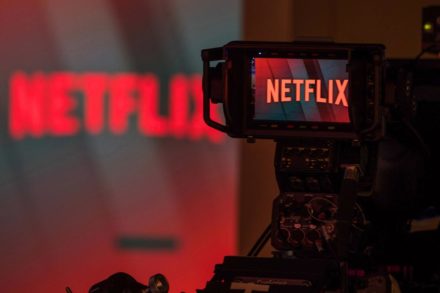
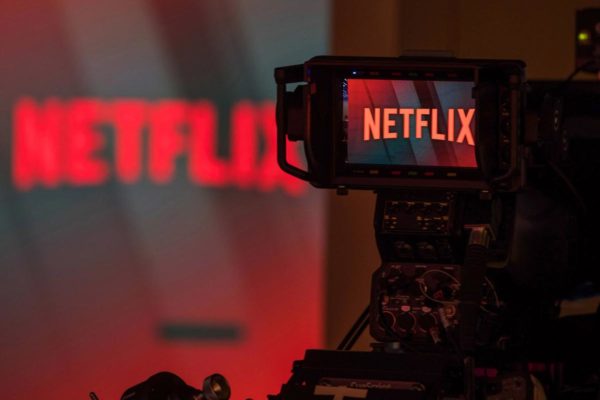
A 15-year-old Reddit user has told fellow users on the platform that he thinks Netflix outed him to his father.
The poster said it happened when he and his dad were looking for a movie to watch together and he volunteered to use his own Netflix account. It was a decision he quickly regretted.
He wrote, “The first thing on Continue watching was ‘Elite’ [a Spanish teen drama prominently featuring a gay romance]. If you know Netflix, they like to switch up the little posters about once every minute, and this time, they decided to put the one of the gay couple holding each other’s faces. I nearly got put in cardiac arrest.”
“My father said something on the lines of ‘What’s that? Go back,’” the Reddit poster said. “I don’t know if that’s what he was referring to or he found something he wanted to watch. Either way, I low-key pretended that I didn’t know what he was talking about and kept looking.”
The Redditor went on to add that his reaction may have made it suspicious, but also stressed that his dad was not exactly a homophobe. “He’s very open-minded,” he wrote, “and I wouldn’t call him an ally, but he’s pretty close. I walked in the house and saw him and his (girlfriend?) watching “Queer Eye,” and any time the topic comes up, he’s always supportive.”
“Regardless, I was still scared sh*tless,” the teen said.
From the responses in the comment section, it appears that other users have experienced similar embarrassing moments.
“I know how you feel,” one Redditor wrote. “When I showed my dad Netflix, he scrolled down to gay movies I used to watch. He didn’t say anything, but either he doesn’t know yet or he doesn’t want to talk about it.”
Another user wrote, “I legit delete my Netflix account every other week, so my parents won’t see that kind of program on my account.”
Other commenters said that the original poster might be overreacting, since LGBT content is now common on Netflix, even speculating that the teen’s dad may have been using the revelation of “Elite” on his son’s watchlist as a “conversation starter.”
“What if he asked what it was in order to give you an opening to discuss it?” wrote one user. “Either way, no pressure. When the time is right, for you.”
Another reply read, “If Dad is comfortable enough to watch “Queer Eye,” something tells me that he’s a bit more understanding than OP is giving him credit for. It sounds to me like he might have an inkling and used that moment to try to broach the subject.”
No update has been forthcoming from the original poster, so it’s still unclear if his TV bonding time with Dad has resulted in an unexpected “coming-out” conversation, but his story still serves as a cautionary tale for closeted Netflix users – who might want to keep it in mind when browsing for the next binge-watching session with their family members or anyone else who isn’t yet “in the know.”




Celebrity News
Peppermint made her mark on ‘Drag Race.’ Now, her advocacy is front and center
LGBTQ activist is this year’s NYC Pride grand marshal
Uncloseted Media originally published this article on May 26.
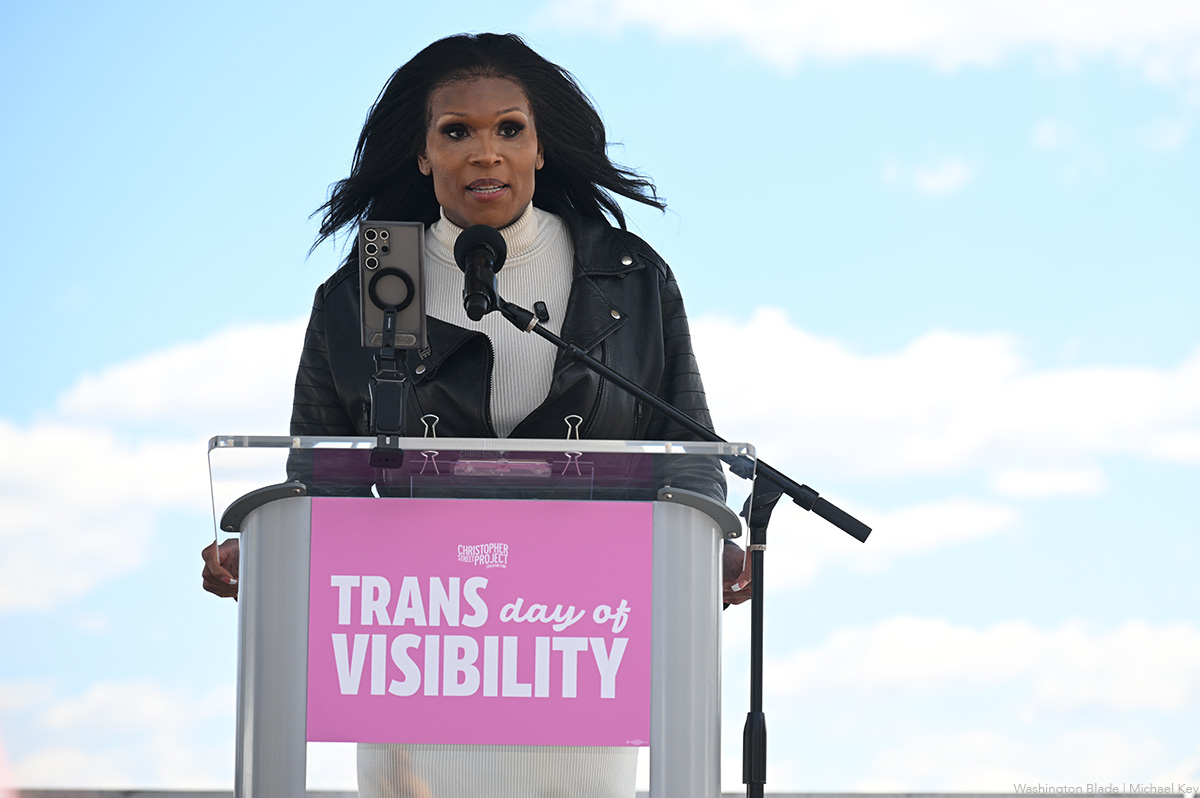
By SPENCER MACNAUGHTON, BELLA SAYEGH, and LAURY PEYSSONNERIE | You may know Peppermint as a runner-up on season 9 of “RuPaul’s Drag Race.” Or for her stint as the first trans competitor on the runaway hit “The Traitors.” Or for her relentless activism at a time when the Trump administration is waging an unprecedented attack on the LGBTQ community.
Now, Peppermint is getting set to be one of New York City Pride’s official grand marshals. And she’s doing that while upholding the legacy of the trans women of color who were at the Stonewall Uprising in 1969.
In this episode of “UNCLOSETED, with Spencer Macnaughton,” Spencer sits down with Peppermint to hear about what it means to be a Black trans woman at the forefront of the LGBTQ movement during the second Trump administration.
(Uncloseted Media video)
SPENCER MACNAUGHTON: Hi everyone, welcome back to UNCLOSETED with me, Spencer Macnaughton. Today, I have the great pleasure of speaking with Miss Peppermint. She was a runner-up on “RuPaul’s Drag Race,” she was the first trans contestant on the runaway hit, “The Traitors,” and now she is the grand marshal for this year’s New York City Pride. Peppermint, thanks so much for speaking with me and Uncloseted Media today.
PEPPERMINT: Hello, I’m so happy to finally be with you. This is great! Hello, Uncloseted!
SM: Yes, we’ve done many collabs and you’ve definitely amplified our work, and you’re just such a huge advocate in the community so we’re thrilled to connect with you formally in this way. So, you were recently named the grand marshal for New York City Pride. How did that come about and what does that exactly mean? What is your duty if you’re grand marshal?
P: You know, I’m still trying to figure it out, but don’t tell them. Obviously, most parades and marches, and probably all of them traditionally, have a grand marshal who’s somebody that they honor who’s like one of the people at the very front of the parade as it goes through. And so I’ll be joined by some other fabulous grand marshals as well. I’m sharing the spotlight with Dominique Jackson, with Bernie Wagenblast, who New Yorkers will know as one of the voices of the subway system, and also Bowen Yang. And Gays Against Guns was just announced, and I’m so excited to share the spotlight with them.
SM: Yes, and you wrote, or you mentioned in a recent interview that you said, “Being named a grand marshal for New York City Pride is deeply meaningful, not just as an artist, but as a Black trans woman standing in the legacy of those who fought for us to be here.” That’s Marsha P. Johnson, that’s Sylvia Rivera. And through history, those voices, the voices of trans women of color have, for many parts since 1969, been erased from that conversation, right? So how meaningful is that to you as a Black trans woman to be in this space now in 2026, especially given the political climate we’re experiencing?
P: I am continuously dedicated to using whatever platform I have, whether it’s before I was on TV, since I’ve been on TV, still using my platform to advocate for the LGBT community, including, obviously, trans folks. As someone who is trans, it does feel good to know that they are, “they” meaning the New York City Pride, they hold some reverence for the legacy of trans women of color, of trans people in general and their contribution and to the legacy of Pride. The march is a sort of recreation of the very first time that the community marched to commemorate what happened in 1969 at the Stonewall Uprising, where, you know, the police came to raid the bar, Stonewall, the legendary gay bar Stonewall in the Village, and the community fighting back.
But, I think what a lot of people didn’t realize is that, yes, trans people, trans women were there on the forefront, but it wasn’t just an attack on the bar. This was an attack on sex workers, people who were homeless and on the street, many of which were femme presenting people, drag queens, trans women. These were the street kids who were working, who were sometimes cast out of their apartment, or kicked out of their homes from their families, and the only places that they could gather were, besides the bar, were also down at the pier and on the street, wherever, and they were, some of them were engaging in survival sex work. And the police, the NYPD, were attacking, constantly harassing, and throwing in jail, and just like targeting trans sex workers, essentially. These were the people who were, and are often, the most vulnerable when it comes to interactions with the police, and those were the people who said, “We are done, we are tired of it.” That story has been whitewashed over time in many ways. One of the very first movies, one of the mainstream movies about Stonewall that we’ve seen, is a bunch of blonde kids from Iowa as the ones fighting back when we know that it wasn’t. Again, it was the street kids, it was the people who were vulnerable. And so their legacy had been erased. And so while we’re hearing voices like Marsha P. Johnson and Sylvia Rivera being mentioned so much, especially in recent years, is because it hadn’t been included so much in the past. And it had been essentially erased. And It’s been restored, and then since then, this administration has tried to erase trans folks from that legacy, taking down the mention of trans from the official website for the Stonewall National Monument, removing trans women, you know, biology, gender, whatever, all these words from all federal government documents and websites. So, I know that was a long answer, but I think it was important for people to know that that’s why it’s important for me and that’s so important to be included in Pride, because it feels like this year in 2026, the same year that the flag came down and went back up, thank goodness, it feels it’s a good time to remind people that trans folks are a very important part of the community.
SM: A hundred percent. And when I hear you speak all that, you are at the end of the day a very brave person, a very courageous person. You have Trump erasing all references to gender identity from all government documents, taking down the pride flag for what reason? And then his administration unveiled a new counterterrorism strategy that maybe you’ve seen that talks about the biggest concern, which is not at all reflected in the evidence, is left-wing extremists and pro-radical transgender people, whatever that means. I just interviewed two extremism experts for a different episode, who talked about there’s not even one mention of white supremacy, even though all of the evidence points to that being the biggest threat. So I wanna know, you’re an advocate, but you’re also a Black trans woman, triple, quadruple jeopardy as it relates to who this administration’s attacking. How does that make you feel going into this Pride month as grand marshal?
P: It really just kind of solidified what I already knew, the absence of white supremacist groups and organizations, and white supremacy as a notion in terms of being a threat, domestic terrorism threat. It’s like the weakest part of that evidence because the biggest part of it was when they removed the proof that the federal government stated in multiple reports that white supremacy was the largest domestic terrorism threat in the United States since the ‘80s.
SM: And just so the listeners know, the Department of Homeland Security quietly removed that threat from documents so the public would not be privy to it.
P: So the absence is just an echo of that, right? Their action of removing that is what really was like, what? I clutched my pearls. So, this latest sort of act is just sort of confirmation of that, and it is terrifying. I want to leave the country.
SM: You want to leave the country? You do?
P: Yeah, part of me wants — of course. I want to continue to use my platform to advocate for what I feel is right. And part me wants to leave, part of me wants to stay and fight. You know, and I, I think like, what am I, what is this country that I want to fight for? I envision like, am I going to stay and fight and want to risk my life for like a bunch of other people that are just like, “Oh well, that’s what happened to the trans people.” Or are we all going to fight? Like, I can’t just fight by myself. We have to fight for each other. Sometimes when we see not only the government putting out documents, official documents on government letterhead that say, “We’re going to name trans people as terrorists.” But then at the end it’s saying, “We will find you and we will kill you.” That’s the part that’s like, well, do I need to wait for them to kill me?
SM: And just to be clear to the people who haven’t read this document, that is a verbatim quote. They essentially list the terror threats, which include, quote, “pro-transgender radicals,” and then they say, make no mistake, quote, “We will find you and we will kill you.” I mean, that’s insane.
P: That’s in the document.
SM: That’s in the document. You mentioned you can’t do this alone. If people are listening to this and they aren’t trans but are concerned and are seeing the stats, what can they do? What can we do to really be there for our trans siblings?
P: When I say, “I don’t want to do it alone,” it’s not so much, I need you to defend me, which would be nice; it’s more that I need you to defend yourself by defending me, is what I want people to know. Like the cis community, people who are cisgender, people who’re not trans, and also people who are outside of the queer community, need to know that if rights are what we have, if equal rights are what a democracy gives you and what you have, an attack on those and removal of those rights for who someone is, who they love or their political beliefs, then it is an attack on that very democracy and an attack on the people of that democracy and the people who value those rights. And so, going after people for who they are and removing their passports, naming them as terrorists, threatening to kill them, banning them from all types of government buildings and bathrooms and holding a job and da-da-da, and healthcare, all these things. The only way they can do that to me is if they change the rules to make it possible to do. Now we have a government that can remove people from all these things. So now that means all they have to do is include, you know, let’s include Mormons as terrorists. You know what? I mean, it took them how long to put out this document. Vegans, whatever, I don’t know. Like they can target anyone. It sounds absurd and preposterous because it is, but it won’t take long for them to widen that group to who they want to focus on next.
SM: And I know you’ve been outspoken in all different places, including mainstream media. You’ve gone on CNN a few times. I’ve seen you on there. And I worked in mainstream media, “60 Minutes,” the Wall Street Journal. And a big reason I left was because I didn’t feel like the coverage was rigorous enough, was fair enough, was frequent enough. How do you think the mainstream media is doing characterizing the issues plaguing the trans and LGBTQ community right now?
P: What is this question? They get an F, for fuck off. They get a terrible F because —
SM: Tell me why.
P: It’s so wild. Yeah, hello. We know that they’re interested because they talk about it on the daily. Every other day, there is mentions of trans people in some way, shape or form, and queer people in general. And so they’re constantly evoking us, talking about us, blaming us, bringing us up, attaching us, associating us, constantly. It is wild that they have so much to say about us and they don’t want to talk to us in general, the mainstream media. They don’t wanna include us. They don’t wanna hear. And I wonder why that is because with many other situations, they would want to go to, sort of like, the subject and speak with them about what it is, or the people who are involved in the story. You want to get their side of the story, except when it’s a situation like this, when it’s the political scapegoat. When it’s the political scapegoat, it actually is imperative that you don’t hear from them, that you just hear about them, because then you can create who they are for other people to sign off on.
SM: I have a friend, Alaina Kupec, and she’s a trans military veteran and she went on Abby Phillip’s CNN “NewsNight,” the 10 p.m. slot, after Trump passed the trans military ban. She was the only trans person on the panel. Other panelists include Scott Jennings, who is a Trump loyalist who has zero expertise in trans issues, but it created this false equivalency debate between Alaina, who was a military person and is trans, and Scott Jennings, as though both of those opinions should be considered equal from a journalistic perspective. How damaging are those kinds of conversations that are airing on shows like Abby Phillip’s that are, you know, sure we say “Americans don’t talk but they talk here,” but the majority of Americans perceive that as news still.
P: Yeah, it’s not news. It’s obviously just entertainment. And, you know, I really was upset with, I mean, I was really grateful to be on the show and have appeared there with another trans person, particularly, I got a chance to go on there.
SM: On Abby’s show?
P: On Abby’s show, pardon me, yes. But I do think that CNN has always served to launder the reputation, to launder the impact, and soften the perception of the very, very, real impact that sort of centrist politics that CNN holds. It really just exists to protect, sort of like capital and protect big business and sort of corporate, the corporate flow of politics that controls policy. And so I’m not surprised, but I think you’re 100 percent right. There is an epidemic, a habit, a vibe that this country has to just, like, take somebody off the street who has no knowledge about anything at all, other than their own opinion when they hear something, and that opinion when they hear, like, “What do you think of this concept that you’ve never heard of but we’re going to give it you and tell us what you think. And then here’s an expert in that, go!” And suddenly, you know, Scott Jennings gets to have an opinion on what I’m doing with my body or what rights I have and you know that thinks it’s harmful, it’s damaging and harmful.
SM: And I don’t want to single out, you know, Abby’s show too much because this happens on many different shows across network news, but to hosts like Abby or to producers on these shows — and I’ve worked in these newsrooms — who really care and really want to do it right, but might hit blocks. What’s your advice as a trans woman who’s experiencing this? What’s your advice to them? The people who are actually shaping the news packages we’re watching and actually do have some agency in deciding what gets to air.
P: My ask is, bring trans people on, at least to talk about the trans issues that you mentioned every day. But besides that, bring trans people on to talk about what’s going on with Medicare. Bring trans people on to talk about what’s going on with the war. Whatever. Bring trans people on to talk about more because those things impact us as well. The simplest thing is gender-affirming care. Gender-affirming care and issues of gender-affirming care, the government telling people what decisions they can make medically with their own body, ties directly with reproductive justice and access to abortion, and making your own medical decisions for your own body. That’s something that we can all talk about. That is an intersection that you could bring a trans person on to talk about.
So I would ask of those other creators, bring trans people on to talk about everything that you wanna talk about, Honey. We got lots to say, and we can add something to the conversation because we have a very unique perspective.
And then beyond that, my advice to CNN is you would want to follow what the other podcasters will be doing and having them on because you will be sealing your own demise and become a lot less relevant than you already are if you don’t.
SM: The least surprising thing from this interview is that you’re very interesting. I want to stick on media though for a second because right now you must know that the Ellisons, billionaires, own Paramount, right? And they, who are MAGA loyalists and they have really reshaped the narrative at CBS News, bringing in Bari Weiss, who is an opinion columnist, but Paramount also owns MTV, which airs “RuPaul’s Drag Race,” which you were a finalist on. Ru and the show have been a groundbreaking TV series as the most successful Emmy award-winning reality TV series of all time. They have been progressive trailblazers for many different reasons for LGBTQ rights. There’s been no messaging on the fact that Paramount’s owned by the Ellisons. Should there be? Should they stay with Paramount? What are your thoughts on that?
P: It would be wonderful to see anyone on that show speak out against sort of what is happening in our country with regards to the control over politics and policy and the intersection again of money with politics, especially as related to the Ellisons and the purchase of Paramount. We’ll know when the takeover is complete, when RuPaul is like, “I love Larry Ellison,” cause that’s probably happening. They’re gonna get a script. So let’s just wait for them to get a script and start talking about how great President Trump is, whatever, I don’t know. That’s what I envision happening is they will try to either cut “Drag Race” or use it as a tool to parrot what they want to say. I hope that doesn’t happen, but it’s either one or the other. They’re either gonna get rid of the show, but it’s such a ratings juggernaut that I imagine they’ll probably try to reshape “Drag Race” and take out any political messaging.
SM: That’s what I think about though. Ru has so much money, she doesn’t need any more money, right? And the show is such a ratings juggernaut [that] they could go somewhere else. They have enough power from a ratings perspective that they don’t have to be with Paramount. They’re enough of a product there that they could dip out. Do you think they should dip out given the political climate?
P: I don’t know, I guess I have mixed feelings on it. I certainly see a world where Paramount, CNN, anything under this new umbrella is going to have to follow what their owner and boss wants. Every show, every network that’s been sort of sucked into the umbrella is gonna have to fall in line. That’s what fascism is about. You follow directions. And so I think that’s in the future for the show if they don’t leave. If they don’t leave, then it’s probably going to, just they’ll either be disbanded or we’ll wake up one day and there’s gonna be this weird messaging coming out of drag or something like, where’s the lip sync? Suddenly they’re like forcing us to say the Pledge of Allegiance, but with Donald Trump’s name in it. Like that’s what’s gonna happen. That’s what happens in fascism. Do I think they should? I don’t wanna see a “RuPaul’s Drag Race” that’s teaching us how to march in a certain way. So I don’t know, because by that point, it won’t even matter. But I think if they could just go online and start doing it on YouTube or whatever, I think they could do that. But I think ultimately no linear, traditional television is safe. They own most of it.
SM: It’s so interesting. You know this from being on camera. I know this from being behind the scenes that there are always little things that the viewer might not realize happen. And I wonder over at Paramount, while they’re putting together “All Stars” or the next season, whatever it is, the little decisions that could be being made in the final script. And I think that there might be a lot of silent things to the next season that we don’t realize have been edited out to appease the big bosses who are MAGA loyalists. And those are just the things we’ll never know.
P: We’ll never know. And I would be so surprised if they, it would be smart of them to just leave Drag Race alone. Drag Race is a wonderful thing because it’s, because it features wonderful drag entertainers. That’s what’s so great about “Drag Race,” in my opinion. But I don’t rely on Drag Race to get my political anything.
SM: I hear you. Fascinating conversation about media, I could talk about it forever, but we’re going into Pride 2026, right? And we are now six years after the explosion of the Black Lives Matter movement after George Floyd’s murder that spawned into a submovement, the Black Trans Lives Matter Movement. And I’m curious, a lot of that has faded, at least from national international conversations, right? Where do you think we are now in 2026?
P: I think we are in a state of emergency, for sure. I think this administration has been successful. That’s where I think we are. It’s like a wild sort of, a wild, wild west. Do I think we need another moment? I mean, hopefully not, considering that what galvanized people was the death of an unarmed Black man. No, I don’t want that to happen, but it continues to happen on the daily and that we’re not marching in the street about it means that the sort of news cycle focus isn’t on it. And I’m grateful to see that people were able to become temporarily activated. And so I think we benefited from that, but I do think that it allowed people to sort of revert or to sort of jump to this automatic sort of social media style performative advocacy or reaction, which I think is a natural human response maybe in this situation. So by that matter, people posting a black square and thinking that they’ve done their part, fine, obviously it wasn’t enough. What I would like to see is instead of another sort of mainstream BLM moment is an awareness that yes, racism exists. Yes, transphobia exists. Yes, we have to fight those things, but also organizing and at the community level, connecting in sort of a mutual aid way so that we can’t say, “Oh my god girl, I can’t go out and protest because I’ll lose my job and I won’t be able to pay my rent.” Well, if we can make a way for your rent to be paid, you can go out in protest whether you lose your job or not, and then you don’t care and you’re more likely to challenge the system. And so that is where I want people’s minds to go because it’s gonna be necessary to withstand whatever’s coming.
SM: I want to be respectful of your time. That was great, that was an important answer so thank you.
I think out of all the people we collaborate with, there’s a lot of people who want to amplify our work, but you really are at the top of the list for people who are like I don’t care if this post hasn’t popped or isn’t going to get me more followers or I just want to do this and I can tell your advocacy is absolutely authentic and selfless. How did you get here?
P: That’s a good question. I wonder, I sit around asking myself, why am I doing this, like what in the world, but I’m just like driven to it, you know? And it’s something that I would be doing whether I’m alone, whether I am with people, whether there’s a benefit of it or not, it’s not something that I’ve seen that people can do to make money or things like that, most of what I do now is advocacy and all of it is unpaid. And I do it because I care about it and I will continue to do it. But it also means that I’m extremely vulnerable to not being able to survive because I’m not spending my time doing the things that it’s necessary to do to survive. I just want to make sure that we’re able to live and have basic rights, which means, you know, advocacy. And I think it started along, I mean, it definitely started a long time ago and it evolves over time. You know, I think I got it from my grandmother. She was heavily involved in civil rights and so that’s probably where it came from. I don’t know if it’s genetic or if it was just instilled as I was watching, but it’s here now.
SM: And when you got celebrity from “RuPaul’s Drag Race” and other things like that, how did that affect it? Because the celebrity status would have made you in a whole different ballgame with it, I would imagine.
P: Yeah, I remember thinking when I got on “RuPaul’s Drag Race,” I was basically, yes, my platform sort of multiplied and sort of exploded tenfold, which I’m grateful for. And I remember thinking, well, I’m basically doing exactly what I’ve always been doing the entire time, just on a larger scale. I believe I’m quite the family-friendly entertainer and personality. But I’m sure that there’s people that have been like, “Let’s not hire her because she might say the wrong thing.” I’m sure that I’ve suffered that, but it doesn’t change that if I lose every follower I have, I’m still gonna be doing the same thing. I’ll just be back to where I was before I started this stuff. And so, you know, that’s kind of my thought on it.
SM: I love it, and I feel like that is a beautiful place to stop. I could talk to you for a long time, but Peppermint, so grateful that you’ve given us your time. Thank you so much for speaking with me and Uncloseted Media today. This has been a really rich conversation.
P: Absolutely. I do want to remind people to tune in to the last job I held, which was “Survival of the Thickest” on July 2, right after New York City Pride.
SM: Absolutely, we can plug that also in the show notes. So yes, thank you again, Peppermint. This was fantastic.
P: Awesome, thank you.
Season 3 of “Survival of the Thickest” featuring Peppermint launches July 2 on Netflix.
a&e features
From Media Matters to massive queer ragers: the rise of Tara Dikhof
The Washington Blade sits down with the DJ and drag star on her summer tour, rise to prominence, and how Musk helped shape her path.
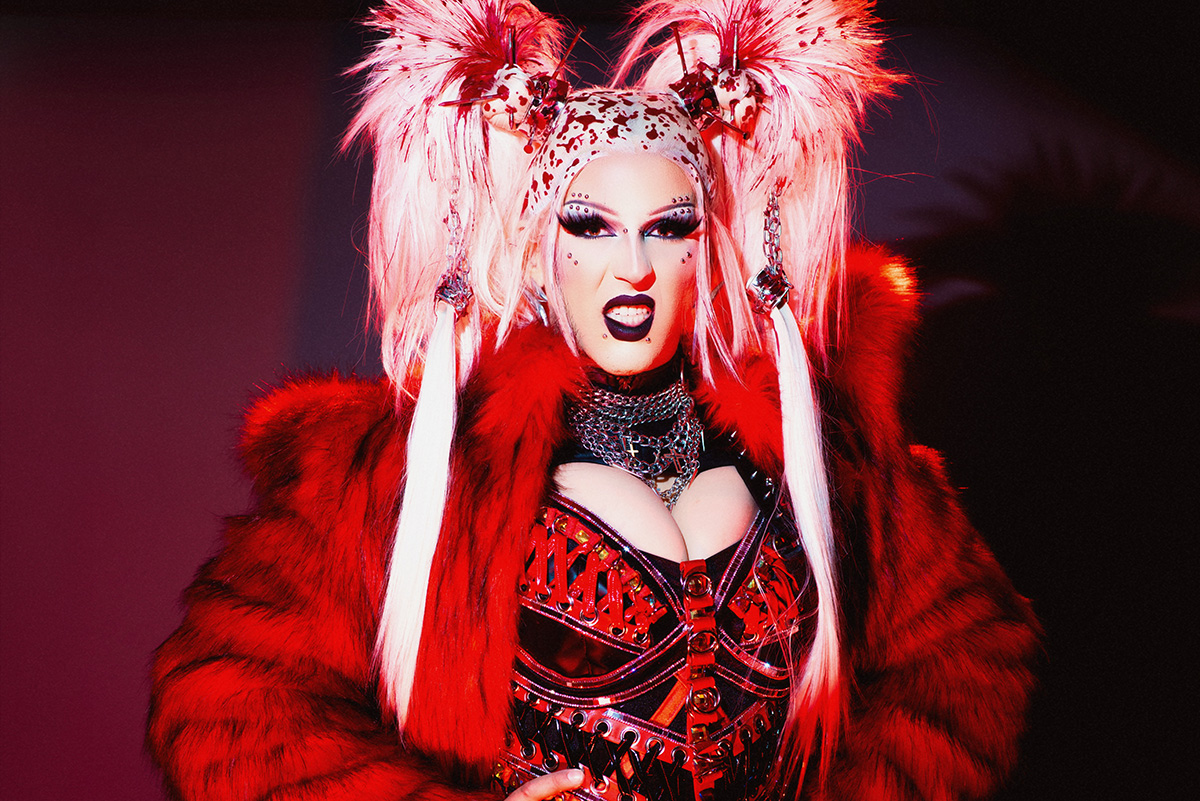
Before becoming the “full-time party girl” with the power to turn any room with Instagram Reels into a dingy dance floor packed with queer people — at least for a minute or two — Tara Dikhof was much like a lot of queer Washingtonians: upset at how the first Trump administration quickly began attacking marginalized communities’ rights, and in need of a creative, constructive outlet.
“I used to be a journalist at Media Matters, where I worked on our online extremism and LGBTQ program,” Tara Dikhof told the Blade when asked how she became the actualized drag performer she is today. “I did extensive work documenting how the right wing media ecosystem poisons the debate on queer issues — and spreads virulent lies about LGBTQ people online.”
Media Matters is a nonprofit that describes itself as a “progressive research and information center” with the goal of “monitoring, analyzing, and correcting conservative misinformation in the U.S. media.”
Tara, who, while working at Media Matters lived up to that goal. She wrote — or assisted the media watchdog with — more than 150 articles for the web-based organization. While she covered a wide variety of topics, she became a leading voice covering Joe Rogan during her tenure as a senior researcher for the LGBTQ Program at Media Matters.
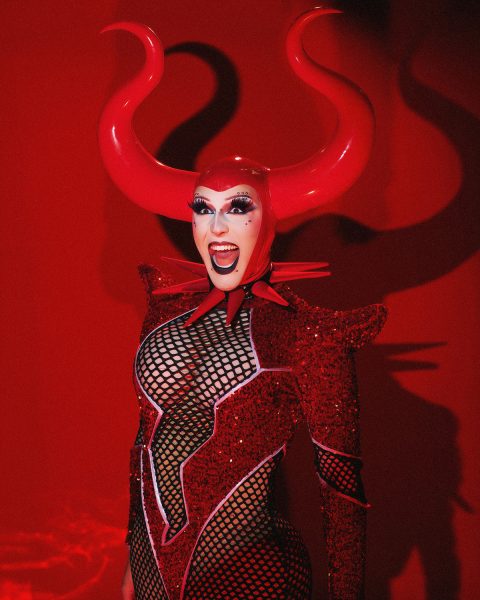
“I think some of my most impactful work from my time at Media Matters was when I was the leading journalist reporting on Joe Rogan’s extremism and right wing misinformation. I broke the story that he was encouraging young people not to get the COVID vaccine,” Dikhof said. “I reported that the presidential debates hadn’t asked a question about LGBTQ issues since the 2000s. I also led a study looking at TV news reporting on anti-trans violence, showing that TV news stations, cable and broadcast combined, collectively reported on anti-trans violence for less than an hour almost every year.”
In addition to media coverage, Dikhof also worked on the inside as a Truman-Albright Fellow and policy analyst at the U.S. Department of Health and Human Services, working to improve the health and safety of Americans.
That effort was recognized from both sides of the political aisle. She and her detailed research appeared in a slew of outlets, includingDemocracy Now!, The Atlantic, and even the Blade’s West Coast sister publication, the LA Blade, among others. While her work began making headlines informing people about the dangers of under coverage of LGBTQ issues, it also garnered attention from staunch anti-LGBTQ voices.
One of those voices — and the one Dikhof ultimately credits as the reason she bowed out of the media watchdog world — was Elon Musk. Musk, the CEO of Tesla, founder and chief engineer of SpaceX, and owner of X, was not pleased with coverage of the platform’s questionable practices under his leadership. The app relaxed censorship policies, dissolved its Trust and Safety Council, and reinstated thousands of previously banned accounts — many of them far-right accounts found to be pushing harmful misinformation and disinformation.
“He was trying to silence fact-based journalism that revealed that his platform X was running advertisements next to Nazi content,” Dikhof said. “When you’re facing lawsuits against the richest man in the world, unfortunately, the facts don’t matter as much.”
She said it led to her being let go from the media watchdog organization — something she had worked so long to help grow awareness about the dangers of growing authoritarianism on platforms and across the airwaves.
“That was incredibly devastating. I dedicated my entire adult life to the progressive movement, to trying to stop right wing misinformation, and to have that drop out from under me was defeating, to say the least. But you can’t keep a powerful girl down.”
She didn’t stay down for long. She tapped into the drag and DJ world after leaving the nation’s capital. Since then, she has expanded on her drag journey and opened for some of the world’s biggest performers — from Aliyah’s Interlude, to Violet Chachki, to massive pop superstar Chappell Roan. It seems the Dikhof rocket has taken off and doesn’t look like it’s slowing down.
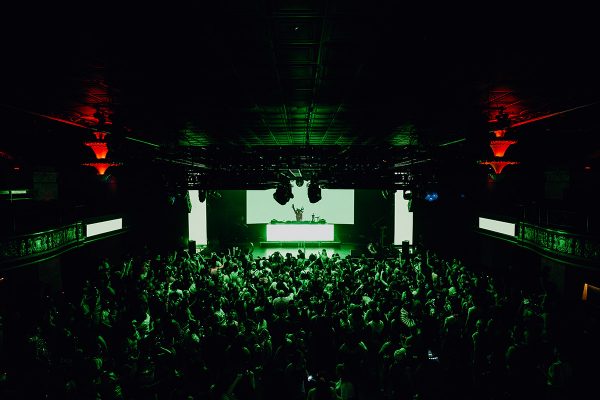
That switch, she explained, has her feeling like she is doing more for the LGBTQ community than she could at Media Matters.
“I started throwing parties and community events for queer people in Boston, and I now throw parties for over 1,200 people a month,” she said. “I honestly don’t feel like I’ve ever had more of an impact on queer and trans people than I am now. I believe, from the bottom of my heart, that getting a group of LGBTQ people in a room together and letting them radically express themselves through dance and movement and to build new friendships and to find the love of their life — is a radical act.”
Her goal is simple — provide a place for LGBTQ people, specifically trans people, to let down their hair — or in her case, giant wigs and fantastical headpieces — and just dance.
“I’m just trying to give people a space to exist, which for a lot of queer and trans people right now is not something they can do. They don’t feel safe at work, they don’t feel safe at home, they don’t feel safe in public, and the one oasis that they can access is the gay club. It’s a place where they can dress however they want, they can love whoever they want.”
That radical act, she explained, should be as inclusive as America is diverse. She sees the waves of conservatism that have hit the federal government — and state offices around the country swinging to the right — reflected in the nightlife scene she encounters. LGBTQ clubs have long been a proxy for the social standards in mainstream America, which often focus heavily on young, white, cisgender men.
“It is one of the most connecting things we can do while we’re on this planet. My guiding light is, I am trying to build dance floors that are multigenerational and multiracial. I’m trying to start a new chapter in queer nightlife, where dance floors aren’t just dominated by white, buff gay men.”
While in-person nightlife has led to a diverse dance floor thumping with bops from Slayyyter’s new release “Wor$t Girl In America” to gay club classics like Ariana Grande’s “Into You” — with wild-haired Dikhof at the helm in looks that could make even Cher do a double take — her rise has also been immensely assisted by some of the very platforms she once called out while living in Washington.
She has amassed quite the following — 142,000 followers on Instagram, 2.6 million likes on TikTok, and thousands of streams on SoundCloud.
Despite this growing and visibly powerful media presence, she has hard limits on when and where she deems it appropriate. The dance floor is not always one of those places — not just due to the growing data on the harm social media causes to users’ health, but also to stay true to her goal of helping the LGBTQ community become a stronger, more accepting place.
“Social media promises connection and relationships, but it’s not true. What we actually need is a way for people to put their phones down and connect with others in real life,” she said. “I’m trying to build a coalition that represents the true power of the LGBTQ community, where we can all exist in harmony together. At a lot of my parties, I have a no-phones policy, because what I want people to do is disconnect from social media, disconnect from our system of mass surveillance, and just be present for a few hours.”
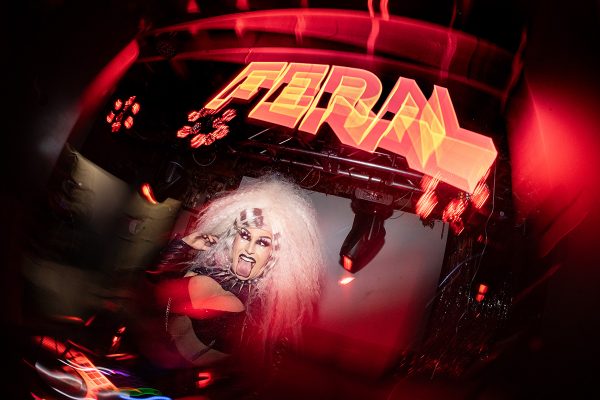
“For my party, Feral, which is [a] no-phones LGBTQ rager, at the door before anyone enters the party, we tell them our party’s policies, and we make sure they have a verbal yes agreeing to them,” she said. “Those policies are no phones, no photos, no videos on the dance floor, treat yourself and others with respect.”
She sees this intentional inclusivity as a major way to combat the hate trickling down from the Trump-Vance administration and regurgitated by mainstream media organizations that feed into that bias.
“I believe that we can create, and we can continue to build radical change in this country on the dance floor. So much mainstream media has consistently allowed conservative media to set the terms of debate for LGBTQ rights. Mainstream media outlets like the Washington Post, outlets like New York Times, put trans rights up for debate when we can all agree that human rights are not something that we can debate.”
She continued, explaining that the bias mainstream media imposes — like with The New York Times’ consistently criticized coverage of transgender people, which often has little or no actual transgender voices in its reporting — frames these issues as cultural debates rather than basic human rights.
“These mainstream outlets don’t debunk those claims. They don’t push back on them. We need to say that lesbians belong at the gay club. We need to say that we don’t tolerate anti-Black discrimination at the gay club. We need to say that trans people deserve to be loud and messy in the gay club, just like everyone else gets to.”
She explained that what she is trying to do is simple in theory — make the space truly a dance haven for everyone in the community.
“What I’m really trying to do is I’m trying to open a portal of transcendence. I’m trying to create magical moments where all of the problems in the world drop out of your mind.”
Dikhof attempts to do this, she explained, by tapping into that deeply human — and animalistic — need for connection.
“Humans are primates and primates are animals that need physical touch. We need community spaces, and increasingly, with social media, late stage capitalism, and a horrible economic outlook, people don’t have a public forum to connect with others. There have been nights where I have taken a $3,000 loss, but it’s part of it.”
To her, the value queer nightlife gives to the community can’t be measured by ticket sales or ad clicks — it’s measured by acts of queer joy and defiance that echo the community’s need for broader survival in an era of book bans and hostility for the sake of cruelty.
“All we need is a room for four hours, a DJ, a working sound system, and a community that cares about protecting each other. If you have that, you can create total bliss. I think the beauty and transcendence of queer nightlife is something that Republican lawmakers will probably never understand.”
She sees the dance floor as just as important for queer people as the Senate floor. Not separate from politics — it is politics.
“I do believe that having queer community spaces is an integral part of political organizing. We cannot let the bastards steal our joy. Getting out of the house and being loudly queer is a form of resistance.”
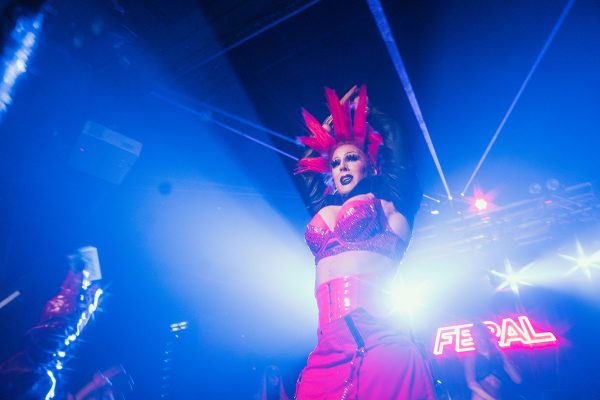
“Right now, I’m really living my wildest dreams and I’m hungry. This is just the beginning for Tara Dikhof. We’re living in a society where we have Paleolithic emotions, medieval institutions, and God like technology, and I am going to use that God like technology to the best of my ability.”
Tara Dikhof is currently on her summer tour, starting at Project GLOW for Queer Chaos in Washington. She will return — after crisscrossing the country — to perform at Bunker on June 20 during Capital Pride weekend.
Celebrity News
Sam Asghari talks allyship and his new MISTR partnership
Reality star breaks down new role as healthcare service’s newest ambassador
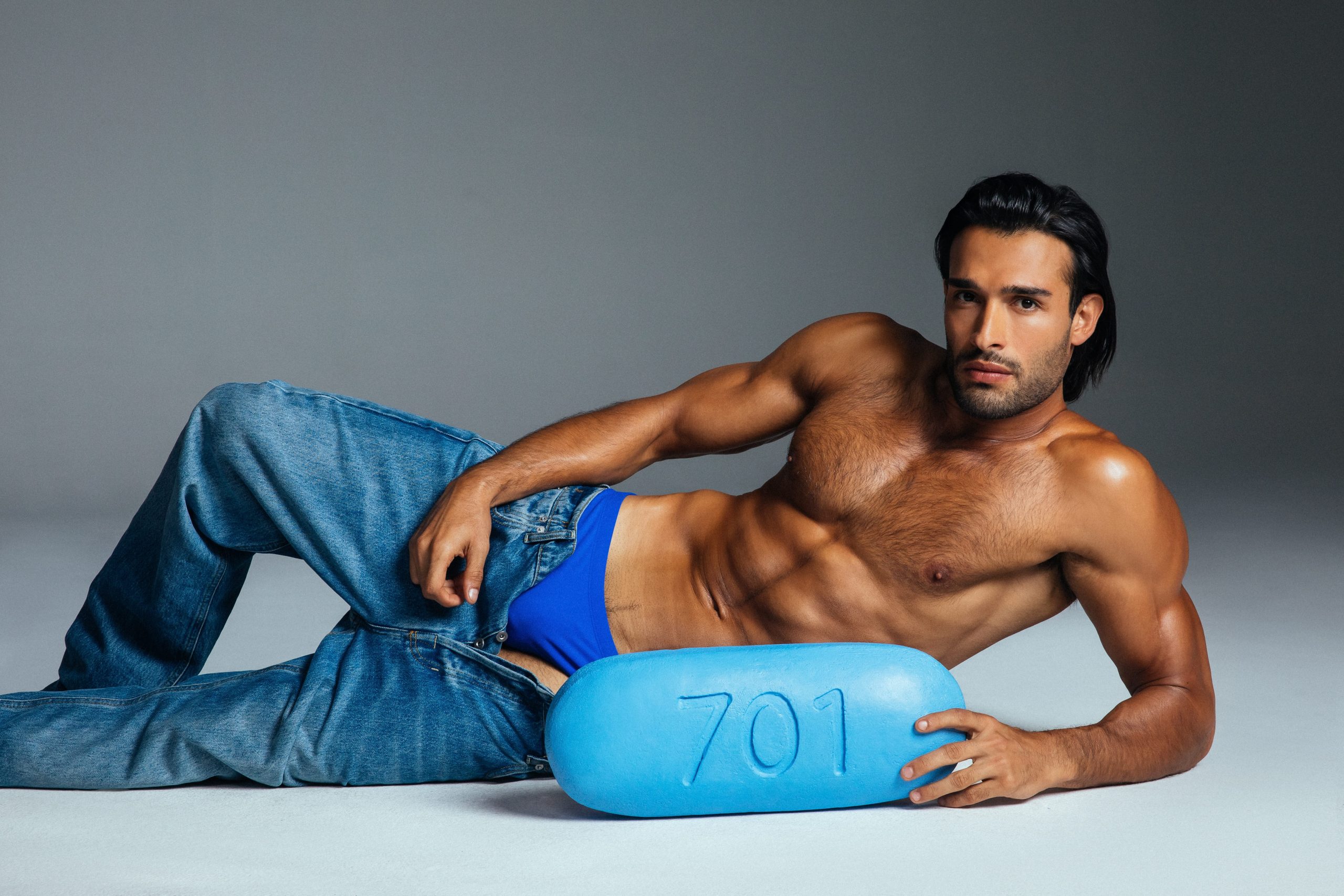
When people think of Sam Asghari, they often think about his TV career, his long history as a model, or even his love life — but not enough know just how much of an advocate this professional really is.
Many first met Asghari through his time on reality TV; the man earned acclaim for his hilariously soft-spoken tenure on season three of “The Traitors.” This came after many years as a model — as well as former husband to a certain pop star — with the reality series showing that he could stun as much onscreen as he could on a runway. Yet even though recent years have seen thousands of fans fall in love with Asghari’s quiet charm, far too many of these new supporters still don’t realize how important LGBTQ advocacy is to Sam today.
Asghari has spent recent years speaking out against queer discrimination in both the United States and his home country of Iran. Yet while he’s never been shy about his support, there hasn’t yet been an opportunity to really use his platform to fight for this community on a larger level. Well, luckily for us all, Asghari’s newest (and possibly sexiest) project will give him the chance to do just that, as Sam was just announced as the newest ambassador for the United States’ largest provider of free online PrEP, MISTR.
“It’s an honor and a pleasure to kick off this allyship with such a great company making such a huge impact!” raved Asghari, as he sat down with the Los Angeles Blade to discuss this new partnership. The interview took place in West Hollywood’s The Abbey, a club that’s become a second home to Sam in recent years; the model was seen at almost every one of the many events that MISTR hosted at the club in 2025. “My best friends, my mentors, and everybody that I adore that make me who I am — [they all] just happen to be [LGBTQ]! [But] where I come from … people within this community don’t get to say it outright.”
Sam spoke about witnessing queer discrimination early on in his life through the treatment of these communities in Iran, describing, “They have to hide away … they [get punished] just for being themselves.” It’s a prejudice that he has unfortunately seen grow across the U.S. in recent years, which is what made him realize that he needed to do more for these groups who’ve helped him become who he is today. “I feel a huge responsibility on my shoulders to not only represent [them], but be the voice of [those facing discrimination] when I can.”
This is why he was thrilled to be the newest addition to the MISTR family, a brand that queer Angelinos will know well; plastered around the city — but especially in West Hollywood — are ads for the service, each ad featuring muscular men in speedos preaching about the importance of PrEP and long-term HIV care. The company has perfected this versatile form of marketing, not only catching people’s attention with the fun on display but underlying it with a serious mission of revolutionizing queer healthcare. It’s proven itself as both a serious provider of health services and a constant stream of scintillating fun — meaning it was just the right opportunity for Sam Asghari.
“MISTR does such a great job as creating not only awareness, but providing the tools for everybody to have PrEP … they’re trying to raise awareness in the biggest ways possible,” Asghari explained, when discussing what drew him to the company in the first place. “I needed it more than they needed me,” he joked. “Not only do I [get] to have a good time, [but] I also get to make this world a better place.”
It’s a collaboration that fans are already loving; the first images of Sam donning MISTR’s iconic blue Speedo were met with acclaim from thousands of LGBTQ users online earlier this week. While definitely entertaining on a superficial level, the deeper aspects of these initial photos speak to the style of advocacy that Sam Asghari has spent his entire life building. He is willing to literally bare it all to raise awareness of important issues affecting queer folks around the globe. And while the collaboration does focus around him, he’s pursuing it knowing that his role as an ally means that unaware portions of his usual audience will suddenly get to learn about the vital resources MISTR offers today. “This campaign is going to be something extremely sexy, and it’s going to open a lot of eyes in a good way. So be ready.”
This is the perfect time for Sam Asghari to use the massive amount of thirst his fans have for him to educate them on the importance of queer healthcare. It’s why he was so honored and thrilled to be named MISTR’s newest ambassador. And it’s why, through his new campaign, Sam Asghari may just help this company uplift more people in need than it ever has before.

Man accused of threatening to shoot D.C. bar employee after making anti-gay slurs

Bree Fram’s congressional campaign ends but her fight continues

Rev. Peter Leland DeGroote dies at 86

Kenyan High Court issues landmark transgender rights ruling

Peppermint made her mark on ‘Drag Race.’ Now, her advocacy is front and center

Eight Democrats break with party as House advances ‘Don’t Say Trans’ bill

ROSENSTEIN: Marylanders should again reject Trone

Quest for fame becomes an obsession in entertaining ‘Lurker’

Here’s how to celebrate Black queer joy

When impunity meets history
-

 Congress4 days ago
Eight Democrats break with party as House advances ‘Don’t Say Trans’ bill
-
Opinions4 days ago
ROSENSTEIN: Marylanders should again reject Trone
-
Movies4 days ago
Quest for fame becomes an obsession in entertaining ‘Lurker’
-
Out & About4 days ago
Here’s how to celebrate Black queer joy