Arts & Entertainment
Lil Yachty smacks down homophobic fans over new video
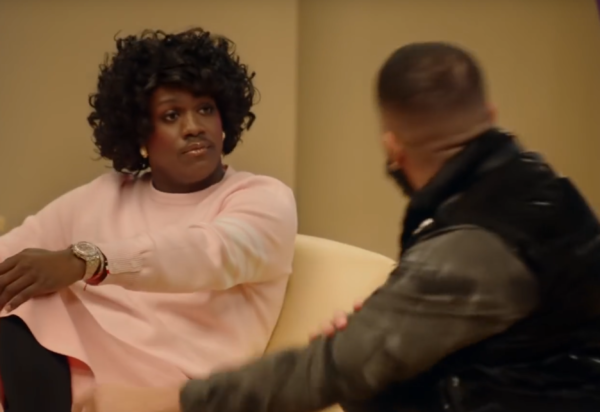
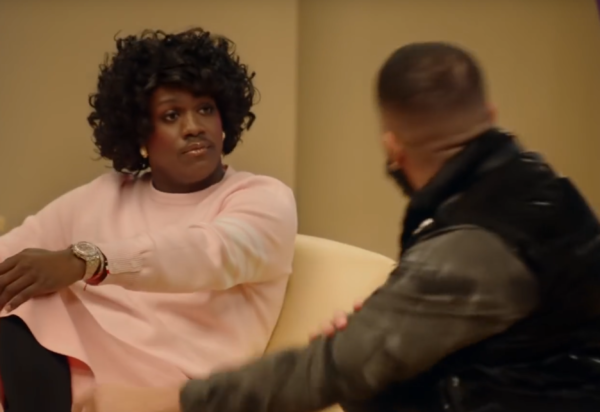
Rapper Lil Yachty slapped back hard at bigoted fans this week after a new video drew homophobic comments on social media.
In his new “Oprah’s Bank Account” clip, which also features Drake and DaBaby, the 22-year-old Lil Yachty appears in a wig and a dress, wearing makeup, jewelry, and heels for his comic portrayal of a female talk show host named Boprah. It’s essentially just another example in a long history of men donning women’s clothes for laughs, something comedians have been doing regularly since… well, since forever.
But in the case of Lil Yachty’s followers on Twitter, apparently tradition is not enough to justify the rapper’s Oprah drag.
One fan tweeted, “I’m convinced lil yachty is gay… why would he dress like Oprah lost me,” while another followed up with the offensive remark, “That n*gga lil yachty a whole fag for what he did.”
Another user attempted to frame their homophobia as an argument in social ethics, saying, “It’s gay and he has a influence over young minds, he’s subjecting them tho that behavior thus normalizing it… that’s not cool.”
Yet another, however, was honest enough to make it all about themselves when they proclaimed, “In my opinion you don’t need to wear no dresses or wings to sell,” adding dramatically, “how I’m suppose to take this.”
Finally, the Georgia-born Lil Yachty jumped into the fray to respond with a scathing reprimand.
“Bitch it’s just supposed to be entertaining… it ain’t even that deep,” the rapper wrote. “Y’all N*gga’s so in denial with y’all masculinity shit like this bother y’all.. relax.”
He also responded to a comment from another man, which read “You are Bi. Dressed up as a damn woman you done let the black community down.” Lil Yachty replied to the (white) commentor with a series of photos calling him out for what might be a bit of hypocrisy.
Lil Yachty demonstrated his support for the LGBTQ+ community in 2017, when he sported a rainbow-colored grill and included a gay couple kissing on the cover of his “Teenage Emotions” album.
“If you have vitiligo or if you’re gay or whatever it is, embrace yourself,” he said at the time, in response to the inevitable round of homophobic backlash. “Love yourself. Be happy, positive.”
You can watch the “offending” video below.




Out & About
Congressional Cemetery hosts Gays & Graves
Daylong Pride celebration blends history, remembrance, art and community

Historic Congressional Cemetery will host the second annual “Gays & Graves: A Big Gay Festival” on Sunday, June 14 at 11 a.m.
The event will feature pioneering activist Randy Wicker, the Gay Men’s Chorus of Washington, and new public art installations and programs celebrating LGBTQ+ history. Gays & Graves is an official partner event of Capital Pride 2026.
This event is a daylong Pride celebration blending history, remembrance, art and community. Visitors can shop from LGBTQ+ and allied artists and makers, experience performances and interactive installations, and engage with programs exploring LGBTQ+ history and lived experience.
For more details, visit the cemetery’s website.
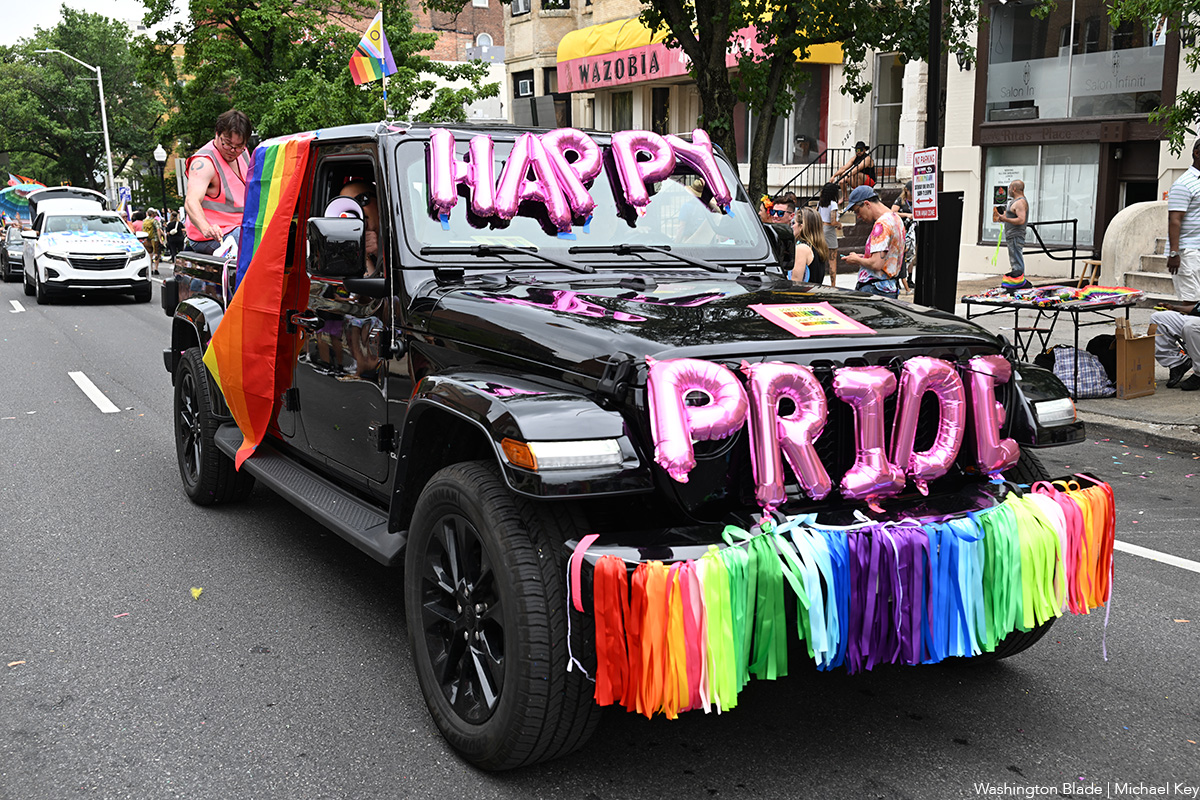
Baltimore Pride is underway, taking place from June 8-14.
The Pride Parade will be on Saturday, June 13 at 12 p.m. at Charles Street & North Avenue, followed by the Pride Block Party at 1 p.m. at Druid Hill Park. And then the Pride Festival will be held on Sunday, June 14 at 12 p.m. at Druid Hill Park.
There will be an array of additional events including: a fashion show, a “Suits and Sneakers” reception and a 5k race, among many other events.
For more details, visit Baltimore Pride’s website.
Friday, June 12
Bet Mishpachah will host “Pride Shabbat Happy Hour” at 6 p.m. at Edlavitch DC Jewish Community Center. This is an in-person happy hour with an open wine and beer bar, great company, and joyful conversation. Attendance is free and more details are available on Eventbrite.
Women in their Twenties and Thirties will meet at 8 p.m. on Zoom. This is a social discussion group for queer women in the Washington, D.C. area. For more details, visit Facebook.
Saturday, June 13
Out N Bad will host “SWEET WHINE: DC Pride Queer Caribbean Slow Whine Function” at 9 p.m. at Decades DC. This is a late-night escape into slow and steamy Dancehall & Kompa only. No splits. No headtops. No pressure. Tickets are $22.14 and are available on Eventbrite.
The DC LGBTQ+ Community Center will host a screening of “10s Across the Borders,” a bold pan-Asian queer film that confronts homophobia, transphobia, and racism while celebrating Southeast Asia’s underground ballroom scene. For more details, visit the DC Center’s website.
Sunday, June 14
Beth A Wolfe Yoga will host “Pride Baby Goat Yoga” at 1 p.m. at Faith Lutheran Church in Arlington, Va. The goats will be decked out in their finest Pride apparel, and human participants are welcome to do the same. Proceeds from this event will go to the Trevor Project. Tickets cost $44.52 and are available on Eventbrite.
Monday, June 15
“Center Aging: Monday Coffee Klatch” will be at 10 a.m. on Zoom. This is a social hour for older LGBTQ+ adults. Guests are encouraged to bring a beverage of choice. For more information, contact Adam ([email protected]).
Tuesday, June 16
“Self-Defense Class with Avi Rome” will be at 12:30 p.m. Rome is a proud member of the LGBTQ+ community and a full-time Martial Arts instructor with 25 years of teaching experience. He holds a 5th Degree Black Belt in Jhoon Rhee Tae Kwon Do and is the director of the studio’s Adaptive Tae Kwon Do program for students with special needs. He has also run numerous self-defense workshops for various groups and situations. For more details, visit the center’s website.
Center Bi+ Roundtable will be at 7 p.m. on Zoom. This is an opportunity for people to gather in order to discuss issues related to bisexuality or as Bi individuals in a private setting.Visit Facebook or Meetup for more information.
Wednesday, June 17
Job Club will be at 6 p.m. on Zoom upon request. This is a weekly job support program to help job entrants and seekers, including the long-term unemployed, improve self-confidence, motivation, resilience and productivity for effective job searches and networking — allowing participants to move away from being merely “applicants” toward being “candidates.” For more information, email [email protected] or visit thedccenter.org/careers.
Thursday, June 18
The DC Center’s Fresh Produce Program will be held all day at the DC LGBTQ+ Community Center. People will be informed on Wednesday at 5:00 pm if they are picked to receive a produce box. No proof of residency or income is required. For more information, email [email protected] or call 202-682-2245.
Virtual Yoga Class will be at 7 p.m. on Zoom. This free weekly class is a combination of yoga, breathwork and meditation that allows LGBTQ+ community members to continue their healing journey with somatic and mindfulness practices. For more details, visit the DC Center’s website.

Congressional Cemetery hosts Gays & Graves

Baltimore Pride is here

Calendar: June 12-18

Gender-bending buddy film gets 4K restoration for 25th anniversary

German group slams White House’s LGBTQ rights record ahead of World Cup

‘Mighty Real’ explores history of LGBTQ music

D.C.’s housing reality: Cautious optimism meets landlord strain

Hundreds of thousands expected to attend D.C. Pride events

PHOTOS: Pride Run