Books
¡Hola Papi! works as memoir, advice column
Laughs and sighs abound in Brammer’s new book
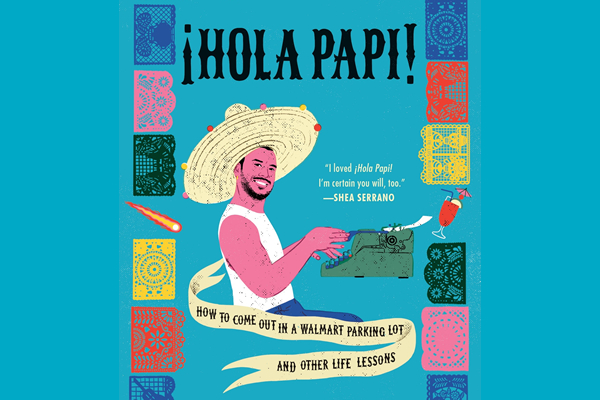
‘¡Hola Papi! How to Come Out in a Walmart Parking Lot and Other Life Lessons’
By John Paul Brammer
c.2021, Simon & Schuster
$26.00/224 pages
Your best friend definitely has an opinion.
You need advice and she offers an answer, though it might not be the one you seek. You may get sound counsel but at the wrong time, with sentiments directly opposing what you were thinking. And yet, you have to be grateful. As in the new book “¡Hola Papi!” by John Paul Brammer, the words come from the heart.
Growing up in the small Oklahoma town of Cache, John Paul Brammer knew nothing about being gay. He had little relationship experience, in fact, and he didn’t learn about hookup apps until he was a junior in college.
Once he found those apps, though, he was “instantly hooked.”
Much to his amusement, “some white guy” said “Hola papi” in greeting on an app one day and Brammer, “a mixed-race Mexican American with noodle arms” never forgot it – because hey, wouldn’t that be a great name for an advice column? He pitched it, landed a gig in conjunction with Grindr and it was a landslide hit with users, even though Brammer felt like an imposter sometimes. Was he really qualified to do this? He wondered, then he remembered what he’d want if he needed advice.
When asked what one can do to let go of past hurts, Brammer answers with a tale of his middle-school years, of bullying, inadequacies, and teen angst, and of coming out, growing up, and not letting someone be defined by the worst of the past.
He writes of puppy love with a girl when he was kinda sure he was attracted to boys, and how the experience wasn’t a waste. He remembers co-workers at a nearby taco stand who taught him to speak Spanish, to belong, and that “Lo siento” isn’t always necessary. He tells readers about releasing the love he thought was “the one”; about the oh-so-awkward night a childhood bully approached him on a dating app; and how to let go of a dream, and a nightmare situation.
You know this: Dear Emmy and Dear Posey can always be relied upon to present some poor schlub with drama worse than yours. You know they’ll offer snappy, sometimes snarky, maybe dismissive advice – but that might not be as applicable as what’s in “¡Hola Papi!”.
Agony Aunties don’t normally insert themselves into their answers quite like author John Paul Brammer does; nope, he makes his advice into a memoir that resonates. Each mini-chapter here begins with a question, followed by what feels like a personal answer written specifically to the forlorn rather than to the world — in a story, really, but one that’s relatable. It’s fun to read but, more importantly, it wraps advice-seekers (and not just the writer) in a comfortable tale that might make them laugh but definitely makes them feel they’re not alone.
Another nice thing: this book is by a gay man, but the advice he offers is for anyone, of any age. If you can remember that there are some eyebrow-raisers snuggled amidst laughs and sighs, of “¡Hola Papi!”, you’ll have a high opinion.
Books
New books reveal style trends for a more enlightened century
Guidelines that hint about gendering clothing are out
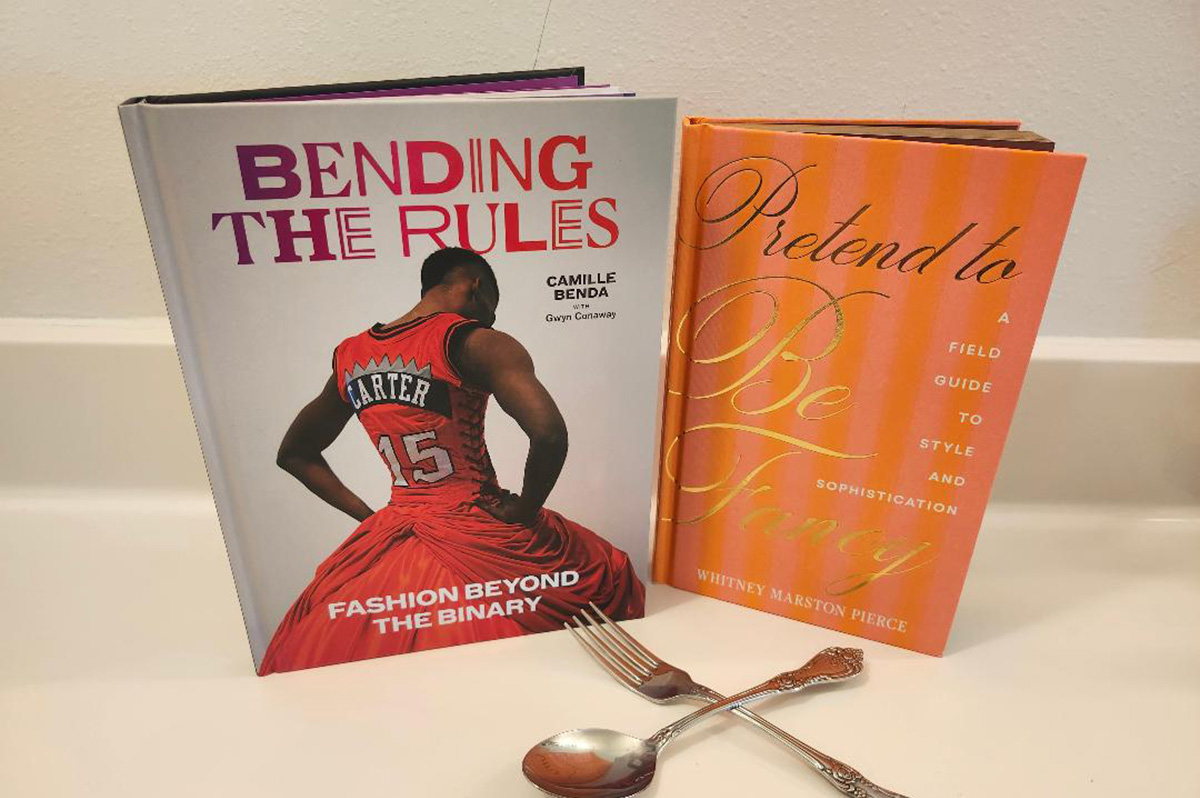
Books about Fashion and Style
By various authors
c.2026, various publishers
$19.95 – $29.95
Don’t look now, but your legs are showing.
It’s OK, it’s almost summertime and you want to show both skin and style. So how about a few hints for looking your best? Check out these great books and get stylin’.
Who says there are rules about fashion? Wearing white before Memorial Day is OK; socks with sandals not so much? Fine, but in “Bending the Rules: Fashion Beyond the Binary” by Camille Benda with Gwyn Conaway (Princeton Architectural Press, $29.95), you’ll see that any guidelines that hint about gendering clothing are oh-so-last century.
Along with lively, fun narrative, there are lots of photos in this book, ads for how clothing used to be worn along male-female lines, and short biographies of some of today’s best designers. Here, you can check out prom dresses from the 1950s and new haute couture gowns practically right off the runway – and see how one parallels with the other. The timeline reaches back centuries, so you get a nice idea of where certain kinds of clothing originated and how it’s relevant today – making what’s inside here perfect for browsing.
Pick up this book, in fact, and you might also pick up some ideas for filling your closet and creating your very own style.
The fashion you wear on your body isn’t all you’ll find in “Pretend to Be Fancy: A Field Guide to Style and Sophistication” by Whitney Marston Pierce (Chronicle Books, $19.95). You’ll also read about other nice things you can have.
So you’re not a pinky-in-the-air kind of person, whatever. You can easily hang with those who are, once you read and absorb this book.
Tongue-tied at fancy soirees? Not anymore, there are tips for talking here. What do you know about canapes, hors d’oeuvres, and the kind of foods you don’t get at the corner c-store? How do you make a charcuterie that everyone will Ooooooh over? And how do you give a gift for the person whose taste seems scads better than yours? That’s all in here, along with what to drink, how to dress, and how to make every corner of your home look like something right out of a high-end magazine.
Will this book make you chic? Possibly, yes. Will it help you get invited to all the best parties? Maybe, but for sure, it’ll make you laugh, it’ll make you feel fabulous, look fabulous, and live your best life with the surroundings you deserve. Out May 5, so put it on your list.
But let’s say you need more ideas. You have questions or thorny issues with fashion that you really need answering. That’s when you ask for a talented fashionista at your local bookstore or library, that knowledgeable someone knows books and knows how to get what you need to be your most dazzling, best-dressed, finest-appointed self in a home you can be proud of, with comfortable furniture that will be the envy of everyone who sees it.
In the meantime, grab the above titles, because these books got legs.

‘La Lucci’
By Susan Lucci with Laura Morton
c.2026, Blackstone Publishing
$29.99/196 pages
They’re among the world’s greatest love stories.
You know them well: Marc Antony and Cleopatra. Abelard and Heloise. Phoebe and Langley. Cliff and Nina. Jesse and Angie, Opal and Palmer, Palmer and Daisy, Tad and Dixie. Now read “La Lucci” by Susan Lucci, with Laura Morton, and you might also think of Susan and Helmut.

When she was a very small girl, Susan Lucci loved to perform. Also when she was young, she learned that words have power. She vowed to use them for good for the rest of her life.
Her parents, she says, were supportive and her family, loving. Because of her Italian heritage, she was “ethnic looking” but Lucci’s mother was careful to point out dark-haired beauties on TV and elsewhere, giving Lucci a foundation of confidence.
That’s just one of the things for which Lucci says she’s grateful. In fact, she says, “Prayers of gratitude are how I begin and end each day.”
She is particularly grateful for becoming a mother to her two adult children, and to the doctors who saved her son’s life when he was a newborn.
Lucci writes about gratitude for her long career. She was a keystone character on TV’s “All My Children,” and she learned a lot from older actors on the show, and from Agnes Nixon, the creator of it. She says she still keeps in touch with many of her former costars.
She is thankful for her mother’s caretakers, who stepped in when dementia struck. Grateful for more doctors, who did heart-saving work when Lucci had a clogged artery. Grateful for friends, opportunities, life, grandchildren, and a career that continues.
And she’s grateful for the love she shared with her husband, Helmut Huber, who died nearly four years ago. Grateful for the chance to grieve, to heal, and to continue.
And yet, she says of her husband: “He was never timid, but I know he was afraid at the end, and that kills me down to my soul.”
“It’s been 15 years since Erica Kane and I parted ways,” says author Susan Lucci (with Laura Morton), and she says that people still approach her to confirm or deny rumors of the show’s resurrection. There’s still no answer to that here (sorry, fans), but what you’ll find inside “La Lucci” is still exceptionally generous.
If this book were just filled with stories, you’d like it just fine. If it was only about Lucci’s faith and her gratitude – words that happen to appear very frequently here – you’d still like reading it. But Lucci tells her stories of family, children and “All My Children,” while also offering help to couples who’ve endured miscarriage, women who’ve had heart problems, and widow(ers) who are spinning and need the kindness of someone who’s lived loss, too.
These are the other things you’ll find in “La Lucci,” in a voice you’ll hear in your head, if you spent your lunch hours glued to the TV back in the day. It’s a comfortable, fun read for fans. It’s a story you’ll love.
The Blade may receive commissions from qualifying purchases made via this post.
Books
Risking it all for love during World War II
New book follows story of Black, gay expat in Paris
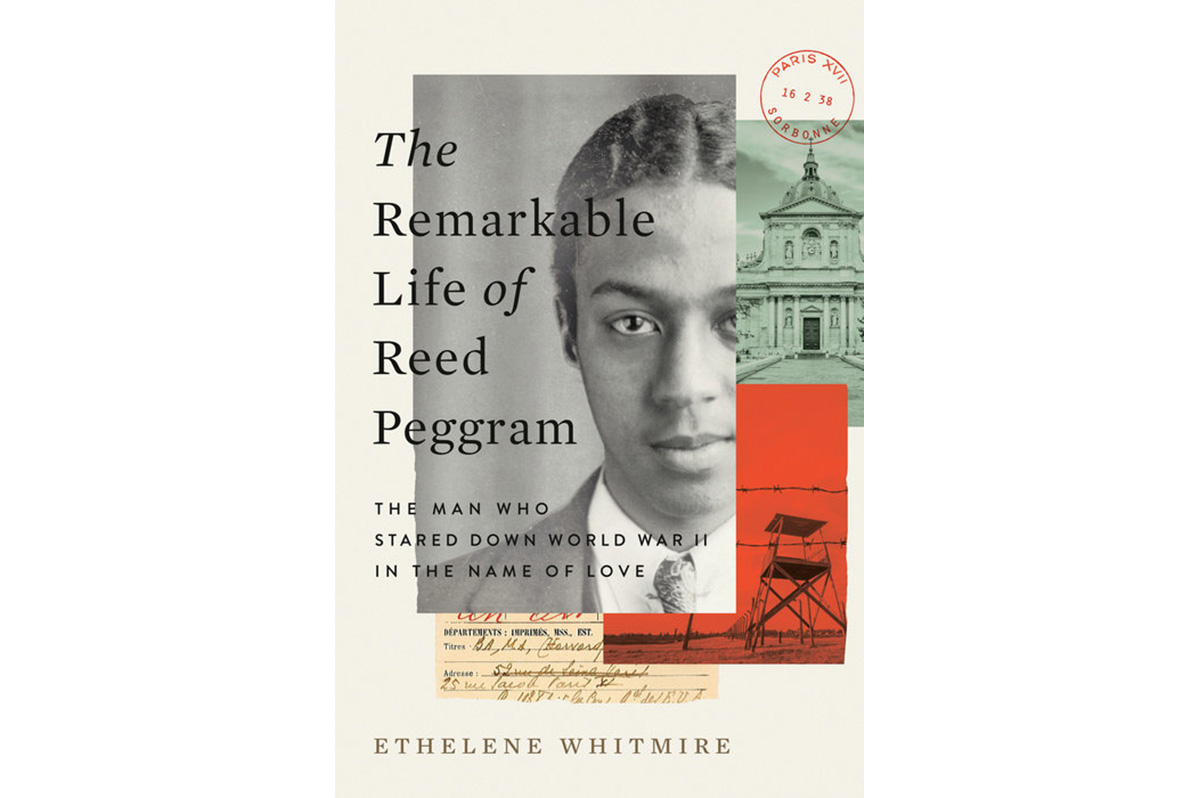
‘The Remarkable Life of Reed Peggram’
By Ethelene Whitmire
c.2026, Viking
$30/308 pages
You couldn’t escape it.
When you fell in love, that was it: you were there for good. Leaving your amour’s side was unthinkable, turning away was impossible. You’d do anything for that person you loved – even, as in the new biography, “The Remarkable Life of Reed Peggram” by Ethelene Whitmire, you’d escape toward danger.
On Aug. 28, 1938, Reed Peggram boarded a ship from Hoboken, N.J., hoping to “become a proper gentleman” and fulfill his dreams. A prolific writer and Harvard scholar of comparative literature, he’d recently been awarded the Rosenwald Fellowship, which put him in the company of literary stars like Du Bois, Hurston, and Hughes.
Both Peggram’s mother and grandmother were then domestic workers, and they had big expectations for him. Reed himself was eager to study abroad, for professional and personal reasons; he was “determined to become a French professor and an accomplished linguist” and “He also hoped to find love.”
What better place to do it than in Paris?
Outgoing and confident, Peggram made friends easily and had no trouble moving “through the world of his white male peers.” Where he faltered was in his lack of funds. He relied on the kindness of his many friends – one of whom introduced Peggram to a “man who would become so pivotal in his life,” a Danish man named Arne.
Peggram and Arne had a lot in common, and they began to enmesh their lives and dreams of living in the United States. But there were complications: homosexuality was largely forbidden, World War II was in its early stages, and it quickly became apparent that it was dangerous to stay in Europe.
And yet, Peggram loved Arne. He refused to leave without him and so, while most visiting Black Americans fled the war in Europe, “Reed was trying to stay.”
There’s so much more to the story inside “The Remarkable Life of Reed Peggram,” so much to know about Reed himself. Problem is, it’s a long haul to get to the good stuff.
In her introduction, author Ethelene Whitmire explains how she came to this tale and yes, it needs telling but probably not with the staggering number of inconsequential details here. Peggram moved homes a lot, and many people were involved in keeping him in Europe. That alone can be overwhelming; add the fact that costs and other monetary issues are mentioned in what seems like nearly every page, and you may wonder if you’ll ever find the reason for the book’s subtitle.
It’s there, nearly halfway through the book, which is when the tale takes a tender, urgent turn — albeit one with determination, rashness, and a dash of faux nonchalance. Also, if you’re expecting an unhappily-ever-after because, after all, it’s a World War II tale, don’t assume anything.
Reading this book will take a certain amount of patience, so skip it if you don’t have that fortitude. If you’re OK with minuscule details and want a heart-pounder, though, “The Remarkable Life of Reed Peggram” might be a good escape.
The Blade may receive commissions from qualifying purchases made via this post.

China’s top court acknowledges anti-LGBTQ discrimination

Man accused of threatening to shoot D.C. bar employee after making anti-gay slurs

Bree Fram’s congressional campaign ends but her fight continues

Rev. Peter Leland DeGroote dies at 86