Local
Man who shouted slurs at Alexandria gay couple found not guilty of assault
But judge rules neighbor guilty of misdemeanor disorderly conduct
An Alexandria, Va., General District Court judge on Monday, Nov. 8, issued a verdict of not guilty for 57-year-old Thomas Wood on a charge of misdemeanor simple assault against a gay man that police and prosecutors listed as a hate crime.
Following a four-and-a-half-hour nonjury trial, Judge Thomas Kelley Jr. ruled that two video and audio recordings that captured Wood repeatedly shouting anti-gay slurs at his two next door neighbors, Kyle Metz and Metz’s husband, Leo Liu Metz, in a July 3 incident did not provide sufficient evidence to prove Wood physically assaulted either of the two gay men or committed a simple assault under Virginia law.
Assistant Commonwealth’s Attorney Joe Cahoon, who acted as the lead prosecutor in the case, argued that both Kyle and Leo Metz testified at the trial that Wood raised and swung his arms over a fence that separated the properties of Wood and the Metz’s. He said Wood would have struck Leo Metz if Kyle Metz had not pulled Leo away from the fence.
In a separate verdict, Judge Kelley found Wood guilty of disorderly conduct, the second of the two charges filed against him by prosecutors in connection with the July 3 incident. The misdemeanor disorderly conduct charge was not classified as a hate crime under Virginia law.
Under Virginia law, misdemeanor cases such as simple assault or disorderly conduct are brought to trial before a judge without a jury.
While finding Wood not guilty of the hate crime assault charge, Kelley stated from the bench while delivering his verdict that he disagreed with arguments made by Wood in his testimony as a witness and by Wood’s attorney that the altercation was only and exclusively about a dispute over Wood’s parking space in an alley that separates Wood’s house from the house where Kyle and Leo Metz live.
“There is nothing that is said about parking,” Kelley said in referring to the two video recordings with full sound that captured Wood shouting the word “faggots” and asking which of the two gay men was the “wife,” among other insults.
“Are you the wife?” Wood is heard yelling on the video and audio recording. “Are you fucking him every night?” Wood shouts multiple times as captured by the recording.
“It is all about sexual orientation,” Kelley said from the bench while announcing his verdict, even though the hate crime designation ended when Kelley found Wood not guilty on the assault charge.
Minutes later, Kelley handed down a sentence for Wood on the disorderly conduct conviction that includes a $1,000 fine, 90 days in jail with all 90 days suspended, one year of unsupervised probation, and a requirement that Wood undergo counseling for anger management.
Under court rules, Wood could be ordered to serve some or all of the suspended 90 days of incarceration if he violates the terms of his probation.
At the request of Kyle and Leo Metz, and without objection from Wood’s attorney, B.R. Hicks, Kelley approved a stay-away protection order that prohibits Wood from threatening, intimidating or approaching the two gay men.
The dispute between Wood and Wood’s wife, Mary Wood, and the Metz’s began in April of this year, according to testimony at the Nov. 8 trial. Thomas and Mary Wood testified during the trial that the dispute began when the Metz’s moved into the house in Old Town Alexandria on Duke Street next door to the house they had been renting.
According to the Woods, the Metz’s placed a large planter at the edge of their property line that made it very difficult for the Woods to park their car in a space on their own property. Both Woods testified that in the weeks prior to the July 3 incident, they repeatedly and politely came to the front door of the Metz’s house to ask them if they could move the planter to make more room for them to park their car.
But the Metz’s testified that Thomas Wood yelled both anti-gay and anti-Asian slurs at them for at least a month or more prior to the July 3 incident that led to the assault and disorderly conduct charges against Thomas Wood. Leo Metz is Asian American.
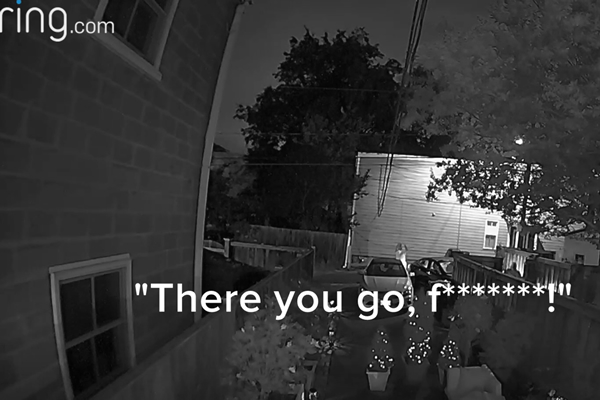
The July 3 incident received widespread publicity on social media and on local TV news broadcasts when the Metz’s released the video and audio recording of the incident captured on their Ring camera video surveillance system. A second video of the incident was taken by another nearby neighbor, Julia Kennedy, who testified at the trial that she witnessed what she believed to be Thomas Wood subjecting Kyle and Leo Metz to homophobic slurs during the July 3 incident.
Prosecutor Cahoon played both videos on a large video screen several times during the trial. He noted that Thomas Wood’s loud and prolonged shouting of anti-gay slurs and other insults that the Metz’s interpreted to be threats reverberated across the neighborhood, creating a disturbance that clearly constituted disorderly conduct.
Defense attorney Hicks pointed to Thomas Wood’s testimony in which Wood claimed he was shouting the word “maggot” and not “faggot” most of the time when he became outraged that he could barely park his car in the space on his own property because of the Metz’s planter blocking access to his parking space. The Metz’s have said the planter was completely within their property line.
They testified that the incident began about 9:30 p.m. on July 3 when they heard a loud crashing sound outside their house and became worried that someone hit their own car. Before going outside, they said they watched the video from the Ring camera linked to their cell phones and saw Thomas Wood shouting insults over the fence that separates the two houses.
The two gay men testified that they then went outside to find out what was happening, and immediately were subjected to anti-gay insults by Wood.
In response to questions from defense attorney Hicks, Wood insisted he is not homophobic and his anger on the night of the incident was based completely on the parking dispute and not on the sexual orientation of Kyle and Leo Metz.
“He is not a homophobe at all,” defense attorney Hicks told the Washington Blade after the trial.
A friend of the Metz’s who attended the trial told the Washington Blade that the parking space on the Wood’s property was too small for their car and that they, not the Metz’s, were responsible for their parking problems.
Although Kyle and Leo Metz testified that Wood reached over the fence and attempted to assault Leo, which prosecutor Cahoon said constituted a simple assault under Virginia law, defense attorney Hicks argued that nowhere on the two videos was there any image showing an assault or an attempted assault.
Prior to the judge’s verdict, Hicks argued that Wood should not be convicted of a hate crime because his words of “anger” were protected under the free speech provisions of the U.S. Constitution, even though his words were not “politically correct.”
Hicks couldn’t immediately be reached after the trial to determine if Wood plans to appeal the verdict finding him guilty of disorderly conduct.




District of Columbia
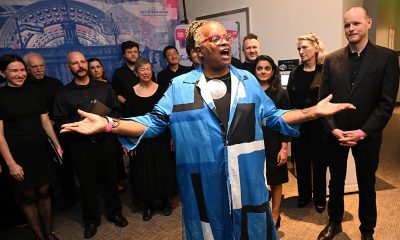
Capital Pride chair resigns from board after just 10 months
Anna Jinkerson ‘taking step back to move forward’

Anna Jinkerson, who has served as chair of D.C.’s Capital Pride Alliance Board of Directors for the past 10 months and has served on the board for the past four years, confirmed she is resigning from the board effective Sept. 30.
Capital Pride Alliance serves as the lead organizer of D.C.’s annual LGBTQ Pride events.
“I am taking a step back to move forward and plan to stay engaged in the community,” Jinkerson told the Washington Blade in a statement. “Serving as a volunteer leader during a period of transition following World Pride was both an honor and a challenge,” she said.
“Throughout my tenure, I focused on strengthening accountability, improving communications, supporting staff and volunteers, and helping position the organization for long-term success,” she told the Blade in her statement. “Meaningful organizational progress requires collaboration, dedication, and a shared commitment to serving the community, and I am proud of the work accomplished during this period.”
In February of this year, during Jinkerson’s tenure on the board, Capital Pride announced it had expanded the size of its board from 12 to 25 members.
Around that same time one of the existing board members, transgender activist Taylor Lianne Chandler, announced in a letter to fellow board members that the Blade obtained from an anonymous sender that she was resigning from the board. Among her reasons for resigning, she said in the letter, was the board’s failure to address “sexual misconduct” within the Capital Pride organization.
In the letter, which she confirmed for the Blade was authentic, Chandler said she and other board members raised “credible concerns” of alleged sexual misconduct within the Capital Pride organization and the board chose not to adequately respond to those concerns.
Chandler told the Blade a Capital Pride investigation identified an individual implicated in a “pattern” of sexual harassment related behavior, but said she was bound by a Non-Disclosure Agreement that applied to all board members and she could not provide further details.
When the Blade contacted Capital Pride for comment on Chandler’s allegations, Jinkerson responded with a statement saying Capital Pride was addressing her concerns.
“When concerns are brought to CPA, we act quickly and appropriately to address them,” Jinkerson said. “As we continue to grow our organization, we’re proactively strengthening the policies and procedures that shape our systems, our infrastructure, and the support we provide to our team and partners,” she said.
In her statement to the Blade this week commenting on her planned resignation from the Capital Pride board, Jinkerson appeared to refer to the concern raised by Chandler.
“I am proud to have advocated for sexual harassment training, supported staff and volunteers when concerns were raised, engaged community leaders in important conversations, and helped advance practices that strengthen safety, transparency, and accountability,” she said.
“As I step away from board service, I do so with gratitude for the opportunity to serve and with confidence in the organization’s future,” she added. “I am taking a step back to move forward, and I look forward to remaining actively engaged in our community and continuing to support efforts that advance equality, belonging, and pride for all.”
District of Columbia
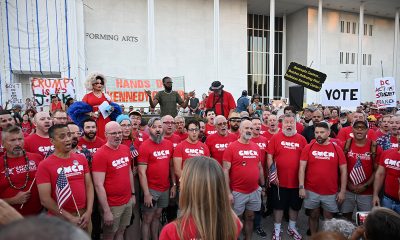
Over 2,000 turn out for Hands Around the Kennedy Center protest
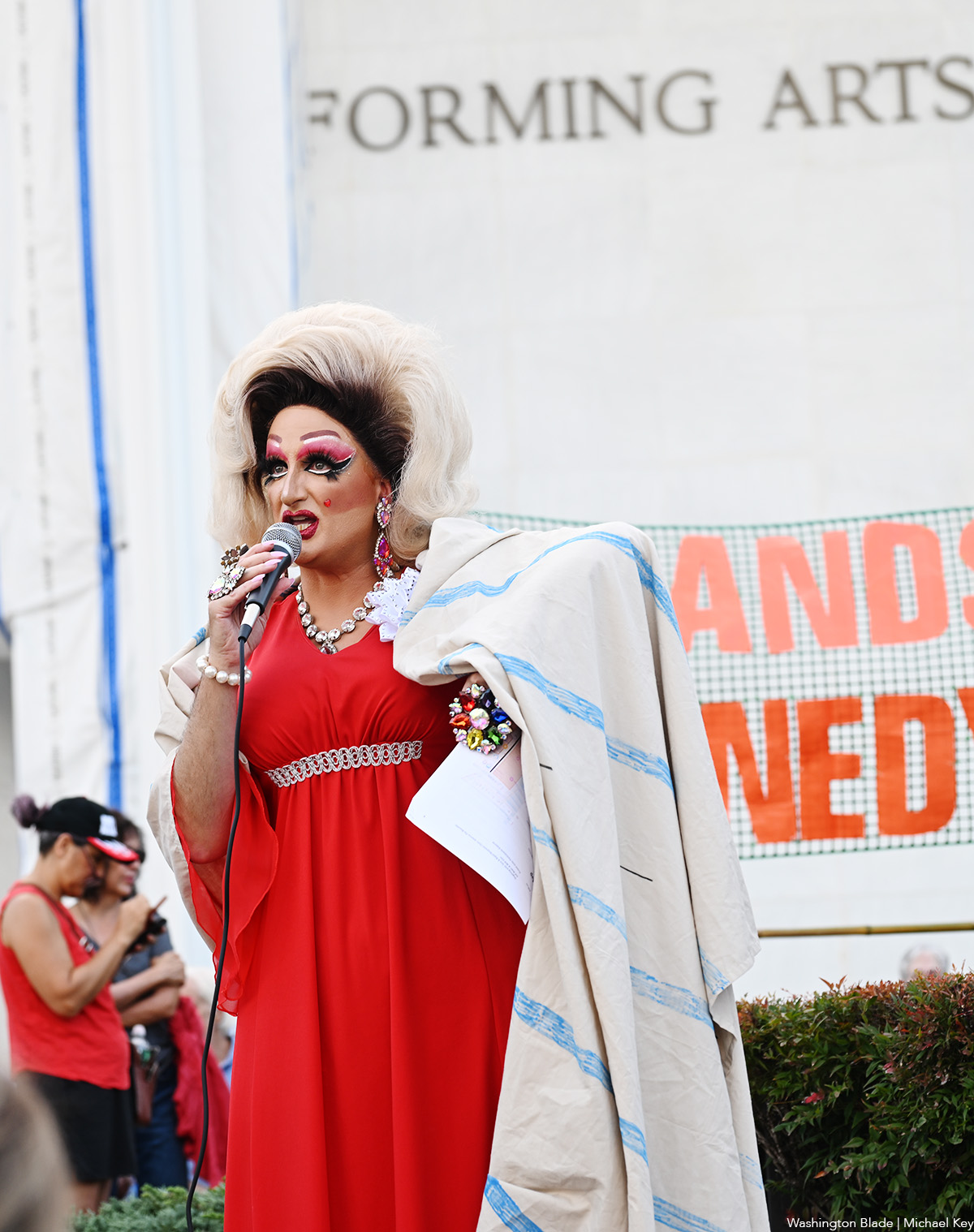
Drag performer Tara Hoot serves as MC, Gay Men’s Chorus of DC performs, attendees shout for Trump to keep ‘hands off’ Kennedy Center
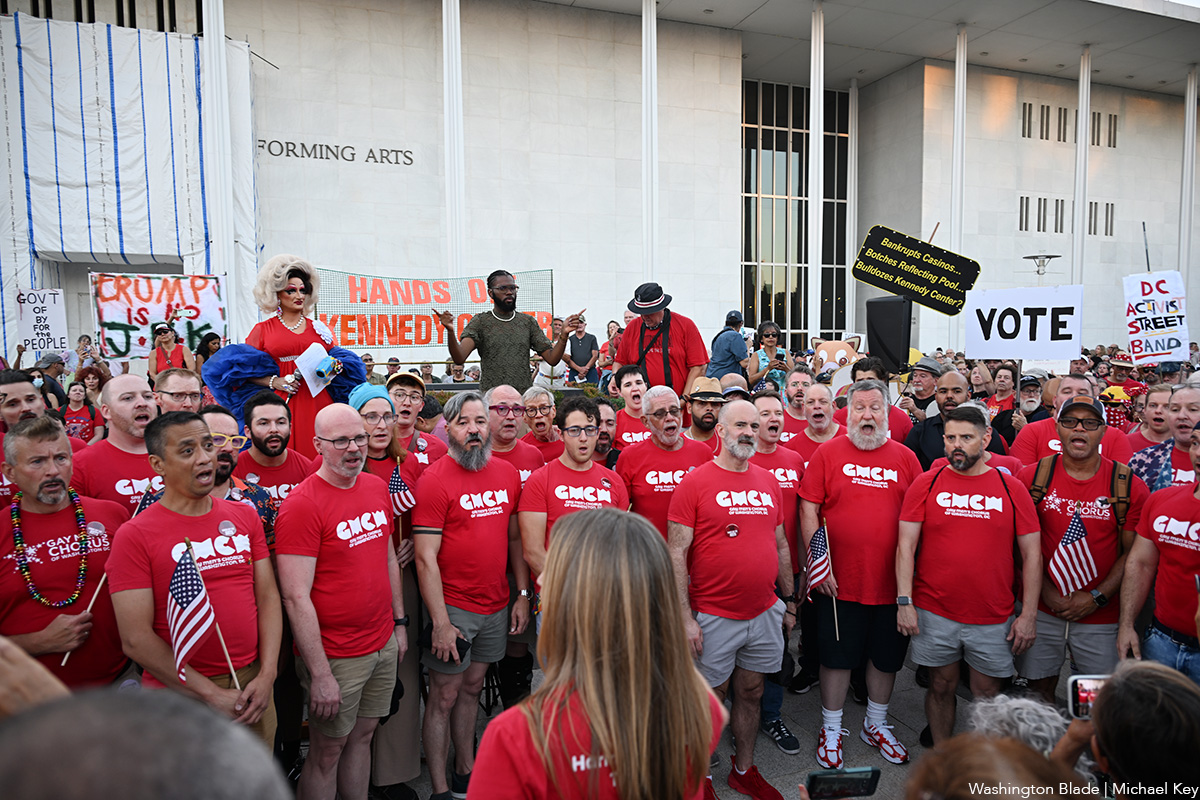
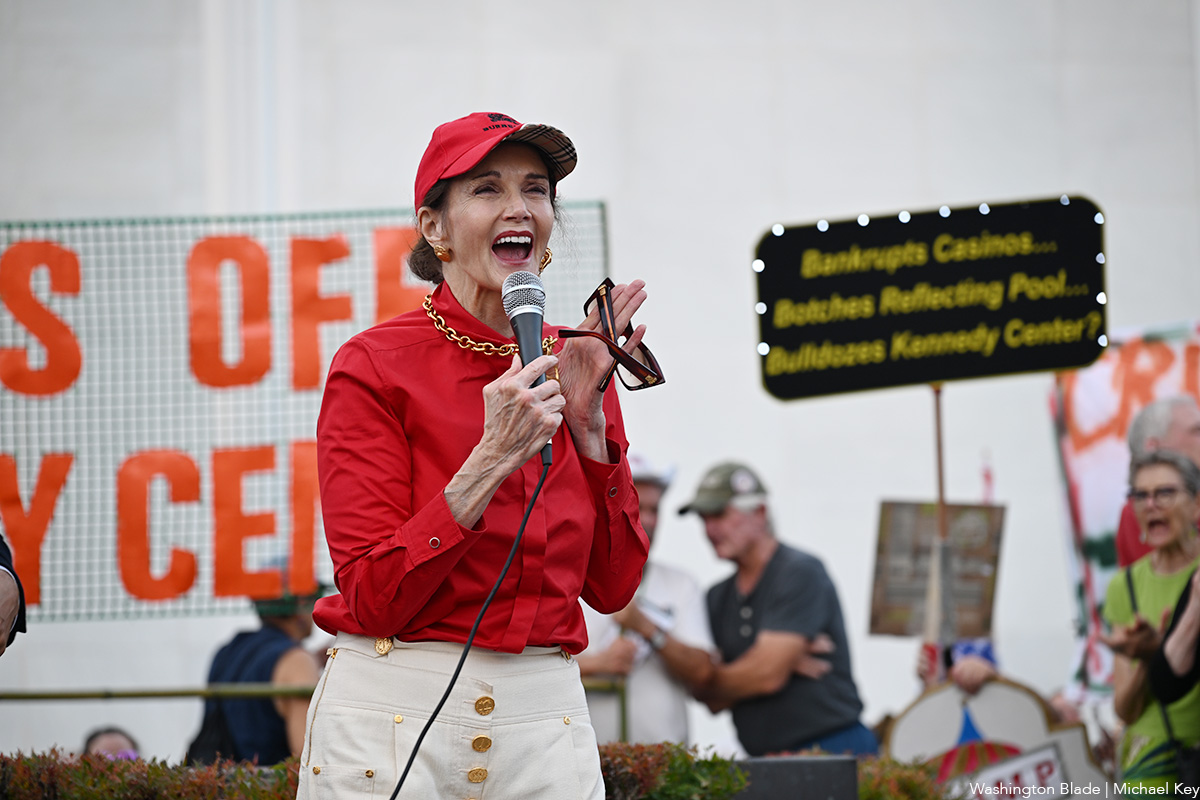
More than 2,000 supporters of the John F. Kennedy Center for the Performing Arts turned out on Sept. 18, for a rally in support of the performing arts center and a vocal protest against President Donald Trump’s threats to permanently close the center and possibly demolish it.
The event was organized by a group called Hands Off the Arts, which initially called for participants to form a “human chain” around the Kennedy Center’s main building following a rally on the plaza in front of the building.
However, due to a decision by the Trump-controlled Kennedy Center’s board of trustees to close the center earlier in the week and install fencing around part of the building, participants could only form the chain around part of the building, according to organizers.
Drag performer Tara Hoot, who co-organized the event and served as master of ceremonies for the rally preceding the “human chain,” said the large turnout could have fully surrounded the building at least twice had the fencing not prevented a full encirclement.
Among the musicians and singing groups that performed at the rally was the Gay Men’s Chorus of Washington, which, like other rally performers, had performed at the Kennedy Center in past years. They drew loud applause after singing one of their favorite songs from the Broadway musical show Ragtime, which includes the lyrics, “Will justice be demanded by 10 million men? Make them hear you. When they hear you, I’ll be near you again.”
View on Threads
Prior to their performance, Gay Men’s Chorus of Washington’s artistic director, Thea Kano, spoke at the rally, reminding participants that shortly after the Trump takeover of the center last year, Kennedy Center officials cancelled a concert the chorus was scheduled to perform there for World Pride 2025.
A Kennedy Center spokesperson said the cancellation was due to a scheduling conflict, but chorus members and LGBTQ activists believe it resulted from policies put in place by Trump and his leadership team at the Kennedy Center following Trump’s statements that he would end controversial “woke” performances that he claimed the majority of Americans disapprove of.
“Now this building sits empty in silence,” Kano told the crowd at the rally. “Let us raise our voices together and bring back the Kennedy Center as it was intended, a place where American culture could be celebrated and elevated, embracing the vibrancy with the spectrum of identify without censure and without politics,” she said.
Among the others who spoke at the rally were U.S. Rep. Don Beyer (D-Va.), U.S. Rep. Jonathan Jackson (D-Ill.), and D.C. Councilmember Robert White (D-At-Large).
Most speakers, along with LGBTQ participants in the hands-around-the-building event expressed strong opposition to Trump’s demand that the Kennedy Center name be changed from the John F. Kennedy Center for the Performing Arts to the Donald J. Trump and the John F. Kennedy Center for the Performing Arts.
At Trump’s request, his appointed board initially made that name change and placed Trump’s name on the front wall of the building along with the Kennedy name. But following legal action taken by opponents who pointed out that Congress must approve such a name change, a judge ordered the removal of Trump’s name from the building. Trump has said he will take steps to reverse that order and has said he will stop plans to renovate the Kennedy Center building and possibly demolish it if his name is not restored in the Kennedy’s Center’s official name.
Throughout the Sept. 18 rally, LGBTQ participants repeatedly responded to the Trump threats by shouting, “Hands Off!”
Chris Raleigh, one of the founders of Hands Off the Arts and a lead organizer of the Sept. 18 event at the Kennedy Center who spoke at the event told the Washington Blade that more similar events are being planned and he welcomes the support the event has received from the LGBTQ community.
“The LGBTQ community was here first, and we’re following them,” he said. “They’ve been the spearhead; they’ve been the vanguard. And I’m so thankful for heroes like Tara Hoot,” he said, adding, “It’s because they know what it means and how this is a safe place – the theater – for many LGBTQ people.”
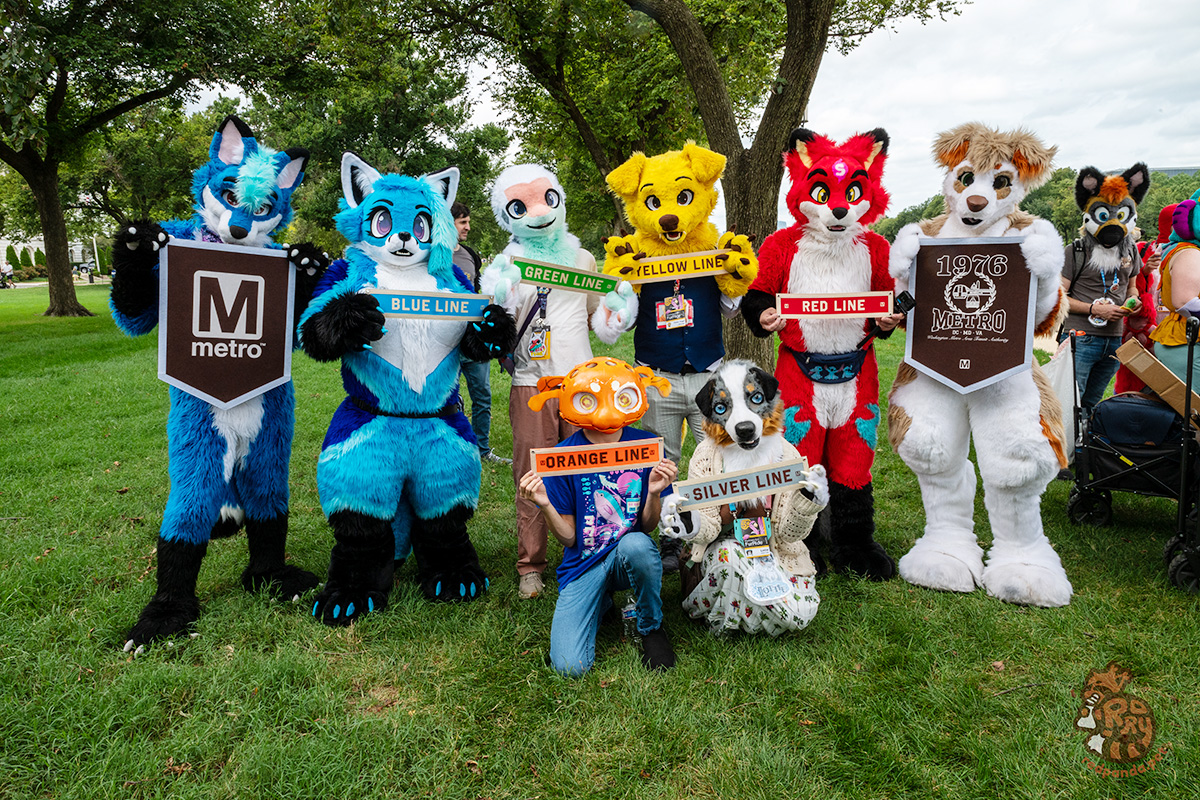
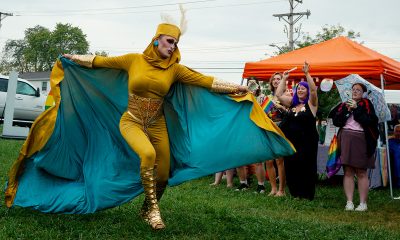
The DMV’s own furry group was on full display on the Metro on Sept. 12.
Shutterpaws is a volunteer-led 501(c)(3) non-profit organization located in Maryland.
The furry group has been doing the FurRide event since 2024 and has blown up in popularity for furries around DMV. They showcased themselves on the Silver and Blue Lines near the Smithsonian on Sept. 12.
“A lot of careful planning goes into running these events, with the goal being a seamless and enjoyable experience for everyone who attends,” says Zayre, a Shutterpaws staff member. “There’s a lot that you learn just by trial and error, and as Shutterpaws hosts more and more events, our team of event organizers continues to learn and refine our approach to keep things running smoothly and finding new ways to engage with our community.”
With a larger growth of participation in the community comes many challenges with the group, especially when it comes to the Metro rides and organizing.
“The biggest challenge that we face as organizers is keeping things fresh and finding new and engaging venues to host events,” says Zayre. “Recently we saw a lot of success hosting a meet at On Target Battlezone, an indoor NERF gun battle arena where our crew was welcome to show up and play both with and without a fur suit.”
Nevertheless, Shutterpaws receive overwhelming support from the community and partners.
“Across the DMV there are so many amazing places to host a Shutterpaws event so we can pursue our mission of helping connect fur suiters and photographers, and we’re blown away with the amount of support we’ve received from our community partners,” says Zayre.
Shutterpaws plans to do more events for anyone in the DMV who is interested.
Their next event in collaboration with DC Fur Meet will take place at Pitchers (2317 18th St., N.W.) on Saturday. Visit Shutterpaws’ website for more information.

Caso Karlina: Una sentencia histórica contra las terapias de «conversión»

Washington Blade responds to concerns over White House pool duties

Young people should know history of the fight for human rights

Dutch prime minister visits Stonewall Inn

Clavicular charged in alleged rape of teenage influencer

Over 2,000 turn out for Hands Around the Kennedy Center protest

PHOTOS: Wanda Alston Foundation Fall Reception

PHOTOS: Walk and 5K to End HIV

What LGBTQ veterans are building after ‘Don’t Ask, Don’t Tell’