News
White House: Same-sex marriage bill still ‘incredibly important’ to Biden
Jean-Pierre declines to comment on private talks on bill
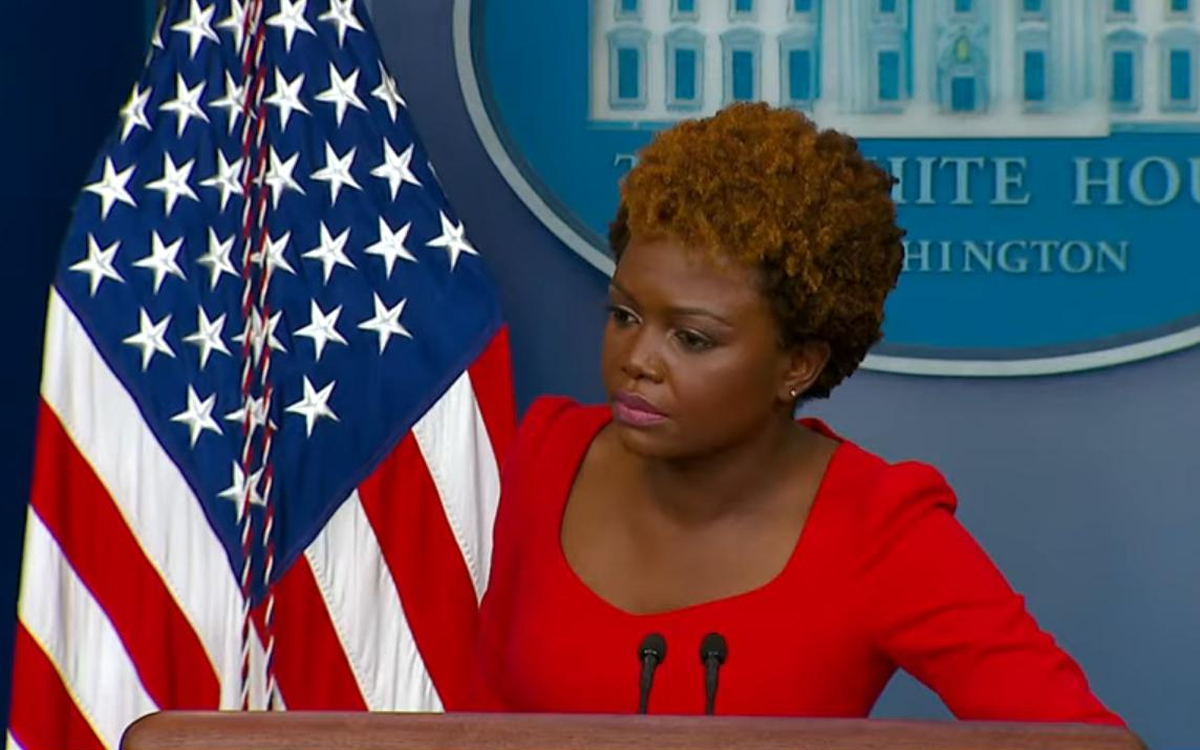
White House Press Secretary Karine Jean-Pierre said Thursday legislation seeking to codify same-sex marriage, left by the Senate as unfinished business before adjourning for August recess, continues to be “incredibly important” to President Biden.
Jean-Pierre, responding to a question from the Washington Blade on whether Biden will reach out to Senate Majority Leader Charles Schumer (D-N.Y.) to get a vote scheduled on the Respect for Marriage Act, said she had no private conversations to read out, but pointed to a formal Statement of Administration Policy from the White House as evidence of Biden’s support for the bill.
“As you know, we are constantly in conversation with Congress — members of Congress,” Jean-Pierre said. “This is something that we put out a SAP when it first passed the House supporting the marriage equality bill. This is incredibly important to the president. We heard from him back in 2012 when he was one of the first voices to talk about how important marriage equality was being ahead of many others. He has been an advocate for the community. He will continue to be advocate for the community.”
Jean-Pierre was referring to Biden’s comments in 2012 on “Meet the Press,” when he spoke out in favor of marriage rights for same-sex couples and beat President Obama to the punch by several days in coming out for gay nuptials.
Asked by the Blade about talk of an amendment for religious accommodations to obtain the necessary 10 votes from Republicans to end a filibuster in the Senate, Jean-Pierre said the White House would leave the details to Congress.
“We’ve always said we leave the mechanics of the Senate, or Congress, in this case the Senate, to the Senate and the leadership, but we’ll continue to have those conversations,” Jean-Pierre said, “This is an issue that is…tremendously important to this president.”
Commentary
Is Ghana’s selective justice a human rights contradiction?
Country’s commitment to human rights appears inconsistent
Ghana’s mission to have the United Nations recognize the trafficking of enslaved Africans and racialized chattel enslavement as the gravest crime against humanity is a historic milestone. The resolution adopted on March 25, 2026, with 123 out of about 180 countries in support, marks a major step toward global acknowledgement of the brutality and inhumanity of slavery. A 2022 report by the Equal Justice Initiative, “The Transatlantic Slave Trade,” highlights how during the slave trade, Africans who were enslaved had no rights, freedom, recognition or protection under the law. They had no voice, no bodily autonomy, no respected identity and could be brutally violated with no legal protection. This history represents a grave crime against humanity.
In my opinion, Ghana and the other countries that voted in favor are entirely right to say that such historic events cannot be sanitized or reduced to diplomatic language. Recognition is the first step towards accountability. This matter is important because it is arguably the foundation of the modern-day injustice and inequality people experience, including wealth inequality, racism, sexism, xenophobia, and queerphobia.
The double standard
Yet, despite this important step on the world stage, Ghana’s commitment to human rights appears inconsistent. The same government advocating for justice for enslaved Africans is enacting laws that jeopardies the rights of Africans today. This contradiction between Ghana’s international stance and its domestic policies is at the heart of the discussion.
In February 2026, the Ghanaian parliament formally received the Human Sexual Rights and Family Values Bill. The bill is a grave threat to the rights to nondiscrimination, protection under the law, privacy and freedom of association, assembly, and expression. It expands criminalization of LGBTQ+ people, and anyone associated with them. This Human Sexual Rights and Family Values Bill calls for a three-year imprisonment for anyone who identifies as LGBTQ+, anyone who has gender affirming treatment, anyone who enters into a same-sex marriage or attends a same-sex wedding and anyone who promotes equal rights for LGBTQ+ people. It turns enforcement into a societal obligation rather than just a state function, encouraging people to report anyone who looks suspicious or different. This further legitimizes the brutal attacks on LGBTQ+ people socially, which leaves the people of Ghana with blood on their hands.
Ghana’s proposed and reintroduced anti-LGBTQ+ legislation is said to be among the most restrictive in the world and will result in the inhumane treatment of LGBTQ+ people. It not only further criminalizes consensual same-sex relations but also targets civil society organizations that are perceived to be supporting equal rights for LGBTQ+ people. So, if this law passes, it will be illegal to support equal rights and challenge the inhuman treatment of queer Ghanaians and allies. Is this not a double standard? Ghana seeks justice for the ill-treatment of Africans during the transatlantic slave trade but is actively in the process of seeking to harm its own people.
This is not theoretical harm; it is practical harm. According to the Human Rights Watch, LGBTQ+ people in Ghana already face systemic stigma, discrimination, harassment and violence, often enabled by both legal frameworks and social stigma, resulting in a hostile climate.
Ghana falls short of upholding human rights at home
On the global stage, Ghana is arguing that the dehumanization of Africans through slavery was so severe that it constitutes the gravest possible violation of human dignity. This argument rests on a core principle that reducing people to less than fully human is unacceptable under any circumstances.
Back at home, the state is endorsing laws that do exactly that to LGBTQ+ people. Criminalizing identity, suppressing expression, clamping down on civic space, monitoring and surveilling citizens and advocating for social exclusion. These are elements of dehumanization signaling that some are less deserving of protection, dignity, respect, and justice. That is the definition of a double standard.
Supporters of these laws often frame homosexuality as un-African, but this claim does not hold up under scrutiny. In his article, “The ‘Deviant’ African Genders That Colonialism Condemned”, Mohammed Elnaiem emphasizes that historical and anthropological evidence shows that diverse sexualities and gender expressions existed across African societies long before colonial rule. Ironically, many of the laws used to criminalize LGBTQ+ people today trace directly back to the colonial-era. This is even supported by the African Court, which, in December 2020, through its Advisory opinion, made it clear that these colonial-era laws are discriminatory and perpetuated marginalization. The African Court also called on African states to take action in this regard.
It is no secret that anti-rights actors are actively operating in Ghana and supporting leaders to advance their anti-rights agenda. They are increasingly organized, visible, well-funded, and influential in shaping state policy. The upcoming 4th African Inter-Parliamentary Conference on Family and Sovereignty, scheduled to take place in Accra from May 27-30, 2026, is a clear example of this coordination. The conference endorses the so-called African Charter on Family Values, a deeply contested initiative that frames LGBTQ+ people as a threat to children and positions queer identities as foreign ideologies. This platform is being used to legitimize and advance anti-LGBTIQ+ legislation, restrict comprehensive sexuality education and roll back sexual and reproductive health rights. In this context, the treatment of LGBTQ+ people in Ghana cannot be viewed as isolated policy choices, but rather as part of a broader coordinated anti-rights agenda that normalizes and legalizes discrimination. It fuels increasingly inhumane conditions for queer communities and civil society. Ghana is simultaneously rejecting colonial injustice in one breath while enforcing colonial-era morality laws in another.
There is also a legal inconsistency worth noting. Ghana’s own Constitution guarantees the right to life, protection from violence, the right to personal liberty, the right to human dignity, equality and freedom from discrimination and the right to a fair trial. Yet, in practice these rights are not equally applied to LGBTQ+ individuals. Depriving equal rights to LGBTQ+ persons is the same as what the slave owners did to slaves.
You cannot build a credible human rights position on selective application
To be clear, recognizing slavery as a crime against humanity is not diminished by pointing out this contradiction. Both truths can coexist: the UN resolution is a victory and Ghana’s domestic policies remain deeply troubling. In fact, holding both realities together is necessary if the language of human rights is to mean anything at all. Ghana has taken a powerful stand on the global stage. The question now is whether it is willing to apply that same moral clarity at home.
Bradley Fortuin is a consultant at the Southern Africa Litigation Center and a human rights activist.
Maryland
Supreme Court ruling against conversion therapy bans could affect Md. law
Then-Gov. Larry Hogan signed statute in 2018
By PAMELA WOOD, JOHN-JOHN WILLIAMS IV, and MADELEINE O’NEILL | The U.S. Supreme Court on Tuesday ruled against a law banning “conversion therapy” for LGBTQ kids in Colorado, a ruling that also could apply to Maryland’s ban on the discredited practice.
An 8-1 high court majority sided with a Christian counselor who argues the law banning talk therapy violates the First Amendment. The justices agreed that the law raises free speech concerns and sent it back to a lower court to decide whether it meets a legal standard that few laws pass.
Justice Neil Gorsuch, writing for the court’s majority, said the law “censors speech based on viewpoint.” The First Amendment, he wrote, “stands as a shield against any effort to enforce orthodoxy in thought or speech in this country.”
The rest of this article can be read on the Baltimore Banner’s website.
Research/Study
Glisten report details hostile climate for LGBTQ students
Survey details persistent harassment, feeling unsafe in classroom
The Gay, Lesbian, and Straight Education Network (now referred to as Glisten rather than GLSEN following a February rebrand) released its 13th National School Climate Survey on Tuesday, offering an often under-evaluated and under-addressed look at the realities LGBTQ students are dealing with within America’s K-12 schools.
The revised report provides new data points that could indicate the future of the current LGBTQ youth population, highlighting rising issues within school structures that often disproportionately impact LGBTQ students, while also offering a more “nuanced portrait” of how they are maneuvering these challenges.
The most alarming piece of data shows that “two in three students” reported feeling unsafe in school during the 2023–2024 school year due to their sexual orientation, gender identity, or gender expression. That high number becomes clearer as other findings in the research corroborate the points made — especially for those who haven’t stepped into a modern American classroom recently — which seems to be the best way to get a sense of what it is like to learn in one.
An additional data point showing LGBTQ students’ heightened sense of insecurity is reinforced by the widespread and constant harassment students face for their sexuality or gender identity.
The survey found that 62 percent of students experienced verbal, physical, or online harassment based on sexual orientation, while 68 percent reported the same due to their gender identity or expression.
Fifty-three percent — slightly more than half of all respondents — said they faced LGBTQ-related discrimination, including being barred from using facilities aligned with their gender identity in schools.
The survey also highlights disparities within the community — particularly within the 2023–2024 data, which emphasizes the unique struggles faced by transgender and non-white students. Trans students reported that 86 percent of them avoided certain school spaces out of fear for their safety. Non-white LGBTQ students (including Black, Indigenous, and people of color, referred to in the data as BIPOC) face a particularly difficult time within schools, with 48 percent reporting harassment based on their race or ethnicity.
In addition to these high levels of harassment, survey respondents also noted that the broader political climate shaping Washington is impacting their daily experiences in negative ways. Many reported that school environments felt more hostile during the 2024–2025 school year amid escalating anti-LGBTQ rhetoric across the country, in the news, and within the White House as policy debates continue.
Despite these conditions — which attempt to generalize and adequately compare the discrimination, harassment, and bullying faced by LGBTQ students in K-12 schools — the report underscores that LGBTQ students are not easily categorized.
“Young people actually defy the static labels of victim or hero,” said Glisten CEO Melanie Willingham-Jaggers, speaking to the Washington Blade at a reception for the data’s release. “They are neither all downtrodden nor all resilient — they are complicated and multifaceted. What we are finding through our research is that they are actually creating solutions with and for each other. They understand they can’t rely on these systems, so they are doing something themselves.”
That dual reality — that LGBTQ students appear hyper-resilient amid systemic failure in school systems that make their experiences more difficult — is a defining theme of this year’s findings.
“There’s a resilience and a power and a clarity in young people that says there is no use in trying to change who I am because I am who I am,” Willingham-Jaggers said at the event held in the NEA building. “What is also true is that a super hostile political environment is really terrible for everyone’s mental health, including children. It ought not be on a 13-year-old or a 16-year-old to keep themselves safe. That’s what parents are for, that’s what adults in schools are for, and that’s what education is supposed to do.”
She added that the data reflects broader institutional shortcomings, especially as many attempts to fix these systemic issues continue to fall short or worsen conditions for the most marginalized. Trans people of color often face the worst instances of discrimination, harassment, and bullying, and the structures in place to alleviate these issues can sometimes make them worse.
“Unfortunately, our leaders and our institutions are failing our children,” she said, pointing out that education should serve as a pathway out of adversity and into a better future. “Education is supposed to be helping our young people connect with each other, and allow for them to envision a world so they can leave school, and come out into the world, and be leaders … I think you can take the moral temperature of a country by how they treat their children. And we are — the collective ‘we,’ personified by our leaders — failing our children.”
Despite the troubling data highlighting how difficult it is to be an LGBTQ K-12 student today, the survey points to clear pathways for improvement.
These include being upfront and inclusive with LGBTQ students in a variety of ways. When schools provide comprehensive anti-bullying policies, LGBTQ students reported they were more likely to look forward to school and feel like they belonged. This also extends to expanding sex education to include often-overlooked sexual and gender minorities. Increased instances of positive LGBTQ inclusion were linked to better academic performance, attendance, and overall belonging, while negative depictions and exclusionary practices were linked to worse outcomes.
A major positive finding of the study is that when LGBTQ students reported having access to supportive educators, inclusive curricula, explicit anti-bullying policies, and Gender and Sexuality Alliances (GSAs), they also reported higher GPAs and a stronger sense of belonging — suggesting that even small, targeted policy shifts can meaningfully improve outcomes.
In a statement accompanying the report, Willingham-Jaggers emphasized the importance of listening to students’ experiences in full, which they acknowledged can be difficult to capture.
“LGBTQ+ youth, including intersex, asexual, and two-spirit students, are whole people with complex lives that defy the tired boxes of ‘victim’ or ‘leader’ into which they are so often placed,” she said. “Safety is not just the absence of harm; it is active affirmation. At a moment when young people’s identities are being debated and restricted, this study speaks truth to a menacing power.”
Researchers behind the survey also noted a shift in methodology this year, incorporating more qualitative data through student focus groups. By broadening beyond strictly quantitative measures, the data offers a deeper understanding of students’ lived experiences and strengthens the overall findings.
“Similar to previous findings, we continue to find that schools continue to be hostile sites for LGBTQ+ students and in particular for trans and gender-expanding students and BIPOC students,” said Yu-Chi Wang and Shweta Moorthy. “Students provided us with more context and emotion behind our findings … helping us better understand what was happening in our schools and brainstorm ways we can improve it.”
For Willingham-Jaggers, the stakes extend beyond education alone and into the kind of adults these students will become — and, for some, the leaders who will shape the future. By instilling the values of understanding, equality, and democracy early, young people are better equipped to navigate future challenges and reshape the systems they inherit.
“Education is the cornerstone of democracy,” she said. “Education provides an immune system for autocracy. Democracy is born anew every generation, and education is its midwife. We need young people to be ready to build a future that is bigger than the tiny, weak vision of those currently in power.”
Even in a moment she described as “dark and frightening,” Willingham-Jaggers framed the report as both a warning and a call to action. “I feel really privileged to be leading this organization at this moment, because this moment is really critical,” she said. “I’m glad it’s me building the team and envisioning with our young people the future that we’re trying to build.”
The report concludes by recognizing the many organizations that contributed to the development of its findings. Focus group partners included Able South Carolina, Advocates for Youth, Freedom Oklahoma, interACT: Advocates for Intersex Youth, Louisville Youth Group, the Montrose Center, National Queer Asian Pacific Islander Alliance, National Black Justice Collective, Trans Mentor Project, and Youth Celebrate Diversity. Additional organizations — including GenderCool, Immigration Equality, interACT, SIECUS, and UnidosUS — also helped review and update the survey.
The methodology and data collection instruments used in Glisten’s 2025 National School Climate Survey were reviewed and approved by an independent Institutional Review Board, ensuring the study met established ethical standards and best practices for research involving human subjects.
The full report can be accessed at Glisten’s website at glisten.org.
-
The White House5 days agoTrump tells Fox News he won the ‘gay vote’ — but polls tell a different story
-
District of Columbia2 days ago‘Out for McDuffie’ event held at D.C. gay bar
-
Theater3 days ago‘Jonah’ an undeniably compelling but unusual memory play
-
Movies3 days agoThe Oscar-losing performance that’s too good to miss