Obituary
Longtime D.C. LGBTQ rights advocate, event promoter Jacob Pring dies at 47
Popular events included parties for people with HIV and ‘Gay Day’ at National Zoo
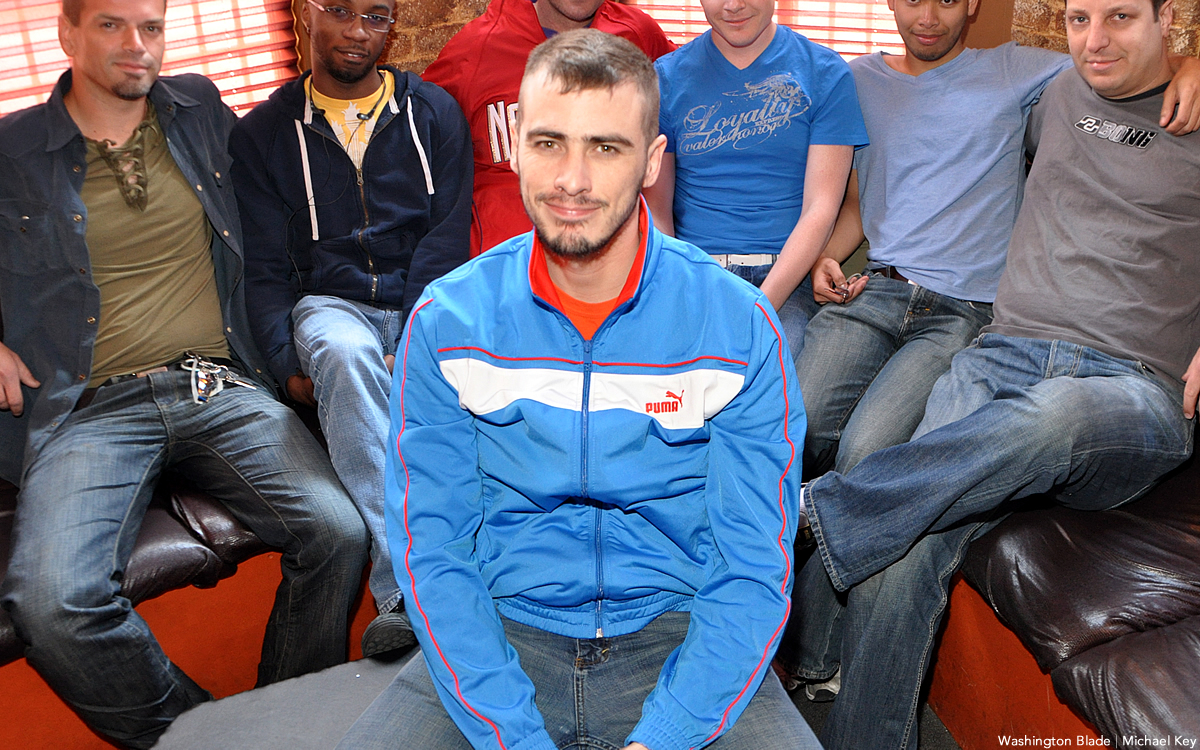
Jacob Nathaniel Pring, a D.C.-area LGBTQ rights advocate whose career included working as a mortgage loan officer and Lyft driver by day while organizing social events and parties at night and on weekends at D.C. gay bars and other venues, including “Gay Day” at the National Zoo, died Sept. 26, at his home in Springfield, Va. He was 47.
His longtime friend Nicholas DiBlasio said another friend and housemate at the group home where Pring lived found him deceased in his room. DiBlasio said Pring’s passing was sudden and unexpected and friends and family members were awaiting the results of toxicology tests associated with an autopsy performed by the Virginia Office of the Chief Medical Examiner to determine the cause of death.
“Jacob was a good man, and he had an engaging personality and a marvelous smile,” according to Sasha Chijoku, one of his housemates who posted a tribute to Pring on Facebook. “Above all, Jacob’s personality was big, and the only thing that was perhaps bigger was his smile,” she wrote.
DiBlasio and others who knew him and posted messages on social media said Pring for many years organized and promoted weekly leather-oriented events at gay clubs and other LGBTQ supportive clubs. Among them were the events held at the D.C. gay bar Green Lantern and the LGBTQ-friendly nightclub Crucible called CODE and XXX parties.
In a January 2013 interview with the Washington Blade, Pring said between 100 and 150 mostly gay men turned out for those events.
“There’s always new people coming in,” he said. “People bring their friends. It’s fun. No attitude, no drama.”
DiBlasio said Pring was born and raised in Pennsylvania. Pring’s Facebook page says his hometown was Levittown, Pa. Pring’s LinkedIn page says he studied computer engineering at Temple University in Philadelphia from 1998-1999 and studied biology at the University of the District of Columbia from 2014-2017, where DiBlasio says he believes Pring received his bachelor’s degree.
“I served in the U.S. Air Force and the Air National Guard,” Pring stated in a September 2020 Facebook posting. “I chose to do my part to keep our country safe,” he wrote, adding, “This stuff about Trump saying crazy things he has said makes me so angry! Please vote that asshole out! Please!”
Pring, an outspoken supporter of LGBTQ rights, makes it clear in his social media postings that he was a staunch Democrat.
While a student at UDC in 2015, Pring created a student military veterans group called VIRTUES, which he said stood for “Values, Integrity Readiness, Tenacity, Unity, Excellence, and Service.”
In his LinkedIn page, Pring says he worked from 2003 to 2006 as a Senior Mortgage Consultant for the firm Preferred Service Mortgage and in the following year, he held a similar position with Access National Mortgage. It says that beginning in 2020 he served as a loan officer with Intercostal Mortgage LLC.
DiBlasio said about a year later in 2021 Pring switched jobs to resume working as a Lyft driver, which he had been doing periodically in earlier years.
David Mariner, former executive director of the D.C. Center for the LGBT Community, praised Pring for creating yet another important event – Gay Day at the Zoo – which Mariner said served and continues to serve as a fundraising event for the D.C. Center
“He was out as an HIV-positive person and created social spaces for poz men,” Mariner said in a Facebook posting this week.
Mariner was referring to Pring’s launching of a series of “Poz” events for both people with HIV and their friends and loved ones.
“The Poz events bring faces to the disease & helps eliminate the STIGMA surrounding people with HIV/AIDS,” Pring stated in a Facebook message. “The DJs are HIV+ & Jacob Nathaniel Pring himself has been Poz for 7 years!” his message states.
Pring’s friends have pointed to other social media postings by Pring discussing his own struggles with substance abuse and depression. But in recent years, Pring’s postings have said the support he received from counseling and support groups helped him “walk away” from drug use.
“I have had a blessed life,” he wrote in a Sept. 7, 2020, Facebook posting. “Walking away from the drugs for good has me sitting here reminiscing of younger days,” he wrote. “We don’t get to go back but we sure do get to live an older life. I switched gears,” he continued.
“Sex ran my life for 30 years. Now, I feel like a retired older elder,” he stated. “I have lived life to the fullest. I can’t imagine what life has left in store for me. But I have reached a new mental frontier. I feel lucky and blessed to have made it to this new age of living!!!”
But DiBlasio said about one year later the death of Pring’s mother, to whom he was very close, took an emotional toll on him. “That was about a year ago and that hit him pretty hard,” DiBlasio said.
Another one of Pring’s friends, who identifies himself on Facebook as Mike Di, appeared to sum up Pring’s life as he was known to many of his friends and loved ones in a posting on the day he learned of Pring’s passing.
“Jacob, I am so sad to hear the news of your passing tonight. The progress you made over the past 10+ years putting yourself through school, tackling the demons, living clean, etc. It was all remarkable and I’m so proud of you,” he wrote.
“I’m grateful that you left about a thousand pics of yourself (& with friends) here on your Facebook,” Di said. “It’s a gift really…you can never be forgotten, nor the highs and lows of the last 15 years of your life that are documented in the pics.”
Chijoku added in her tribute to Pring, “He was a fine man, and certainly Heaven is being greeted right now with the toothiest grin I’ve ever had the pleasure to know!”
Pring’s sister, Michelle Forrest, said family and friends were planning a memorial service or celebration of life for Pring at the family’s hometown of Levittown, Penn. as well as in D.C, and an announcement would be made when the plans are finalized.
Pring was predeceased by his mother, Paulette Marks of Levittown, Penn. He is survived by his father, John Pring of Bethlehem, Penn.; his brother, Matthew Pring of Texas; his sisters Michelle Forrest of Brooksville, Fla., and Amy Lindquist of Levittown, Penn.; and many friends. Among the friends are Nicholas DiBlasio, Sasha Chijoku, Todd Westberg, Babak Movahedi, John Madej, and Tommy Sanders.





Obituary
U.S. int’l trade negotiator, consultant James Bedore dies at 82
Longtime D.C. resident was prominent supporter of Dignity Washington
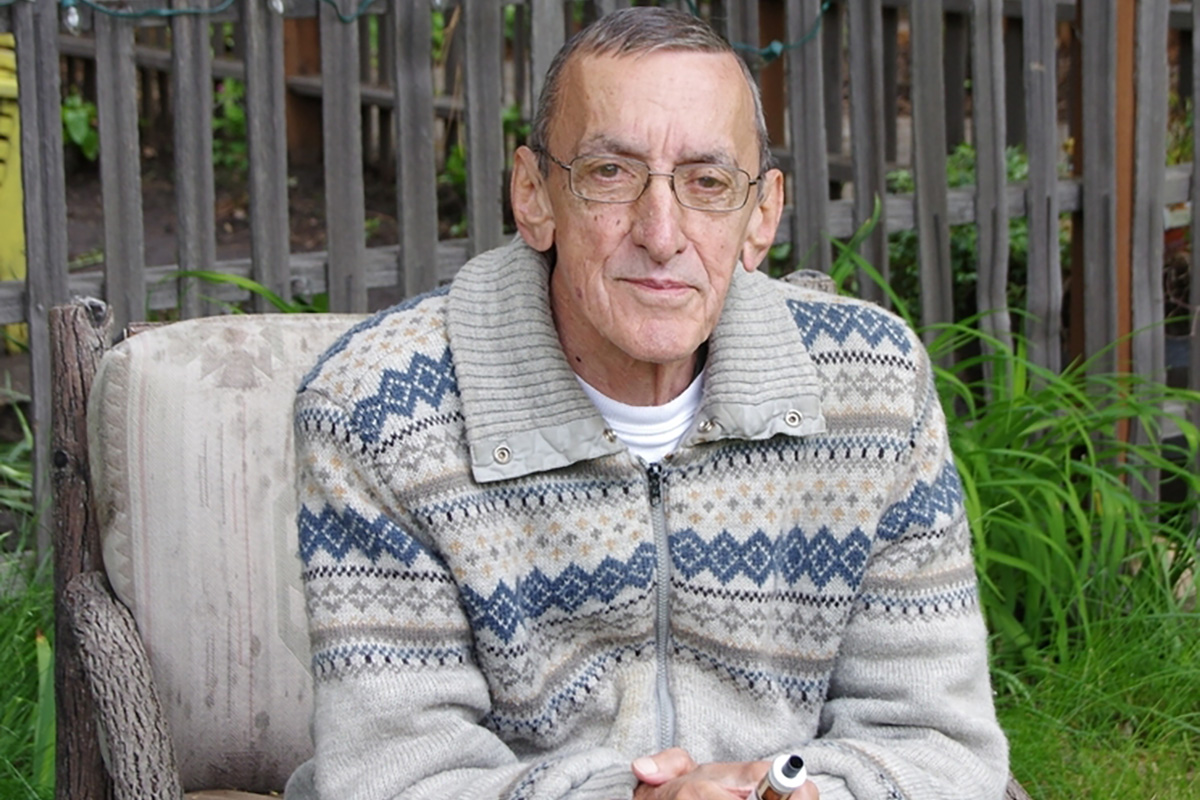
James “Jim” Bedore, an international affairs specialist whose career included work for the U.S. Department of State and as a private sector consultant in Europe with a focus on Middle Eastern and African development before his retirement in 2000, died on Sept. 2 at his home in D.C. He was 82.
His sister, Carol Bedore, said the cause of death was lung cancer.
Dignity Washington, the D.C.-based LGBTQ Catholic organization, released a detailed statement on Bedore’s life and career that, among other things, says Dignity Washington “became a huge part of Jim’s social life after his retirement in 2000.”
Carol Bedore said her brother was born and raised in Unionville, Mich., as the sixth of eight kids and the oldest boy in their family. She said he graduated from high school there before going on to “amazing” things in a distinguished career.
The Dignity Washington statement says upon the completion of his “B.A. in History and Economics,” Bedore served in the U.S. Peace Corps in West Africa in the mid-1960s. The statement says after completing his Peace Corps service Bedore taught briefly at Voorhees College, a historically Black college in South Carolina. He next earned a master’s degree from the East-West Center in Honolulu before undertaking advanced graduate work at the London School of Economics, according to the statement.
“During the Vietnam War, he served a two-year assignment in the Mekong Delta with the U.S. Department of State,” the statement continues. “He later worked in the private sector in Hong Kong, Saudi Arabia, and London, residing in London for fifteen years,” it says, adding, “He served as a Research Fellow at Chatham House (the Royal Institute of International Affairs in London) and co-authored a volume on Middle East Industrialization, (Macmillan in 1979).”
The statement says other articles and commentaries that Bedore wrote appeared in several prominent publications, including the journals Foreign Affairs, International Affairs, the Financial Times of London, and the International Herald Tribune. It says he remained active in international affairs after his retirement in 2000, including involvements with ‘think tank” organizations in D.C.
The Dignity Washington statement says Bedore, who lived for many years until the time of his passing in a condominium in D.C.’s Dupont Circle neighborhood, was a dedicated volunteer and organizer of Dignity related events.
“He did what he could to organize practical and social events, including some 14 years cooking and feeding approximately 100 homeless individuals monthly at Christ House,” the statement says, referring to the D.C. Adams Morgan neighborhood organization that provides medical care and other services for homeless people.
“Additionally, he initiated the ‘Moon Over Washington’ pot-luck event on the incredible roof on his condominium building,” it says. “The event continues to be one of Dignity Washington’s signature events to this day.” Among other things, it says Bedore was part of Dignity Washington’s annual LGBTQ Pride parade contingent, and he helped to sew 60 AIDS Memorial Quilts.
The statement says Bedore also “built a good relationship with St. Matthews’s Cathedral and created a gay chapter there, where he collaborated with parents with gay children.”
Dignity Washington President Peter Edwards called Bedore a beloved, dedicated Dignity Washington member. Edwards said the group recently issued its Willick Award to Bedore, which he said, “is a special award that we give to people who have done wonderful things for our community.”
“We will remember Jim for his sharp mind, his humor, his generosity, and his unwavering belief in the power of human connection,” the statement adds. “He lived a life shaped by service, curiosity, and love – and he leaves behind a community forever enriched by his presence,” it concludes.
Edwards said Dignity Washington will hold a Catholic Mass in Bedore’s honor in the coming weeks.
The statement says Bedore was pre-deceased by two life partners, Geoffrey Lawrence of 19 years, and Al Lunde, who the statement says passed away in 1999.
Bedore’s sister, Carol, said Bedore was cremated and his ashes have been returned to the family’s hometown in Michigan where an interment is being planned at the family’s cemetery plot.
Obituary
Beloved D.C. ‘Old Catholic’ Bishop Charles Braun dies at 86
Gay church leader offered spiritual support to LGBTQ community
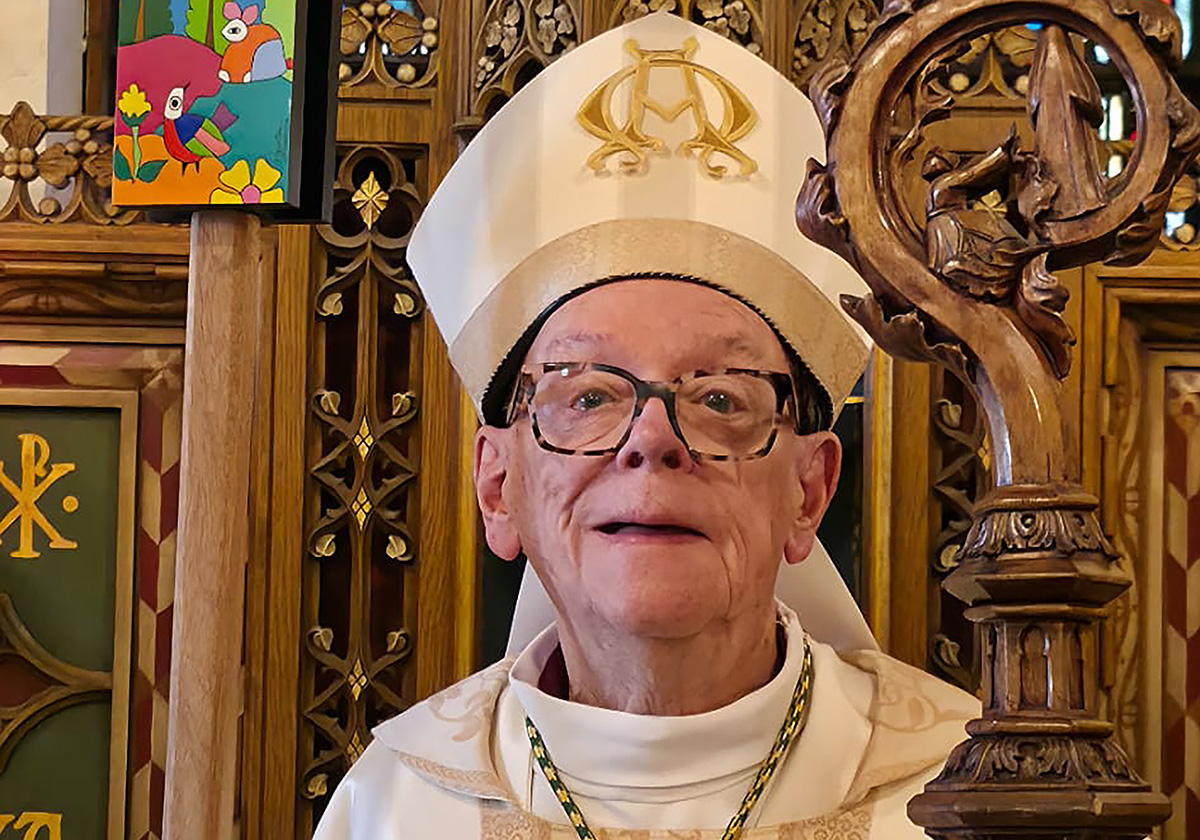
The Rt. Rev. Charles “Charlie” Braun, who served since 2001 as Bishop of the D.C.-based Inclusive Catholic Diocese of the Chesapeake Bay and as founding minister at the affiliated LGBTQ supportive St. John’s Inclusive Catholic Community of D.C., passed away Aug. 3 at the age of 86.
Write-ups about Braun’s life and legacy as a progressive religious leader report that the Inclusive Catholic Diocese of the Chesapeake Bay and St. John’s Inclusive Catholic Community are part of the “Old Catholic” movement, which is a partial break-away church from the Roman Catholic Church.
“St. John’s parish was founded with and continues with the special calling to reach those who had been hurt by other church denominations,” a statement on the St. John’s website says.
“St. John’s welcomes all without exception, with particular care for members of the LGBTQIA+ community who have suffered abuse and rejection elsewhere, offering them contemporary scriptural and theological guidance grounded in an ancient faith tradition made to work in the 21st century,” the website statement says.
It notes that until the time of his passing, Braun, among other things, performed the St. John’s Inclusive Catholic Community’s weekly Sunday mass at its headquarters location at 3417 14th St., N.W. in the city’s Columbia Heights neighborhood. The location is in a converted townhouse owned and operated by the LGBTQ supportive Dandelion Collective, which provides support for the local LGBTQ community.
Rev. Stephen F. Scott, the current pastor at the D.C. St. John’s Catholic Community, said Braun is a native of Bucks County, Pa., and studied to become a priest at D.C.’s Catholic University’s Marist House seminary, where he was ordained as a Roman Catholic priest in the 1960s.
Scott told the Washington Blade that Braun was then assigned as a parish priest at St. Michael’s Catholic Church in Wheeling, W.Va. The St. John’s Catholic Community website write-up says Braun directed that church’s choir “and formed friendships that lasted lifetimes.”
The website write-up continues, “Bishop Charlie left the Roman Catholic priesthood but never left ministry. He found a new spiritual home in the Old Catholic movement, where he was consecrated a bishop and became a beloved unapologetic voice for its theology and tradition.”
It says he began his service as Bishop of the D.C.-based Inclusive Catholic Diocese of the Chesapeake Bay in October 2001 and later founded the St. John’s Inclusive Catholic Community, both of which he led until the time of his passing.
“In Washington, D.C. Bishop Charlie became especially well known and cherished within the LGBTQ+ community, offering compassionate pastoral presence, ordaining and mentoring candidates for ministry, and reminding all who knew him that ministry does not end when circumstances change – it simply takes new forms,” the website statement says.
Rev. Scott confirmed reports by people in the LGBTQ community who knew Braun and who told the Blade the man they knew as Bishop Charlie visited LGBTQ supportive bars and restaurants in D.C., including the Dupont Circle area, to perform religious services and offer spiritual support for LGBTQ people.
“Charlie spoke so much about the importance of loving and welcoming, especially gays, lesbians, transgender Catholics and Christians and meeting them where they were,” Scott said. “So not expecting people to come to a full-on church building, he would go in his evenings and enjoy a drink or have a meal, whether it was Dupont Italian Kitchen, Floriana, or any of the neighborhood gathering places in the queer community,” Scott told the Blade.
“If there was a couple that would come to talk to him and wanted to get married, he would arrange with the couple to have the ceremony at their venue of choice,” according to Scott. “He would have weddings, confirmations, baptisms at those locations because that’s where the community felt comfortable.”
A Mass of Christian Burial was held for Bishop Charles ‘Charlie’ Braun on Saturday, Aug. 22, at the LGBTQ supportive Lutheran Church of the Reformation located in the Capitol Hill neighborhood. Scott said the church was selected because it offered a larger space for the service than the St. John’s Inclusive Catholic Community location in Columbia Heights.
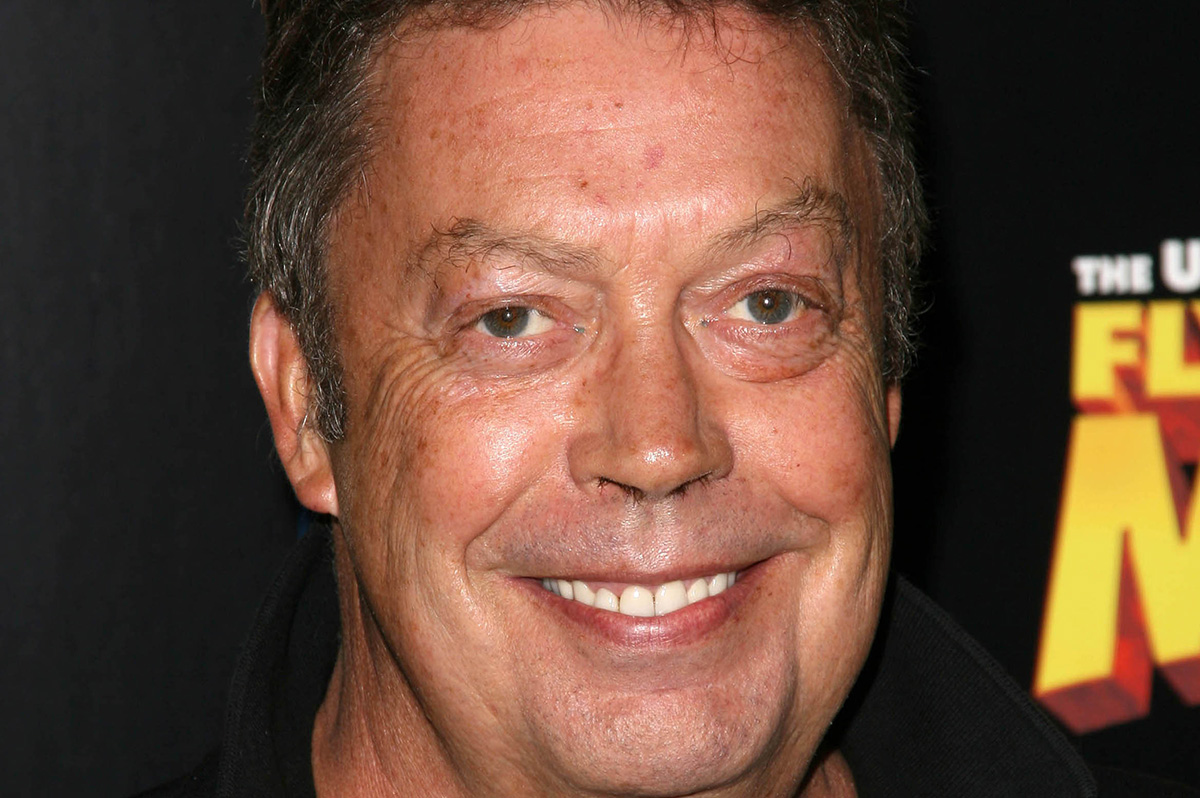
Actor Tim Curry died at his home in Los Angeles on Tuesday.
Curry has a career spanning decades that included roles on the stage and screen. With an unmistakable voice, he also leaves behind a large body of voice work in animated features and video games. Curry is perhaps best remembered by LGBTQ fans for his performances in camp classics, “The Rocky Horror Picture Show” and “Clue.”
“Rocky Horror” (1975) became an underground cultural phenomenon of gender-bending joy.
To this day, fans meet at late night movie theaters dressed in costumes of their favorite characters, including as Curry’s Dr. Frank-N-Furter. Such gatherings gave permission for fans to play with gender expression, which could be particularly important for LGBTQ fans in more repressive times and places.
“… It became a gathering point for LGBTQ+ people. For punks, for goths, for anyone who felt marginalized or othered by society,” screenwriter, producer, and filmmaker Michael Varrati told the Washington Blade in September 2025 interview on “Rocky Horror”‘s lasting legacy. “When you walked through those theater doors, you belonged, and everybody accepted you, and the thing that made you feel like a freak was celebrated.”
Curry was also known for roles under heavy prosthetics, such as Pennywise the murderous clown in Stephen King’s “It,” or as the demon-horned Darkness in “Legend.” Always shining through any mask was Curry’s signature mischievous voice.
With the passing of Dolly Parton, a fellow LGBTQ icon, one can expect many tributes to Curry and Parton at drag shows and music events at LGBTQ venues in the coming nights.
Pitchers DC (2317 18th St., N.W.) will have a “Dolly + Tim Tribute” with show tunes on Sunday from 2-8 p.m. JR.’s Bar (1519 17th St., N.W.) has announced it will have a show tunes night “honoring Dolly & Tim” on Monday starting at 9 p.m.

Center Arts Gallery celebration, auction to take place on Oct. 17

Comings & Goings

‘Hidden in Plain Sight:’ The story of Odessa Madre

‘Governments that attack LGBTQ+ rights learn from each other’

Horror genre has evolved into space to explore queer identity

ICC unseals arrest warrants for Taliban officials accused of persecuting LGBTQ people, women

Physician: addiction doesn’t always look the way you think it does

Calendar: October 9-15

Solidarity beyond the parade: the actual cost of Pride

Essential queer horror classics for Halloween
-

 Afghanistan4 days ago
ICC unseals arrest warrants for Taliban officials accused of persecuting LGBTQ people, women
-
District of Columbia4 days ago
Physician: addiction doesn’t always look the way you think it does
-
Calendar4 days ago
Calendar: October 9-15
-
Opinions3 days ago
Solidarity beyond the parade: the actual cost of Pride