Nightlife
D.C.’s gay DJ collective CTRL returns
Electropop group resurfaces at Trade on March 30
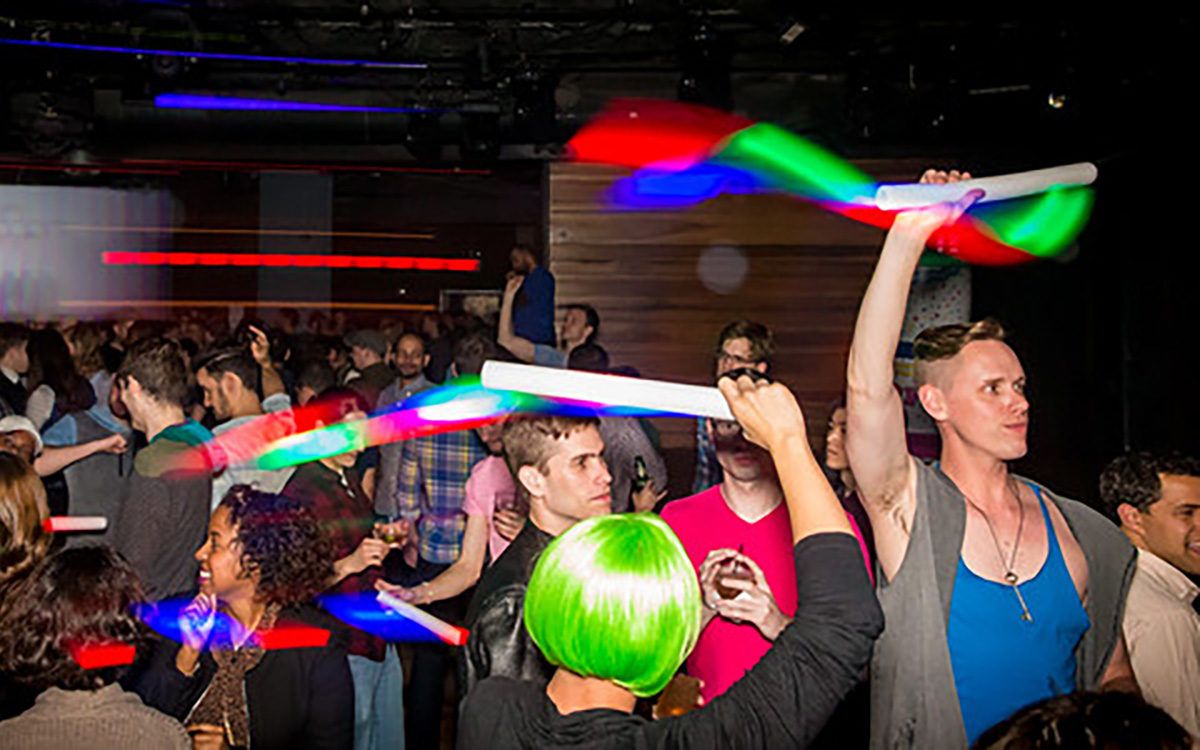
Finger lasers, confetti cannons, drag shows, photo booths, throwback tunes, and a touch nerdy: after a long break, D.C.’s gay DJ collective CTRL is throwing its first party in six years.
Born in an Eritrean restaurant more than a decade ago, this longstanding gay nightlife electropop group is resurfacing with a comeback event at Trade on March 30.
Gay DJs Adam Koussari-Amin, Jeff Prior, Devon Trotter, and Brett Andreisen hosted the first CTRL party at now-closed restaurant Dahlak, on the corner of 18th and U Streets. After a year of hosting pop-ups in that restaurant’s dining room, they upgraded down 18th Street to now-closed gay club Cobalt. There, the parties grew: drag shows, a pop-up photo booth from David Claypool, and quirky activations like throwing hot dogs into print-outs of Putin’s mouth. Their productions grew as well, like producing the now-defunct Brightest Young Gays (BYG) Pride events at Wonderbread Factory and Union Market and the ‘Get Wet’ pool party with David Brown’s Otter Crossing at the Capitol Skyline Hotel.
CTRL wasn’t done. The group received its biggest stage yet after a call from Ed Bailey, the owner of now-closed gay club Town, as well as current gay bars Number 9 and Trade. At Town, the opportunity “allowed our creativity to flourish with even bigger performances, bigger photo experiences, crazier hand-outs, and the same electropop dance vibes our fans had come to know us for,” says Koussari-Amin.
CTRL pressed pause when Town shut down, which “was a huge loss to the LGBTQIA+ community and D.C. nightlife in general,” says Koussari-Amin. After that, it hosted an occasional spinoff called QWERTY. Post-pandemic, Koussari-Amin has spent a few nights solo as DJ at Trade and other venues.
After connecting with Jesse Jackson, the Trade general manager, as well as with Bailey, who agreed to host the inaugural event, Koussari-Amin was determined to shift CTRL back to life.
However, getting the old band back together proved to be a challenge. While the rest of the group have either left Washington, D.C., or are pursuing other projects, Koussari-Amin received their blessing to stay on and find new members.
“When it came to finding new partners, both DJ Dez [Desmond Jordan] and DJ Lemz [Steve Lemmerman] were obvious choices,” he says, noting that “they also have distinct styles and interests.” Dez has a residency at Pitchers and Kiki as well as pop-ups, and Lemz throws events like Sleaze and BENT.
“It seemed important to come back to the nightlife table with an experience that could complement all the amazing experiences that have even built up since CTRL threw its last event at Town. Bringing back both the DJ collective and the CTRL event with Dez and Lemz means new voices, perspectives, sounds, and excitement.”
“CTRL is an opportunity for the community to come together, enjoy music, drinks, and good vibes,” adds Jordan, noting that for him, it’s an event that celebrates queer identity.
And after months of planning, CTRL will kick off its monthly party series at Trade on March 30 for the first gig after its glow-up.
The trio says that its core inspiration “is driven by the indie and electropop favorites of new and old, like Goldfrapp, Ava Max, Charli XCX, … We’re also all huge fans of slut and trash pop music like Kim Petras, Slayyyter, Cupcakke,” as well as pop diva remixes, new bops, and songs that reside inside and far beyond the expanse of Top 40.
CTRL is also bringing back its activations that complement the tunes. Summer Camp is set for drag performances, David Claypool is back with his photo booth, and Koussari-Amin promises “to have all sorts of weird and wacky handouts like we used to.”
After the March premiere, April’s party is “CTRLella”, a Coachella send-up. Future events will feature various different themes, and they plan to throw a party during Capital Pride; they’re also looking to be a central part of Trade’s expansion into the adjacent space.
Koussari-Amin says that “the event’s signature experience [is] a lynchpin in connecting D.C.’s expanding generations of queer folks, giving everyone a safe space to let loose and feel a rush no matter who they are.”
For his part, Bailey continues to support CTRL and its collective intention, expressing its essential nature as a party for partiers by partiers. “CTRL is the kind of party that represents what people want. It’s just a real party by real people that just want to hear good music and dance with their friends.”



Nightlife
In D.C. comedy, be sure to shop local
A thriving patchwork of queer-friendly stages in Washington, Baltimore
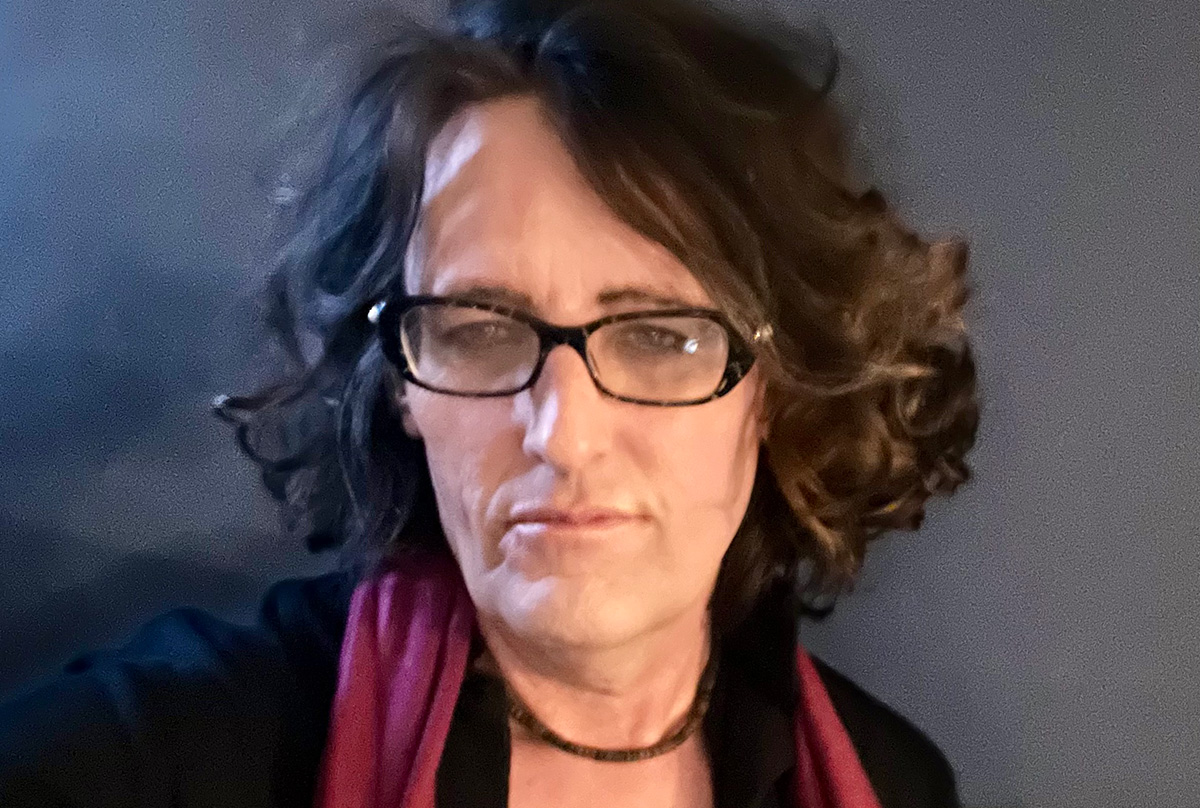
Most people know stand-up comedy from Netflix specials or late-night sets on Comedy Central. The reality is far different for local working comics like me. A few times a month, I might get paid $50 for a 10-minute set and my photo on a bar flyer to show off to the ladies in my scrapbooking club.
Still, it’s a joy sharing laughs about my well-worn Washington career arc — from conservative reporter to openly trans organic grocery store worker and nightclub comedian. Or, as I like to say onstage, from Fox to foxy.
Stand-up is hard. Offstage, it’s even harder. It took more than a year and nearly 80 open mics to land my first paid set. Since then, I’ve performed in coffee shops, bars, restaurants and even on a city sidewalk. I once performed in the Catskills, which felt like a big deal — even if it was a bigger deal in the 1950s.
As an older trans comic in Washington, I’ve found it nearly impossible to get stage time — or even the courtesy of a returned email — at the big, corporate-owned comedy clubs. Fortunately, there’s a thriving patchwork of queer-friendly producers in Washington and Baltimore creating shows that reflect the diversity of our communities, instead of straight male-dominated lineups that look like the cast of “Ice Road Truckers.”
“There are so many kinds of funny people, but a lot of barriers exist for women and queer people because it’s a very masculine culture,” said Dana Fleitman, who runs the Just Kidding Comedy Collective and is helping produce the Woke Mob Comedy Festival in April, featuring many women and queer comics.
Full disclosure: I’m not performing in the festival. But I am proud to be one of more than 50 women and nonbinary comics Fleitman and her colleagues have helped “train up” through an incubator program she first ran through Grassroots Comedy and now through Just Kidding Comedy Collective.
Another trans comic, Charlie Girard, who splits time between New York and Washington, runs an incubator program called Queers Can’t Take a Joke. He has trained more than 100 comics in Washington.
Girard has one rule: no punching down.
“The best comics speak truth to power,” Girard said. “Making fun of marginalized communities is simple lazy writing based on tired, old stereotypes.”
Ultimately, Girard wants to prepare students not just for queer rooms, but to find their voice and expand into all kinds of spaces.
Comics trained by Girard and Fleitman have gone on to produce or help run shows like Clocked Comedy, Backbone Comedy, the Crackin’ Up open mic and Funny Side Up. Several have found a home on Barracks Row at As You Are — one of my favorite places to perform. In Washington, comic Jenny Cavallero’s show Seltzer is a sober comedy night frequently featuring local queer comics.
In Washington, performer and producer Arzoo Malhotra, who runs Zoo Animal Productions, said it’s a critical moment to support community-based comedy producers, often the first hit by worsening economic conditions.
“We’re losing spaces faster than we’re creating them,” Malhotra said. “We are in the use-it-or-lose-it stage. If there’s a restaurant you like or a performer you want to keep seeing, patronize them now — because they’re going away.”
I’m also grateful for producers in Baltimore, which has a thriving queer comedy scene. Comic Hannah Alden Jeffrey’s monthly “The Really Cool Open Mic,” created for women and trans performers but open to all, regularly draws up to 100 people.
Hannah’s mic and Kenny Rooster’s “Dramedy” open stage have provided safety and opportunity when other stages felt out of reach. Comedians Michael Furr and Jake Leizear also produce shows regularly featuring queer comics.
“We started the REALLY COOL Open Mic because every other mic in town catered toward straight dudes that dominated the Baltimore scene,” Alden Jeffrey said. “Contrary to the lineups of many shows today, people don’t want to see a show of eight guys being bigots. Go figure.”
One of the most important moments for me came when I attended a free showcase at a well-known Adams Morgan club. Like other big venues, it hadn’t responded to emails from a new comic looking for a shot. I sat in the back row thinking maybe these comics were just way funnier than I am.
Then a straight male comedian — with hair even more gorgeous than mine — launched into a long joke comparing eating pizza to performing oral sex on a woman.
At that moment, I walked out feeling better about myself. I remember thinking: nope. I absolutely deserve to be on that stage, too.
Lots of us do.
Jamie Mack is a stand up comedian, speaker and writer. Follow them on Instagram at @jamiemack_blt or email [email protected].
District of Columbia
Tatianna to headline National PrEP Day event at Crush
Medication dramatically reduces HIV risk among users

Crush Dance Bar will join a nationwide inaugural celebration of National PrEP Day during a Thursday event that will feature “RuPaul’s Drag Race” star Tatianna.
MISTR, the nation’s largest telehealth platform for sexual health, and its companion brand SISTR are together launching National PrEP Day on Friday. The campaign aims to end HIV in the U.S. by enrolling 10,000 people in PrEP within 10 days.
PrEP is a pill or injection that reduces the probability of HIV by up to 99 percent.
MISTR and SISTR provide free, discreet PrEP delivery regardless of insurance status. The brands aim to promote stigma-free PrEP access for LGBTQ men and women of color during the campaign.
“We already have the tools to end HIV: the science, the medication, and the technology. What’s missing is the will, the access, and the equity,” said Tristan Schukraft, the founder and CEO of MISTR.
More than 39,000 people were diagnosed with HIV as recently as 2023. Only one in four of individuals eligible for PrEP are current users.
The Washington event is one of 16 events being held across the country to celebrate PrEP access and sexual health equity.
In addition to national events, MISTR is also behind a social media campaign encouraging people to sign up for PrEP. The national campaign will end with a National PrEP Day blue carpet event at The Abbey in West Hollywood, Calif., on Thursday, featuring celebrities and drag queens, to count down to National PrEP Day.
Nightlife
D.C. queer community partakes in ‘performative masc contest’
Event took place at Shakers on Sept. 25

Competitors showed off carabiners, guitars, and Old Spice deodorant to a packed bar crowd during a “performative masc contest” held at Shakers on Sept. 25.
Alphabet Soup Events, a queer event organization focused on the sapphic community, organized the contest at the LGBTQ-friendly bar on the U Street Corridor. The free event reached capacity, with cheers echoing outside and a line of patrons trailing on to the sidewalk.
The competition instilled a queer twist on the “performative male contest,” an event popularized through social media and seen across college campuses in recent months. While the latter satirizes men feigning certain beliefs or appearances to attract women, Alphabet Soup Events tailored the concept to the sapphic community.
The contest began with 14 competitors “catwalking” across the stage. Some presented a bouquet of flowers to the crowd, flaunted vinyl records, and pretended to flip through popular books. The crowd then watched competitors answer a series of questions, such as their favorite hobbies or the most romantic thing they’ve done for a former partner.
Competitor Jack Harris ultimately emerged as the winner of the contest. They applauded the event for “inviting people to express themselves.”
“As someone who has been told that they’re not masculine enough, I thought competing in a performative masc lesbian contest would be a unique opportunity to show people what masculinity means to me,” Harris said.
Harris stated that feeling like themselves during the contest all while “playing up” their gender expression made the experience fun.
Alphabet Soup Events initially introduced the contest via Instagram on Sept. 9, garnering more than 3,000 likes on the announcement post. The organization has hosted events in cities across the U.S. and has arranged past events for Washington’s sapphic community, such as boxing classes, and astrology-focused speed dating.
Becca Gaylin, an event attendee, noted she was “so excited” to see a performative masc event at Shakers following the virality of performative male contests.
“The D.C. queer scene is amazing and there are lots of sapphic events, but honestly this is just such a silly way to poke fun at stereotypes and get people together in a low stakes easy way,” Gaylin said.
Beyond the stage, the night featured local vendors, including a tattoo artist and a psychedelic storefront.
Soon after the event, Alphabet Soup Events posted competitors’ Instagram accounts, divided into “Single” and “Not Single” categories. The organizers also teased a follow-up contest, writing “femmes… ur NEXT!” in an Instagram caption.
More information about Alphabet Soup Events can be found at their Instagram page.

Women’s FEST returns to Rehoboth Beach next week

Belarusian lawmakers approve bill to crackdown on LGBTQ rights

Calendar: April 3-9

How new barriers to health care coverage are hitting D.C.

Kenyan advocacy groups launch LGBTQ voter mobilization campaign

‘Out for McDuffie’ event held at D.C. gay bar

Thousands attend ‘No Kings’ protests in D.C.

Ghanaian president welcomed to Philadelphia amid backlash over anti-LGBTQ bill

PHOTOS: ‘No Kings’ rally and march