Maryland
Mayor of Salisbury, Md. cancels Pride flag display
Decision ends five years of support for LGBTQ community
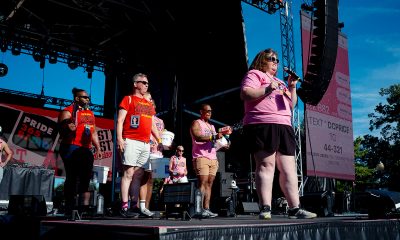
The City of Salisbury, Md., will not fly the Pride flag outside the city office building in downtown Salisbury. This will mark the first time in five years that a Pride flag will not fly at the city’s office for Pride month.
Randolph J. Taylor, the mayor of Salisbury, told the Blade that the choice not to raise the flag was based on being “fair” and “transparent.”
“The administration’s position on the PFLAG kick-off is very simple,” Taylor said to the Blade in an email. “That is, to be neutral. Neutrality is not to be interpreted as anything else but simply that — being neutral.“
Taylor explained that the decision to appear more neutral was not to single out one particular group. “This is an approach the City has and will take with any other event held in the City of Salisbury as we entertain more than 100 events a year from a variety of groups and causes.”
Taylor concluded his statement with good wishes for PFLAG, the LGBTQ human rights organization that previously collaborated with the mayor on the flag raising and recently relocated within Salisbury.
“I am glad PFLAG has a new location on Carroll St. for its kick-off,” Taylor said. “The City of Salisbury wishes the event good luck!”
Nicole Hollywood, legislative chair for PFLAG Salisbury, said the decision not to promote cultural events using “city assets,” which includes the city’s flagpoles and street lamps, could impact longstanding celebrations of cultural heritage in the city.
“We simply got an email saying that ‘we’re evaluating the use of city assets for cultural events,’ and ‘we don’t feel it’s appropriate moving forward to hang flags that represent special interest groups,’” Hollywood told the Blade regarding the denied request for flying the flag. “We were disheartened and made a statement saying that the planned event, which has occurred for a number of years always on the same day in the same location, is temporarily postponed until we could find an alternative.”
Hollywood continued, explaining that she, and other supporters of the LGBTQ community, have plans to bring the issue to the city council’s attention. She hopes to get a more standardized approach to the vetting of cultural events, like the Pride flag raising, in Salisbury.
“We do have a request that we’ll be making in front of the city council, which is simply that a structure be put in place that’s uniform and equitable, that’s used to vet applications for flag raisings and other civic and cultural events,” she explained. “It isn’t clear, at this time, who exactly holds authority over city assets.”
In addition to her concerns regarding the current “murky” methods of approval for cultural events, Hollywood also highlighted her fears for the future of the Pride crosswalk in Salisbury.
The crosswalk, which includes the classic rainbow Pride flag, the updated progressive Pride flag (that comprises the colors of the classic Pride flag, transgender pride flag, and stripes of black and brown to recognize people of color in the LGBTQ community), as well as a transgender flag, was the first to be installed in Maryland.
Hollywood fears that if the city re-evaluates the crosswalks, it could be the beginning of the end of outward support for the LGBTQ community on any public land.
“We think that it’s been a beacon of hope to people in the community having this rainbow, the trans, and progress Pride crosswalks,” Hollywood said. “We really want to protect and steward their existence because we know that if they’re painted over, or erased, that it won’t be as easy to get them back.”
Despite the shift in attitude from the city, some in the community have pledged to show their support in full force. The downtown business alliance in Salisbury, which works to foster growth for business in Salisbury, has encouraged its members to fly rainbow flags on private property in solidarity with PFLAG.
“We’re trying to get as many people as possible to feel that they have a voice,” Hollywood said. “To feel that they’re included and to find other ways that we could celebrate queer joy.”


Maryland
Md. groups receive state grants to fight hate crimes
Pride Center of Maryland among recipients
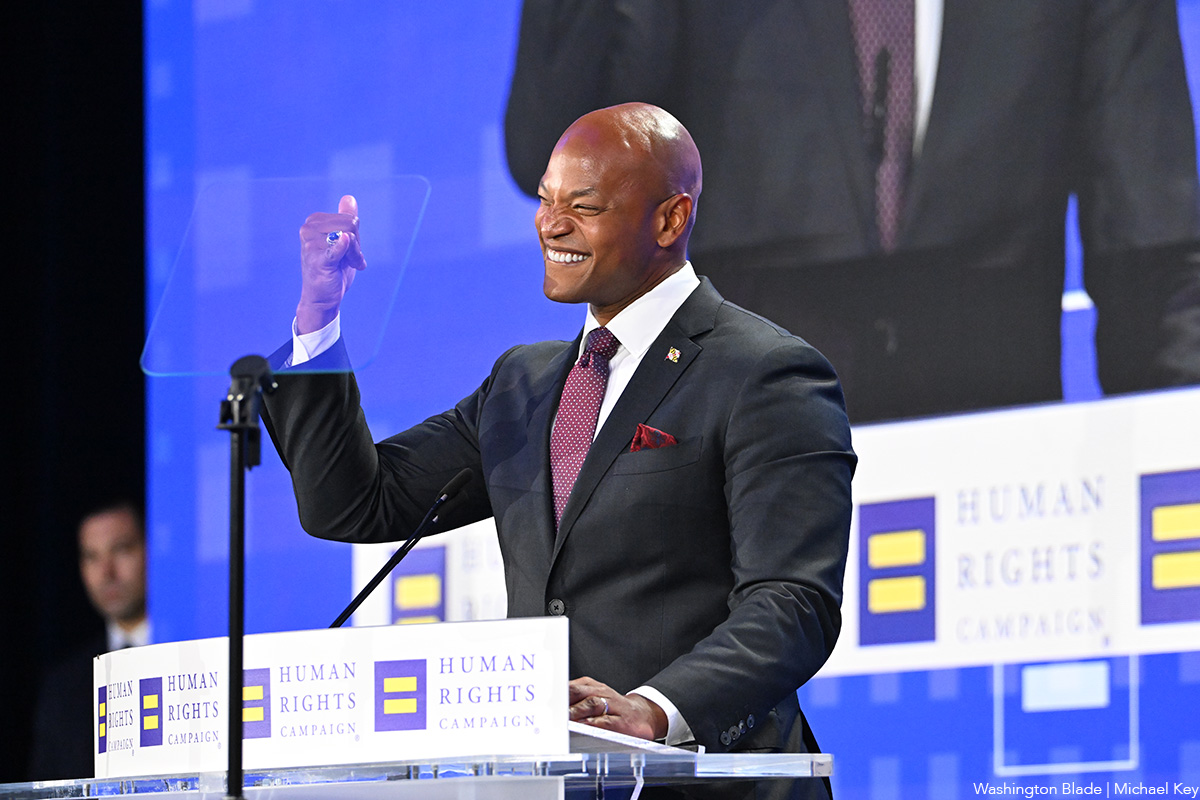
Maryland Gov. Wes Moore and the Governor’s Office of Crime Prevention and Policy are awarding a total of $10 million in grants in the 2027 fiscal year to nonprofit organizations that work to prevent hate crimes in the state.
The funds will be used to support those who feel targeted or discriminated against because of their race, religion, sexual orientation, gender identity, or disability status.
The Pride Center of Maryland is among the recipients. Churches, synagogues, mosques, and LGBTQ organizations are all eligible to receive grants
“The safety and security of all Marylanders is my top priority, so we are drawing a hard line because we have no tolerance for hate,” said Moore, according to media reports. “We are committed to protecting and ensuring safe and sacred spaces stay that way by investing in non-profit organizations, houses of worship, and community centers to protect and honor every community that makes our state so diverse and special.”
“Protection Against Hate Crime funding has strengthened the Pride Center of Maryland’s ability to protect, educate, and support the communities we serve … at a time of heightened concern associated with the Trump administration’s anti-LGBTQ/SGL (same-gender-loving) policies and pressures,” Pride Center of Maryland CEO Cleo Manago said. “PAHC funding helps us do more than improve physical security — it strengthens our community’s knowledge, preparedness, connection to resources, and ability to respond to hate with greater awareness and support.”
Maryland’s hate crimes law includes both sexual orientation and gender identity. The state’s nondiscrimination statute is also LGBTQ-inclusive.
Maryland
Anne Arundel schools now need parent permission to call trans students by preferred names
Conservative groups challenged system’s policy
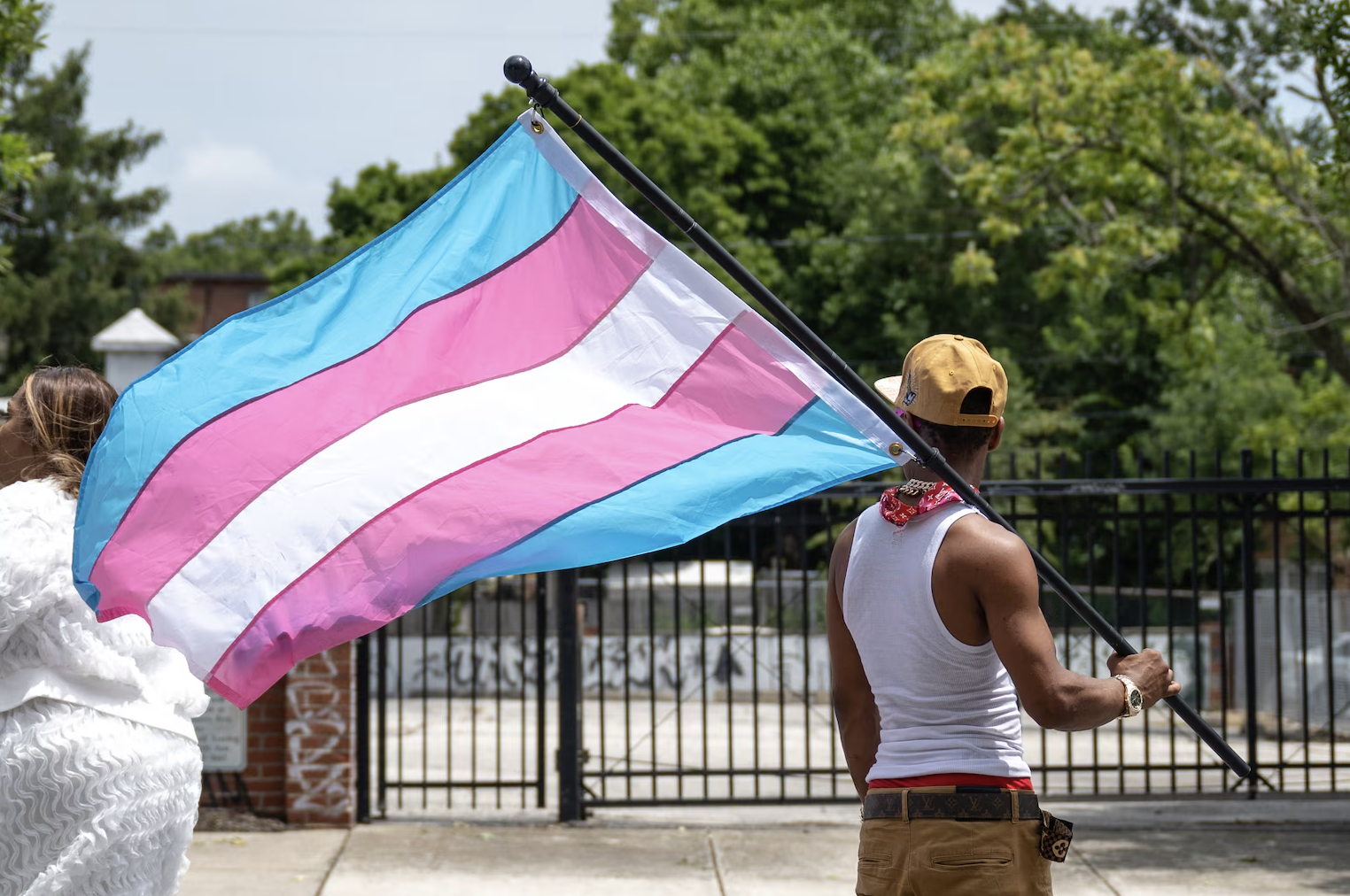
By JESSICA CALEFATI | Anne Arundel County Public Schools staff cannot use transgender students’ preferred names if their parents oppose it, according to an internal document reviewed by the Banner, a change that comes after conservative groups challenged the school system’s approach to gender identity.
Teachers union president Kristina Korona told members in an Aug. 20 email that the new guidance undermines district policy on acceptance and inclusivity and “will begin harming affected students immediately.”
Previously, the district didn’t require parental permission to use a high school student’s chosen name and pronouns corresponding to their gender identity, the internal document says. Now it does. The change comes as parents challenge the suburban school system’s gender identity policy and regulation in court and the Trump-Vance administration threatens the district’s funding.
The rest of this article can be found on the Baltimore Banner’s website.
Maryland
Girlfriends charged with Silver Spring murder to go on trial in 2027
Prosecutors charged both women with killing mother of one of them

Two women identified as a couple who are charged with the May 22, 2026, murder of the mother one of them in her Silver Spring home and who were arrested three weeks later in Ohio are scheduled to go on trial for murder April 19, 2027.
According to online records filed with Montgomery County Circuit Court in Rockville, Vanessa Tjongarero-Henderson, 29, of Clarksburg, Md., and Samantha Raebel, 36, of Phoenix are being held without bond in the Montgomery County Correctional Facility until the time of their trial.
Statements from Montgomery County police show the two women were arrested June 10 in Genoa, Ohio, after fleeing from the scene of the murder in Silver Spring. Police statements and court records show they were extradited back to Maryland in July, where prosecutors with the Montgomery County State’s Attorney’s Office obtained indictments against them for murder.
Earlier statements from Montgomery County police say their investigation into the murder led to their decision to initially charge the two women with first-degree murder for the death of Hilde Henderson, 67, who was Tjongarero-Henderson’s mother.
“Through the course of the investigation, detectives identified Henderson’s daughter, Vanessa Tjongarero-Henderson, and Vanessa’s girlfriend, Raebel, as the suspects,” one of the police statements says. It says police obtained arrest warrants for both women and launched a nationwide search seeking help from the public in in locating them.
One of the police statements says an autopsy determined the cause of Hilde Henderson’s death was blunt-force trauma injuries brought about by a murder. Police and the State’s Attorney’s Office, which is prosecuting the case, have yet to disclose whether they have determined a motive for the murder.
Court records show that prior to the start of the April 19, 2027, trial a “motion” hearing was scheduled for Oct. 30, 2026, a pre-trail conference was scheduled for Feb. 12, 2027, and another motion hearing and a status hearing were scheduled for March 12, 2027.
Court records also show that Tjongarero-Henderson is being represented by attorneys with the Montgomery County court system’s public defender service. The records show that Raebel initially had been represented by a public defender service attorney, but updated records show Aug. 14 is listed as the “removal date” for that attorney.
The docket shows that on Aug. 20, two new attorneys with the prominent D.C. law firm of Covington & Burling made their official appearance as her attorneys in the murder case. One of them, Daniel Solomon, told the Washington Blade in response to an inquiry that the defense has no comment at this time on the case.
He confirmed that Covington & Burling is representing Raebel on a no-cost, pro bono bass.
The office of the Montgomery County public defender service didn’t immediately respond to a phone message from the Blade asking for a comment on the Tjongarero-Henderson case.

Vote now! Best Of LGBTQ DC readers’ choice awards

Meet the LGBTQ candidates running for U.S. House, Senate

Ana Brnabić becomes world’s first openly lesbian head of state

529 openly LGBTQ candidates running in Brazilian election