Movies
What to watch this fall
What to watch this fall

It might be too soon to get excited about the movies we know are coming later in the year – like the first installment of the big-screen adaptation of “Wicked” or Pedro Almodóvar’s first English language movie “The Room Next Door” – but that doesn’t mean there’s still not plenty to look forward to as their time draws nearer. As always, we’ve compiled a preview of the most interesting LGBTQ and related content coming to movie and TV screens over the weeks ahead, so get ready to plan out your own watchlist as you keep reading below.
“The English Teacher” (Hulu, now streaming): In its publicity blurb, we’re told that educators being forced to navigate “a lot of bullshit” as a result of the ongoing culture wars is a theme that runs “subtly” through this new workplace comedy created by and starring Brian Jordan Alvarez, which is putting it mildly to say the least. Centering on an Austin high school teacher who comes under fire after a student sees him making out with his boyfriend at school, it’s a giddily up-front social satire that skewers not only the hypersensitivity of our current era but the counter-productive absurdity of an education system more concerned with placating political pressures than passing on knowledge; it’s already emerged as a critical darling among the new shows of the Fall Season – which is great news for Alvarez, a talented performer (best known as Jack’s husband-to-be in the rebooted “Will and Grace” and his viral video content on Instagram and TikTok) overdue for the mainstream spotlight.
“Lover Of Men: The Untold Story of Abraham Lincoln” (theaters, now playing; streaming/VOD, TBA this fall): Earnest, passionate, yet delivered with a light touch, this sure-to-be-controversial new doc addresses the much-speculated question of our iconic 16th president’s sexuality with a trove of well-documented evidence, presented by a host of respected historians and bolstered by amusingly modernistic re-enactments of the Great Emancipator’s supposed intimate liaisons with various men during key parts of his life. More than that, it ties its narrative to the way America’s attitudes and acceptance of LGBTQ people has evolved into contemporary times while also discrediting many modern assumptions about the ways the community has been treated in the past. It may not convince the die-hard doubters, but this polished and politically hopeful effort from filmmaker Shaun Peterson is as hard to dismiss as it is entertaining, and it definitely belongs on your watch list.
“Seeking Mavis Beacon” (theaters, Sept. 13): After a limited release on Sept. 6, this documentary expands nationwide this week with a “DIY detective story” about the search for the unknown and un-credited real-life model whose image was used as the face of “Mavis Beacon Teaches Typing” – a widely used instructional computer typing program launched in 1987 – that serves as a launch pad to explore a whole spectrum of sociological and philosophical nuances related to race, ethical marketing, and the impact of technology on culture and communication. With two queer women of color – director Jazmin Jones and associate producer Olivia McKayla Ross – leading the onscreen investigation, it’s an unusual and thought-provoking think piece that is as entertaining as it is enlightening.
“The Critic” (theaters, Sept. 13): Venerated queer elder and acting legend Ian McKellen returns to the screen in this deliciously dark tale of period intrigue from director Anand Tucker and writer Patrick Marber, in which a notoriously poison-penned theater critic (McKellen) in 1934 London attempts to preserve his career by manipulating an ambitious young actress (Gemma Arterton) into a sinister scheme to influence his paper’s new editor (Mark Strong). Lush costumes and period settings, not to mention an assortment of top-notch thespians that also includes Alfred Enoch, Ben Barnes, and the always-exquisite Lesley Manville, all make this grimly macabre morality tale about the dangers of an unbridled ego an unmistakable product of the UK – and it’s likely fans of “BritTV” style costume dramas will be most appreciative of its somewhat old-fashioned charms. Even so, another deftly over-the-top performance from McKellen and an underlying exploration of hazards of leading an openly queer life within a comfortably homophobic status quo are enough to make it interesting for other audiences, too.
“Unfightable” (theaters, Sept. 13 in New York and Sept. 20 in LA; Fuse TV, October TBA): Another new doc tells the story of transgender MMA fighter Alana McLaughlin, from her difficult upbringing and service in the US Special Forces, through her transition and search for community in Portland, to her decision to seek professional status in an arena notorious for its bias against transgender athletes. A real-life narrative highlighting the bravery it can take to assert one’s true identity, this must-see offering from director Marc J. Perez only screens in New York and LA this month, but debuts on Fuse TV in October.
“Will and Harper” (theaters, Sept. 13 / Netflix, Sept. 27): Yet another doc – or is it a non-fiction “road trip buddy movie?” – is set apart from the rest by the star power on the screen: namely Will Farrell, who goes on a cross-country drive with close friend Harper Steele, a writer he met on his first day working on “Saturday Night Live” in 1995. The twist? Steele, whom Farrell had only known as a man, had come out to him as a trans woman, and the trip is their way of forging a new path forward in their friendship “through laughter, tears, and many cans of Pringles.” Funny, intimate, honest, and heartfelt, this is one of those movies that has Hollywood abuzz, and with good reason – its unequivocal and highly visible exploration of trans identity comes with considerable industry clout in the form of its star (who is joined by fellow SNL alums like Seth Meyers, Tina Fey, Kristen Wiig, Colin Jost, Will Forte, Molly Shannon, Tim Meadows, and Paula Pell) and promotes unconditional love and acceptance toward trans people on the cusp of an election in which their rights and protections are very much at stake. Needless to say, this one should be near the top of your watch list.
“My Old Ass” (theaters, limited Sept. 13, wide Sept. 27): Just in time for the new psychedelic revolution comes this comical coming-of-age story in which free-spirited Elliott (Maisy Stella) takes an 18th birthday mushroom trip and finds herself face-to-face with her own 39-year-old self (Aubrey Plaza). Her “old ass” has some pretty strong opinions about what her younger self should and shouldn’t be doing, and doesn’t hesitate to deliver them in between wisecracks – causing Elliott to second-guess everything she thought she knew about family, love and what increasingly appears to be a transformative summer ahead. Written and directed by Megan Park, and also featuring Percy Hynes White, Maddie Ziegler, and Kerrice Brooks, this one is notable for featuring a bisexual central character, which is more than enough for us to put it on our list.
“How to Die Alone” (Hulu, Sept. 13): In this comedy series co-created by and starring Natasha Rothwell, Mel is a “broke, fat, Black JFK airport employee who’s never been in love and forgotten how to dream” – until an accident leads to a near-death experience. Jarred into a new outlook on life, she throws herself into a quest to go out and start living by any means necessary. Rothwell’s strong talents are enough to bring us to the table, but out gay co-star Conrad Ricamora (“How to Get Away With Murder,” “Fire Island”), as Mel’s best friend, definitely ups our interest level for this promising new entry.
“Agatha All Along” (Disney +, Sept. 18): We all know Marvel has been struggling to please its fans with its ambitious slate of TV content, but one hands-down winner for the titanic franchise was certainly the imaginative and ultimately powerful “WandaVision” – and this new miniseries, which stems directly from that critically lauded entry into the MCU canon, is breathlessly anticipated as a consequence. It follows the further misadventures of villainous Agatha Harkness (Kathryn Hahn), who (according to the official synopsis) “finds herself down and out of power after a suspicious goth teen [Joe Locke, ‘Heartstopper’] helps break her free” from the spell that trapped her at the conclusion of the former series. When he asks her to take him down the legendary “Witches’ Road,” a series of dangerous magical trials that might help her restore her powers, her interest is piqued, so the pair gathers a “desperate coven” and sets off on the treacherous journey together. Hahn’s reprisal of her fabulously campy supervillain role is likely to be the main attraction, but including the adorable Locke as her gay new teen familiar is a brilliantly irresistible touch.
“Monsters: The Lyle and Erik Menendez Story” (Netflix, Sept.19): Ryan Murphy and Ian Brennan’s true-crime anthology series “Monster” follows up its award-winning “Dahmer” saga by exploring the story of the real-life titular brothers, convicted in 1996 for the murders of their parents, José and Mary Louise “Kitty” Menendez – successfully prosecuted on the argument that they were motivated by greed for the family fortune despite the brothers’ claims of lifelong physical, emotional, and sexual abuse. It was a shocking, heavily publicized case, launching a surge in audience fascination with true crime, and let’s face it – nobody has quite the same golden touch in getting to the humanity behind these kinds of lurid tabloid tales as the prolific Murphy. It’s a must-watch, you can count on it – though if it’s anywhere near as disturbing as the show’s inaugural season, it probably won’t be a binge-watch. Javier Bardem and Chloë Sevigny play the parents, with relative newcomers Cooper Koch and Nicholas Alexander Chavez as the boys.
“Brilliant Minds” (NBC, Sept. 23) Out gay actor Zachary Quinto stars in this new medical procedural, loosely based on the life and work of Dr. Oliver Sacks, the famed late doctor whose work helped reconfigure the way we understand and treat neurological disorders – but while the real Sacks, though gay, didn’t come out until late in life, the series “re-imagines” his story into modern New York, giving Quinto’s version of the doc the chance to not only be open about his sexuality, but to use some unorthodox practices to help his patients. It might sound a bit forced, but Quinto is always an interesting actor to watch, and any chance to get queer talent playing queer characters in queer stories is good enough to warrant a chance from us, too.
“Grotesquerie” (Sept. 25, FX): The season’s second Ryan Murphy show is this miniseries about a small community unsettled by a wave of heinous crimes – which feel to the town’s lead investigator (Niecy Nash) to be eerily personal. Struggling with issues at home (and her own inner demons), she enlists the aid of a journalist nun (Micaela Diamond) with a difficult past of her own; together, this mismatched team strings together clues as they find themselves snared in a sinister web that only seems to raise more questions than answers. Yes, that all sounds pretty vague and evokes “American Horror Story” vibes without revealing anything – but with Nash as its star and supporting players like Lesley Manville, Courtney B. Vance, and even Travis Kelce (yes, him) on the roster, it’s bound to be a good time.
“Joker: Folies a Deux” (theaters, Oct. 4): This sequel to 2019’s acclaimed “Joker” brings back both director Todd Phillips and star Joaquin Phoenix as failed comedian Arthur Fleck, continuing his re-imagined origin story into the iconic “Batman” villain as it introduces him to the “love of his life” – soon-to-be fellow villain Harley Quinn (Lady Gaga) – while incarcerated in Arkham Asylum. The mad mischief-makers naturally embark upon what’s described as “a doomed romantic misadventure,” and frankly, we don’t know much more than that. But the trailers look amazing, and there’s no question of Phoenix’s brilliance in a role he’s already made his own. Even without those encouragements, though, there’s nothing that’s going to stop fans of queer diva Gaga from flocking to the theater to see her take on a character she seems already to have been destined to play – and you can bet we’ll be among them.

“Smile 2” (theaters, Oct. 18): For horror fans, Halloween brings this sequel to the popular 2022 “death curse” chiller from filmmaker Parker Finn, this time following a global pop sensation (Naomi Scott) as she starts out on a new world tour, only to begin experiencing increasingly terrifying and inexplicable events. No, the premise doesn’t sound terribly original (and just as it didn’t in the first installment), but if Finn keeps the same level of visual and storytelling skills as the last time around, it’s sure to be a delightfully terrifying thrill ride for those who dare.
“Fanatical: The Catfishing of Tegan and Sara” (Hulu, Oct. 18): Our list closes with one final documentary, which chronicles the labyrinthine tale of how the influential queer indie rock band of the title fell victim to an insidious hacking scheme from a lone stalker, leading to an identity-theft and catfishing campaign that continued to terrorize both the two musicians and their global legion of fans for more than a decade. Tegan and Sara join documentary filmmaker and investigator Erin Lee Carr to unfold this real-world mystery is into “a thriller, a caper, a whodunnit, and an intimate personal journey rolled into one.” Sounds good to us!



Movies
‘Thelma and Louise’ remains landmark of unspoken queer rebellion
Celebrating iconic film 35 years after its release
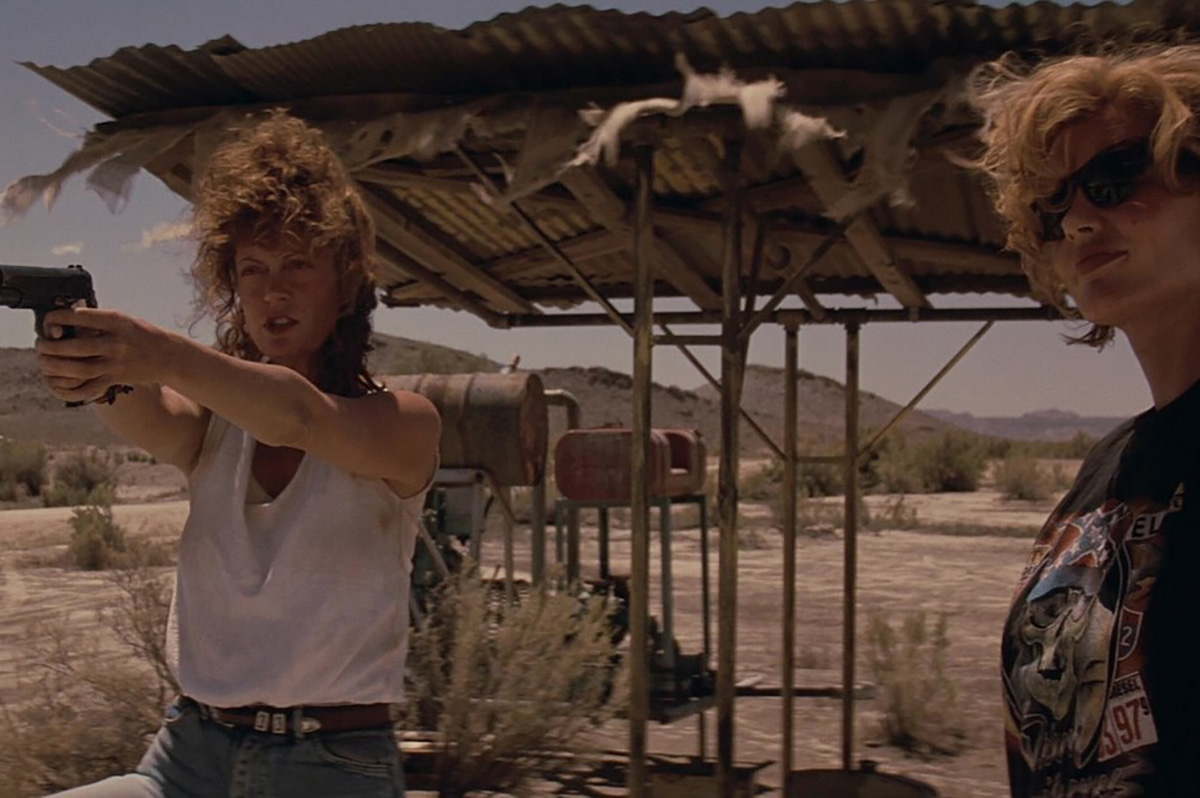
Hard as it is to believe for those who were around when it happened, “Thelma and Louise” celebrates the 35th anniversary of its release this year.
Deeply popular with both critics and audiences at the time, its reputation continues to ride high; it’s a movie that manages to exist within a nexus of intersecting genres – the “buddy picture”, the “crime thriller,” the “action adventure,” the” “western,” the “neo-noir” – by blending them seamlessly into a crowd-pleasing wild ride of a story, all while delivering a powerful feminist message of outrage, defiance, and empowerment.
And no, “Thelma and Louise” is not a “queer movie” – but it feels like one.
That’s partly because It exists within another genre, too: “lesbian noir,” which blossomed in its wake with films like “Bound” (1996) and has re-emerged in recent films like “Love Lies Bleeding” (2024) and “Honey, Don’t” (2025) – but that also stretches back across decades into the days of old Hollywood, when coded queer characters were a regular fixture in the seedy film noir classics of their time, never overtly identified as such but obvious to spot for anyone savvy enough to read the subtext. That’s why “Thelma and Louise” resonated (and continues to resonate) with lesbian and bisexual audiences who see themselves reflected in its two lead characters, even if there is nothing queer about their relationship — on the surface at least.
Of course, that can be a sore subject; subtext might seem like a “cop-out” for those who long for more open representation for LGBTQ people on the screen – but it’s everything when it comes to recognizing the queerness of older movies (and a lot of newer ones, too), and just because something is not explicitly stated, that doesn’t mean it’s being hidden. After all, most good stories rely on the transcendent power of nuance, which always relies on subtext to shine through. And if any movie relies upon subtext, “Thelma and Louise” is certainly one of them. In its masterfully crafted narrative of a weekend “girl’s trip” that goes horribly wrong, a lot of the most important information is left unspoken.
Take Thelma (Geena Davis), to start with: a naive young housewife whose husband Darryl (Christopher McDonald) treats her like a possession, she blithely ignores his mediocrity and disregards – or at least, pretends to – his repressive tactics to control her, choosing instead to live in a tenuous illusion of “traditional” marriage dynamics; yet when her bestie Louise (Susan Sarandon) offers her a chance to escape for a weekend, she jumps at it – even if she has to skip the part where she asks his permission.
Louise (Susan Sarandon), a bit older and a lot more worldly, is a waitress who spends her days fending off the insults and advances of her male customers at the diner where she works; she sees Thelma’s situation clearly, and hopes that a temporary respite from Darryl will help her recognize the dead-end reality of her marriage. We understand this immediately, even though a direct word is never said about it, and she’s right, of course. They’ve barely even gotten on the road before Thelma’s longing for attention from someone other than her inadequate husband – a honky-tonk Lothario (Timothy Carhart) she meets in a roadhouse where they stop for drinks on the way out of town – leads to an attempted rape that is only prevented when Louise shoots the predator dead in the parking lot.
That killing is the catalyst that turns them into fugitives; as Louise rightly understands, there’s no evidence of sexual assault, just a dead body and a pair of runaway women, and the letter of the law is not on their side. But in truth, that fatal shot is fired not to save Thelma, who has already been freed from her would-be rapist’s clutches when it happens, but because Louise has traumatic memories – and a chip on her shoulder – over something that “happened in Texas,” years before. We never find out what it was that happened, and we don’t need to; our imaginations tell us all we need to know, just as we know that the killing, while it may have been cold-blooded murder, is a justifiable homicide all the same.
There’s more of that subtextual nuance throughout, from the perversely inspiring motivations of hitchhiking hustler J.D. (Brad Pitt, in the sex-on-a-stick performance that launched him on his trajectory to stardom), who takes advantage of Thelma’s gullibility to rob the heroines even as he teaches her the tactics that will soon sustain them on their fateful ride-or-die fugitive adventure; to the self-serving “chivalry” of Louise’s erstwhile boyfriend (Michael Madsen) when he casts himself as the “martyr” for letting her go. And yes, even to the benignly sublimated patriarchal programming that drives police investigator Hal Slocumb (Harvey Keitel in an uncharacteristically empathetic role) to act as would-be savior to these two “fallen” women, though they want no part of his well-meaning attempts to “rescue” them from the consequences of their choices. And when the two fugitives terrorize a piggish trucker (Marco St. John) before blowing up his big-rig tanker, nobody says – or needs to say – why it feels like the right thing to do; it simply IS the right thing, and we, as the audience, know it. What we have seen up to that point has placed us firmly on Thelma and Louise’s side, and we’re as ready to watch the puerile patriarchy burn as they are.
None of this is spoken aloud, nor is it even alluded to, but it comes through, nonetheless. Chalk it up to the power of Callie Khouri’s Oscar-winning screenplay, which expertly lays this inner narrative as the foundation for everything that happens, and leaves director Ridley Scott to supply the stylish, action-packed visuals.
Thelma and Louise may not be “a couple,” but we can’t help notice as their clothing evolves from frilly-femme to “butch” utilitarianism along the way, nor how their connection to the men in their lives easily dissolves without fanfare. And by the time we reach the movie’s thrilling denouement, when all they have left is their commitment to simply stand up against the things that have kept them feeling incomplete, unfulfilled, and unacceptable, it’s an achingly familiar feeling for any queer viewer who has experienced the same – and let’s face it, that’s probably almost all of us.
We all know what happens, so it’s no spoiler to say that, when they drive off to oblivion in the Grand Canyon, they choose freedom over life itself – and when they head over that cliff, fully embracing their fate as a feminist iteration of the Bonnie and Clyde brand of “noble” outlaws, they seal their fate with a kiss.
At that point, any further explanation would feel like an insult. Their love for each other transcends anything they’ve felt with the inadequate men in their lives, it’s as simple as that, and their triumph is perfectly captured in that final freeze-frame moment, when they drive off the cliff and begin their plunge toward certain death and it feels like joy.
Yet still, we like to think that their car – like Danny Zuko’s at the end of “Grease” – simply flies away with them instead, into the bliss of an endless summer, and you can’t get any queerer than that!
Movies
‘Here the Whole Time’ delivers queer coming-of-age comedy
A feel-good journey toward self-discovery
There are a lot of queer coming-of-age movies about how hard coming of age can be when you’re queer – and that’s because, for far too many queer young people, coming of age is a very difficult experience.
Yet as difficult as it may be, imagine how much more so it is for queer kids who are also struggling with other factors that make them a potential target for bullying and social stigma. When your awakening sexuality is complicated by fears and self-esteem issues that can cause you to feel ostracized even by the other queer kids, it’s pretty hard to find a place where you fit in. Unfortunately, there are far fewer movies that address that kind of “double whammy” scenario, and even fewer whose leading characters don’t look like model-perfect “influencers,” complete with chiseled abs, perfect hair, and flawless skin – which makes it all the more welcome when a movie like that actually does come along.
That’s why the arrival on Netflix of “Here the Whole Time” – a Brazilian teen romcom from director Daniel Lieff – feels a bit like a surprise gift.
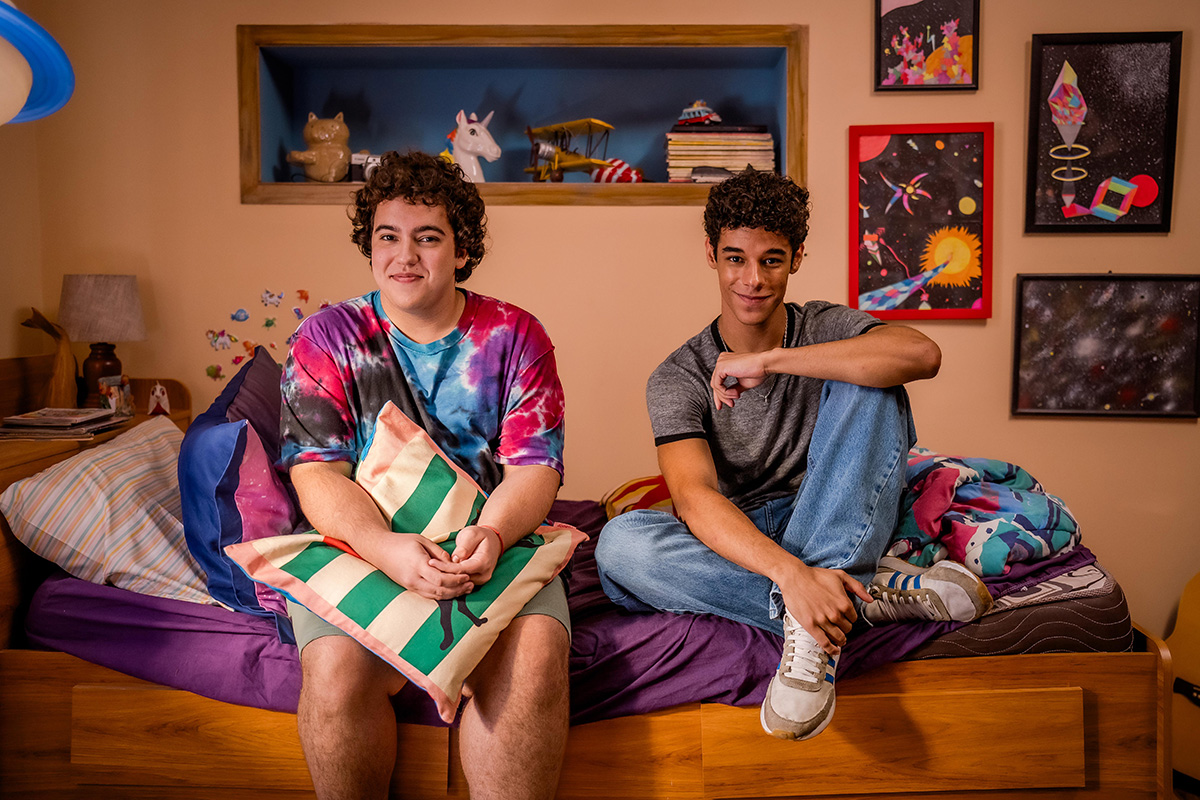
Its central character – Felipe (Miguel Lallo), a teenager who lives with his single mom Rita (Débora Falabella) – is already out as gay, but that’s not the only reason that his life at school is torturous; as he informs us through his own narration, he’s always been the butt of cruel jokes and public bullying because he’s always been (in his own words) “fat.” He’s teased in the classroom, humiliated in the hallways, and victimized at dodgeball in his gym class; so when his eagerly awaited summer break arrives, he’s looking forward to weeks of freedom in which he never has to interact with anyone except his mother.
His blissful dreams of isolating himself in his room are shattered, however, by a rude awakening in the form of Caio (Diego Lira), a neighbor boy and former childhood friend, whose mother and father have left him to stay with Rita while they are away on a trip. Athletic, handsome, and popular, he’s everything Felipe is not, and despite any previous bond of companionship they may have had, Felipe has no intention of playing the gracious host.
Yet as the days go by, the two boys begin to resuscitate their friendship; rather than being the bully Felipe expects, Caio is mostly respectful and exceedingly polite in trying to negotiate their temporary co-habitation. Forced to spend time together, the two gradually warm to each other, opening the door to a renewed friendship; they begin to “hang out” together, expanding the usually isolated Felipe’s social circle to include Caio’s BFF Beca (Mika Soiero) and her girlfriend Melissa (Bel Moreira) — leading to a revelation that turns his newfound friendly feelings for Caio into something more of a crush.
Is the feeling mutual? Can Felipe set aside his insecurities enough to even find out? We did describe the movie as a “romcom, so you can draw your own conclusions from that, but it’s a wild ride of a story, and half the fun is watching it unfold through each new development, so we won’t give any of those surprises away.
It won’t be a spoiler, however, to discuss the way “Here the Whole Time” undercuts the sentiment of its predictably “sweet” formula with its presentation of Felipe as something of an anti-hero, a strident “rebel with a cause” who disdains and distrusts everyone around him except for his mother and sees his therapy (or at least pretends to) as just an extension of school — complete with the unwanted inconvenience of homework.
He’s also, ironically, something of a bully himself, initially responding to the presence of Caio — who is no happier about their temporary living arrangement than he is — with willful and deliberate contempt, and levying his position as host (or as son of the hostess, at least) to assert his circumstantial power and dominance over an unwanted guest. Of course, we can see all along where it comes from, the habitual offense-as-defense tactic that has helped him survive and gain what little self-confidence he has, but that doesn’t make it any less rude.
Still, we don’t dislike him for it; a lifetime of body-shaming can do that to a person. Besides, it makes the transformation that comes in him — after learning to stand up for others like he stands up for himself, and other valuable life lessons he undergoes along the way — feel much more like an uplift. And if his insecurities win out once in a while (as they do, to dramatic effect, in the film’s penultimate chapters), who can blame him?
Caio, too, is portrayed against expectation. His self-assured swagger, like Felipe’s misanthropic hostility, comes from a young lifetime of self-protective compensation, but it’s just as easy for us to see through, and as the tenderness inside is revealed, he’s a far cry from “popular jock” stereotype that Felipe — and the audience — assume him to be,
It’s the dynamic between these two eminently likable characters that makes the film work, granting each of them their own dovetailing journeys toward self-discovery and allowing the feel-good sentiment of the story to emerge as something authentic, rather than just another trope-driven fantasy.
Much of this is thanks to the two young leads, who fully commit to their roles and strike a winning chemistry that makes us want them both to find their way through the amusing — but no less traumatic — growing pains they experience, both together and apart. They succeed in building an onscreen world in which we can believe, with them, in the possibility of rising above the obstacles thrown in their path, and it leaves us feeling not just uplifted, but maybe even a little joyful.
Kudos also go out to Falabella, whose performance as the quintessential “cool mom” makes her stand out as the film’s adult MVP; likewise, director Leiff handles the material with a superb sense of balance between over-the-top absurdity and quietly joyful moments of truth. In the end, though, it’s screenwriters Ray Tavares and Victor Brandt — adapting from a book by Vitor Martins — that’s truly responsible for crafting a charming coming-of-age story that allows itself to reach for the unlikely happy ending instead of sticking with the tried-and-true bittersweetness that usually arrives to provide an extra dash of unrequited yearning.
Of course, more jaded viewers — especially if they’re adults — might find the overall effect of “Here the Whole Time” less of than convincing. But for most of us — and hopefully it’s target audience, especially — it’s a charming reminder that “coming of age” isn’t just about sex or compromising with disillusionment. More than anything else, it’s about learning to let go of our disappointed assumptions to blossom into the life we truly deserve.
As a refreshingly upbeat entry into a genre that somehow holds a key position in our compromised adult lives, it’s definitely a ride worth taking,
Movies
‘Teenage Sex and Death’ has never been more entertaining
Come for the jump scares, but stay for the tour-de-force filmmaking
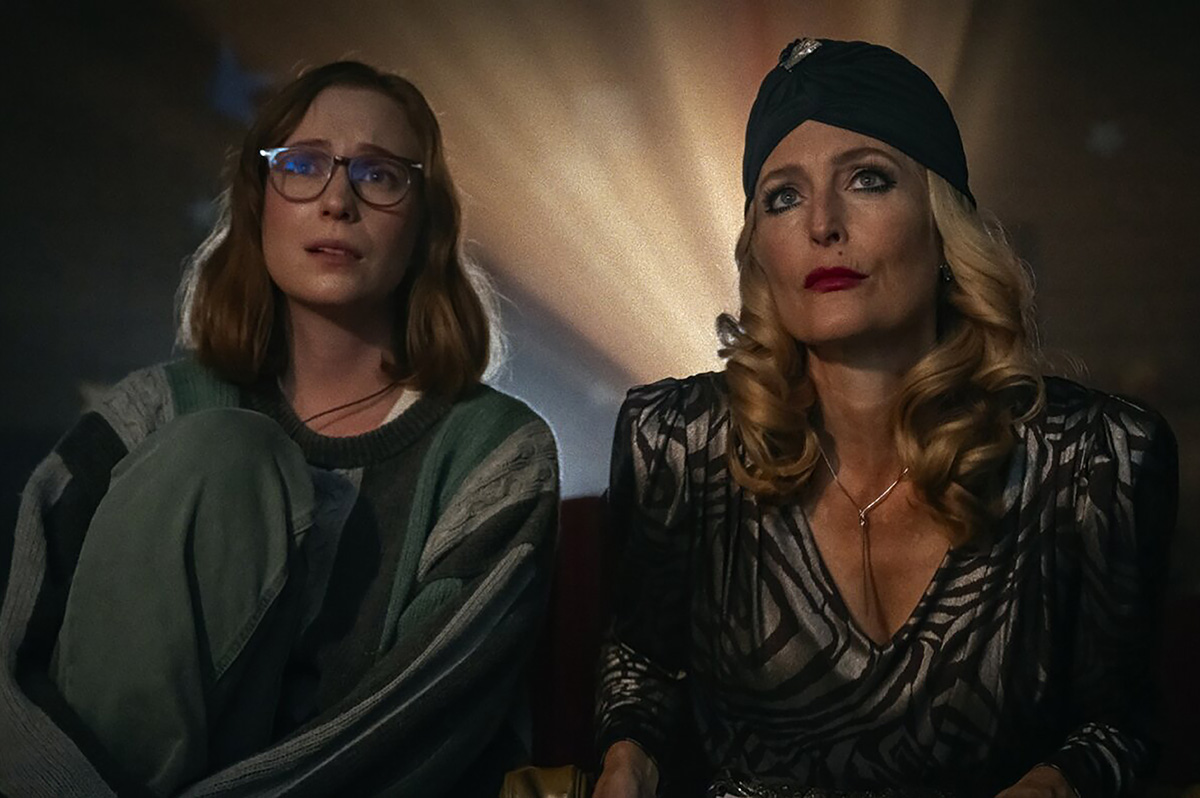
If any movie title can be said to describe exactly what it is going to show us, “Teenage Sex and Death at Camp Miasma” would have to be it – and yet, it doesn’t communicate anything to prepare us for what we are going to see.
For that, you’d have to already be a fan of the creator behind it – transfeminine, non-binary filmmaker Jane Schoenbrun – and the surreal, dysphoric, and meta-formal nature of their previous work.
A horror fan since childhood, Schoenbrun spent their teen years frequenting online message boards for popular horror shows, writing fan fiction, and going to see punk bands in basements; a bachelor’s degree in film from Boston University paved their way into the world of “indie” cinema, and their first directorial effort was an online documentary about the phenomenon of “Slender Man” (look it up), which explored the way media and reality can blend together in the cultural imagination.
That blending has continued to permeate their films: their first feature, “We’re All Going to the World’s Fair,” about a lonely teen who is drawn into a creepy online challenge, tells its story entirely through video clips she and the other participants share online; their second, “I Saw the TV Glow,” is an eerie and devastating tale of two teen friends who form a bond over their shared obsession with a paranormal television show and drift apart when it is cancelled, only to be drawn together again when buried memories of it begin to infiltrate their “real” lives. Both are driven by themes of gender identity, social isolation, queer awakening, and transformation – the stuff that resonates deeply with queer and trans audiences – and Schoenbrun didn’t bury the subtext in the story; instead, the subtext was the story.
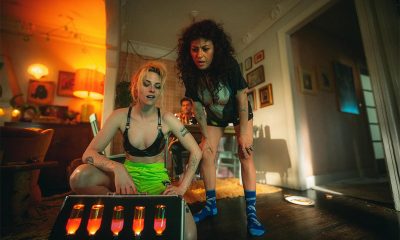
With “Camp Miasma,” their third and (thanks to its win of the “Queer Palm” at Cannes) highest profile feature film to date, they carry their creative obsessions forward into a surreal narrative that exists around the border between reality and media-manufactured fantasy, and brings them into the the world of queer adulthood. Even more boldly, perhaps, it’s a comedy (albeit a dark and grisly one), a satire of the movie industry itself – which gives the director plenty of cheekily self-referential opportunities to make this their most “meta” film yet. After all, it’s about a young non-binary director working on a horror film, and you can’t get much more “meta” than that.
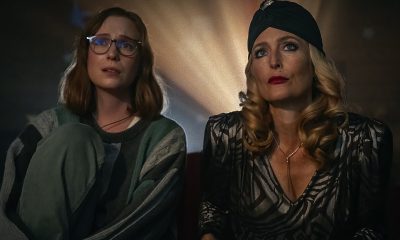
The onscreen director who serves as Schoenbrun’s semi-autobiographical avatar is Kris Williams (Hannah Einbinder), who has been tasked by a studio with remaking its classic slasher movie from the 1980s (“Camp Miasma”), in hope of generating an updated reboot of the once-lucrative franchise it spawned. Kris, who loves the original film, hopes to coax the actress who starred as its “final girl” – Billy Presley (Gillian Anderson) – into returning to the screen for the new one, though she has been retired from acting and living as a recluse ever since. Managing to get a meeting with her at her secluded home in the Pacific Northwest, Kris arrives in a snowstorm to discover that Billy now lives in the same abandoned campground where “Camp Miasma” was filmed four decades ago. She also has seemingly developed the unsettling eccentricities of an aging once-famous scream queen who has faded into obscurity and spent decades dwelling in memories of the past.
Despite some initial misgivings (on both sides), the two hit it off, and Billy agrees to help Kris develop her ideas for the reboot. As they work, their shared obsessions around the original film and its horrifying mythos draws them closer together into a more intimate kind of relationship – even as Billy’s unconvincingly “tongue-in-cheek” insistence that the franchise’s iconic killer is a real entity, waiting to be reawakened for the next massacre, begins to creep into Kris’s own psyche.
Ingeniously mixing fan nostalgia for vintage “Friday the 13th”-style slasher films with the Lynchian surrealism of modern horror cinema and the campy-but-transgressive absurdity of a movie that wants us to be “in” on the joke, “Camp Miasma” takes Schoenbrun’s broodingly ironic Gen-Z sensibilities and spins them into something that works on multiple levels. As a horror film, it relies on the familiarity of its tropes and gleefully manipulates our reactions, yet undercuts its own formula to turn it into a blend of parody and homage that somehow elevates the genre by way of its own deconstruction. As a piece of postmodern cinema, it precludes attempts at analysis by transparently analyzing itself as it goes as part of its own self-aware scenario, turning intellectual interpretation into just another trope of its own. As a queer allegory, it nullifies the standard critical interpretations by wearing them jokingly on its sleeve. As a love-letter to cinema, it brims with callbacks to iconic masterworks like “Sunset Boulevard” and “Psycho.” It uses the irresistible darkness of its milieu as a vehicle through which to express a liberating, sex-positive celebration of queer joy, unencumbered at last by a confrontation with the fear, shame, and insecurity forged by social constructs that are so often used to suppress it. It even works as a romance, turning the age gap between its two leads into a bridge that overpasses any notions of conformity and eliminates false sentiment by framing it as a sexy kind of cross-generational mentoring.
At the center of it all is the powerhouse pairing of Einbinder and Anderson, whose dynamic together works so well we never bat an eye over that age gap; they sink their teeth into the material and deliver it with a fearlessness that feels a bit like pure glee, and they give what might just be the two best screen performances of the year.
There are also some winking cameos, like “Kids in the Hall” alumnus Kevin MacDonald as a local hotel clerk who was once enlisted as a supporting player in the “Camp Miasma” franchise, and veteran character actor Dylan Baker as the facile-minded studio exec who simply wants Kris to create something commercial enough to turn the franchise into a cash cow again. Jack Haven (the trans co-star of “I Saw the TV Glow” opposite Justice Smith) commands our attention as Camp Miasma’s weirdly air-duct-masked slasher – named “Little Death,” a phrase which, translated into the French “La petite morte,” is a euphemism for orgasm, just in case it wasn’t already clear that the movie operates as a psychosexual drama, on top of everything else.
Ultimately, though, it’s Shoenbrun who is the real star; much in the way that Alfred Hitchcock turned his own unique milieu into a kind of star power that eclipsed even the draw of the big name actors who populated his films. They come into their own with “Teenage Sex and Death at Camp Miasma, creating one of the best films of the year so far and cementing their reputation as one of the most excitingly visionary filmmakers of the post-Millennial era.
In other words, come for the blood, gore, and jump scares, but stay for the sublimely entertaining — and entertainingly original — tour-de-force filmmaking that raises this one to the level of pop culture masterpiece.

988 restores crisis services for LGBTQ youth

To school to homeschool to school again

Ryan Murphy’s ‘Monster’ vilifies the lesbian

The right to be an ordinary transgender man

LGBTQ community must vote in big numbers

PHOTOS: HRC National Dinner

What’s frightening is also funny in ‘Venus’

I’m 66, he’s 27. Is it love or am I being played?

The LGBTQ real estate map is being redrawn