District of Columbia
Two D.C. LGBTQ rights advocates stepping down from jobs
Crenshaw leaving Alston Foundation; Czapary departs mayor’s office
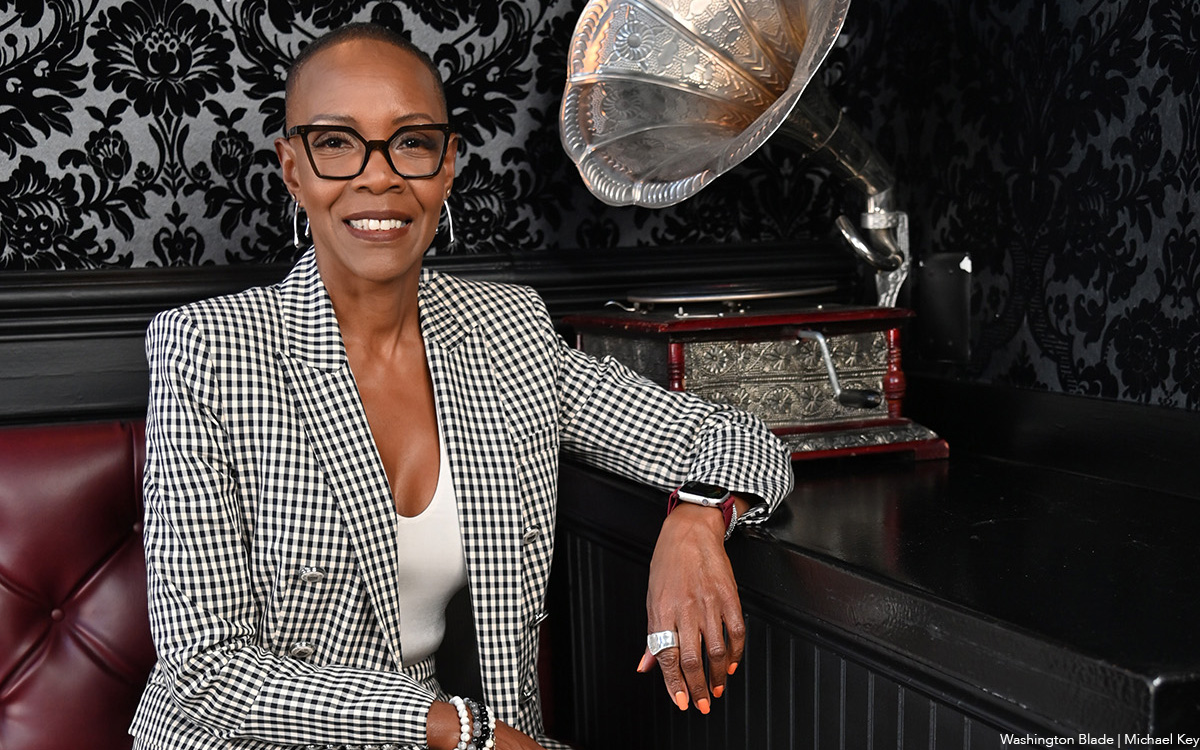
Longtime D.C. LGBTQ rights advocate June Crenshaw announced she is stepping down from her position for the past nine years as executive director of the Wanda Alston Foundation, the local organization that provides housing and support services for homeless LGBTQ youth.
Around the same time, fellow LGBTQ rights advocate Salah Czapary announced he is stepping down from his position for the past two years as director of the D.C. Mayor’s Office of Nightlife and Culture.
Meanwhile, a third longtime local LGBTQ rights advocate, David Meadows, was unanimously confirmed on Nov. 1 by the D.C. Council for an appointment by Mayor Muriel Bowser as a member of the city’s Alcoholic Beverage and Cannabis Board, which is responsible for administering, enforcing, and adjudicating the city’s alcoholic beverage and medical marijuana laws.
Neither Crenshaw nor Czapary disclosed in announcing their departure from their jobs what their future career plans are, and the two didn’t immediately respond to a question from the Washington Blade asking about career plans going forward.
Crenshaw currently serves as co-chair of the committee organizing D.C. World Pride 2025, the international LGBTQ Pride celebration expected to draw a million or more visitors to the city for a wide range of World Pride events in late May and early June 2025.
“After over nine years of unwavering dedication and visionary leadership, our beloved Executive Director, June Crenshaw, has decided to step into her next chapter,” a statement released by the Wanda Alston Foundation board of directors says. “While we will miss June’s daily presence, we are grateful that she will stay on through the transition to ensure a warm, seamless handover as we actively search for our next executive director,” the statement says.
It adds, “Her unwavering commitment to our mission, clients, and team has helped build a foundation of compassion, resilience, and excellence. This transition reflects her readiness to explore new paths and her belief in the bright future of the Wanda Alston Foundation.”
In his own statement, Czapary said he appreciated the opportunity his job gave him to serve the city and its residents and visitors.
“October marked my last month in the Mayor’s Office and I’m grateful to Mayor Bowser for giving me the opportunity to serve as the District’s Nightlife and Cultural Director, supporting our hospitality sector – the sector that makes the city a great place to live and visit,” he said.
“I’m proud of positioning the office as a responsive entry point for industry and residents to interact with government,” he said in his statement. “The role deepened my understanding and love for D.C. in ways I couldn’t have imagined two years ago.”
Czapary added, “As for me, I’m excited about what’s next.” But he gave no indication of his future career plans.
In the past 20 years or longer D.C. mayors have appointed an LGBTQ member of what used to be called the Alcoholic Beverage Control Board or ABC Board before its role was expanded to include marijuana regulations. It currently still uses the name ABC Board to denote Alcoholic Beverage and Cannabis Board.
LGBTQ rights advocates have called for at least one LGBTQ member of the board to provide representation for the important role that gay bars and other LGBTQ establishments licensed to sell or serve liquor have historically played in the community.
The board’s previous gay member, Edward Grandis, left the board earlier this year. In a statement released at the time of his confirmation by the Council, the Alcoholic Beverage and Cannabis Administration, which works with the ABC Board on liquor and cannabis related regulations, issued a statement introducing Meadows as its new board member.
“Mr. Meadows is a long-time Ward 8 LGBTQIA+ community advocate with 30 years of extensive experience serving in leadership roles in District government and civic organizations,” the statement says. “Most recently, Mr. Meadows ran day-to-day operations in the Office of At-Large Councilmember Anita Bonds as her Chief of Staff and Senior Adviser,” the statement continues.
It says Meadows previously has served as executive director of the D.C. Democratic Party and notes he began his career in the hospitality industry, including serving as events manager for the D.C.-based National Democratic Club. His appointment on the ABC Board is for a four-year term.


District of Columbia
‘Queer Love’ campaign launched to address domestic violence
D.C. event set for LGBTQ+ Domestic Violence Awareness Day on May 28
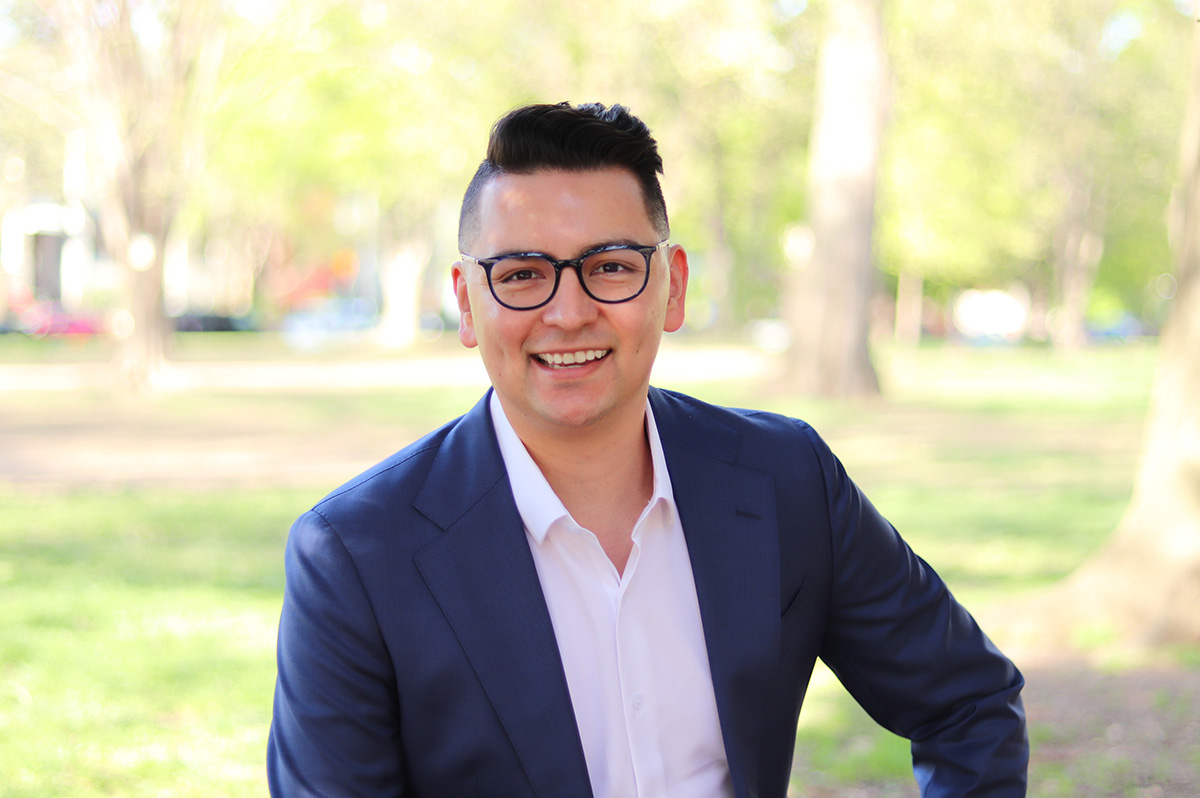
The D.C.-based Wanda Alston Foundation, which provides housing and support services for homeless LGBTQ youth, announced earlier this month that it has joined partner organizations to launch a Queer Love Shouldn’t Hurt campaign aimed at addressing domestic violence within the LGBTQ community.
In a May 18 statement, the Alston Foundation said the campaign involves a public awareness initiative leading up to LGBTQ+ Domestic Violence Awareness Day scheduled for May 28.
“Domestic and family violence in LGBTQ+ communities is real and too often invisible,” Cesar Toledo, the Alston Foundation’s executive director, said in the statement. “As a community, we do not talk about it enough, and that silence can leave survivors feeling isolated and alone,” he said. “We must break that silence.”
He added that culturally competent care for those impacted by domestic violence is available through a newly launched website, queerlove.org, “where people can safely access vital resources, educational toolkits, and support networks they need on their healing journey.”
The website announces one of the project’s first events, a Queer Love Community Social, was scheduled for Thursday, May 28, from 6-8 p.m. at the D.C. LGBTQ+ Community Center at 1827 Wiltberger St., N.W.
“Join us this LGBT+ Domestic Violence Awareness Day for a community social dedicated to visibility and survivor resilience,” the website statement says. “Let’s gather to strengthen our bonds, honor the path to healing, and share free resources,” it says of the May 28 event.
The website also announces a June 1 workshop called Empowering Survivors of LGBTQ+ Intimate Partner Violence, which it says will be presented by Jesse Wedell, an official with the D.C. LGBT+ Counseling Collaborative. The website provides an online form to register for the workshop upon which its location would be disclosed.
It identifies the partner organizations working with the Alston Foundation on the Queer Love Public Awareness Campaign as the LGBT+ Counseling Collaborative, Whitman-Walker Health, the D.C. LGBTQ+ Community Center, and Equality Chamber.
The resources and information provided by the project can be accessed at www.queerlove.org.
District of Columbia
Man accused of threatening to shoot D.C. bar employee after making anti-gay slurs
May 24 incident took place near Black Pride events on U Street

D.C. police on Sunday, May 24, at around 4:20 p.m. arrested a Maryland man for allegedly threatening to shoot an employee while using anti-gay slurs at Ben’s Next Door restaurant and bar at 1211 U St., N.W.
According to a statement released by police and a police incident report, the arrested man, identified as Delonte Fraley, 32, of Accokeek, Md., made the threats after the employee told a bartender not to serve the man alcohol.
“The suspect overheard the employee and threatened to shoot the employee and used homophobic slurs against the employee,” the police statement says. “When the employee left the restaurant for the day, the suspect was standing near the employee’s vehicle,” it says.
“The employee returned to the restaurant and called the police,” the statement continues. “The suspect was apprehended by responding officers,” it says.
The police statement says the arresting officers charged Fraley with Felony Threats (Hate/Bias).
D.C. Superior Court records show prosecutors with the Office of the U.S. Attorney for D.C., which prosecutes D.C. criminal cases, escalated the charge to Threatening to Injure or Kidnap a Person (Bias-Related Hate Crime).
The incident occurred during Memorial Day weekend when thousands of visitors and D.C. area LGBTQ advocates and supporters were attending D.C. Black Pride events held in locations across the city, including Black Pride parties hosted by LGBTQ bars in the U Street entertainment area near Ben’s Next Door.
Among the nearby LGBTQ bars hosting D.C. Black Pride events were Nellie’s Sports Bar and Thurst Lounge. Ben’s Next Door is located next to the popular longtime U Street eatery Ben’s Chili Bowl.
Court records show that Judge Robert R. Rigsby at a May 25 presentment hearing released Fraley on personal recognizance with a stay-away order — the details of which were not publicly disclosed pending a June 4 preliminary hearing.
A more detailed arrest affidavit filed in court by D.C. police says Fraley allegedly confronted the employee at Ben’s Next Door with anti-gay slurs on the day prior to his arrest.
“The complainant told the defendant that because he used homophobic slurs towards himself previously on May 23, 2026, and his hostess, as well as making threats to the complainant and calling him a faggot, he was unable to stay in the establishment,” the affidavit states.
It adds, “The defendant became irate stating, ‘I know where your Tesla is at. See me outside faggot, I will slap your ass’ and ‘I will shoot your ass.’” The affidavit says the complainant confirmed to police the Tesla referred to by Fraley was his vehicle. It says as the victim walked toward his car after getting off work, he saw Fraley standing directly in front of the car.
“The complainant stated he felt unsafe while the defendant was standing in front of his vehicle because he felt the defendant was capable of carrying out those threats,” says the affidavit. It says the victim then decided to return to the restaurant and call police without the defendant having seen him.
“The defendant was placed under arrest for Felony Threats Hate/Bias and was transported to the Third District Station for processing,” the affidavit concludes.
It couldn’t immediately be determined whether the victim identifies as LGBTQ or whether any of the Ben’s Next Door patrons had been involved with D.C. Black Pride.
“Established in 2008, Ben’s Next Door is a family-owned and operated restaurant and bar on U Street, Northwest in Washington, D.C.,” a statement on its website says. “As a Black-owned establishment, it’s our goal to deliver a warm, welcoming, familiar, and communal vibe to all guests,” the statement says.
District of Columbia
Doc on Blade reporter Chibbaro scores Emmy nomination
‘Lou’s Legacy’ chronicles 50-year career

“Lou’s Legacy: A Reporter’s Life at the Washington Blade” has been nominated for a Capital Emmy in the “Documentary – Historical” category by the National Capital Chesapeake Bay Chapter of the National Academy of Television Arts & Sciences.
“Our members include all of the video content producers who serve our local audiences in Washington, DC, Maryland and Virginia—from the Atlantic to the Appalachians, from Bristol to Baltimore,” said Capitol Emmys President Adam Longo in a press release.
Broadcast last June by WETA PBS in Washington, D.C. and MPT in Maryland, the documentary was directed and produced by Emmy-nominated filmmaker Patrick Sammon in association with the Mattachine Society of Washington, D.C. Additional nominees who worked on the film include producer Julianne Donofrio and editor Amir Jaffer.
“Lou’s Legacy” tells the story of two D.C. icons — legendary Washington Blade reporter Lou Chibbaro Jr. and beloved drag performer Donnell Robinson, known to generations of Washington audiences as “Ella Fitzgerald.” Through Chibbaro’s nearly five-decade career at the Blade and Ella’s return to the stage after a three-year hiatus following COVID, the 29-minute documentary explores the history of Washington’s LGBTQ community and today’s rising backlash against LGBTQ rights, including laws targeting drag performers.
“We’re honored that Lou’s Legacy has been recognized alongside such an impressive group of historical documentaries,” said Sammon. “This nomination is especially meaningful because the film preserves and celebrates the stories of people who helped shape queer history in Washington, DC — often without recognition from mainstream institutions. We’re deeply grateful to the Mattachine Society, Lou Chibbaro Jr., Donnell Robinson, WETA PBS, and everyone who helped bring this project to life.”
“Lou’s Legacy” premiered on WETA PBS in June 2025 during Pride month. The documentary also broadcast on Maryland Public Television and is streaming nationally on PBS.org. WETA will rebroadcast “Lou’s Legacy” several times during Pride month, including June 15 th at 9 p.m. Winners of the Capital Emmy Awards will be announced at the Capital Emmy Gala on June 20 at the Bethesda Marriott Hotel.

‘How to Survive a Plague’ screens June 5

‘Queer Love’ campaign launched to address domestic violence

Ken Paxton wins Texas Republican primary runoff

China’s top court acknowledges anti-LGBTQ discrimination