Virginia
EXCLUSIVE: HRC PAC to endorse Spanberger for Va. governor
Former congresswoman to face off against state’s GOP lieutenant governor
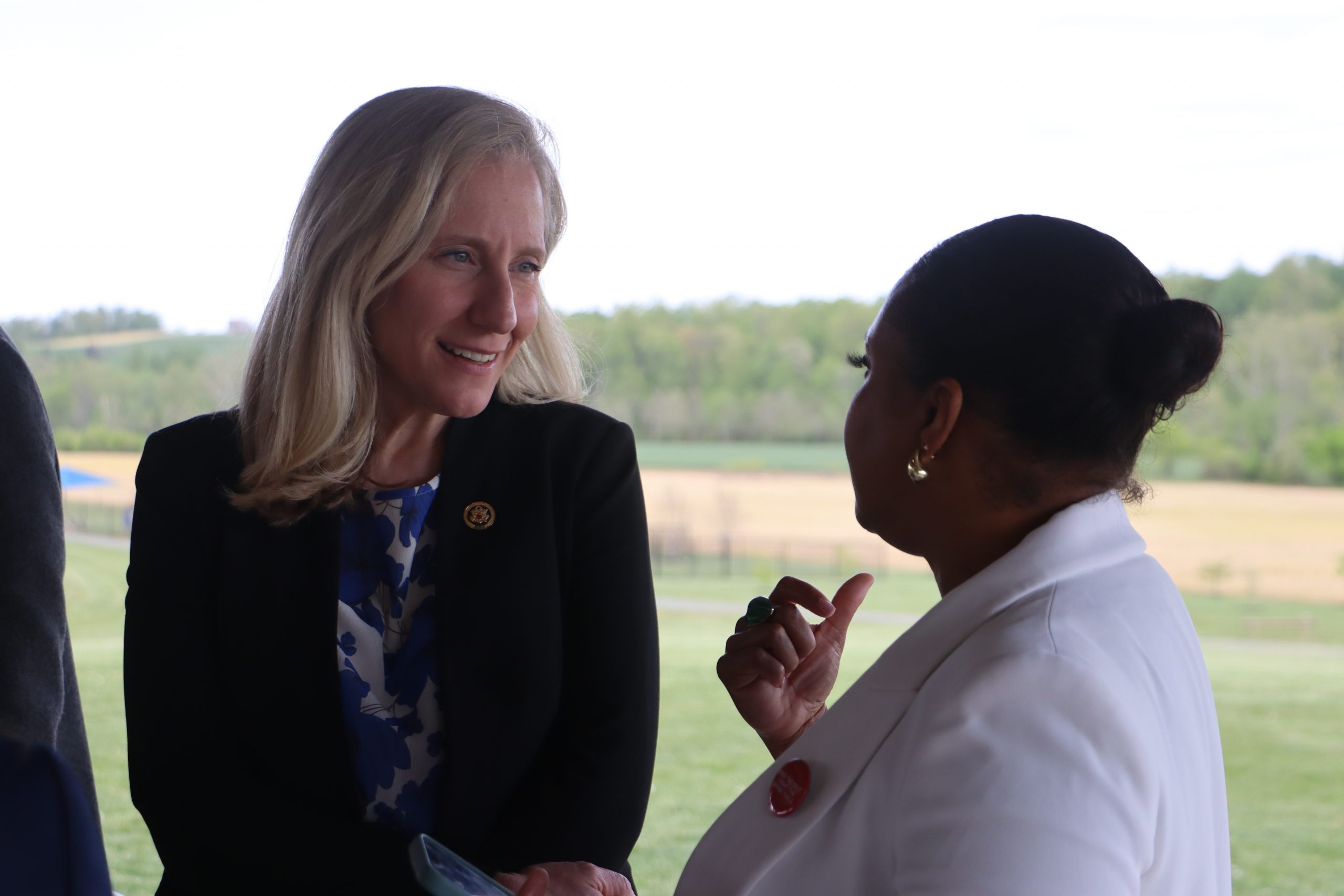
The Human Rights Campaign PAC on Tuesday will endorse Democratic nominee Abigail Spanberger’s run for governor of Virginia, the organization told the Washington Blade.
The former CIA agent-turned-congresswoman, who represented her state’s 7th Congressional District from 2019 to 2025, will face off against Republican Lieutenant Gov. Winsome Earle-Sears in this year’s gubernatorial race.
A Roanoke College survey in February found Spanberger in the lead with a comfortable margin, 39-24, while a trio of polls in January found her ahead by one, five, and 10 percentage points.
Virginia’s incumbent Republican Gov. Glenn Youngkin, who is prohibited from seeking a second term under the state’s constitution, has consistently restricted LGBTQ rights and attacked the transgender community since taking office in 2022.
HRC said Spanberger’s candidacy “offers Virginians renewed hope for a future rooted in equality,” with the group’s president, Kelley Robinson, calling her “a champion for the LGBTQ community.”
Noting the former congresswoman’s co-sponsorship of the Equality Act, legislation that would expand federal anti-discrimination protections to include LGBTQ people, Robinson said Spanberger “understands that Virginia’s future success depends on the full inclusion and protection of all its people.”
HRC’s president added, “As governor, she will work tirelessly to build a Virginia where everyone — regardless of who they are or who they love — can live, work, and go to school with dignity, safety, and opportunity. We are thrilled to support her and mobilize pro-equality Virginians to make her the commonwealth’s next governor.”
Responding to news of the endorsement, Spanberger said “I’m honored to earn the endorsement of the Human Rights Campaign, and I’m ready to work together to build on the progress we’ve made to secure equal protections for all Virginians under the law.”
“Affirming that Virginia is a welcoming home for all families goes beyond protecting marriage equality — it means defending Virginians’ right to live without fear of discrimination or harm,” she said. “As governor, I will work to make sure that no Virginian is denied government services, loses a job, or faces any other form of discrimination because of who they love or who they are.”
HRC further noted that Spanberger fought to pass the Respect for Marriage Act, which was signed into law in 2022 and codified legal protections for married same-sex and interracial couples, as well as her promise to “defend marriage equality and work with the General Assembly to enshrine marriage equality in Virginia’s constitution.”
Spanberger has also committed to “signing legislation guaranteeing Virginians’ right to access contraception and birth control,” HRC wrote, “and protecting against attempts by extreme judges and politicians to roll back Virginians’ reproductive freedoms.”
By contrast, the organization criticized Sears’s LGBTQ rights record — noting that in 2004, she pledged to “emphatically support a constitutional amendment” banning same-sex marriage, in 2021, she campaigned with a gubernatorial candidate who said homosexuality was the “work of the devil,” and in 2022, she “dodged questions” about her position on marriage equality and “attempted to rewrite her hateful history.”
Since 1977, with only one exception, Virginia has elected governors who belong to the party that is out of power at the presidential level. The state’s upcoming off-year gubernatorial contest presents an opportunity for Democrats who are eager for a major electoral victory to channel momentum against President Donald Trump and Republican majorities in Congress.


Virginia
Campaign urges Virginia High School League to reverse stance on trans athletes
Equality Arlington and other advocacy groups behind ‘Right 2 Play’ VA’ initiative

Virginia advocacy groups have launched a campaign that urges the Virginia High School League to once again allow student athletes to compete on sports teams that correspond with their gender identity.
Equality Arlington on Sept. 16 published an article about the “Right 2 Play VA” campaign. Amy, a group representative, spoke about the initiative with the Washington Blade.
“The primary goal is to reverse the Virginia High School League’s discriminatory ban on allowing transgender girls to play on girls’ sports and replace it with a policy that is fair for all students.” they said.
The Virginia High School League in 2025 announced the policy, which reversed a previous position in support of transgender and nonbinary athletes. The 2025 policy coincided with President Donald Trump’s executive order — “Keeping Men Out of Women’s Sports” — that threatened to “rescind all funds from educational programs that deprive women and girls of fair athletic opportunities, which results in the endangerment, humiliation, and silencing of women and girls.”
The Arlington Gender Identity Alliance, Equality Virginia, and the American Civil Liberties Union of Virginia have also joined the “Right 2 Play VA” campaign.
“We had a policy in Virginia for 12 years that allowed transgender girls to play on girls’ sports teams, and we had not one instance — not one instance — that was brought forward demonstrating an unfair advantage or any type of safety concern,” said Amy.
Amy then discussed what they described are the benefits of trans youth playing sports.
“There are physical benefits. There are mental health benefits. There are community and social development benefits, and those are all well documented,” they said. “All kids should have the right to benefit from playing youth sports. We are talking about kids. We are talking about youth. We are not talking about Olympians. We are not talking about Division One college athletes. We are talking about kids in Virginia, and because the benefits of sports are so well documented, we think that every kid should have the ability to play sports.”
Virginia
Gay Va. couple hopeful voters will enshrine marriage equality in state constitution
Early voting has already begun in the state
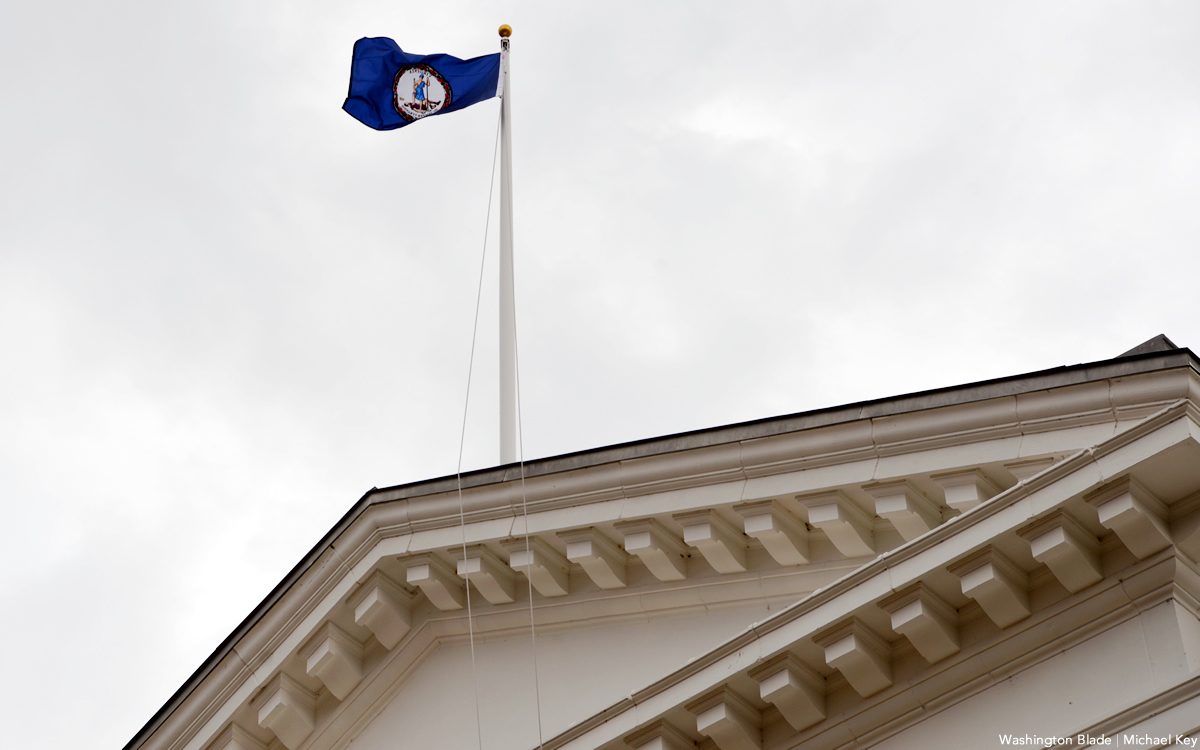
A referendum on whether to enshrine marriage equality in Virginia’s constitutional amendment is on the ballot this year.
If voters approve Question 2, it will codify the U.S. Supreme Court’s Obergefell ruling in 2015 that extended marriage rights to same-sex couples across the country — gays and lesbians have been able to legally marry in Virginia since Oct. 6, 2014.
Ron Bookbinder and James Fisher are a married couple who live in Arlington.
They have been together for 38 years — Bookbinder and Fisher married in 2014.
“We think this is a critical vote to remove this discriminatory language from the constitution and to ensure that going forward, no matter what happens, the state of Virginia will ensure marriage equality,” Fisher told the Washington Blade. “It is it is really difficult and upsetting to think that our current state constitution would prohibit same-sex marriage, even though the federal government overrides that now. There’s no saying what may happen in the future.”
Bookbinder said it was important for him and Fisher to get married “to gain social equality.”
“I was surprised how good it felt, how important it was to begin to say, ‘my husband rather than my partner,'” Bookbinder said.
Bookbinder then explained why it feels good to be married.
“Is it a legal partner, a business partner, a tennis partner, you know, or a romantic partner? But when you say my husband James, everyone knows exactly what you mean and confers an equal status with everyone else who’s married, and we were both surprised at how good it felt and how equal it felt to suddenly be married and be able to state that you were married and discuss your husband rather than your partner, and I would hate to lose that,” he said.
Bookbinder and Fisher said they are hopeful that voters will approve the amendment, noting Virginia has become more progressive over the years.
“I think people have, with the Supreme Court decision, people have seen that a same-sex marriage is just a marriage,” stated Fisher. “It’s just two people who love each other, and I think more and more people have attended a same-sex marriage, someone in their family or a friend, and the experience of what this is, firsthand experience, is so important in shaping people’s opinions, and I think the period of time that we’ve had since the Obergefell decision has given a lot of voters that experience, which I think is really important and powerful.”
The couple also said the push to enshrine marriage equality in Virginia’s constitution is in response to the Trump-Vance administration.
“And I think due to President Trump doing all the horrible things he’s done to so many groups, including LGBTQ, especially trans people, that Virginians are kind of pushed to be even more progressive to protect those who need protection, which would include the LGBTQ community in terms of marriage equality, so I’m confident it will pass,” said Bookbinder.
Narissa Rahaman, executive director of Equality Virginia, sent the Blade a statement about early voting on Question 2 that has already begun.
“With early voting now underway, our focus is making sure every Virginian knows Question 2 is on their ballot,” said Rahaman. “The outdated ban on same-sex marriage still in Virginia’s state constitution leaves a gap in protections for the thousands of same-sex couples that call this state home, but after 20 years we have the chance to fix it.”
Log onto www.mobilize.us/vaformarriage to find out more about the campaign in support of Question 2.
Virginia
Virginia Anti-Violence Project struggles to fill federal funding gaps
Group has lost 54 percent of funding since 2020
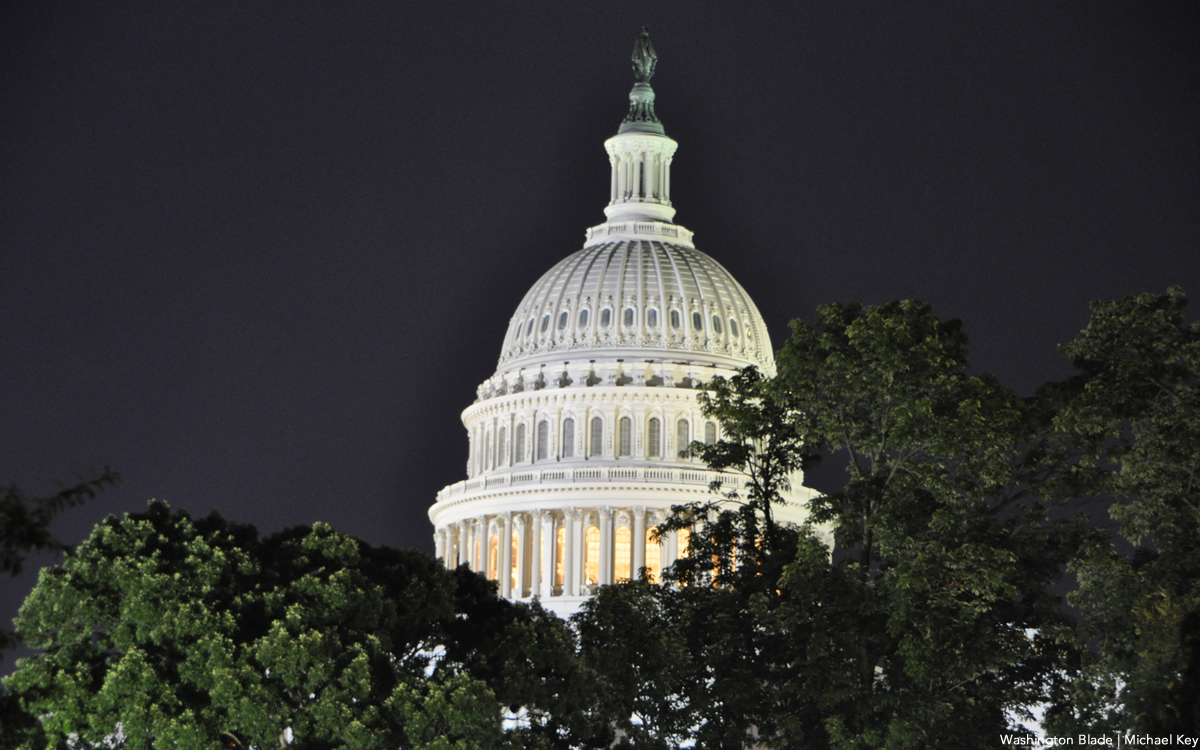
A loss of federal funding has threatened to adversely impact the Virginia Anti-Violence Project’s work in the state.
The group’s mission is to assist LGBTQ and BIPOC (Black, Indigenous and people of color) victims of domestic, sexual, interpersonal, and state violence with direct support, education, and advocacy. The VAVP seeks to build a future where LGBTQ and BIPOC individuals can live freely without a sense for worry about violence.
“Virginia Anti-Violence Project helps to close the distance between services existing and LGBTQIA+ survivors actually being able to reach safety, stable housing, and support that they can trust,” VAVP Executive Director Ebony Clark told the Washington Blade on Tuesday. “Our mission is to provide direct services and advocacy to LGBTQ+ survivors across Virginia.”
Clark said obtaining state and federal funds has become increasingly difficult.
“One of the reasons that we can talk about is politics and how you know queer diverse, queer communities are targets when it comes to politics, and so that may be a reason why the funding is decreasing in in very niche areas, but overall, state funding, federal funding has been lost or significantly reduced when it comes to culturally specific marginalized populations,” Clark said. “The bigger picture is that funding that was purposed for diversity, equity, inclusion, marginalized populations, or you know culturally competent programming, those funds have been strategically reduced or eliminated on state and federal levels overall.”
Even more so with the current Trump-Vance administration.
Data shows federal funding for one “major federal victim-services funding stream in” Virginia has dropped 54 percent over the last six years: from $25.1 million in fiscal year 2020 to $11.6 million in fiscal year 2026.
Clark noted some federal funding has been denied due to VAVP’s DEI policies — it has had to “water down” their language. These cuts have forced VAVP to limit housing and economic support, which has resulted in fewer resources for its clients.
The organization has set up a goal for receiving between $250,000-$300,000 a year that would allow it to operate — and focus on client housing.
“Housing is fundamental to safety,” Clark told the Blade. “If you know leaving violence puts someone on the street or forces them back to the person harming them, that means the crisis isn’t over. So there needs to be other prevention strategies and reactive strategies in place to be able to prevent further violence from folks.”
VAVP has set up a link for anyone who is interested in making a donation. It is here.
The VAVP website is also accepting donations.

Annie Andrews denounces trans athletes after Trump targets her

On Republican Long Island, gay Democrat Chris Gallant bets on public service over politics

Report: LGBTQ exclusion costs Japanese economy billions a year

Center for Black Equity honors leaders, activists at BE. Gala

In ‘The Lost Brontë,’ a complicated lie can lead to danger

U.S. int’l trade negotiator, consultant James Bedore dies at 82

Campaign urges Virginia High School League to reverse stance on trans athletes

Calif. GOP gubernatorial candidate ad ‘disgusting attempt to exploit lesbian intimacy’

Center Arts Gallery celebrates 10 years with reception, auction

Trump, Netanyahu, and Putin are all war criminals
-

 Obituary5 days ago
U.S. int’l trade negotiator, consultant James Bedore dies at 82
-
Virginia5 days ago
Campaign urges Virginia High School League to reverse stance on trans athletes
-
California5 days ago
Calif. GOP gubernatorial candidate ad ‘disgusting attempt to exploit lesbian intimacy’
-
Commentary5 days ago
Center Arts Gallery celebrates 10 years with reception, auction