Books
Queer Visitors: How drag and Oz are inspiring a new adult LGBTQ book club
The new adult LGBTQIA+ book club uses “The Wonderful Wizard of Oz” to explore themes of self-acceptance, found family, and community with special drag performances.
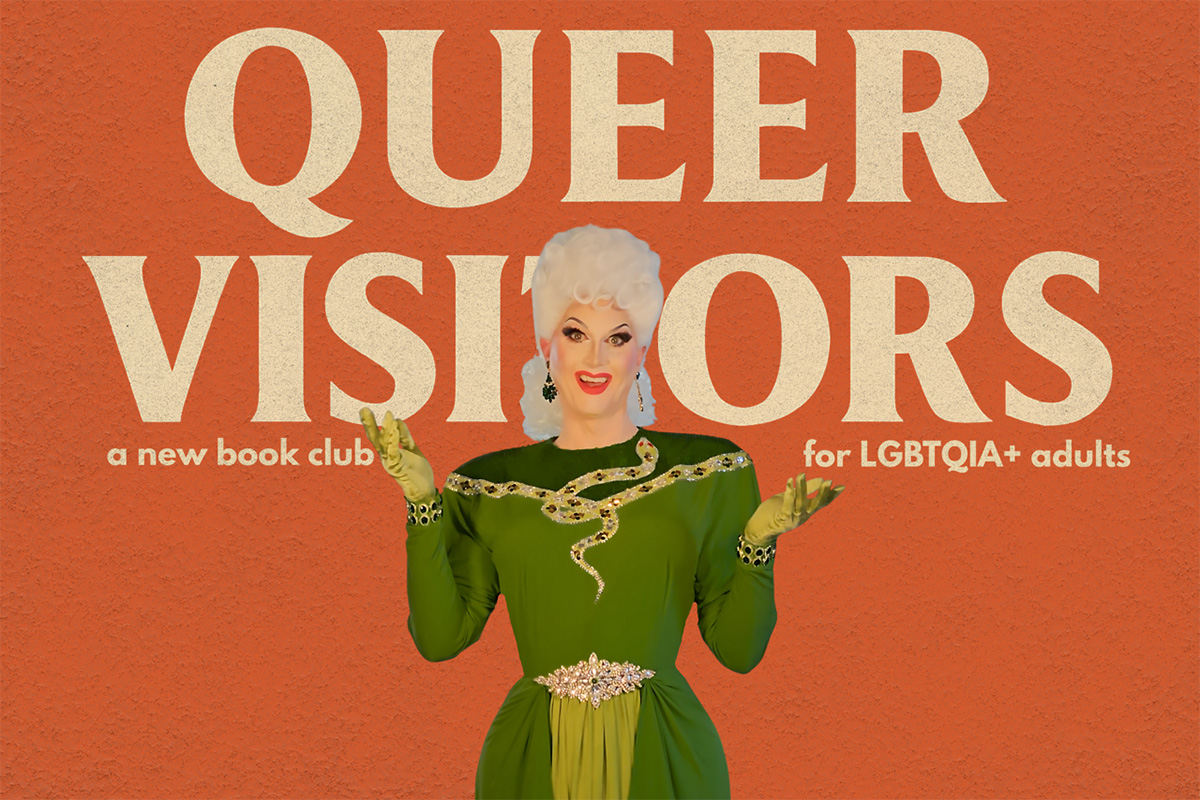
When looking at media, few works of literature have achieved the critical success and enduring resonance with the LGBTQ community that “The Wonderful Wizard of Oz” has.
From its messages of radical acceptance, home, and belonging, to its subversions of gender norms and its memorable, fluidly gendered characters, “The Wizard of Oz” has remained a queer cultural touchstone more than 125 years after its first publication.
The book itself offered many LGBTQ readers one of their first glimpses of a world that celebrated differences that might otherwise be considered “queer.” The 1939 MGM film adaptation, starring gay icon Judy Garland, further cemented Dorothy—and Oz—into LGBTQ culture, contributing (somewhat debatedly) to the origin of the term “Friend of Dorothy” as a euphemism for LGBTQ individuals and helping to establish rainbows as a queer symbol.
The story also inspired the wildly popular musical “Wicked,” which reimagines the witches of Oz and is rich with LGBTQ subtext.
Given all this, it makes perfect sense that an adult LGBTQ book club would choose to start its journey in the fantastical world L. Frank Baum created with Oz.
Queer Visitors, a book club made for LGBTQIA+ adults and named after a comic strip L. Frank Baum published in 1904 called “Queer Visitors from the Marvelous Land of Oz,” created by Drag Story Hour—a national non-profit whose goals include “celebrating storytelling through the dynamic art of drag performance”—chose to kick off this new venture with “The Wonderful Wizard of Oz.”
The Washington Blade had the chance to speak with Jonathan Hamilt, co-founder of Drag Queen Story Hour, about what the LGBTQ adult book club will entail, why now, and why Oz.
When asked what spurred the choice to start an adult LGBTQ book club, Hamilt explained that the club has been a long time in the making.
“‘Drag Story Hour’ is celebrating 10 years of stories this year. We’ve always served families and children reading public books… but we really wanted to expand our programming for an adult-focused book club that was basically a drag story hour for adults only,” Hamilt said.
For years, the organization has worked to inspire children and promote diversity across the U.S.—and the globe. Now, they are venturing over the rainbow into adult territory.
“It’s like Oprah’s book club, but gay, where we will have a monthly book club… with a virtual experience with the drag artist and a subject matter expert of the book.”
For their first month, Queer Visitors went with drag queen (and face of Queer Visitors) Nana Tuckit from Portland, Ore., and Tori Calamito—a self-described “Oz historian” and LGBTQ ally known as “The Oz Vlog” on social media—to stand alongside the club online.
“Nana Tuckit brings a really fun energy to the space… and Tori is an Oz historian and can tell us all the things about that world,” Hamilt said when explaining their choice to go with Tuckit and Calamito. “I think the two of them will be a really amazing powerhouse chatting about this book.”
Calamito and Tuckit both sat down with the Blade to discuss why they chose to partner with Drag Queen Story Hour and Queer Visitors—both going into detail about why “The Wizard of Oz” is a perfect pick for the first meeting of the book club, explaining that LGBTQ people can see themselves in the story.
“‘The Wizard of Oz’ at its core, is a story about self-actualization and achieving self-actualization alongside your found family,” Tori Calamito told the Blade. “And I think those are themes that the LGBTQIA+ community can really relate to.”
She sees “The Wizard of Oz” as a story that resonates universally: “I think it’s a story everyone knows. So no matter where you’re coming from, in society, where you live in the country, where you hail from, everybody can hear Oz and go, ‘Aha, there’s some sort of association in your memory.’”
“Queer people are just naturally drawn to those stories where the interesting oddball characters are accepted and welcomed and present and they’re celebrated,” Nana Tuckit said. “I feel like it’s important right now to tell people’s stories to understand perspectives that are different… there is such a huge range of lives people are living.”
“’The Wizard of Oz’ is such an interesting cultural capstone… all generations know ‘The Wizard of Oz’ in some capacity… there are so many original books and I think they’re so innately queer if you read between the lines,” Hamilt said. “One way to look at it: it’s just so campy and so colorful and so fun… and this idea of queer diaspora… Dorothy being displaced or in a new land, kind of finding her chosen family… it’s kind of like an allegory for the whole queer experience.”
Calamito echoed Hamilt’s points and said her LGBTQ followers—more than 375,000 combined on Instagram and TikTok—helped show her that.
“You know, when I first read the L. Frank Baum original series of Oz books, I didn’t pick up on the very queer, coded themes and the gender fluid themes because reading it through the lens of a straight cis woman—just those things didn’t hit me,” she said. “But interacting with other folks in the broader [Oz] fandom opened my eyes to how obvious those themes are.”
“When we hear stories about those kinds of people [queer], and they aren’t the villains of the story—they aren’t the people who are being scrutinized and condemned or picked apart for those aspects of themselves—I think that’s what gets people so excited,” Tuckit told the Blade. “We need to create some worlds that are super fun for queer people to experience, because we need to know that we can be the main character, the hero, the savior. We can be all of the good things, the magical things.”
Hamilt also noted that the childlike wonder the Oz books and story have been able to provide to people for over a century reflects the need to heal their internal child selves.
“Queer adults have to do a lot of inner child healing… getting back to the magic of books where the excitement maybe first happened for you… it brings a lot of joy at face value with this book club that makes you feel like a kid at heart,” Hamilt said.
Tuckit went on to emphasize how the feeling of community—which has been life-saving for LGBTQ people when families have, and continue to, shun them for coming out—is present throughout the book.
“Even at the end of the book, The Lion, the Scarecrow, and the Tin Woodman all become the king of their own… the people have chosen you to be this figure for them, because they know you’re going to be supportive of them and looking out for them,” Tuckit said.
That community, she explained, can help the reader find what Dorothy was searching for when her house landed in Oz.
“If I think about what feels like home for me, it’s definitely not necessarily the physical place, but it is about who I’m with and the people that I’ve created my community with.”
Hamilt also saw the opportunity for book club members to create real-world connections using the club as a goal.
“It’s really easy as an adult to get sucked into your phone or social media… my hope is that this book club gets a physical book in your hands… gets you to meet other people that are excited about a really dorky topic… bring back this idea of real community.”
The act of drag has long been a community- and family-maker in the LGBTQ world. From ballroom families to the unique feeling of love one can get when watching a truly moving piece of drag, the art form has community woven into its history that adds an additional layer to the complexities of LGBTQ relationships.
“Drag is starting to represent just more of a wide range of people and experiences, just reflecting what we are as people… it’s all the same,” Tuckit said. “Drag artists are just expressing that something inside them that they want to get out and show the rest of the world.”
“I love Drag Story Hour. I take my own daughter, we go to drag brunch. We love drag queens in this household. And it harkens back to classic theater and pantomime in the days of Shakespeare,” the Oz historian said, highlighting that drag has been around for centuries, despite what anti-LGBTQ conservatives say.
“The opposition to Drag Story Hour isn’t new. We’ve been around for 10 years, and there’s always been an ebb and flow,” Hamilt explained. “One common comment we hear from people who are homophobic or transphobic is, ‘Why do you only read to kids? Why don’t you read to adults?’ And the truth is, we do! We read to elderly people, we go into hospitals—we read to a wide variety of audiences. So, if the issue really is age, we’ve even started side projects just for adults. Will there be protests? Opposition? Pushback when it’s only adult-focused programming? Absolutely. Because it’s never really been about children. It’s about control, hatred, and trying to erase the queer experience altogether.”
When asked what she hopes Queer Visitors brings to all fans of Oz, LGBTQ members, or allies, Calamito said she hopes it helps create good feelings during difficult times for members of the LGBTQ community.
“I hope this fosters a safe space for people to have good community outreach,” she said. “I hope this becomes a place where we can dispel fear.”
For Hamilt, the goal is both playful and proud: “Stories are for everybody… the goal is to celebrate self-expression and imagination through glamorous, playful, proud, queer role models… the more we love and accept the diversity of the world, it makes us more empathetic.”
For more information on joining the book club, where to pick up a copy, and how to get involved, visit www.dragstoryhour.org/queer-visitors.



Books
Risking it all for love during World War II
New book follows story of Black, gay expat in Paris
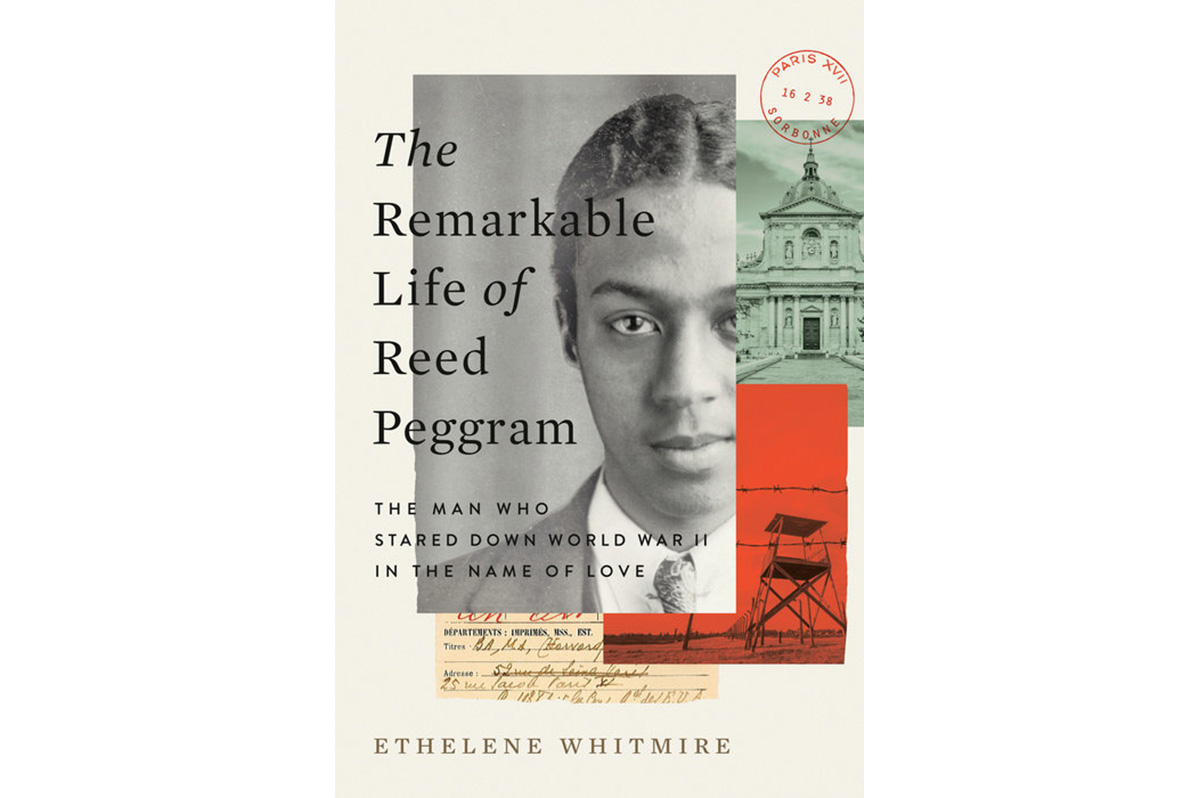
‘The Remarkable Life of Reed Peggram’
By Ethelene Whitmire
c.2026, Viking
$30/308 pages
You couldn’t escape it.
When you fell in love, that was it: you were there for good. Leaving your amour’s side was unthinkable, turning away was impossible. You’d do anything for that person you loved – even, as in the new biography, “The Remarkable Life of Reed Peggram” by Ethelene Whitmire, you’d escape toward danger.

On Aug. 28, 1938, Reed Peggram boarded a ship from Hoboken, N.J., hoping to “become a proper gentleman” and fulfill his dreams. A prolific writer and Harvard scholar of comparative literature, he’d recently been awarded the Rosenwald Fellowship, which put him in the company of literary stars like Du Bois, Hurston, and Hughes.
Both Peggram’s mother and grandmother were then domestic workers, and they had big expectations for him. Reed himself was eager to study abroad, for professional and personal reasons; he was “determined to become a French professor and an accomplished linguist” and “He also hoped to find love.”
What better place to do it than in Paris?
Outgoing and confident, Peggram made friends easily and had no trouble moving “through the world of his white male peers.” Where he faltered was in his lack of funds. He relied on the kindness of his many friends – one of whom introduced Peggram to a “man who would become so pivotal in his life,” a Danish man named Arne.
Peggram and Arne had a lot in common, and they began to enmesh their lives and dreams of living in the United States. But there were complications: homosexuality was largely forbidden, World War II was in its early stages, and it quickly became apparent that it was dangerous to stay in Europe.
And yet, Peggram loved Arne. He refused to leave without him and so, while most visiting Black Americans fled the war in Europe, “Reed was trying to stay.”
There’s so much more to the story inside “The Remarkable Life of Reed Peggram,” so much to know about Reed himself. Problem is, it’s a long haul to get to the good stuff.
In her introduction, author Ethelene Whitmire explains how she came to this tale and yes, it needs telling but probably not with the staggering number of inconsequential details here. Peggram moved homes a lot, and many people were involved in keeping him in Europe. That alone can be overwhelming; add the fact that costs and other monetary issues are mentioned in what seems like nearly every page, and you may wonder if you’ll ever find the reason for the book’s subtitle.
It’s there, nearly halfway through the book, which is when the tale takes a tender, urgent turn — albeit one with determination, rashness, and a dash of faux nonchalance. Also, if you’re expecting an unhappily-ever-after because, after all, it’s a World War II tale, don’t assume anything.
Reading this book will take a certain amount of patience, so skip it if you don’t have that fortitude. If you’re OK with minuscule details and want a heart-pounder, though, “The Remarkable Life of Reed Peggram” might be a good escape.
The Blade may receive commissions from qualifying purchases made via this post.
Books
Laverne Cox, Liza Minnelli among authors with new books
A tome for every taste this reading season
Spring is a great time to think about vacations, spring break, lunch on the patio, or an afternoon in the park. You’ll want to bring one (or all!) of these great new books.
So let’s start here: What are you up for? How about a great new novel?
If you’re a mystery fan, you’ll want to make reservations to visit “Disaster Gay Detective Agency” by Lev AC Rosen (Poisoned Pen Press, June 2). It’s a whodunit featuring a group of gay roommates, one of whom is a swoony romantic. Add a mysterious man who disappears and a murder, of course, and you’ve got the novel you need for the beach.
Don’t discount young adult books, if you want something light to read this spring. “What Happened to Those Girls” by Carlyn Greenwald (Sourcebooks Fire, June 30) is a thriller about mean girls and a camping trip that goes terribly, bloodily wrong. Meant for teens ages 14 and up, young adult books are breezier and lighter fare for the busy grown-up reader.
If you loved “Boyfriend Material” and “Husband Material,” you’ll be eager for the next installment from author Alexis Hall. “Father Material” (Sourcebooks Casablanca, June 2) takes Luc and Oliver to the next step. First was dating. Then was marriage. Is it time for the sound of pitter-patter on the kitchen floor?
Maybe something even lighter? Then how about a book of essays – like “The Terrible, Horrible, No Good, Very Bad Gay” bycomedian and writer Eliot Glazer (Gallery Books, Aug. 11). It’s a book of essays on being gay today, the irritations, the joys, and fitting in. Be aware that these essays may contain a bit of spice – but isn’t that what you want for your reading pleasure anyhow, hmmm?
But okay, let’s say you want something with a little more heft to it. How about a biography?
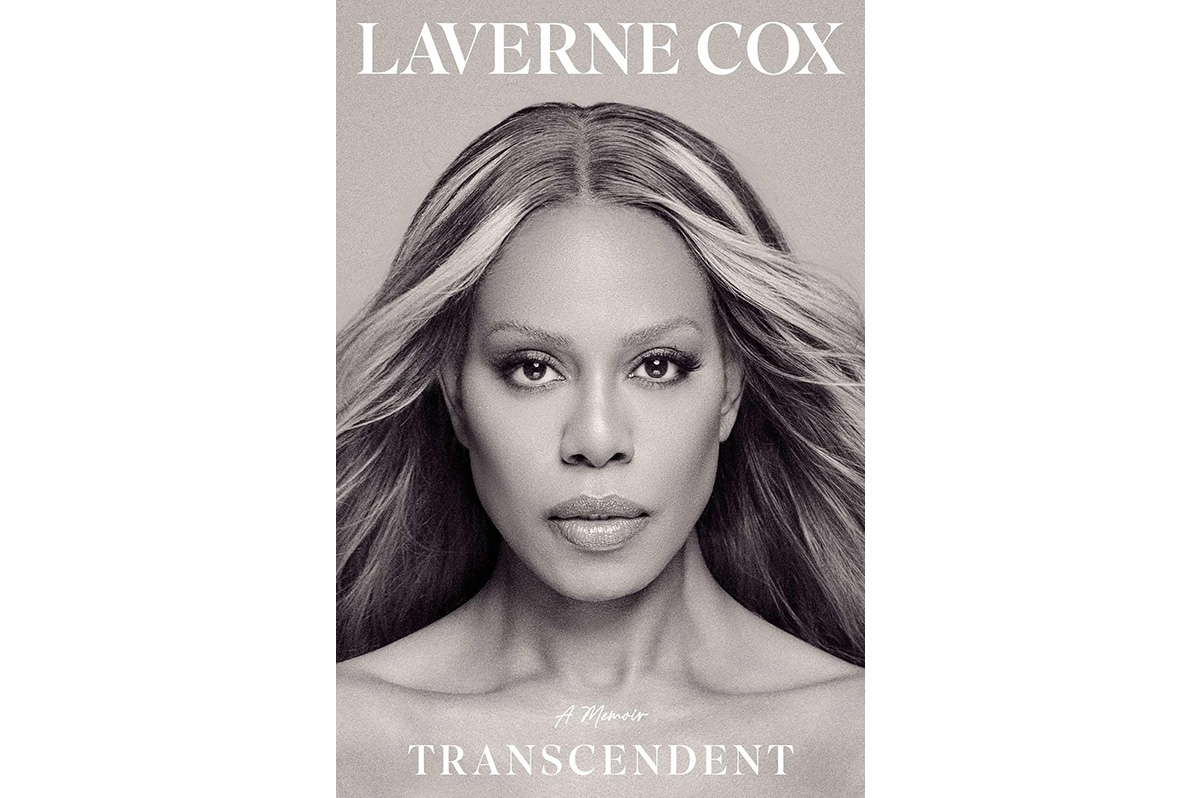
Look for “Transcendant” by Laverne Cox (Gallery Books, June 9), or “Kids, Wait Till You Hear This” by Liza Minnelli (Grand Central Publishing, March 10), and “Every Inch a Lady” by Audrey Smaltz with Alina Mitchell (Amistad, July 14). Keep your eyes open for “Without Prejudice: My Life as a Gay Judge” by Harvey Brownstone (ECW Press, May 26) or “The Double Dutch Fuss” by Phill Branch (Amistad, June 2).
Then again, maybe you want some history, or something different.
So here: look for “Queer Saints: A Radical Guide to Magic, Miracles, and Modern Intercession” by Antonio Pagliarulo (Weiser, June 1) for a little bit of faith-based gay. Music lovers will want “Mighty Real: A History of LGBTQ Music, 1969-2000” by Barry Walters (Viking, May 12). Activists will want “In the Arms of Mountains: A Memoir of Land, Love, and Queer Resistance in Red America” byformer Idaho state Sen. Cole Nicole LeFavour (Beacon Press, May 26).
And if these books aren’t enough, then be sure to check with your favorite bookseller or librarian. They’ll have exactly what you’re in the mood to read. They’ll find what you need for that patio, beach towel, or easy chair.
Books
Love or fear flying you’ll devour ‘Why Fly’
New book chronicles a lifetime obsession with aircraft
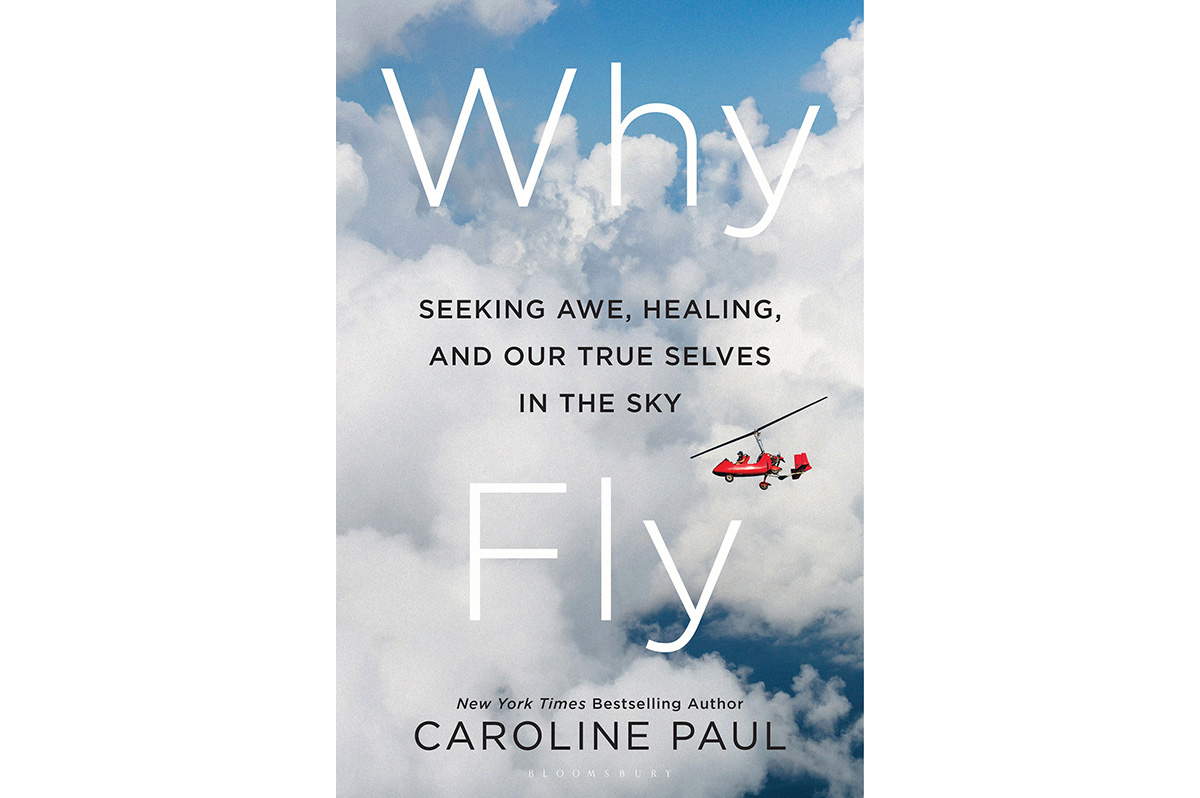
‘Why Fly’
By Caroline Paul
c. 2026, Bloomsbury
$27.99/256 pages
Tray table folded up.
Check. Your seat is in the upright position, the airflow above your head is just the way you like it, and you’re ready to go. The flight crew is making final preparations. The lights are off and the plane is backing up. All you need now is “Why Fly” by Caroline Paul, and buckle up.
When she was very young, Paul was “obsessed” with tales of adventure, devouring accounts written by men of their derring-do. The only female adventure-seeker she knew about then was Amelia Earhart; later, she learned of other adventuresome women, including aviatrix Bessie Coleman, and Paul was transfixed.
Time passed; Paul grew up to create a life of adventure all her own.
Then, the year her marriage started to fracture, she switched her obsession from general exploits to flight.
Specifically, Paul loves experimental aircraft, some of which, like her “trike,” can be made from a kit at home. Others, like Woodstock, her beloved yellow gyrocopter, are major purchases that operate under different FAA rules. All flying has rules, she says, even if it seems like it should be as freewheeling as the birds it mimics.
She loves the pre-flight checklist, which is pure anticipation as well as a series of safety measures; if only a relationship had the same ritual. Paul loves her hangar, as a place of comfort and for flight in all senses of the word. She enjoys thinking about historic tales of flying, going back before the Wright Brothers, and including a man who went aloft on a lawn chair via helium-filled weather balloons.
The mere idea that she can fly any time is like a gift to Paul.
She knows a lot of people are terrified of flying, but it’s near totally safe: generally, there’s a one in almost 14 million chance of perishing in a commercial airline disaster – although, to Paul’s embarrassment and her dismay, it’s possible that both the smallest planes and the grandest loves might crash.
If you’re a fan of flying, you know what to do here. If you fear it, pry your fingernails off the armrests, take a deep breath, and head to the shelves. “Why Fly” might help you change your mind.
It’s not just that author Caroline Paul enjoys being airborne, and she tells you. It’s not that she’s honest in her explanations of being in love and being aloft. It’s the meditative aura you’ll get as you’re reading this book that makes it so appealing, despite the sometimes technical information that may flummox you between the Zen-ness. It’s not overwhelming; it mixes well with the history Paul includes, biographies, the science, heartbreak, and exciting tales of adventure and risk, but it’s there. Readers and romantics who love the outdoors, can’t resist a good mountain, and crave activity won’t mind it, though, not at all.
If you own a plane – or want to – you’ll want this book, too. It’s a great waiting-at-the-airport tale, or a tuck-in-your-suitcase-for-later read. Find “Why Fly” and you’ll see that it’s an upright kind of book.
The Blade may receive commissions from qualifying purchases made via this post.

How to navigate shifting tenant expectations

Viktor Orbán ousted in Hungarian elections

Minimal version of ‘Streetcar Named Desire’ heading to Dupont Underground

Comings & Goings

An effort to increase the number of psychiatrists of color

Tenn. lawmakers pass transgender “watch list” bill

LGBTQ groups condemn Trump’s threat to destroy Iranian civilization

Report: Grenell wants Russian ambassadorship

D.C. Council member honored by LGBTQ homeless youth group

Glisten’s 30th annual Day of Silence to take place April 10
-

 Tennessee4 days ago
Tenn. lawmakers pass transgender “watch list” bill
-

 Iran4 days ago
LGBTQ groups condemn Trump’s threat to destroy Iranian civilization
-
The White House4 days ago
Report: Grenell wants Russian ambassadorship
-
District of Columbia4 days ago
D.C. Council member honored by LGBTQ homeless youth group