Ukraine
Activists in Ukrainian city hold annual Pride event
Kharkiv is less than 30 miles from Russian border

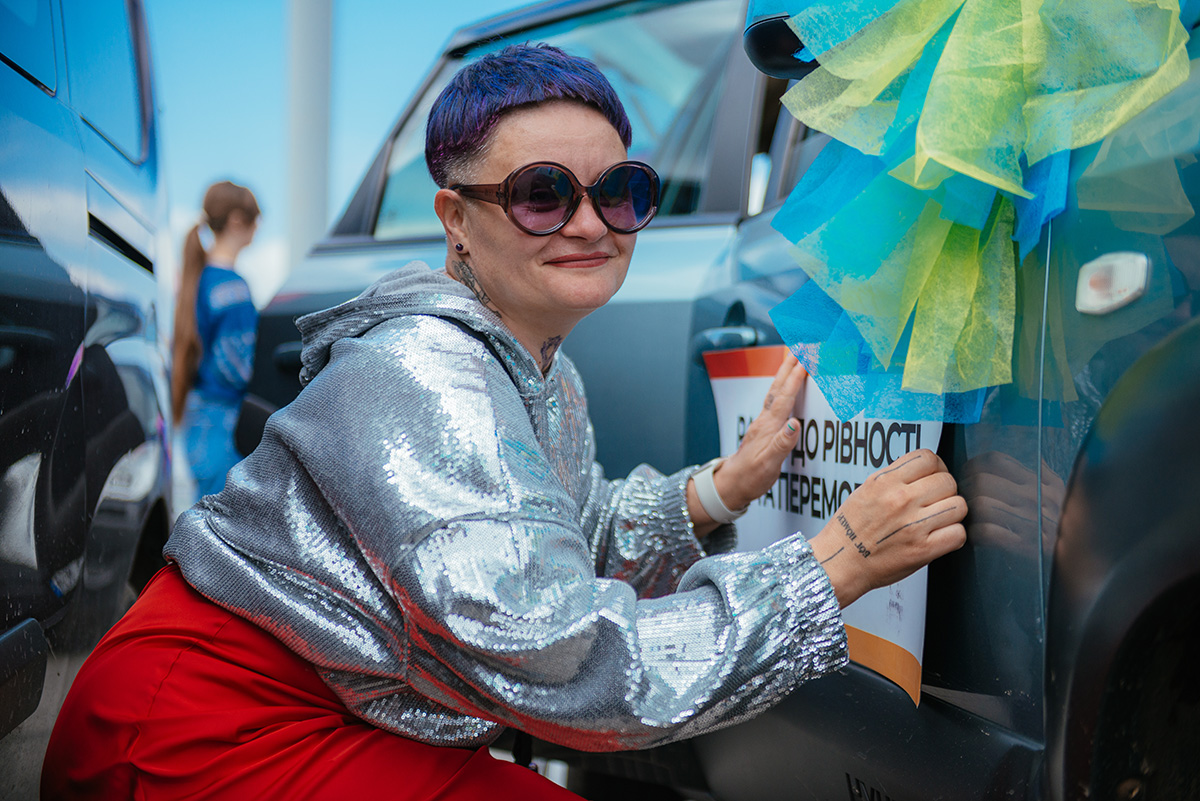
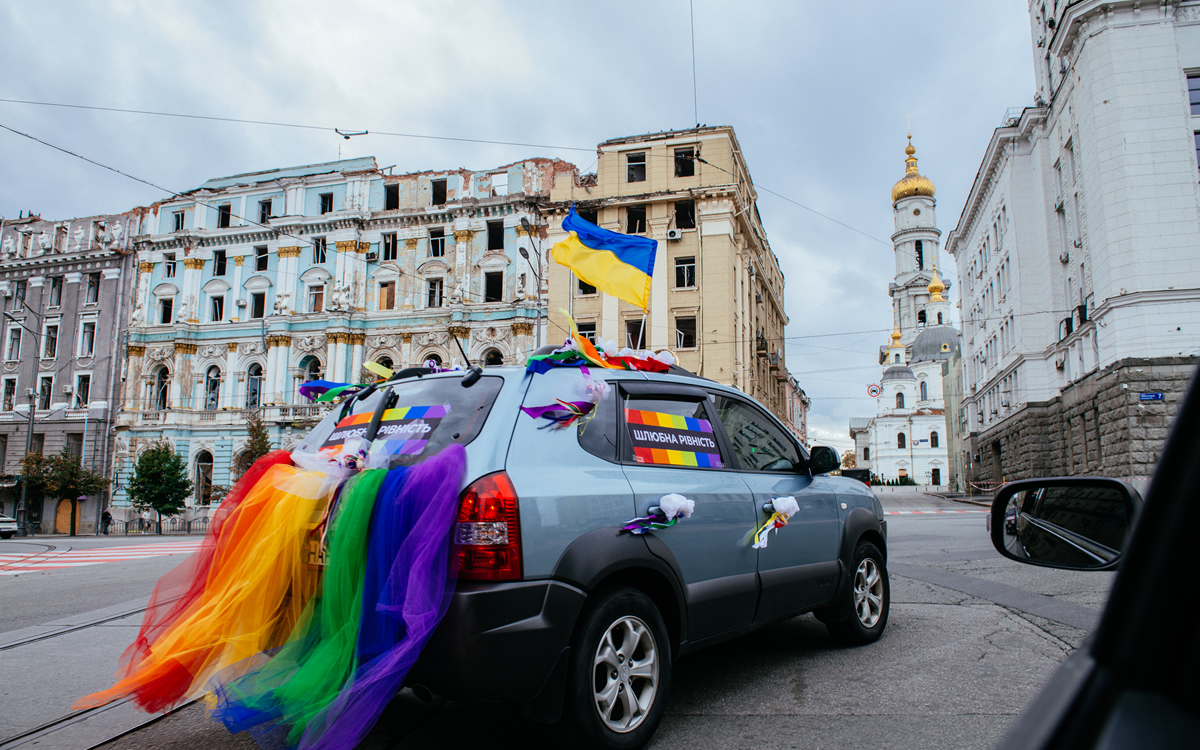
Activists in the Ukrainian city of Kharkiv on Saturday held their annual Pride event.
A Kharkiv Pride press release notes 17 cars “drove through the city to draw attention to the importance of ensuring human rights for all through legislation.” Upwards of 50 people: LGBTQ people, activists, volunteers, and servicemembers, participated in the event lasted about an hour.
Kharkiv, which is Ukraine’s second-largest city, is less than 30 miles from the Russian border in the eastern part of the country.
Russia has repeatedly targeted the city since the Kremlin launched its war against Ukraine on Feb. 24, 2022.
Kharkiv Pride in its press release notes organizers decided to organize an “AutoPride” — “a motorcade format” — as opposed to a street march because of security concerns.
“Despite the fact that in Kyiv Pride has already taken place for two consecutive years in the format of a street march, the security risks in Kharkiv are higher, as the city is located in eastern Ukraine, close to the Russian border,” said Kharkiv Pride. “Therefore, for the second year in a row, the Kharkiv Pride team opted for a motorcade format — it allows them to convey important messages while taking security threats into account as much as possible.”
Kharkiv Pride noted police officers “escorted” the “AutoPride” participants.
“KharkivPride is a human rights civic movement, not just some kind of fun and entertainment,” said Anna Sharyhina, co-organizer of Kharkiv Pride and president of the Sphere Women’s Association. “Kharkiv needs Kharkiv Pride — a powerful and vivid distinction from Russia. We strive to live in a free and safe country and to have the same rights that heterosexual people already enjoy. Every day, LGBTQ+ people contribute to the victory, so the state must finally provide us with protection.”




Ukraine
Ukrainian MPs advance new Civil Code without protections for same-sex couples
Advocacy groups say proposal would ‘contradict European standards’
Ukrainian lawmakers have advanced a proposed new Civil Code that does not contain legal protections for same-sex couples.
The Kyiv Independent reported the proposal passed on its first reading on April 28 by a 254-2 vote margin.
The newspaper notes more than two dozen advocacy groups in a statement said some of the proposed Civil Code’s provisions “contradict European standards” and “violate Ukraine’s commitments under its EU accession process.”
“The most worrying provisions are those that make it impossible for a court to recognize the existence of a family relationship between people of the same sex,” the statement reads. “This overturns the already established case law on this issue, and closes the only legal avenue that allows partners to somehow protect their rights in individual cases.”
“Moreover, the draft completely ignores the obligations that Ukraine should have already fulfilled as part of its accession to the EU, as it lacks provisions that would allow people of the same sex to register their relationships,” it adds.
“The provisions also stipulate that all marriages concluded by people who have changed their gender automatically become invalid,” the statement further notes. “This is not just stagnation in the field of human rights or lack of progress on the path to European integration, but an actual setback in the legal sphere.”
Olena Shevchenko, chair of Insight, a Ukrainian LGBTQ advocacy group, in an April 28 Facebook post said the new Civil Code “is a step back on upholding the rights of women and the LGBT+ community in Ukraine.”
The Ukrainian constitution defines marriage as between a man and a woman.
President Volodymyr Zelenskyy in 2022 publicly backed civil partnerships for same-sex couples.
The Ukrainian Supreme Court on Feb. 25 recognized Zoryan Kis and Tymur Levchuk — a gay couple who has lived together since 2013 and married in the U.S. in 2021 — as a family. Ukraine the day before marked four years since Russia began its war against the country.
Ukraine
Ukrainian Supreme Court recognizes same-sex couple as a family
Zoryan Kis and Tymur Levchuk married in US in 2021

The Ukrainian Supreme Court has recognized a same-sex couple as a family.
The couple — Zoryan Kis and Tymur Levchuk — have lived together since 2013. They legally married in the U.S. in 2021.
The Kyiv Independent notes the couple challenged the Ukrainian Foreign Ministry’s refusal to acknowledge Levchuk as Kis’s family member, therefore denying him spousal rights while Kis was posted at the Ukrainian Embassy in Israel. Kis and Levchuk challenged the decision in court in 2024.
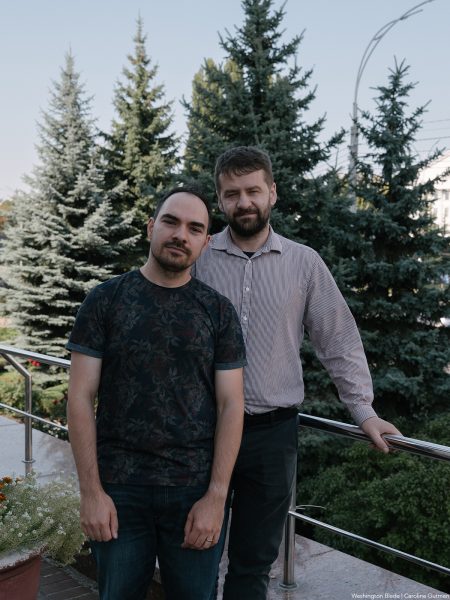
Kyiv’s Desniansky District Court last year in a landmark ruling recognized Kis and Levchuk as a family. Vsi Razom, an anti-LGBTQ organization, appealed the decision.
Insight, the Ukrainian LGBTQ rights group that represented Kis and Levchuk, said the Supreme Court upheld the lower court’s ruling on Feb. 25.
“The Supreme Court of Ukraine has upheld the legality of recognizing a same-sex couple as a family based on their factual relationship, despite the absence of legal recognition of same-sex partnerships in Ukrainian legislation,” Insight Chair Olena Shevchenko noted to the Washington Blade on Tuesday. “The court confirmed the decision, establishing the fact that (the) two men had lived together as a family, affirming that such recognition can be based on proven circumstances of their shared life rather than on political decisions or the existence of formal partnership laws.”
Insight in a Facebook post added the Supreme Court ruling sets “a tremendous precedent.”
“No homophobic or conservative organization will be able to use the courts as a tool to persecute or overturn decisions in favor of LGBT+ people under the guise of ‘social morality,’” said Insight. “The state has protected the boundaries of private life.”
The Supreme Court issued its ruling a day after Ukraine marked four years since Russia began its war against the country.
The Ukrainian constitution defines marriage as between a man and a woman.
President Volodymyr Zelenskyy in 2022 publicly backed civil partnerships for same-sex couples. Shevchenko pointed out Ukrainian law “currently does not provide a mechanism for registering same-sex marriages or partnerships.”
Books
New book profiles LGBTQ Ukrainians, documents war experiences
Tuesday marks four years since Russia attacked Ukraine
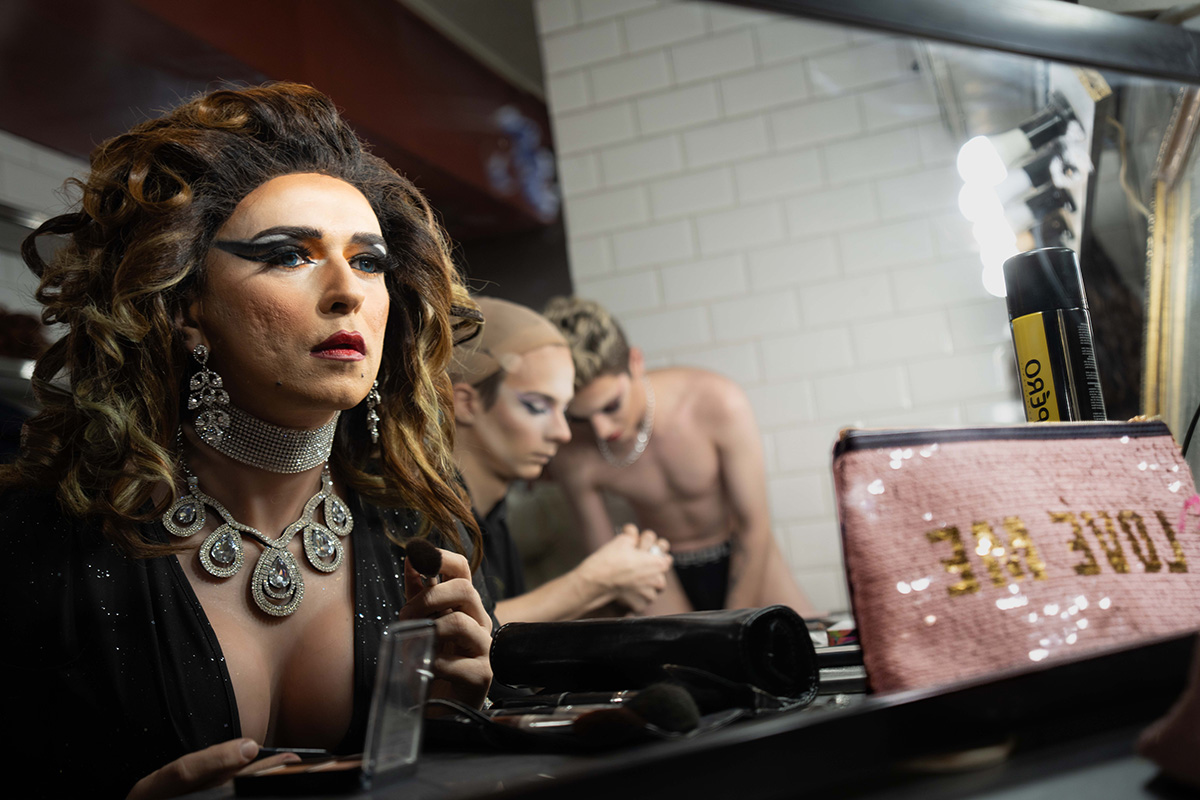
Journalist J. Lester Feder’s new book profiles LGBTQ Ukrainians and their experiences during Russia’s war against their country.
Feder for “The Queer Face of War: Portraits and Stories from Ukraine” interviewed and photographed LGBTQ Ukrainians in Kyiv, the country’s capital, and in other cities. They include Olena Hloba, the co-founder of Tergo, a support group for parents and friends of LGBTQ Ukrainians, who fled her home in the Kyiv suburb of Bucha shortly after Russia launched its war on Feb. 24, 2022.
Russian soldiers killed civilians as they withdrew from Bucha. Videos and photographs that emerged from the Kyiv suburb showed dead bodies with their hands tied behind their back and other signs of torture.
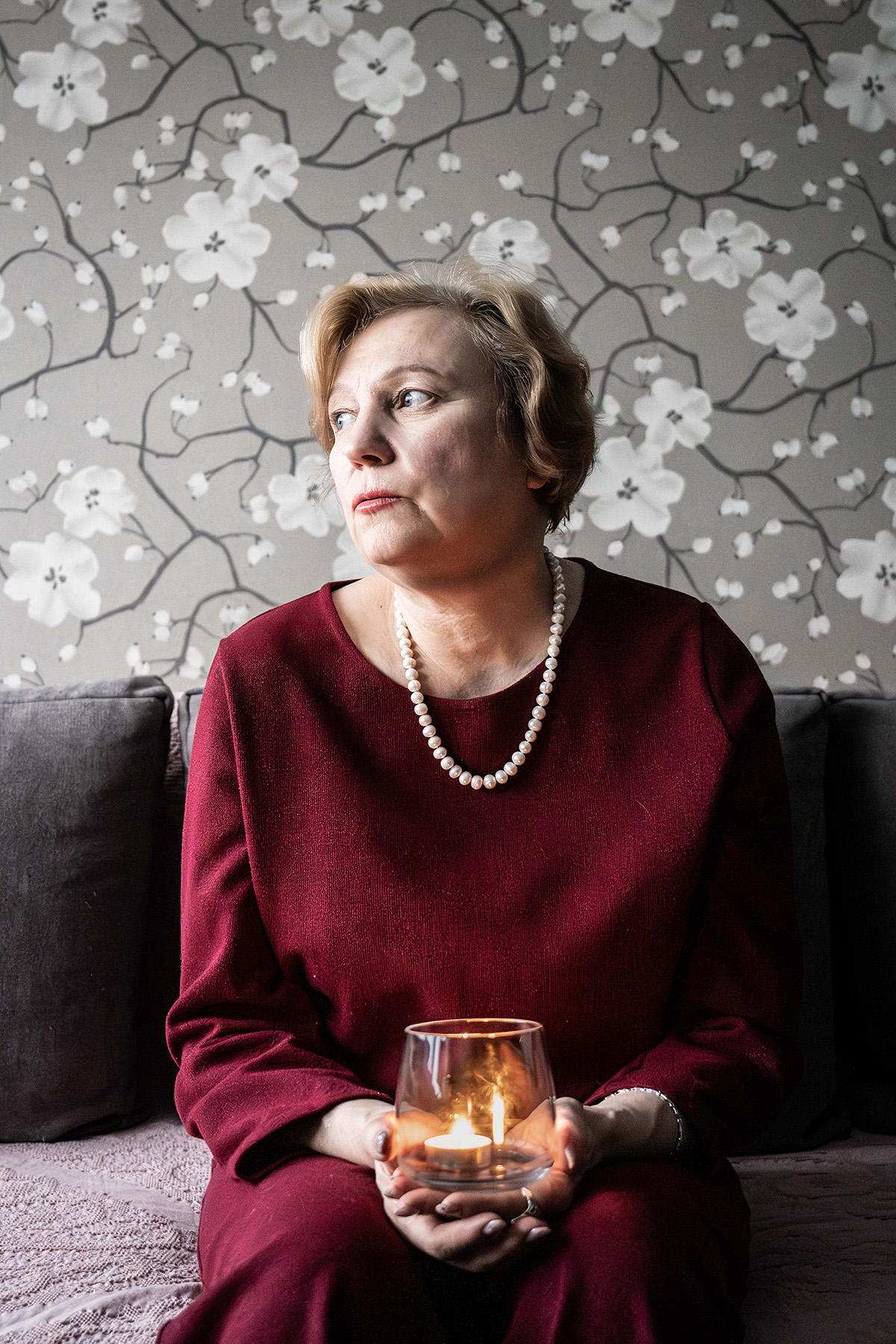
Olena Shevchenko, chair of Insight, a Ukrainian LGBTQ rights group, wrote the book’s forward.
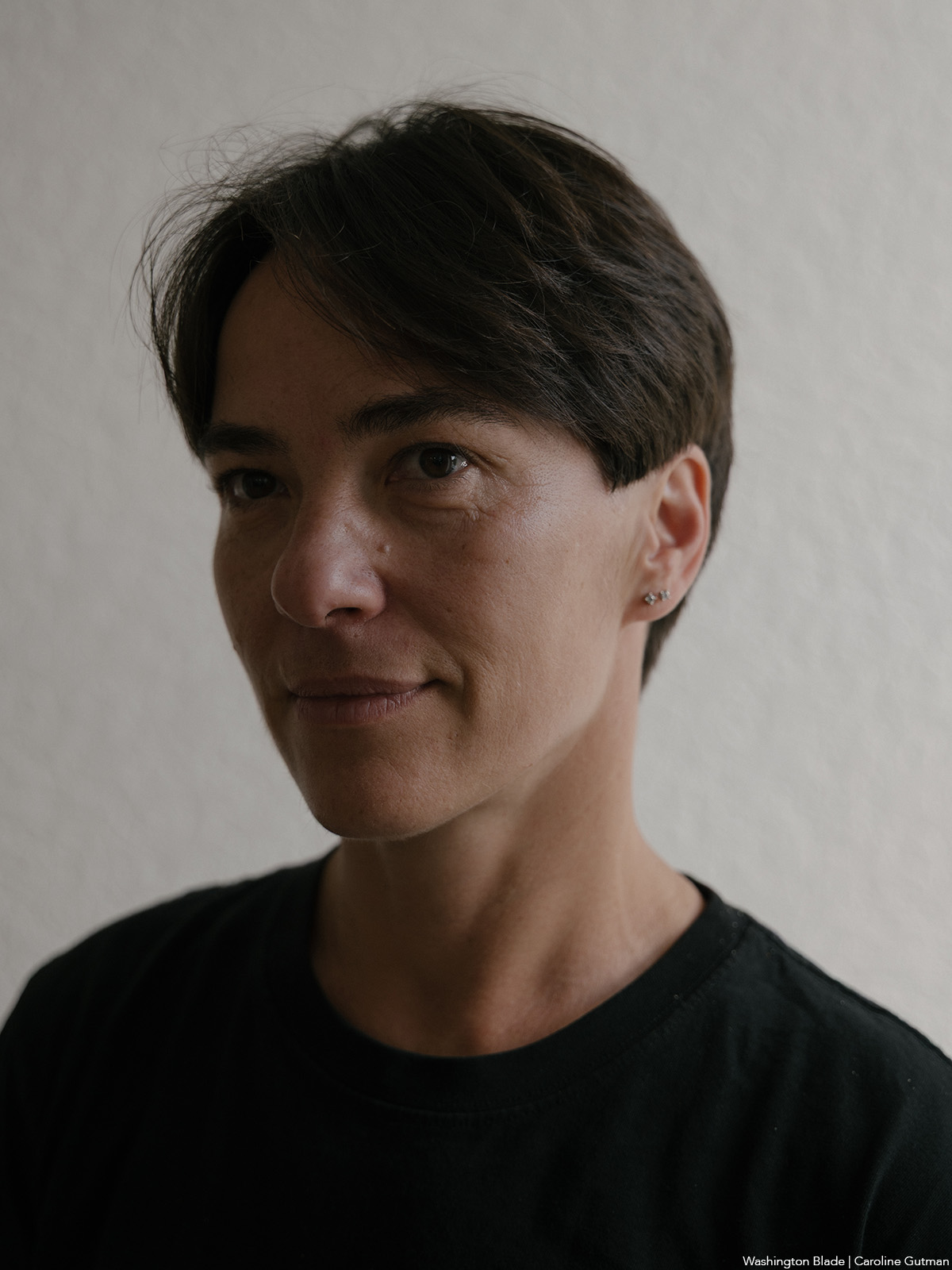
The book also profiles Viktor Pylypenko, a gay man who the Ukrainian military assigned to the 72nd Mechanized Black Cossack Brigade after the war began. Feder writes Pylypenko’s unit “was deployed to some of the fiercest and most important battles of the war.”
“The brigade was pivotal to beating Russian forces back from Kyiv in their initial attempt to take the capital, helping them liberate territory near Kharkiv and defending the front lines in Donbas,” wrote Feder.
Pylypenko spent two years fighting “on Ukraine’s most dangerous battlefields, serving primarily as a medic.”
“At times he felt he was living in a horror movie, watching tank shells tear his fellow soldiers apart before his eyes,” wrote Feder. “He held many men as they took their final breaths. Of the roughly one hundred who entered the unit with him, only six remained when he was discharged in 2024. He didn’t leave by choice: he went home to take care of his father, who had suffered a stroke.”
Feder notes one of Pylypenko’s former commanders attacked him online when he came out. Pylypenko said another commander defended him.
Feder also profiled Diana and Oleksii Polukhin, two residents of Kherson, a port city in southern Ukraine that is near the mouth of the Dnieper River.
Ukrainian forces regained control of Kherson in November 2022, nine months after Russia occupied it.
Diana, a cigarette vender, and Polukhin told Feder that Russian forces demanded they disclose the names of other LGBTQ Ukrainians in Kherson. Russian forces also tortured Diana and Polukhin while in their custody.
Polukhim is the first LGBTQ victim of Russian persecution to report their case to Ukrainian prosecutors.
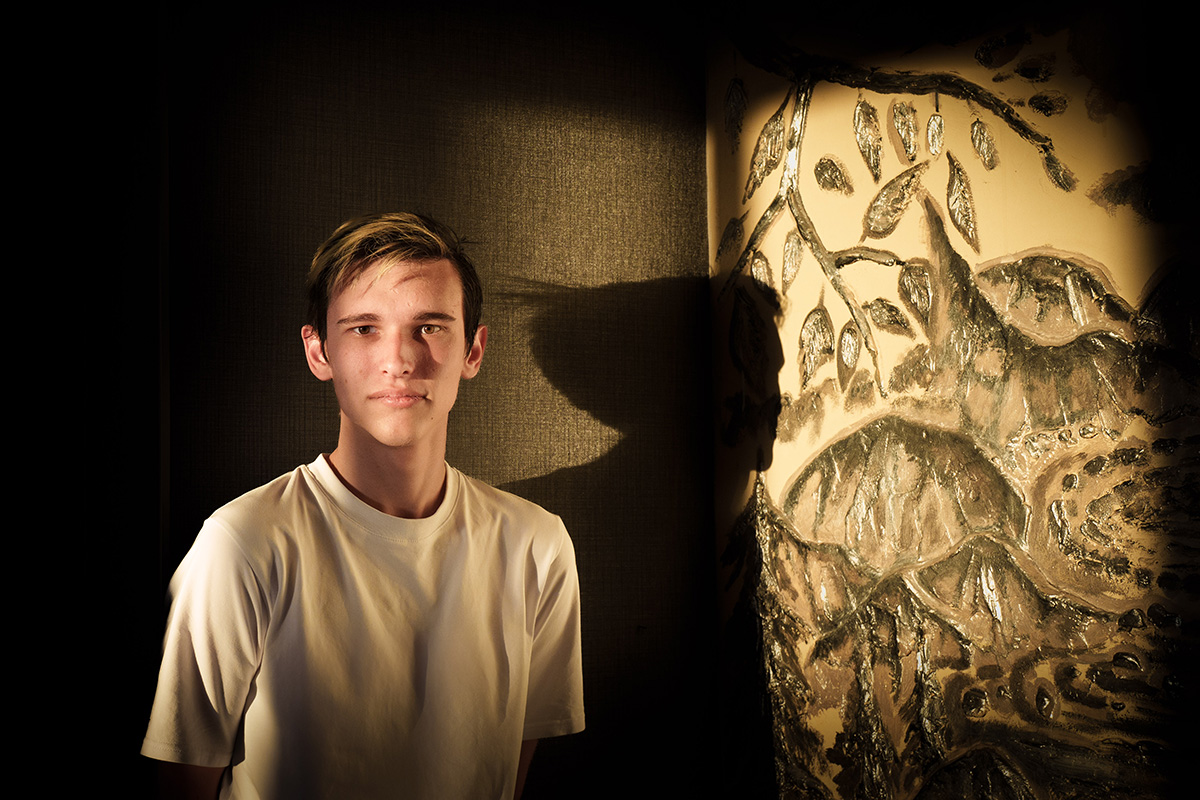
Feder, who is of Ukrainian descent, first visited Ukraine in 2013 when he wrote for BuzzFeed.
He was Outright International’s Senior Fellow for Emergency Research from 2021-2023. Feder last traveled to Ukraine in December 2024.
Feder spoke about his book at Politics and Prose at the Wharf in Southwest D.C. on Feb. 6. The Washington Blade spoke with Feder on Feb. 20.
Feder told the Blade he began to work on the book when he was at Outright International and working with humanitarian groups on how to better serve LGBTQ Ukrainians. Feder said military service requirements, a lack of access to hormone therapy and documents that accurately reflect a person’s gender identity and LGBTQ-friendly shelters are among the myriad challenges that LGBTQ Ukrainians have faced since the war began.
“All of these were components of a queer experience of war that was not well documented, and we had never seen in one place, especially with photos,” he told the Blade. “I felt really called to do that, not only because of what was happening in Ukraine, but also as a way to bring to the surface issues that we’d had seen in Iraq and Syria and Afghanistan.”
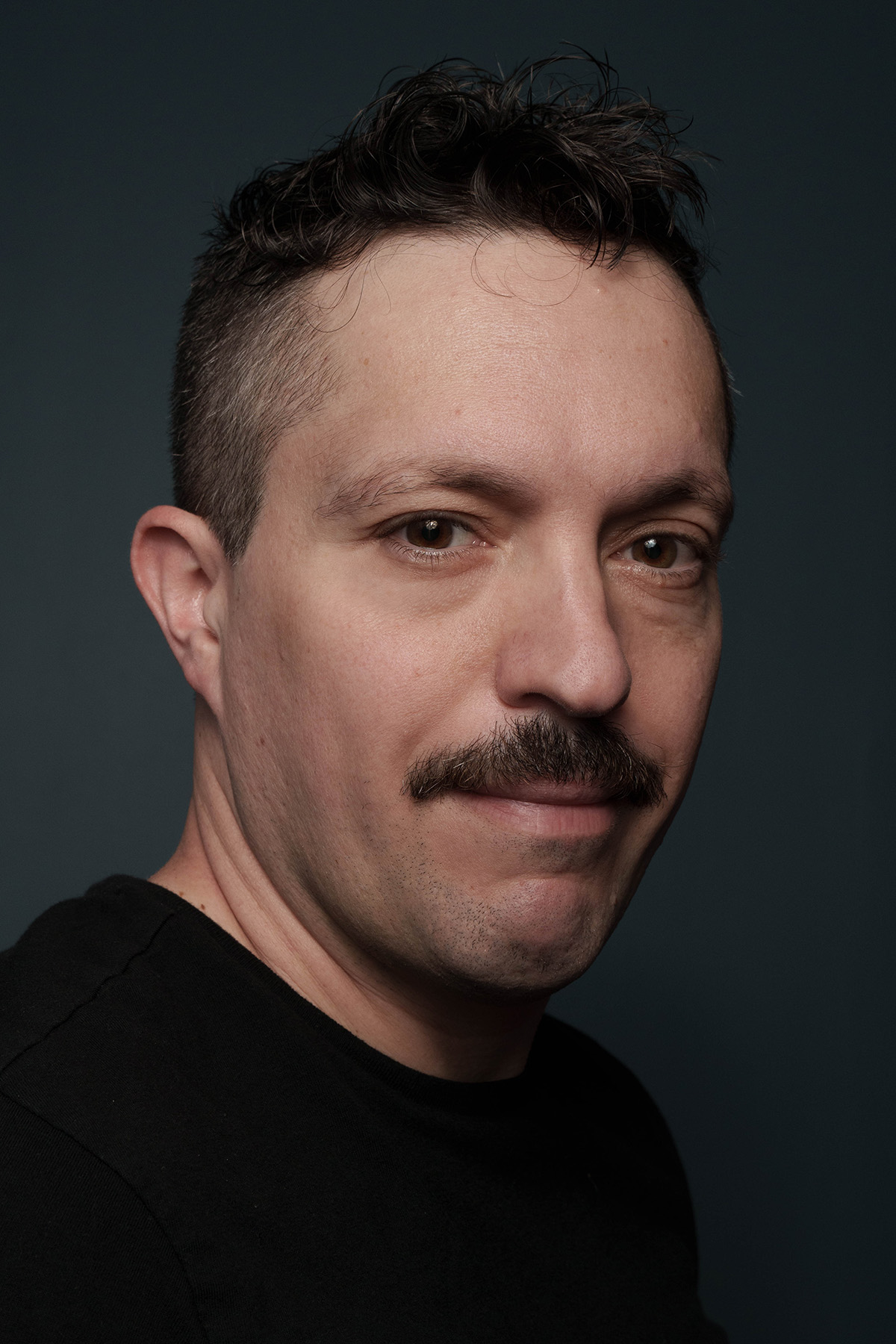
Feder also spoke with the Blade about the war’s geopolitical implications.
Russian President Vladimir Putin in 2013 signed a law that bans the “promotion of homosexuality” to minors.
The 2014 Winter Olympics took place in Sochi, a Russian resort city on the Black Sea. Russia annexed Crimea from Ukraine a few weeks after the games ended.
Russia’s anti-LGBTQ crackdown has continued over the last decade.
The Russian Supreme Court in 2023 ruled the “international LGBT movement” is an extremist organization and banned it. The Russian Justice Ministry last month designated ILGA World, a global LGBTQ and intersex rights group, as an “undesirable” organization.
Ukraine, meanwhile, has sought to align itself with Europe.
Ukrainian President Volodymyr Zelenskyy after a 2021 meeting with then-President Joe Biden at the White House said his country would continue to fight discrimination based on sexual orientation and gender identity. (Zelenskyy’s relationship with the U.S. has grown more tense since the Trump-Vance administration took office.) Zelenskyy in 2022 publicly backed civil partnerships for same-sex couples.
Then-Ukrainian Ambassador to the U.S. Oksana Markarova in 2023 applauded Kyiv Pride and other LGBTQ and intersex rights groups in her country when she spoke at a photo exhibit at Ukraine House in D.C. that highlighted LGBTQ and intersex soldiers. Then-Kyiv Pride Executive Director Lenny Emson, who Feder profiles in his book, was among those who attended the event.
“Thank you for everything you do in Kyiv, and thank you for everything that you do in order to fight the discrimination that still is somewhere in Ukraine,” said Markarova. “Not everything is perfect yet, but you know, I think we are moving in the right direction. And we together will not only fight the external enemy, but also will see equality.”
Feder in response to the Blade’s question about why he decided to write his book said he “didn’t feel” the “significance of Russia’s war against Ukraine” for LGBTQ people around the world “was fully understood.”
“This was an opportunity to tell that big story,” he said.
“The crackdown on LGBT rights inside Russia was essentially a laboratory for a strategy of attacking democratic values by attacking queer rights and it was one as Ukraine was getting closet to Europe back in 2013, 2014,” he added. “It was a strategy they were using as part of their foreign policy, and it was one they were using not only in Ukraine over the past decade, but around the world.”
Feder said Republicans are using “that same strategy to attack queer people, to attack democracy itself.”
“I felt like it was important that Americans understand that history,” he said.

Lula, Flávio Bolsonaro to face off in second round of Brazilian presidential election

The financial realities facing LGBTQ+ first-time buyers

‘Merrily’ is for Sondheim super fans, the uninitiated, and anyone in between

Engrossing ‘Tip Toe’ delivers tension and an ominous warning

Eliot Glazer’s new book an engaging collection of essays

Meet the LGBTQ candidates running for U.S. House, Senate

Ana Brnabić becomes world’s first openly lesbian head of state

Vote now! Best Of LGBTQ DC readers’ choice awards

Gay Va. couple hopeful voters will enshrine marriage equality in state constitution

Victory Fund board investigates former staffers’ allegations against CEO Evan Low
-

 2026 Midterm Elections4 days ago
Meet the LGBTQ candidates running for U.S. House, Senate
-
Serbia4 days ago
Ana Brnabić becomes world’s first openly lesbian head of state
-
Arts & Entertainment4 days ago
Vote now! Best Of LGBTQ DC readers’ choice awards
-
Virginia4 days ago
Gay Va. couple hopeful voters will enshrine marriage equality in state constitution