Opinions
Democratic Socialists of America are not automatically Democrats
There’s some overlap but also major policy differences

I recognize people come to their opinion of the Democratic Socialists of America Party, a party different from the Democratic Party, usually based on their own backgrounds.
I am a progressive Democrat. A first generation American; gay, and Jewish. My parents were refugees from Hitler, my mother from Austria, my father from Germany. My father’s parents were killed in Auschwitz. I have spent a lifetime working for civil rights, women’s rights, disability rights, and since I came out at the age of 34, LGBTQ rights. I was a union member when I taught school in Harlem. I worked for one of the most progressive members of Congress, Bella S. Abzug (D-N.Y.). Bella understood how to move forward the progressive issues she worked on. She won the right for women to get their own credit cards, without their husband’s signature. She is responsible for the curb cuts we see on every corner. She was the first to break the highway trust fund for mass transit. She fought against the Vietnam War, and to impeach Nixon. She introduced the first Equality Act for the LGBTQ community. She was named a whip by Tip O’Neill in her third term in Congress, not because she gave up her fight for progressive causes, but rather because she could get things done. She understood what compromise meant, and used it to move forward the progressive issues she fought for.
So, people must understand, members of the Democratic Socialists of America (DSA), are their own party, they are not automatically part of the Democratic Party. They have their own platform, different from the Democratic Party platform in many ways. Yes, the two overlap in many areas. But the differences are clear.
DSA was founded in 1982 from a merger of the Democratic Socialist Organizing Committee (DSOC), and the New American Movement (NAM). The merger was seen as a symbolic healing of the rift between the Old Left, represented by DSOC’s social democrats and trade unionists, and the New Left, represented by NAM’s activists who emerged from the social movements of the 1960s. Initially led by Michael Harrington, the DSA continued DSOC’s strategy of “realignment” by working within the Democratic Party to push it to the left, functioning as a small advocacy group for its first three decades. After the 2016 presidential campaign of Sen. Bernie Sanders, a self-identified democratic socialist, and independent, never a Democrat, and the election of Donald Trump, the organization’s membership swelled from about 6,000 members in 2015 to 100,000 in 2026. This growth gave DSA a much younger and more activist base, which shifted its strategy toward one centered on building an independent political force. DSA’s platform calls for reforms such as a Green New Deal, single-payer healthcare, and tuition-free higher education, with a long-term aim of social ownership and democratic control of the American economy. They support defunding the police. DSA’s foreign policy is non-interventionist, strongly supporting spending cuts and footprint reductions to the U.S. military while also supporting pro-Palestinian and anti-Zionist causes. That includes the abolishment of the State of Israel from the ‘river to the sea.’
As a progressive Democrat, I support universal healthcare, and have since Hillary Clinton introduced it to Congress when she was first lady in 1993. I support expanding Medicare, ensuring the solvency of the Social Security System, and making housing, childcare, and education, affordable for everyone. As a Democrat all my life, I supported Democrats who believe in the same things.
This may enrage many, but in my opinion one of the biggest mistakes the Democratic Party made was allowing independent, Democratic Socialist Bernie Sanders, to run in their presidential primary in 2016. When they did, they shared their voter lists, and enabled Sanders to get a foothold in the party without actually being a Democrat. He ended up screwing Hillary Clinton’s chances to be president. He attacked her throughout the entire primary, and even after she secured the nomination, he kept attacking, and wouldn’t endorse her for 30 days. When he finally did, he traveled the country, in essence pretending he was campaigning for her, when in actuality he was building his own brand, and writing his book. So yes, the independent, Democratic Socialist, Bernie Sanders, who has accomplished nothing in a 40-year congressional career, carries a lot of responsibility for helping to elect Donald Trump.
Today we have Mamdani, mayor of New York, who proudly calls himself a Democratic Socialist of America. He is a charismatic leader, and helped a number of Democratic Socialist candidates in New York win their primaries. One who he endorsed for the state Senate in Queens, is Democratic Socialist Aber Kawas. She is the one who said the United States brought the 9/11 terror attacks on itself, believing we asked for and are responsible for the nearly 3,000 people killed.
I have been, and will be, attacked, for saying the DSA platform is anti-Semitic for calling for the total abolishment of the State of Israel. For asking why there is nowhere in the DSA platform a condemnation of Hezbollah or Hamas, for their platforms calling for genocide against Jews in the State of Israel, while they are comfortable calling Israeli killings in Gaza genocide. While I may debate the term, I agree what Israel is doing is horrendous. Netanyahu and his government are committing war crimes, and belong in jail. But then so are Hamas, and Hezbollah committing war crimes.
The way to stop all this is to rid the world of Netanyahu and his government, and the terrorist groups Hamas and Hezbollah. I believe the United States should stop funding Israel’s offensive weapons, while we still ensure they have an adequate defense. Iran and others need to stop funding the two terrorist groups. We need to separate people’s views of the Jewish people, from the Netanyahu government, in the same way we need to separate views of the Palestinian people from Hamas, and the Lebanese people from Hezbollah. That is the only way we will ever have peace and a Palestinian state. If we ever get there, we must ensure the billions of dollars needed to make it self-supporting. But to get to that state, the Palestinian people must also have the support of the world, including the states surrounding Israel, that have never given support to the Palestinian people. I don’t have an answer to all of this, and clearly no one else does at the moment. I believe the last time there could have been a Palestinian state, with Israel agreeing to it, was back during the Camp David accords.
But whatever happens in the Middle East, if we want people in the United States to succeed, if we want to make sure the poor and the middle class can do more than just exist, if we want to provide affordable, decent healthcare, housing, job opportunities, and childcare, etc., the Democratic Party must not think redefining themselves as the Democratic Socialists of America, and all the baggage they bring with them, is the way to go.
While DSA candidates will succeed in a few big cities, this is not where the vast majority of voters in the nation are. If there is a positive Democratic Party platform, and we allow candidates in each district to run on the particular issues they feel can win for them, we can move the vast majority of the nation to more progressive positions, and to younger Democrats. That is the direction the Democratic Party must move in if we are to take back Congress in the midterms, and then the presidency in 2028.
There are a host of candidates around the country who are running, and winning, in Democratic primaries, as Democrats, not as members of the DSA Party. In not one of the districts we need to flip to take back Congress, is being a member of the Democratic Socialists of America a positive thing.
To begin the process of taking back our country, let’s all support Democrats across the board, up and down the ballot. If we do, we win!
Peter Rosenstein is a longtime LGBTQ rights and Democratic Party activist.


Opinions
Insured on paper, excluded in practice
How fertility coverage definitions discriminate against LGBTQ+ workers
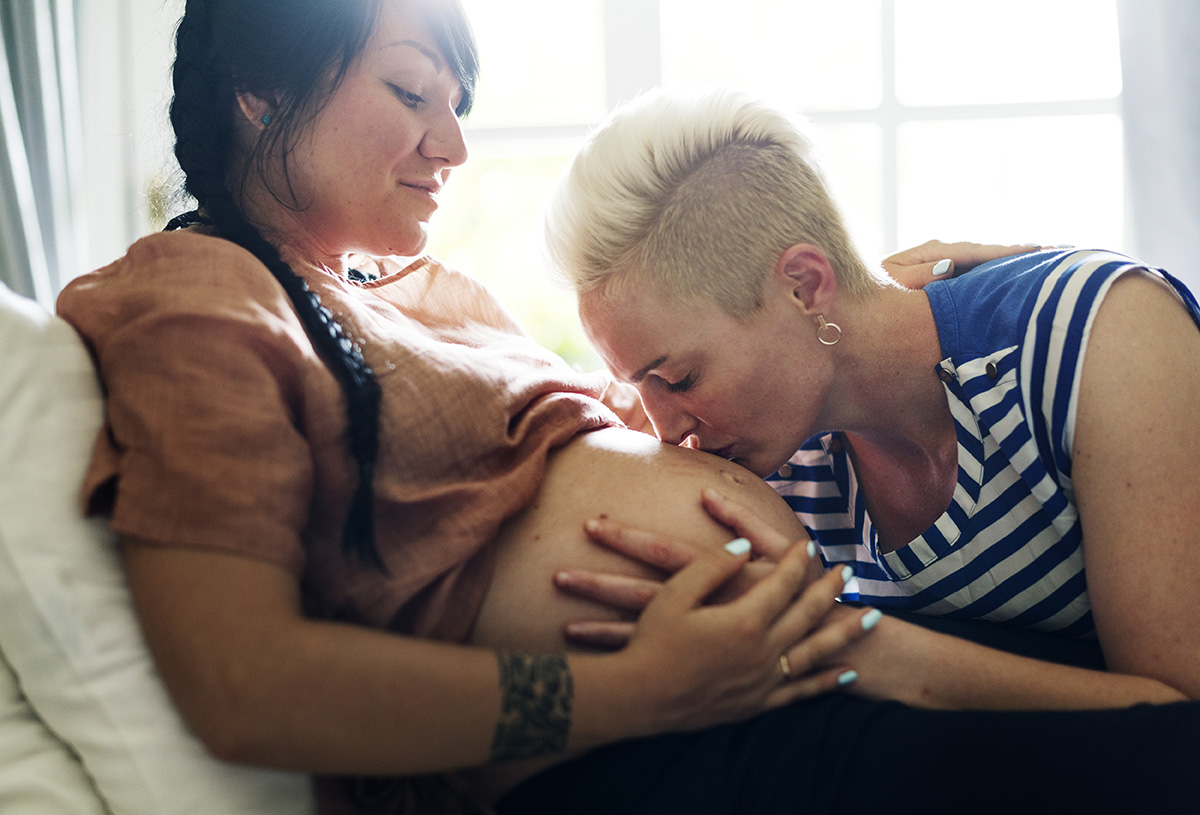
Pregnant workers in the LGBTQ+ community often encounter greater barriers than their cisgender or heterosexual counterparts, particularly when accessing company-sponsored health insurance. The challenges for pregnant workers are especially prevalent in obtaining fertility care, such as intrauterine insemination (IUI) and in vitro fertilization (IVF). Section 1557 of the Affordable Care Act prohibits sex discrimination in any federally funded health program, and a growing body of federal litigation now applies that prohibition to insurer-administered fertility benefits that exclude LGBTQ+ workers. Presently, 18 states and Washington, D.C. have infertility insurance laws, with requirements ranging from mandating private insurers to cover fertility treatments to merely offering coverage, which employers may choose not to select (MAP – Movement Advancement Project, “Fertility Healthcare Coverage”). Of these, six states and Washington, D.C. have language that is explicitly inclusive of LGBTQ+ people, while three states have language that may exclude LGBTQ+ people or couples. Where this coverage is not offered or is exclusionary, LGBTQ+ people must spend thousands of dollars for fertility care, while it may be guaranteed for other individuals. Today, 53% of LGBTQ+ adults live in states with no private-insurer fertility mandate, and a single IVF cycle can exceed $18,000 out-of-pocket.
Legal Framework: Section 1557 of the Affordable Care Act
Section 1557 of the Affordable Care Act protects individuals from sex discrimination in any health program or activity that receives any funding from the Department of Health and Human Services. It specifies that in terms of sex discrimination, an individual’s sex, including pregnancy, childbirth, and related medical conditions are protected. In turn, many claims challenging health insurance’s fertility policies invoke Section 1557 to argue that definitions of infertility or proof requirements that exclude same-sex couples constitute unlawful discrimination. Recently, the Ninth Circuit held that Section 1557 of the Affordable Care Act applies to an insurer if any part of the entity receives federal funds, even when the specific health plans at issue are not federally funded, though whether the insurer is ultimately liable under that section is a fact-specific inquiry. Pritchard v. Blue Cross Blue Shield of Illinois, No. 23-4331, slip op. (9th Cir. Nov. 17, 2025). Specifically, how insurers can be held liable in the context of fertility care to LGBTQ+ employees remains to be tested.
Case Study: Kulwicki v. Aetna Life Insurance Company
In 2022, a lesbian registered nurse, Tara Kulwicki, filed a complaint alleging that the medical plan offered by her employer, Wellstar Health System Inc. and Wellstar Cobb Hospital Inc., and administered by Aetna, Inc. and Aetna Life Insurance Company imposed discriminatory barriers on homosexual couples to seeking access fertility care. Under Kulwicki’s medical plan, fertility treatment such as intrauterine insemination (IUI) and in vitro fertilization (IVF) is covered only for couples who can meet the plan’s definition of “infertile.”
The medical plan’s definition for “infertile” is as follows: “For a woman who is under 35 years of age: 1 year or more of timed, unprotected coitus, or 12 cycles of artificial insemination; or [f]or a woman who is 35 years of age or older: 6 months or more of timed, unprotected coitus, or 6 cycles of artificial insemination. For heterosexual couples, infertility could be established by showing that six to twelve months of unprotected sex without contraception did not result in a pregnancy. The plan, however, defines “unprotected sex” as exclusively sexual intercourse between a man and woman. This definition effectively excludes homosexual couples as they do not have the capacity to become pregnant through unprotected sex with their partner. If couples are unable to prove they meet the definition, as in Kulwicki’s case, they are forced to pay high out-of-pocket costs, often totaling thousands of dollars, for IUI and IVF treatments before they qualify for coverage.
In Kulwicki’s case, Section 1557 is used as the basis for the claim. Kulwicki alleged Aetna administered Wellstar’s plan, denied her IUI precertification for not meeting “infertility,” and that the plan and Aetna’s policy tied infertility to unprotected heterosexual intercourse or multiple insemination cycles, resulting in out-of-pocket costs for non-heterosexual women.
The United States District Court for the District of Connecticut later denied Aetna’s renewed motion to dismiss for failure to join Wellstar, holding Aetna could face Section 1557 liability for its own role and that damages could provide complete relief without Wellstar. Most recently, on September 24, 2025, the court denied Aetna’s motion for partial summary judgment, finding factual disputes about Aetna’s collaborative role in shaping the plan language and its reserved contractual rights to align plan terms with Aetna systems, policies, and governing law. As a result, Tara Kulwicki’s class action will continue against Aetna. The court noted Aetna’s active role in shaping the plan’s infertility definition and retaining authority to ensure terms aligned with its systems, policies, and governing law.
Comparative Cases: Echoes of Kulwicki
Courts addressing similar infertility definitions have allowed claims to proceed where LGBTQ+ members face cost or proof burdens not imposed on heterosexual couples.
In Berton v. Aetna Inc. et al. (4:23-cv-01849, 2023), Mara Berton filed a suit against Aetna in violation of the Affordable Care Act after her insurance denied coverage for fertility treatment. This case raises question of first impression as to the “burden of proof” required to demonstrate infertility. In this case, the court denied Aetna’s motion to dismiss a Section 1557 claim where the plan formerly required “frequent, unprotected heterosexual sexual intercourse” or donor insemination cycles, and postJanuary 2023 language still required “eggsperm contact,” allowing heterosexual couples to attest through intercourse while same-sex couples had to incur costs for donor insemination cycles. The court found these allegations plausibly facially discriminatory. The court also rejected Rule 12(b)(7) arguments, concluding complete relief through damages could be afforded without joining the employer plan sponsor.
In Murphy v. Health Care Service Corporation (Blue Cross Blue Shield of Illinois) (No. 22-cv-2656, 2023), the court denied a motion to dismiss, holding that even under a 2020 policy listing multiple infertility pathways, the definition of “unprotected sexual intercourse” as malefemale intercourse left similarly situated samesex participants with no costfree route to establish infertility, plausibly alleging intentional discrimination under Section 1557 standards.
Two parallel actions against Aetna have already produced settlements that reshape the landscape. In Goidel v. Aetna Life Insurance Co., No. 1:21-cv-07619 (S.D.N.Y.), the court granted final approval on October 14, 2025 of a class settlement that aligned Aetna’s infertility definition with American Society for Reproductive Medicine guidelines and made intrauterine insemination a standard medical benefit. Weeks later, in Berton v. Aetna Inc., No. 4:23-cv-01849 (N.D. Cal.), the Northern District of California preliminarily approved a settlement under which most eligible class members who submit a qualifying claim will receive approximately $11,000 in compensation, with claims due by June 29, 2026.
Conclusion
Recent litigation underscores that insurers cannot avoid responsibility where they actively shape, interpret, or administer plan terms that disadvantage LGBTQ+ patients, including fertility coverage definitions and proof requirements. Section 1557 of the Affordable Care Act applies to health programs or activities receiving federal funding, and courts have allowed claims to proceed where infertility definitions or evidentiary burdens effectively exclude same-sex couples. The court in Kulwicki allowed a class action to proceed based on allegations that the insurer administered a plan tying “infertility” to unprotected heterosexual intercourse or multiple insemination cycles and played an active, collaborative role in shaping infertility language while reserving contractual rights to align plan terms with its policies. Other courts have similarly denied motions to dismiss Section 1557 claims where plans with definitions of “unprotected sexual intercourse” limited to male-female intercourse, leaving same-sex participants with no cost-free route to establish infertility. Taken together, courts are scrutinizing not only employers’ selection of plans but also insurers’ roles in designing and administering plan terms that may impose discriminatory barriers.
Employers should be proactive in counteracting harmful policies by incorporating specific protective language into their company policies and providing robust support systems for their transgender, nonbinary, and intersex employees. Employees who suspect their plan’s infertility definition imposes additional cost or proof burdens on same-sex couples should preserve all denial letters, plan booklets, and out-of-pocket receipts, and consult counsel promptly.
Isabelle Megosh, Lily Miller, and Ting Cheung are with Sanford Heisler Sharp McKnight, a national civil rights and employment law firm that represents employees in discrimination, harassment, and benefits-related litigation.
Opinions
Suzanne Goode is not good for Rehoboth Beach
Voters should reject divisive candidate in Saturday’s mayoral election
I understand why some will say I shouldn’t be so negative about a candidate. But the reality is, Suzanne Goode is one person who deserves the negativity. She has shown herself to walk with MAGA Republicans, and that is not the vibe conducive to the welcoming place Rehoboth is today. While I believe there may be a change coming to the country in the mid-term congressional elections, we still see our lives impacted by local mayors, and town commissions, as much as by Congress.
Goode has been a commissioner for two years. Fellow commissioners find her difficult to work with. It isn’t just that she doesn’t agree with them, often on the losing end of 6-1 votes, but she has shown herself to be nasty and insulting to the people she was elected to work with, including city employees.
She has shown she has no real respect for the business community, or for that matter, the truth. She has said of Rehoboth, “They really are in trouble. I never expected to get involved, but once I saw how dysfunctional everything was, that’s what inspired me.” Well Rehoboth is neither in trouble, nor dysfunctional. She lies suggesting Rehoboth is on the brink of bankruptcy, while the truth is, there will be a budget surplus at the end of this budget year, and projected surpluses through 2030. She claims she supports the LGBTQ community but then speaks out in ways that show she really doesn’t. Things like objecting to rainbow crosswalks. I figure that is something she got from Florida Gov. Ron DeSantis, whom she has supported. She said, “Unfortunately, the rainbow crosswalks have potentially reduced the upkeep of conventional crosswalks.” That is not the person we want as mayor of Rehoboth who would oppose spending the very few dollars to maintain the rainbow crosswalks.
She pretends to be more in tune with the community by cleaning up her Facebook page. At one time it showed support for DeSantis, and attacks on Hillary Clinton, President Barack Obama, and the ACA. Sounds very similar to the felon in the White House.
I love Rehoboth Beach. Today it is a place where everyone is welcome. A place where everyone can live in harmony. Where young people from around the world are welcomed for summer jobs, and residents and visitors enjoy learning from them about their lives, and cultures.
Those of you who are older will remember that wasn’t always the case. When I first visited in 1984, I heard the stories about incidents occurring when Joyce Felton and Victor Pisapia opened the Blue Moon, in 1981. Some locals would drive by the patio on Baltimore Avenue, throw eggs, and shout insults at those standing there. People were being beat up on the boardwalk for just being who they were. These, and other incidents, are why Murray Archibald and Steve Elkins co-founded CAMP Rehoboth, the LGBTQ community center. They, supporters, and dedicated volunteers, along with some commissioners, and a supportive police chief, worked hard to make Rehoboth what it is today: A safe and welcoming place for all. CAMP trained police officers to work with those that may be different from themselves. They worked to change Delaware laws. They made it comfortable for members of the LGBTQ community to open businesses here, to move here, and live in a place that not only respected them, but wanted them.
Rehoboth has come too far to elect someone who could take the city backwards. Someone who tried to get her husband elected to the Commission to get another vote. Someone who will try to do it again if she is elected mayor. That is not what Rehoboth is about. People here are better than that. I hope the people of Rehoboth are smarter than that. While we can always disagree on some things, that is only natural, we must do it both honestly, and respectfully. It is unfortunate that Goode does neither.
Suzanne Goode does not in any way live up to her name. Suzanne Goode is really not good for Rehoboth. There are four candidates running for mayor, and they could split the vote enough to let her win. So, I suggest to the voters, coalesce around the person who appears to have the most support at the moment, Susan Stewart, and cast a ballot for her. She will make a positive difference for the city. Electing Stewart as mayor is the way to ensure the Rehoboth Beach we love, will continue to be a wonderful place for all to work, live, and visit, for years to come. Voting takes place on Saturday, Aug. 8, from 10 a.m.-6 p.m. at the Rehoboth Beach Convention Center.
Peter Rosenstein is a longtime LGBTQ rights and Democratic Party activist.
Opinions
Continue to engage in community after Pride month
Parades are performative; we have work to do
Everyone has now had more than a month to recover from Pride 2026. Even for those who have not yet put away all their seasonal rainbow paraphernalia or are still finding glitter in unexpected places, June is now a memory; hence, community members and allies have work to do.
The LGBTQ community of Washington, D.C., and the DMV region, is not defined (or limited) by any specific month, annual event, or organization. There is no singular agenda, arbiter, or leader. Considering the efficacy of some organizations and the competency and integrity of certain individuals, that is a good thing. This creates more opportunities for more people.
June is Pride month, but some LGBTQ celebrations in D.C. happen annually in May. Others, including several in Maryland and Virginia, occur on dates in July through October. Regardless of scheduling, the planning process begins (or at least should begin) immediately following the current year’s festivities. With the end of the fiscal year rapidly approaching, time is of the essence. It behooves organizers not to wait until January or the spring to secure funding.
Money is one thing all nonprofits and community organizations need, especially those without corporate sponsorship. A donation or sponsorship of any amount can make the biggest impact if the recipient is a new or smaller organization. Also, be intentional with your spending; patronize LGBTQ businesses, purchase tickets to LGBTQ events, and subscribe to or advertise with LGBTQ media. If organizing events, book local LGBTQ performers, DJs, and hosts/emcees, and offer free resource tables to organizations when you can.
Donating your time and talents can also be impactful, especially to organizations without salaried staff. Some LGBTQ organizations need people for events, and others need help with data entry or miscellaneous administrative tasks. Outdoors, indoors, or online, you can help with something that limited staff or volunteers have put on the proverbial back burner, such as updating graphics or a website. If you seek a leadership role, there are often opportunities to become a board member of a local LGBTQ organization. At the very least, make an effort to like and share information about events, fundraising, and calls for volunteers on social media.
For some people, looking beyond LGBTQ organizations may be a good use of their time and energy. Help create the inclusion that may be missing from “mainstream” organizations. With this being an important election year, registering voters, working at a polling location, or supporting a candidate might be the best use of your time for the next several months.
Whatever inquiries you make, don’t expect immediate responses, immense gratitude, or an enthusiastic welcome. (Unless you contact Team Rayceen Productions; I try to provide all three.) Many organizations have poor communication, often because of personnel limitations or inquiry volume, so your email or DM may not be answered quickly, or at all. Some “groups” are essentially run by an individual, so be patient and, when necessary, persistent.
That leads to something else very important to consider: whether an organization is worthy of your time, talents, and/or money.
Reviewing a website and reading a mission statement is a good start, but that is just a starting point. What is their reputation? What have they accomplished? Do they put their resources to good use?
If they are a tax-exempt organization, information such as their revenue and executive compensation is available on the ProPublica Nonprofit Explorer website. The Charity Navigator website provides additional data and tools. However, the most helpful information may come from members of the community.
Unfortunately, some individuals use their positions to enrich themselves. One such person sits in prison today. Despite receiving numerous accolades and positive media coverage, many people had an idea that something was amiss long before charges were filed. Not that embezzlement, fraud, or other shenanigans are commonplace, but it certainly happens. Look out for red flags. Be leery if asked to sign a non-disclosure agreement. Remove yourself from uncomfortable or inappropriate situations. Report inconsistencies, irregularities, and unethical behavior. Demand transparency and accountability. Don’t let your interest in helping your community lead to your reputation being sullied by association.
If you are unable to find an organization you want to support, consider starting your own. Create whatever it is you cannot find. Start small; your focus could be helping people in need, organizing community events, or forming an activity group. You could create programming for LGBTQ History Month in October. If you want a new Pride month event in your county, town, or neighborhood, start planning now. (Shameless Plug: Rayceen Pendarvis, Empress of Pride, is available for booking.)
Pride should be more than parties and parades, but I hope those things motivate people to be more involved in their communities. The LGBTQ community and its members exist 12 months a year. Whatever your schedule and capacity may be, there is probably something you can do to help.
Zar is a mononymous D.C.-based LGBTQ community advocate, speechwriter, and songwriter who co-founded and served as creative director for Team Rayceen Productions.

2 former NBA players launch cheap anti-trans stunt to exploit WNBA rules

Same-sex couples challenges India income tax law

HISTORIC: Susan Stewart elected Rehoboth’s first out mayor

Todd Blanche’s record on LGBTQ issues comes under scrutiny as he takes over DOJ

Don’t miss summer productions at Clear Space in Rehoboth Beach

HRC files class action over federal ban on gender-affirming care coverage

Dutch PM: More needs to be done to defend trans rights

HRC condemns DoE removal of LGBTQ bullying data from federal survey

New book chronicles gay man’s life in hippie commune

PHOTOS: Daddy Issues at Kiki
-

 The White House5 days ago
HRC files class action over federal ban on gender-affirming care coverage
-
Netherlands5 days ago
Dutch PM: More needs to be done to defend trans rights
-
National5 days ago
HRC condemns DoE removal of LGBTQ bullying data from federal survey
-
Books4 days ago
New book chronicles gay man’s life in hippie commune