Local
Metro Weekly publisher settles $1 million lawsuit
Agreement reached over debt, fraud allegation; IRS tax liens remain
Metro Weekly — a local gay magazine published by Jansi LLC, which is owned by Randy Shulman — and Post-Newsweek Media, Inc., the company that owns the Washington Post, reached a settlement agreement on April 28 over a lawsuit in which Post-Newsweek alleged that Jansi and Shulman engaged in fraud to avoid paying a Post-Newsweek-owned printing company $85,000 for printing services.
The settlement came six days after a D.C. Superior Court judge presiding over the lawsuit denied a motion for summary judgment by Jansi and Shulman that called for dismissing the fraud charge on grounds that insufficient evidence existed to move forward with the charge.
The settlement agreement also came just over seven months after Judge Ramsey Johnson denied a separate motion by Jansi and Shulman seeking dismissal of the lawsuit.
The terms of the settlement between the two parties could not be found in the court records, indicating the parties chose to keep the terms confidential as is the case with many lawsuits.
Paul S. Thaler, the attorney representing Post-Newsweek, and John W. Karr and William G. McLain, the attorneys representing Jansi and Shulman, did not respond to the Blade’s request for comment on the case and the settlement.
McLain faxed a message to the Blade on May 27 saying Jansi and Shulman would consider responding to a Blade inquiry in writing if such a response was “deemed appropriate” by him but the magazine has a policy of not providing interviews to Blade reporters.
Jansi and Shulman’s attorneys have argued that the lawsuit was without merit, saying the printing debt was incurred by Isosceles Publishing, Inc., the corporation that owned and operated Metro Weekly up until November 2007.
The magazine’s attorneys have argued that a new corporation called Jansi LLC entered into a licensing agreement with Isosceles to publish and operate Metro Weekly beginning in November 2007. They maintain that Jansi, as a separate corporate entity, was not responsible for the debts and liabilities incurred when Metro Weekly was published and operated by Isosceles.
A past due bill of $85,000 from Comprint, a Gaithersburg, Md., company owned by Post-Newsweek, was for printing services incurred by Metro Weekly during the time Isosceles published the magazine, the lawyers have argued.
In its lawsuit filed in July 2010, Post-Newsweek charged Jansi LLC and Shulman, one of Jansi’s two shareholders, with breach of contract, saying they were responsible for the printing debt with Comprint.
The lawsuit also charged Jansi and Shulman with fraud for allegedly entering into the licensing agreement with Isosceles for the alleged purpose of evading debts and liabilities.
“Upon information and belief, Mr. Shulman, Jansi, and Isosceles entered into the 2007 License Agreement with the specific intention to evade Isosceles’ creditors while continuing to publish, and reap revenue from, Metro Weekly,” the lawsuit said. “As a direct result of the defendant’s fraud, plaintiff suffered damages in a sum to be proved at trial but expected to exceed $1,000,000,” the lawsuit said in its request for punitive damages.
‘Nearly $656,000’ in tax liens
In its court brief opposing Jansi and Shulman’s motion to dismiss the fraud charge, Post-Newsweek attorney Thaler cited Shulman’s testimony in a deposition in February in which Shulman acknowledged that he and Isosceles had yet to resolve an outstanding tax obligation with the IRS.
News of Isoceles’ tax liabilities surfaced last year when the Washington Business Journal reported that, “nearly $656,000 in federal and state tax liens have been filed against Isosceles.” Records from the D.C. Recorder of Deeds, which keeps track of tax liens, show that 21 federal, D.C., or unemployment tax liens had been filed against Isosceles Publishing between 1996 and 2010.
Thaler stated in his brief opposing Jansi and Shulman’s motion to dismiss the fraud charge that the tax liens were an indication that the licensing agreement between Isosceles and Jansi was conceived to enable Metro Weekly to evade its debts, a development, he said, that supports Post-Newsweek’s fraud claim.
In Jansi and Shulman’s August 2010 motion for summary judgment seeking to dismiss the lawsuit, Karr argued that Post-Newsweek’s breach of contract charge concerning the printing debt was invalid because, among other things, Post-Newsweek had brought the same charge in a separate lawsuit in 2009.
A judge ruled in Post-Newsweek’s favor in the earlier lawsuit and ordered Isosceles to pay the printing debt. Isosceles started making payments for the initial printing debt, which exceeded $100,000, for a while before stopping all payments. That prompted Post-Newsweek to file the second lawsuit last July, Thaler said in court papers.
Karr argued in his dismissal motion that the legal concept of “claim preclusion” or “issue preclusion” prohibits “relitigation in a subsequent proceeding of the same claim between the same parties or their privies.”
He also argued that Post-Newsweek failed to provide in its lawsuit the required “elements” indicating that fraud might have taken place to a sufficient degree that a fraud claim could move forward to trial.
D.C. Superior Court Judge Ramsey Johnson rejected those assertions, stating in a Sept. 13, 2010 ruling denying the motion for dismissal of the lawsuit that he was “satisfied that the Plaintiff’s complaint for fraud has been sufficiently pled.”
In its separate motion filed Feb. 23, 2011 seeking dismissal of the fraud charge, Karr reiterated his claim that Post-Newsweek failed to provide sufficient grounds for proving fraud. Karr cited the testimony of Post-Newsweek official Garland Christmas in a deposition in which Christmas stated he was not familiar with the specific details of the lawsuit’s allegation that Metro Weekly and Shulman engaged in fraud through the licensing agreement between Isosceles and Jansi.
Karr argued in his brief that Christmas, the Post-Newsweek official in charge of debt collection for the company, also could not provide information to support Post-Newsweek’s claim that it suffered damages exceeding $1 million due to the non-payment of the printing debt or the licensing deal between Isosceles and Jansi.
In his opposition motion for Post-Newsweek, Thaler said the latest lawsuit was aimed at “asking the court to pierce the corporate veil and find that defendants Randy Shulman and Jansi LLC are the functional ‘alter egos’ of Isosceles and should therefore be held liable for the debt owed to Plaintiff.”
Business funds for personal use
In his opposition motion, Thaler added, “Mr. Shulman further indicated [in a deposition] that the licensing arrangement was the ‘only way’ Metro Weekly could continue to be published in light of the tax lien against Isosceles…Shulman and his business partners frequently commingled funds between Jansi and Isosceles. Shulman has also withdrawn funds from Isosceles and Jansi for personal use.”
Shulman was asked during depositions about various charges made to a company ATM card. “If you go down the purchases apparently using the ATM card you’ll see not just the Pet Smart and Martin’s Wine but a series of purchases at Safeway, RiteAid, Target and Subway as well as something called 14k Restaurant, Starbucks. Is it your testimony that all of these were for Jansi or mistakes by you as you’ve indicated you sometimes do,” a Post-Newsweek lawyer asked.
“Some could be mistakes I would think that – I know for a fact the 14K would be a business – that would be a business – that was probably for coffee for a business meeting,” Shulman replied.
In response to questions about purchases with the Jansi card made at other places, such as the Virginia Market convenience store near his home, Shulman said:
“ … I’m looking this over and I’m looking at the cluster of time and it’s very likely at this time that, aside from the thing that I was – quite honestly, I probably had absolutely no money in my own personal account. I was actually utilizing Jansi funds that were there at the time to help support me.”
“So you used the ATM for Jansi,” the lawyer replied.
“I did use the ATM for Jansi to make my purchases during that period.”
In his April 22 ruling denying Jansi and Shulman’s summary judgment motion to dismiss the fraud charge, Judge Johnson stated, “The court has already concluded that Plaintiff’s fraud claim was sufficiently pled when it denied Defendants’ Motion for Failure to State a Claim on Sept. 13, 2010. With regard to the instant motion, the Court does not find that the issue of fraud, at least in this case, lends itself to summary judgment.”





District of Columbia
To school to homeschool to school again
‘Pandemic took more than 2 years of school. It took 2 years of my childhood’
It wasn’t until I no longer had those 30 minutes of lunch and recess, when all the boys and girls would come together to trade bracelets, make up games, gossip about who we liked, play tag and sports, that I realized how much of my childhood happened during the parts of school that had nothing to do with schoolwork.
I was in the third grade when the COVID-19 pandemic began. I remember my parents explaining that I couldn’t go back to school and wondering when I would see my friends again — or whether I wanted to go back at all. But after spending two years learning from home, cut off from the friends, teachers and routines I had known, I began to understand what I had lost.
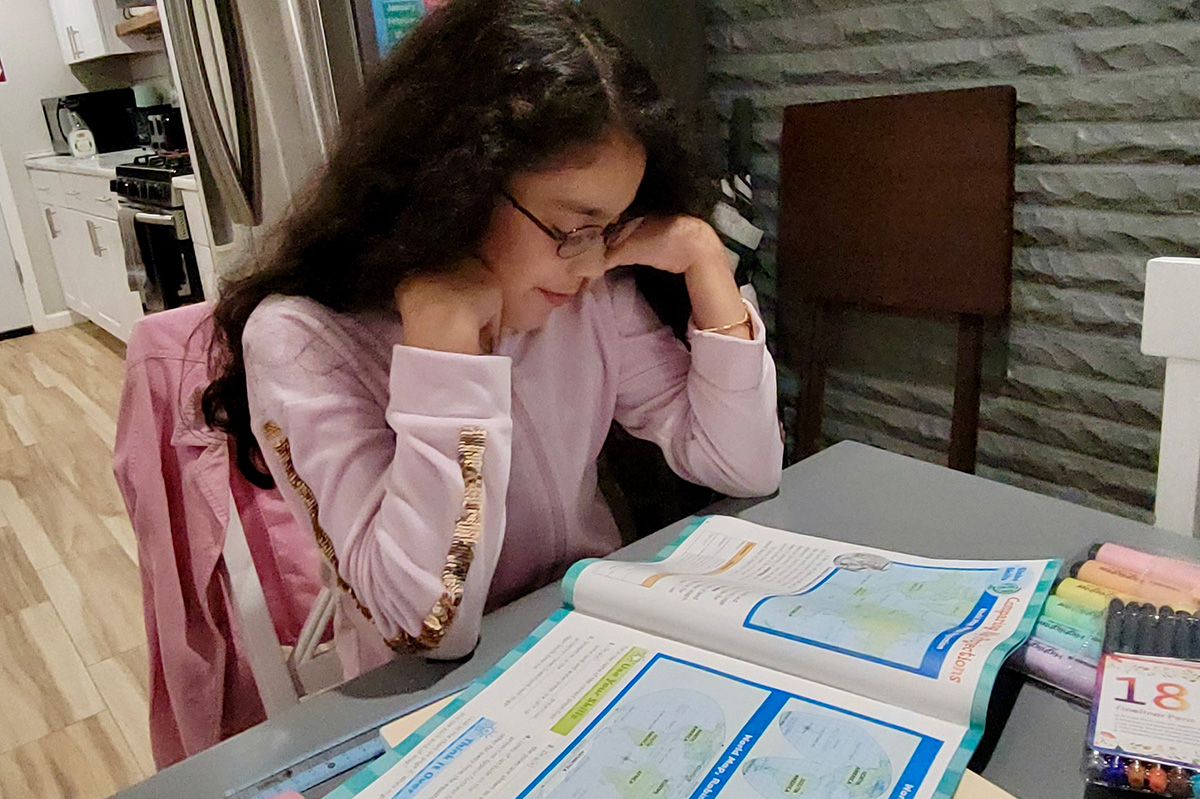
For many of my friends and classmates, going to school changed from a bus ride every morning to clicking a link and seeing their teachers and classmates through a screen. My experience was a little different. Instead of going to virtual school, I was homeschooled. My new routine was sitting at my kitchen table, with my mom teaching me how to write a paragraph or solve a math problem, surrounded by the same walls I saw every day.
My family was not alone. Many families across the country turned to homeschooling after schools shut down. Homeschooling increased sharply during the pandemic, especially among Black families, rising from 3.3 percent in the spring of 2020 to 16.1 percent that fall, according to the U.S. Census Bureau’s Household Pulse Survey.
It would be two years before I entered a classroom again.
At first, I loved homeschooling.
I didn’t have to wake up early or put on a uniform. I liked the comfort of my own room, surrounded by my stuffed animals and toys. I didn’t have to push my way through that horrible lunch line because my food was now waiting for me at the kitchen table.
It felt like a fever dream where school was canceled and all day was fun. That was my view as a 9-year-old.
But as days turned into weeks and weeks into months, that initial excitement wore off.
Every day became the same routine. There was no recess when I could play princess with all the other girls. There were no conversations in the lunch line and none of the small things that had broken up the school day before. I didn’t realize how much those moments mattered until I could no longer experience them.
With less to look forward to, I started spending more time on the internet.
I turned to platforms such as YouTube and TikTok to distract myself. Instead of seeing what the kids around me were doing every day, I could watch people online show off their clothes, makeup, dances, art and lives.
Over time, I started comparing myself with what I saw. I thought the way I dressed was childish and wanted to be like the superstars I saw online. I followed what was trendy and admired the girls and boys who looked so confident on screen.
Before the pandemic, my friends and I didn’t need the internet to tell us what was popular. But during those years at home, I became much more aware of what other people thought was cool and what someone my age was supposedly supposed to like. I felt as though I was growing up without getting to experience all the steps in between.
When I finally returned to school, I thought my classmates would be excited to see each other again after spending so much time apart.
Instead, I realized how much we all changed.
When I walked through those doors, I remembered vague memories of running down those halls and always seeing my peers with smiles on their faces. Now those same faces were tired, with eye bags. The lunchroom, which used to be full of life with happy kids eating to their hearts’ content, turned into a lunch where all the girls controlled what they ate and talked about the latest trend on TikTok.
Maybe some of that change would have happened anyway. Kids grow up. Interests change. Middle school has always been awkward.
But I didn’t get to watch my classmates gradually change or change alongside them. I left one social world and came back to another.
When I returned, I was expected to understand a social world that had changed while I was gone. I felt I missed so much that I would never get back, and without that day-to-day learning to help me adapt to these new norms, I struggled.
Those everyday interactions are an important part of how children learn to get along with others: A 2026 meta-analysis of 157 studies from 33 countries published in the academic journal Child Development found that children’s social and emotional skills declined during the pandemic, along with their overall well-being. The researchers noted that schools are not just places where children learn math and reading. They are also places where children learn how to make friends, work through disagreements, understand other people’s feelings and manage their own emotions.
Years later, many parents say some of those effects are still being felt. In a 2025 Gallup survey, 45 percent of parents with school-age children said the pandemic hurt their child’s social skills, and 22 percent said those problems were still ongoing. Forty-two percent said the pandemic negatively affected their child’s mental health. Parents were more likely to report problems with their children’s social skills and mental health than with their academics or physical health.
I saw some of those changes around me, too. Classmates who once seemed outgoing became quieter or more withdrawn. Starting conversations felt harder. Making new friends felt harder. Sometimes retreating into myself felt easier than trying to figure out where I belonged.
Now, the kids who were in elementary school when the pandemic began are moving through high school. We are older, but some of us are still figuring out what those missing years meant.
Before the pandemic, I thought lunch and recess were simply breaks from learning. Now I understand that we were learning during those 30 minutes, too. We were learning how to make friends, how to disagree and make up, how to be embarrassed and recover from it, what we liked and what we didn’t, and slowly who we wanted to become.
I can’t know exactly who I would be if I had spent those years inside a classroom instead of at home. Maybe middle school still would have been awkward. Maybe I still would have worried about fitting in.
But I know I missed something I didn’t understand was important until it was gone: the ordinary, sometimes boring, sometimes ridiculous parts of growing up alongside other kids.
You can make up schoolwork. You can return to the classroom. But there are some parts of childhood you don’t get to repeat.
Gloria Collazo Huamani is a sophomore at Benjamin Banneker Academic High School in D.C., one of Youthcast Media Group’s journalism class partners. Gloria worked with James Jarvis, a YMG mentor-editor and reporter for Inside Health Policy, on this story.
Virginia
Gay Va. couple hopeful voters will enshrine marriage equality in state constitution
Early voting has already begun in the state
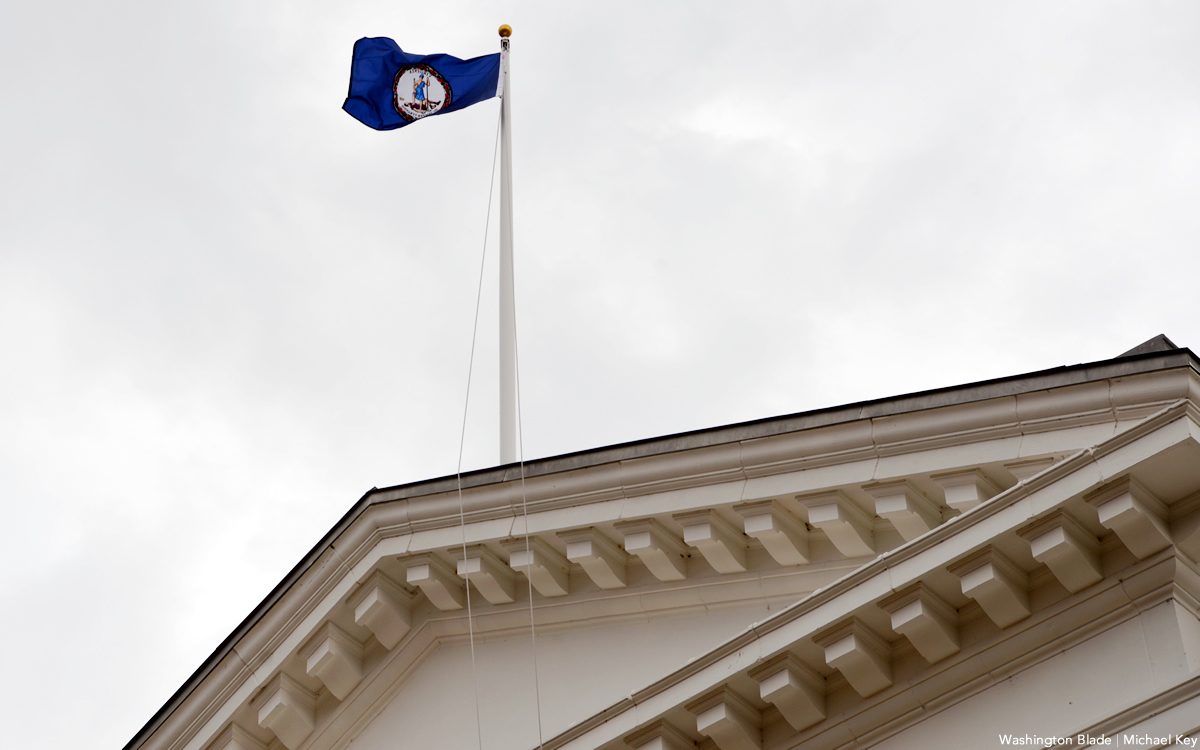
A referendum on whether to enshrine marriage equality in Virginia’s constitutional amendment is on the ballot this year.
If voters approve Question 2, it will codify the U.S. Supreme Court’s Obergefell ruling in 2015 that extended marriage rights to same-sex couples across the country — gays and lesbians have been able to legally marry in Virginia since Oct. 6, 2014.
Ron Bookbinder and James Fisher are a married couple who live in Arlington.
They have been together for 38 years — Bookbinder and Fisher married in 2014.
“We think this is a critical vote to remove this discriminatory language from the constitution and to ensure that going forward, no matter what happens, the state of Virginia will ensure marriage equality,” Fisher told the Washington Blade. “It is it is really difficult and upsetting to think that our current state constitution would prohibit same-sex marriage, even though the federal government overrides that now. There’s no saying what may happen in the future.”
Bookbinder said it was important for him and Fisher to get married “to gain social equality.”
“I was surprised how good it felt, how important it was to begin to say, ‘my husband rather than my partner,'” Bookbinder said.
Bookbinder then explained why it feels good to be married.
“Is it a legal partner, a business partner, a tennis partner, you know, or a romantic partner? But when you say my husband James, everyone knows exactly what you mean and confers an equal status with everyone else who’s married, and we were both surprised at how good it felt and how equal it felt to suddenly be married and be able to state that you were married and discuss your husband rather than your partner, and I would hate to lose that,” he said.
Bookbinder and Fisher said they are hopeful that voters will approve the amendment, noting Virginia has become more progressive over the years.
“I think people have, with the Supreme Court decision, people have seen that a same-sex marriage is just a marriage,” stated Fisher. “It’s just two people who love each other, and I think more and more people have attended a same-sex marriage, someone in their family or a friend, and the experience of what this is, firsthand experience, is so important in shaping people’s opinions, and I think the period of time that we’ve had since the Obergefell decision has given a lot of voters that experience, which I think is really important and powerful.”
The couple also said the push to enshrine marriage equality in Virginia’s constitution is in response to the Trump-Vance administration.
“And I think due to President Trump doing all the horrible things he’s done to so many groups, including LGBTQ, especially trans people, that Virginians are kind of pushed to be even more progressive to protect those who need protection, which would include the LGBTQ community in terms of marriage equality, so I’m confident it will pass,” said Bookbinder.
Narissa Rahaman, executive director of Equality Virginia, sent the Blade a statement about early voting on Question 2 that has already begun.
“With early voting now underway, our focus is making sure every Virginian knows Question 2 is on their ballot,” said Rahaman. “The outdated ban on same-sex marriage still in Virginia’s state constitution leaves a gap in protections for the thousands of same-sex couples that call this state home, but after 20 years we have the chance to fix it.”
Log onto www.mobilize.us/vaformarriage to find out more about the campaign in support of Question 2.
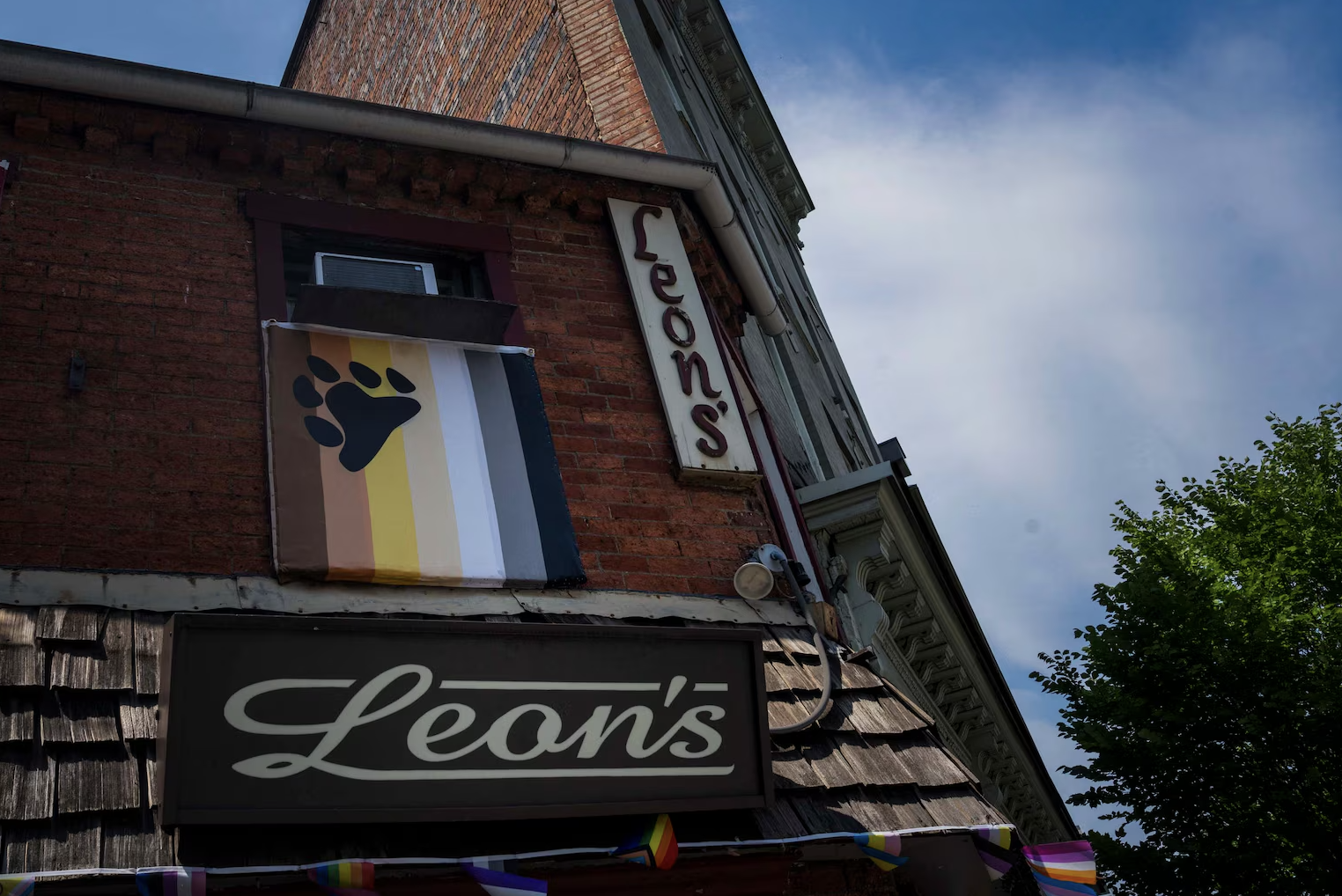
By JOHN-JOHN WILLIAMS IV | Those legendary heavy-handed pours, spirited karaoke and trivia nights, and groan-worthy wall-to-wall patrons on packed nights are back!
Leon’s will live to see another day.
Baltimore’s oldest gay bar, which opened in the 1950s, closed in July following the death of its owner, Ron Singer.
The rest of this article can be read on the Baltimore Banner’s website.

988 restores crisis services for LGBTQ youth

To school to homeschool to school again

Ryan Murphy’s ‘Monster’ vilifies the lesbian

The right to be an ordinary transgender man

LGBTQ community must vote in big numbers

PHOTOS: HRC National Dinner

What’s frightening is also funny in ‘Venus’

I’m 66, he’s 27. Is it love or am I being played?

The LGBTQ real estate map is being redrawn