Arts & Entertainment
Actor Garrett Clayton says Hollywood forced him to stay closeted
The ‘King Cobra’ star also opened up about coming out to his family
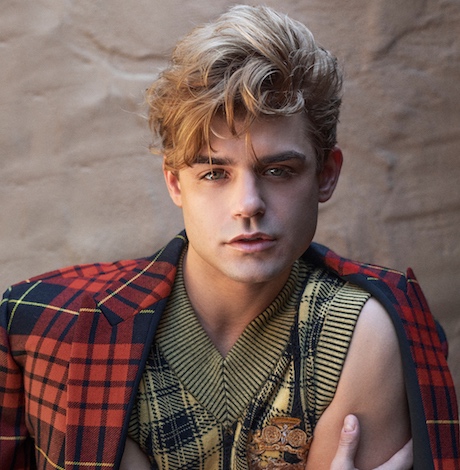
Garrett Clayton (Photo courtesy of Gay Times Magazine)
Actor Garrett Clayton got candid about his experience being gay in Hollywood in a new interview with Gay Times Magazine.
Clayton, 27, started his career appearing in Disney programs such as “Teen Beach Movie” and ‘Shake it Up.” He also portrayed Link Larkin in NBC’s “Hairspray Live!” In 2016, he starred as Brent Corrigan in the gay porn drama “King Cobra” but Clayton didn’t publicly come out as gay until August.
Speaking with Gay Times Magazine, Clayton says he was encouraged to keep his sexuality a secret for the sake of his career.
“One of the first things somebody who was instrumental in starting my career did, they sat me down and they said, ‘Are you gay?’ And I could feel the pressure of the question, so I was like, ‘Yeah, I’m gay, or bi, or whatever’, because suddenly I could feel that there was something wrong with that in this person’s eyes. They looked at me and said, ‘No one wants to fuck the gay guy, they want to go shopping with him, so we’re going to have to figure this out.’ It turned into this situation where I’d get calls and they’d say, ‘You still need to butch it up,'” Clayton says.
Clayton was told to change the way he acted, dressed, talked and even answered questions to appear straight.
“It got as petty as them saying, ‘People need to see that you’re into sports because they’ll think that’s more masculine, so why don’t you go buy a sports hat, take some pictures in it, and make sure people see you in it,’” he recalls.
“I convinced myself that I was the problem, and I got into a really dark place for a couple of years. Then I went to therapy for about a year and a half to really sort through all the things I went through growing up and the situations I found myself in while in Hollywood. I got to work through all those conflicting things,” Clayton continued.
Clayton also had a tough time coming out to his family.
“Before my dad moved to Florida I kind of had a meltdown and told him, and he just hated it. A month or two after that, when I was leaving my last day on the set of my first movie – which was a huge step for me, I was so excited – he freaked out because I was late. I came out to the car and he just started screaming at me, and it boiled up to him screaming at me about how he hated that I was gay, and he didn’t know what to do with me. It was this horrible gut-wrenching fight right after one of my first big accomplishments,” he says about coming out to his dad.
His brother had a similar negative reaction. Clayton says that after a fight over same-sex marriage on social media the two haven’t reconnected.
“My brother reacted badly when I told him, too. I don’t want to put him on blast, because he’s still my family, but I do feel that honesty in this situation is important. A few years ago, when same-sex marriage was legalised, my brother was furious, and he went online posting about how the American flag was gonna be a rainbow soon, like, ‘What’s happening to America?’ And I remember seeing that and thinking, ‘You have a gay brother, you idiot!’ So I went on his Facebook like, ‘So wait a minute, you’re telling me that there can be someone you care about in your life, who wants to impede nothing on yours, and just wants the same rights as you, and you would take that away from them?’ And then he blocked me. If my brother wants to reconnect with me, I welcome it wholeheartedly. I’m a big believer in people learning from their mistakes. But not every story gets a happy ending,” Clayton says.
Read Clayton’s full interview here.
a&e features
Tickets on sale for chef Patrick O’Connell’s book launch event
Sept. 18 kickoff to feature José Andrés, Tom Sietsema
Acclaimed chef Patrick O’Connell is preparing to publish his new memoir, “Main, Middle & Gay” in September and he’s launching the book with an event on Sept. 18 at 6 p.m. at Lisner Auditorium featuring Chef José Andrés and former Washington Post food critic Tom Sietsema.
Tickets for the event go on sale Tuesday, July 21 at Ticketmaster; prices start at $55.
O’Connell, who’s gay, is the pioneering Michelin-starred chef and longtime proprietor of the Inn at Little Washington. He spoke with the Blade about the September event and the launch of his first memoir.
“I’ve known [Andrés and Sietsema] for more than 25 years and I have great respect for them,” O’Connell said. “I felt that it would allow us to add a different dimension rather than just have an interviewer. The chemistry will be fun and lively and unpredictable and exciting. I think we’re all different personalities and we’ll compliment each other.”
O’Connell has published cookbooks but this is his first memoir. The event will feature a short film that will highlight his work and the Inn.
“What I hope to do with the event is bring the book to life visually,” he said. “So we’re producing a short film that will be part of it. Most of the audience will not have read the book so it’ll give them a visual flavor of the book. It parallels the evolution of American cuisine over 50 years. It’s a rare perspective to be in the trenches for that long.”
The book’s title refers to the location of the garage on the corner of Main, Middle, and Gay streets in Washington, Va., where he launched his restaurant that became an international culinary destination.
The Blade will publish the rest of its wide-ranging interview with O’Connell in September in conjunction with the book’s release.
Arts & Entertainment
Sci-fi has long been at vanguard of LGBTQ representation
Story lines now criticized as ‘woke’ is weird
Since I was a teenager, I have liked sci-fi because of the depth with which it explores social issues. At the time, I didn’t know that I was autistic and queer, so I couldn’t see myself in other autistic and queer people. Instead, I saw myself in androids, mutants, telepaths, and sometimes aliens who were portrayed as minorities persecuted by the human majority. It was a universal language for talking about alienation, systemic discrimination, conversion therapy, segregation, and internalized self-hatred.
Now, when so many sci-fi stories are being criticized online as “woke,” it seems weird for me. This is especially true when we are talking about franchises, such as the British TV series “Doctor Who” and American franchise “Star Trek,” both of which have always been remarkably progressive by the standards of their own time.
Let’s take a closer look at “Doctor Who.”
In June 2026, the BBC cancelled the planned Christmas special, saying that viewers would have to wait longer for the next season after internal studio issues, and now the BBC is looking for new production partners. “Doctor Who” is the longest-running science fiction television series in the world, originally airing from 1963 to 1989 before returning in 2005. The future of the franchise is currently unclear, and many people online immediately began blaming “wokeness” for what had happened to their favorite show.
After all, the Doctor, an alien Time Lord who can regenerate and literally change faces, had traditionally been played by white men. But the last, Fifteenth Doctor was played by Ncuti Gatwa, a Black Scottish-Rwandan actor who has publicly identified as queer (and the doctor himself was first presented as queer character after a queer romantic episode where he kissed a man), while the Thirteenth Doctor was played for three seasons by Jodie Whittaker, the first woman to portray the Doctor. In 2023, the series also introduced Rose Noble, a trans feminine nonbinary teenager and supportive character played by transgender English actress Yasmin Finney.
But despite popular stereotypes online, “Doctor Who” did not suddenly “go woke.” The program has existed in two main eras: the classic series, which aired from 1963 to1989, and the modern revival, which has been broadcast on BBC One since 2005.
Even in the 1960s, one of the program’s earliest stories, “The Daleks” (1963–64), presented an obvious allegory for fascism, racial purity, bigotry and the horrors of war. Throughout the classic era, the Doctor frequently opposed militarism, authoritarian governments, and dictatorships. Many fans have also pointed to moments of queer coding and subtext throughout the classic series.
However, openly queer characters appeared as soon as the modern revival began.
The 2005 revival introduced Captain Jack Harkness, played by John Barrowman, one of the first openly queer recurring characters in the “Doctor Who” universe. He openly flirted with people regardless of their gender and later became the lead character of the spin-off series “Torchwood.” “Torchwood” went even further with LGBTQ representation, featuring multiple queer characters, including trans and nonbinary characters whose identities were treated as a normal part of the story.
“Doctor Who” has always been remarkably progressive for its time. The franchise doesn’t suddenly change its values, it’s always been “woke.”
The same happened with the American franchise “Star Trek.”
It is widely known as one of the most openly left-wing and progressive television franchises ever broadcast. The original series, which aired from 1966-1969, was created during the Cold War and featured the utopian United Federation of Planets, a society without poverty or money that can be characterised as socialist or even communist. It also featured Lt. Uhura, played by Nichelle Nichols, a Black woman serving as a highly respected bridge officer at a time when Black women weren’t portrayed in positions of authority on American television. The series also included one of the first interracial kisses in modern American television, between Capt. James T. Kirk (William Shatner) and Uhura in the 1968 episode “Plato’s Stepchildren,” a moment that had a significant cultural impact.
Gene Roddenberry, the creator of the franchise, said that he had wanted to include openly queer characters as well, but believed it would have been impossible to keep the show on the air because it had already pushed social boundaries in so many other ways.
Today, many viewers — including Elon Musk — claim that “Star Trek” has only recently become “woke.” In reality, I think it actually became less radical than the original series. Even queer characters are not a recent addition to the franchise. One of the earliest major queer characters appeared in “Star Trek: Deep Space Nine” (1993–1999): the Trill officer Jadzia Dax, played by Terry Farrell. In the 1995 episode “Rejoined,” she shared one of the first same-sex kisses in the history of the franchise.
However, for some reason, it was the openly gay couple Paul Stamets (Anthony Rapp) and Hugh Culber (Wilson Cruz) in “Star Trek: Discovery” (2017–2024), together with the trans Trill character Gray Tal, played by trans actor Ian Alexander, that triggered a major backlash among conservative parts of the fandom. That backlash reached another peak with “Star Trek: Starfleet Academy,” which features the canonically gay Klingon cadet Jay-Den Kraag. The actor has spoken about receiving abuse and threats because of the role, despite the fact that there was nothing especially ideological about his character. He was simply a gay character whose sexuality was only one aspect of who he was. In fact, considering the ideals of the original “Star Trek,” I was more surprised that the franchise still includes relatively few trans or polyamorous characters, and that they are not part of the lead cast. After all, the franchise was created to imagine a future that was ahead of its time.
So why do conservatives and anti-LGBTQ people continue to watch franchises that have always been deliberately progressive? And why do they keep claiming that these shows have only recently “gone woke”?
A more logical explanation is that parts of the audience have become less willing to accept the same kinds of progressive ideas that these franchises have embraced for decades. In other words, it is not the shows that fundamentally changed. Some long-time viewers have become more conservative than they were in their youth, while newer conservative audiences have joined them and begun criticizing franchises without knowing their real history.
In many ways, geeks have changed more than these shows have. Sci-fi hasn’t “gone woke.” Some of its fans have simply become less comfortable with the same progressive values these franchises have promoted for decades.
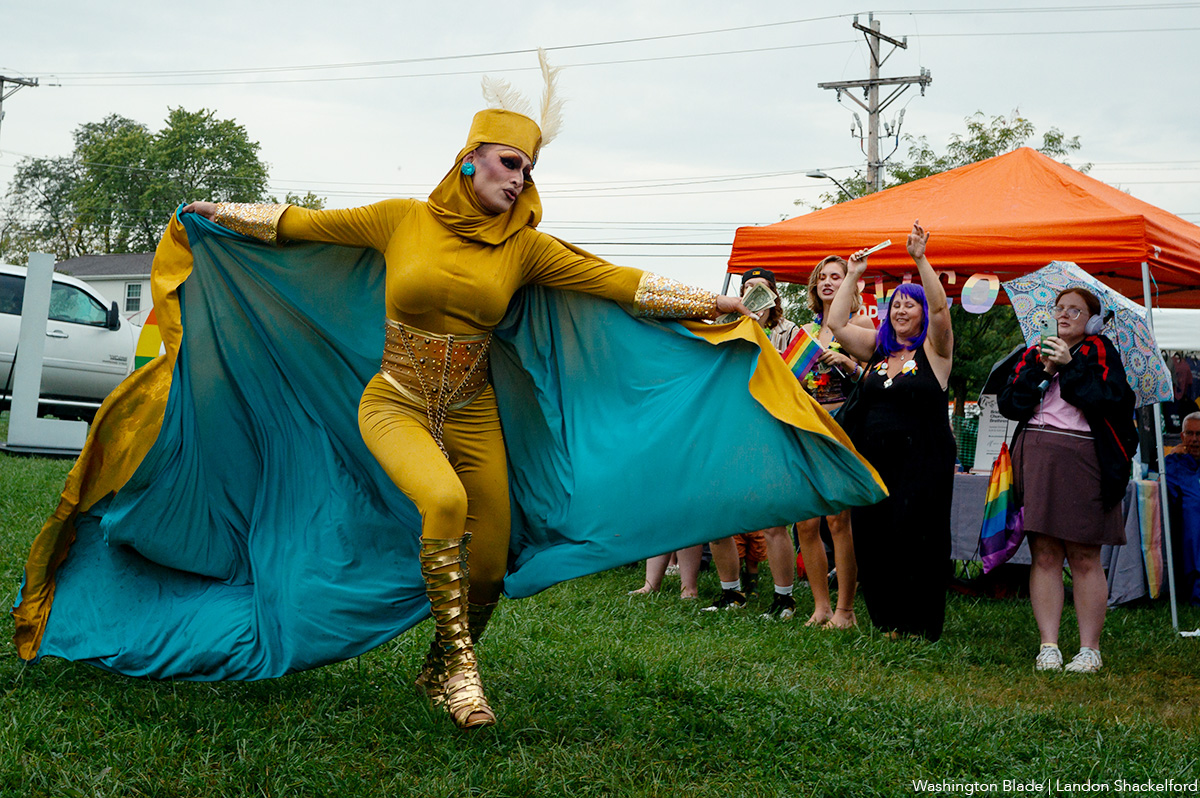
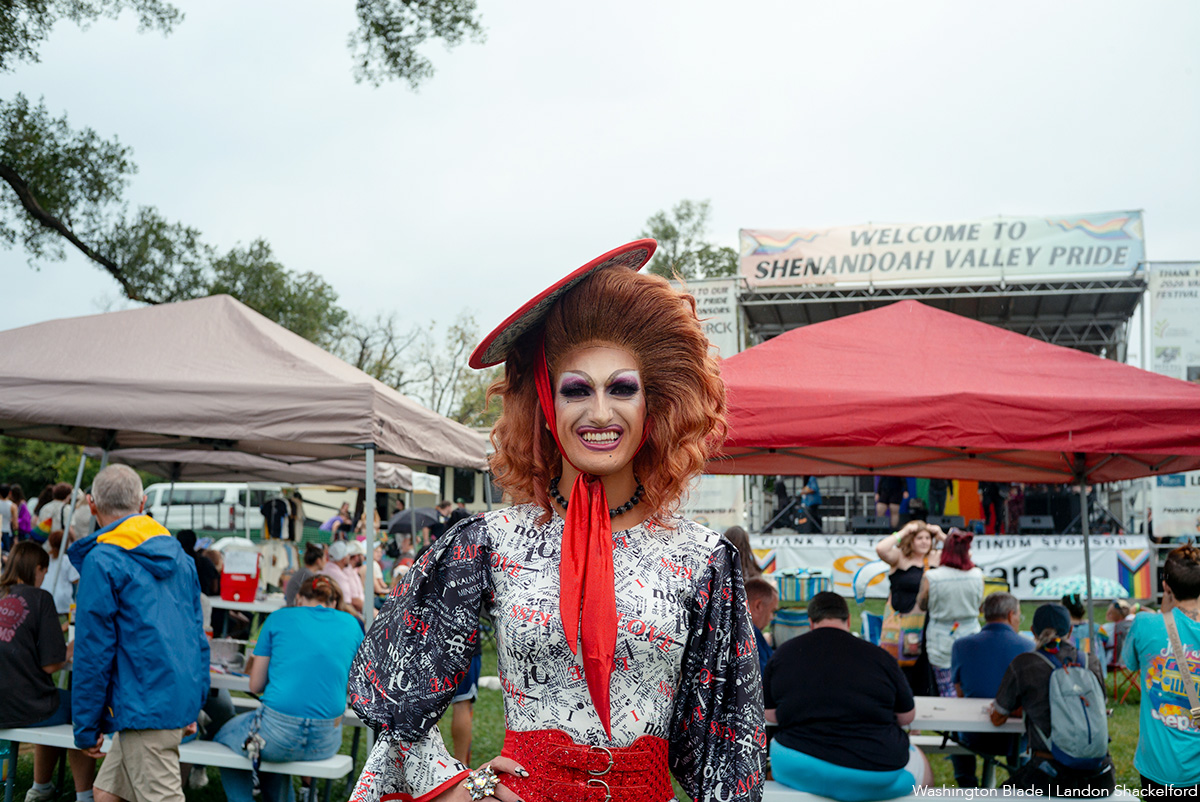
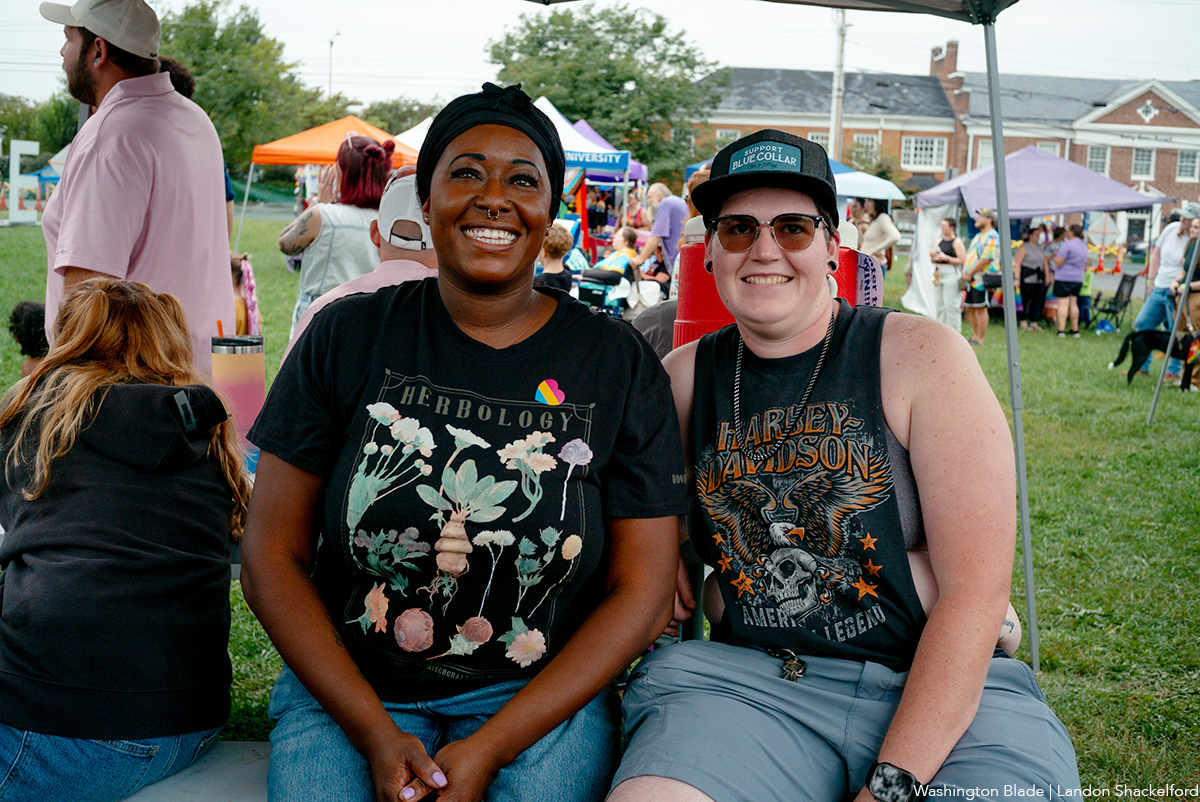
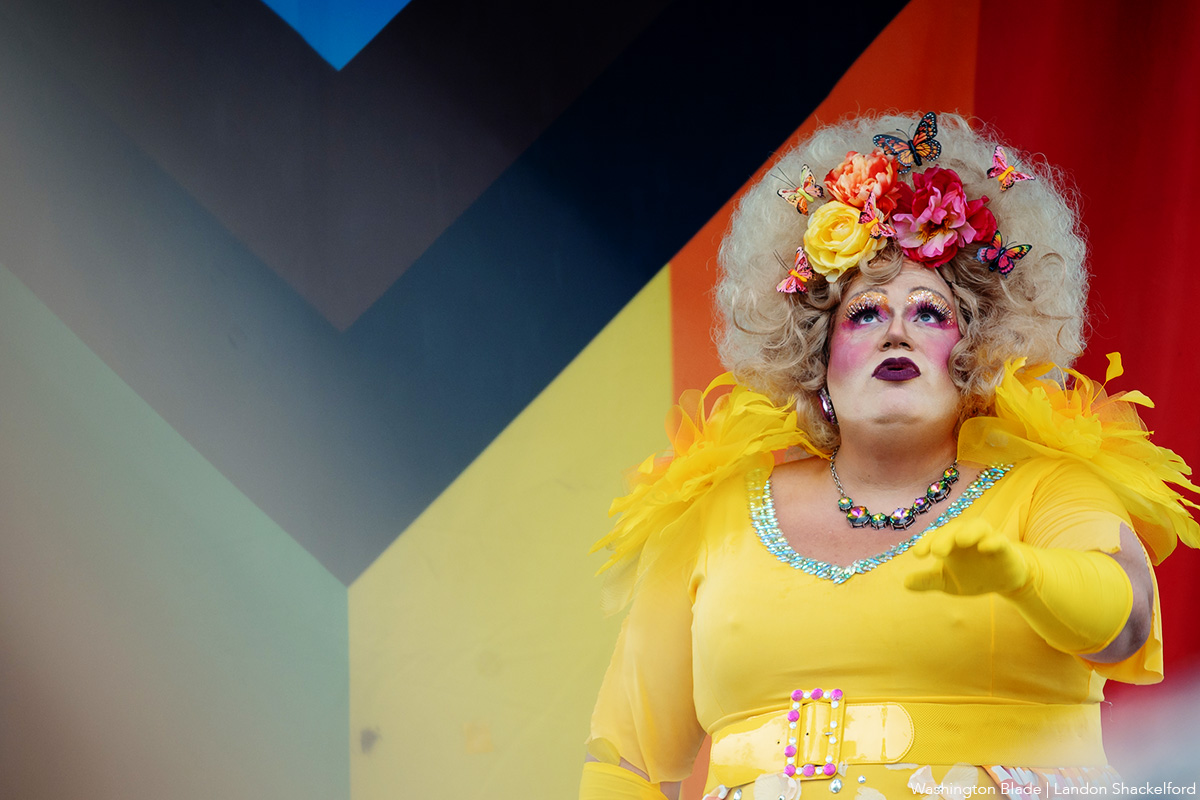
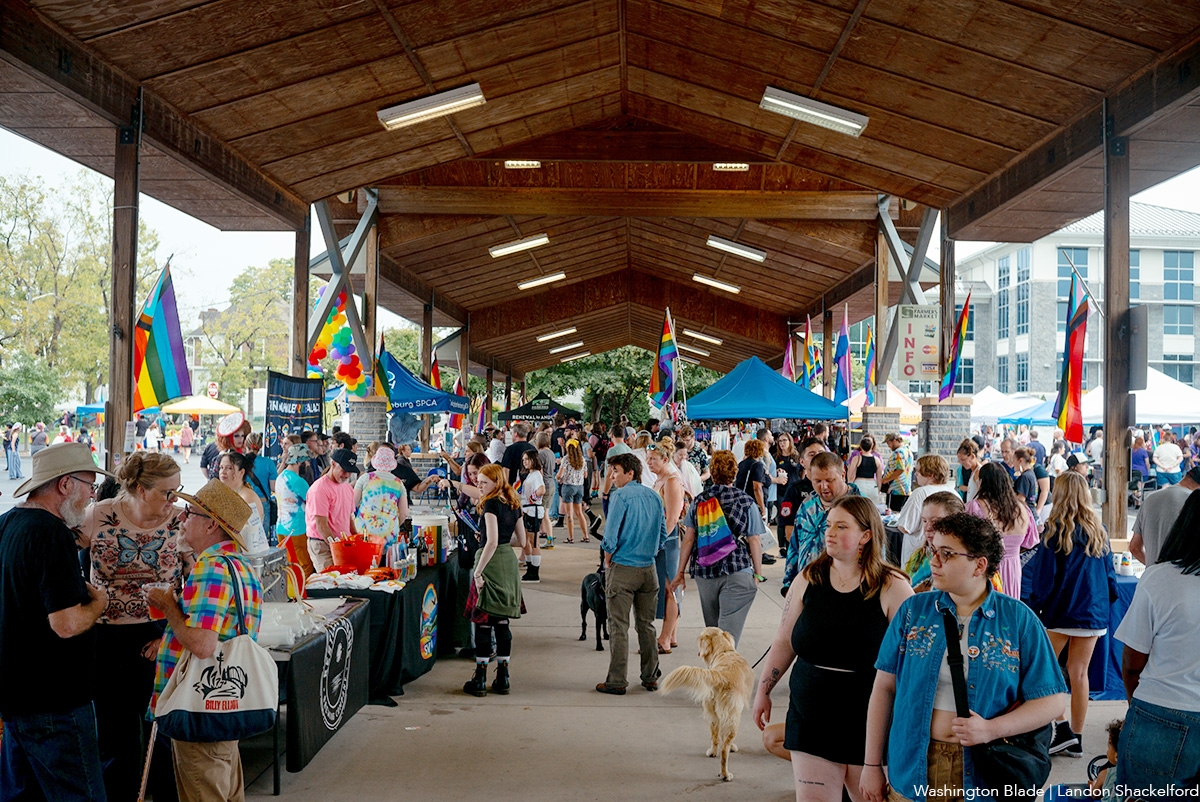
JR.’s Bar held a “RuPaul’s Drag Race: All Stars” watch party followed by a live drag show on Friday, July 17. The Vitamin C weekly drag show was hosted by Citrine with performers Brooke N Hyman and Rosie Beret.
(Washington Blade photos by Landon Shackelford)


-
National2 days agoDOJ seeks to dismiss some claims in gay FBI employee’s bias lawsuit
-
North Carolina5 days agoAuthorities investigate officer-involved shooting outside Asheville gay bar
-
Baltimore5 days agoPopular Mount Vernon gay bar Leon’s to temporarily close after owner’s death
-
Photos3 days agoPHOTOS: Vitamin C at JR.’s