a&e features
John Waters is never wrong
In new book, the ‘filth elder’ has an opinion on just about everything
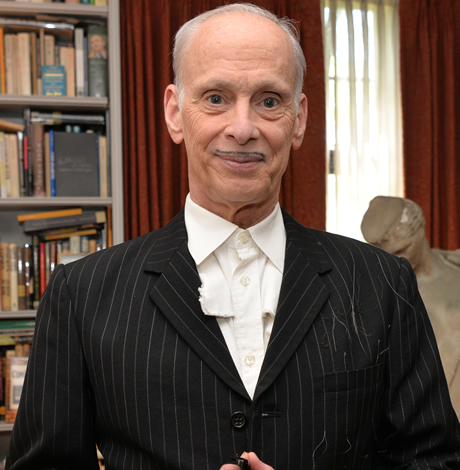
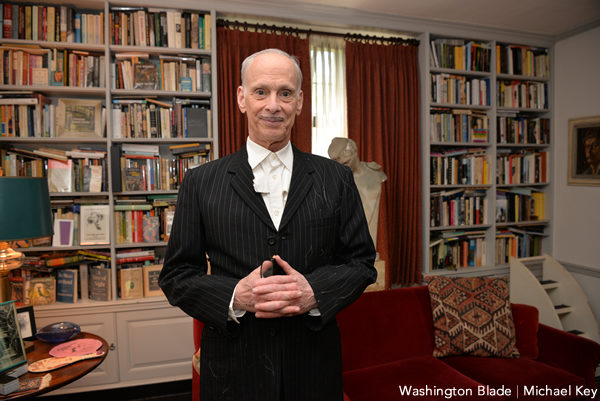
John Waters has had underwhelming meals in overpriced restaurants — so you don’t have to.
He’s been caught in long airport security lines. He’s taken the BoltBus to New York City and been delayed while the driver took a dump in the on-board restroom. He’s had to sit in a doctor’s waiting room with an embarrassing ailment and been barraged with questions from other patients who recognize him and demand to know what he’s got.
Now the Baltimore-based filmmaker and writer, who just turned 73, has put all of those experiences and more into a book of opinions and advice, presumably so people won’t have to endure what he has. Called “Mr. Know-It-All: The Tarnished Wisdom of a Filth Elder,” it’s his ninth book, and it comes out on May 21. He’s described it as “my opinion on everything” and “how to avoid respectability at 70 years old.”
When it comes out, readers will discover that “Mr. Know-It-All” isn’t just a book about coping with life’s indignities and humiliations, even though there’s plenty of guidance about that. It’s also part memoir, part celebrity tell-all and part movie industry guidebook with separate chapters about each of his last seven films, all filmed in Baltimore (“Polyester,” “Hairspray,” “Cry-Baby,” “Serial Mom,” “Pecker,” “Cecil B. Demented” and “A Dirty Shame.”)
The book is filled with anecdotes about many of the actors he’s worked with, including Kathleen Turner, Johnny Depp, Tracey Ullman and, of course, Divine. There’s the time Waters turned down Brad Pitt at an audition for “Cry-Baby” because Pitt was too handsome to be cast as Depp’s sidekick, a decision that he thinks makes him perhaps “the only director who ever said no to Brad Pitt.” He remembers that Rikki Lake lost her virginity halfway through “Cry-Baby;” how he called Tab Hunter out of the blue to star in “Polyester” and how he battled with motion picture censors to let him use the word “Pecker” as a movie title.
Other readers may be drawn to his essays about non-cinematic subjects, which range from art collecting and Brutalist architecture to Yippie protests, Andy Warhol and taking LSD at 70. In one chapter, he names the one female he has adored since childhood. In another, he imagines returning to the apartment he lived in during the 1960s, a sign that, in some cases, you can go home again (especially when you still live in the town where you grew up).
“Mr. Know-It-All is here to tell you exactly how to live your life,” he writes early in the book. “I’m never wrong.”
Though the title says it’s a book of wisdom, this is not a rehashed litany of someone else’s platitudes. All the advice he offers grows out of his own experiences. As a result, readers gain insights into the maker of “Pink Flamingos” and “Female Trouble” by learning what he’s gone through and how he dealt with it.
One of those insights is that Waters can be quite frugal and down to earth. He not only takes the inexpensive BoltBus to New York but also goes to a Laundromat when he spends the summers in Provincetown. (And of course, he hitchhiked across the country and wrote about it in his bestseller, “Carsick.”)
In many of his stories, Waters reveals a knack for handling even the most humiliating situations with humor and aplomb. He also says he licks important packages before he puts them in the mail — “to remove any ‘curse’ of show business rejection” — and instructs his staff to do the same. In the LSD chapter, he mentions texting “my boyfriend,” whom he never names.
Next week, Waters begins a national tour to launch his book, published by Farrar, Straus and Giroux. East Coast stops include Barnes and Noble’s Union Square location in New York City on May 21; Politics and Prose Bookstore in Washington (the 5015 Connecticut Ave., N.W. location, with first-come, first-served seating) on May 24 at 7 p.m. and a book signing at Atomic Books, 3620 Falls Road in Baltimore, on May 25 at 7 p.m.
West Coast stops include ticketed events at The Green Arcade at the McRoskey Mattress Loft, 1687 Market Street in San Francisco on May 30 at 7 p.m., and Book Soup at The Renberg Theatre (Los Angeles LGBT Center’s Village), 1125 N, McCadden Place in Los Angeles on June 1 at 7 p.m.
Waters recently sat down at his home for an interview with the Washington Blade to talk about his book and his life as a filth elder. The interview has been condensed.
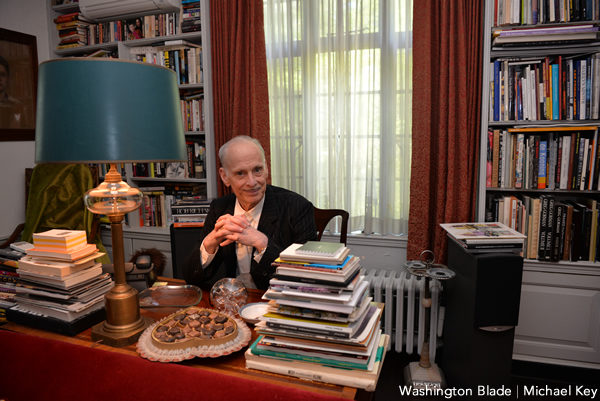
WASHINGTON BLADE: A good alternative title for your book would be “The Influencer,” don’t you think? How To Win Friends and Influence People 2?
JOHN WATERS: I’m Norman Vincent Peale, you’re saying?
BLADE: You do give a lot of advice: Come up with a gimmick. Have backup plans. Get at least one other person to believe in you. Sound advice, with a John Waters twist.
WATERS: I agree with that totally.
BLADE: Why an advice book?
WATERS: Well, I always kind of parody things, so I thought an advice book coming from me would be kind of a parody in the first place. I needed that kind of genre to be able to talk about all the things I wanted to talk about.
In some ways it’s like “Shock Value” because “Shock Value” ended right before we made “Polyester,” so this has the rest of the movies in it. But I also wrote it from a viewpoint of how to tell young filmmakers how to deal with Hollywood and what happens and all that kind of stuff, and how you fail upward. And then the other subjects I had to put in about love, about fashion, about art, about death, about every possible thing. But to talk about them all, you need a theme that runs through the whole thing, so that’s how I came up with [giving] advice.
Do I expect every person to follow my advice? No, but I believe that I gave good advice. It’s not really told ironically. I believe everything I say in it. But I hoped to write a humorous book at the same time.
BLADE: Who are you giving advice to?
WATERS: I’m giving advice, first of all, to the people that like my work, because they’re hopefully the first people that buy the book. Secondly, even if you don’t know anything about me, I’m giving advice to younger people about how to handle what’s coming, failure and success, in your life if you’ve chosen to be in the arts in any way. So I think I’m trying to give advice to anybody probably younger than me, because older than me are dead, you know. And I tell you how to beat that too.
BLADE: You’re not writing just for the hardcore fans?
WATERS: No, not at all. If you’re never seen any of my movies, you can still read the book.
BLADE: A lot of your fans may be the “others” in society, those who don’t fit in or conform, the people in “Desperate Living” and other movies.
WATERS: The people that used to be the “others” in society are often now the leaders. Everybody wants to be the “other” now. They didn’t used to. Even Trump would probably want to be an outsider. Obama thought he was an outsider. Everybody wants to be an outsider, and I want to be an insider. I said that in “Make Trouble,” that it’s more fun to cause trouble from within. Which is what “Hairspray” did.
BLADE: But a lot of the others aren’t the ones who would typically be disposed to take advice.
WATERS: Maybe from me they might.
BLADE: Why should someone follow your advice?
WATERS: You don’t have to. I think you could read the book and not follow one bit of it and still enjoy the book. You don’t have to. I don’t expect anybody to, really.
BLADE: Your advice grows out of your experiences. It’s not warmed-over Norman Vincent Peale. And because it comes from within, your advice in turn provides insights into you.
WATERS: I always thought that is a joke, that book, which I probably never read. But my parents had it and it was such a thing then that it became a joke in a way. That same title could apply to this book.
BLADE: The other thing about your advice is, you chronicle all the ways you’ve suffered indignities. You’ve had bad dinners at good restaurants. You’ve had bad seats on international flights. You’ve been harassed at the doctor’s office.
WATERS: I’m also saying all the wonderful things that happened to me. So basically, there are different kinds of problems. It is a high-class problem to worry about being recognized in a doctor’s office. It’s the one time that it’s really bad to be seen. Although, if you weren’t [famous], you wouldn’t have gotten the appointment. So in the long run, it isn’t bad.
BLADE: Do bad things happen to you more than most, like Joe Btfsplk in “Li’l Abner?”
WATERS: No. I say in the book, not one bad thing has ever happened to me from being famous, in any way. It really hasn’t. I mean, high-class problems, some of the things I talk about. But, generally, I can bitch about flying all the time. Bitch about first class, which is really bold. But I get to fly all the time and I don’t pay for it. But I’m working, you know? So I’m trying to tell people that when bad things happen to them, they can use it and how they can appreciate it and how they can look back on it and it doesn’t mean really anything terrible.
BLADE: You bring up all these universal things that anybody can identify with and you’ve come out on the other side, none the worse for wear from the indignities you’ve suffered.
WATERS: Everybody has indignities.
BLADE: Are you more sensitive to things than others?
WATERS: No, I don’t think so. I think I notice them more and it’s more, like, ludicrous, some of the problems that you get from being known.
BLADE: And then you use it for comic relief.
WATERS: Yeah, comic relief. In my own life, even.
BLADE: Is there one disappointment that tops them all?
WATERS: I only regret one thing, smoking cigarettes. It’s the only thing I regret in life. Because I’ll probably die from it. I mean, I don’t have cancer, but I’m just saying that, both my parents died from some form of cancer. They were 90 though. They had a long, good life. So, yes, I regret smoking cigarettes.
BLADE: You lived through all these indignities, and that’s a sign that others can too.
WATERS: The other day in New York somebody yelled at me, a homeless person, ‘You’re still alive?’ Which really made me laugh. I thought, ‘Well, yes I am, are you?’
BLADE: You and the Queen of England ought to compare notes.
WATERS: She probably has some really good ones.
BLADE: On your book tour, you’re appearing at Politics and Prose in Washington. Is this book political?
WATERS: Sure it is. All humor is political. And this book, definitely. I have a whole chapter, ACT BAD, which is really [suggesting ways] to go further than ACT UP did. I think comedy is political, trying to get you to laugh at things. I think every chapter in this book is political. But the worst way you can be political [is to] rant. If you get people to laugh, they’ll listen. If you lecture, in a strident tone, like Elizabeth Warren, no one will pay attention. Even though I totally agree with her politics, I hate to hear her talk. She’s never said a funny thing in her life. So the thing is, it’s important, if you want to change people’s minds, to make them laugh. It’s the first way to get their attention.
BLADE: What will you be doing at Politics and Prose?
WATERS: Well, probably a conversation with somebody and read a chapter and sign books. Like what I do everywhere. It’s always “a conversation with.” It’s basically a free lecture tour.
BLADE: As opposed to Atomic Books in Baltimore, where it’s primarily a book signing.
WATERS: That is usually the biggest one in the whole country, which is pretty amazing. That tiny bookshop, on the last two books, I think, sold even more than Barnes and Noble in New York.
BLADE: For your “Carsick” book-signing there, it was raining and the line was around the block.
WATERS: That bookstore, I get all my fan mail there. It’s really a great place, so I’m all for it.
BLADE: Does your book have any bombshells in it? Landing Tab Hunter for “Polyester?” Not casting Brad Pitt when he auditioned?
WATERS: That’s not up to me to say. The only thing I could think in there, maybe, is the [taking] LSD thing, in a way. That’s the stunt of the book. That’s something that I did that I thoroughly enjoyed. I think if there’s a sentimental chapter in the book about friendship, then maybe that is that. If I had known how strong the LSD was that I took, I probably would have been uptight. But I didn’t and it was great. I spent eight months getting the right acid from the purest source I could find, practically from Timothy Leary’s asshole. The Blade can print that. But the provenance of it was high and it was great. I don’t have to ever do it again. Just like I don’t have to ever hitchhike across the country again. Why would I? I did it. I don’t know if that’s newsworthy, but that would be, maybe.
BLADE: You had a big build-up about it in the book: We don’t know what this is going to do to us. And then you stopped hallucinating and it was OK and the sun rose…
WATERS: It was more than OK. It was great. I never had a bad experience when I was young, or I probably would have never done it. What I wanted to see is, what is it like to do it now, when I’m 70 years old? I certainly would never imagine that many 70-year-olds try to take acid. Especially if you haven’t done it since you were young.
BLADE: Do people still take LSD?
WATERS: Oh yeah. All the young people now do micro-doses. All the people that work in Google. All the tech kids take teeny doses of it. But not many 70-year-olds take it. People I know don’t take it.
BLADE: You write that you tried to get transgender pioneer Christine Jorgensen in a movie. That’s something probably a lot of people don’t know. You’ve sprinkled in all kinds of things that are going to be part of your lore.
WATERS: There are lots of things that people don’t know. But I don’t know that that means it’s Stop the Press. Most everything in the book is probably new information to most people.
BLADE: Who do you wish had been in one of your movies but never was?
WATERS: Always Meryl Streep. But I would have had to stop her from doing a Baltimore accent. And she would have done it brilliantly.
BLADE: Did you have a part for her?
WATERS: You know, at times, any of those movies she could have been in, yeah. We’ve met before, maybe a couple of times, at parties. She’s lovely. But she didn’t say, “Oh, I’ve been dying to work with you.”
BLADE: Roseanne Barr has come up.
WATERS: Well, Roseanne, when I dealt with her, she was a liberal. Completely. Yes, she came up a couple of times. I was friendly with her.
BLADE: For “Serial Mom?”
WATERS: Yeah. “And A Dirty Shame.” She was possible for that at one point. So, I was always friends with a liberal. I did her show and everything. Traci Lords was on her show. Who knows? I don’t know. I guess she’s just on the Internet too much.
BLADE: Who was the greatest delight to work with?
WATERS: They all were a delight, in a way. I mean, making movies is horrible. I say that in the book. Basically, it’s not fun, because there’s so much pressure and you have to do something every day and we’re not going to get this shot and it’s going to be over budget. But they all were team players. That’s what I can say they were.
Somebody said about my mother after she died: She was game. And they were game. They had to be game, to come with us, come to Baltimore, especially joining a group of people that had known each other for 30 years, a lot of them. I didn’t have any trouble with any of them. They were pros. But we were pros to them. I think I was prepared. I knew what to do. It wasn’t like we mistreated them. And they sort of got into the spirit of it.
BLADE: Would you do a word association? Kathleen Turner.
WATERS: A pro. Still see her. Great actress. Stage. Screen. Movies. She could play men, women, anybody with great conviction.
BLADE: Johnny Depp from “Cry-Baby.”
WATERS: I’m on his new album, I hear. I’m not sure how. I remember I talked to him on the phone with Alice Cooper recently and he said, “Say this.” I don’t remember what I said, so I guess they put it in the album like when I did in The Creep [a song with Nicki Minaj]. Johnny Depp was always a pro with me.
BLADE: Tab Hunter.
WATERS: Well, he voted for Reagan, you know. He used to shock me. He was for Trump, too. He used to laugh when he told me, because he knew how crazy it made me. I love Tab. You know, that’s the thing. He was from a different era. Completely from a different era.
BLADE: Was he like Rock Hudson?
WATERS: Rock Hudson, I don’t know if he was a Republican. Tab, I think was always a Republican. Oh yeah, he was in the closet forever. He had to be. It was illegal. You know. He was loved by every woman in America. It would have ruined his career. And he wrote about all that in his book.
BLADE: Did he write about you?
WATERS: Yeah. He was lovely. I stayed friends with him right up until the end. I just talked to his husband recently. Tab was great. He was a team player too. Lovely to Divine. Matter of fact, he liked the experience so much he went and made a movie with Divine afterwards, called “Lust in the Dust.”
BLADE: Andy Warhol?
WATERS: I remember him at the Baltimore Museum of Art meeting Edith [Massey] and saying, where did you find her? And he was very supportive. He took Fellini to see “Pink Flamingos.” He put Divine on the cover of Interview. He was always supportive.
BLADE: Mink Stole. You named her?
WATERS: Her real name is Nancy Stoll. S-t-o-l-l. I knew her forever. I met her in Provincetown. She was early in my films. She was a character actress, always. She usually played Divine’s enemy. We’ve been friends forever and ever. And I think she’s a really good actor. She still works all the time.
BLADE: Any way to sum up Divine, 31 years after his death?
WATERS: He gets more and more famous as the years go by. And he’d still rather be here. He’d be pissed he’s dead. I’m still shocked he’s dead. I still am. That’s still a shock. But, it’s kind of amazing. Well, we’re all being buried in the same graveyard where he is, you know, all my friends. Obviously, he is still with us.
BLADE: You’ve been good to the guys who commissioned the Divine mural in Baltimore, Jesse Salazar and Tom Williams.
WATERS: They were lovely. Why wouldn’t I be?
BLADE: Your book has only one chapter that’s named after a female.
WATERS: Betsy.
BLADE: The finger-painting chimp from the Baltimore zoo. You reveal this life-long love affair that you’ve kept secret until now.
WATERS: Well, I didn’t have sex with Betsy. I want to make sure that people understand that.
BLADE: You wrote a chapter about her appearances on TV and about The Golden Age of Monkey Art, which she inspired.
WATERS: I just remembered her in that dress and getting national attention and being all over the country. She was on Garry Moore, who was from Baltimore, too.
BLADE: In the last chapter, you write about death and dying, specifically about your death. You try to imagine what happens after you die, and you go back and visit your first apartment at 315 E. 25th Street in Baltimore. Why so morbid?
WATERS: Is it morbid? I don’t think it’s morbid. I think, who at 70-some years old doesn’t think about that?
BLADE: Why such a potential downer?
WATERS: You think it’s a downer? I don’t think it’s a downer… I think everybody at 73 [thinks about death], and I think my friends think about it more than I do. I don’t think about it that much. But you can’t help it when you go to funerals and you think, I am 73, you know, something is going to get you. So I tried to just imagine beating it, how I could be such a control freak that I would refuse to die. And I do always dream about that apartment, so it is just a fantasy of what happens after you die.
But it was to me dealing with the one subject that you’re really not supposed to joke about or kind of focus on. To think about it was sort of liberating in a way, to go through the whole thing. Except that I want to be sure that just because I write something here to be funny, it doesn’t mean that I want my heirs to follow every single thing. Like I say in there, I don’t want something funny on my tombstone. So, I don’t know. I thought it was optimistic. I beat death in it in a way, spiritually at least. That’s optimistic.
BLADE: How is your health?
WATERS: My health is fine.
BLADE: You didn’t write the book to fight death?
WATERS: Well, you write all books to fight death. I mean, I’ve never been as busy as I am. I have more projects than I’ve ever had in my entire life.
BLADE: You don’t name in the book any kind of significant other or life partner.
WATERS: And I never would. Because every person I’ve ever been involved with …doesn’t want to be public. I wouldn’t want somebody that would want to do the red carpet with me. I don’t want a groupie. I don’t want a fan. I want somebody that has their own life.
BLADE: Do you have a partner?
WATERS: Yes, I do.
BLADE: Is that in the book?
WATERS: Obliquely.
BLADE: You don’t want to say who it is?
WATERS: If you don’t keep some things private, you don’t have a personal life. It’s the same thing I say, I have some restaurant receipts that are not tax-deductible. That means I have a personal life. When I read celebrities are telling everything, I think, don’t you have any friends?
BLADE: Your book is so wide ranging it makes one wonder what you’re saving for the next one. After “Mr. Know-It-All,” what is there to write about?
WATERS: Do I have any stories left? Well, I’m writing a novel. I’m on page 64. So, yes, there’s stuff to write about.
BLADE: Is that why your next book is fiction, because you’ve exhausted the autobiography?
WATERS: I’ve written 17 movies. They‘re fiction. The first part of “Carsick” was fiction, too, except that I was in it. That makes it a lot easier. I had never written a novel, so I wanted to try it.
BLADE: Are you ever going to slow down?
WATERS: I hope not. I don’t need to slow down. I like what I’m doing. I don’t know. I guess when I drop dead, I’ll have to.


a&e features
What ‘Queer Eye for the Straight Guy’ can still teach us
Producer David Collins on lasting impact of hit series
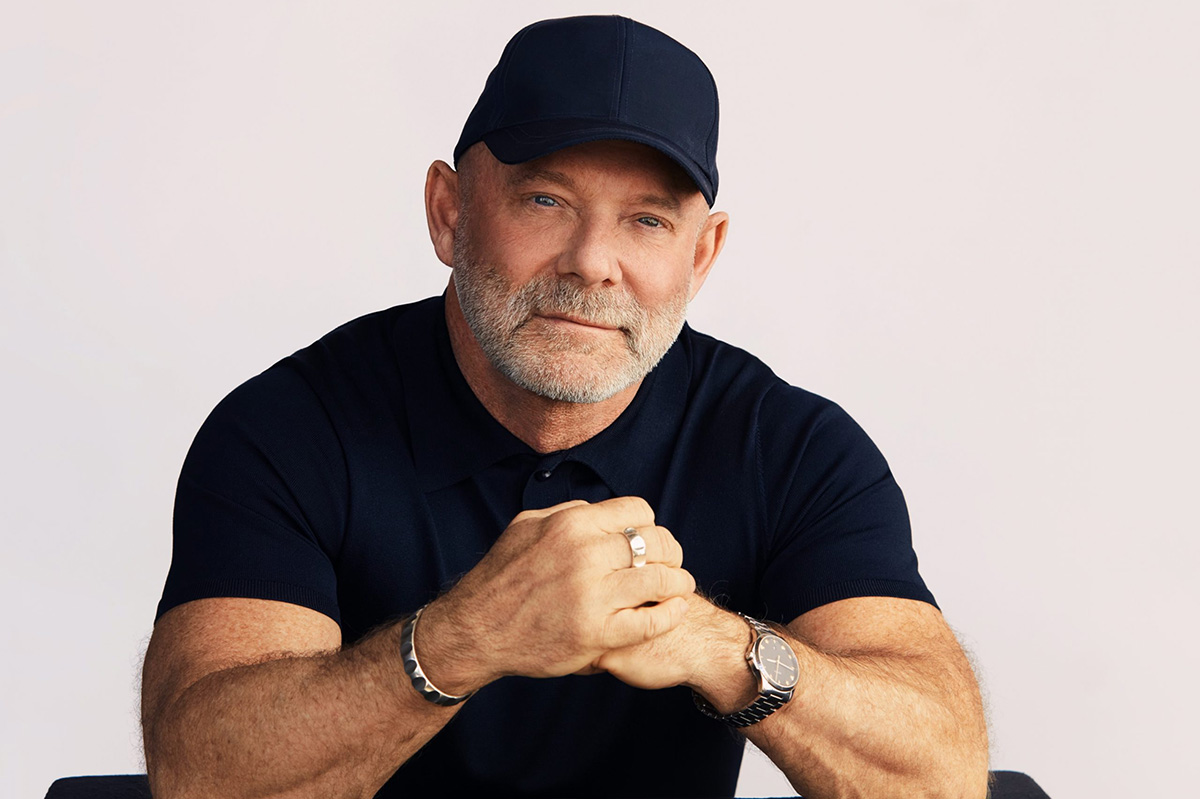
It’s hard to imagine where LGBTQ+ television would be without “Queer Eye for the Straight Guy,” the trailblazing reality series that premiered in 2003.
Each episode of this Emmy-winning show saw a group of gays converge on a struggling man — the titular straight guy — and offer nonstop wit while organizing his endlessly messy life. This program about a group of homosexual helpers took the world by storm, furthering the love of gay television begun by shows like “Will and Grace” but bringing it into the growing medium of reality TV. Of course, it wasn’t perfect; “Queer Eye for the Straight Guy” often cast its experts less as multi-faceted queer folks and more as sources of early 2000s gay jokes. But despite these pitfalls, it’s undeniable that the original program explored the realities of being gay in a way audiences had never seen before. It was a monumental piece of LGBTQ+ representation, and its success is largely owed to the man who fought to get this show made: producer David Collins.
Collins spoke with the Blade from his Los Angeles home, where he’s spent the past few years living with his husband and his two daughters. David spoke fondly of his many years in the industry, detailing how it feels to be such a huge part of LGBTQ+ history. He explained, however, that he didn’t initially set out to alter how queer people were seen on television. “I never went out to make gay television,” said the producer. “I went out to tell great stories.”
“I’m a hillbilly from Ohio, and I thought I was going to be an editor,” David laughed, looking back on his career. “I interned at the Cincinnati Film Office, and I showed up to work my very first day, and the film commissioner was like, ‘Get to the airport right now and pick [someone] up. Don’t talk to them.’ Well, I ended up picking up Jodie Foster.” Collins raved about this car ride that changed his life, with the pair becoming friends and Foster pushing him to become a producer who puts their own media out into the world. Eventually, he did just that, and after learning about the wild new genre that was reality TV, he pitched a series to Bravo: “Queer Eye for the Straight Guy.”
“I was obsessed with Esquire magazine, and they had five categories: fashion, grooming, interior design, culture, food, and wine. So I gave them each a gay, and the Fab Five were born!” Collins said, describing how viewers quickly fell in love with the concept and earned the program four seasons and an Emmy for Outstanding Reality Program. He spoke about how proud he felt creating a show that centered real gay people, not characters in a story, remembering, “To stand in the middle of Times Square and look up and see this massive billboard with the original Queer Eye guys…it wasn’t even a dream come true, because it wasn’t a dream I had even fathomed.”
With his series, people were watching actual gay men and learning the realities of a queer culture that had always been portrayed as a danger to society. Collins tearfully recounted hearing about queer people using the show as a way to connect with their family, saying, “What I’m most proud of that’s come out of Queer Eye [are] the conversations that that series has allowed to have people around their kitchen tables with little boys in Ohio like me who were scared to death that they were going to burn in hell because their pastor was telling them that they were a sinner.”
Now, for all of its trailblazing, the program wasn’t wholly positive; the show’s focus on the central ‘straight guy’ meant it rarely delved into the lives of its Fab Five. Collins regretted that lack of depth but understood that earlier audiences weren’t accustomed to such a nuanced look into queerness — that would have to wait for the reboot.
When “Queer Eye” came out in 2018, audiences were introduced to not only a new Fab Five, but a whole new format (that didn’t rely on a straight person). Now, the series would assist queer folks and allies alike, spotlighting these individuals as well as the queer experts helping them improve their lives. The show has been applauded for its amazing makeovers, but where it truly stands out is its representation, offering a look into individuals across the country and the struggles — along with the immense joys — of being queer in America today.
Fans were disappointed to hear that “Queer Eye” would be ending after its 10th season, but David stressed that they wouldn’t have to be sad for long. “What I will say to you is this: hang tight,” he teased. “There’s yet another version of ‘Queer Eye’ to come, and we’re working on that now.” In the meantime, Collins is continuing his work with new shows like the “House of Stassi,” a series centered on “Vanderpump Rules’”prolific waitress. He’s excited about these new projects, but emphasized that his heart will always belong to “Queer Eye for the Straight Guy” and all that it continues to do for viewers 19 years after its finale.
“It’s not about your new outfit or your new couch or your new whatever. It’s about your humanity,” said Collins, speaking about the core lesson he hopes people take away from the Queer Eye franchise. “It’s about seeing yourself. It’s about dignity. It’s about how confidence breeds success.”
A valuable message that queer folks can benefit from even more now than they did in 2003. And, while it’s unclear just what lies ahead for this franchise, one thing is for sure: “Queer Eye for the Straight Guy” helped people everywhere understand the power that exists within our queerness. It’s a truth that has impacted countless pieces of LGBTQ+ television today, and it’s one that Collins promises to keep alive through whatever hit show he creates next.
a&e features
Jason DePuy on coping with homophobia in ‘Big Brother’ house
First drag queen contestant on CBS show fought to stay positive
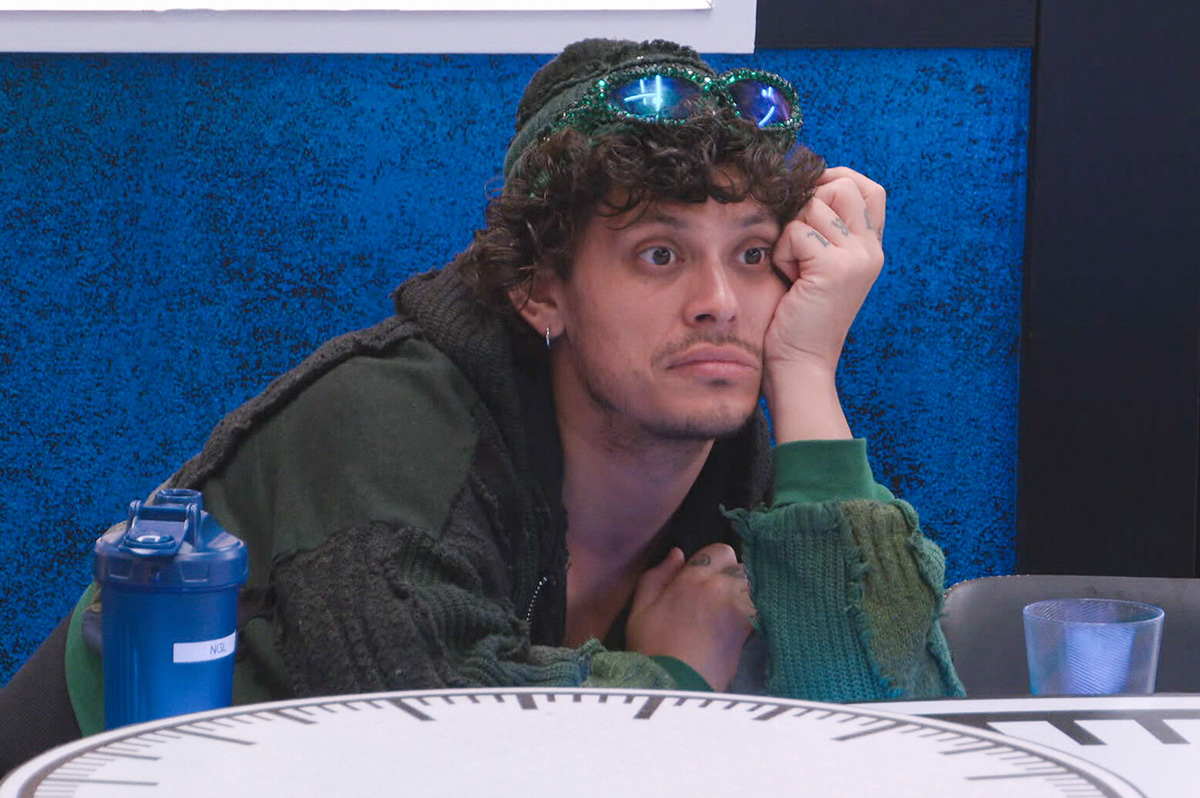
One week after Jason DePuy (known as Salina EsTitties on “RuPaul’s Drag Race”) was bullied and eventually evicted from CBS’s “Big Brother” house, the queer drag performer is still emotionally processing his feelings.
During his 24 days in the reality TV competition, DePuy often had a rough time, with fellow cast member Kamuela “Kamu” Kirk making homophobic comments and feeling isolated.
In a conversation with Head of Household Rick Devens, Kirk left viewers upset when he said, “Bro, miss me with the drag stuff. Miss me. I’m still an MMA guy, and I have an image to uphold.”
Former “Big Brother” contestant Frankie Grande called his words ‘homophobic’ and ‘gross.’ Another comment, where Kirk said he wanted to end DePuy’s career, also received strong backlash online.
Now that he is out of the house, DePuy has been shocked and deeply touched by the love from “Big Brother” fans and former contestants. We chatted with DePuy for this Blade exclusive.
“To know that my community was rallying for me outside the house was the most wonderful thing. Seeing how much people were just wanting to shower me with love was incredible. Even my friends, I went to say hi and give them a hug, and they’re like, ‘Uh, uh, come here.’ They had to hold me and let me know America was feeling for me in a way that I had no idea.”
He added: “To see that reality was just overwhelming, and I couldn’t ask for more.”
Known as a messy player in the house, DePuy often had to fight to stay positive and stand up for himself.
“No one was coming to my rescue. In real life, it’s easy to block people, but in the house, I didn’t have that luxury, so I had to find it within myself to learn how to speak up for myself in a way that wasn’t nasty or biting. I didn’t attack anyone personally, which is what I was the most proud of.”
DePuy acknowledged he has had a history of putting his foot in his mouth when it came to certain “Drag Race”moments, being in the public eye, and making a fool of himself. “I’ve learned my lessons; to see how I handled myself in the ‘Big Brother’ house was amazing.”
While DePuy has been sober for 14 and a half years and has a strong spiritual foundation, in the Big Brother house, he often felt like he couldn’t communicate what he was feeling.
“As a queer person, a person of color, a drag queen, I have to be very careful about how I move. I don’t have the luxury or privilege to just act a certain way or say a certain thing. I have to be very careful; I’m representing me. But who I am is a Latino, a person of recovery, a drag queen, a queer person in the community. I know that there’s a lot of pressure that comes with that. I felt it was safer for me to sit there and just breathe than try to do anything crazy.”
He continued: “I couldn’t speak to the personal attack that was happening in the house, because in my mind I was like, ‘no, this is a game, and I have to play it, put that aside.’”
Not only can viewers watch the episodes, but they can also watch the live feeds of what’s happening. Seeing the fans’ social media posts from people who had watched the episodes and the live feeds also contributed to DePuy realizing that his feelings of discomfort were valid.
“To know that I wasn’t delusional in those moments, that others could see what was happening, has been a lot to take in. Fans and friends let me know the comments made went beyond the game…I’m like, ‘Oh, so my instincts were correct.”
One of the most poignant moments on the live feeds occurred when DePuy was crying, alone in his room, and said how he missed his gay community.
“I really missed my friends. I missed my queer community. We’re so colorful. We’re so loud. We’re so vibrant. We speak off the cuff, and we’re very truthful and honest with how we speak, and it’s fun. We have fun lingo.”
DePuy had to censor his expressions in the house. “Because I can say one thing, but it can mean something different to straight people than it does with my queer brothers and sisters. So, there was a sense of code-switching that I had to do. I had to even put aside some of my queerness in a way sometimes to fit in.”
DePuy was thrilled to be the very first drag queen to ever be cast on the show.
“I’m honored to have been chosen. There’s a million drag queens out there, and to know that I was a contender to come in the house and not even be in drag was like a wow for me. I’m over here in Hollywood, running around these streets with a wig and heels just to make a dollar to survive, and I have to rely on drag to do that. And then to be offered this opportunity and be given the privilege to say, ‘hey, you don’t have to put on the wig for you to be valuable here,’ is just insane to me.”
Prior to his shows, DePuy has been hustling for 15 years, flipping burgers and doing drag at night.
“That has been my life these past since I was 17. So it’s been a long journey; the opportunity to do this out of drag is a very big blessing. I’m honored and grateful to be the representation of my community.”
If you missed Jason on “Big Brother: Unlocked,” the episode can be seen on CBS.com. He will be back on the show for the finale.
a&e features
Rainbows in Revolt on a mission to make LGBTQ artists’ voices heard
Rainbows in Revolt on a mission to make LGBTQ artists’ voices heard
Last month’s Pride celebration in D.C. was so fun. Walking around my first Capital Pride with a $15 lemonade I was loving the madness and the color. Artists and small businesses battling banks you’ve never heard of collecting your personal information so you can spin a wheel to snag free merch. Great music blaring, people actually smiling and enjoying themselves, the “Great” American State Fair could never!
The Monument Stage was on Pennsylvania Avenue, directly in front of the National Gallery of Art and I can’t think of a better venue to see live music. How does someone get on the lineup for Pride? How do we accelerate the visibility of the most talented voices in our community to perform in places like this?
There is certainly not a talent gap, but there is a visibility gap. Chappell Roan went from playing for two people in a parking lot to owning the main stage at Coachella in one year. Whether it is shadowbanning or bias in AI, algorithms have been shown to suppress queer artists. In a digital age, how can queer people break through and show the world how talented they are?
Allison and Matt of Rainbows in Revolt are on a mission to make openly LGBTQ+ artists’ voices heard. Their goal is to find “musicians whose queerness is central to their identity as an artist,” and accelerate them to a place where they can actually reach fans.
The only time queer events seem to be in the spotlight is June, but this should be year round, according to Allison and Matt. Rainbows in Revolt wants to act as a “nucleus” for different sub-communities, finding common ground in the universal language of music.
Matt and Allison founded Rainbows as a way to make cheaper, higher quality merchandise for queer artists. While Rainbows has already pledged 20% of their profits to the LGBTQ+ community, with 10% to Whitman-Walker Health and 10% to LGBTQ+ organizations in need, this is just the beginning of the work that they do.
Rainbows “does the dirty work” that artists normally struggle to do on their own with limited resources. Interviews, artist profiles, social promotion, playlist discovery, radio outreach, and merch-funded support. This work is normally expensive, time consuming, and requires lots of different skills. Musicians don’t want to be editing clips to post online. Standup comedians don’t want to make graphics for their tour dates. They want to write more. They want to focus on their craft.
In addition to helping artists find their audience, Rainbows has built other digital tools to help queer people connect, including an interactive Safe Space Map for most major cities. It is hard to know which places are truly safe and supportive just from a simple Google search. Attitudes and actions change, and there should be a simple way for queer people to find other places that align with them. The Safe Spaces Maps are all up to date, and are tagged and filterable. Instead of relying on forums and word of mouth, Rainbows has created a centralized way to find authentic community quickly.
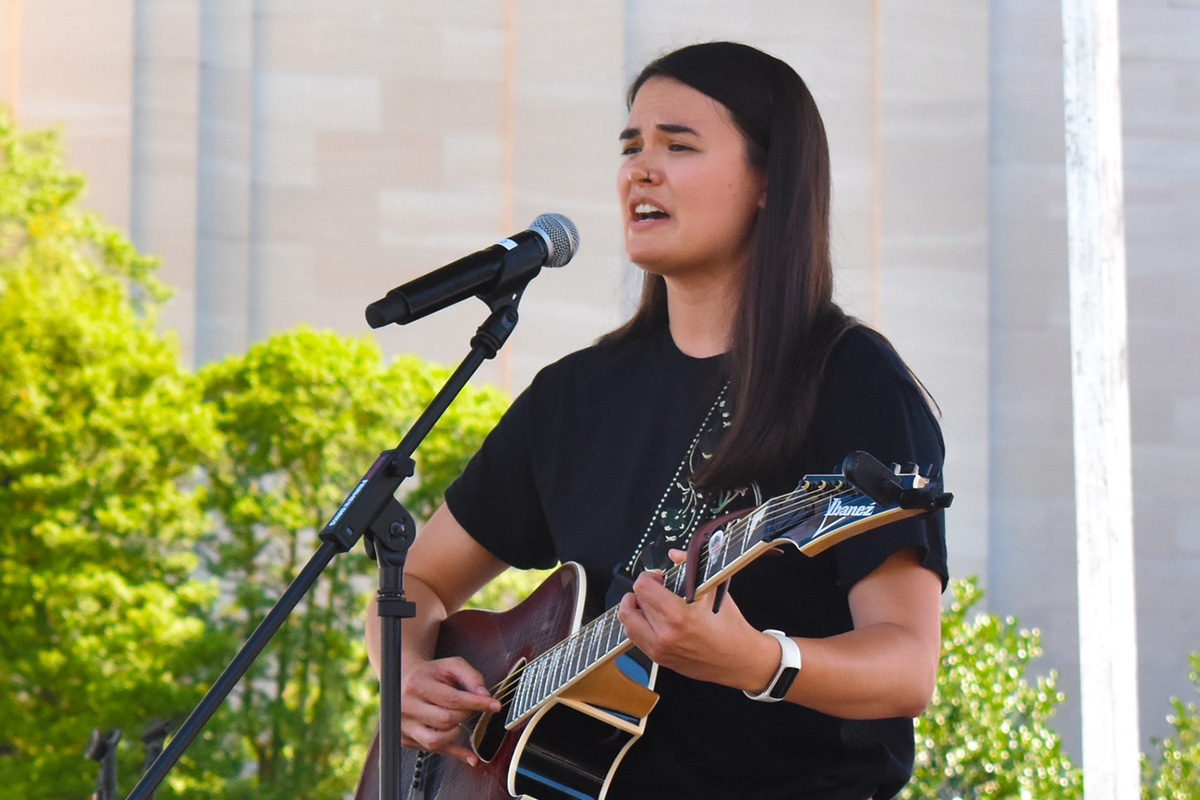
I had a chance to talk with Allison and Matt at Pride where Lily Erin, one of their signature artists, was performing on the Monument stage. Lily Erin is a folk singer who is familiar and forging her own path. Her bittersweet sound echoes through Acadia, and her garb mirrors the New England athletes I grew up with. Gorp Core meets streetwear. A graphic tee, hiking shorts, and creamsicle Jordans.
Her debut single, “Bus Stop,” tells a sad story about unconditional love, and the conditions that still seem to come with it. Graduating into lockdown, Erin needed a new way to connect with herself and others. Lily made “Bus Stop” without an intention to share it, but doing so was a liberation. People have been responding to her honesty around queer-ness, family, and the “ghosts which haunt us” even in the daytime.
Rainbows in Revolt has helped Lily Erin go from bars and backyards to The Monument Stage at Pride. This is a meteoric rise, and a testament to both Erin’s talent and the work of Rainbows to promote her. “A little encouragement goes a long way with early artists,” and by “planting a seed” Rainbows is already seeing their artist garden grow. Community is power, and Erin is a perfect example of how effective simple modern techniques of promotion can be.
A next step for Rainbows is putting on shows themselves. On Oct. 3, Rainbows in Revolt will host an Evening with Ray Boltz at the National City Christian Church. Boltz grew up in the Catholic Church and for many years was the soundtrack to many services, youth camps, and church groups. He was celebrated by millions until he came out in 2008. Allison remembers her community “never playing his music again.”
Rainbows in Revolt is helping him to return to the church, and proving that identity does not need to be exclusive. We live in a complicated world with complicated lines being drawn. Boltz proves that these lines don’t exist, and will be breaking down barriers to bring together communities. To Allison, “a trans woman standing next to a straight white man in church is a powerful teacher.”
The Safe Space maps bridge all types of spaces, and one of the unlikely ones is, perhaps, churches. Matt said that “BYU has only nine safe spaces around their campus and seven of them are churches.” Not all churches are anti-gay, and many times they are the only place for people to find community.
Rainbows in Revolt is just getting started bridging gaps and building community.

New book examines Trump cuts to LGBTQ healthcare

E-INFOSOL leaders encourage youth to pursue tech careers

Milo Yiannopoulos deported to UK

San Francisco, long a queer safe haven, remains competitive for homebuyers

For LGBTQ youth starting with nothing, Pride House in Florida offers help

Monument to LGBTQ Canadians officially unveiled

Dolly Parton dies at 80

Music icon and dear LGBTQ friend Dolly Parton remembered

New data shows record-high LGBTQ population amid Trump attacks