Connect with us

Politics

Rubio continues hold on gay black judicial nominee

Florida Republican only obstacle to advancing nomination
Published

on

Marco Rubio, 2012 Republican National Convention, Tampa, GOP, RNC, gay news, Washington Blade

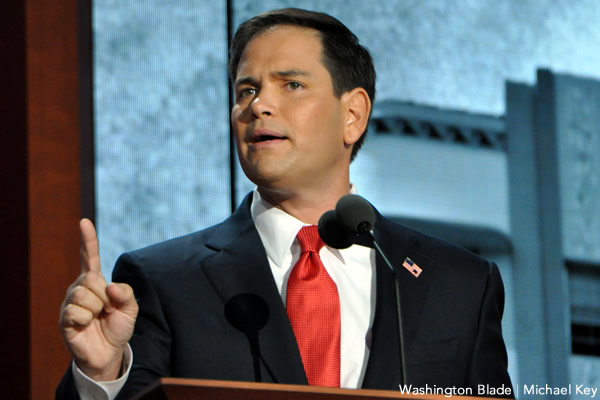
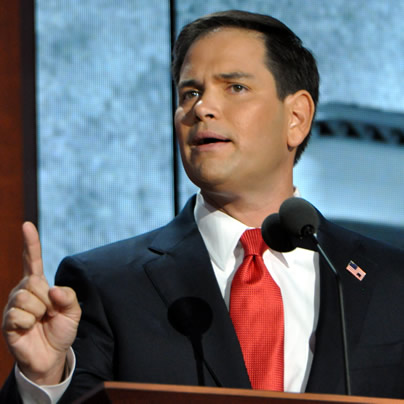
Sen. Marco Rubio is holding up the nomination of a gay black judicial nominee who’d be the first openly gay black male to serve on the federal bench. (Blade file photo by Michael Key).

LGBT groups are pressuring the Senate to push forward with the confirmation of the first openly gay black male to the federal bench now that a hold from Sen. Marco Rubio (R-Fla.) is the only hold up in the process.

The confirmation of William Thomas, whom President Obama first named in November for a seat on the U.S. District Court for the Southern District of Florida, was as of last week held up by both U.S. senators in Florida — Bill Nelson and Rubio — who had yet to return the “blue slips” for the nomination even though it had been pending for more than eight months.

But on Wednesday, following the publication of several media reports on the issue — including one from the Washington Blade — Nelson submitted the blue slips for the nomination, according to Senate sources familiar with the process. Dan McLaughlin, a Nelson spokesperson, confirmed the Florida Democrat had returned the blue slips for the nomination.

Nelson’s office had previously said the senator hadn’t submitted the blue slips because the Senate Judiciary Committee hadn’t yet completed the background investigation on the nomination.

Nelson’s lifting of his hold on the nominee means Rubio is now the only senator obstructing Thomas from proceeding through the confirmation process. Other judicial nominees renominated at the start of the 113th Congress have received confirmation, but no action has been taken on Thomas.

Rubio’s office didn’t respond to repeated requests from the Blade over the past two weeks to comment on why he continues to hold up the Thomas nomination. According to a report last week in the Tampa Bay Times, Rubio has concerns about Thomas’s involvement in a controversial case in which a man was given a sentence of just 364 days in jail for the hit-and-run death of a cyclist.

A judge is seeking to allay these concerns about Thomas in a letter to Rubio that was obtained by the Blade.

In the July 19 missive, Nushin Sayfie, administrative judge for the criminal division of the Eleventh Judicial Circuit in Florida, says the sentence Thomas gave in the case was within his guideline range. The name of the case, the victim and the defendant aren’t found in the letter.

Sayfie maintains that unlike what the media reported, the defendant wasn’t charged in the death of the victim, but “charged with leaving the scene of an accident (involving death).” Further, Sayfie said the defendant filed a motion for downward departure on the grounds that he suffered from a rare blood disease that placed him at risk of death during a prison sentence, but Thomas denied this motion.

According to Sayfie, Thomas sentenced the defendant to 23 months in state prison followed by two years of community control, but allowed him to finish the sentence locally to accommodate his medical condition.

“I hope this communication helps to answer some of the concerns you might have,” Sayfie concludes. “I have known Judge William Thomas as a colleague and friend for approximately nineteen (19) years. It was my pleasure to serve as a reference for him for the federal bench (and be interviewed at length by the ABA, the FBI and the White House Counsel’s Office!) He is a dedicated, intelligent and hard-working public servant.”

Thomas has experience both as a defense attorney and as a judge. He’s been a circuit judge in Florida’s 11th Judicial Circuit since 2005, where he has presided over both civil and criminal matters. Before that, he was an assistant federal public defender in the Southern District of Florida and represented indigent clients in federal criminal cases.

Rubio faced criticism last week from members of the Congressional Black Caucus for holding up both the Thomas confirmation and that of Brian Davis, another black judicial nominee who was nominated for a seat on the U.S. District Court for Middle District of Florida. The Gay & Lesbian Victory Fund also called for the Thomas nomination to move forward.

Rubio continues to hold up the Thomas nomination even though he and Nelson recommended Thomas for the seat following approval from Florida’s Federal Judicial Nominating Commission, which makes recommendations to the state’s senators.

But in the aftermath of Nelson lifting his hold, other LGBT groups stepped up the pressure for movement on the nomination when asked for comment by the Washington Blade.

Fred Sainz, vice president of communications for the Human Rights Campaign, is among those calling for Rubio to take action.

“He should return the blue slip and allow this well-qualified jurist to get confirmed by the U.S. Senate,” Sainz said. “The federal district court system is already backlogged. There’s no good reason why justice should be further delayed when Judge Thomas is ready, willing and able to serve.”

Sharon Lettman-Hicks, CEO of the National Black Justice Coalition, said as a Floridian for more than 25 years, she’s “disgusted” by Rubio’s lack of action on the Thomas nomination.

“By the accounts of Florida’s Federal Judicial Nominating Commission and even Senator Rubio, himself, Judge Thomas has been a principled jurist who would serve our nation with distinction on the federal bench,” Lettman-Hicks said. “Judge Thomas deserves a nomination process unobstructed by the malevolent politics of the right-wing agenda, and it is inexcusable that Senator Rubio would block the nomination of such a highly qualified and exemplary candidate, particularly at a time when our judicial system is hemorrhaging with a bevy of judicial vacancies in critical seats.”

No one has alleged discrimination based on sexual orientation as a reason for the holdup on the Thomas nomination, although the Congressional Black Caucus last week drew attention to the fact that Rubio was holding up two black judicial nominees.

Shin Inouye, a White House spokesperson, joined in the calls for movement on the Thomas nomination after being silent last week when both Florida senators were holding it up.

“The president nominated Judge William Thomas more than eight months ago,” Inouye said. “This judicial vacancy has been declared a ‘judicial emergency,’ and the non-partisan American Bar Association has rated Judge Thomas ‘well-qualified.’ Unfortunately, his nomination continues to be stalled, and the Senate should promptly consider it without further delay.”

Thomas would be the first openly gay black male to serve on the federal judiciary; U.S. District Judge Deborah Batts — who was appointed by President Clinton in 1994 — is black and a lesbian.

Advertisement
FUND LGBTQ JOURNALISM
SIGN UP FOR E-BLAST

2026 Midterm Elections

LGBTQ Victory Fund looks beyond Washington for change in 2026

Vice President of Political Programs Daniel Hernández spoke with Blade

Published

on

Former Arizona state Rep. Daniel Hernández, right, campaigning for Joe Biden in 2020. (Photo courtesy of Daniel Hernández)

As the Trump-Vance administration enters its second year, LGBTQ people from around the country are running for public office amid fears of the removal of federal civil rights laws that could lead to rollbacks in protections.

The Washington Blade sat down with Daniel Hernández Jr., the newly made vice president of political programs for the LGBTQ Victory Fund, a nonpartisan political action committee dedicated to electing openly LGBTQ individuals to all levels of government, to discuss why now is more important than ever to actualize LGBTQ political power.

Hernández is often credited with saving the life of then-U.S. Rep. Gabrielle Giffords (D-Ariz.) while working as her 20-year-old intern in Tucson, Ariz., in 2011. He served on the Pima County School Board and in the Arizona House of Representatives from 2017-2023, advocating for LGBTQ rights, healthcare access, and education.

Founded in 1991, the Victory Fund was created by a group of prominent LGBTQ political voices, including Dallas gay rights activist William Waybourn and former Human Rights Campaign Fund Executive Director Vic Basile, who were inspired by the success of EMILY’s List, a PAC that works to elect Democratic women to office.

Since its founding, the Victory Fund has worked with LGBTQ advocates and LGBTQ-supportive donors who recognized the need to prepare LGBTQ people to run for office nationwide.

When asked where LGBTQ people and allies need to focus looking ahead, Hernández emphasized that 2026 will be won or lost at the state and local level.

“One of the bigger things that people may not be paying as close attention to as we really should is the impact of state and local races. Federal races are crucial, obviously, but the folks who are actually able to have an impact in a meaningful way right now are not the people in the U.S. House or Senate,” Hernández said. “It can take years before a bill even moves through Congress. Meanwhile, state and local leaders are the ones standing up and fighting for our rights today. Especially during this Trump administration, that’s where the real action is happening.”

He expanded on that point, saying that at this moment in the U.S. political landscape, statewide races matter far more than they are often given credit for — particularly as 2026 is a midterm year under President Donald Trump. People who win elected office in midterm years, Hernández explained, are many times viewed as legislators pushing back against the administration at the top.

“Looking at 2026 in particular, because it’s a midterm year, people sometimes forget just how many critical statewide races are on the ballot. We have people like Chris Mayes in Arizona, who won by less than 300 votes in a battleground state and is now running for reelection,” he said. “These are the races that protect democracy and protect people’s rights in real time. If we ignore them, we’re doing so at our own peril. Statewide offices are where so much power actually lives.”

Hernández also urged LGBTQ voters and donors to think critically about where their time, money, and energy are going — particularly as resources remain limited heading into 2026 and not every race is winnable.

“I think one thing we don’t do enough as a community is pause and ask whether our resources are actually going where they can have an impact. If someone is running against a Republican in a plus-20 Republican state that hasn’t elected a Democrat in decades, do I really need to give my limited resources there? Or does it make more sense to support candidates in competitive states like Arizona or Wisconsin? In 2026, we have to be more strategic, because our resources are not unlimited. Winning matters.”

That calculation, Hernández said, also means moving away from what he described as emotionally driven donations and toward a more deliberate strategy.

“Our community is incredible at rallying when we’re angry, and I call that ‘rage giving.’ Someone awful is in office, a challenger pops up, and we all open our wallets. But what we really need to be doing is asking where that money will actually move the needle. In 2026, it’s not enough to feel good about donating — we have to make sure those donations help candidates who can realistically win. That’s how we protect LGBTQ rights long term.”

Asked how the Victory Fund determines which candidates receive endorsements — especially amid a growing field of openly LGBTQ contenders — Hernández emphasized that viability is central to the organization’s approach in 2026.

“One of the things we’re really focused on in 2026 is viability. We’re not endorsing people who have a zero-percent chance of winning. We’re looking at candidates who are running strong campaigns, who have plans, who are fundraising, and who are doing the work. That’s important because our community deserves guidance it can trust. When you see a Victory endorsement, it means we believe that candidate can actually win.”

Hernández also pushed back on the long-standing notion that being openly LGBTQ is a political liability — an argument that has resurfaced amid right-wing attacks on LGBTQ candidates.

“There’s been this long-standing perception that being LGBTQ is a liability and that it can cost Democrats elections. But when you actually look at the data, that just isn’t true. The reality is that being LGBTQ is not a risk — it’s often a strength. Voters care about roads, health care, affordability, and jobs, not fear-based caricatures. In 2026, we’re seeing more LGBTQ candidates than ever because people understand that now.”

That shift, he added, has helped reframe what LGBTQ candidates are actually campaigning on — despite efforts by conservatives to reduce them to culture-war issues.

“The so-called ‘gay agenda’ is not bathrooms. It’s making sure people have access to health care, that roads are safe, and that families can afford to live. LGBTQ candidates are talking about the same bread-and-butter issues as everyone else. That’s why the idea that LGBTQ candidates cost elections just doesn’t hold up. In fact, we’re seeing them lead on some of the most important issues facing voters right now.”

As misinformation and fear-based narratives continue to dominate right-wing messaging, Hernández said openly LGBTQ elected officials play a crucial role in countering those attacks — both through policy and presence.

“First and foremost, any elected official’s responsibility is to their constituents. That’s what we’re seeing from LGBTQ officials who are focused on affordability, health care access, and consumer protections while Republicans obsess over culture-war nonsense,” Hernández said. “But there’s also a responsibility to be authentic. Being honest about who you are and why you fight matters. That authenticity cuts through fear-based disinformation.”

Looking ahead to 2026, Hernández pointed to transgender elected officials as a particular source of momentum and optimism, even amid intensified political attacks.

“Our trans elected officials are honestly at the forefront of some of the biggest battles we’re facing right now. Despite relentless attacks and vilification, they are still delivering results for their communities. That tells me something incredibly powerful about where the country is headed. Even in this political climate, trans leaders are winning and governing. That gives me a lot of hope for 2026.”

Ultimately, Hernández said the stakes of the upcoming cycle extend far beyond a single election, shaping the future of LGBTQ political leadership nationwide.

“The leaders we elect at the state and local level today are the members of Congress and senators of tomorrow. People don’t just wake up one day and run for Congress — they come from city councils, state legislatures, and school boards. That’s why 2026 is so important. If we invest now, we’re not just defending our rights in the moment, we’re building the next generation of LGBTQ leadership.”

Victory Fund’s endorsed candidates

Incumbents Endorsed: January 2026

  • Helen Grant (they/them) – Norman City Council, Ward 4, Okla.
  • Louie Minor (he/him) – Bell County Commission, Precinct 4, Texas
  • Jonathan West (he/him) – Manchester Selectboard, Vt.
  • George Leach (he/him) – Court of Common Pleas, Franklin County Judge, Ohio
  • John Fredrickson (he/him) – Nebraska State Senate, District 20
  • Ben Bowman (he/him) – Oregon House of Representatives, District 25
  • Jeffrey Prang (he/him) – Los Angeles County Assessor, Calif.
  • Amie Carter (she/her) – Sonoma County Superintendent of Schools, Calif.
  • Elinor Levin (she/her) – Iowa House of Representatives, District 89
  • Ken Carlson (he/him) – Contra Costa County Supervisor, District 4, Calif.
  • Emma Pinter (she/her) – Adams County Commission, District 3, at-large, Colo.
  • Justin Chenette (he/him) – York County Commission, District 3, Maine
  • Kris Fair (he/him) – Maryland House of Delegates, District 3
  • Jennifer Cornell (she/her) – Ann Arbor City Council, Ward 5, Mich.
  • Darlene Martinez (she/her) – Constable, El Centro – Downtown Phoenix, Ariz.
  • Brian Garcia (he/him) – Arizona House of Representatives, District 8
  • Christian Phelps (he/him) – Wisconsin State Assembly, District 93
  • Jack Patrick Lewis (he/him) – Massachusetts House of Representatives, 7th Middlesex
  • Will Brownsberger (he/him) – Massachusetts State Senate, Suffolk and Middlesex Counties
  • Julian Cyr (he/him) – Massachusetts State Senate, Cape & Islands District
  • CM Hall (she/they) – Newport City Council, Ore.
  • Jimmy Mack (he/him) – Southampton Town Trustee, N.Y.
  • Michael Vargas (he/him) – Elk Grove USD Board of Education, Area 2, Calif.
  • Lisa Grafstein (she/her) – North Carolina State Senate
  • Hector Bustos (he/him) – Trustee, Santa Ana Unified School District, Calif.

Newly Endorsed Candidates – January 2026

  • Kirk McPike (he/him) – Virginia House of Delegates, District 5
  • Winn Decker (he/him) – North Carolina House of Representatives, District 37
  • Jonathan Lambert-Melton (he/him) – Wake Co. Board of Commissioners, At-Large, N.C.
  • Karen Stegman (she/her) – Orange County Board of Commissioners, At-Large, N.C.
  • Landon Campbell (he/him) – Hays County Criminal District Attorney, Texas
  • Christine Castillo (she/her) – Bexar County District Clerk, Texas
  • Nicholas “Nico” Costilla (he/him) – Hays County Clerk, Texas
  • Davis Mendoza Darusman (he/him) – Harris Co. Justice of the Peace, Pct. 5, Pl. 2, Texas
  • Nicholas Palmer (he/him) – Justice, Fifth Court of Appeals, Texas
  • José “Che-Che” Wilson (he/him) – Cook County Board of Commissioners, District 12, Ill.
  • Sarah Bury (she/her) – Metropolitan Water Reclamation District Board of Commissioners, Ill.

For more information of the LGBTQ Victory Fund’s endorsments, qualifications, or on how to register to receive an endorsement, visit the organization’s website at victoryfund.org

Continue Reading

Congress

New Equality Caucus vice chair endorses Equality Act, federal trans bill of rights

Salinas talks about her personal road to LGBTQ advocacy

Published

on

Rep. Andrea Salinas (D-Ore.) (Screen capture via Congresswoman Andrea Salinas/YouTube)

Rep. Andrea Salinas, the new vice chair of the Equality Caucus, sat down with the Blade to discuss the battles ahead as she demands protections for LGBTQ Americans.

Salinas is no stranger to government service. The daughter of a Mexican immigrant, she graduated from the University of California, Berkeley, and soon became a valued member of multiple Democratic offices — including working as a congressional aide to U.S. Sen. Harry Reid (D-Nev.) and U.S. Reps. Pete Stark (D-Calif.) and Darlene Hooley (D-Ore.). From there, she served six years in the Oregon House of Representatives before being elected to Congress, representing areas south of Salem and parts of southern Portland. With her new role in the Equality Caucus, Salinas vows to push protections for LGBTQ Americans in every room she enters.

The Washington Blade spoke with Salinas last week following her leadership announcement to discuss what the role means to her, why she — as a straight woman— feels it is her duty to fight for LGBTQ protections, and how she views the current state of the country.

When asked why she decided to take on a leadership role within the Equality Caucus, Salinas explained that she was already doing the work — but that the timing of the caucus’s outreach, coupled with what she described as a growing threat posed by the Trump-Vance administration, made the moment feel especially urgent.

“I was actually asked to take on this role because of the work I’ve already been doing. I didn’t seek out a title— the Congressional Equality Caucus came to me, and I was honored by that,” the Oregon representative told the Blade. “I’ve been a lifetime advocate, first as a mother and then as a legislator. With Trump back in office and the shackles off, kids are vulnerable right now, and they’re being attacked. We need champions, and with or without a title, I was going to do this work anyway.”

That work includes passing LGBTQ-related education policy during her time in the Oregon House of Representatives, requiring the Oregon Department of Education to train teachers on how to better support LGBTQ students. She also backed legislation aimed at preventing LGBTQ-related bullying and harassment, while using her platform to ensure educators had the skills needed to address trauma in the classroom. Salinas also pushed for Oregon’s 2013 conversion therapy ban and played a role in defending it.

Salinas said her personal motivation for expanding and protecting LGBTQ rights is rooted in the experiences of her daughter, Amelia.

“My daughter is queer, and she has known who she is since she was a child,” Salinas said. “She presents very masculine, and I’ve had to advocate for her her entire life — from whispers on soccer sidelines to fears about using the bathroom when she was just three or four years old. That kind of bullying and harassment stays with you as a parent. It became part of who I am, part of my ‘mama bear’ advocacy. When I entered public office, continuing that fight was the most natural thing in the world.”

That “mama bear” advocacy, she said, now extends far beyond her own family.

“Across this country, kids are vulnerable right now, and Trump is attacking them,” she said. “My daughter was devastated after the 2024 election— she said, ‘They’re coming after us,’ and she was right. That fear is real, especially for transgender youth. Civil rights should be expanding, not being stripped away from certain communities. That’s why this fight feels so urgent.”

Since returning to the White House in 2024, the Trump administration has moved to roll back anti-discrimination protections, particularly those affecting transgender people. These efforts include barring transgender people from serving openly in the military, blocking access to gender-affirming medical care in federal health programs, challenging state laws that protect transgender students on religious grounds, and arguing that the Constitution entitles employers to discriminate against LGBTQ people based on religious beliefs — even in states with nondiscrimination laws.

For Salinas, the Equality Caucus’s most urgent task under the Trump-Vance administration is advancing what she called a long-sought but non-negotiable priority: the Equality Act.

The Equality Act would add explicit protections based on sexual orientation and gender identity to federal law. Despite more than five decades of debate on Capitol Hill, no version of the bill has yet become law.

“We have to keep pushing the Equality Act— there’s no way around that. No one should be discriminated against in housing, employment, credit, or healthcare because of who they are,” Salinas said. “Republicans are making LGBTQ identity a political wedge because they think it’s expedient, and that’s unacceptable. Sexual orientation and gender identity should not matter in determining someone’s access to opportunity. Yet here we are, still having to fight for that basic principle.”

Salinas added that advancing legislation like the Equality Act requires compassion— even when that compassion is not returned— and a commitment to education.

“We have to meet people where they are— Democrats, Republicans, independents, all of them. Until you know a family, or understand someone’s lived experience, it can feel abstract and overwhelming,” she said. “Education, compassion, and empathy are essential to moving the dial. When people understand this is about human rights, not politics, conversations start to change. That’s how we build broader support.”

She also emphasized the need for a federal transgender bill of rights, which would provide explicit protections for transgender Americans amid what she described as an increasingly hostile federal environment.

“A transgender bill of rights would clarify that discrimination against transgender and nonbinary people is illegal — in employment, housing, credit, and healthcare,” Salinas said. “What’s happening right now, with efforts to criminalize doctors for providing evidence-based care, is unheard of and dangerous. We also need to ban conversion therapy nationwide, because states are increasingly trying to undo those protections through the courts. These safeguards are about ensuring people can live safely and with dignity. That should not be controversial.”

Mental health is another central focus of Salinas’s work. She said ensuring children have access to support— particularly LGBTQ youth— is critical to their long-term wellbeing.

After the Trump administration eliminated the LGBTQ-specific option from the 988 Suicide and Crisis Lifeline, Salinas said her reaction was one of outrage.

“When Trump shut down the 988 press-three option for LGBTQ youth, I was apoplectic,” she said. “It is one of the simplest, most upstream ways to save lives, and it felt arbitrary, cruel, and inhumane. We know the suicide risk among transgender youth is far higher than among non-LGBTQ kids. Connecting them with someone who understands their experience can be life-saving. This should be bipartisan, and I’m going to keep pushing to restore it.”

“You cannot be what you cannot see….” she added while reflecting on the handful of LGBTQ leaders who have— and continue to— navigate the halls of Congress to protect their community. “When Sarah McBride was elected, my daughter met with her and walked out glowing… joyful, hopeful, and excited about the future. That kind of representation changes lives. Electing LGBTQ leaders changes the trajectory for people across the country. Grassroots organizing and electoral power go hand in hand, and we need both.”

With Salinas’s experience in both the Oregon House of Representatives and the U.S. House of Representatives, she said that while one arena may reach more people, change often begins locally, especially when combating anti-LGBTQ attacks.

“I’ve seen how misinformation fuels fear at the local level— whether it’s school board fights or bathroom debates rooted in baseless claims. There is no data to support these scare tactics,” she said, echoing her past work with the Oregon Department of Education. “What actually helps is facts, education, and training teachers to better support LGBTQ students. I passed legislation in Oregon to give educators real tools to prevent bullying and harassment. That kind of work matters just as much as what we do in Congress.”

Despite just being named vice chair of the Equality Caucus, the Blade asked Salinas what legacy she hopes to leave, particularly when it comes to LGBTQ advocacy.

“I want people to be able to live authentically, without fear from their government or their neighbors. That means passing real legislation— the Equality Act and a transgender bill of rights— so protections are not dependent on who’s in power. Civil and human rights are meant to expand, not contract.

“I’ve been doing this work since I became a mother, and I’ll keep doing it for as long as it takes. My daughter deserves it, and so does every LGBTQ person in this country.”

Continue Reading

Congress

McBride, other US lawmakers travel to Denmark

Trump’s demand for Greenland’s annexation overshadowed trip

Published

on

U.S. Rep. Sarah McBride (D-Del.) is among the U.S. lawmakers who traveled to Denmark over the past weekend. (Washington Blade photo by Michael Key)

Delaware Congresswoman Sarah McBride is among the 11 members of Congress who traveled to Denmark over the past weekend amid President Donald Trump’s continued calls for the U.S. to take control of Greenland.

McBride, the first openly transgender person elected to Congress, traveled to Copenhagen, the Danish capital, with U.S. Sens. Chris Coons (D-Del.), Thom Tillis (R-N.C.), Jeanne Shaheen (D-N.H.), Dick Durbin (D-Ill.), and Lisa Murkowski (R-Alaska) and U.S. Reps. Steny Hoyer (D-Md.), Gregory Meeks (D-N.Y.), Madeleine Dean (D-Pa.), Don Bacon (R-Neb.), and Sarah Jacobs (D-Calif.). The lawmakers met with Danish Prime Minister Mette Frederiksen and Greenlandic MP Pipaluk Lynge, among others.

“I’m grateful to Sen. Coons for his leadership in bringing together a bipartisan, bicameral delegation to reaffirm our support in Congress for our NATO ally, Denmark,” said McBride in a press release that detailed the trip. “Delaware understands that our security and prosperity depend on strong partnerships rooted in mutual respect, sovereignty, and self-determination. At a time of growing global instability, this trip could not be more poignant.”

Greenland is a self-governing territory of Denmark with a population of less than 60,000 people. Trump maintains the U.S. needs to control the mineral-rich island in the Arctic Ocean between Europe and North America because of national security.

The Associated Press notes thousands of people on Saturday in Nuuk, the Greenlandic capital, protested against Trump. British Prime Minister Keir Starmer is among those who have criticized Trump over his suggestion the U.S. would impose tariffs against countries that do not support U.S. annexation of Greenland.  

A poll that Sermitsiaq, a Greenlandic newspaper, and Berlingske, a Danish newspaper, commissioned last January indicates 85 percent do not want Greenland to become part of the U.S. The pro-independence Demokraatit party won parliamentary elections that took place on March 12, 2025.

“At this critical juncture for our countries, our message was clear as members of Congress: we value the U.S.-Denmark partnership, the NATO alliance, and the right of Greenlanders to self-determination,” said McBride on Sunday in a Facebook post that contained pictures of her and her fellow lawmakers meeting with their Danish and Greenlandic counterparts.

Continue Reading

Popular