News
Obama tries again: 2nd gay black man named to fed’l bench
Gayles named for seat on federal bench in Florida
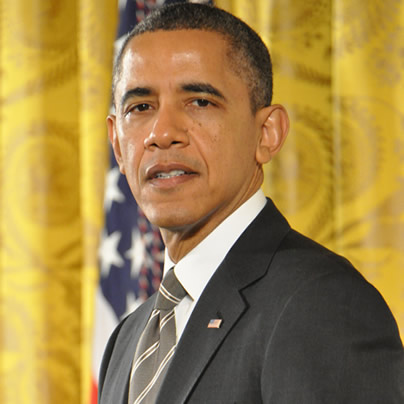
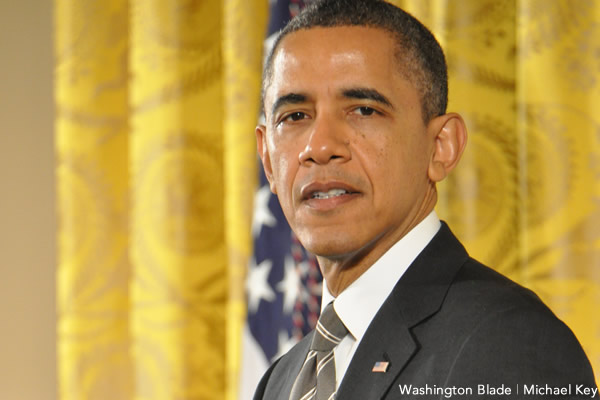
President Obama nominated a gay black judge to serve on federal court (Washington Blade file photo by Michael Key).
After his earlier attempt at appointing a gay black male judge to the federal bench was thwarted by Sen. Marco Rubio (R-Fla.), President Obama on Wednesday announced he’s making another effort with a different nominee in the same court.
Obama named Darrin Gayles, who currently serves as a Miami-Dade Circuit Judge in Florida, as part of a group of four nominees for a seat on the U.S. District Court for the Southern District of Florida.
“Throughout their careers, these distinguished men and women have demonstrated a steadfast commitment to public service,” Obama said in a statement. “I am confident they will serve the American people with distinction from the District Court bench.”
If confirmed by the Senate, Gayles would be the first gay black male to serve on the federal bench. (Deborah Batts, confirmed to the federal bench in 1994 and the first-ever out person to sit on the federal judiciary, is also black.)
Steven Thai, a spokesperson for the Gay & Lesbian Victory Institute, praised Obama for nominating Gayles.
“We commend the administration for nominating a qualified jurist who will also add diversity to the federal bench,” Thai said. “If confirmed, Judge Gayles will be the nation’s first black, openly gay federal judge, and he will reflect the talent and commitment that exists in communities that are underrepresented in public service.”
According to a White House bio, Gayles has served as a circuit judge in Florida state court since 2011. He was among the candidates endorsed by the Gay & Lesbian Victory Fund in 2012.
Before that, Gayles was a county judge since 2004. He’s also served as an assistant U.S. attorney for the Southern District of Florida, an assistant district counsel at the U.S. Immigration & Naturalization Service and an assistant state attorney.
Gayles received his law degree in 1993 from George Washington University Law School and his bachelor’s degree in 1990 from Howard University.
In November 2012, Obama made an attempt to appoint a gay black judge to the federal judiciary by naming Miami-Dade Circuit Judge William Thomas to federal court in Florida, but the nomination never even saw a hearing.
Rubio, who had initially recommended the Thomas nomination, refused to hand in his “blue slip” as one of his home-state senators to start the process of confirmation, objecting to Thomas’ temperament when presiding over two different cases.
Although lawyers involved in the case said he acted appropriately, Rubio refused to allow the nominee to proceed. At the start of the year, Obama didn’t include Thomas’ name among the 200 nominees that were renamed, and the White House said Thomas wouldn’t be named again.
In a statement, Rubio said he’s happy with each of the four judicial nominees that Obama named on Wednesday, which would include Gayles, but said he wished the White House would have acted in more bipartisan manner.
“I welcome today’s four nominations to the district courts in Florida,” Rubio said. “As I previously indicated to the president, I do not anticipate having an objection to moving forward on any of these nominations pending the outcome of the customary background check conducted on every nominee. I am disappointed, however that given the opportunity to fill four vacancies on the court, the White House has declined to nominate any of the Republican finalists jointly suggested by Sen. Nelson and myself.”
Alex Conant, a Rubio spokesperson, said Gayles was on a list of potential nominees that Rubio’s office told the White House would be acceptable.
Ryan Brown, a spokesperson for Sen. Bill Nelson (D-Fla.), said Gayles was among the potential nominees the Florida Democrat sent to the president.
Obama has also named Staci Michelle Yandle, a black lesbian, for a seat on the U.S. District Court for the Southern District of Illinois. Her nomination is pending before the Senate Judiciary Committee.
D’Arcy Kemnitz, president of the LGBT Bar Association, said Gayles’ nomination “deserves prompt consideration” by the Senate.
“Darrin Gayles is admired and well-respected throughout the profession,” Kemnitz said. “Our judiciary should never be politicized, and any attempt to delay or derail his nomination because of animus or discriminatory political views would be unacceptable.”


Hungary
New Hungarian government to scrap anti-LGBTQ adoption law
Prime Minister Peter Maygar ousted Viktor Orbán in April
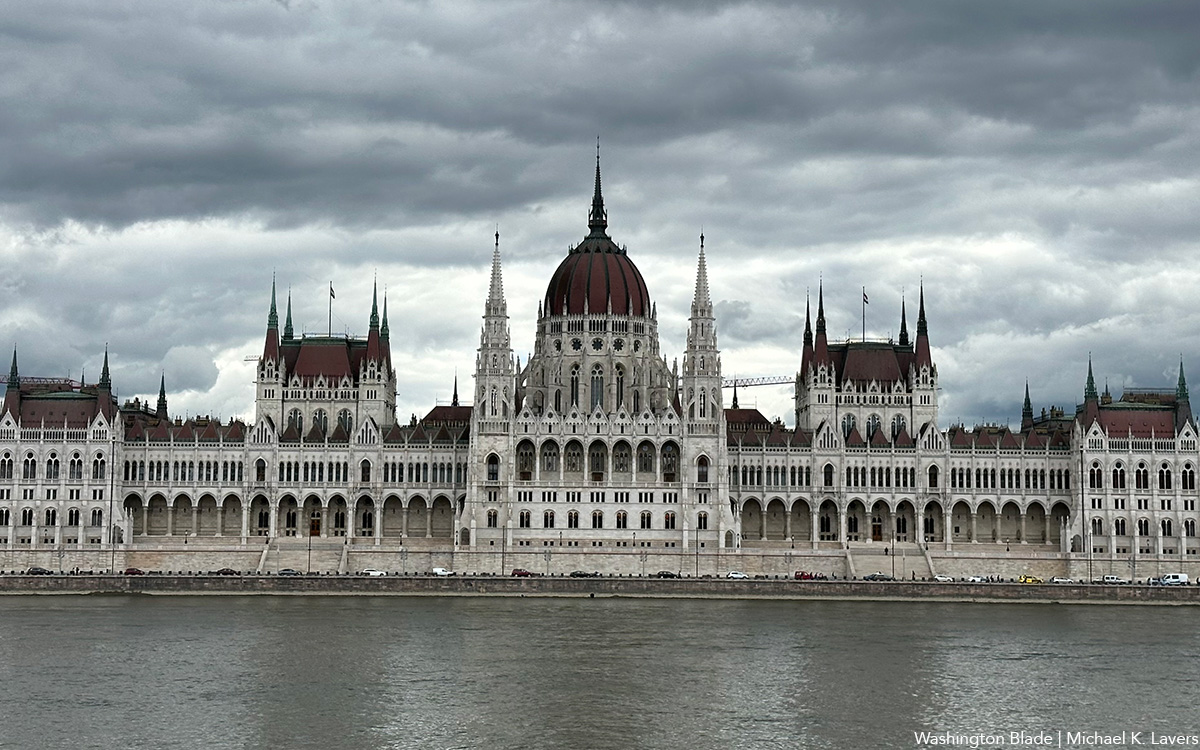
Hungarian Prime Minister Peter Maygar has said his government will amend a law that essentially bans same-sex couples from adopting children.
Lawmakers approved the effective adoption ban in 2020, when then-Prime Minister Viktor Orbán’s government was in power. Maygar announced plans to amend the law on Saturday when he was speaking to supporters in Budapest, the Hungarian capital.
Orbán and his government faced widespread criticism over its anti-LGBTQ crackdown that also included laws banning Pride events.
Maygar in April ousted Orbán in Hungary’s elections.
Baltimore
Transgender woman killed in Barclay community mourned by friends, advocates
Sophie Lee shot to death on Friday morning

By DARREONNA DAVIS | Denise Johnson imagined spending Sunday with her daughter, Sophie Lee, eating crabs at the park. Instead, she stood on a Barclay street corner Sunday evening surrounded by nearly 100 people who came to remember her daughter, a transgender woman who was fatally shot there Friday.
The 27-year-old woman was found in the 2400 block of North Calvert Street around 1:15 a.m. Friday, Baltimore Police said in a news release.
Lindsey Eldridge, a police department spokesperson, said it’s unclear if her identity had anything to do with her death and the investigation is ongoing.
The rest of this article can be read on the Baltimore Banner’s website.
Turkey
Dozens detained after Turkish authorities raid LGBTQ groups, businesses
Raids targeted gay bars, activists’ homes
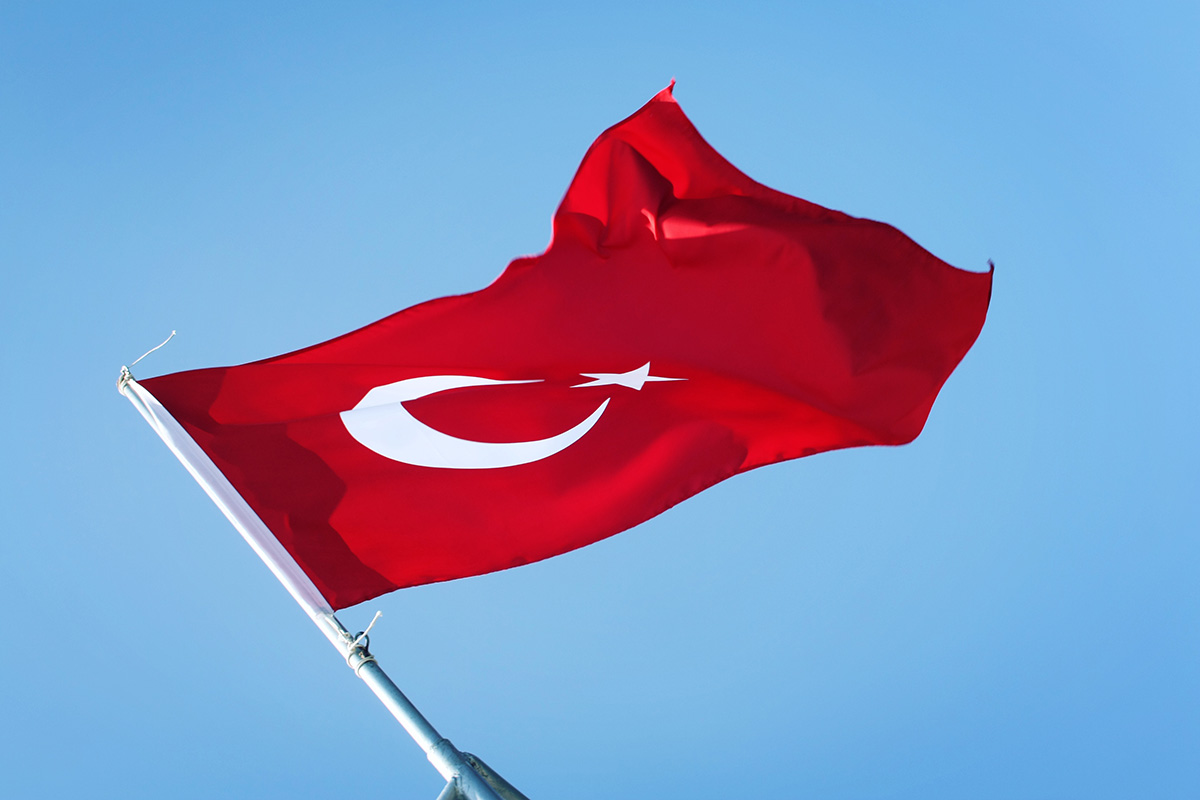
Authorities in Turkey over the weekend detained dozens of people during raids they carried out against gay bars and LGBTQ activists’ homes across the country.
The BBC reported the raids were part of the government’s “My Family is Safe” campaign.
A statement from a group of Turkish advocacy groups the Washington Blade received on Sunday noted Justice Minister Akın Gürlek said the operation included “162 individuals, nine associations, and 13 businesses across 15 provinces.” Prosecutors in Istanbul, Ankara, Izmir, Aydın, and Mersin are coordinating the campaign.
Kaos GL, one of the country’s largest advocacy groups, was among the targets.
“The authorities have referred to allegations including ‘obscenity,’ ‘facilitating prostitution or providing premises for prostitution,’ exposure of children to allegedly obscene content, drug-related offenses, and other morality-related offenses,” reads the press release the Blade received. “Information from the field indicates that additional allegations, including forming a criminal organization, may appear in some investigation files.”
“The reported inclusion of the offense of “establishing an organization for the purpose of committing crimes” under Article 220 of the Turkish Criminal Code is particularly alarming and, if confirmed, would mark a significant escalation in the criminalization of LGBTI+ human rights activism,” it added. “While LGBTI+ activists and organizations have recently faced and continue to face investigations and prosecutions on grounds such as ‘obscenity’ and alleged violations of the Law on Associations, the use of an organized-crime allegation represents a qualitatively more serious threshold, both in terms of the gravity of the accusation and the potential penalties involved.”
Turkish authorities under President Recep Tayyip Erdoğan’s government over the last decade have cracked down on LGBTQ and intersex activists in the country.
Police in 2015 used tear gas and water cannons against people who were about to participate in an Istanbul Pride march. Authorities in 2017 arrested nearly two dozen people who defied a ban on Pride events in the city.
Police in Ankara, the Turkish capital, in 2019, arrested 18 students and an academic who participated in a Pride march at the Middle East Technical University. They faced up to three years in prison, but a court in 2021 acquitted them. Police in 2022 violently broke up a Pride parade at the same Ankara university.
Turkish authorities in July refused to allow a gay cruise ship — the Scarlet Lady, a Virgin Voyage vessel that Atlantis Events chartered — to dock in Kusadasi, a resort town on the Aegean Sea.
Kusadasi is in Aydın Province, one of the provinces in which authorities conducted the raids. Turkish officials also refused to allow the Scarlet Lady to dock in Istanbul.
A Turkish source on Sunday told the Blade the “My Family is Safe” operation began on the 46th anniversary of a military coup that toppled the country’s government in 1980.
“The fact that this operation began on the night of Sept. 12 — the 46th anniversary of the 1980 coup — is highly significant in terms of the foundations of the prohibitive and repressive mindset directed at the LGBTI+ community,” they said. “Moreover, many LGBTI+ organizations had been subject to official inspections last week.”
“Conducting this operation on a Saturday night shortly thereafter also serves the purpose of heightening fear and anxiety within the community,” added the source.
The source asked the Blade not to reveal their identity.
ILGA-Europe in a statement described the raids as “the systematic dismantling of LGBTI civil society.” Paris Mayor Emmanuel Grégoire is among the European officials who have publicly condemned them.
The Blade will update this story with additional details as they become available.

New Hungarian government to scrap anti-LGBTQ adoption law

Fashion icon Bob Mackie dead at 87

Transgender woman killed in Barclay community mourned by friends, advocates

Dozens detained after Turkish authorities raid LGBTQ groups, businesses

PHOTOS: SMYAL Fall Brunch

How Dolly became a folk saint for Appalachian queers

Remembering the LGBTQ heroes of 9/11 terrorist attacks

Report: 90 percent of LGBTQ groups around the world have lost funding since 2025

Historiography with heart