District of Columbia
D.C. man convicted of assaulting gay man sentenced to 18 months
Judge rejects defense claim that victim provoked attack near Logan Circle
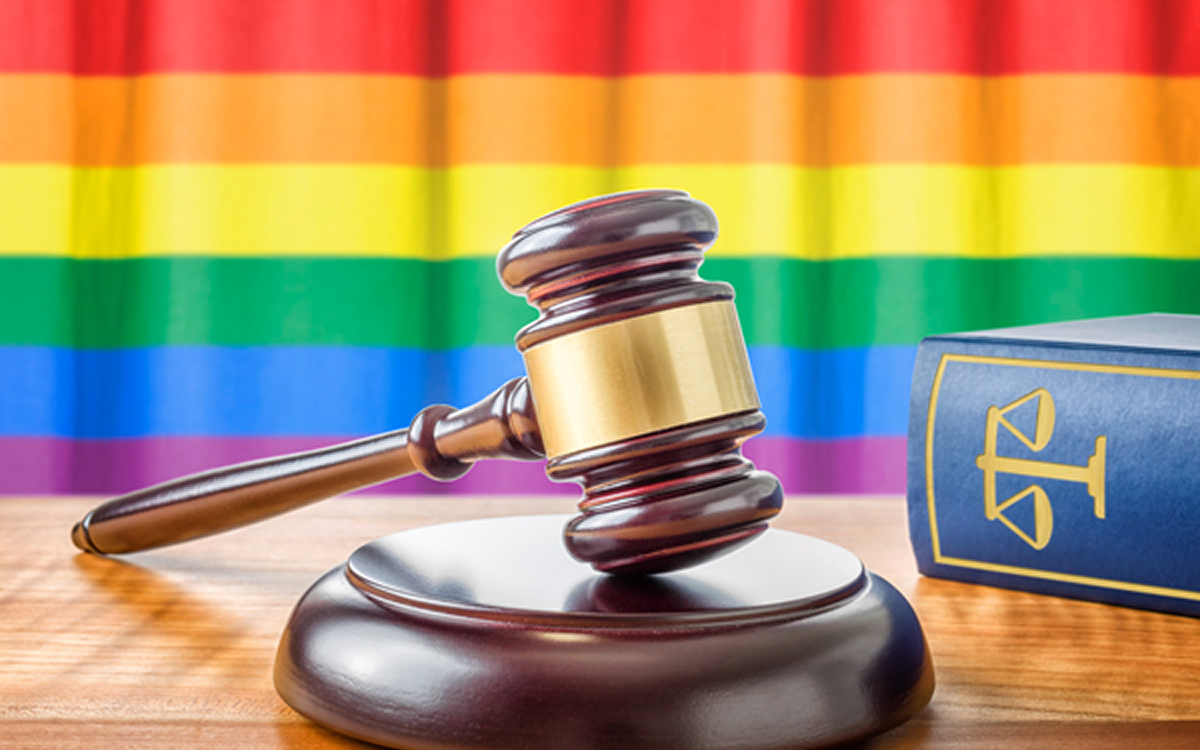
A D.C. Superior Court judge on Tuesday handed down a sentence of 18 months of incarceration for a man convicted of Assault with Significant Bodily Injury for fracturing the nose and breaking several teeth of a gay man while shouting anti-gay slurs during a May 2022 attack near Logan Circle.
Judge Lynn Leibovitz also sentenced the man charged in the case, D.C. resident Anthony Duncan, 42, to three years of supervised release after he completes his prison term and ordered him to pay a fine of $100 for the Victim of Violent Crime Compensation Act program.
Court records show Leibovitz gave Duncan until May 9, 2025, to pay the fine.
The sentencing took place two and a half months after a Superior Court jury on Feb. 27, at the conclusion of Duncan’s trial, found him guilty of the assault charge but not guilty of committing the assault as a hate crime based on the victim’s sexual orientation.
During the May 9 sentencing hearing, Assistant U.S. Attorney Jared English, the lead prosecutor in the case, pointed to charging documents alleging that the attack against the victim was unprovoked and was clearly linked to Duncan’s display of hatred toward the victim based on his perceived sexual orientation.
In a written sentencing memorandum that English filed in court, the prosecutor pointed out that under legal precedent, the judge could still take into consideration Duncan’s homophobic action in considering the sentence, even though a jury acquitted him on the charge of committing a hate crime.
An arrest affidavit filed by police and prosecutors at the time of Duncan’s arrest says the victim “was wearing a Stonewall Bocce shirt, which is a well-known LGBTQ sports league” at the time Duncan allegedly confronted him as the two men crossed paths while walking along 15th Street, N.W., at the intersection of V Street at about 4:50 p.m. on May 21, 2022.
Charging documents say Duncan allegedly punched the victim in the face and head, fracturing the victim’s nose in several places and breaking three of the victim’s teeth while shouting the words “fag” and “faggot.” He was taken by ambulance to a hospital for emergency treatment, court records show.
Quo Mieko Judkins, Duncan’s attorney, argued during the sentencing hearing that Duncan became angry during the incident, which she says Duncan believes was a fight, when the victim allegedly touched himself in a way that Duncan interpreted as a provocation.
Police charging documents quote Duncan as claiming at the time of his arrest that the victim “grabbed his nuts at me,” which police interpreted to mean he accused the victim of making a sexual gesture toward him.
The charging documents say the victim strongly disputed that assertion, saying he attempted to walk away from Duncan after Duncan began calling him a “faggot” and punched him in the back of his head.
In a development that LGBTQ activists have said further confirmed Duncan’s hostile motive, the charging documents say Duncan used his phone to make a video recording of his assault of the victim, which police obtained and used as evidence. One of the charging documents says Duncan can be heard on the recording yelling the word “fag” as he assaulted the victim.
Judkins asked Leibovitz to hand down a sentence that did not include incarceration or a sentence of 180 days at most. She said Duncan had a troubled childhood that led to some earlier convictions, as English pointed out, but that since the time of his arrest in this case he has started his own business with a working website. He is productive in his community, Judkins said.
“The defendant was offended by a gesture of the complainant,” Judkins told the judge. “This was not completely unprovoked,” she said. “There was something that set this off. I’m not saying this was right,” Judkins argued.
Leibovitz disputed that argument before handing down her sentence. She said it was “not reasonable” for Duncan to have punched the victim with a metal object in his hand, referring to charging documents that said Duncan was holding a metal object at the time of the attack.
“He made angry, homophobic statements,” Leibovitz said, adding that the victim may have adjusted his pants in the area of his private parts, but that did not justify Duncan committing an assault.
“This was unprovoked,” Leibovitz said.
Duncan had been released pending his trial and sentencing shortly after the time he was arrested.
Immediately after Leibovitz handed down her sentence of 18 months incarceration at Tuesday’s sentencing hearing, two U.S. Marshals placed Duncan in handcuffs and escorted him out of the courtroom as his sentence was to begin at that time.
Before handing down her sentence, Leibovitz said she had read a community impact statement submitted by the victim, who did not attend the sentencing hearing, and an impact statement by at least one LGBTQ organization, the D.C. Advisory Neighborhood Commissions’ Rainbow Caucus, which consists of LGBTQ ANC commissioners.
“The effect this case has had on the LGBT community in the District of Columbia cannot be understated — rising violence scares all Washingtonians, but attacks against LGBT individuals scares other LGBT people even more so,” the Rainbow Caucus impact statement says.
“In this particular case, the assailant recorded his crime for future purposes — including possibly celebrating it publicly and taunting and terrorizing other gay people,” the statement continues.
“Your Honor, calling someone homophobic slurs is one thing and it is something that all LGBT individuals experience,” the statement says, adding that going on to break the victim’s nose and three of his teeth “takes this crime to an entirely new and terrifying level for our community.”
It calls on Leibovitz to “take the fears of the broader LGBT community into account in sentencing and acknowledging this attack’s impact not just on the victim, but on his entire community.”

District of Columbia
Over 2,000 turn out for Hands Around the Kennedy Center protest
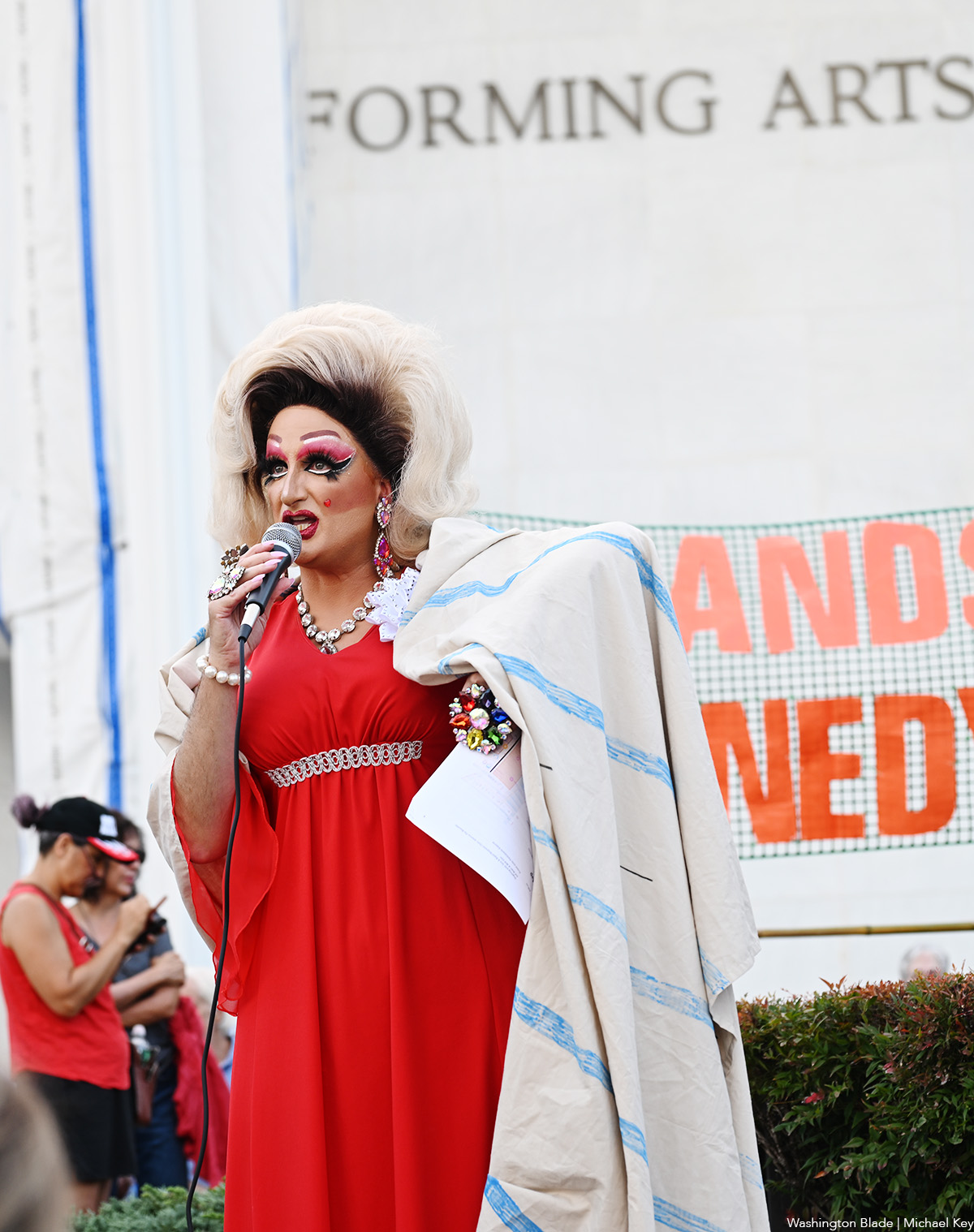
Drag performer Tara Hoot serves as MC, Gay Men’s Chorus of DC performs, attendees shout for Trump to keep ‘hands off’ Kennedy Center
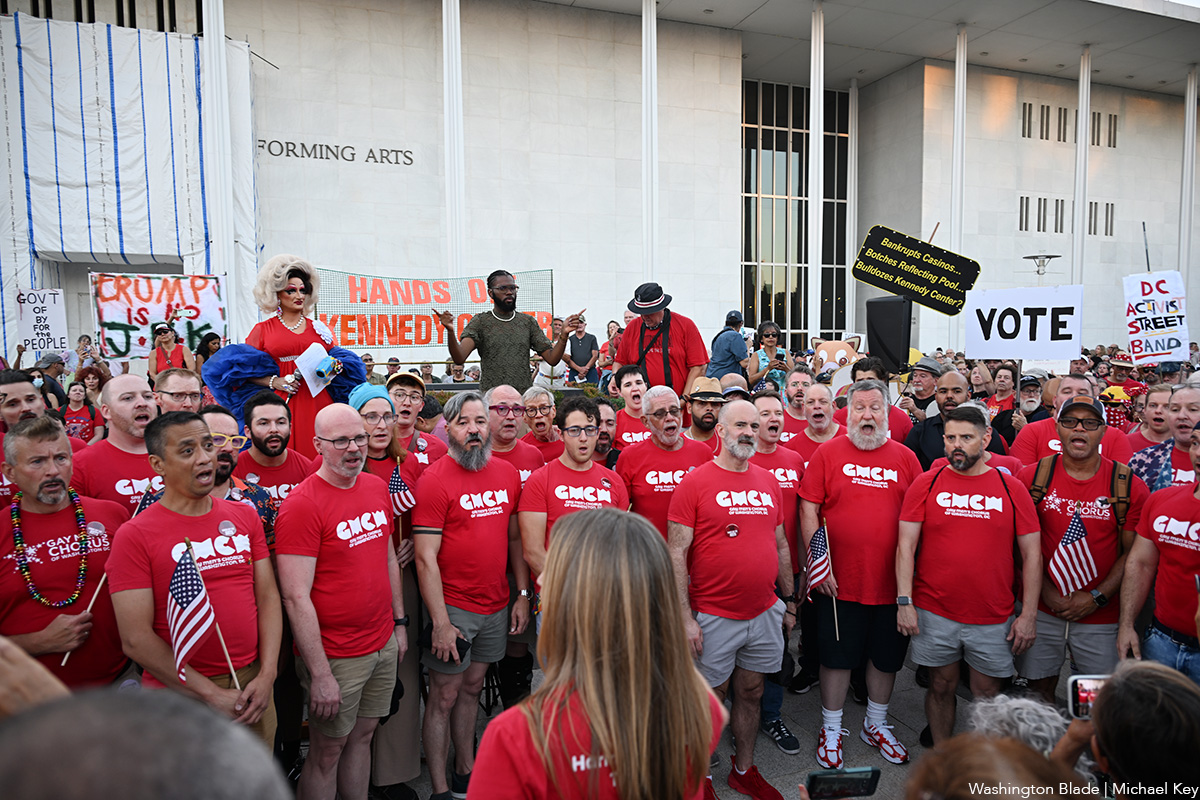
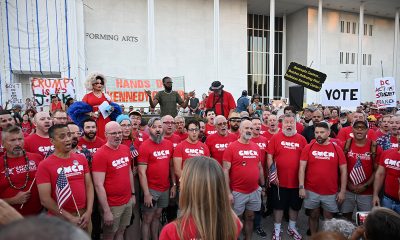
More than 2,000 supporters of the John F. Kennedy Center for the Performing Arts turned out on Sept. 18, for a rally in support of the performing arts center and a vocal protest against President Donald Trump’s threats to permanently close the center and possibly demolish it.
The event was organized by a group called Hands Off the Arts, which initially called for participants to form a “human chain” around the Kennedy Center’s main building following a rally on the plaza in front of the building.
However, due to a decision by the Trump-controlled Kennedy Center’s board of trustees to close the center earlier in the week and install fencing around part of the building, participants could only form the chain around part of the building, according to organizers.
Drag performer Tara Hoot, who co-organized the event and served as master of ceremonies for the rally preceding the “human chain,” said the large turnout could have fully surrounded the building at least twice had the fencing not prevented a full encirclement.
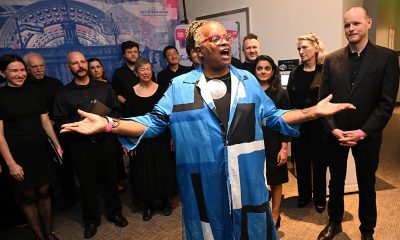
Among the musicians and singing groups that performed at the rally was the Gay Men’s Chorus of Washington, which, like other rally performers, had performed at the Kennedy Center in past years. They drew loud applause after singing one of their favorite songs from the Broadway musical show Ragtime, which includes the lyrics, “Will justice be demanded by 10 million men? Make them hear you. When they hear you, I’ll be near you again.”
View on Threads
Prior to their performance, Gay Men’s Chorus of Washington’s artistic director, Thea Kano, spoke at the rally, reminding participants that shortly after the Trump takeover of the center last year, Kennedy Center officials cancelled a concert the chorus was scheduled to perform there for World Pride 2025.
A Kennedy Center spokesperson said the cancellation was due to a scheduling conflict, but chorus members and LGBTQ activists believe it resulted from policies put in place by Trump and his leadership team at the Kennedy Center following Trump’s statements that he would end controversial “woke” performances that he claimed the majority of Americans disapprove of.
“Now this building sits empty in silence,” Kano told the crowd at the rally. “Let us raise our voices together and bring back the Kennedy Center as it was intended, a place where American culture could be celebrated and elevated, embracing the vibrancy with the spectrum of identify without censure and without politics,” she said.
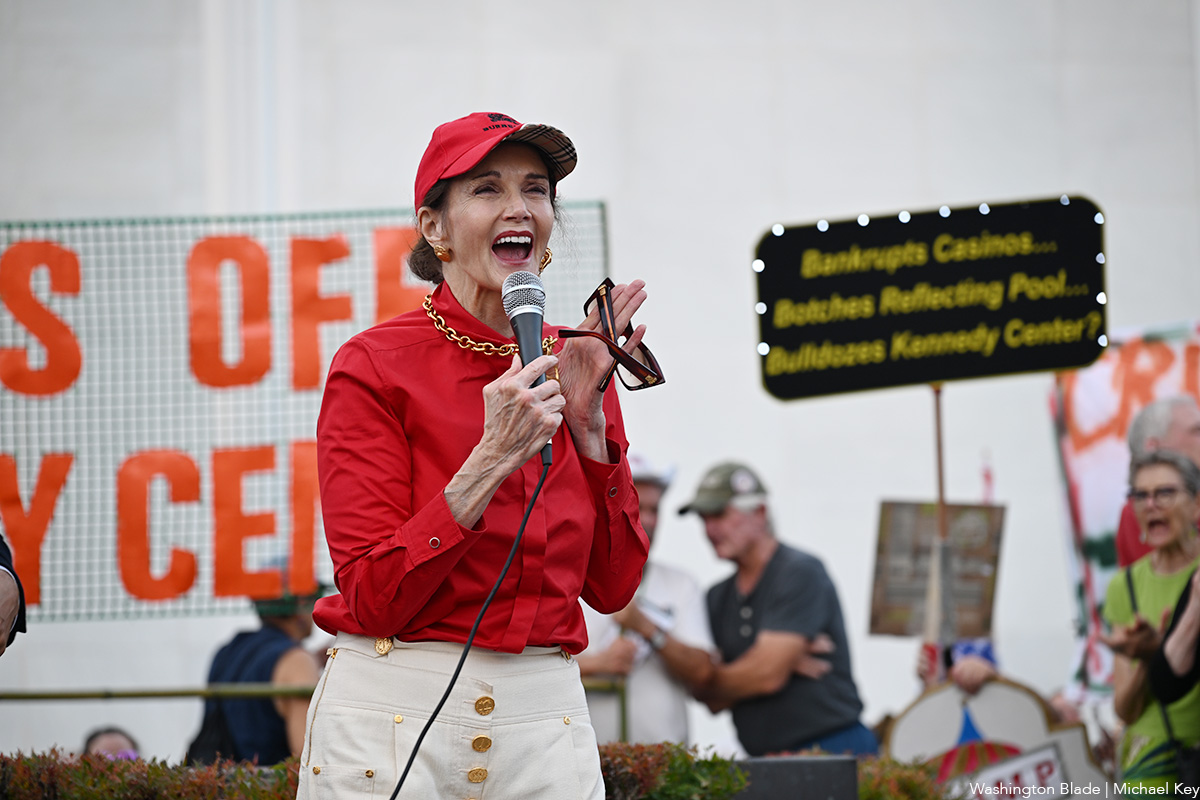
Among the others who spoke at the rally were U.S. Rep. Don Beyer (D-Va.), U.S. Rep. Jonathan Jackson (D-Ill.), and D.C. Councilmember Robert White (D-At-Large).
Most speakers, along with LGBTQ participants in the hands-around-the-building event expressed strong opposition to Trump’s demand that the Kennedy Center name be changed from the John F. Kennedy Center for the Performing Arts to the Donald J. Trump and the John F. Kennedy Center for the Performing Arts.
At Trump’s request, his appointed board initially made that name change and placed Trump’s name on the front wall of the building along with the Kennedy name. But following legal action taken by opponents who pointed out that Congress must approve such a name change, a judge ordered the removal of Trump’s name from the building. Trump has said he will take steps to reverse that order and has said he will stop plans to renovate the Kennedy Center building and possibly demolish it if his name is not restored in the Kennedy’s Center’s official name.
Throughout the Sept. 18 rally, LGBTQ participants repeatedly responded to the Trump threats by shouting, “Hands Off!”
Chris Raleigh, one of the founders of Hands Off the Arts and a lead organizer of the Sept. 18 event at the Kennedy Center who spoke at the event told the Washington Blade that more similar events are being planned and he welcomes the support the event has received from the LGBTQ community.
“The LGBTQ community was here first, and we’re following them,” he said. “They’ve been the spearhead; they’ve been the vanguard. And I’m so thankful for heroes like Tara Hoot,” he said, adding, “It’s because they know what it means and how this is a safe place – the theater – for many LGBTQ people.”
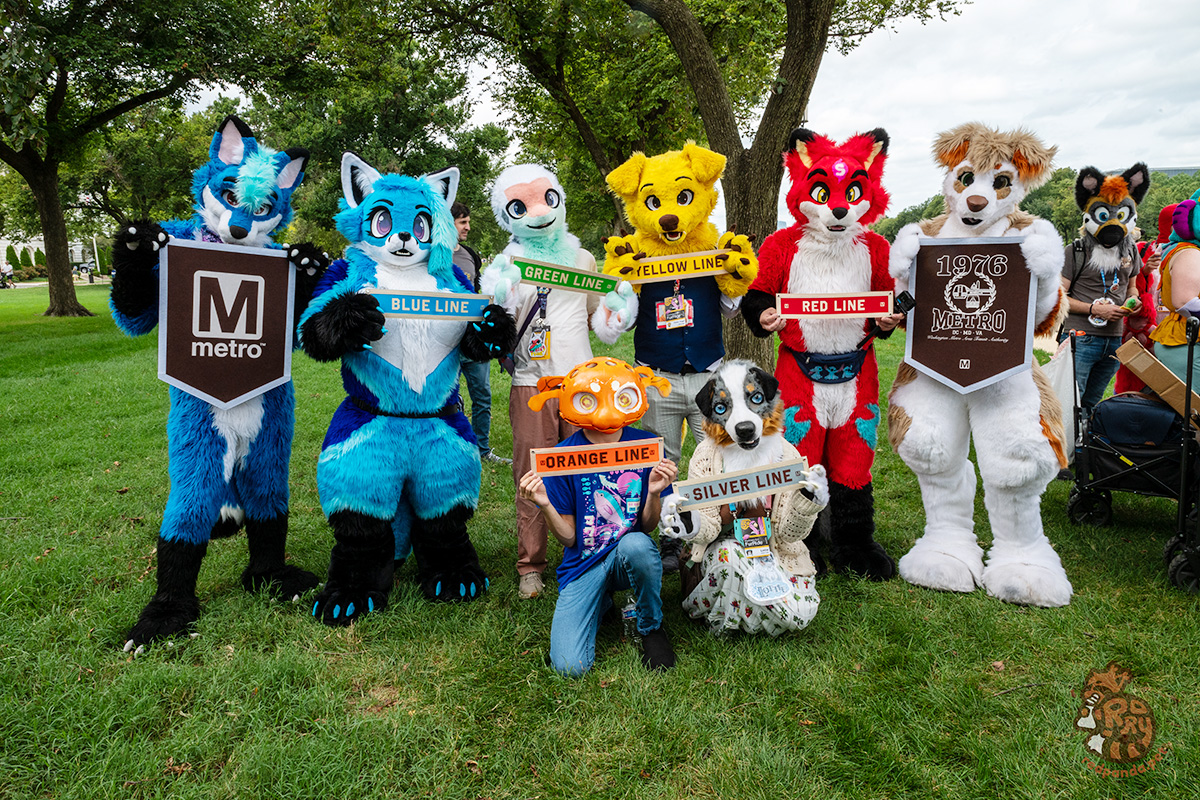
The DMV’s own furry group was on full display on the Metro on Sept. 12.
Shutterpaws is a volunteer-led 501(c)(3) non-profit organization located in Maryland.
The furry group has been doing the FurRide event since 2024 and has blown up in popularity for furries around DMV. They showcased themselves on the Silver and Blue Lines near the Smithsonian on Sept. 12.
“A lot of careful planning goes into running these events, with the goal being a seamless and enjoyable experience for everyone who attends,” says Zayre, a Shutterpaws staff member. “There’s a lot that you learn just by trial and error, and as Shutterpaws hosts more and more events, our team of event organizers continues to learn and refine our approach to keep things running smoothly and finding new ways to engage with our community.”
With a larger growth of participation in the community comes many challenges with the group, especially when it comes to the Metro rides and organizing.
“The biggest challenge that we face as organizers is keeping things fresh and finding new and engaging venues to host events,” says Zayre. “Recently we saw a lot of success hosting a meet at On Target Battlezone, an indoor NERF gun battle arena where our crew was welcome to show up and play both with and without a fur suit.”
Nevertheless, Shutterpaws receive overwhelming support from the community and partners.
“Across the DMV there are so many amazing places to host a Shutterpaws event so we can pursue our mission of helping connect fur suiters and photographers, and we’re blown away with the amount of support we’ve received from our community partners,” says Zayre.
Shutterpaws plans to do more events for anyone in the DMV who is interested.
Their next event in collaboration with DC Fur Meet will take place at Pitchers (2317 18th St., N.W.) on Saturday. Visit Shutterpaws’ website for more information.
District of Columbia
Hands Off the Arts to form ‘human chain’ around Kennedy Center
Drag performer Tara Hoot among event organizers
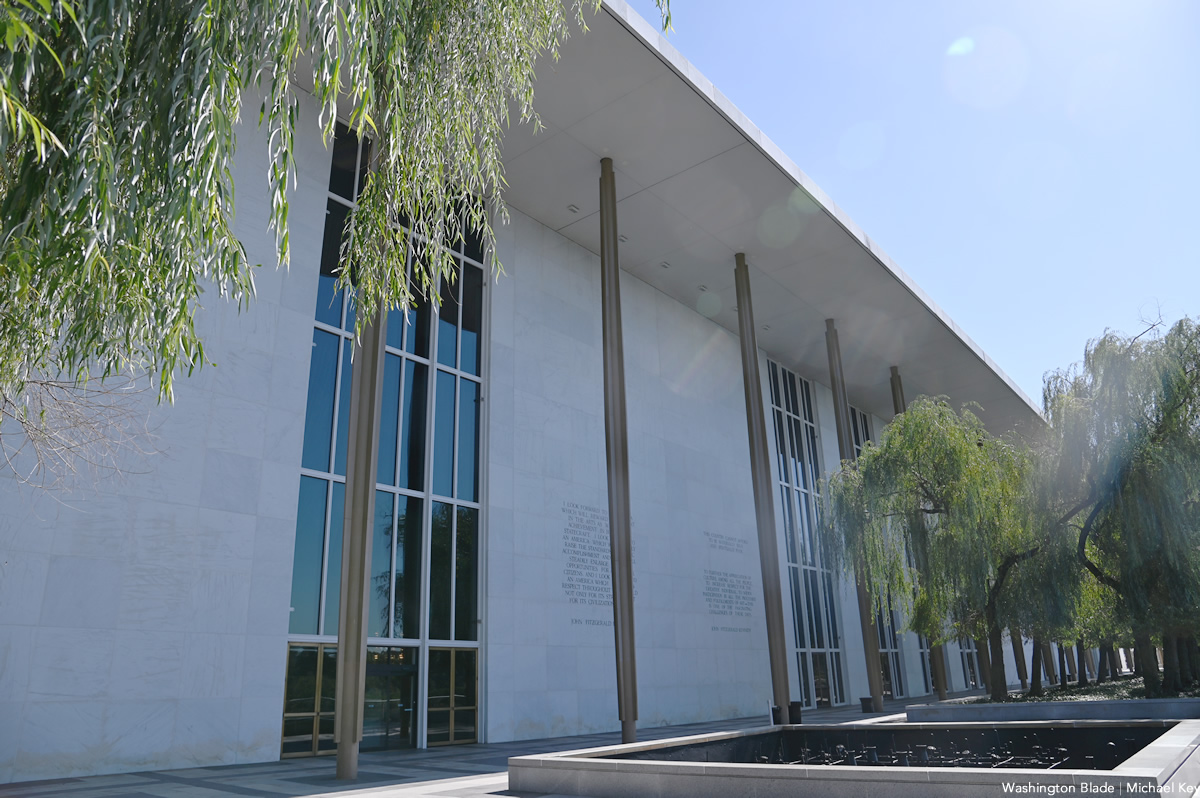
An organization called Hands Off the Arts has announced it is holding a protest on Friday, Sept. 18, in which between 400 and 800 participants are expected to create a “human chain” around the Kennedy Center to voice their strong objection to President Donald Trump’s call for possibly demolishing the Kennedy Center.
“Hands Off the Arts is organizing a rally Sept. 18 against the president’s defacing of JFK’s memorial, his removal and censorship of art, and the threat to demolish the center if he can’t remake the site in his image,” a statement released by the group says.
The statement says the event will start with a rally at 6:30 p.m. on the Kennedy Center steps and culminate with a “human chain” around the building. “There will be musical performances, testimonials from current and former employees, along with other special guest speakers,” it says
A separate announcement by the group says longtime D.C. drag performer Tara Hoot, who has performed at the Kennedy Center in past years, was among the organizers of the Sept. 18 protest.
The planned protest follows Trump’s decision last year to use his authority to replace the existing members of the Kennedy Center’s board of directors with new members loyal to him. Over the objection of longtime Kennedy Center supporters, the Trump-appointed board changed the name of the center, at Trump’s request, from the John F. Kennedy Memorial Center for the Performing Arts to the Donald J. Trump and the John F. Kennedy Center for the Performing Arts.
But following the threat of legal action by opponents who pointed out that the name change could not be legally made unless approved by Congress, the name change was cancelled, with Trump saying he would take steps to restore it later.
The Washington Post, meanwhile, reports in a Sept. 13 news story that because of negative publicity related to Trump’s actions, the Kennedy Center was facing “fiscal collapse” and possible bankruptcy and could be forced to shut down as early as this week.
According to the Post report, a 57-page document presented to the Kennedy Center’s board of trustees says the center was facing a financial and structural building crisis, with the recent collapse of part of the building’s inside ceiling, indicating the building was unsafe for employees and the public. Among other things, the document says the Kennedy Center may not be able to make payroll or pay for routine maintenance “within a matter of weeks,” the Post reports.
Some LGBTQ advocates were among those who joined others in boycotting the Kennedy Center to express their objections to Trump’s actions, including a statement by Trump that he objected to the Kennedy Center’s practice of hosting drag performances.
The Gay Men’s Chorus of Washington has been among the LGBTQ performing arts groups and artists that have performed at the Kennedy Center.
“With the future still very much uncertain, now more than ever, the Center needs you to stand up for freedom of expression and against authoritarian overreach into arts and culture institutions,” the Hands Off the Arts group says in its announcement of the Hands Around the Kennedy Center protest.
“You have the opportunity to make a difference — show up with Hands Off the Arts and show your power as part of Hands Around the Kennedy Center,” it says.
A spokesperson for the Kennedy Center couldn’t immediately be reached for comment.

United States Conference on HIV/AIDS grapples with federal budget cuts

For lesbian victims of domestic violence, competent care is scare

UN human rights chief sounds alarm over ‘comprehensive onslaught’ against LGBTQ rights

White House press pool pushes back after Trump bars three outlets

PHOTOS: Shenandoah Valley Pride

Republican challenger misgenders McBride during forum, forced to leave

Queer mega stars coming to D.C. this fall

Activists protest outside Turkish Embassy in D.C.

A roundup of fall events not to be missed