Maryland
Md. governor visits, praises Baltimore LGBTQ Safe Haven
Moore calls facility ‘invaluable resource’ for community

Maryland Gov. Wes Moore and the state’s lieutenant governor, Aruna Miller, on Sept. 8 visited Baltimore Safe Haven, a transitional housing and support organization that provides a wide range of services for the LGBTQ community, with a special outreach to the transgender community.
A statement released by Moore’s office says the visit was made in partnership with the Maryland Commission on LGBTQIA+ Affairs and provided an opportunity for him and Miller to tour Safe Haven’s housing facilities and learn more about the services it offers.
“In Maryland, we lead with love and inclusion, and nobody should have to justify their own humanity,” Moore said in a statement. “Baltimore Safe Haven provides help and hope to the people who need it most,” he said. “The only way forward is together, and Baltimore Safe Haven has a partner in the State House.”
Moore added, “We have a lot of work to do, and we must tackle that work in partnership. If we do, we can build a kinder, safer Maryland for all.”
Miller said in the statement that she and the governor fully support Baltimore Safe Haven’s work and mission.
“Baltimore Safe Haven’s services are a critical link in the continuum of care for our LGBTQIA+ community, specifically for Black transgender Marylanders, and our administration is proud to be their partner,” she said.
Iya Dammons, the founder and executive director of Baltimore Safe Haven who on July 28 officially opened a D.C. Safe Haven facility at 331 H St., N.E., said the visit by Moore and Miller to the Baltimore facility has highlighted the organization’s work to provide support for people in need.
“Baltimore Safe Haven has been at the forefront of this fight, providing a lifeline to those who have been disproportionately affected by homelessness, discrimination, and violence,” she said in a statement. “During their walk-through, Lieutenant Governor Aruna Miller and Governor Wes Moore witnessed firsthand the compassionate and empowering environment created by Baltimore Safe Haven.”
Added Dammons, “We hope that their visit will inspire others to join our mission to create a more inclusive and equitable Maryland.”
Like the Baltimore Safe Haven operation, Dammons said the D.C. Safe Haven will provide a wide range of services, including housing for homeless LGBTQ youth, a computer lab, a drop-in center, a case manager, and a once-a-week clinic supported by the University of Maryland.



Maryland
Anne Arundel schools now need parent permission to call trans students by preferred names
Conservative groups challenged system’s policy
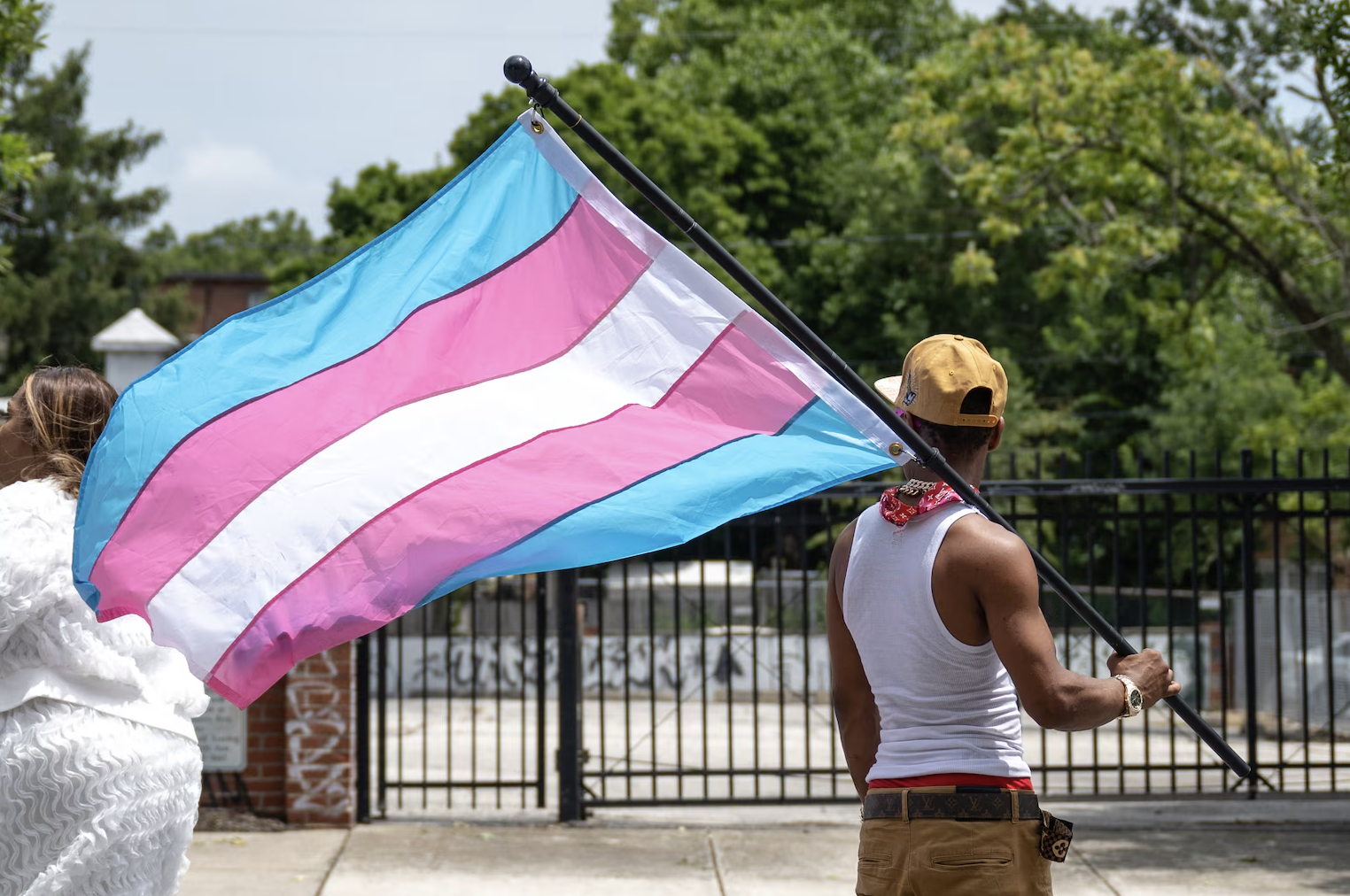
By JESSICA CALEFATI | Anne Arundel County Public Schools staff cannot use transgender students’ preferred names if their parents oppose it, according to an internal document reviewed by the Banner, a change that comes after conservative groups challenged the school system’s approach to gender identity.
Teachers union president Kristina Korona told members in an Aug. 20 email that the new guidance undermines district policy on acceptance and inclusivity and “will begin harming affected students immediately.”
Previously, the district didn’t require parental permission to use a high school student’s chosen name and pronouns corresponding to their gender identity, the internal document says. Now it does. The change comes as parents challenge the suburban school system’s gender identity policy and regulation in court and the Trump-Vance administration threatens the district’s funding.
The rest of this article can be found on the Baltimore Banner’s website.
Maryland
Girlfriends charged with Silver Spring murder to go on trial in 2027
Prosecutors charged both women with killing mother of one of them

Two women identified as a couple who are charged with the May 22, 2026, murder of the mother one of them in her Silver Spring home and who were arrested three weeks later in Ohio are scheduled to go on trial for murder April 19, 2027.
According to online records filed with Montgomery County Circuit Court in Rockville, Vanessa Tjongarero-Henderson, 29, of Clarksburg, Md., and Samantha Raebel, 36, of Phoenix are being held without bond in the Montgomery County Correctional Facility until the time of their trial.
Statements from Montgomery County police show the two women were arrested June 10 in Genoa, Ohio, after fleeing from the scene of the murder in Silver Spring. Police statements and court records show they were extradited back to Maryland in July, where prosecutors with the Montgomery County State’s Attorney’s Office obtained indictments against them for murder.
Earlier statements from Montgomery County police say their investigation into the murder led to their decision to initially charge the two women with first-degree murder for the death of Hilde Henderson, 67, who was Tjongarero-Henderson’s mother.
“Through the course of the investigation, detectives identified Henderson’s daughter, Vanessa Tjongarero-Henderson, and Vanessa’s girlfriend, Raebel, as the suspects,” one of the police statements says. It says police obtained arrest warrants for both women and launched a nationwide search seeking help from the public in in locating them.
One of the police statements says an autopsy determined the cause of Hilde Henderson’s death was blunt-force trauma injuries brought about by a murder. Police and the State’s Attorney’s Office, which is prosecuting the case, have yet to disclose whether they have determined a motive for the murder.
Court records show that prior to the start of the April 19, 2027, trial a “motion” hearing was scheduled for Oct. 30, 2026, a pre-trail conference was scheduled for Feb. 12, 2027, and another motion hearing and a status hearing were scheduled for March 12, 2027.
Court records also show that Tjongarero-Henderson is being represented by attorneys with the Montgomery County court system’s public defender service. The records show that Raebel initially had been represented by a public defender service attorney, but updated records show Aug. 14 is listed as the “removal date” for that attorney.
The docket shows that on Aug. 20, two new attorneys with the prominent D.C. law firm of Covington & Burling made their official appearance as her attorneys in the murder case. One of them, Daniel Solomon, told the Washington Blade in response to an inquiry that the defense has no comment at this time on the case.
He confirmed that Covington & Burling is representing Raebel on a no-cost, pro bono bass.
The office of the Montgomery County public defender service didn’t immediately respond to a phone message from the Blade asking for a comment on the Tjongarero-Henderson case.
Congress
Chris Van Hollen says the Democratic Party needs change. Is he the one to lead it?
Senator is backing anti-establishment Democrats across the country
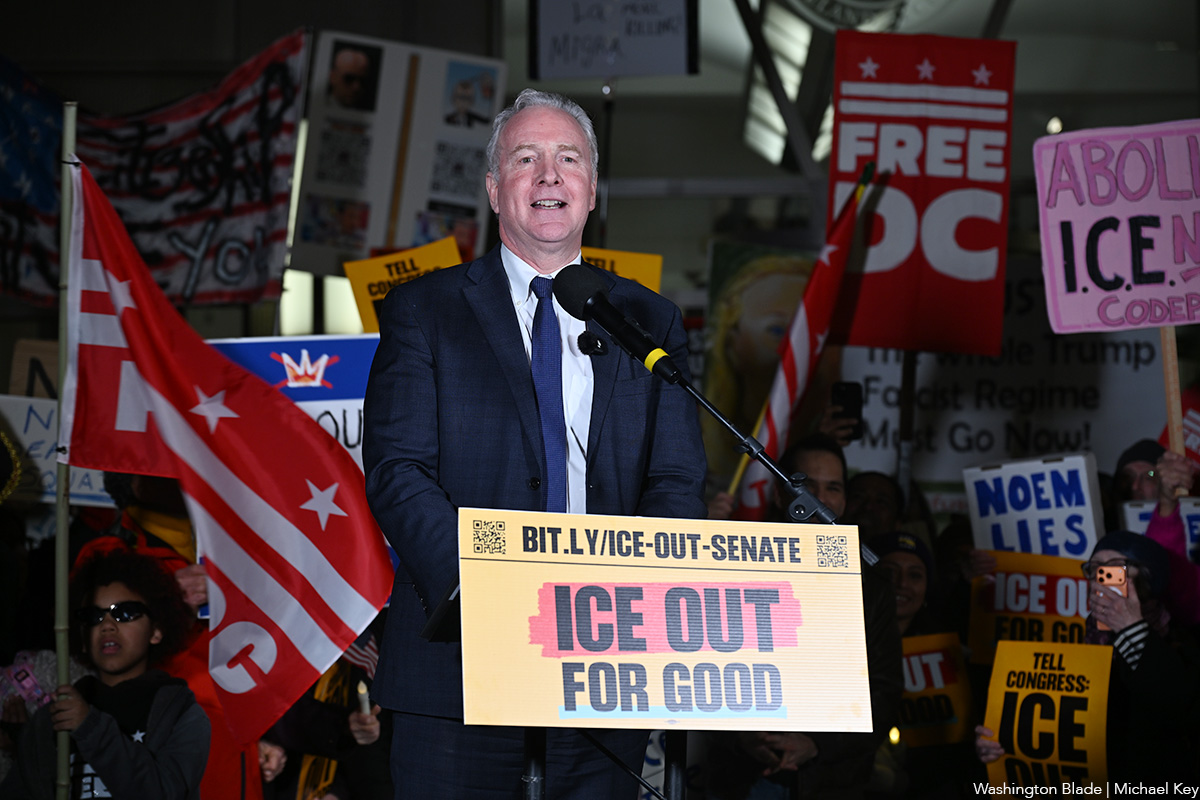
By LEE O. SANDERLIN | The Democratic Party is having something of an identity crisis — losing to President Donald Trump twice in three elections will do that.
Should the party embrace anti-establishment figures who espouse progressive policy ideas like Medicare for all and rhetoric about unrigging the economy for the 1 percent? Or should Democrats try to appeal to moderates who want to return to semi-normalcy in a time of political upheaval?
Although he’s been in Congress since 2002, with key leadership roles throughout his tenure, Maryland Sen. Chris Van Hollen, 67, counts himself firmly in the anti-establishment camp.
The rest of this article can be found on the Baltimore Banner’s website.

PHOTOS: Miss Gay Old Bay

SUNFESTIVAL takes center stage as Rehoboth Beach closes out summer

Anne Arundel schools now need parent permission to call trans students by preferred names

Shooting outside gay bar in Ariz. leaves three dead

‘People don’t see me. They see a trend’

San Francisco, long a queer safe haven, remains competitive for homebuyers

Trans, nonbinary Americans find refuge in the Netherlands

Calendar: August 28-September 3

‘Teenage Sex and Death’ has never been more entertaining

Actor Tim Curry dies at 80
-

 California4 days ago
San Francisco, long a queer safe haven, remains competitive for homebuyers
-
Netherlands5 days ago
Trans, nonbinary Americans find refuge in the Netherlands
-
Calendar4 days ago
Calendar: August 28-September 3
-
Movies4 days ago
‘Teenage Sex and Death’ has never been more entertaining