World
This year’s IDAHOBiT to highlight democracy
Criminalization laws, US funding cuts among global movement’s challenges
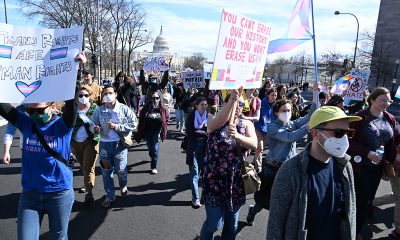
Activists around the world on Sunday will mark the International Day Against Homophobia, Transphobia, and Biphobia.
The IDAHOBiT Advisory Group — which includes 18 LGBTQ and intersex rights organizations around the world — in a press release notes IDAHOBiT events are expected to take place in more than 60 countries. Advocacy groups are also using IDAHOBiT to highlight discrimination and violence based on sexual orientation and gender identity and other LGBTQ-specific issues.
Caribe Afirmativo, a Colombian advocacy group, on May 8 released a report that notes one LGBTQ person was reported murdered in the country every 32 hours in 2025. Caribe Afirmativo also said the Colombian government has not done enough to address anti-LGBTQ violence.
“The evidence is clear: violence against LGBTIQ+ persons in Colombia does not begin with homicide, but with tolerated prejudice and ignored threats,” reads Caribe Afirmativo’s report. “In 2025, the State not only failed to protect — it also failed to count, investigate, and sanction. The crisis is not invisible. It is structural. And it requires an urgent, comprehensive, and sustained response.”
The Initiative for Equality and Discrimination, a Kenyan group known by the acronym INEND, issued a report that details how the country’s law enforcement treats LGBTQ and intersex people. “A widespread pattern of arbitrary arrests, extortion, and both physical and sexual violence” are among the abuses the INEND report notes.
“These abuses not only inflict severe physical and psychological trauma but also foster a widespread distrust of the law enforcement, further marginalizing the community and hindering its ability to seek justice, access essential services such as healthcare, and fully enjoy fundamental freedoms,” it reads.
IDAHOBiT commemorates the World Health Organization’s declassification of homosexuality as a mental disorder on May 17, 1990. This year’s IDAHOBiT theme is “At the Heart of Democracy.”
This year’s IDAHOBiT will take place against the continued impact that the lack of U.S. funding is having on the global LGBTQ and intersex rights movement.
The IDAHOBiT Advisory Group notes consensual same-sex sexual relations remain criminalized in 65 U.N. member states, and the number of countries with criminalization laws increased in 2025. The IDAHOBiT Advisory Group also indicates more than 60 countries have laws that restrict “freedom of expression related to sexual and gender diversity issues.”
“No matter where we live, who we are, or the faiths that drive us, most people want to nurture neighborhoods and communities where every life can bloom,” said the IDAHOBiT Advisory Group. “But today, reactionary governments worldwide are poisoning our gardens with the invasive weeds of their authoritarian policies and exclusionary legislations.”
‘Progress is still happening’
Activists around the world since last year’s IDAHOBiT have seen several legal and political victories.
New Hungarian Prime Minister Péter Magyar on April 12 defeated his predecessor, Viktor Orbán, whose government faced widespread criticism over its anti-LGBTQ crackdown.
The Eastern Caribbean Supreme Court last July struck down St. Lucia’s colonial-era laws. The Dominican Republic’s Constitutional Court a few months later ruled the country’s National Police and Armed Forces cannot criminalize consensual same-sex sexual relations among its members. Botswana late last month repealed a provision of its colonial-era penal code that criminalized homosexuality.
A Hong Kong judge last September ruled in favor of a lesbian couple who sought parental recognition for their son. The European Union Court of Justice over the last year issued two landmark decisions: one said EU countries must recognize same-sex marriages legally performed in other member states and another directed member states to allow transgender people to legally change their name and gender on ID documents.
“Time and again, LGBTQIA+ people have resisted, rolled up their sleeves together with all the good people caring about their communities, and sowed the seeds of change,” said the IDAHOBiT Advisory Group in its press release.





Netherlands
Thailand’s first openly gay senator attends World Pride in Amsterdam
Blade sat down with Pornchai Witayalerdpan on Aug. 7
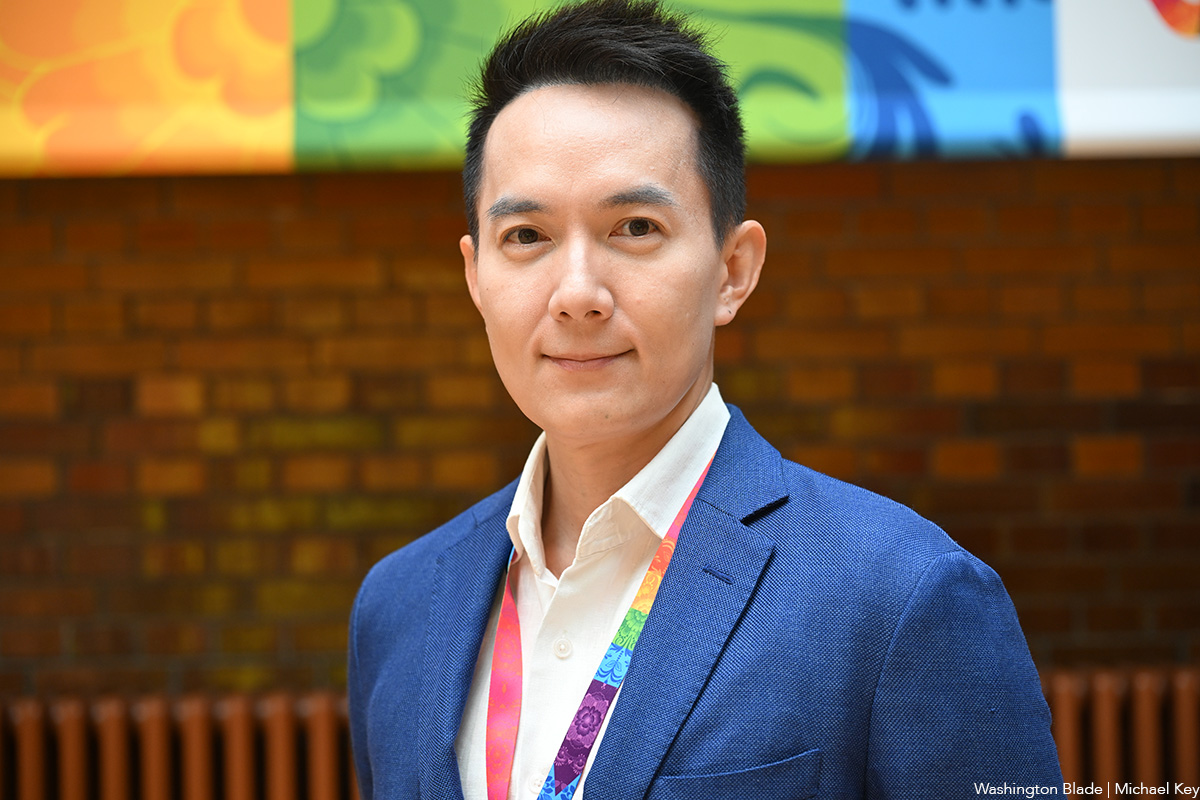
Editor’s note: International News Editor Michael K. Lavers and Photo Editor Michael Key were on assignment in the Netherlands from July 28-Aug. 10.
AMSTERDAM — The first openly gay man elected to the Thai Senate says the law that extended marriage rights to same-sex couples in Thailand has positively impacted his country’s global image.
“It totally changed how the world perceived Thailand,” Sen. Pornchai Witayalerdpan told the Washington Blade on Aug. 7 during an interview at the World Pride Human Rights Conference in Amsterdam.
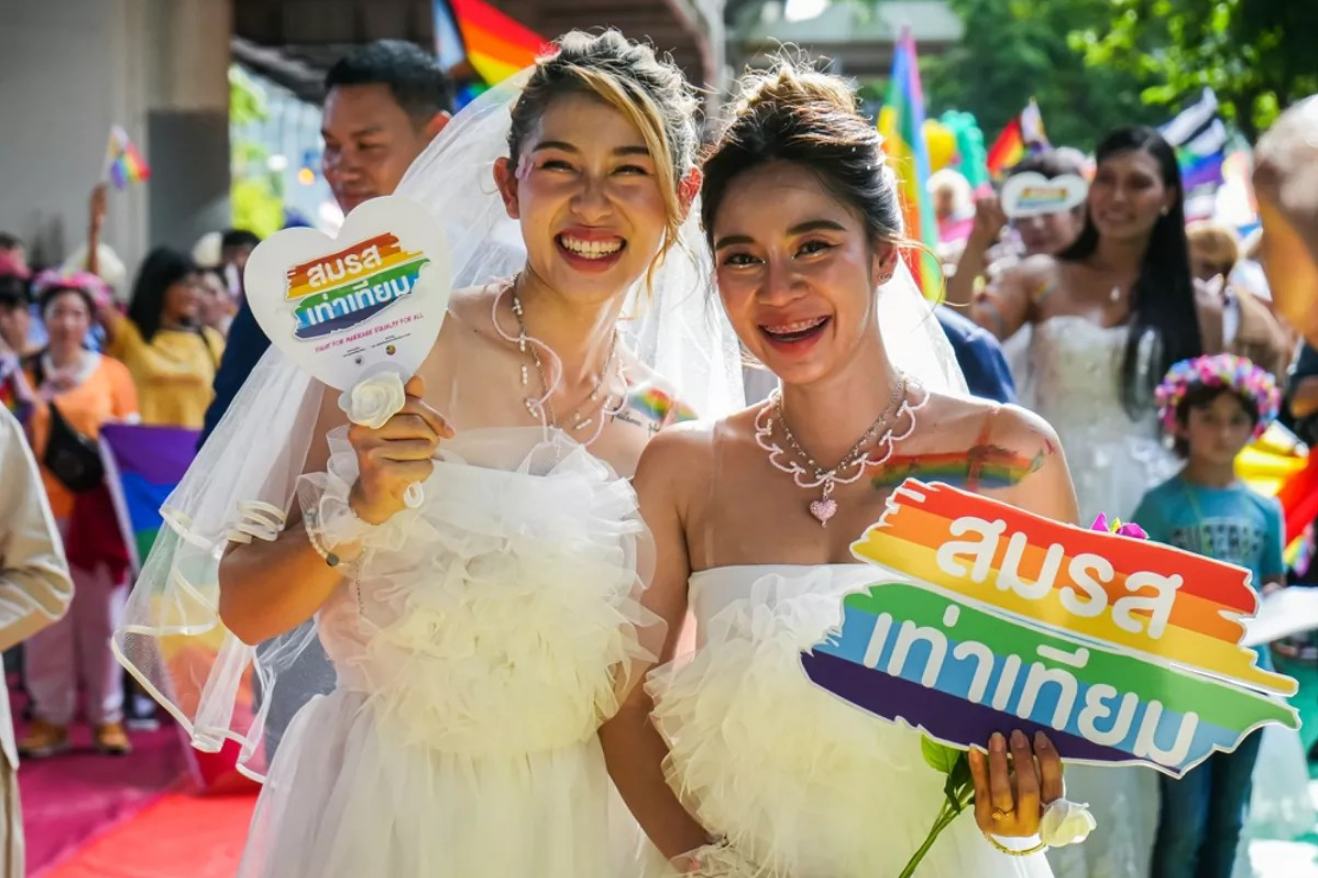
Thailand on Jan. 23, 2025, became the first country in Southeast Asia to allow same-sex couples to legally marry.
The marriage equality bill received final legislative approval in June 2024 when the Senate approved it by a 152-130 vote margin. King Maha Vajiralongkorn signed it a few months later. Then-Prime Minister Prime Minister Paetongtarn Shinawatra is among those who supported the law.
Witayalerdpan was a freelance interpreter before he took office in July 2024.
The independent senator noted Thailand’s marriage equality movement began to gain traction with a lawsuit that the Foundation for Sexual Orientation and Gender Identity Rights and Justice, a Thai advocacy group, filed.
The Constitutional Court in 2021 upheld a law that defined marriage as between a man and a woman. MP Tunyawaj Kamolwongwat of the Move Forward Party later introduced the marriage equality bill that became law.
“It was a coalition of efforts between the civil society organizations, the LGBTQ organizations, and also the Pride movement in Thailand,” Witayalerdpan told the Blade.
Taiwan in 2019 became the first country in Asia to extend marriage rights to same-sex couples.
The Nepalese Supreme Court in June issued a landmark ruling that ordered the country’s government to guarantee full marriage rights to same-sex couples.
The Japanese Supreme Court in March said it will consider six marriage equality lawsuits that have been filed in the country. The Indian Supreme Court in 2023 ruled against marriage rights for same-sex couples. South Korea is among the other Asian countries in which marriage equality efforts are gaining momentum.
Witayalerdpan said Thailand’s marriage equality law could have a direct impact in Japan, which is the only G7 country that does not legally recognize same-sex couples.
“It’s been nothing but a positive effect (in Thailand) after the same-sex marriage law (took effect),” he said.
InterPride, the organization that coordinates World Pride events, has announced Bangkok and Barcelona, Spain, are the two finalists to host the biennial event in 2030. (World Pride took place in D.C. in 2025.)
Witayalerdpan told the Blade that World Pride in Bangkok would further improve Thailand’s global image. He also said his fellow lawmakers, in turn, should pass LGBTQ rights bills — including proposals that would allow transgender people to legally change their name and gender and enable same-sex couples to have children via surrogates from in vitro fertilization. Witayalerdpan noted the most important bill to him is one that would strengthen Thailand’s LGBTQ-inclusive nondiscrimination law that took effect in 2015.
Impact of US funding cuts has ‘been very hard’
Witayalerdpan also offered advice to activists in the U.S. and elsewhere around the world.
“Keep on pushing forward,” he told the Blade. “I know that it’s hard for activists in Thailand as well.”
Witayalerdpan acknowledged the loss of U.S. government funding since the Trump-Vance administration took office — which has forced advocacy groups in Asia and elsewhere around the world to close — has “been very hard.” Witayalerdpan noted the global LGBTQ and intersex rights movement in response to these cuts has turned to the European Union, the U.K., Canada, and the Netherlands to help fill the gap.
“It’s very good that these countries are providing more funds to the activists in Asia than before because of the Trump situation,” he told the Blade. “It can increase their soft power as well.”
Witayalerdpan said American activists should “wish for a positive result in the mid-term elections.”
“Then there is some resistance,” he added.
Witayalerdpan specifically highlighted efforts to fight against the Trump-Vance administration’s efforts to restrict gender-affirming healthcare.
A federal court in Massachusetts on Aug. 15 struck down a key provision of a U.S. Department of Health and Human Service rule that would have limited access to gender-affirming care under the Affordable Care Act. Maryland and California are two of the 21 states that sued the Trump-Vance administration over the issue.
“You have to show more resistance … to show that we are still here and we will push back when we can,” said Witayalerdpan.
Russia
Russian LGBTQ rights group to shut down
Russian LGBT Network in April declared ‘extremist’ organization
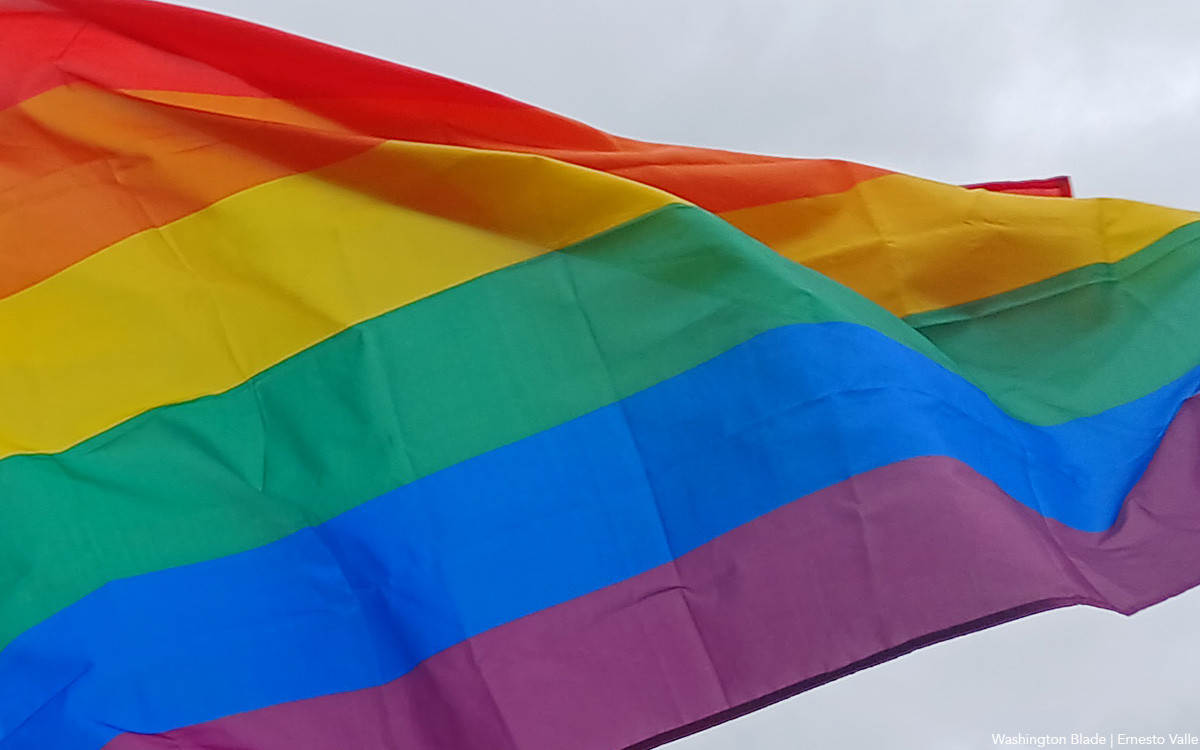
A Russian LGBTQ advocacy group on Monday announced it will shut down after a court declared it an “extremist” organization.
A St. Petersburg court in April in response to a Russian Justice Ministry lawsuit made the declaration against the Russian LGBT Network.
“For many years, Russian LGBT Network brought together initiatives and activists and supported queer people across the country,” said the advocacy group on its Facebook page. ” However, its ‘extremist’ status has made the previous public format of its work impossible: any connection to the organization may create additional risks for the people we seek to support and protect.”
The Russian LGBT Network formed in 2006.
The group on its Facebook page said it “made this decision” to close “after a thorough assessment of the risks.”
“Continuing our public activities could have put at risk those who took part in the organization’s work, supported it, or received assistance,” said the Russian LGBT Network. “We cannot control the repressive environment, but we can do everything possible to avoid creating additional risks for people. People’s safety comes first.”
The Kremlin over the last decade has faced global criticism over its crackdown on LGBTQ rights.
The Russian Supreme Court in 2023 ruled the “international LGBT movement” is an extremist organization and banned it.
Russia in January designated ILGA World, a global LGBTQ and intersex rights group, as an “undesirable” organization. ILGA World in response to the designation noted Russians who are found guilty of engaging with “undesirable” groups face up to six years in prison.
Human Rights Watch in May noted the Russian LGBT Network is one of nine LGBTQ groups that Russia this year has banned after authorities deemed them “extremist.”
“Russian LGBT Network may close; but dignity, solidarity, and people’s right to be themselves cannot be destroyed,” said the Russian LGBT Network in its statement. “Take care of yourselves.”
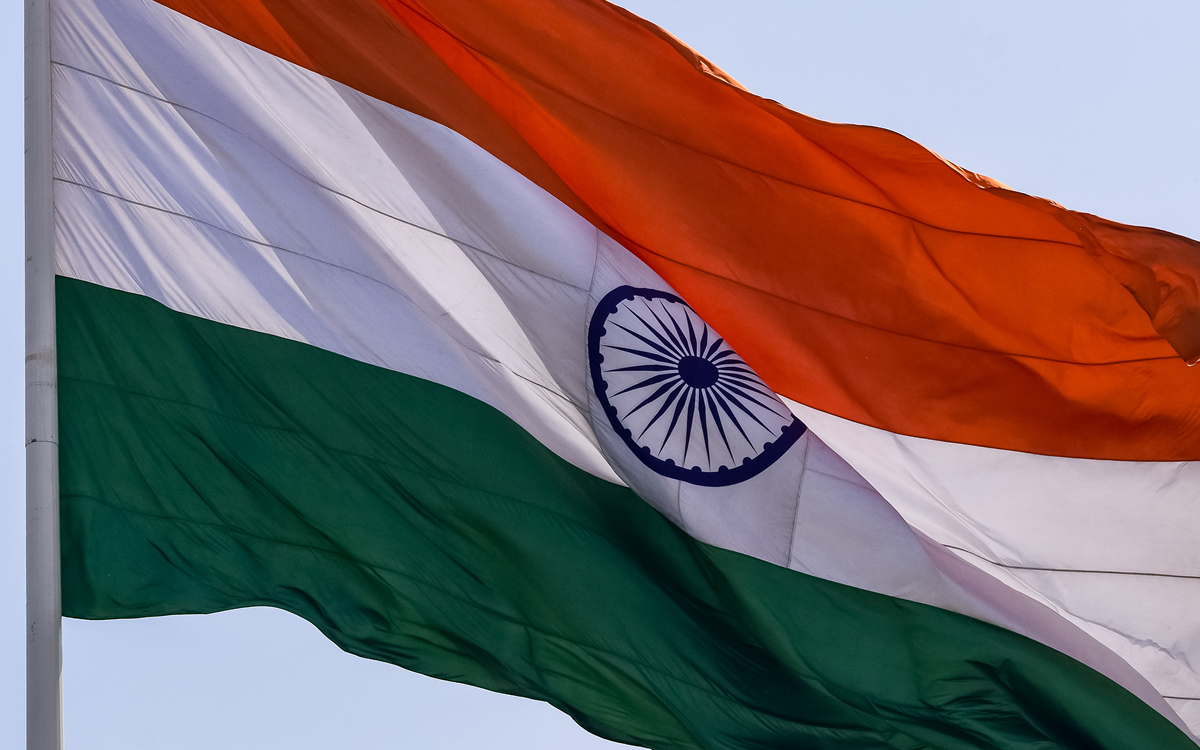
India’s Income Tax Department has opposed a same-sex couple’s petition that challenges Section 56(2)(x) of the Income Tax Act.
The provision exempts gifts between spouses from tax. The couple seeks the same benefit for their relationship.
At the center of the challenge is the explanation to the fifth provision of Section 56(2)(x). According to the petition, the provision excludes same-sex partners from the definition of “spouse.” The petition describes that exclusion as unconstitutional.
The provision defines “relative” to include an individual’s spouse, siblings, the spouse’s siblings, parents’ siblings, and other blood relatives.
Paiyo Ashiho and another petitioner, Vivek Divan, asked the Bombay High Court to recognize same-sex couples presumed to be in a marriage as “spouses” under the fifth provision to Section 56(2)(x).
A similar challenge is pending before the Karnataka High Court.
Bengaluru-based engineers Anurag Kalia and Akhilesh Godi have sought similar relief. Kalia said he wanted to give Godi a gold bracelet worth more than ₹115,500 ($1213.44.). The case remains pending.
The Prime Minister Narendra Modi-led government rejected the petition in an affidavit filed last year. It argued the plea was not legally tenable because it challenged no action or order of the Income Tax Department. Calling the petition an “abuse of process of law,” the government said the relief sought fell outside the scope of the Income Tax Act, 1961.
The government also argued the petitioners sought the benefits available to a “spouse” without legal recognition of their relationship. According to the affidavit, they had not placed on record any law recognizing their relationship as a marriage. It urged the court to dismiss the petition with costs.
The case returned to the spotlight on July 6, when the Bombay High Court heard the petition.
Justices B.P. Colabawalla and Firdosh P. Pooniwalla adjourned the matter after Solicitor General Tushar Mehta said he would appear on behalf of Modi’s government.
The petition comes nearly two years after the Indian Supreme Court’s marriage equality ruling.
In 2023, a five-judge Constitution Bench, in a 3-2 verdict, declined to recognize the constitutional validity of same-sex marriage in India. The country’s top court said MPs must decide whether to extend marriage rights to same-sex couples.
During the 2023 marriage equality hearings, lawyer Abhishek Manu Singhvi told the Supreme Court that marriage is a source of social validation, dignity, self-respect, fulfillment, and security. He argued that it also carries legal and civil benefits, including those related to taxation, inheritance, and adoption. Lawyer Anand Grover, who also appeared for the petitioners, told the court that marriage remains fundamental to the functioning of society and is necessary to access several state benefits, including joint tax benefits and surrogacy rights.
Chief Justice Dhananjaya Y. Chandrachud, in his minority opinion, said the Income Tax Act provides numerous tax benefits for payments made on behalf of a spouse, including deductions for life and health insurance premiums. He also noted that marriage confers several financial benefits on a spouse, including eligibility for gratuity, funeral expenses, medical benefits, and provident fund claims as the dependent of a deceased spouse.
In the marriage equality ruling, the Supreme Court recognized queer people cannot be discriminated against. The court said denying queer couples the material benefits and services available to heterosexual couples violates their fundamental rights.
While issuing directions to the federal, state, and territory governments; Chandrachud said the government should ensure there was no discrimination in access to goods and services. He also directed governments to sensitize the public about queer rights, establish a hotline for the queer community, create safe houses for queer couples, and ensure intersex children were not forced to undergo medical operations.
The petition is awaiting its next hearing before the Bombay High Court.
India’s tax system relies on both direct and indirect taxes, although its direct tax base remains relatively narrow. Individuals pay income tax at progressive rates of up to 30 percent, while consumers pay taxes on most goods and services through the Goods and Services Tax. The Income Tax Act also provides exemptions, deductions, and other tax benefits for eligible taxpayers, including those linked to family relationships and legal marital status.
India’s LGBTQ community is estimated to comprise between 135 million and 140 million people, or nearly 10 percent of the country’s population. Collectively, it is estimated to have a purchasing power exceeding $168 billion. The World Bank estimated that exclusion based on sexual orientation and gender identity cost India between $1.9 billion and $30.8 billion in lost economic output annually, or up to 1.7 percent of its gross domestic product.
India imposed a separate Gift Tax Act in 1958 to tax certain transfers of property made without consideration. Parliament repealed the law in 1998 to simplify the tax system and encourage genuine gifting. However, concerns over tax avoidance later prompted the government to bring gifts back within the Income Tax Act. Today, specified gifts exceeding prescribed limits may be taxed under Section 56(2)(x), subject to exemptions that include gifts received from relatives.
Under the Income Tax Act, gifts received from non-relatives exceeding ₹50,000 ($525.30) in a financial year are generally treated as taxable income, unless they qualify for a statutory exemption. Gifts received from specified relatives, including a spouse, are exempt from tax regardless of their value.
Tarun Khaitan — a research director and professor of public law at the London School of Economics Law School, honorary professorial fellow at Melbourne Law School, and associate fellow of the Bonavero Institute of Human Rights at the University of Oxford — told the Washington Blade the guarantee of equality and non-discrimination under India’s constitution was deliberately framed in broad terms because its framers envisaged that the understanding of those principles would evolve over time. They did not intend to freeze their meaning in 1950, he said. Instead, older and newer statutes alike must be interpreted in light of the constitution’s contemporary understanding.
“Constitutional values must inform the interpretation of all laws in India. It is well established in Indian jurisprudence that if a term can carry two meanings, the court will give it the meaning that complies with constitutional demands,” Khaitan said. “The term ‘spouse’ is not defined in the Income Tax Act, and unlike ‘husband’ or ‘wife’ is not a legal term of art in Indian family law. Its use by the Income Tax Act therefore is apt for judicial interpretation, which must be guided by the constitutional guarantees of equality and liberty.”
Asked how courts should balance respect for legislative choices with their constitutional responsibility to safeguard equality and dignity, Khaitan said he was not convinced that the legislature had made a clear choice in this case. He noted that the Income Tax Act uses the term “spouse” without defining it, adding that no other Indian law, to his knowledge, defines the term either. Its meaning has evolved over time, he said, pointing to the Oxford English Dictionary, which now defines a spouse as “a husband or wife, or a person joined to another in a comparable legally recognized union.”
Khaitan said the decision to restrict the meaning of “spouse” to different-sex married couples appeared to be the government’s interpretation rather than one expressly adopted by MPs. Even so, he said, courts have a duty to safeguard constitutional rights, although those rights are not absolute. The state, he said, must justify any restriction by demonstrating that it serves a sufficiently important public interest and that the limitation is proportionate to that objective.
“The extension of marriage would be a symbolic expression of equal acceptance of same-sex relations by law as well as a the extension of the bundle of material incidents that typically attach to it. Whether or not such extension happens, concerns such as inheritance, hospital visitation rights, decisions regarding end of life care, pensions etc affect the lives of same-sex couples as well as unmarried different-sex couples in a real, material sense,” Khaitan said. “There is no conceptual reason why the expressive salience of ‘marriage’ and the material incidents of a domestic partnership cannot be unbundled.”
Khaitan has had his scholarship cited by the Supreme Court in several constitutional cases, including Navtej Singh Johar v. Union of India, which decriminalized consensual same-sex relations, and Lt. Col. Nitisha v. Union of India, a landmark judgment on indirect discrimination.

NYC lawmakers seek to repeal bathhouse ban

Black Educated Lesbians: A movement rooted in community

Hegseth uses transphobic slur while campaigning for Iowa congressman

What ‘Queer Eye for the Straight Guy’ can still teach us

I respect AOC, even though I often disagree with her

PHOTOS: Nellie’s Drag Brunch

‘Maddie’s Secret’ defies campy expectations

Remembering Barbara ‘Boo’ Price, a pioneering force in women’s music

White House targets gender-affirming care funding, states fight back