COUNSELING FOR LGBTQ
Germany
German group slams White House’s LGBTQ rights record ahead of World Cup
LSVD says trans, nonbinary soccer fans safety ‘not guaranteed’ in US

A German advocacy group on the eve of the 2026 World Cup sharply criticized the Trump-Vance administration over its anti-LGBTQ policies.
The World Cup will take place in the U.S., Canada, and Mexico through July 19. The tournament began on Thursday in Mexico City with Mexico beating South Africa 2-0.
“In the USA, democracy is being gradually dismantled,” said Julia Monro of Federation Queer Diversity, a German LGBTQ and intersex rights group known by the acronym LSVD, in a statement released on Wednesday. “In particular, the human rights of trans, intersex, and nonbinary individuals, as well as other queer people, are facing massive attacks and political instrumentalization by the Trump administration.”
The LSVD statement notes sports “has a special responsibility in this situation because it conveys values worldwide that extend beyond the playing field: fairness, respect, and inclusion.”
“This must apply to everyone, including trans* and nonbinary people,” says LSVD. “Those who love sport must also protect those who can only experience it under difficult circumstances.”
“The public visibility of queer people is being pushed back, companies and organizations with diversity strategies are being pressured, and laws for trans*, intersex, and nonbinary people are being tightened,” added the group. “This is not a fringe issue, but directly affects everyday life, mobility, and safety. The way minority rights are treated is a measure of the state of a democratic society. Inhumane measures must not be normalized. The international community must not remain silent as attention on the host country, the USA, increases. The Trump administration could exploit this media platform for further inhumane purposes, in order to transfer its homophobic agenda to other countries.”
LSVD also stressed the “safety of trans* and nonbinary soccer fans is currently not guaranteed in the USA.”
“We advise all queer fans to inform themselves carefully beforehand and to take precautions for their safety,” it said.
The Council for Global Equality is one of the more than 100 organizations that issued a travel advisory for the U.S. ahead of the World Cup.
LSVD in its statement pointed out the German government in 2025 issued a travel advisory for trans and nonbinary people who are planning to visit the U.S. The warning specifically noted President Donald Trump’s executive order that banned the State Department from issuing passports with “X” gender markers.
InterPride, the organization that coordinates WorldPride events, issued a travel advisory for trans and nonbinary people who planned to travel to the U.S. for WorldPride that took place last summer in D.C.
“Due to an executive order issued by the U.S. president on Jan. 20, all travelers must select either ‘male’ or ‘female’ when applying for entry or visas. The gender listed at birth will be considered valid,” read the InterPride advisory. “If your passport has ‘X’ as a gender marker or differs from your birth-assigned gender, we strongly recommend contacting the U.S. diplomatic mission before traveling to confirm entry requirements.”
LSVD notes the German government reiterated its 2025 travel advisory ahead of the World Cup.
“Anyone traveling with a different gender entry, with an ‘X’ marker in their passport, or who does not conform to the state’s expectations during checks, must expect problems in the USA,” said LSVD.
Virginia
Gay 1920s-era Hollywood star to be honored in Staunton, Va.
Billy Haines became acclaimed designer after anti-gay policies ended his acting career
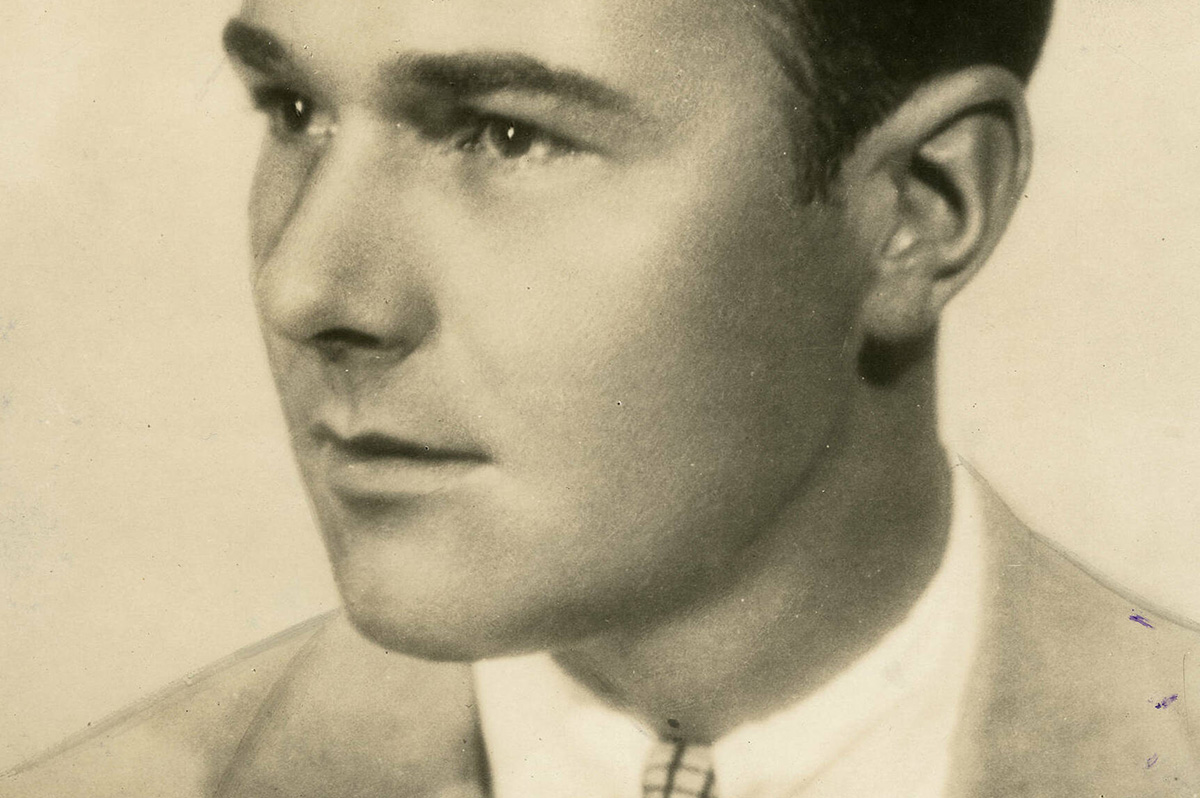
A project is underway in Staunton, Va., to honor William ‘Billy’ Haines, who was born and raised in Staunton before becoming an out gay 1920s and early 1930s-era Hollywood movie star whose acting career ended around 1934 when he refused demands that he conceal his sexual orientation and end his relationship with his male partner.
Haines left the movie business around that time to start what became a highly successful interior design and furniture business in Los Angeles that he led until his death in 1972 at age 72, and which remains in business today, according to the Arcadia Project, a Staunton-based nonprofit initiative.
In a statement released last month, Arcadia Project announced it is working to revitalize a long-vacant movie theater in downtown Staunton that it plans to rename after Haines. It says a fundraising campaign is under way to support efforts to reopen the theater and the larger building in which it is housed as a “dynamic mixed-use cultural center.”
The statement notes that Haines left Staunton at age 14 and resided in Hopewell, Va., and Greenwich Village in New York City until 1922, when he was “discovered” by a talent scout and sent to Hollywood.
“Between 1922 and 1934, Haines appeared in 54 movies during his meteoric and highly successful career,” the Arcadia Project statement continues, noting he transitioned from silent movies to talkies and was fully open about being gay. “But when Hollywood’s moral crackdown of the 1930s demanded that he end his relationship with his longtime partner Jimmie Shields, Haines refused,” it says.
“For LGBTQ people – then and now – Haines’s choice resonates deeply. Rather than deny who he was, he reinvented himself as an interior designer to the stars,” according to the statement.
It says he helped invent the so-called Hollywood Regency style home and designed homes for Hollywood legends such as Joan Crawford, Gloria Swanson, Carole Lombard, George Cukor, and Jack Warner as well as for political figures like Ronald Reagan when he was governor of California.
“As there is no monument, marker or public recognition for Haines in his hometown of Staunton, Va., Arcadia Project, in collaboration with the LGBTQ+ community in Staunton seeks to commemorate him inside a new cultural center,” the statement says.
It quotes Arcadia Project Executive Director Pamela Mason Wagner as saying, “Naming the movie theater in Haines’ honor is more than an act of historical recognition – it is a powerful statement about visibility, belonging, and whose stories are valued in our community.”
The statement says project leaders hope to open the cultural center in early 2027, with a fundraising campaign seeking to raise $250,000 to renovate the theater.
“If the full goal is not reached, a smaller space within the building will be named for Haines, scaled to the amount of funds raised,” it says. “We truly hope friends and admirers of Billy Haines everywhere will want to participate.”
Donations for the project can be made through this site: www.thearcadiaproject.org
Opinions
Why I’m supporting Gary Goodweather for D.C. mayor
In a word, longtime local resident has the character for the job

Hey fellow LGBTQ+ Democrats, this is worth reading! Especially if you’re a voter in Washington, D.C. who’s planning to cast a ballot for the nomination of local candidates in the District of Columbia in 2026.
Because next Tuesday June 16 is a really Big Deal for D.C. Democrats. It’s the first time in two decades that the doors to filling the crucially important job of mayor are wide open because no incumbent is on the ballot.
That is, Mayor Muriel Bowser is not running for election. Instead she will — at last, and after three terms in office — symbolically ride off into the political sunset. And to considerable and well deserved applause. Because she’s been rightly lauded for many important accomplishments, including her well documented record of supporting the many diverse issues concerning the LGBTQ+ community.
But she’s been equally derided for her far too spineless a record recently, of (not) effectively opposing President Donald Trump and his outrageous stationing of outsider National Guard armed troops all across D.C. This despicably sad state of affairs has been a grim statement that Washington, D.C. (not being a state) is subject to the Donald’s feral instincts for nastily mean-spirited retributions. But she’s been meek and mild, and even actively complicit with Trump, when other mayors have told Trump to buzz off. And they succeeded.
But enough about Mayor Bowser. Her “sell by date” fast approaches. The old order changes. And a new day dawns.
Next Tuesday, two candidates of this old (and by now seriously outmoded) order seek to win the coveted Democratic nomination for mayor on June 16. First, there’s Janeese Lewis George, who’s a great first or second choice by any measure. And (ahem) then there’s Kenyan McDuffie.
But this is Ranked Choice Voting and it’s brand new. It’s not “either/or” binary, just like we now appreciate that sexual orientation and identity are also non-binary.
My first choice is clear because I know him. His name is Gary Goodweather. But so, who is this outsider candidate for mayor anyway?
It goes like this. First, together with his remarkable wife, successful D.C. Realtor Meredith Margolis, Gary and their two college age kids are all 20-year residents of Dupont Circle. I actually first met Gary and Meredith a year ago at a BBQ event, when he was a speaker at the historic, progressive, feminist Woman’s National Democratic Club.
So once again, who’s this Gary Goodweather? And why should you seriously consider him for your personal first or second or even third choice?
Here’s why. He’s new to politics in the conventional old paradigm of “politics.” But he knows Washington, D.C. forwards and backwards and inside and out. Because he’s been involved for many years in successful local private sector business investments, including the development of neighborhood-based BIDs, or Business Improvement Districts including the one in NoMa.
And his thinking is typically “out-of-the box.” For example, he’s currently an actual active advocate for establishing agriculture in our densely populated urban environment — through so-called “tiered gardens.” Yes, D.C., trust me, this is an actual thing. And yes, it requires street smarts to deal with challenging zoning issues; but it’s a real example of what fresh blood and new thinking and real imagination can bring to our hogtied and often over-regulated city.
Gary was in the U.S. Army and the National Guard for four years as a captain in the armored command. He earned his MBA in finance from Johns Hopkins University in night school.
If elected, Gary would be D.C.’s first Jewish mayor. (His is Reform Judaism. Repair the breach!)
He’s become my friend and I admire his intelligence and diligence and imagination and in a word his character.
Here’s what he said to me about what he calls his political North Star: “All D.C. residents should be protected, regardless of who they love. Love is love. Love who you want. Identify how you choose to be.”
Look, it’s always time for good weather in our city. Maybe it’s time for Gary Goodweather as mayor too. First choice or second choice. Then let’s all see what happens next.
David Hoffman is a freelance writer and retired federal government civil servant. He is a longtime resident of the H Street Northeast corridor. He is a member of both the Woman’s National Democratic Club and DSA, Democratic Socialists of America Metro DC chapter.

German group slams White House’s LGBTQ rights record ahead of World Cup

Gay 1920s-era Hollywood star to be honored in Staunton, Va.

Why I’m supporting Gary Goodweather for D.C. mayor

Don’t just vote for change — vote for Hope Solomon for mayor

Vote Kenyan McDuffie for D.C. mayor

PHOTOS: ‘Soul Divas’

‘Mighty Real’ explores history of LGBTQ music

D.C.’s housing reality: Cautious optimism meets landlord strain

Hundreds of thousands expected to attend D.C. Pride events