Politics
How will Obama handle National Guard units disobeying fed’l directive?
4 states refusing order to process spousal benefits for gay troops
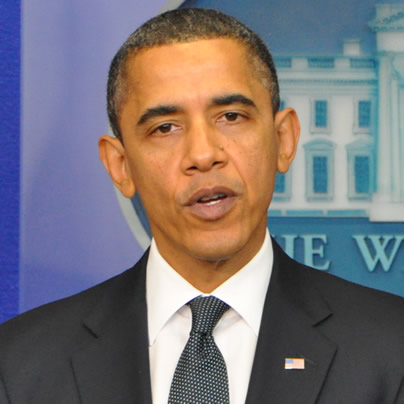
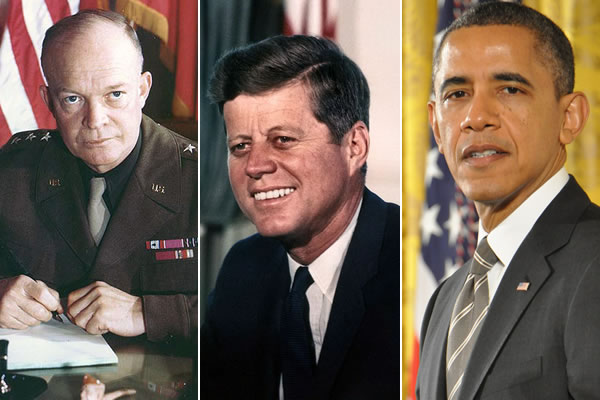
President Obama (right) could follow Presidents Kennedy and Eisenhower, who both federalized National Guard units. (Photos of Dwight D. Eisenhower and John F. Kennedy public domain. Washington Blade photo of Barack Obama by Michael Key).
As National Guard units in several states refuse to process spousal benefit applications for troops in same-sex marriages, one advocate says there’s a unique — yet unlikely — solution: President Obama could federalize the state units.
Ret. Lt. Col. Chris Rowzee, spokesperson on National Guard affairs for the American Military Partner Association, raised the possibility of federalizing the National Guard units to ensure states offer spousal benefits to gay troops.
“This would be an extreme example, but they could … federalize the troops, and in that case, the state governor would have zero say over what the guard unit then does,” Rowzee said. “We certainly hope that it doesn’t come to something like that. We hope that the governors of these states recognize that the right thing to do for these guardsman and these families is to give them support and the entitlements to which they are entitled.”
Rowzee added she’s not calling for Obama to take control of the National Guard units, but noted she wants some kind of response from the Obama administration.
At least four states — Texas, Oklahoma, Mississippi and Louisiana — are refusing to give troops in same-sex marriages military IDs for their partners by denying these couples’ applications at state-run facilities. That hampers the couples’ ability to receive health, pension and housing benefits afforded to other service members.
Despite an Aug. 13 directive from Defense Secretary Chuck Hagel saying these benefits should be available nationwide, even in non-marriage equality states, these four states are citing state constitutional amendments banning same-sex marriage as the reason they cannot enroll these couples into the Defense Enrollment Eligibility Reporting System.
The American Military Partners Association has called for a response from the Obama administration to prompt a change from the state National Guards. The more obvious method that has been discussed before is a deprivation of federal funds for these installations as a result of disobeying a federal directive.
Chris Jenks, a former Army judge advocate general and law professor at Southern Methodist University, said federalizing elements of the National Guard and withholding funds are both viable options for Obama.
“Ultimately, if the governors of the four states persist in their order to their state National Guards to not provide benefits to same-sex married guard members, the governors run a risk that the president will federalize those state national guards,” Jenks said. “One hopes it wouldn’t come to that. But if the gay rights movement is the civil rights struggle of our time, it will be interesting to see how far the first African-American president will allow state governors to countermand him.”
In the 1950s, President Eisenhower federalized the Arkansas National Guard when the governor of that state was using it to enforce racial discrimination at Little Rock Central High School. In 1963, President Kennedy took similar action in Alabama to desegregate the University of Alabama.
The situation today, of course, isn’t exactly parallel. Eisenhower and Kennedy federalized the units in Arkansas and Alabama to force integration of schools – not to make the guard units themselves operate in a non-discriminatory manner.
Under the relevant statute, the president would have to declare a national emergency in order to bring the National Guard units of those states under his direct command.
Fred Sainz, vice president of communications for the Human Rights Campaign, said his organization is asking for a federal response to the situation, but does not endorse the idea of federalizing the National Guard units.
“We are urging Secretary Hagel to talk to these state governments about the need to have uniformity and fairness for all service members in accessing the benefits to which they are entitled by law,” Sainz said.
The Obama administration has been quiet on the issue of individual National Guard units resisting the order for nationwide spousal benefits for gay troops.
White House Press Secretary Jay Carney had no immediate answer when the Washington Blade asked if Obama was aware of the issue and believes these units are violating federal policy. Carney deferred to the Pentagon, but also said he could take the question and talk about the issue later. As of last week, the Blade had not received a White House response.
Lt. Cmdr. Nathan Christensen, a Pentagon spokesperson, would only say troops in same-sex marriages are able to enroll at federal installations.
“All Federal Military installations (in Texas, Oklahoma, Mississippi and Louisiana) will issue IDs to all those who provide a valid marriage certificate from a jurisdiction that recognizes same-sex marriage,” Christensen said.
But Rowzee maintained that directing troops to travel to a federal installation isn’t an adequate solution to the problem. For starters, the issue isn’t just enrollment for benefits, but also participation in guard activities like family readiness programs.
“The rationale that they are using to deny giving me the ID cards to begin with is rationale that very easily could be applied to even something as simple at the spouse being given access to the base, being able to drive to the base to pick up her guardsmen from a deployment,” Rowzee said.
Legal experts who spoke with the Blade agreed the decision to refuse to process these applications violates federal law.
SMU’s Jenks said these states are caught between state and federal governments, but are ultimately exceeding their authority.
“I think the state governments have overreached and it’s unfortunate that they are using the National Guard in a politicized fashion, that’s not why the National Guard exists,” Jenks said. “Ultimately these efforts by the states will not be successful.”
One initiative that has emerged as states have begun to withhold these benefits from gay troops is a petition led by the American Civil Liberties Union and the American Military Partner Association calling on the Pentagon to reaffirm that all married military personnel are eligible for these benefits.
Another group that is pursuing action on the issue in Texas is Lambda Legal. Representing Alicia Butler and Judith Chedville, a lesbian military couple denied benefits at Camp Mabry, Lambda sent a letter on Sept. 13 to Texas Military Forces saying current policy “fails its troops and their families.” The letter requests a response in 10 days.
Paul Castillo, staff attorney for Lambda Legal, said he “absolutely” thinks Texas is violating federal law by denying benefits to troops in same-sex marriages.
“The state law does not inhibit the National Guard from completing a federal mission,” Castillo said. “The DEERS system and benefit administration is federally funded along with the personnel operating the system, so there’s no reason for them to discriminate in issuing the spousal IDs and enrolling them in the DEERS system.”
Castillo said Texas confirmed receipt of the letter. Since that time, Castillo said communications between Lambda and the state are ongoing, although he couldn’t elaborate on them.
Whether a lawsuit is in the works by any of these groups remains to be seen. None would rule out the possibility of litigation if nothing changes at these guard units.
For Rowzee, the decision of these guard units to withhold benefits is particularly disappointing in the wake of advancements in marriage equality throughout the country following the Supreme Court decision against the Defense of Marriage Act.
“Do I honestly believe that the governor of Texas will be forever able to defy a DOD directive? No, and I think he knows that,” Rowzee said. “I think he’s using this issue to try to gain political points, and the problem is it harms people in the meantime. It harms our military families.”




2026 Midterm Elections
Trump uses anti-trans slur against Democratic Senate candidate
President mocked Annie Andrews

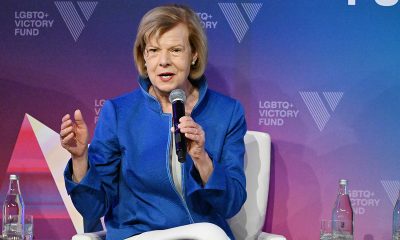
President Donald Trump used an anti-trans slur against Democratic South Carolina Senate candidate Annie Andrews on Monday as he sought to rally support for Republicans in the state’s Senate race.
In a post on Truth Social, Trump attacked Andrews three times, referring to her as “trannie” while promoting U.S. Sen. Darline Graham (R-S.C.)’s campaign.
Andrews is running against Graham for a Senate seat in the solidly Republican state.
Earlier this year, Graham was specially appointed to the seat following the death of her brother, Lindsey Graham, who represented South Carolina in the Senate from 2003 to 2026.
Andrews, the Democratic nominee from the state, is a pediatrician that lives in Charleston with her three children. She told NBC News that she will “work with anyone to put South Carolina first.”
“As a mom and a pediatrician, I’m in this race to fight for my patients, my three kids, and South Carolina,” Andrews said, adding that “lowering costs and making life better for families across our state is going to take all of us working together.”
Andrews used the attention from the president’s attack to emphasize what she described as a focus on policy issues rather than the culture wars that have dominated much of the political debate.
“If you care more about your bills than the politics in Washington, this campaign is for you,” she added.
Trump’s remarks have drawn criticism from leaders on both sides of the aisle.
Senate Minority Leader Chuck Schumer (D-N.Y.) condemned Trump’s words Monday night on social media, calling his attacks on Andrews “despicable.”
“Annie Andrews is a mom and pediatrician who’s always put her community first — and she’s exactly who South Carolina needs representing them in the Senate,” Schumer said on X.
Former South Carolina Gov. David Beasley, a Republican, also criticized the president’s attack on Andrews, urging voters to “reject politics based on division and hate.”
“This is abhorrent. Elections don’t have to be about cruelty and lies. South Carolina deserves better,” Beasley wrote Monday night on X.
South Carolina has not elected a Democratic senator in nearly three decades.
Andrews’s campaign website does not mention her positions on LGBTQ issues.
The Washington Blade reached out to Andrews’s campaign for comment on Trump’s attack and her positions on transgender rights but did not hear back by time of publication.
2026 Midterm Elections
Meet the LGBTQ candidates running for U.S. House, Senate
Pappas would become first out gay man elected to upper chamber

The midterm elections are often seen as a report card for the party in power, giving voters an opportunity to weigh in on the direction of the country after two years of unified control of the federal government. With Republicans controlling the White House, Congress and the Supreme Court, the 2026 elections could reshape the balance of power in Washington and determine what the next two years of federal policy will look like.
Among the candidates looking to shape that future are a large number of openly LGBTQ politicians running for federal office. All of the candidates listed below openly identify as members of the LGBTQ community and are running as Democrats, seeking seats in both the U.S. House of Representatives and the U.S. Senate. (See below for a list of LGBTQ incumbents.)
The New Candidates
U.S. Senate:
Chris Pappas — NH
The United States House of Representatives:
Cait Conley — NY-17
Jeremy Moss — MI-11
JoAnna Mendoza — AZ-06
Marni von Wilpert — CA-48
Scott Wiener — CA-11
Chris Gallant — NY-1
JD Ford — IN-5
Janelle Sarauw — U.S. Virgin Islands
If all of these candidates running for federal office win their seats, this would make the federal government the queerest legislative term for Congress ever.
Chris Pappas would become the first openly gay male senator if he wins the race against Republican John E. Sununu. Pappas is currently leading early polls 50% to Sununu’s 42%, and is seen as a fairly centrist Democrat with a slew of accomplishments passed through the House since his election in 2018 that make him a desired candidate for the purple “Granite State.”
Cait Conley is fighting to take two-term incumbent Republican Mike Lawler’s seat for New York’s 17th district, covering parts of Westchester, Rockland, Putnam and Dutchess counties. Conley has a long history of working as a public servant through her extensive military service, which includes six overseas deployments with the Army and work with the National Security Council. Current polling shows she has an advantage over her opponent, 64% to his 36%, making this one a race to watch.
Jeremy Moss is running for election in Michigan, after quickly rising in the ranks within the Great Lake state. Moss, who was elected to his city’s city council, then to the state House, then to state Senate has had a lengthy connection with state politics for someone so young. He also served as the state’s first gay president pro tempore. He is running in the Detroit suburbs, including Oakland County. Nearly all polling puts Moss in the lead with some already giving him 99%.
JoAnna Mendoza is a veteran of the U.S. Navy and U.S. Marine Corps running for a House seat for the Tucson and southeastern Arizona area. She has been outspoken about how the cost of everyday necessities under the current leadership of President Trump and Republicans in Congress has made people in her state less safe. She is currently locked in a tight race with her Republican counterpart, leading Juan Ciscomani 47% to 45%.
Marni von Wilpert is running to represent northern San Diego County. She has experience representing the area as a San Diego City Council member, former prosecutor, and Obama workers’ rights attorney. Von Wilpert holds a narrow lead over Republican Jim Desmond, 45% to 42%.
Scott Wiener is looking for a chance to take former House Speaker Nancy Pelosi’s seat in the San Francisco area. Weiner holds a narrow lead over the Pelosi-endorsed San Francisco supervisor Connie Chan. A New York Times poll has him leading 45% to Chang’s 40%.
Chris Gallant has a slew of federal accomplishments under his belt, from working as an FAA air traffic controller to serving in the U.S. Army and New York Army National Guard, including as a Black Hawk helicopter pilot, and is a volunteer firefighter on Long Island. Despite all of this dedication to public service, he’s running in a solidly red district with recent predictions favor LaLota 81 to 26.
JD Ford is fighting to represent the northern Indianapolis suburbs and north-central Indiana against Republican incumbent Victoria Spartz. He was the first and only openly LGBTQ person elected to the Indiana Legislature, running his campaign on making living more affordable. Polling puts him slightly behind Spartz 48% to 46%.
Janelle Sarauw is trying to win the U.S. Virgin Island’s seat in the U.S. Congress. While there is no voting power, the seat can participate in debates. Sarauw is likely to win the seat after sweeping the primary earlier this year, and will face off against Shelley Moorhead, an independent, in November.
The Incumbents
Becca Balint — VT-At Large
Emily Randall — WA-06
Eric Sorensen — IL-17
Mark Pocan — WI-02
Mark Takano — CA-39
Ritchie Torres — NY-15
Robert Garcia — CA-42
Sarah McBride — DE
Sharice Davids — KS-03
Becca Balint is running for reelection to represent all of Vermont, making her one of the few candidates on this list who represents an entire state rather than a congressional district. Balint, a former teacher and Vermont state senator, has made housing affordability, mental health, and protecting democracy central parts of her platform. Recent polling gives Balint a substantial lead over Republican challenger Gerald Malloy, 60% to Gerald’s 30%.
Emily Randall is running for reelection in Washington’s 6th Congressional District, which includes the Olympic Peninsula and parts of the Kitsap Peninsula across Puget Sound from Seattle. Randall, who previously served in the Washington state Senate, has made expanding access to affordable health care a major part of her platform. She appears to be in a relatively strong position for reelection where she won 60% of the vote in Washington’s August top-two primary, while her Republican opponent Teresa Fox received about 25%.
Eric Sorensen is running for another term representing western Illinois. The former television meteorologist has centered his congressional work on lowering costs for working families. There is no public polling in the race, but a current nonpartisan forecast gives Sorensen 59% of the vote compared to Republican Dillan Vancil, with 40%.
Mark Pocan is seeking to continue representing Madison and south-central Wisconsin. Pocan, who has served in Congress since 2013, has focused on issues including health care affordability, workers’ rights and LGBTQ+ equality. There is no public polling of the race, but the current field has no Republican candidate, and a nonpartisan forecast gives Pocan more than a 99% modeled chance of winning.
Mark Takano is running for reelection in California’s 39th congressional district, which includes Riverside and portions of the Inland Empire east of Los Angeles. Takano has made health care and veterans’ issues major parts of his congressional work. There is no public polling of the race, but in his primary he came in first with 61% of the vote compared to Republican Steve Manos’s 39%.
Ritchie Torres is running for another term representing New York’s 15th congressional district in the Bronx. Torres, who previously served on the New York City Council, has made housing, economic development, education, and public safety major parts of his platform. There is no current public polling of the race, but multiple prediction sites have it squarely his to win.
Robert Garcia is seeking another term representing California’s 42nd congressional district, which includes Long Beach and southeastern Los Angeles County. Garcia, the former mayor of Long Beach, has focused on issues including infrastructure, transportation, education, and LGBTQ+ rights while in Congress. There is no public polling of the race, but forecasting has Garcia winning the seat over Republican Brian Burley 99% to 1%.
Sarah McBride, is running for reelection to represent Delaware’s sole congressional district, meaning she represents the entire state. McBride, who made history as the first openly transgender member of Congress, has centered her campaign on lowering health care costs, protecting reproductive health care, and strengthening workers’ rights. There is no public polling of the general election, but a current nonpartisan forecast gives McBride a 99.1% modeled chance of winning against Republican Joseph Arminio.
Sharice Davids is seeking another term representing Kansas’ 3rd Congressional District, which covers the Kansas side of the Kansas City metropolitan area. Davids, a former White House fellow and attorney, has made agriculture, lowering costs, and health care central parts of her platform. There is no current public polling of the race, but prediction polling shows she has a 94% chance of winning her race.
White House
Trump-appointed judge restores White House TV pool access
Judge called in to question president’s justification of the ban

A federal judge ordered the White House to restore West Wing press credentials to three news organizations after President Donald Trump attempted to bar their access for unfavorable reporting.
Early Thursday morning, Trump-appointed U.S. District Judge Timothy Kelly granted a temporary restraining order brought by POLITICO, CNN, and MS NOW as part of a joint lawsuit. The lawsuit cites the imperative role of a “free press” and ordered the 78 journalists’ credentials returned to the three outlets for at least the next two weeks as litigation plays out.
In the eight-page ruling, the judge goes over a slew of laws that Trump may have violated in banning the three media groups — from stepping on their First Amendment rights to a free press to the Fifth Amendment right to due process.
The judge also questioned Trump’s justification for removing the outlets, originally saying it was a matter of national security.
“The court is skeptical — at least on this record — that defendants’ interest in safeguarding national security is the actual motivation for, or is even advanced by, the revocation of plaintiffs’ hard passes,” Kelly wrote in an 8-page ruling issued just before 1 a.m. ET.
“Nothing in the record that predates this suit suggests that the revocation of plaintiffs’ hard passes was motivated by national security concerns. Certainly, that is not what President Trump said when he announced that he was ‘banning’ plaintiffs from the White House — instead, he focused on the alleged lack of truthfulness and negativity of plaintiffs’ reporting,” the judge added.
The Washington Blade reached out to the White House press office asking if the administration would file an appeal to keep the journalists out of the West Wing but did not hear back before publication time.

Bet Mishpachah participates in D.C. Oct. 7 commemoration ceremony

Man charged in Mall of America shooting plot inspired by Pulse massacre: report

Bar Betsie, inviting and intimate, marks one-year anniversary

Trump, Netanyahu, and Putin are all war criminals

Center Arts Gallery celebrates 10 years with reception, auction

Eliot Glazer’s new book an engaging collection of essays

Equality Chamber hosts Pride in Business Expo and Profits & Pours

Learn more about Virginia’s queer history

The financial realities facing LGBTQ+ first-time buyers

PHOTOS: Winchester Pride
-

 Books4 days ago
Eliot Glazer’s new book an engaging collection of essays
-
Out & About5 days ago
Equality Chamber hosts Pride in Business Expo and Profits & Pours
-
Out & About5 days ago
Learn more about Virginia’s queer history
-
Real Estate4 days ago
The financial realities facing LGBTQ+ first-time buyers