News
Rubio wins battle against gay black judicial nominee
Thomas not among more than 200 nominees White House resubmitted to the Senate
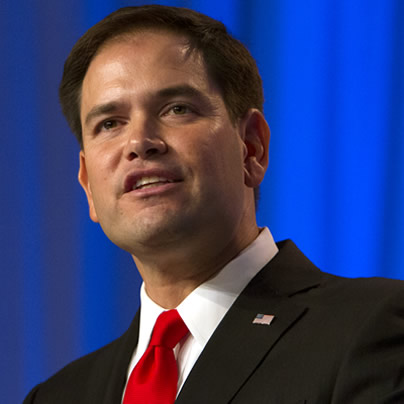
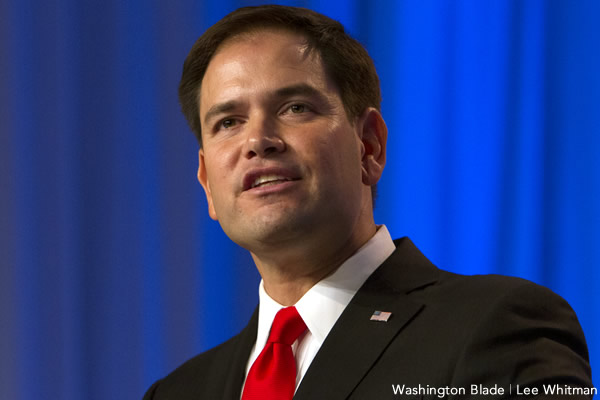
Sen. Marco Rubio (R-Fla.) won his battle against a gay black judicial nominee. (Washington Blade file photo by Lee Whitman)
Sen. Marco Rubio (R-Fla.) has won his battle against the White House over the confirmation of a gay black judicial nominee to the federal bench.
At the start of the year, the White House submitted to the Senate a list of more than 200 nominations previously named by Obama. But, as first reported by The Huffington Post, William Thomas, whom Obama named for a seat on the U.S. District Court for the Southern District of Florida, isn’t among the nominees.
A White House official confirmed for the Washington Blade that Thomas wasn’t resubmitted.
“The nomination of Judge William Thomas was returned by the Senate and Sen. Rubio has made his objection clear, so the president chose not to renominate him,” the official said.
Had Thomas been confirmed by the Senate, he would have been the first openly gay black male to sit on the federal bench. (Deborah Batts, confirmed to the federal bench in 1994 and the first-ever out person to sit on the federal judiciary, is also black.)
Fred Sainz, vice president of communications for the Human Rights Campaign, was among those expressing disappointment that the Thomas nomination didn’t succeed.
“We supported the Thomas nomination,” Sainz said. “We are disappointed that Judge Thomas was not re-nominated but we know that Sen. Rubio’s opposition to Thomas is unwavering and that the senator would not have let this exceptionally qualified judge move forward.”
Over the course of more than a year since Obama first nominated Thomas in November 2012, the nomination has been blocked. Rubio refused to hand in the “blue slip” to the Senate Judiciary Committee to allow the nomination to go forward, even though the Florida senator initially recommended Thomas and the nominee received a rating of “well-qualified” from the American Bar Association.
Faced with accusations that he was holding up Thomas because of his race and sexual orientation, Rubio pointed to the way Thomas as a state judge in the Miami-Dade Circuit handled two cases as reasons for holding up the nomination. The objection in one case was for being too lenient; the objection in the other was for being too harsh.
One was the case of Michael Traverso, who killed a cyclist in a hit-and-run accident while driving on a suspended license. Rubio’s office cites concerns that Thomas sentenced Traverso to the minimum sentence of 22.8 months in jail, less time served, amounting to only 364 days.
The other involves Joel Lebron, who took part in the 2002 gang rape and murder of 18-year-old Ana Maria Angel. According to Rubio’s office, Thomas twice suppressed confessions of perpetrators of the crime including the confession of Lebron, who pulled the trigger.
The reasons that Rubio’s office offered for blocking the nomination are in dispute. Attorneys involved in the cases wrote letters to Rubio last year, saying Thomas acted responsibly.
A Senate staffer confirmed for the Blade this week that Rubio had never returned his “blue slip” to allow the Thomas nomination to move forward.
LGBT advocates who had been pushing the Thomas expressed disappointment over the missed opportunity of confirming the first openly gay black male to the federal bench.
Rea Carey, executive director of the National Gay & Lesbian Task Force, said the fallout was troublesome because more diversity is needed on the federal bench.
“We need more diversity in the federal judiciary, not less and it’s disappointing that Judge William Thomas was not included among the nominees the White House submitted to the Senate this week,” Carey said. “Sen. Marco Rubio’s procedural maneuvering to stop this nominee was unacceptable and harmful given that the vacancy on the Southern District Court of Florida has been classified as a judicial emergency.”
Denis Dison, a spokesperson for the Gay & Lesbian Victory Fund, also expressed disappointment that the Thomas nomination didn’t succeed. The Presidential Appointment Project, a Victory Fund-led initiative, recommended Thomas to the White House.
“It’s hard to see how Sen. Rubio’s bizarre behavior with regard to this nomination is anything but politically motivated, and that’s a shame,” Dison said. “Judge Thomas is highly qualified and his nomination enjoyed broad support. The fact that he is openly gay should have no bearing on the Senate confirmation process.”
But Thomas wasn’t the only pending LGBT judicial nominee before the Senate. One other remains: Judith Levy, a lesbian whom Obama nominated in July for a seat on the U.S. District Court for the Eastern District of Michigan. Her nomination is still before the Senate Judiciary Committee.
Brooke Sammon, a Rubio spokesperson, pointed to a previous statement she issued on Thomas when asked if the Florida senator was satisfied his nomination didn’t succeed.
“The nomination of Judge Thomas has also been thoroughly reviewed, and Sen. Rubio has determined that Thomas’s record on the state court raises serious concerns about his fitness for a lifetime federal appointment,” Sammon said. “Those concerns include questions about his judicial temperament and his willingness to impose appropriate criminal sentences, particularly in the two high-profile cases of Michael Traverso and Joel Lebron last year. After reviewing Thomas’s record, Sen. Rubio cannot support moving forward with the nomination.”




National
Victory Institute to honor Biden at D.C. conference
Former president to receive award on Friday

The LGBTQ+ Victory Institute on Friday will honor former President Joe Biden at its annual International LGBTQ+ Leaders Conference in D.C.
Biden will receive the Chris Abele Impact Award in recognition of what the Victory Institute described as “his historic role in championing LGBTQ+ rights and for his leadership in achieving the most LGBTQ+ inclusive administration in U.S. history.” Biden will be the award’s third recipient.
“President Biden has shown unwavering commitment to ensuring LGBTQ+ people can participate fully and openly in our democracy,” said Victory Institute President Evan Low in a press release. “From appointing a record number of LGBTQ+ leaders to reversing harmful policies and expanding civil rights protections, his administration set a new and necessary standard for what inclusive governance looks like.”
“And now, we’re seeing LGBTQ+ elected officials lead the way on everyday issues that are important to most Americans like groceries, housing, and lowering the costs of healthcare,” he added. “This award honors not only his achievements, but also the real impact these changes have had on LGBTQ+ Americans across the country.”
The conference will take place Dec. 4-6 at the JW Marriott Hotel in Downtown Washington, where more than 700 elected LGBTQ+ political leaders and human rights advocates are expected to attend.
Notable officials slated to participate include Massachusetts Gov. Maura Healey; Maine Gov. Janet Mills; Michigan Attorney General Dana Nessel; Hawaii Attorney General Anne Lopez; Arizona Attorney General Kris Mayes; U.S. Reps. Mark Takano (D-Calif.) and Robert Garcia (D-Calif.); Maine House of Representatives Speaker Ryan Fecteau; Mississippi state Sen. Fabian Nelson; San Antonio Mayor Gina Ortiz Jones; San Diego Mayor Todd Gloria; West Hollywood (Calif.) Mayor Chelsea Byers and Providence (R.I.) Mayor Brett Smiley.
Transgender Spanish Sen. Carla Antonelli, former U.S. Ambassador to Bosnia and Herzegovina Eric Nelson, and Robert Biedroń, a gay member of the European Parliament from Poland, are slated to attend. Earlene Budd, a longtime trans activist in D.C., and D.C. Councilman Zachary Parker (D-Ward 5) are also expected to participate.
Michael K. Lavers contributed to this story.
Colombia
Colombia anunció la inclusión de las categorías ‘trans’ y ‘no binario’ en los documentos de identidad
Registraduría Nacional anunció el cambio el 28 de noviembre
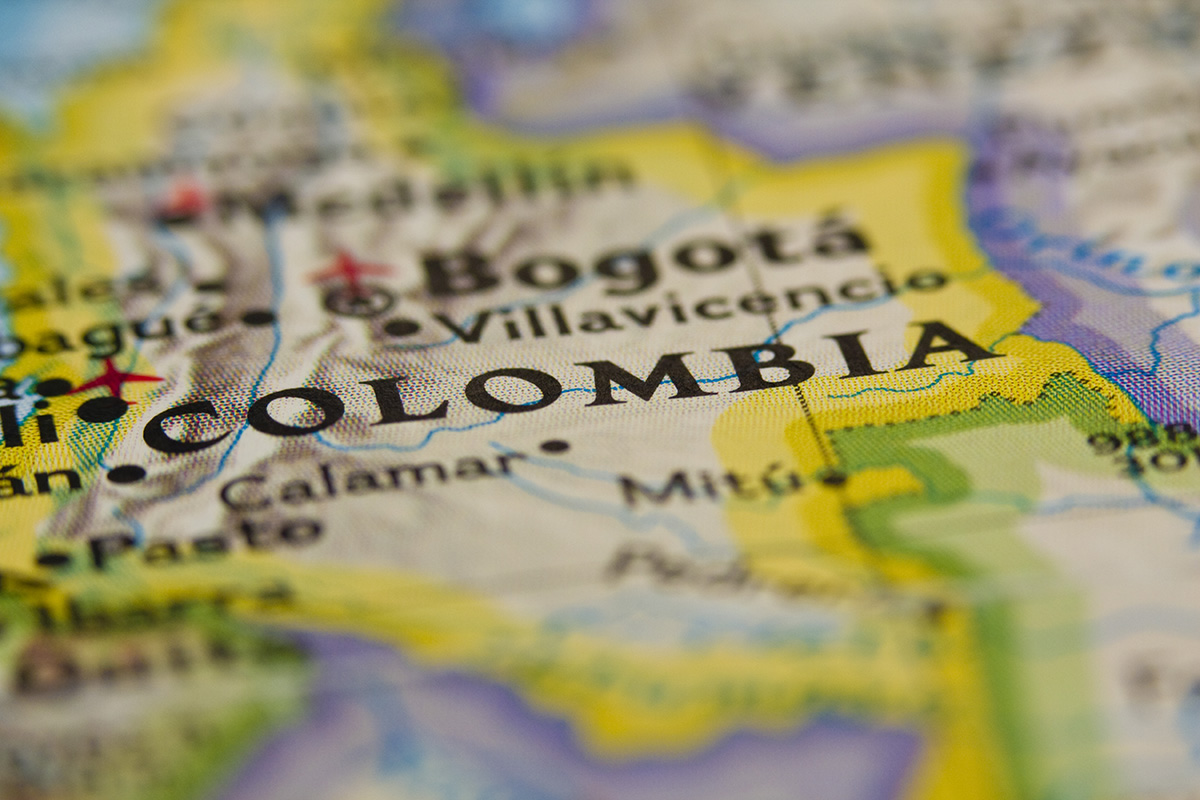
Ahora los ciudadanos colombianos podrán seleccionar las categorías ‘trans’ y ‘no binario’ en los documentos de identidad del país.
Este viernes la Registraduría Nacional del Estado Civil anunció que añadió las categorías ‘no binario’ y ‘trans’ en los distintos documentos de identidad con el fin de garantizar los derechos de las personas con identidad diversa.
El registrador nacional, Hernán Penagos, informó que hizo la inclusión de estas dos categorías en los documentos de: registro civil, tarjeta de identidad y cédula de ciudadanía.
Según la registraduría: “La inclusión de estas categorías representa un importante avance en materia de garantía de derechos de las personas con identidad de género diversa”.
Estas categorías estarán en el campo de ‘sexo’ en el que están normalmente las clasificaciones de ‘femenino’ y ‘masculino’ en los documentos de identidad.
En 2024 se inició la ejecución de diferentes acciones orientadas implementar componentes “‘NB’ y ‘T’ en el campo ‘sexo’ de los registros civiles y los documentos de identidad”.
Las personas trans existen y su identidad de género es un aspecto fundamental de su humanidad, reconocido por la Corte Constitucional de Colombia en sentencias como T-236/2023 y T-188/2024, que protegen sus derechos a la identidad y no discriminación. La actualización de la Registraduría implementa estos fallos que ya habían ordenado esos cambios en documentos de identidad.
Por su parte, el registrador nacional, Penagos, comentó que: “se trata del cumplimiento de unas órdenes por parte de la Corte Constitucional y, en segundo lugar, de una iniciativa en la que la Registraduría ha estado absolutamente comprometida”. Y explicó que en cada “una de las estaciones integradas de servicio de las más de 1.200 oficinas que tiene la Registraduría Nacional se va a incluir todo este proceso”.
National
Faith leaders denounce anti-transgender attacks
‘You are holy. You are sacred. We love you.’
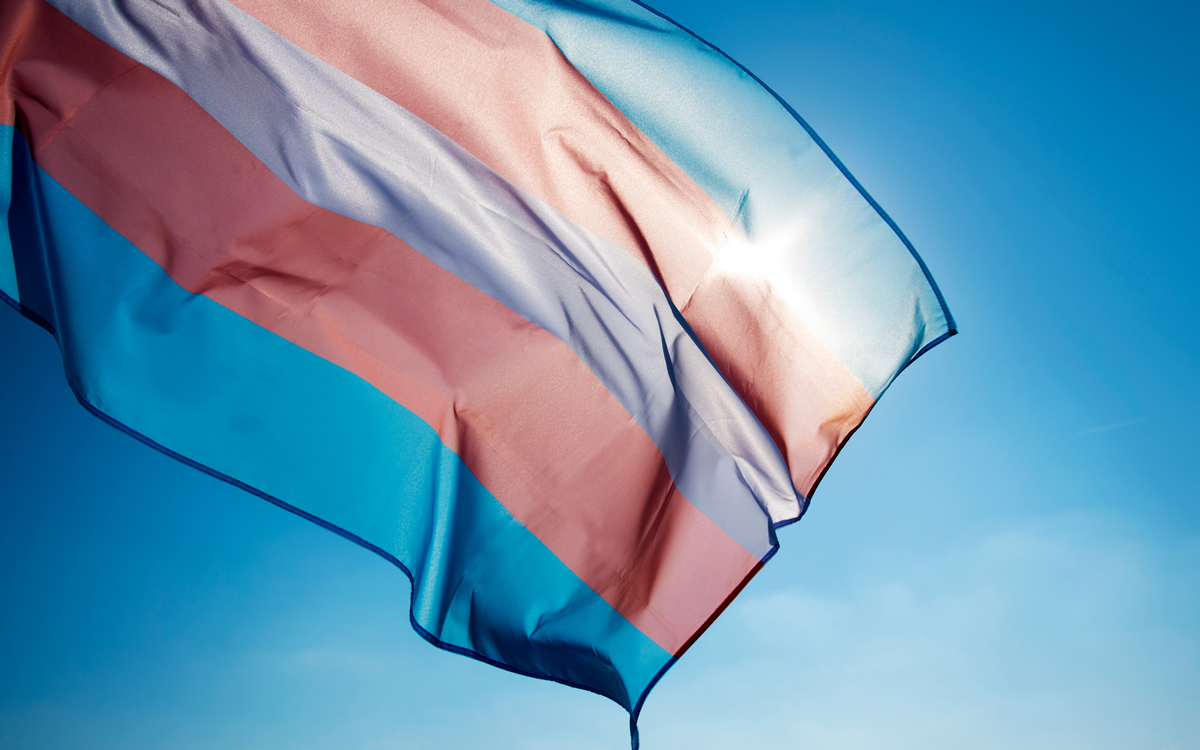
This past Trans Awareness Week, 10 heads of diverse religious traditions issued a statement proclaiming that transgender, intersex, and nonbinary people are worthy of love, support, and protection. Led by Rev. Dr. Sofía Betancourt, president of the Unitarian Universalist Association, representatives from the Universal Fellowship of Metropolitan Community Churches, The Fellowship of Affirming Ministries, the Union for Reform Judaism, the Presbyterian Church, the Christian Church (Disciples of Christ), The Episcopal Church, the United Church of Christ, and Reconstructing Judaism called out the violent and systemic persecution of trans, nonbinary, intersex, and queer people–proclaiming that their faith and their humanity urged them to affirm that trans, intersex, and quere people are “sacred” and “holy.”
Their statement comes at a critical time. Over the past three months, Trump and his Cabinet’s anti-trans rhetoric has only intensified, with a report released late September by journalist Ken Klippenstein in which national security officers leaked that the FBI is planning to classify trans people as “extremists.” By classifying trans people as “Nihilistic Violent Extremists,” far-right groups would have more “political (and media) cover,” as Abby Monteil reports for them, for anti-trans violence and legislation.
While the news is terrifying, it’s not unprecedented – the fight against trans rights and classification of trans people as violent extremists was included in Project 2025, and in the past several weeks, far-right leaders’ transphobic campaign has expanded: boycotting Netflix to pressure the platform to remove trans characters, leveraging anti-trans attack ads in the Virginia governor’s race and banning professors from acknowledging that trans people exist. In fact last month, two Republican members of Congress called for the institutionalization of trans people.
It seems that the government shutdown was predicated, at least partially, on Trump’s own anti-trans policies that were attached as riders in the appropriations bill.
It’s a dangerous escalation of transphobic violence that the Human Rights Campaign has classified as an epidemic. According to an Everytown for Gun Safety report published in 2020, the number of trans people murdered in the U.S. almost doubled between 2017 and 2021. According to data released by the Gun Safety report from February 2024, 34 percent of gun homicides of trans, nonbinary, and gender expansive people remain unsolved.
As Tori Cooper, Director of Community Engagement for the Transgender Justice Initiative for the Human Rights Campaign Foundation, this violence serves a purpose. “The hate towards transgender and gender expansive community members is fueled by disinformation, rhetoric and ideology that treats our community as political pawns ignoring the fact that we reserve the opportunity to live our lives full without fear of harm or death,” Cooper said.
The faith leaders came out in this statement to affirm that it is their spiritual and human imperative to call out this escalating violence and protect trans, nonbinary, intersex, and queer people. The leaders acknowledge that historically and today, religion is used as a weapon of hate to degrade and deny the human dignity of LGBTQ+ peoples. The Supreme Court is hearing Chiles v. Salazar, a case about the constitutionality of a Colorado ban of conversion therapy for minors, with the majority of conversion therapy practices being faith based. And despite the Supreme Court declining to hear a case challenging the constitutionality of same-sex marriage conferred in Obergefell v. Hodges, efforts to end marriage equality remain ongoing with Katy Faust’s End Obergefell movement.
“During a time when our country is placing their lives under increasingly serious threat,” the statement reads, “there is a disgraceful misconception that all people of faith do not affirm the full spectrum of gender – a great many of us do. Let it be known instead that our beloveds are created in the image of God – Holy and whole.”
The faith leaders argue that commendation of LGBTQ peoples and religiously motivated efforts to deny their dignity and rights is not the belief of all faith communities, and far-right Christian nationalist communities and others who uphold homophobia and seek to exact it writ large in the United States do not speak for all faith leaders.
This is a critical piece of the statement and builds on historical precedence. During the 1980s AIDS crisis, when far-right Christian leaders like Jerry Falwell, one of the founders of the Moral Majority, stated that HIV was “God’s punishment” for LGBTQ+ people and indicative of a broader moral decline in America, affirming faith communities came out to affirm the dignity and divinity of queer people. As funeral homes and churches refused to prepare the dead and bury them, some faith communities stepped up to say that these homophobic leaders do not speak on behalf of all people of faith.
In 1985, the United Church of Christ General Synod urged its member congregations to claim and declare themselves “Open and Affirming,” in order to express their welcome and support for LGBTQ+ people, and two years later, the Church of the Brethren issued a statement titled “A Call to Compassion” where conference members urged member congregations to speak out boldly against discrimination, provide direct care to people with HIV/AIDS, and actively educate themselves and others to stop the spread of fear and prejudice surrounding the disease.
Just one year later, the Evangelical Lutheran Church in America Church Council issued a statement, “AIDS and Church’s Ministry of Caring,” which outlined the ways in which welcoming, ministering to and advocating on behalf of people with HIV/AIDS is critical to their mission. Even the US Conference of Catholic Bishops, which earlier this month banned gender-affirming care at Catholic hospitals, issued a statement in 1987 calling discrimination against people with HIV/AIDS “unjust and immoral,” and denouncing the label of “innocent” or “guilty” patients.
Thus, the faith leaders’ statement this past week builds on a rich history of faith communities fighting the stigma that far-right faith groups perpetuate about LGBTQ+ people and committing to action. What sets this latest statement apart is its decidedly interfaith heart, which speaks to the history of the Pride Interfaith Service in Washington, DC that was first started by a group of faith leaders and lay people who gathered at the AIDS Memorial quilt.
As the statement reads, “Our scriptures vary, but they share a common conviction. As we make justice our aim we must give voice to those who are silenced. Our shared values, held across many faiths, teach us that we are all children of God and that we must cultivate a discipline of hope, especially in difficult times. As such, we raise our voices in solidarity to unequivocally proclaim the holiness of transgener, nonbinary, and intersex people, as well as the recognition of the entire spectrum of gender identity and expression.”
The statement ended by arguing that they need to call out the violence they are witnessing. Their silence, they argue, would be in compliance and reinforce the idea that homophobic religious leaders and lay people speak on behalf of all people of faith. Their statement is not only words, however, it is a written promise affirming the dignity and holiness of queer people but also to protect them in the face of increasing violence and persecution.
“When people of faith and conscience stay silent in the face of oppression, we are all made less whole. When people of faith and conscience speak out against that which violates the sacred in its own name, we have the power to stay the hand of sin. Transgender, nonbinary, and intersex people are vulnerable today,” the statement concluded.
“Our faiths, our theologies, and our practices of prophetic witness call on us to say with one voice to transgender people among us: ‘You are holy. You are sacred. We love you. We support you, and we will protect you.’”

Victory Institute to honor Biden at D.C. conference

Colombia anunció la inclusión de las categorías ‘trans’ y ‘no binario’ en los documentos de identidad

Faith leaders denounce anti-transgender attacks

Tokyo court upholds Japan’s same-sex marriage ban

White House halts World AIDS Day recognition amid HIV funding cuts

Comings & Goings

Impulse Group DC to host fundraiser

Calendar: November 28-December 4

India’s Jharkhand state works to improve trans people’s access to health care